

Free Online Courses for Architecture Students: 5 Platforms
A student-focused guide to free online courses that supplement an architecture degree, covering studio skills, software, and theory. Compares MIT OpenCourseWare, edX, Coursera, Alison and Domestika, with tips on auditing classes for free.
 Elif Ayse Sen14 June 20226 Mins read581

Table of Contents Show
Free online courses for architecture students are self-paced classes from universities and learning platforms that supplement a formal degree. They cover studio skills, software such as AutoCAD and Revit, and design theory, letting students audit university-level material at no cost and close the gaps a fixed curriculum often leaves open.
A studio-heavy timetable rarely leaves room for everything you want to learn. That is where free classes earn their place. Used well, they extend your degree rather than compete with it, giving you extra reps on software, presentation, and theory between deadlines. If you want a ranked shortlist of specific classes, our companion piece on the top free online architecture courses pairs neatly with this student-focused guide. For skill-based creative training, Domestika also runs a large catalog of project-based courses that many students follow alongside their coursework.
How to Use Free Courses Alongside Your Degree
The students who get the most from free online courses for architecture students treat them as targeted top-ups, not a second full workload. Map each course to a real gap. If your studio critiques keep flagging weak diagrams, take a short illustration class. If a firm you want to intern at runs on Revit and your school teaches AutoCAD, spend a summer on the software you are missing.
Timing matters as much as the topic. Software and drafting classes land best during breaks, when you can practice on a live project instead of forgetting the shortcuts a week later. Theory and history lectures work better during term, where they feed straight into essays and precedent studies. Batch your learning around the studio calendar so the two reinforce each other.
💡 Pro Tip
Rebuild one of your own studio projects inside every software course you take, rather than the tutorial’s demo file. You finish the class with portfolio-ready output and you remember the tools far longer because they are attached to work you actually care about.
Best Free Platforms for Architecture Students
Not every platform suits every need. University repositories are strong on theory and reading, while structured platforms are better for software and step-by-step skills. The table below groups the main free options by who provides them and what they do best.
Free Course Platforms Compared
| Platform | Provider | Best For |
|---|---|---|
| MIT OpenCourseWare | MIT | Theory, history, and lecture notes, no login needed |
| edX | Harvard, MIT, and partner universities | Design fundamentals and urbanism, free in audit mode |
| Coursera | Universities worldwide | CAD, BIM, and sustainability, free when audited |
| Alison | Alison | Interior design and drafting basics with a free account |
| Khan Academy | Khan Academy | Art history, geometry, and structural math foundations |
📌 Did You Know?
MIT OpenCourseWare has published materials from more than 2,500 MIT courses free of charge since it launched in 2002, including full architecture design studios with reading lists and assignment briefs. You can follow the exact syllabus an MIT student works through, at no cost and with no application.
Should Students Audit a Course or Pay for the Certificate?
For most students, auditing is the smart default. On Coursera and edX, the audit track gives you the video lectures and often the readings for free, while the paid track adds graded assignments and a shareable certificate. If your goal is the skill itself, audit it. If you want a credential that strengthens an internship application, the certificate can be worth the fee, though a strong portfolio usually carries more weight than any single online badge.
Read each course page before you enroll. Audit access varies by course, and some platforms limit how long free content stays open. Coursera explains the difference on its audit a course help page, which is worth a look before you commit money you did not need to spend.
⚠️ Common Mistake to Avoid
Do not treat certificate collecting as a substitute for finished work. Admissions tutors and hiring architects scan portfolios and drawings first, not lists of completed courses. Use free classes to produce something you can show, then let the output speak for the skill.
Building Studio and Software Skills
Once you know how to slot courses around your degree, the next step is choosing what to actually learn. The categories below cover the skills architecture students ask about most, from presentation drawing to modeling software, with example classes you can start today.
-
Illustration

Architectural illustration is one of the best ways to present your projects, because it defines your architectural approach clearly. You can reach various online illustration courses to improve yourself. These classes cover hand-drawn sketching, digital drawing, and the diagrams and illustrations that carry a design narrative. There are courses about illustration software such as Adobe Illustrator and Adobe Photoshop in Domestika. Following these tutorial videos sharpens the presentation skills you need for your architectural portfolio, studio reviews, and professional drawings.

Creative Watercolor Sketching for Beginners

Drawing for Beginners Level -1
-
3D & Animation
Strong 3D modeling and animation present your work far better than static images alone. Every architect benefits from well-built renderings, and short animations support them well. You can follow a class under the 3D & Animation category on www.domestika.org and create walk-throughs that explain a scheme in seconds. The platform lists many courses on 3D modeling, rendering, and animation.


💡 Pro Tip
Learn one modeler well before adding a second. Students who jump between SketchUp, Rhino, and Revit in the same term often end up shallow in all three. Pick the tool your studio or target firm uses, get fluent, then branch out once the core workflow is automatic.
-
Architecture & Space

As an architect, you need to keep improving your spatial and design knowledge. Online courses on spatial organization and the architectural design process carry real advantages, and you can follow them from home in your free time. There are many types of design course, along with classes on space and environment. These extra classes let you fill in what a packed school timetable skips and build design confidence at your own pace.
It is possible to develop not only design and spatial ability but also drawing technique. You can learn architectural software such as AutoCAD and Rhino through the architecture & space category on Domestika. Taking these classes in addition to your school courses helps you develop projects and produce cleaner drawings.

Architectural Drawing: From Imagination to Conceptualization

-
Design
You can find a class on Domestika for almost any design field that comes to mind. The catalog runs from advertising to game design, and from interior design to graphic design. Follow classes on popular topics and widely used software, and pick up cross-disciplinary skills that make your architectural presentations stronger. The full catalog sits at www.domestika.org for architects and other design students alike.

Introduction to Adobe Photoshop

Introduction to Adobe Illustrator
-
Writing
On Domestika, you can find classes that go beyond architecture and design into writing. Clear writing helps with thesis work, competition briefs, and project statements, and you can take detailed courses on social media writing or book writing from working professionals.
-
Web & App Design
There are many courses on Domestika covering web & app design, one of the most popular fields of the moment. If you want to build an online portfolio or move toward computational and interface work, these classes give you a practical starting point.
Frequently Asked Questions
Are free online courses for architecture students worth it without a certificate?
Yes, for skill building. The lectures, readings, and exercises teach the same material whether or not you pay for the certificate. Audit the course, apply what you learn to a real project, and let that work sit in your portfolio. Pay for the certificate only when a specific application or employer asks for one.
Can free courses replace an architecture degree?
No. Free online courses for architecture students supplement a degree, they do not replace it. Licensure in most countries requires an accredited degree plus supervised experience and exams. Free classes are best used to sharpen software, presentation, and theory around that accredited path.
How do students audit a course on Coursera or edX?
On the course enrollment page, look for an “Audit” or “Full course, no certificate” option instead of the paid button. Selecting it opens the lecture videos and most readings for free. Availability varies by course, so check the page before you enroll.
Which free platform is best for learning architecture software?
For structured software walk-throughs, Coursera and edX carry university-run CAD and BIM classes you can audit, while Domestika runs project-based classes on SketchUp, Revit, and the Adobe suite. Match the platform to the tool your studio or target firm actually uses.
Where to Go From Here
Your Next Step: Pick the single weakest area in your last studio submission, whether that is diagramming, modeling, or theory, and enroll in one free class that targets it this week. Rebuild a past project inside the course so you finish with portfolio work, not just a completion screen.






Top 10 Free Online Architecture Courses for 2026
A Top 10 guide to free online architecture courses from Harvard, MIT,...
Elif Ayse Sen5 Mins read
Unlock the Benefits of Learning from Online Architecture Courses Today
Explore the transformative potential of online architecture courses, offering unmatched flexibility and...
 Muhammad Abdullatef - Tifa Studio4 Mins read
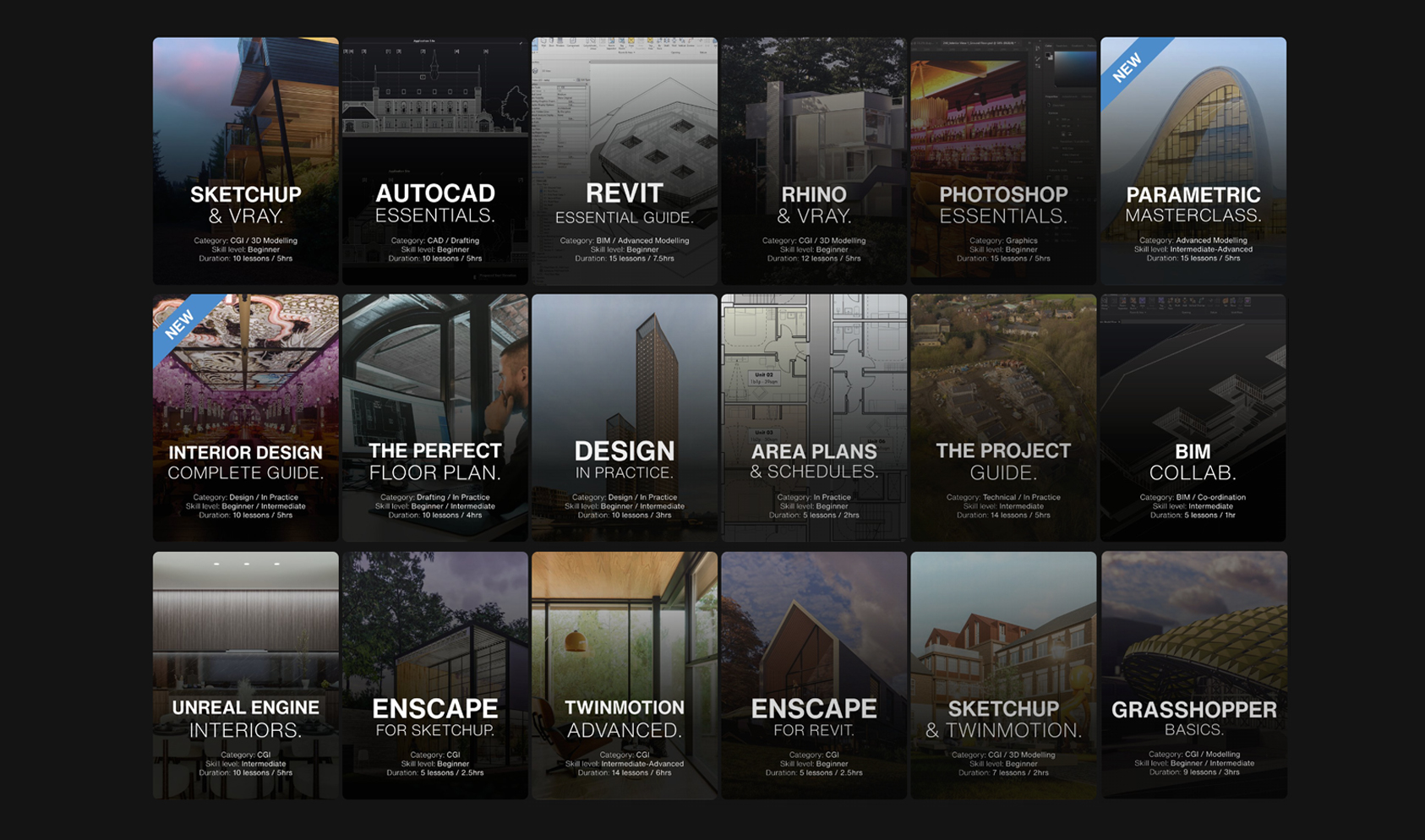
An Innovative Platform Empowering Architects and CG Artists
Table of Contents Show What ArchAdemia Offers Architects and CG ArtistsWho the...
Muhammad Abdullatef - Tifa Studio5 Mins read

Best Courses for Learning AutoCAD
AutoCAD is one of the most essential tools for every architect and...
Elif Ayse Sen7 Mins read


Leave a comment