

Monumental Architecture: How Architects Create Iconic Monuments
Monumental architecture has long defined how societies remember their past and express collective identity. From Eero Saarinen's Gateway Arch to Peter Eisenman's Holocaust Memorial, architects bring spatial thinking, cultural sensitivity, and structural expertise to monument design. This article explores five iconic examples of monument architecture from across the globe, revealing how architects shape public memory through form, material, and symbolism.
 Bahattin Duran10 November 20258 Mins read668
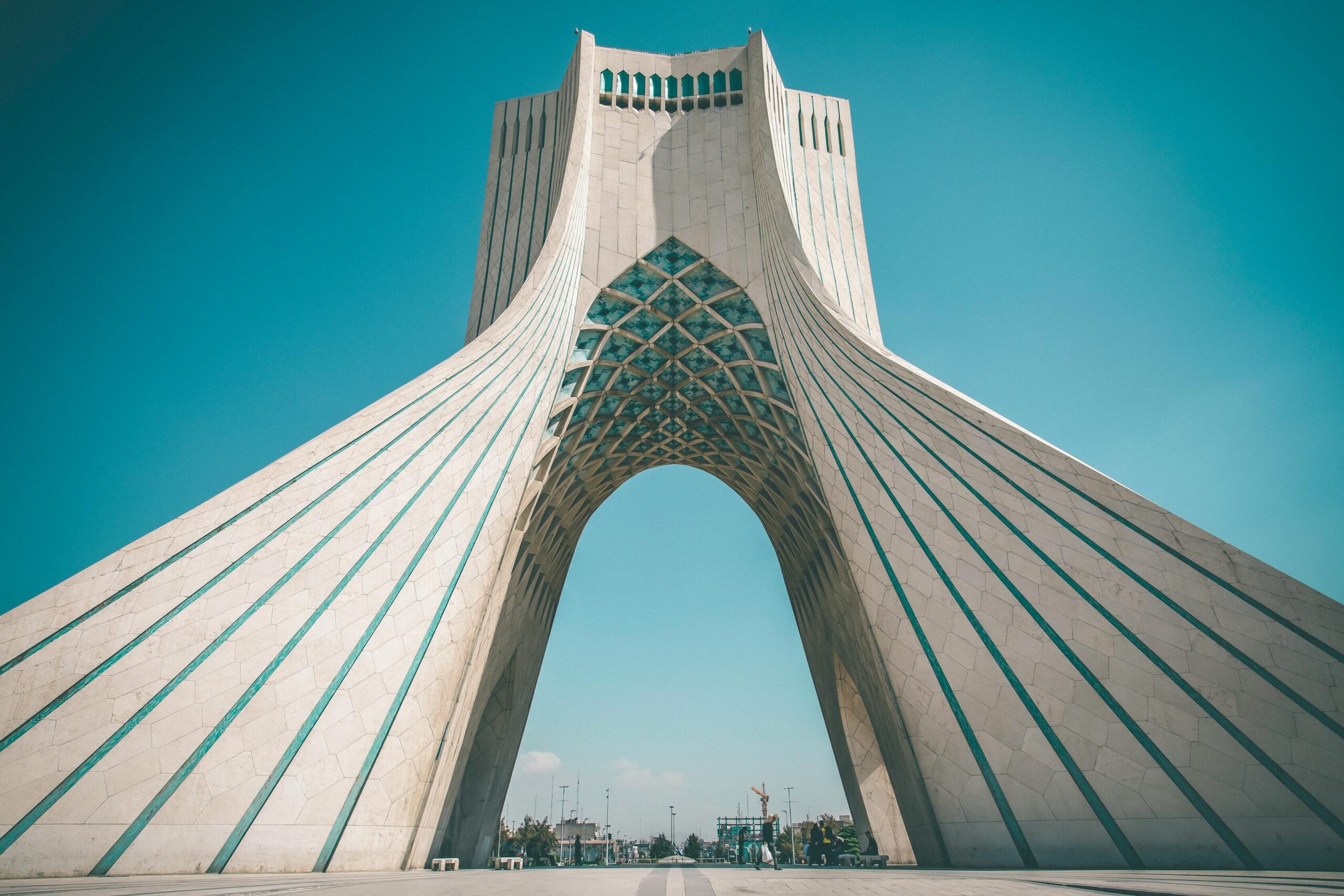
Table of Contents Show
Monumental architecture has long been a defining force in the built environment, shaping how societies remember their past and express collective identity. Architectural training implies a well-rounded education where future architects learn not only about design, but also about history, theory, philosophy, structure, nature, society, art, and many other fields. Consequently, it does not surprise that many architects are not only responsible for designing buildings, but also for many other areas of design, such as the design of the monuments. The relationship between architecture and monuments runs deep — architects have been responsible for the designs of many monuments across the world that became synonymous with the cultures and societies that built them.
But what is monumental architecture, exactly? In its broadest sense, monumental architecture refers to large-scale structures built to commemorate significant events, people, or cultural ideals, often reflecting the social, political, and religious values of the societies that created them. These structures go beyond mere function; their scale, symbolism, and permanence are designed to inspire awe and shape collective memory. From ancient pyramids to modern memorials, monumental structures have influenced design traditions across civilizations.
The monuments designed by architects serve a variety of purposes, from commemorating historical figures or events, to shaping public spaces of gathering. This article, which portrays examples of monument architecture from different regions, offers an overview of how selected architects have influenced the design of monuments across the globe.
Understanding the Architect’s Role in Monument Design
The role of the architect monument designer extends far beyond selecting materials and drawing plans. Architects bring spatial thinking, cultural sensitivity, and structural expertise to create works that resonate across generations. Unlike sculptors or landscape designers, architects approach monument architectural projects with an understanding of how people move through and experience space — considering sight lines, scale relative to the human body, and the interplay between built form and natural surroundings.
Throughout history, many iconic monuments have emerged from brilliant architectural minds who won design competitions, blending artistic vision with engineering innovation. The examples below demonstrate how architects from various backgrounds and regions have shaped some of the world’s most recognizable monuments through monumental architecture.
01 THE GATEWAY ARCH BY EERO SAARINEN
Located in St. Louis, Missouri, The Gateway Arch is a monument for the westward expansion of the United States. It was designed by the Finnish American architect, Eero Saarinen, best known for his innovative designs all across the United States. The 630 feet tall monument was constructed between 1963 and 1965 and to this day it is the largest man-made arch in the world and a great wonder of both architecture and monuments engineering. The visitor is transported from the bottom to the viewing platform at the top of the arch by using two trams made of 8 carts hidden within the arch structure. The hollow cross-section of the arch which encloses the tram system is triangular in shape and narrows down from 54 feet at the base to only 17 feet at the top of the arch. The entire structure is cladded in stainless steel, giving the monument the elegant and modern look Eero Saarinen’s architecture is best known for.
Saarinen’s design for the Gateway Arch is a masterclass in monumental architecture — the catenary curve creates a form that is both structurally efficient and deeply symbolic. His approach to this monument architectural project influenced a generation of architects who would go on to explore sculptural forms in large-scale public works. Saarinen’s legacy as a mid-century modern architect extends well beyond this single structure, but the Gateway Arch remains his most iconic contribution to American monument design.

02 THE STONE FLOWER BY BOGDAN BOGDANOVIĆ
The Stone Flower is a monument for the victims of World War II prosecutions located on the site of the concentration camp in Jasenovac, current-day Croatia. It was designed by a Serbian-Yugoslav architect Bogdan Bogdanović, well known for his works in monument design across the region. The monument, situated in the fields of Jasenovac, is a 24 m tall, flower-shaped concrete structure composed of 6 petals, a stem, and an occupiable crypt at the base. Unique for its abstract nature at the time, the monument strives to both commemorate the innocent victims while giving hope for the future in which such evils should never be repeated. Like most of Bogdanović’s works, this monument is highly symbolic, geometrically referencing a lotus flower that is born from the mud and water, revoking both the idea of rebirth from the ashes as well as the remembrance of one’s roots.
Bogdanović’s approach to monument architecture was distinct from many of his contemporaries. Rather than relying on figurative representation, he used abstract, organic forms to evoke emotion and memory — a technique that has since become widely adopted in memorial design worldwide. The Stone Flower stands as a powerful example of how an architect monument designer can use symbolism and spatial experience to communicate meaning without words.

03 NATIONAL FLAG MEMORIAL BY ÁNGEL GUIDO Y ALEJANDRO BUSTILLO
Built in the original place where the first Argentinian flag was raised in 1812, the National Flag Memorial was designed by architects Ángel Guido and Alejandro Bustillo in the stripped classical style. Located just in front of the Paraná river, the monument consists of a 70 meters tower with an observatory at the top, a symbolic crypt for Argentinian founding father and creator of the flag Manuel Belgrano, a civic courtyard, a propylaea, and an urn for the unknown soldier. Its construction started in 1943, concluding in 1957, the year in which it was inaugurated. Its unornamented yet massive, monumental architecture design won the competition against other eleven submitted proposals, winning with its symbolic concept of “the fatherland’s ship sailing the sea in pursuit of a glorious destiny,” highlighting geographic, historic, spiritual, economic, and telluric features of the nation.
The stripped classical approach used by Guido and Bustillo reflects a broader trend in mid-20th-century monument architectural design, where architects balanced the grandeur of classical architecture with modernist restraint. This memorial demonstrates how architecture and monuments can serve as powerful instruments of national identity.

04 AZADI TOWER BY HOSSEIN AMANAT
Azadi Tower was designed by Hossein Amanat as a monument celebrating the 2500th anniversary of the Persian Empire and it was completed in 1971. Since then, the monument has best been known as the location for both celebrations and demonstrations. The main structure of the monument is reinforced, poured-in-place concrete cladded in uniquely shaped pieces of white marble. The monument was designed by Hossein Amanat, a recent graduate of architecture school who won the competition with his entry that was largely inspired by Persian art and history. The design is a combination of an ancient parabolic Ctesiphon arch and the pointed arches commonly seen through the Islamic period.
This fusion of ancient and Islamic design elements makes the Azadi Tower a remarkable example of how monument architecture can bridge different historical eras within a single form. The project also illustrates the tradition of arch-based architectural design that has spanned centuries, from Roman construction to modern memorials. Amanat’s work as an architect monument designer proves that competition-winning designs need not come from seasoned professionals — a fresh perspective can produce enduring monumental architecture.
05 MEMORIAL OF THE MURDERED JEWS OF EUROPE BY PETER EISENMAN
Also known as the Holocaust Memorial, the Memorial of the Murdered Jews is one of Berlin’s best-known monuments located in close adjacency to the Brandenburg Gate. The open-air museum that was officially opened in 2005 is composed of close to 3,000 concrete slabs identical in footprint dimensions but varying in their height. The monument was designed by a New York-based architect Peter Eisenman whose design was the winning entry in a large-scale international competition. The labyrinth of concrete slabs is meant to evoke an uncomfortable atmosphere for the visitor who can easily get lost within it feeling the emotions of fear and loneliness. It also represents the rigid system with strict order, a bureaucratic machine that has lost touch with humanity. The architect has designed the monument to be a spatial experience where each individual has a unique understanding of the site, its meaning, and its symbolism. Therefore, different visitors have varying interpretations of the site, some finding a resemblance with a graveyard, some understanding it as a metaphor for isolation from the rest of the society, some as the representation of the collective guilt for the past, etc.
Eisenman’s approach to this monument architectural project redefined what a memorial could be. By rejecting traditional figurative representation in favor of an abstract, experiential landscape, he created a work of monumental architecture that engages visitors on a deeply personal level. The memorial’s impact on contemporary architectural thinking has been profound, inspiring designers worldwide to consider how spatial arrangement and scale can communicate complex emotional narratives.

Why Architects Are Essential to Monument Design
The examples above illustrate a fundamental truth about monument architecture: the most enduring monuments are those conceived by designers who understand both the art and science of building. Architects bring a unique combination of skills to memorial projects — spatial awareness, structural knowledge, material expertise, and cultural literacy. Whether working with the sweeping curves of stainless steel, the raw weight of concrete, or the refined elegance of marble, architects shape monuments that transcend their physical materials to become symbols of shared human experience.
From the soaring optimism of Saarinen’s Gateway Arch to the somber gravity of Eisenman’s Holocaust Memorial, monumental architecture designed by architects continues to define how communities remember, mourn, celebrate, and gather. As historic structures continue to inspire today’s designers, the tradition of architect-led monument design ensures that future generations will inherit public spaces of profound meaning and beauty.
For those interested in exploring how architectural principles have evolved across different periods and cultures, our articles on ancient architectural styles and American architecture styles offer additional context on the design traditions that inform monument creation today.
What Is an Architectural Monument?
An architectural monument is a large, permanent structure built to commemorate a person, event, or cultural ideal. Monument architecture combines engineering, symbolism, and artistic form so a building communicates meaning and endures across generations, turning physical scale and material into a lasting public statement of identity.
Famous Monuments of the World and Their Architecture
Some of the most recognized buildings on Earth are monuments first and working structures second. The list below gathers eight famous monuments of the world, the architects who shaped them, and the design ideas that made each one last. Many also rank among the famous landmarks of the world, yet their staying power comes from deliberate design rather than fame alone.
| Monument | Location | Built / Era | Architectural Significance |
|---|---|---|---|
| Eiffel Tower | Paris, France | 1887-1889 | Gustave Eiffel’s wrought-iron lattice rises 300 m (330 m with antennas) and was the world’s tallest structure until 1930. See Britannica. |
| Taj Mahal | Agra, India | 1632-1648 | White marble Mughal mausoleum led by chief architect Ustad Ahmad Lahori, now a UNESCO World Heritage Site. |
| Statue of Liberty | New York, USA | Dedicated 1886 | Sculpted by Frédéric Auguste Bartholdi over an internal iron frame engineered by Gustave Eiffel, rising 93 m to the torch. |
| Christ the Redeemer | Rio de Janeiro, Brazil | 1922-1931 | Art Deco reinforced-concrete figure 30 m tall, designed by Heitor da Silva Costa with sculptor Paul Landowski. |
| Brandenburg Gate | Berlin, Germany | 1788-1791 | Carl Gotthard Langhans modeled this neoclassical gate on the Athenian Propylaea, later crowned by Schadow’s Quadriga. |
| Sydney Opera House | Sydney, Australia | 1959-1973 | Jørn Utzon’s sail-like concrete shells, a UNESCO World Heritage masterpiece of twentieth-century design. |
| Great Pyramid of Giza | Giza, Egypt | c. 2560 BCE | Built for Pharaoh Khufu at about 146 m, the only surviving wonder of the ancient world. |
| Pyramid of the Sun | Teotihuacan, Mexico | c. 200 CE | One of the largest pyramids in Mesoamerica, aligned to the surrounding mountains and the path of the sun. |
Look closely and a clear pattern appears. The Brandenburg Gate borrowed the form of the Athenian Propylaea to signal civic peace, while the Eiffel Tower exposed its iron lattice to celebrate industrial engineering. Each architect matched material and form to the exact message the monument had to carry, which is why these works still read clearly today.
Ancient builders worked the same way. The Pyramid of the Sun at Teotihuacan aligned its enormous mass with the surrounding mountains and the path of the sun, proof that monument architecture has linked structure to meaning for thousands of years. Modern icons such as Rio’s Christ the Redeemer continue that practice, using scale and silhouette so a single form can speak to millions. From Khufu’s pyramid to Utzon’s shell roofs, the strongest monuments outlive the events that inspired them.
Studying these famous monuments shows how a clear concept survives changing technology and taste. Whether carved in limestone, cast in concrete, or riveted in iron, each structure pairs a strong idea with the right method of building. That pairing, more than size alone, is what turns a large building into a true architectural monument, and the same logic still guides memorials and civic landmarks designed today.


1 Comment


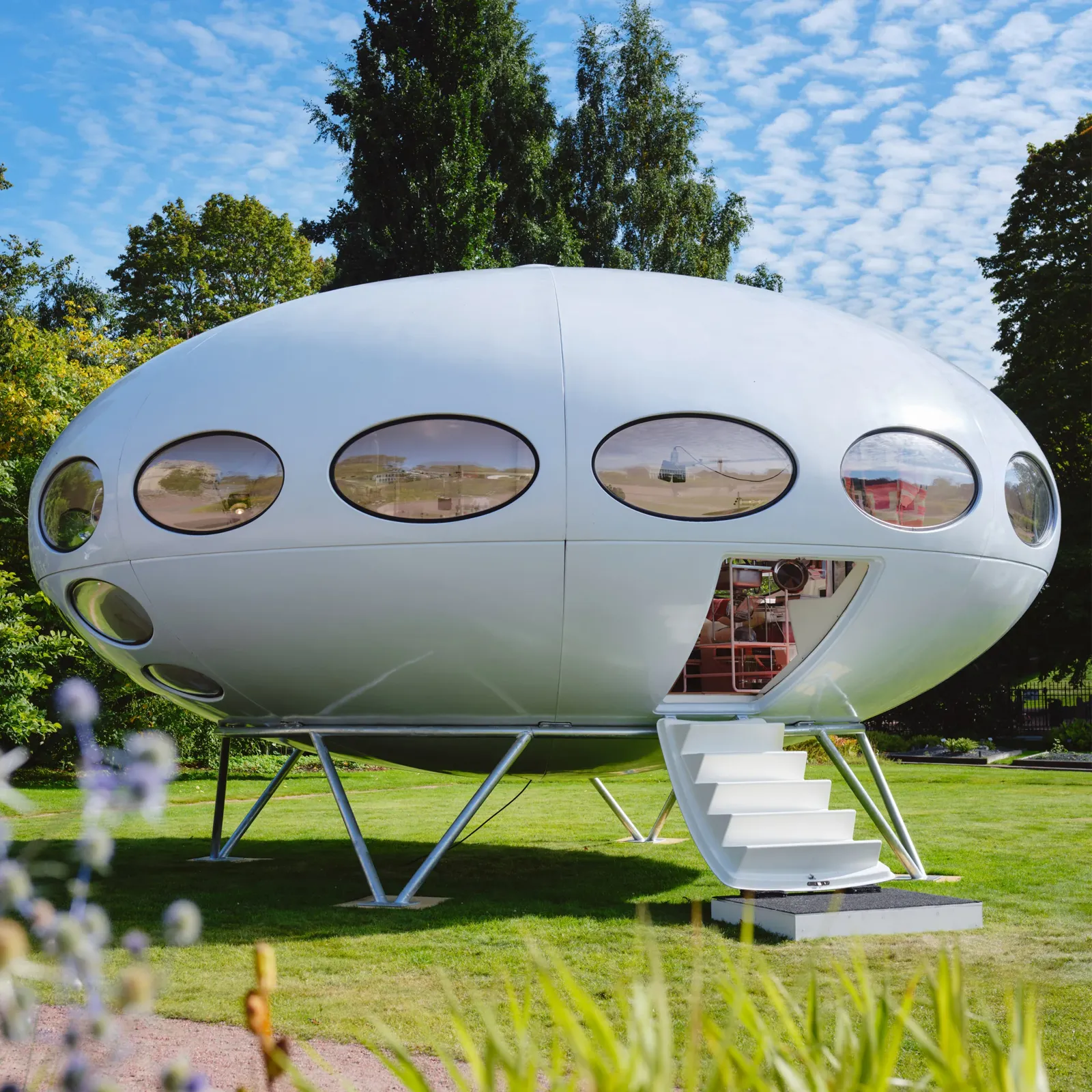
Futuro House Production Revived in Finland After Decades-Long Hiatus
A Facebook listing for abandoned moulds led to the first new Futuro...
 illustrarch Editoral Team3 Mins read

Building Your Dream Home in NSW: What You Should Know About Montgomery Homes
Montgomery Homes has been building across Sydney, Newcastle, the Hunter, Wollongong and...
illustrarch Editoral Team4 Mins read

Designing a Home Theater: Where Drapery Fits Into the Plan
In a media room the curtains are a performance layer, not decoration....
illustrarch Editoral Team3 Mins read
Oscar Niemeyer’s Cathedral of Brasília: The Hyperboloid Concrete Hymn
The Cathedral of Brasília reads as a single gesture, yet it stood...
 Furkan Sen7 Mins read


This article talks about different monuments and their architects. It seems interesting, but I don’t know much about architecture.