

Cafe Design Trends 2026: Sustainability, Comfort, Community
A look at the cafe design trends shaping modern coffee shops, from sustainable materials and biophilic greenery to flexible layouts, minimalist interiors, and community-focused spaces.
 Sinan Ozen10 May 20255 Mins read647

Table of Contents Show
Cafe design trends now center on three priorities: sustainability, comfort, and community. Reclaimed materials, biophilic greenery, flexible seating, and warm lighting turn ordinary coffee shops into places people actually want to stay. The strongest contemporary cafe design balances character, practicality, and a sense of belonging that keeps customers returning week after week.
Walk into a well-designed cafe and you feel the intent before you order. Lighting, materials, seating, and layout work together to shape how long you linger and how the room makes you feel. Coffee shops have shifted from quick service counters into destinations tied to how people live and work, and their design reflects that change.
What Defines Contemporary Cafe Design Today?
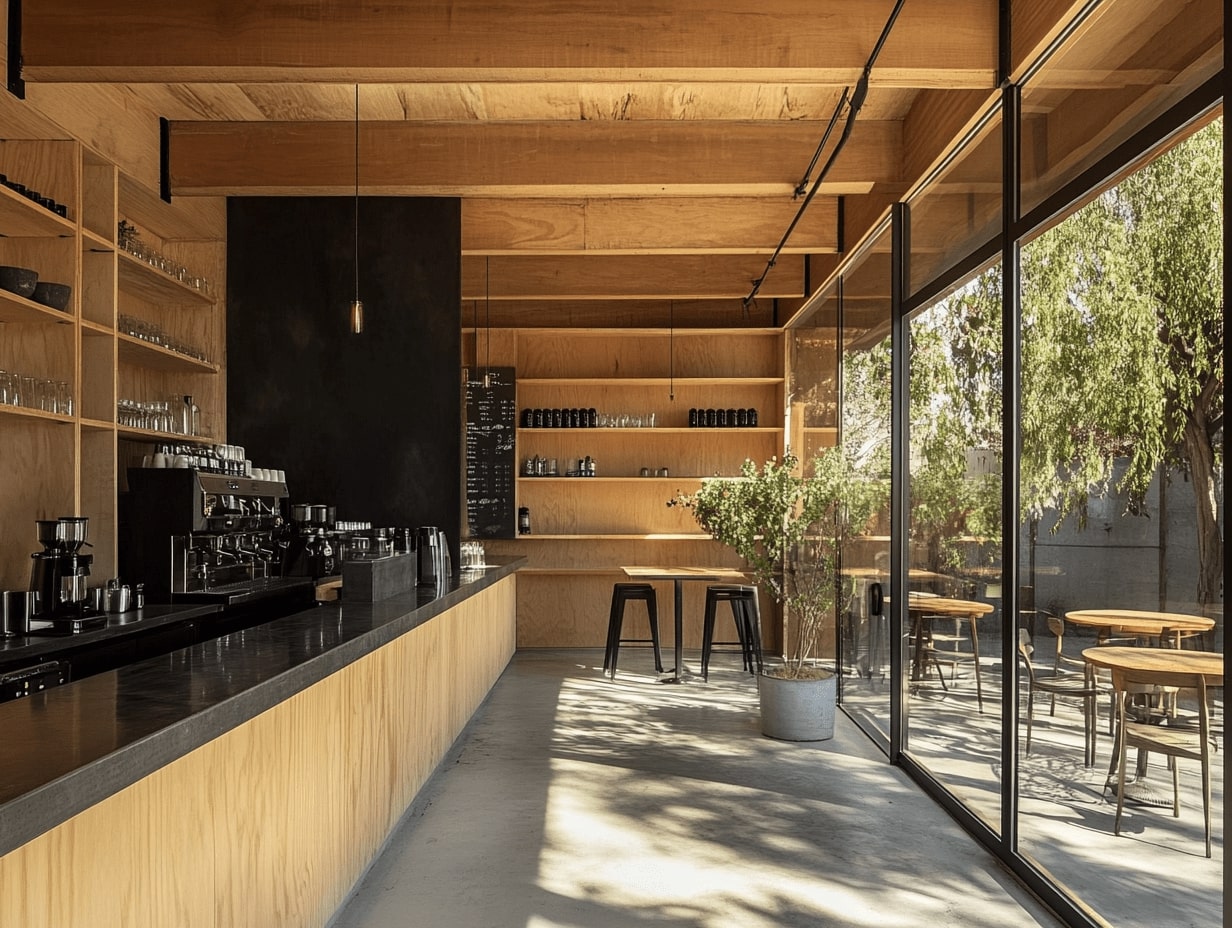
Contemporary cafe design blends visual appeal with practical function, creating an atmosphere that suits both a five minute espresso and a three hour work session. The current direction favors natural materials, greenery, adaptable seating, and lighting that feels warm rather than clinical. Designers also plan for the camera, since a memorable interior travels through social media and brings new visitors through the door.
What separates a good cafe from a forgettable one is coherence. Every choice, from the counter height to the acoustic treatment on the ceiling, points in the same direction. A room that tries to be industrial, rustic, and high-tech at once usually feels confused. The cafes that hold attention pick a clear identity and carry it through materials, sound, scent, and service so the whole visit feels intentional rather than assembled from a mood board.
🎓 Expert Insight
“A cafe interior works best when the design disappears and the experience takes over. People remember how a room made them feel, not the name of the floor tile.”, notes a licensed interior architect with 15+ years in hospitality design
That idea explains why current cafe design trends lean toward comfort and atmosphere over statement pieces that photograph well in a render but wear badly in daily use.
Sustainability at the Core of Cafe Design
Sustainability has moved from a marketing line to a design starting point. Owners and studios pick materials and systems that lower environmental impact while still reading as warm and inviting to the people sitting in them.

Eco-Friendly Materials
Reclaimed wood, recycled metals, and responsibly sourced textiles anchor many current interiors. Reclaimed timber adds grain and history while keeping usable material out of landfill. Recycled steel and aluminium bring durability with a lower carbon load than virgin metal. Low-VOC paints and finishes protect indoor air quality, and green building frameworks such as the LEED rating system give owners a clear way to measure how sustainable a fit-out really is.
Sustainability also extends past the build into daily operation. Energy-efficient espresso machines, LED lighting on sensors, water-saving taps, and clear waste separation cut running costs while matching what regular customers now expect. Locally made furniture and short supply chains reduce transport emissions and support nearby makers, which ties the sustainability story back to the community the cafe serves.
Biophilic Design Elements
Biophilic design ties the interior back to nature, and it has become one of the defining cafe design trends of the past decade. Indoor plants, large windows that pull in natural light, natural stone, and organic shapes calm the room and encourage people to slow down. Living walls and vertical gardens add greenery without eating into floor area, which matters in tight urban units.
Designing for Comfort and Longer Stays
Comfort keeps people in their seats and coffee moving across the counter. The trend leans toward soft textures, human-scaled furniture, and lighting that shifts through the day instead of a single flat overhead glare.
Warm, Natural Color Palettes
Earthy tones, soft whites, terracotta, and muted greens create a settled mood that bright fast-food palettes never reach. Warm color palettes pair naturally with wood and stone, and they read well under both daylight and evening lamps. Small shifts in texture, such as a linen cushion against a plaster wall, add depth without clutter.
💡 Pro Tip
Test your main colors under the actual light the cafe will run in the evening, not just daylight. A tone that looks like cozy terracotta at noon can turn muddy under warm LED lamps, and correcting it after the fit-out costs far more than swatching early.
Flexible and Multifunctional Layouts
A single cafe now hosts solo laptop workers, catch-up meetings, and evening events. Movable tables, a mix of communal benches and quiet corners, and accessible power let one room serve very different needs across a day. Planning zones early, a bright social area near the window and a calmer nook toward the back, stops the layout from feeling like one undifferentiated hall.
💡 Pro Tip
Map out power access before you lock the seating plan. Cafes that add outlets after opening usually end up with trailing extension leads and blocked walkways. Running floor boxes or under-counter USB points during the build keeps the remote-work crowd happy without ruining the look.
Minimalist Aesthetics and Clean Lines
Minimalism stays a strong current in cafe interiors because it keeps the focus on coffee, food, and conversation. Straight edges, restrained material palettes, and open sightlines produce a calm room that feels larger than its footprint. Floating shelves, hidden storage, and simple fixtures cut visual noise so the few chosen details carry real weight.

🏗️ Real-World Example
Blue Bottle Coffee, Kiyosumi-Shirakawa (Tokyo, 2015): Schemata Architects turned a former warehouse into a roastery and cafe, inserting glass panels into walls and floors so daylight and views pass between the roasting area, offices, and seating. The pared-back space became a reference point for minimalist coffee-shop design well beyond Japan.
Technology That Supports the Experience
Technology earns its place in a cafe when it removes friction rather than adding screens for their own sake. Mobile ordering and contactless payment shorten queues, while tables with built-in charging keep remote workers plugged in. Digital loyalty tools connect to repeat visits and give owners real data on what sells and when, which feeds back into smarter layout and menu decisions.
Acoustics deserve as much attention as the visible tech. Hard surfaces such as concrete, glass, and exposed brick look great but bounce sound, and a cafe that turns into an echo chamber at peak hours pushes people out early. Soft ceiling panels, upholstered banquettes, and planting soak up noise so conversations and video calls stay comfortable. Lighting works the same way, with dimmable and layered sources letting one space feel bright and productive by day and relaxed by evening.
Cafes as Community Spaces
Beyond materials and gadgets, the clearest thread across current cafe design trends is community. Communal tables, book swaps, rotating local art, and room for open-mic nights or small workshops turn a coffee shop into a neighborhood anchor. Themed interiors push the idea further; Melbourne studio Biasol drew on Wes Anderson’s palette for The Budapest Cafe in Chengdu, showing how a strong concept can pull people from across a city. For more built work, recent coffee-shop projects on ArchDaily and ongoing coverage in Hospitality Design track how far the format keeps traveling.

Cafe Design Trends at a Glance
The table below sums up the main cafe design trends, what defines each one, and a typical material or example.
| Cafe Design Trend | What Defines It | Example / Material |
|---|---|---|
| Sustainable materials | Low-impact, honest finishes | Reclaimed wood, recycled steel |
| Biophilic design | Nature brought indoors | Indoor plants, living walls |
| Warm color palettes | Cozy, settled mood | Terracotta, muted greens |
| Flexible layouts | One space, many uses | Movable tables, communal benches |
| Minimalist aesthetics | Calm, uncluttered focus | Clean lines, hidden storage |
| Community features | Social connection, local ties | Local art, event nights |
The Bigger Picture
Strip away the plants and the pendant lights and the real shift is simpler: cafes are being designed as public living rooms. The spaces that last will not be the most photogenic ones, but the ones that still feel right to sit in long after this trend cycle has moved on.





Interior Design for Commercial Spaces: Enhancing Functionality and Brand Identity
Commercial interior design has to serve brand, function and regulation at once....
 Begum Gumusel4 Mins read
Futuro House Production Revived in Finland After Decades-Long Hiatus
A Facebook listing for abandoned moulds led to the first new Futuro...
 illustrarch Editoral Team3 Mins read
Building Your Dream Home in NSW: What You Should Know About Montgomery Homes
Montgomery Homes has been building across Sydney, Newcastle, the Hunter, Wollongong and...
illustrarch Editoral Team4 Mins read
Designing a Home Theater: Where Drapery Fits Into the Plan
In a media room the curtains are a performance layer, not decoration....
illustrarch Editoral Team3 Mins read


Leave a comment