

Making Money as an Architecture Student
As an architecture student, you need to improve your skills at first. While you are trying to enhance your architectural skills, you can make money from competitions and freelance projects as side incomes during your student years.
 Elif Ayse Sen25 February 20236 Mins read800

Table of Contents Show
- Get Paid for Freelance Projects & Design Competitions
Your first job as an architecture student is to build your skills. The good news is that some of the best ways to do that also pay: competitions with prize money, small freelance jobs, tutoring and work inside your own school. The catch is time. Studio already takes most of your week, so the useful question is not “how can I earn the most?” but “which paid work makes me a better designer and still leaves room for the project?”



Below are the realistic options, from the ones closest to studio work to the ones further away, followed by how to set a time limit and what international students need to check before taking any paid work.

-
Become a Tutor or Teaching Assistant
-
Look Into Part-Time Jobs Relevant to Your Field

-
Work Remotely or Start a Side Business

-
Consider Internships and Apprenticeships

6. Build Models or Make Renders for Others
The skills you use in studio every week are the ones people outside school will pay for. Common jobs include:
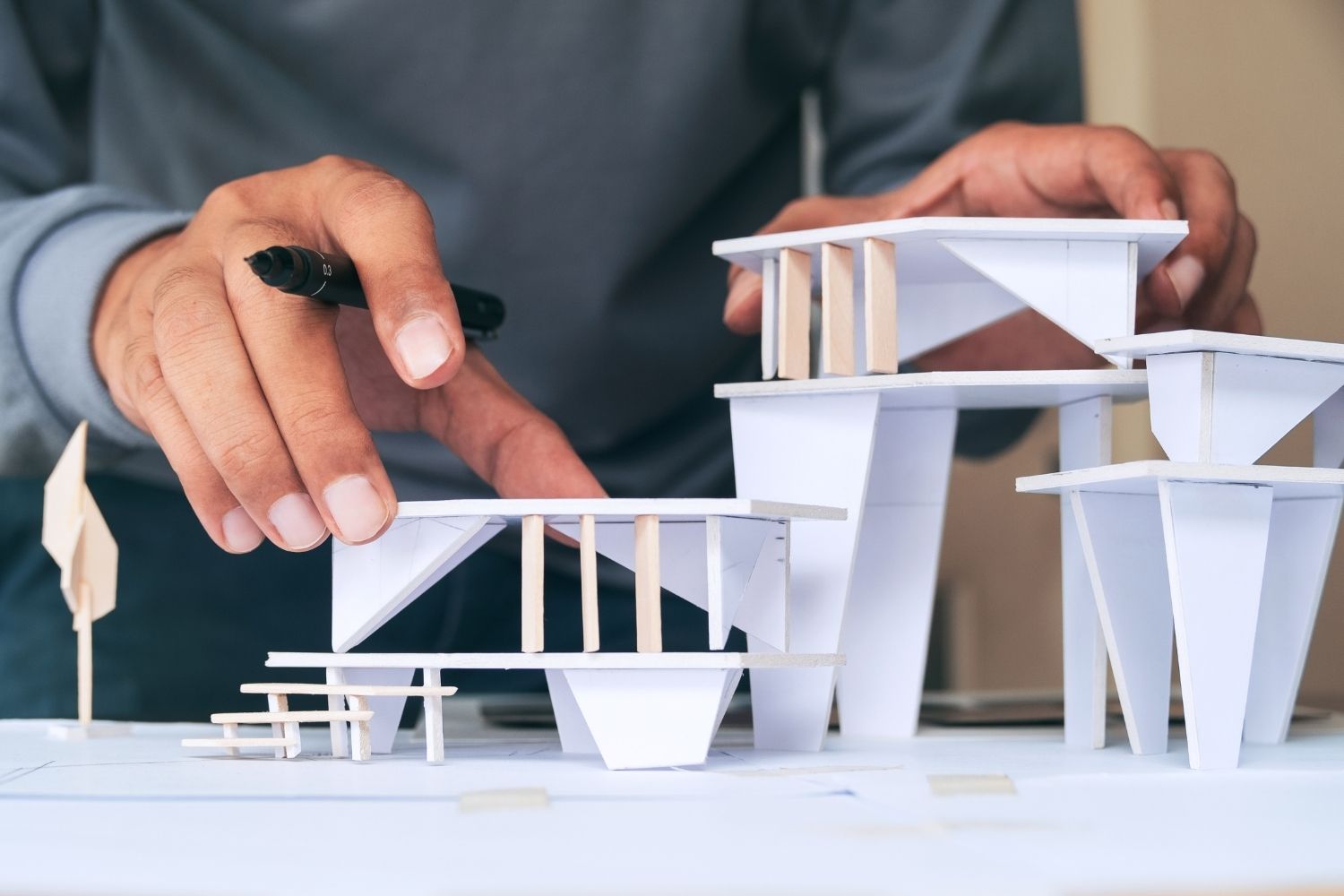
- Physical models: site and massing models for small practices, developers or estate agents, and presentation models for interior designers. If your school has a laser cutter or 3D printer, check whether you may use it for outside work before you quote a price.
- Renders and visualisations: still images of extensions, kitchens or shopfronts for builders, interior designers and homeowners. A small set of clean, well-lit images is a better sales tool than a large gallery of student projects.
- Drawings: measured surveys of existing rooms, simple floor plans for listings or tidy CAD redraws of old paper plans.
- Diagrams and boards: layout and graphics help for other students’ or small firms’ competition boards and portfolios.
Never sell work that will be assessed as someone else’s coursework. Helping a first-year student learn a program is tutoring; drawing their submission for them breaks almost every school’s academic rules and can cost you both your places.
7. Enter Competitions With Prize Money
Competitions are an unreliable income but a reliable portfolio builder. Many student and open ideas competitions offer cash prizes, and even an honourable mention gives you a project, a deadline and a reason to push your presentation skills. Look for briefs that fit work you are already doing, or that you can finish over a break, rather than adding a full extra project to a busy semester.
Read the rules before you register: check the registration fee, who owns the entry once it is submitted, whether team entries are allowed and whether a prize is guaranteed or only “up to” a stated amount. Our roundup of architecture competitions with open calls and deadlines is a good starting point, and listing sites such as Bustler’s competitions page post new calls as they open.
8. Set a Time Limit for Paid Work During Studio
Paid work only helps if your grades survive it. Before you accept any job, decide how many hours a week you can give it and write that number down. Then protect three things: the days before each review, the final submission period and your sleep.
- Agree fixed working slots with employers and clients, such as two evenings and a Saturday morning, instead of “whenever you are free”.
- Put review and submission dates into every freelance agreement and do not take deadlines in those weeks.
- Track the hours you actually work for a month. If studio output drops, cut paid hours before you cut sleep.
- Use breaks between semesters for the bigger jobs, when studio is not competing for the same time.
If you already struggle to keep up, our article on why architecture students struggle with time management is worth reading before you add a job to the week.
9. International Students: Check Your Visa Work Rules First
If you study abroad on a student visa, the right to work is limited and the rules differ from country to country. Some visas cap the hours you may work during term, some allow on-campus jobs only, and some do not allow self-employment at all. That last point matters for architecture students, because freelance modelling or rendering usually counts as self-employment.
The UK is a clear example. The government page on what you can and cannot do on a Student visa states that how much you may work depends on what you are studying and whether it is term time, and it lists being self-employed among the things you cannot do. Rules in other countries are different and change over time, so check your own visa conditions and ask your university’s international student office before you accept paid work or a freelance job. Breaking the conditions can put your visa at risk.
Side Income Options at a Glance
| Option | Skills it uses | Fits around studio? | Watch out for |
|---|---|---|---|
| Tutoring or teaching assistant | Software, drawing, explaining | Yes, fixed hours inside school | Limited places, apply early |
| Part-time job in a practice or model shop | Drafting, making, office routine | Partly, needs flexible hours | Clashes with reviews |
| Models and renders for clients | Modelling, visualisation | Partly, deadlines vary | Scope creep, unpaid revisions, visa rules |
| Competitions with prizes | Design, presentation | Best over breaks | Entry fees, uncertain payout |
| Paid internship | Everything above | Summer or a gap year | Unpaid offers, visa rules abroad |

Architecture Students Hub
This guide is part of Portfolio, CV and Internships, stage 5 of our student roadmap from the first diagram to the first internship. Next stage: Opportunities, or browse every free tool and guide in the Architecture Students Hub.







What Architecture Students Should Know About Structural Glass and Guardrail Code
Glass guards look minimal, but structural behavior, safety glazing, connections and guardrail...
 illustrarch Editorial Team6 Mins read

Can You Become a Licensed Architect Through Experience Only?
Twenty-one US jurisdictions let candidates qualify for licensure with documented experience instead...
 Sinan Ozen6 Mins read

InDesign Alternatives for Architects: 6 Tools That Handle Portfolios and Boards
Adobe InDesign is still the default layout tool in architecture, but the...
 Furkan Sen7 Mins read
What It’s Like Working as an Architect: 5 Things Architecture School Doesn’t Teach You
Architecture school teaches design. Practice runs on construction documents, fee phases, consultant...
Furkan Sen7 Mins read





Leave a comment