

Midterm – Academy for Sleep
Midterm - Academy for Sleep is an architectural project that reimagines public spaces in Tokyo to celebrate the cultural practice of inemuri, or sleeping while present.
 illustrarch Editoral Team14 May 20202 Mins read455


Midterm – Academy for Sleep is an educational project by Timothee Mercier that gives architectural form to one of Japan’s most distinctive cultural habits. The concept begins with inemuri, which translates loosely to “sleeping while present.” It describes the practice of sleeping either in public or at work, anywhere else but home really. The habit is widely accepted in Japan and has even become a sign of dedication and diligence. While the practice is most likely correlated to unhealthy working habits, this project seeks to celebrate sleep as a healthy one. After all, what better way to remedy fatigue than to nap?
The building is organized along a “programmatic gradient” that seeks to reorganize certain parts of the Meguro district to accommodate people’s sleeping habits. The bulk of the building is centered around the Institute for Nature Study, a botanical garden with forest-like features. By anchoring the academy to a green refuge inside the dense city, the design treats rest as something that belongs in public life rather than something hidden away.
Designing for rest and learning
Educational buildings carry a particular design responsibility because they shape how people understand a subject before they ever study it. A school or academy must balance shared social spaces with quieter rooms for focus, and it has to guide visitors through a sequence of experiences that build understanding step by step. Here that sequence is tuned toward the body’s need for calm, with the programmatic gradient acting like a curriculum written in space. Acoustic separation, soft daylight, and a gentle progression from active to passive zones are the kinds of tools that any architect working on a learning environment would weigh carefully.
Sleep in Japan is also a crisis of the cultural landscape, of the modes of representation through which society comprehends and appreciates the importance and complexity of the issue. Giving an architecture to sleep will help people grasp the sometimes very abstract concepts that underlie it. Sleep needs to be seen for it to enter public discourse, and it needs to be experienced to become healthier. By placing this argument inside the city of Tokyo, the academy turns a private matter into shared knowledge. For readers curious about the science the project responds to, the broader study of sleep and the long history of the school as a building type both offer useful context. Mercier’s proposal asks a simple question with serious implications: what changes when a society decides to build for rest?




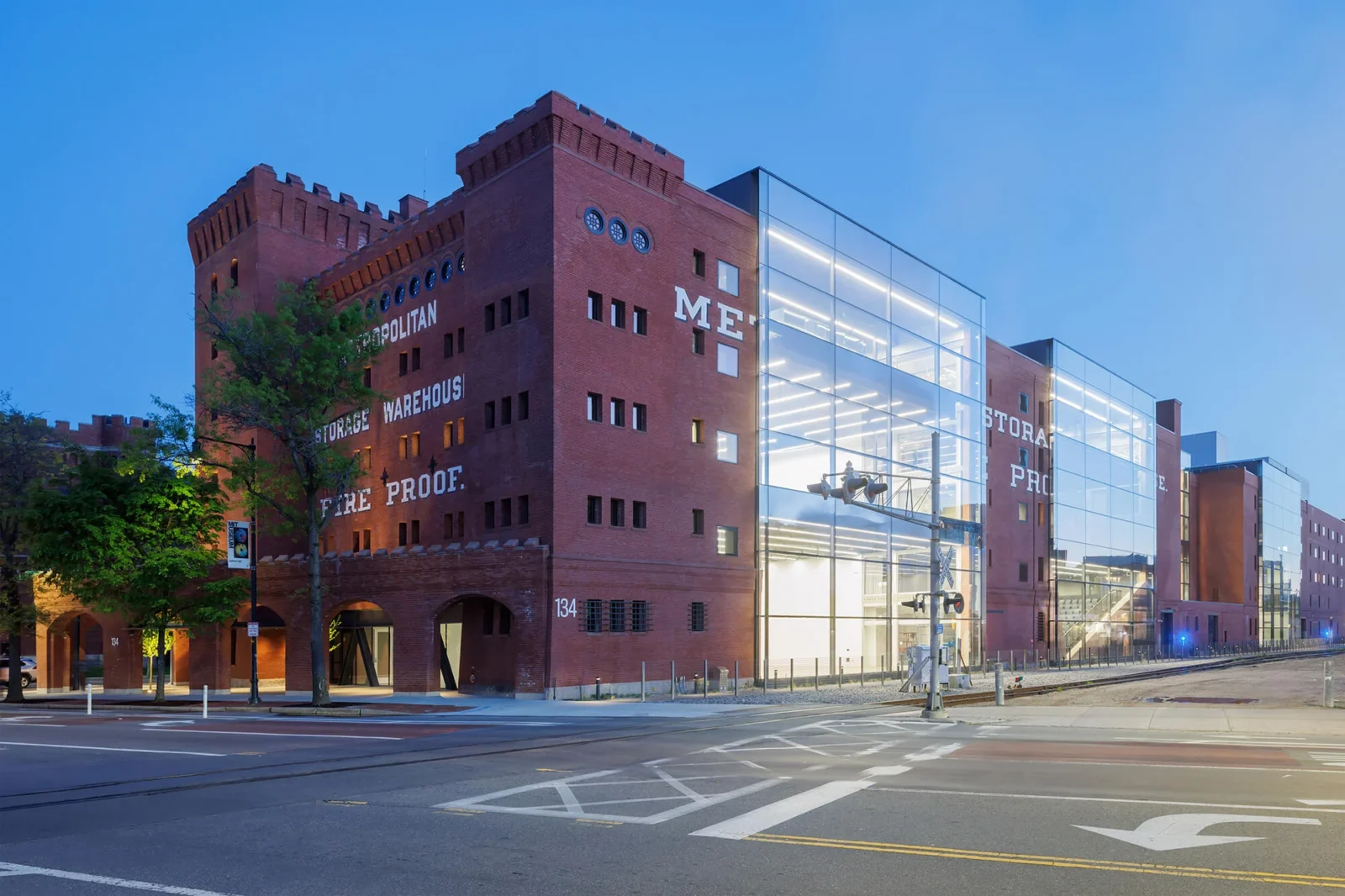
MIT Architecture School Moves Into DS+R-Converted Metropolitan Storage Warehouse
MIT's architecture school has moved into a DS+R-converted 1894 warehouse in Cambridge,...
illustrarch Editoral Team3 Mins read

SENA Tunja Training Center by TAP Arquitectura
TAP Arquitectura's unbuilt competition proposal for SENA in Tunja wraps a 4,400...
illustrarch Editoral Team2 Mins read

Tidsmaskinen After-School Center by BBP Arkitekter
BBP Arkitekter add a heptagonal tower and a greenhouse to a 1918...
illustrarch Editoral Team2 Mins read
Savan House by Nobico Studio
Savan House is Nobico Studio's unbuilt concept for a forested hillside in...
illustrarch Editoral Team3 Mins read


Leave a comment