

Children’s Village – Weaving an Inclusive School Complex into an Urban Retail Fabric
Children's Village is a thesis project that repurposes a Berlin department store into a vertical school complex promoting social integration and inclusivity among students.
 illustrarch Editoral Team28 February 20252 Mins read357

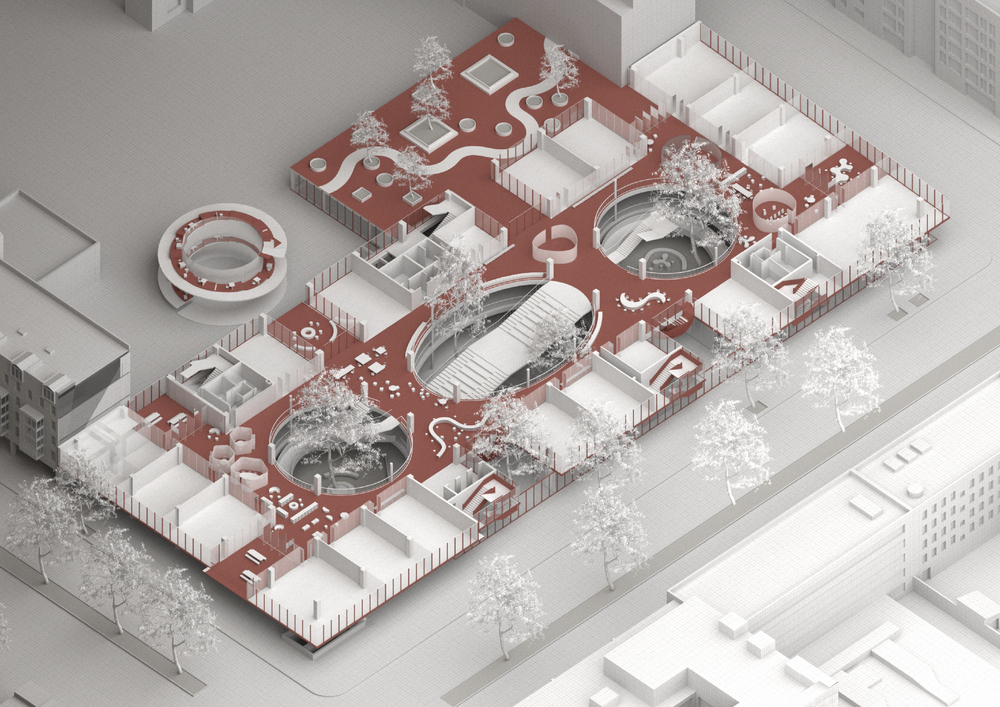

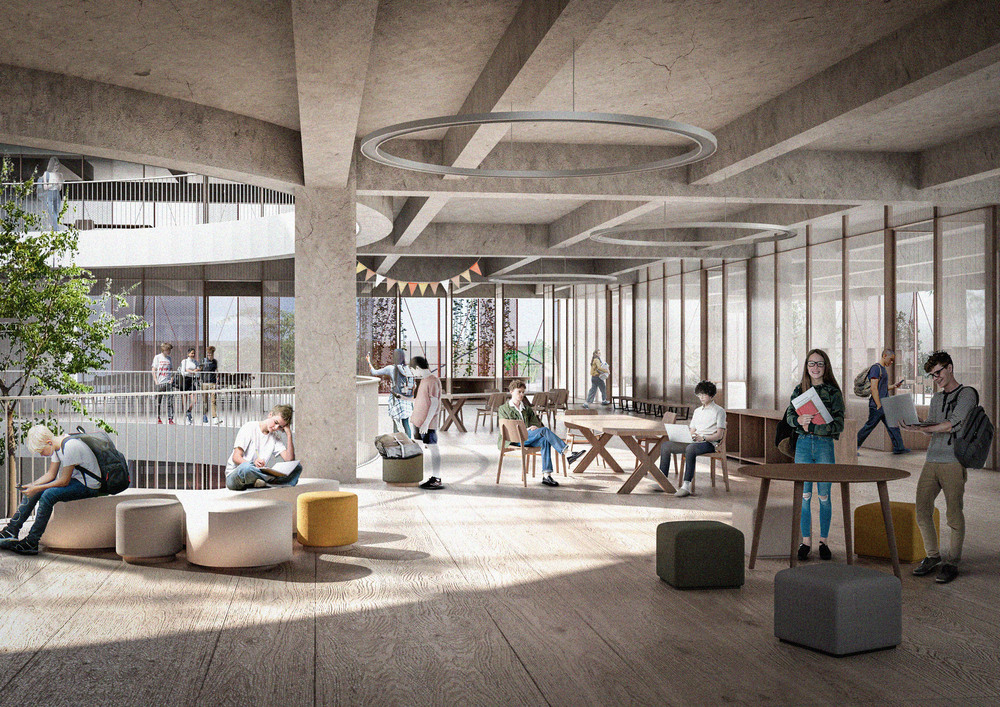
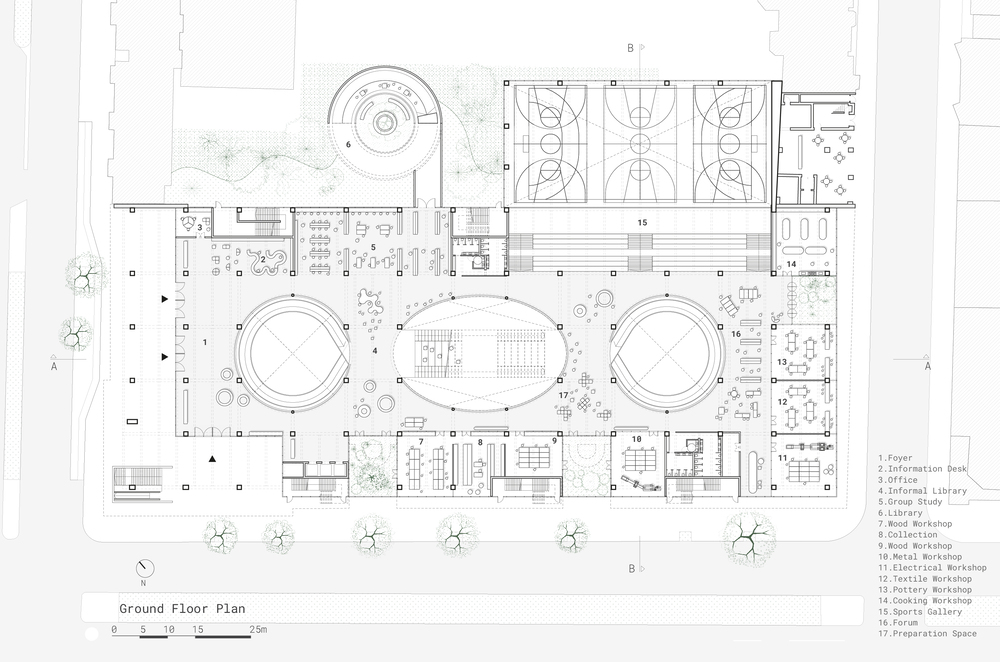

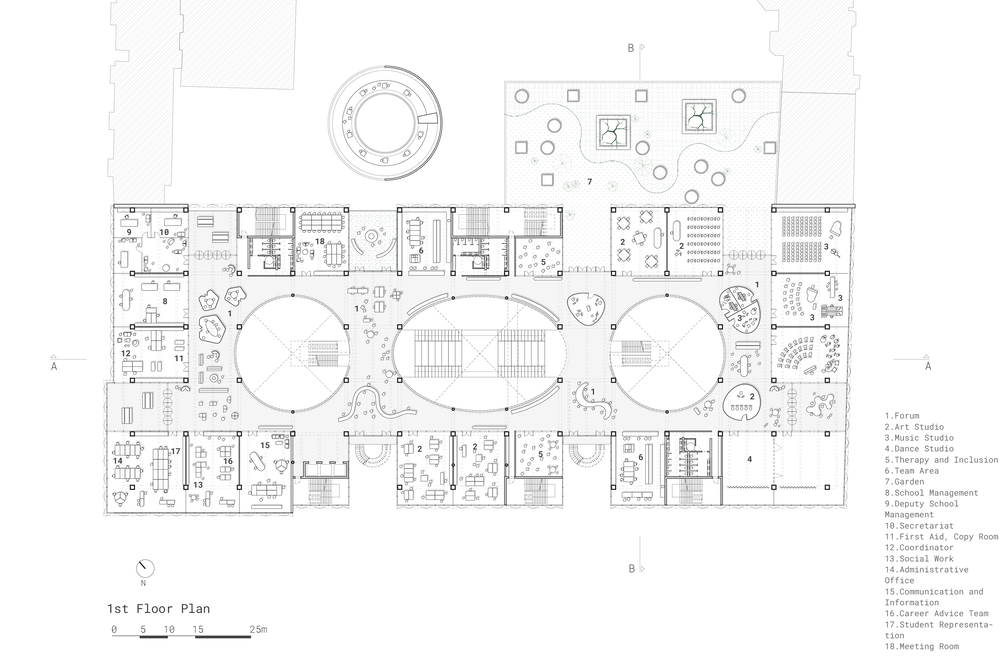
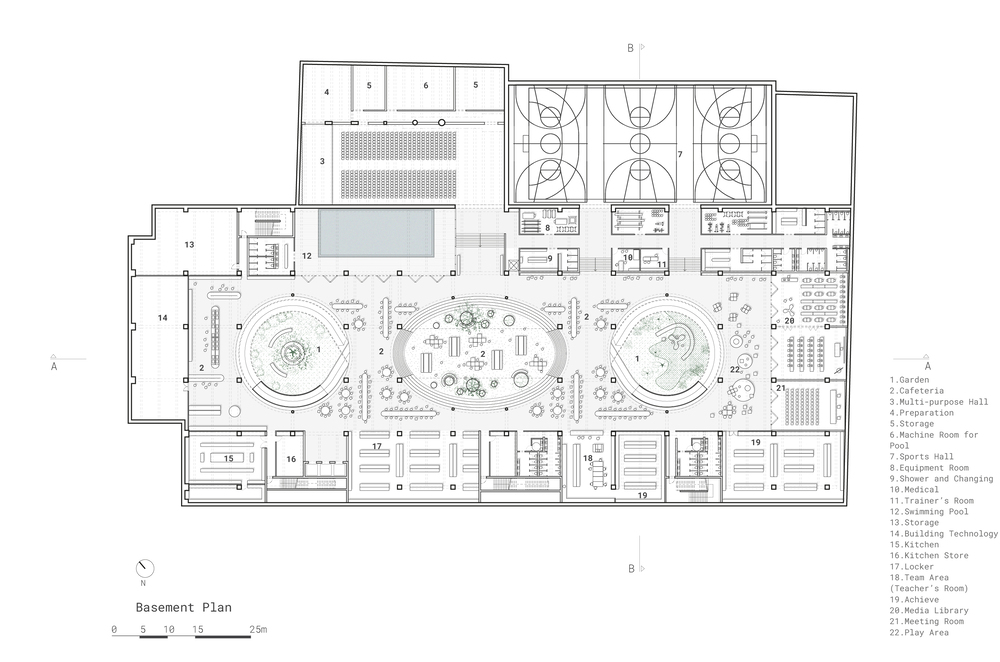

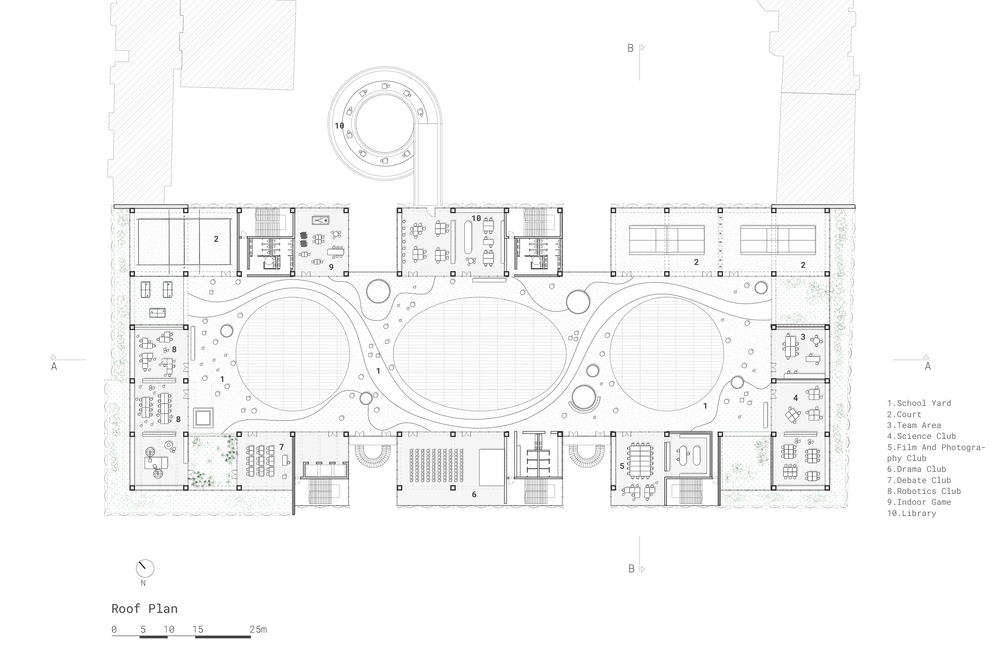
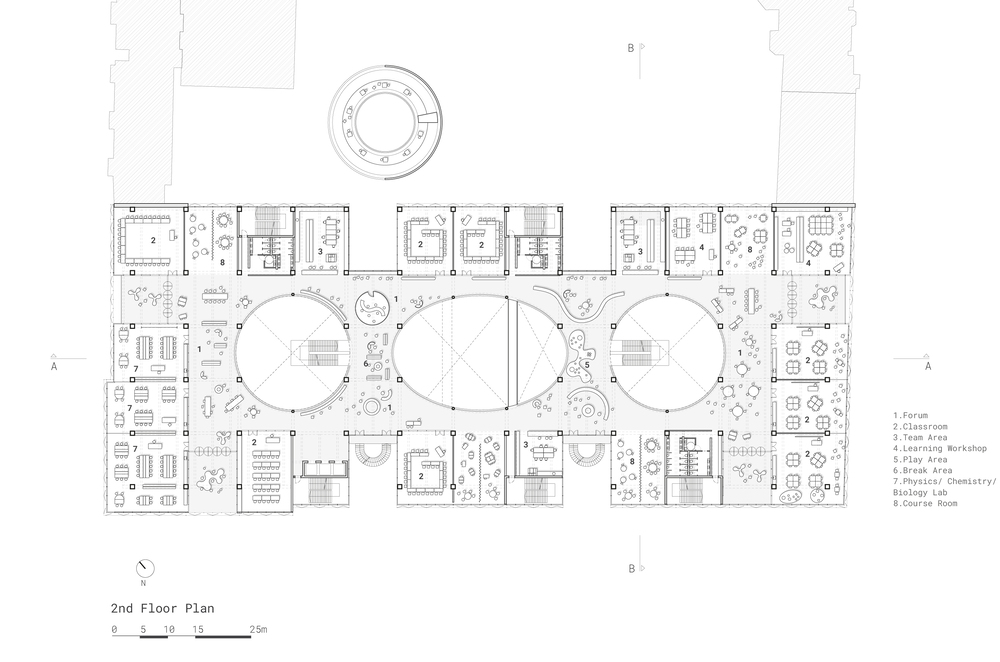
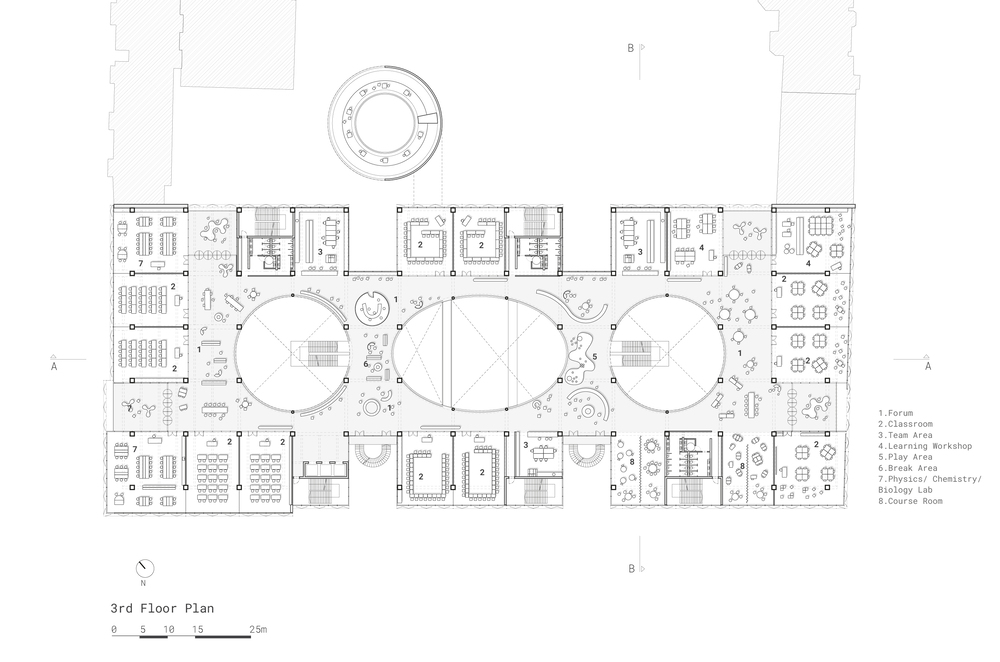
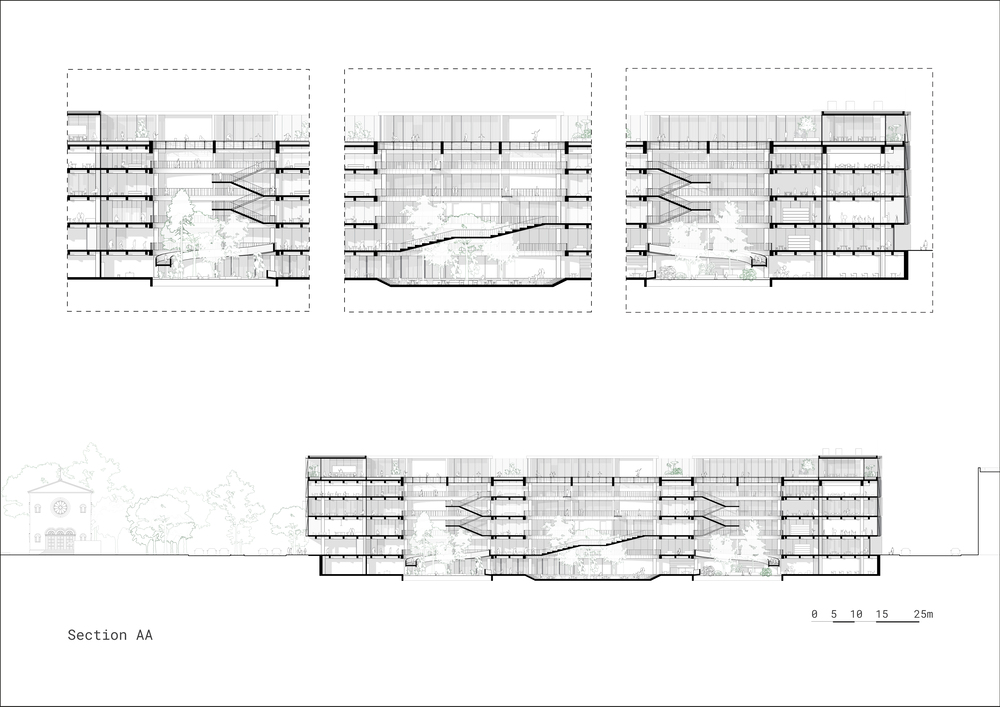
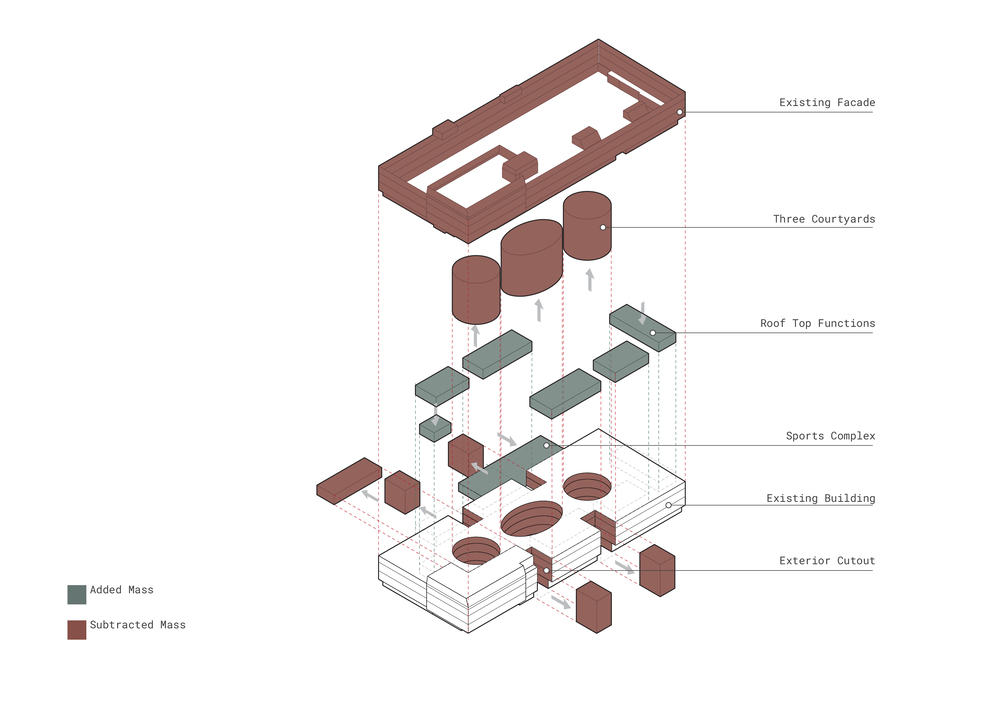
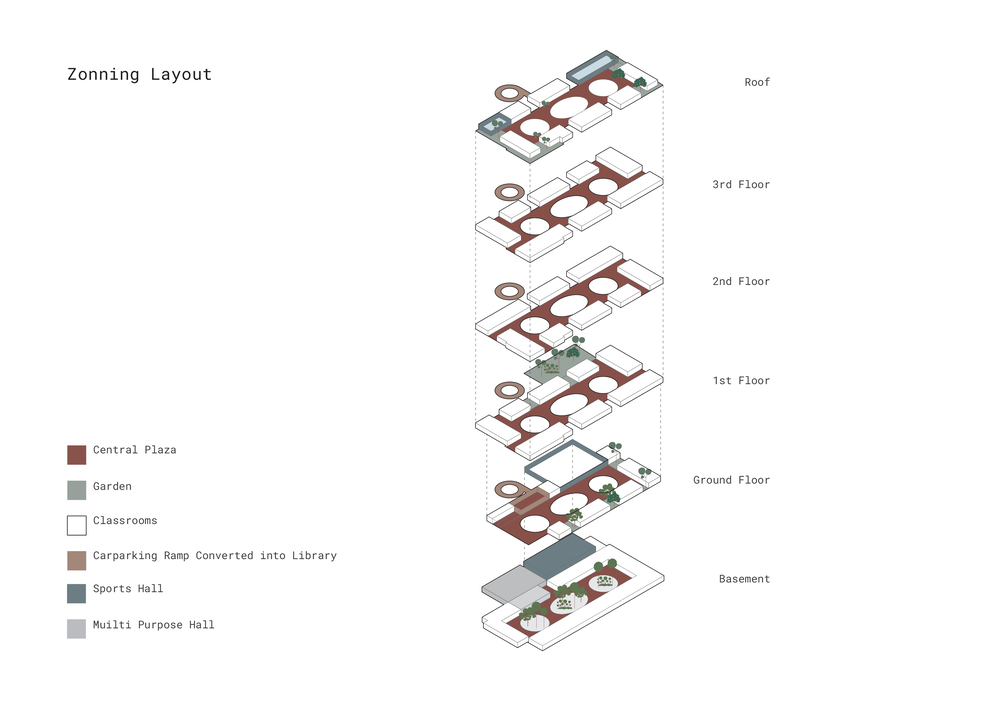
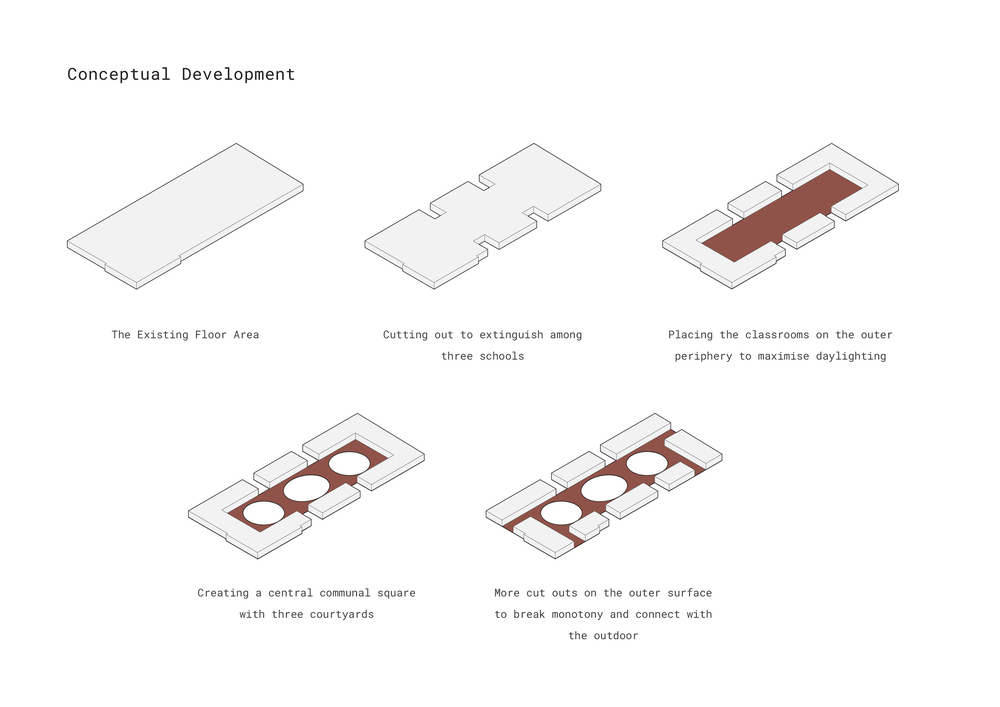
Children’s Village is a thesis project by Atiya Nusrat that transforms Karstadt, a traditional department store in Berlin-Wedding, Germany, into a vertical school complex built around social integration and inclusivity. The proposal treats an underused retail building as the foundation for an educational hub where children of different ages learn, play, and grow together under one roof. Berlin’s Wedding district is a diverse, multicultural community, yet its existing schools are often fragmented and confined, and the design responds directly to that condition by reimagining a familiar commercial structure as a place of learning.
The scheme brings three institutions together within a single complex: a primary school, a high school, and an integrated secondary school. Rather than separating them, the design connects the three through shared spaces that encourage interaction and a sense of belonging. A central plaza acts as a communal hub and “village square,” giving students room to meet, play, and take part in collaborative learning. Atriums and garden spaces carry natural light deep into the floor plates and create a welcoming environment for students of all backgrounds, while the overall organisation draws on the cultural richness of Wedding to reflect the neighbourhood’s character.
Why adaptive reuse suits educational design
Reworking an existing department store into a school speaks to two ideas that shape much of contemporary architecture. The first is adaptive reuse, the practice of giving an aging building a new purpose rather than demolishing it. Department stores offer wide, column-free floor plates and generous vertical circulation, qualities that translate well to flexible classrooms and shared commons. The second is the close relationship between school design and child wellbeing, where daylight, clear wayfinding, and varied social spaces are known to support how children concentrate and connect. Placing schools inside the dense fabric of Berlin also shortens the distance between learning and everyday city life.
A vertical village raises real challenges that the project takes on directly: stacking age groups safely, keeping noise and activity zones legible, and ensuring that every level still feels open rather than enclosed. By answering these with plazas, atriums, and gardens, Children‘s Village shows how surplus retail space can be folded back into a city as something genuinely public. Nusrat closes the project with thanks to the mentors who helped bring the vision to life, and the result reads as a thoughtful argument for treating tired commercial buildings as raw material for inclusive education.





Herzog & de Meuron Builds Amherst College Student Center Atop Old Foundations
Herzog & de Meuron built a mass-timber student center at Amherst College...
illustrarch Editoral Team2 Mins read
MIT Architecture School Moves Into DS+R-Converted Metropolitan Storage Warehouse
MIT's architecture school has moved into a DS+R-converted 1894 warehouse in Cambridge,...
illustrarch Editoral Team3 Mins read

SENA Tunja Training Center by TAP Arquitectura
TAP Arquitectura's unbuilt competition proposal for SENA in Tunja wraps a 4,400...
illustrarch Editoral Team2 Mins read
Best Software in Architecture School and What to Learn First
A practical look at the best software to learn in architecture school,...
 Elif Ayse Sen6 Mins read


Leave a comment