

Bio-Bubbles
Bio-Bubbles is a spherical observation shelter designed to integrate with nature, featuring openable perforated walls that invite wildlife and enhance visitor experiences.
 illustrarch Editoral Team15 May 20201 Mins read538
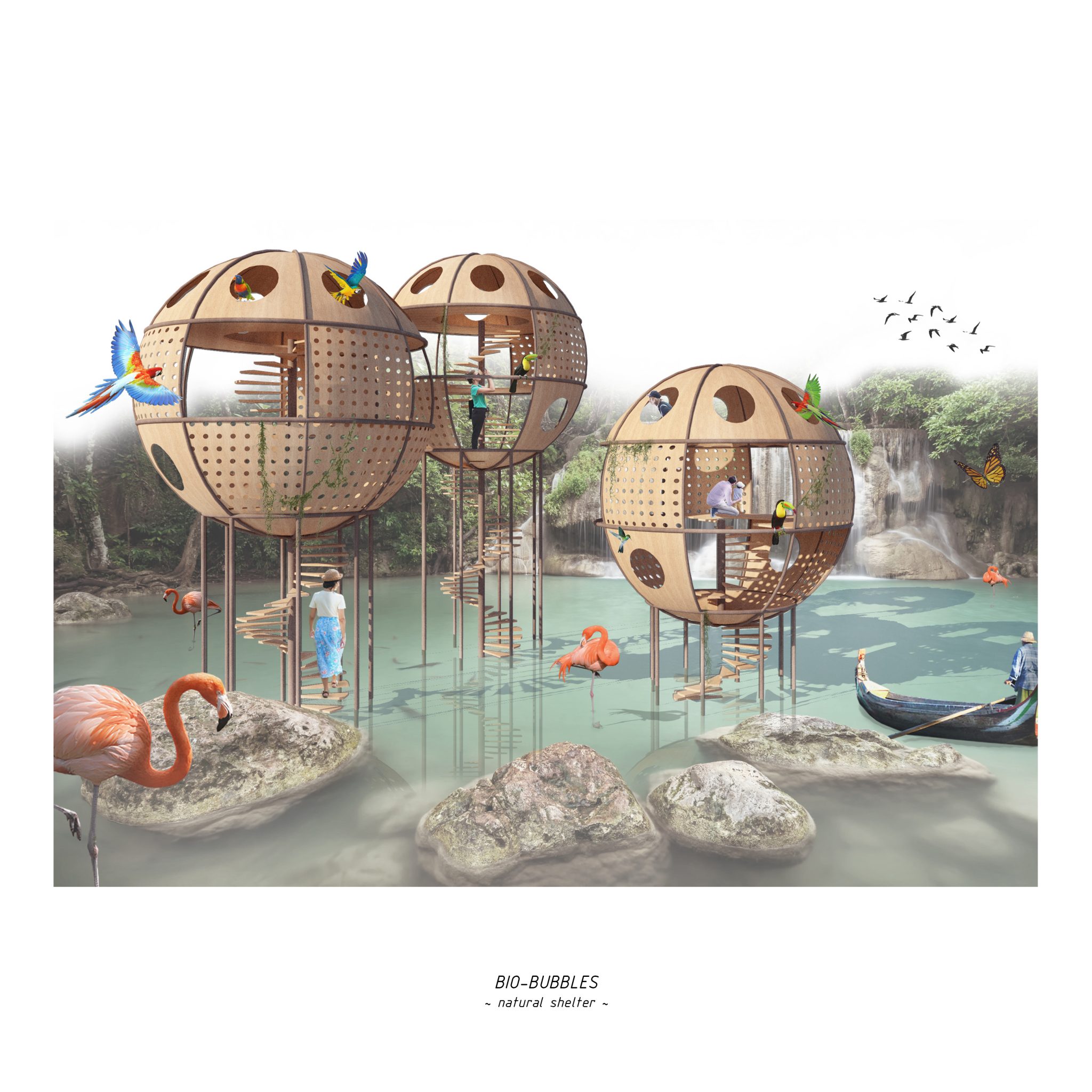


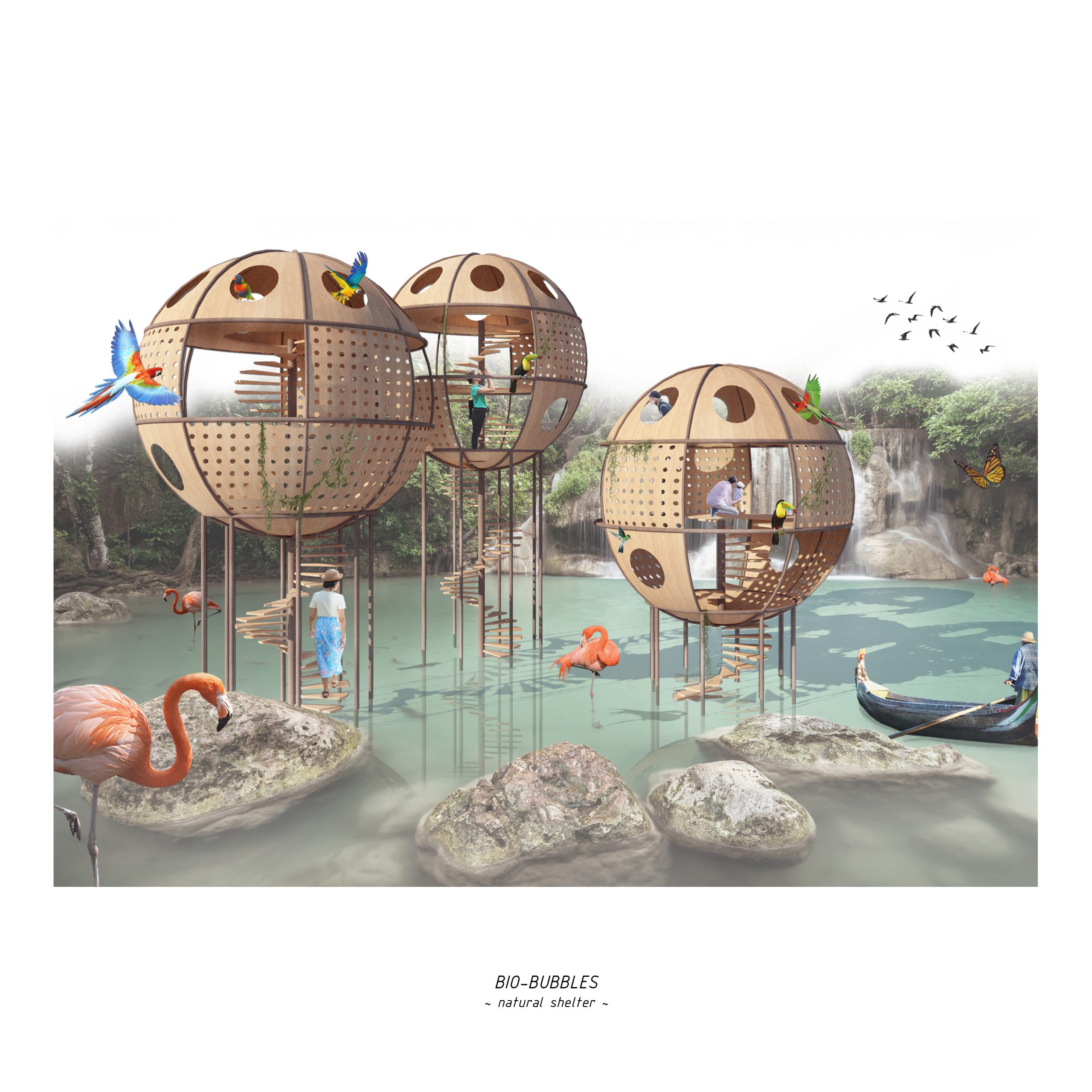


Bio-Bubbles is a natural refuge where visitors can connect with nature and learn about local flora and fauna. Designed by Bubble Architecture Studio in 2020, the project rethinks the small observation shelter as a living, breathing structure rather than a sealed box dropped into the wild. Its spherical shape creates a full 360-degree view, so users can look out in every direction at once.
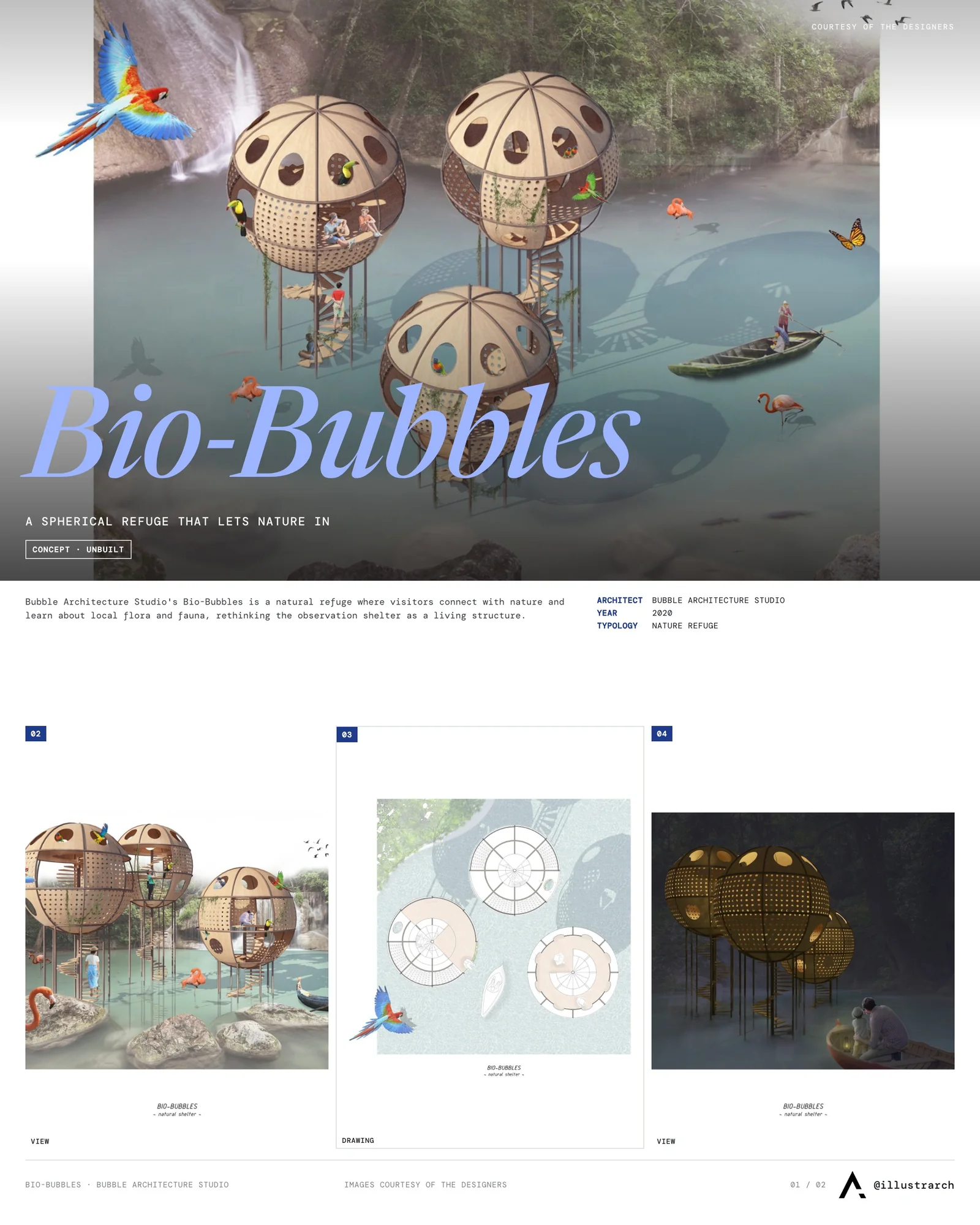
The defining move is the permeable skin. Rather than separating people from the surrounding ecosystem, the envelope invites animals to become part of the project, letting the structure blend into its natural environment. The perforated walls can be opened and closed, providing shelter during the night and opening during the day to create a greater bond with nature. This adaptability turns the building into an instrument that responds to daylight, weather, and the rhythms of the wildlife around it.
Designing for shelter and observation
Small nature pavilions and observation refuges carry a specific set of design challenges. They must offer protection from sun, wind, and rain while keeping sightlines as open as possible, and they have to sit lightly on sensitive ground so the surrounding habitat is not disturbed. A pavilion of this kind succeeds when the boundary between inside and outside becomes soft and negotiable, which is exactly what the openable perforated walls achieve here. The spherical geometry helps too, distributing structural loads evenly and giving the interior a sense of immersion in the landscape.
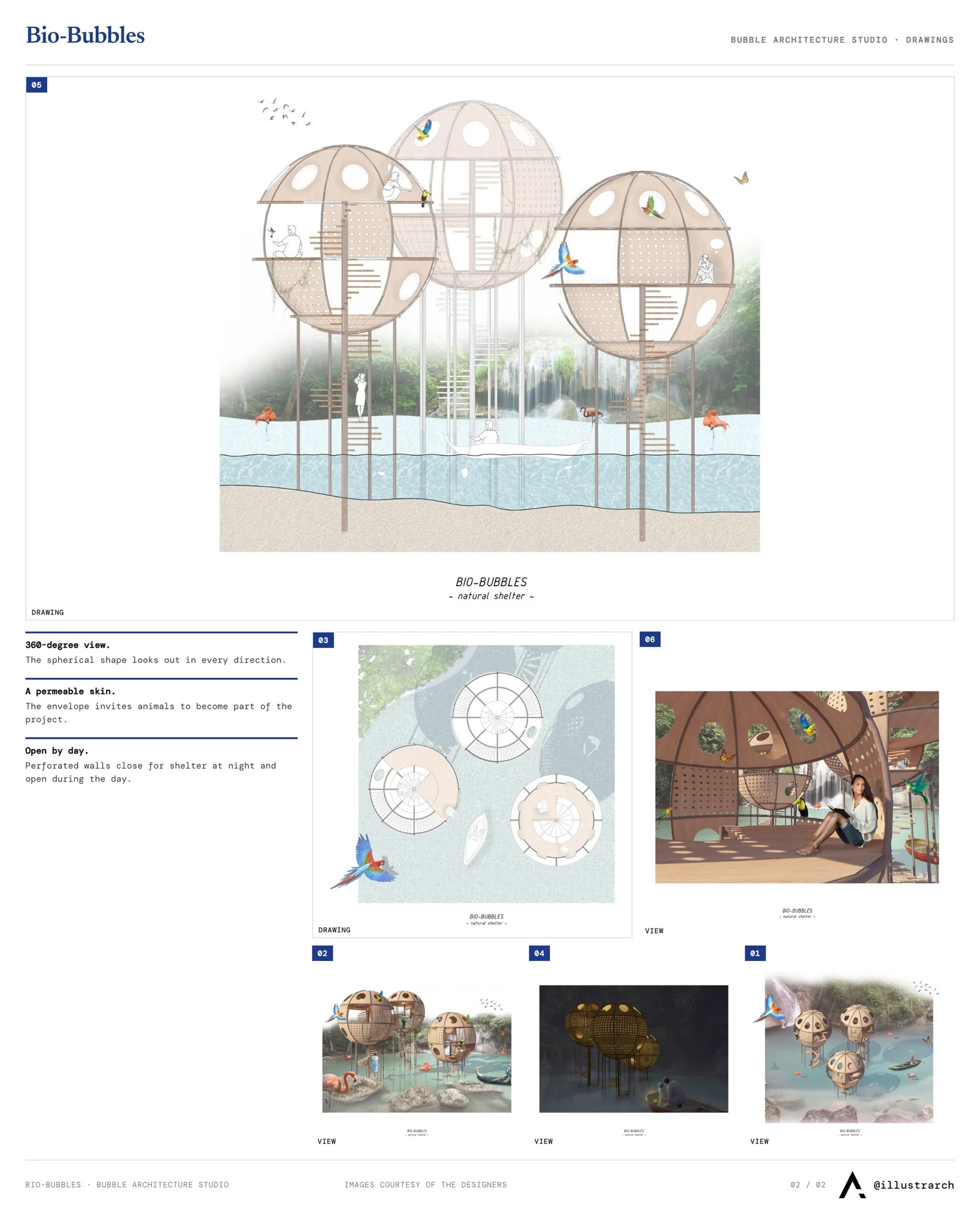
The concept also sits within a wider movement toward sustainable architecture, where buildings are asked to coexist with their ecosystems instead of dominating them. By framing views of the surrounding biodiversity and welcoming animal life rather than excluding it, Bio-Bubbles treats architecture as a quiet host for the environment. The result is a place that teaches through experience: visitors do not simply read about flora and fauna, they sit inside a structure that lives alongside them.
For Bubble Architecture Studio, the bubble form is less a novelty than a clear strategy. It maximizes outlook, minimizes footprint, and gives the shelter a memorable identity that fits its role as both refuge and learning space. Bio-Bubbles reads as a small, generous idea about how people and wildlife might share the same patch of ground.


Savan House by Nobico Studio
Savan House is Nobico Studio's unbuilt concept for a forested hillside in...
illustrarch Editoral Team3 Mins read

Renaatus Irumathi
Renaatus Irumathi Residence features 69 spacious apartments designed with contemporary aesthetics, maximizing...
illustrarch Editoral Team2 Mins read
White Khamovniki
White Khamovniki is a residential tower project in Moscow that combines urban...
illustrarch Editoral Team1 Mins read
Millennium Horizon
Millennium Horizon is an innovative architectural project in the UAE that uses...
illustrarch Editoral Team2 Mins read


Leave a comment