

Pixelated Street Art, by Johan Karlgren
Johan Karlgren's pixelated street art transforms urban spaces in Sweden by incorporating playful, site-specific characters made from fuse beads that engage passersby.
 Begüm Şardan27 March 20194 Mins read532

Table of Contents Show
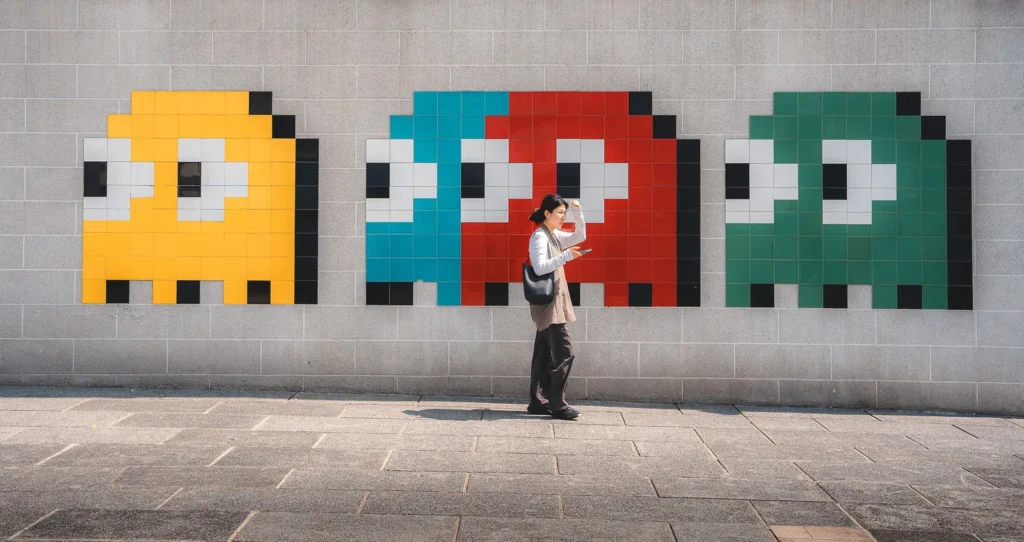
Walk down a sidewalk in Sweden and you might catch a tiny Super Mario clinging to a drainpipe, or a chunk of Pac-Man chewing its way along a curb. This is the work of Pappas Pärlor, the Swedish artist Johan Karlgren, who turns ordinary corners of the city into small bursts of play. His pixelated street art makes the everyday environment more fun, and it invites passersby to slow down and look twice at things they would normally walk straight past.
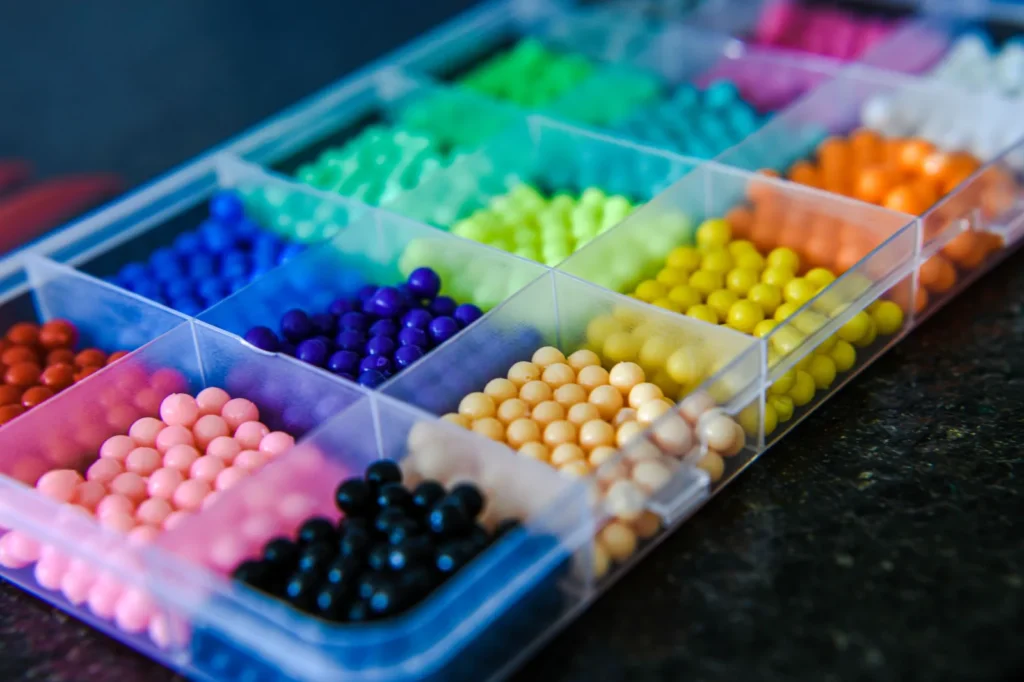
Karlgren draws on a deep well of pop culture, pulling famous cartoon and video game characters into the physical world. The work is a family affair: his team is made up of his own kids, which keeps the whole practice grounded in the same spirit of fun that the finished pieces radiate. Together they build with Quixels, the special fuse beads sold under names like Perler beads, chosen because they are simple to work with and quick to put in place.
The beads are colorful cubes, and that blocky quality is exactly the point. Each finished character is set with a spray of water that binds the pieces together, so a creation can be built as big as the maker wants and placed almost anywhere. The result carries the unmistakable look of pixel art, the 8-bit aesthetic of early video games, lifted off the screen and pressed into the texture of the street.
Art That Belongs to Its Surroundings
What gives these pieces their charm is how completely they belong to where they sit. You can find this pixelated art at every corner of the streets, on traffic signs, pipes, sculptures, fences and more. Like the best street art, each work is site-specific, reading the world around it and answering back. Characters become unique with their environment: Super Mario tucked between real mushrooms, Homer Simpson standing between bushes, each scene built so the surroundings finish the joke.
That conversation between artwork and place is what keeps the pieces feeling alive rather than simply decorative. A pixel character against a brick wall is one thing; the same character set so the city itself becomes part of the gag is another. Pappas Pärlor reminds us that public space can be generous and playful, and that a handful of plastic beads, placed with care, can quietly rewrite how we see the streets we cross every day.
Why Fuse Beads Suit Street Art
The choice of fuse beads is part of what makes this work read so clearly. Each bead is a small, uniform cube, so a finished character is literally built pixel by pixel, with no need to translate a screen image into paint or stencil. The grid of the beads matches the grid of the original 8-bit sprites almost exactly, which is why a Mario or a Pac-Man looks instantly familiar rather than merely suggested. Color is fixed too, since the beads come in set shades, forcing the same limited palette that defined early games and giving the pieces their honest retro feel.
The material is also forgiving for outdoor placement. Once bound with water or heat, a panel becomes a single light, durable object that can be fixed to a pipe, a sign, or a wall without heavy mounting. That portability lets the artist scout a location, build off-site, and install quickly, which is a practical advantage for work placed in public space.
The Tradition of Pixel Art in Public Space
Pappas Pärlor sits within a wider movement of artists who bring video game imagery into the street. The French artist Invader is the best known, tiling cities worldwide with mosaic Space Invaders since the late 1990s. What links these projects is a shared nostalgia for the early arcade era and a belief that the blocky look belongs as comfortably on a brick wall as on a screen. Karlgren’s contribution is the playful site-specific staging, where the setting is treated as a stage rather than just a surface.

How to Spot and Appreciate the Work
Finding these pieces rewards a slower walk. They tend to appear at eye level or just below it, tucked into the kind of overlooked spots most people pass without a glance: the base of a drainpipe, the corner of a curb, the gap behind a railing. The trick is to read the environment first, because the artist usually places a character where the surroundings complete a small visual joke. A mushroom shape nearby, a patch of green, or a worn texture is often the cue that something has been added on purpose.
The Appeal of Temporary, Playful Interventions
Unlike a mural or a sculpture, these interventions are modest and impermanent. Weather, cleaning crews, and curious hands mean any given piece may not last long, and that fragility is part of the point. The work asks nothing of the viewer except a moment of attention, and it offers a small gift of surprise in return. That generosity is a reminder that public art does not have to be monumental to change how a place feels. A few plastic beads, placed with wit, can turn an ordinary commute into a quiet game of hide and seek.






Interior Design for Commercial Spaces: Enhancing Functionality and Brand Identity
Commercial interior design has to serve brand, function and regulation at once....
 Begum Gumusel4 Mins read

India Art, Architecture & Design Biennale 2026: Ministry of Culture Opens Delhi Monuments
Delhi's monuments, including Purana Quila and the Red Fort, will host the...
 illustrarch Editoral Team2 Mins read

Vitra Museum Stages First Major Geoffrey Bawa Retrospective in Decades
Vitra Design Museum opens the first major Geoffrey Bawa retrospective in 20...
illustrarch Editoral Team2 Mins read
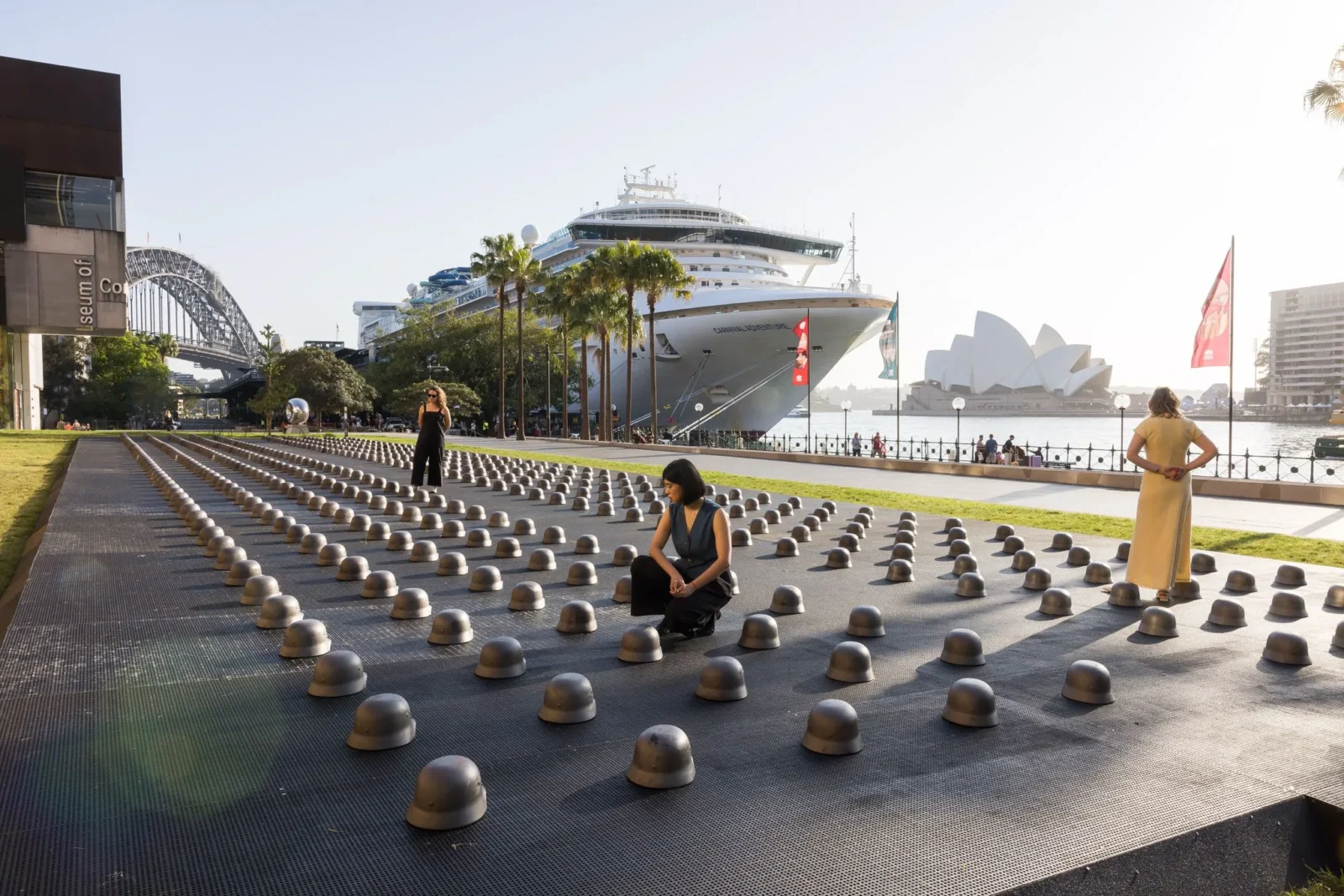
Ai Weiwei Installs 500 Cast-Iron Helmets Outside Sydney Museum
Ai Weiwei's 500 cast-iron helmets opened outside Sydney's MCA on 25 September,...
illustrarch Editoral Team2 Mins read


Leave a comment