

The Architecture of Finance: Understanding Real Estate Loan Types for Residential and Commercial Properties
A focused guide connecting the architecture of finance with real estate loan structures. Compare residential loans, commercial real estate loans, bridge financing, and investment loan types to understand how building design and property financing shape each other.
 Sinan Ozen13 May 20268 Mins read170

Table of Contents Show
The architecture of finance describes the structural framework behind real estate lending, where different loan types serve specific property categories, investment timelines, and borrower profiles. Just as a building requires a sound structural system, every real estate transaction depends on selecting the right financing instrument to match the project’s scale and purpose.
Real estate sits at the intersection of design and capital. Whether you are financing a single-family home or a mixed-use commercial tower, the loan structure you choose affects everything from cash flow projections to construction timelines. The architecture of finance gives architects, developers, and investors a shared language for understanding how money moves through the built environment. This guide breaks down the major real estate loan categories, explains how residential and commercial financing differ, and offers practical insight for anyone working at the crossroads of property design and investment.

What Are Residential Real Estate Loans?
A residential loan is a mortgage used to purchase or refinance a property intended for personal use, typically a single-family home, duplex, triplex, or four-unit building. These real estate loans are underwritten primarily against the borrower’s personal income, credit score, and debt-to-income ratio, rather than the property’s revenue potential.
The most common residential loan types include conventional mortgages (conforming to Fannie Mae or Freddie Mac guidelines), FHA loans insured by the Federal Housing Administration, VA loans for eligible veterans, and USDA loans for rural properties. Each program has specific eligibility criteria, down payment thresholds, and interest rate structures. Conventional loans typically require a minimum of 3% to 20% down, while FHA loans allow down payments as low as 3.5% for borrowers with credit scores of 580 or higher.
Residential loan terms usually extend to 15 or 30 years with fixed or adjustable interest rates. A fixed-rate mortgage locks the interest rate for the full term, giving predictable monthly payments. An adjustable-rate mortgage (ARM) starts with a lower introductory rate that resets periodically based on market indices. For buyers planning to hold a property long-term, fixed-rate options tend to offer more stability. For those expecting to sell or refinance within five to seven years, an ARM may reduce initial costs.
💡 Pro Tip
Before committing to a residential loan, always request a Loan Estimate from at least three lenders and compare not just the interest rate, but the total cost of the loan over its first five years. Closing costs, private mortgage insurance, and rate lock fees often vary by thousands of dollars between lenders, even for identical properties.
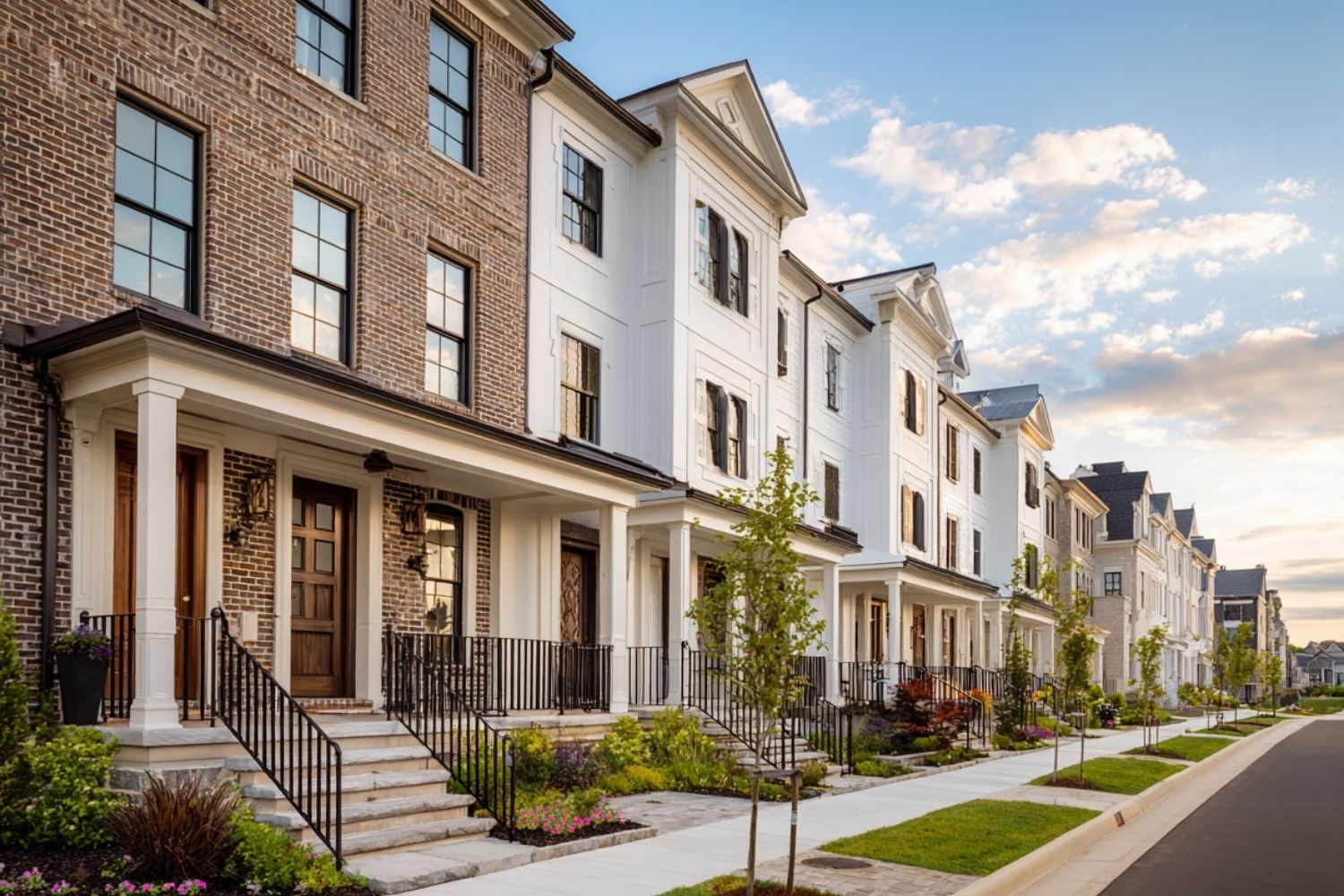
For design professionals, the residential loan a client secures directly shapes the project budget. An FHA 203(k) rehabilitation loan, for instance, wraps renovation costs into the mortgage, enabling significant architectural upgrades on older homes. Understanding these financing tools helps architects advise clients on what scope of work is realistic before design development begins. You can read more about how thoughtful architecture elevates the real estate experience in our related guide.
How Do Commercial Real Estate Loans Work?
A commercial real estate loan finances income-producing properties such as office buildings, retail centers, warehouses, hotels, and multifamily complexes with five or more units. Unlike residential lending, commercial real estate loans are underwritten based on the property’s net operating income (NOI) and debt service coverage ratio (DSCR), not the borrower’s personal salary.
Lenders typically require a DSCR of 1.20 to 1.50, meaning the property must generate 20% to 50% more income than the annual debt payments. Loan-to-value (LTV) ratios for commercial deals generally range from 65% to 80%, depending on the property type and lender. Terms are shorter than residential mortgages, usually 5 to 10 years, with amortization schedules stretching to 20 or 25 years. This mismatch means most commercial borrowers face a balloon payment at the end of the loan term and must refinance or sell.
Major commercial real estate loan types include traditional bank loans, CMBS (commercial mortgage-backed securities) loans, SBA 504 and 7(a) loans for owner-occupied properties, life insurance company loans, and agency loans from Fannie Mae and Freddie Mac for multifamily assets. Each product serves a different risk profile. CMBS loans offer non-recourse financing and fixed rates, making them attractive for stabilized assets. SBA programs, administered through the U.S. Small Business Administration, provide higher leverage and longer terms for qualifying small businesses.
⚠️ Common Mistake to Avoid
Many first-time commercial borrowers assume they can use a residential mortgage for a five-unit apartment building. Once a property exceeds four units, it crosses into commercial territory, requiring an entirely different loan structure, underwriting process, and set of qualifications. Misclassifying a property type at the outset can delay financing by months.
The architecture of a commercial building itself affects its lendability. Properties with flexible floor plates, modern mechanical systems, and strong commercial office space design tend to attract better tenants and higher occupancy rates, which improves the DSCR and makes the asset more attractive to lenders.
Real Estate Bridge Loans: Short-Term Capital for Transitional Properties
Real estate bridge loans fill the gap between acquisition and permanent financing. These short-term instruments, typically lasting 6 to 36 months, provide fast capital for properties that are not yet stabilized or need renovation before qualifying for a conventional loan. Interest rates are higher, usually 2% to 4% above prime, reflecting the increased risk.
Bridge financing is common in value-add strategies where an investor acquires an underperforming building, renovates it, increases rents, and then refinances into a long-term commercial real estate loan at a lower rate. The speed of approval is a key advantage: while a traditional bank loan may take 60 to 90 days to close, a bridge loan from a private lender can close in as little as two weeks.
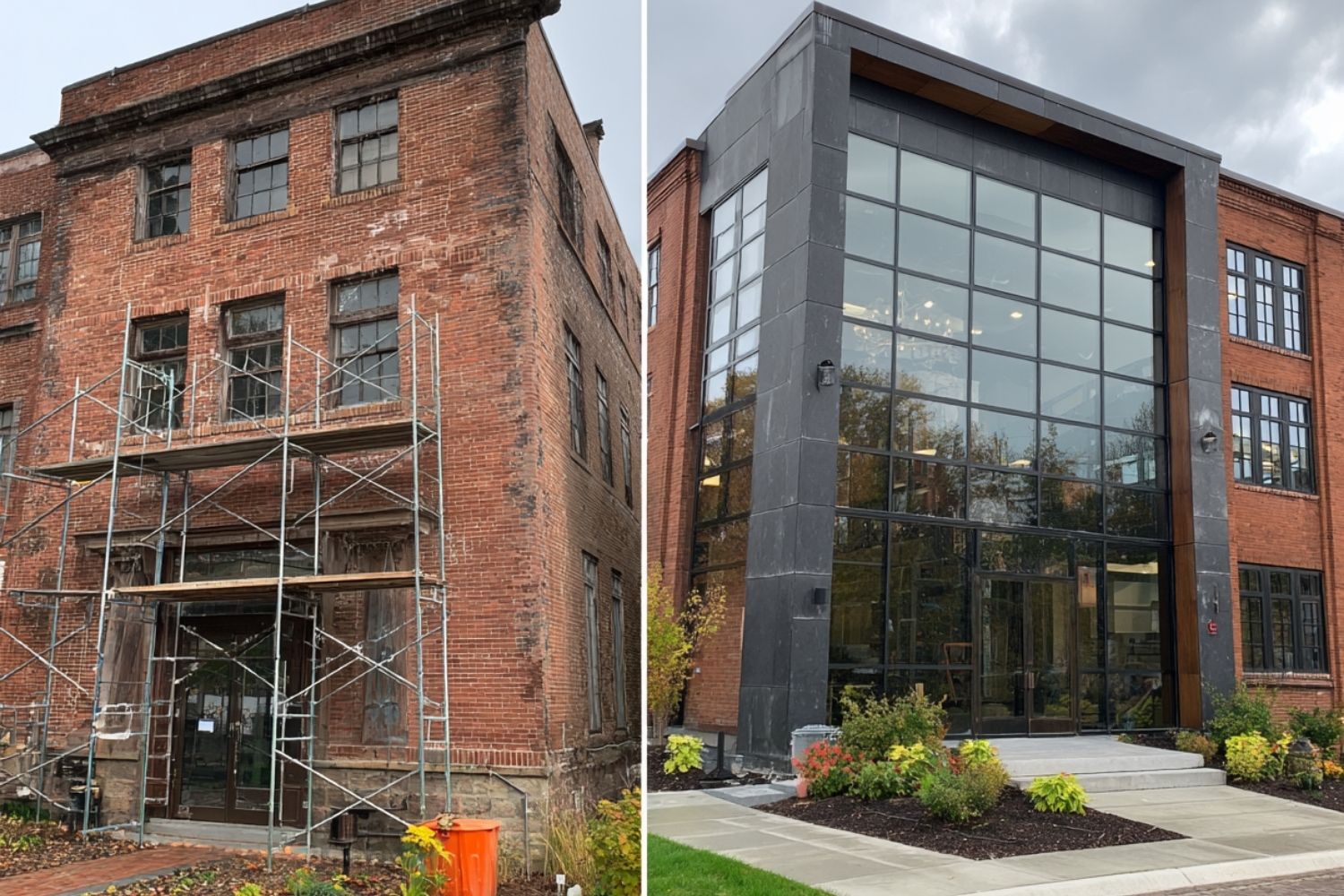
For architects and developers, bridge loans create a practical window to execute design improvements that raise property value. A lobby renovation, facade upgrade, or energy-efficiency retrofit completed during the bridge period can justify higher rents and improve refinancing terms. This is where great architecture directly boosts property value in measurable financial terms.
🎓 Expert Insight
“The best real estate investments are the ones where design thinking and financial structuring happen at the same table.”
Licensed CRE advisor with 20+ years of experience
This perspective reflects a growing consensus in the industry: architectural quality is not separate from financial performance. A well-designed property consistently outperforms comparable assets in both occupancy and valuation, making it easier to secure favorable loan terms.
Real Estate Investment Loans: Financing for Portfolio Growth
Real estate investment loans are designed for borrowers who purchase properties primarily to generate rental income or resale profit, rather than for personal occupancy. These products differ from standard residential mortgages in several important ways: higher down payment requirements (typically 20% to 30%), slightly higher interest rates, and stricter cash reserve requirements.
The most common real estate investment loans include conventional investment property mortgages, DSCR loans (where qualification is based on rental income rather than personal income), portfolio loans held by local banks, and hard money loans from private lenders. DSCR loans have gained popularity among investors who own multiple properties, because the lender evaluates the property’s cash flow rather than the borrower’s W-2 income.
Investors who understand the architecture of finance can structure acquisitions to maximize returns. For example, purchasing a property with strong bones but cosmetic deficiencies, renovating it using a bridge loan or construction-to-permanent loan, and then refinancing into a long-term investment loan at a higher appraised value is a strategy known as BRRRR (Buy, Rehab, Rent, Refinance, Repeat). Each stage of this process requires a different financing tool, and knowing which loan fits each phase prevents costly delays.
Architectural factors directly influence investment loan underwriting. Properties with energy-efficient systems, durable materials, and design features that influence real estate value receive more favorable appraisals. A building with updated HVAC, quality insulation, and modern fire safety systems presents lower risk to lenders, often resulting in better loan terms.
How to Use a Commercial Real Estate Loan Calculator
A commercial real estate loan calculator helps investors estimate monthly payments, total interest, and cash-on-cash returns before committing to a deal. The key inputs are loan amount, interest rate, amortization period, and loan term. Some advanced calculators also factor in closing costs, prepayment penalties, and balloon payment schedules.
To run a basic calculation, start with the property’s expected purchase price and subtract your equity contribution. If you are buying a $2 million retail building with 25% down, your loan amount is $1.5 million. At a 6.5% interest rate amortized over 25 years, monthly principal and interest payments would be approximately $10,130. Over a 10-year loan term, you would pay roughly $715,600 in interest before facing a balloon balance of about $1.15 million at maturity.
🔢 Quick Numbers
- $936 billion in commercial real estate mortgages are maturing in 2026, creating significant refinancing pressure (Mortgage Bankers Association, 2025)
- Commercial mortgage rates ranged from 4.99% to 12.75% as of May 2026, depending on loan type and property class (CommercialLoandirect.com, 2026)
- Total CRE mortgage borrowing and lending reached $498 billion in 2024, a 16% increase from 2023 (MBA Annual Origination Volume Report, 2025)
These numbers matter for architects and developers who need to align project budgets with realistic financing costs. If a renovation adds $300,000 in construction expenses but only increases the appraised value by $200,000, the loan proceeds will not cover the gap. Running scenarios through a commercial real estate loan calculator before finalizing architectural scope prevents budget shortfalls.

Residential vs. Commercial Loans: Key Differences
The following table summarizes the core distinctions between residential and commercial real estate loans:
| Feature | Residential Loan | Commercial Real Estate Loan |
|---|---|---|
| Property Type | 1-4 unit homes | 5+ unit multifamily, office, retail, industrial |
| Underwriting Focus | Borrower income and credit | Property NOI and DSCR |
| Typical Loan Term | 15 to 30 years | 5 to 10 years (with balloon) |
| Down Payment | 3% to 20% | 20% to 35% |
| Interest Rates (2026) | 6% to 7.5% | 5% to 12.75% |
| Recourse | Full recourse (personal guarantee) | Non-recourse options available (CMBS) |
Where Architecture and Finance Intersect
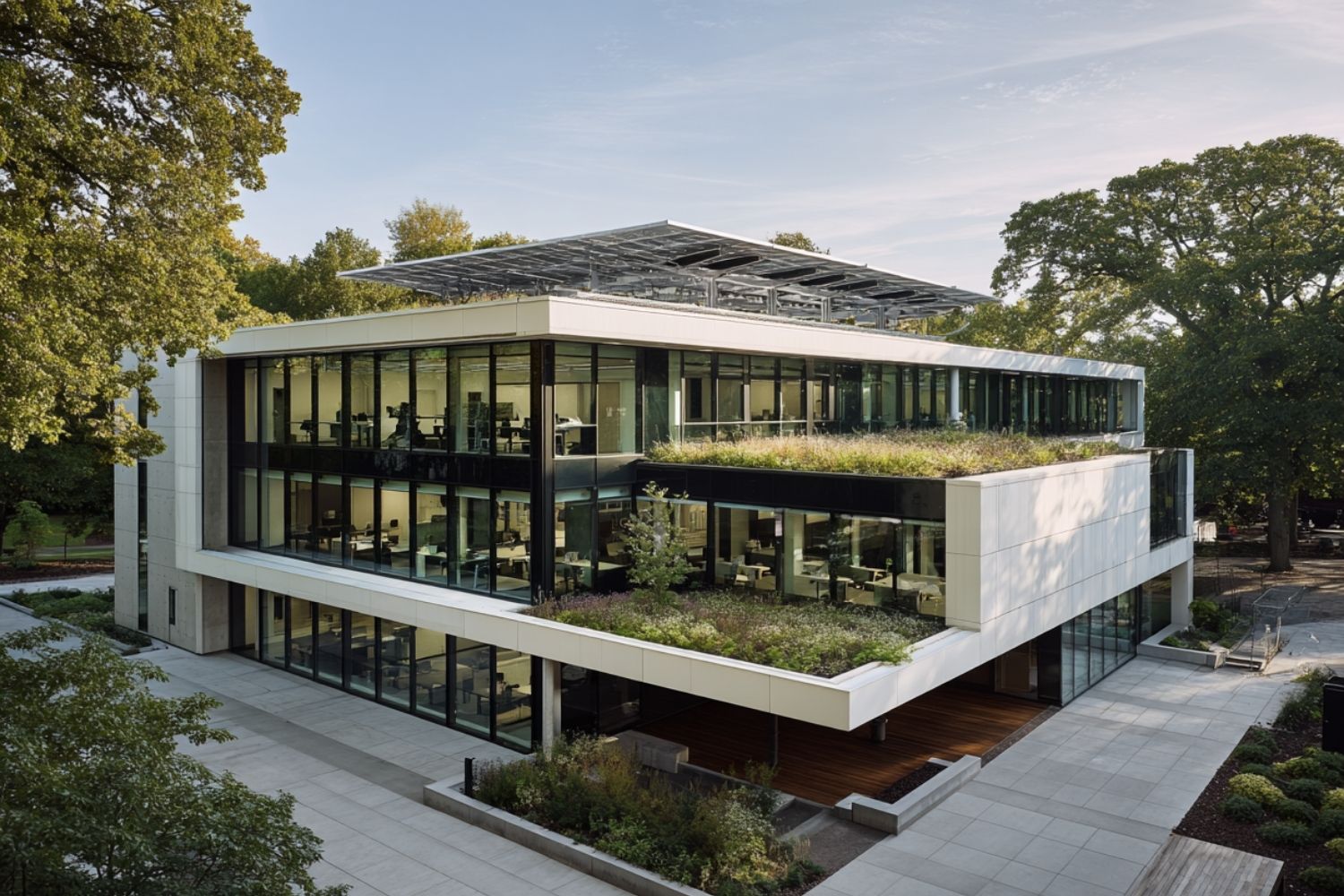
The connection between building quality and loan performance is not abstract. Lenders evaluate a property’s physical condition during the appraisal and environmental review phases of underwriting. A building with deferred maintenance, outdated systems, or structural deficiencies will receive a lower appraisal, reducing available loan proceeds. In contrast, properties with green architecture features such as energy-efficient envelopes, solar panels, and high-performance HVAC systems often qualify for favorable loan terms because they present lower operational risk.
Sustainable design also opens access to specialized financing. Programs like LEED certification from USGBC and Energy Star ratings can qualify borrowers for green building incentive programs offered by Fannie Mae, Freddie Mac, and certain state-level agencies. These programs may offer reduced interest rates, higher LTV ratios, or additional loan proceeds for properties meeting energy performance benchmarks.
🏗️ Real-World Example
Fannie Mae Green Rewards Program: This program provides reduced interest rates and additional loan proceeds (up to 5% of the loan amount) for multifamily properties that commit to reducing energy or water consumption by at least 25%. Since its launch, the program has financed over $70 billion in green multifamily loans, demonstrating that sustainable architecture directly translates into better financing terms.
For professionals working across both design and development, treating the architecture of finance as an integrated discipline rather than two separate conversations leads to stronger outcomes. A project where the architect, developer, and lender align on value expectations from the start avoids the costly redesigns that occur when financing constraints emerge late in the process. Related reading on how architectural design impacts real estate buying decisions offers additional perspective on this relationship.
Final Thoughts
Understanding the architecture of finance is not optional for anyone involved in property design, development, or investment. Each real estate loan type, from a 30-year fixed residential mortgage to a short-term bridge loan for a commercial repositioning, carries specific terms, risks, and strategic implications. The physical quality of a building directly affects its financial performance, and the financing structure shapes what can be built in the first place. By treating design and finance as two sides of the same project, architects and investors can make decisions that produce better buildings and stronger returns.
Cost figures, interest rates, and loan terms referenced in this article are approximate and vary by lender, property type, market conditions, and borrower qualifications. Always consult a licensed mortgage professional or financial advisor before making financing decisions.
Video: Commercial Real Estate Loans Explained
This video from Break Into CRE covers four essential things to know before financing a commercial real estate deal, including interest rate structures, prepayment penalties, amortization versus term, and how lenders determine loan proceeds.







What Crime Maps Don’t Tell You About Choosing a Safe Place to Live
Crime maps show reported incidents, not how a street feels at night....
 illustrarch Editoral Team3 Mins read

How Developers Are Building Package Rooms Into New Multifamily Properties
Parcel volume now shapes a multifamily ground floor as much as parking...
illustrarch Editoral Team3 Mins read

How Much Does It Cost to Hire an Architect for a House Extension?
A clear look at the cost to hire an architect for a...
Sinan Ozen7 Mins read

Top 5 Agencies Competing for the Best Real Estate Company in Boca Raton
Boca Raton real estate agencies are evaluated based on sales performance, client...
illustrarch Editoral Team8 Mins read


Leave a comment