

Multifunctional Complex in the Primorsky Discrict of St. Petersburg
The multifunctional complex in St. Petersburg's Primorsky District proposes innovative living solutions on water, addressing urban crowding with shared.
 illustrarch Editoral Team3 February 20191 Mins read363


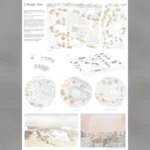
This pilot housing project in the Primorsky District of St. Petersburg proposes living on the water as a structured answer to the crowding of large cities. Designed by Anastasia Tikhonova and Ekaterina Ivoylova, the scheme treats coastal and alluvial territory not as a luxury for a few private mansions, but as an organized, shared environment for permanent residence.
Throughout history, cities have grown toward reservoirs, rivers, and seas. Water served as a source of supply, as natural protection from enemies, as a transport artery, and as an environmental and aesthetic value. Almost all of these factors, apart from the defensive one, still hold today, joined now by a stronger tourist and recreational appreciation of the coastline. Too often that interest turns selfish, expressed in mansions along the banks or in the constant push of investors to occupy the water with commercial platforms in the centers of Moscow or St. Petersburg. The aim here is to give that objective process, the development of coastal land through artificial, alluvial, and floating platforms, a modern and structural character.
Living between land and water
The project confronts a stereotype lodged in everyday thinking, that one cannot live both on the ground and on the water at once. It asks how convenient this alternative type of housing can be for permanent residence, and whether a minimal infrastructure is enough for a full life. The answer it offers rests on the appeal of the alluvial area itself. Residents can live within the city, sometimes near its center, while remaining close to nature and keeping the infrastructure they need close at hand. Water carries real resources and possibilities. It supplies varied transport links and lets a person switch from car to boat, easing the pressure that high housing density places on city streets.
This way of building belongs to a wider tradition of floating architecture and land reclamation, in which communities adapt their settlement patterns to the edge between land and sea. As a major Russian port on the Baltic, St. Petersburg has always been shaped by its relationship with water, which makes it a fitting setting for testing such ideas. By treating the search for sparse, peaceful places to live as a design problem rather than a private privilege, the proposal points toward a more deliberate use of urban waterfronts.



Tidsmaskinen After-School Center by BBP Arkitekter
BBP Arkitekter add a heptagonal tower and a greenhouse to a 1918...
illustrarch Editoral Team2 Mins read

KAFD Metro Station by Zaha Hadid Architects
Zaha Hadid Architects' KAFD Metro Station ties three Riyadh Metro lines together...
illustrarch Editoral Team4 Mins read
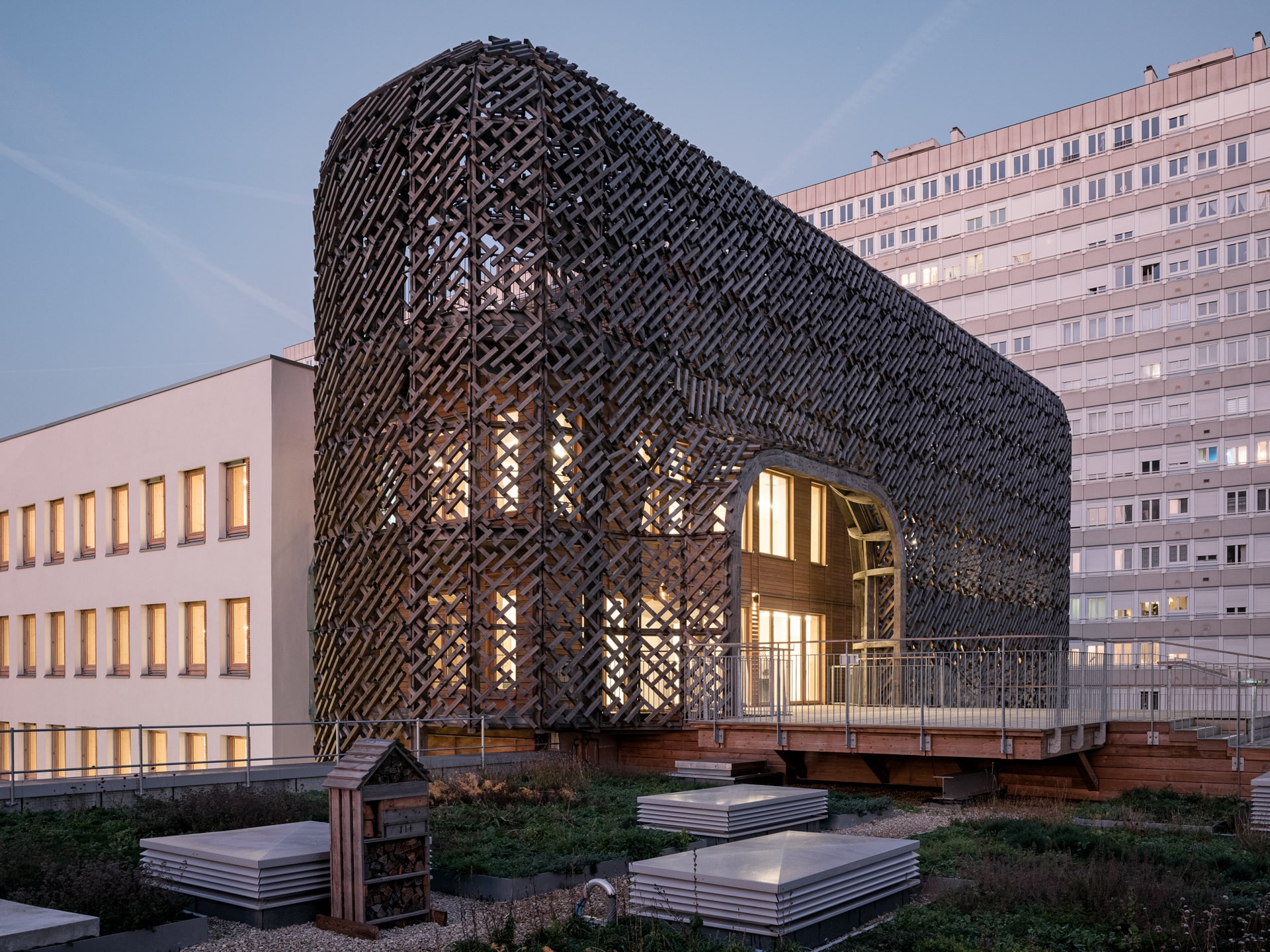
James Baldwin Media Library and Refugee House by associer
In Paris’s 19th arrondissement, Atelier Associer has reimagined a 1970s secondary school...
 Elif Ayse Sen3 Mins read
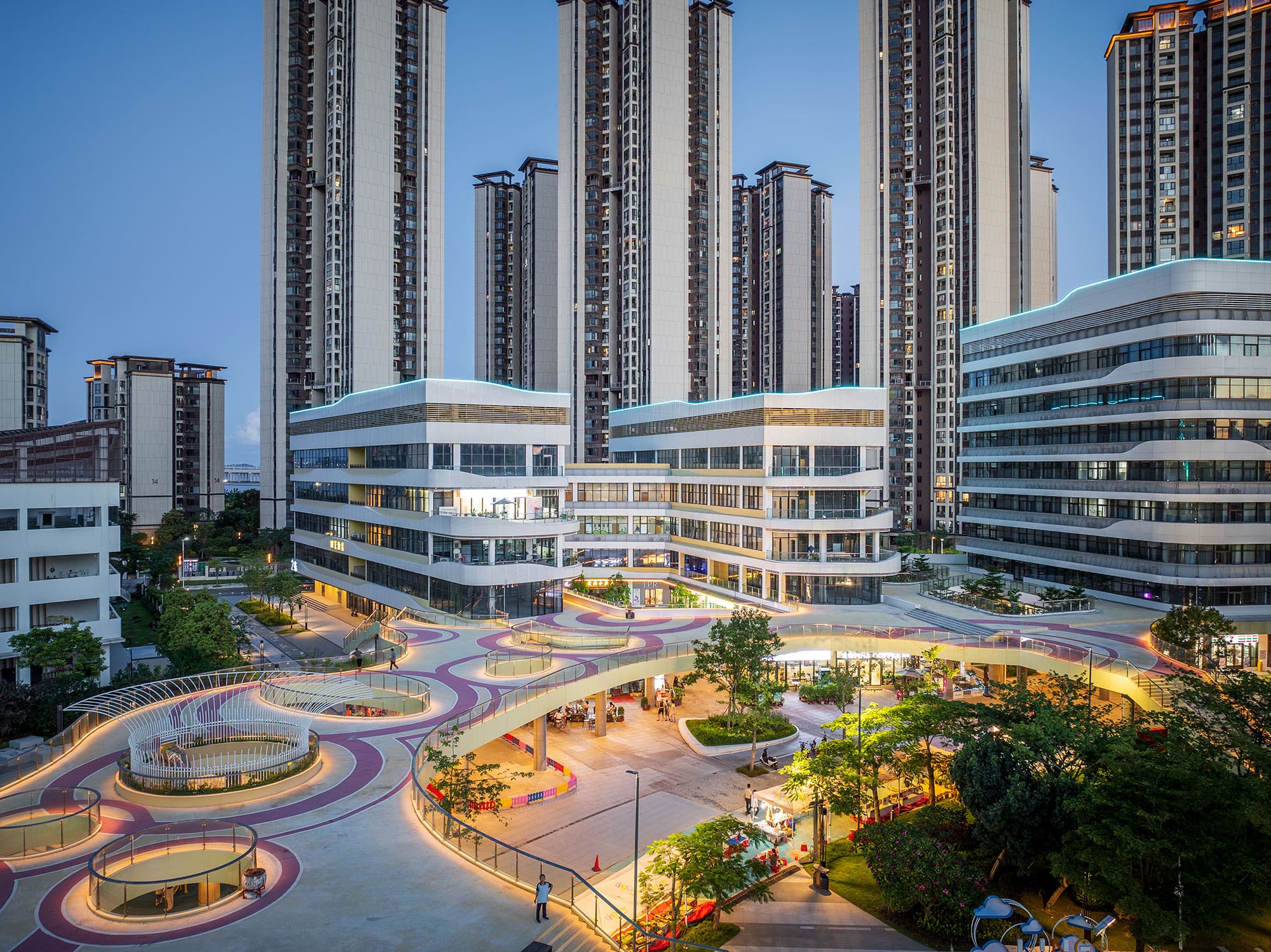
KING ONE Community Center by E Plus Design
In Zhuhai, E+UV has turned four disconnected, underused buildings into the lively...
Elif Ayse Sen4 Mins read


Leave a comment