

Verona Arena
The Verona Arena, a well-preserved Roman amphitheatre, continues to host large-scale performances while embodying architectural principles that influence modern venue design.
 illustrarch Editoral Team6 August 20211 Mins read388
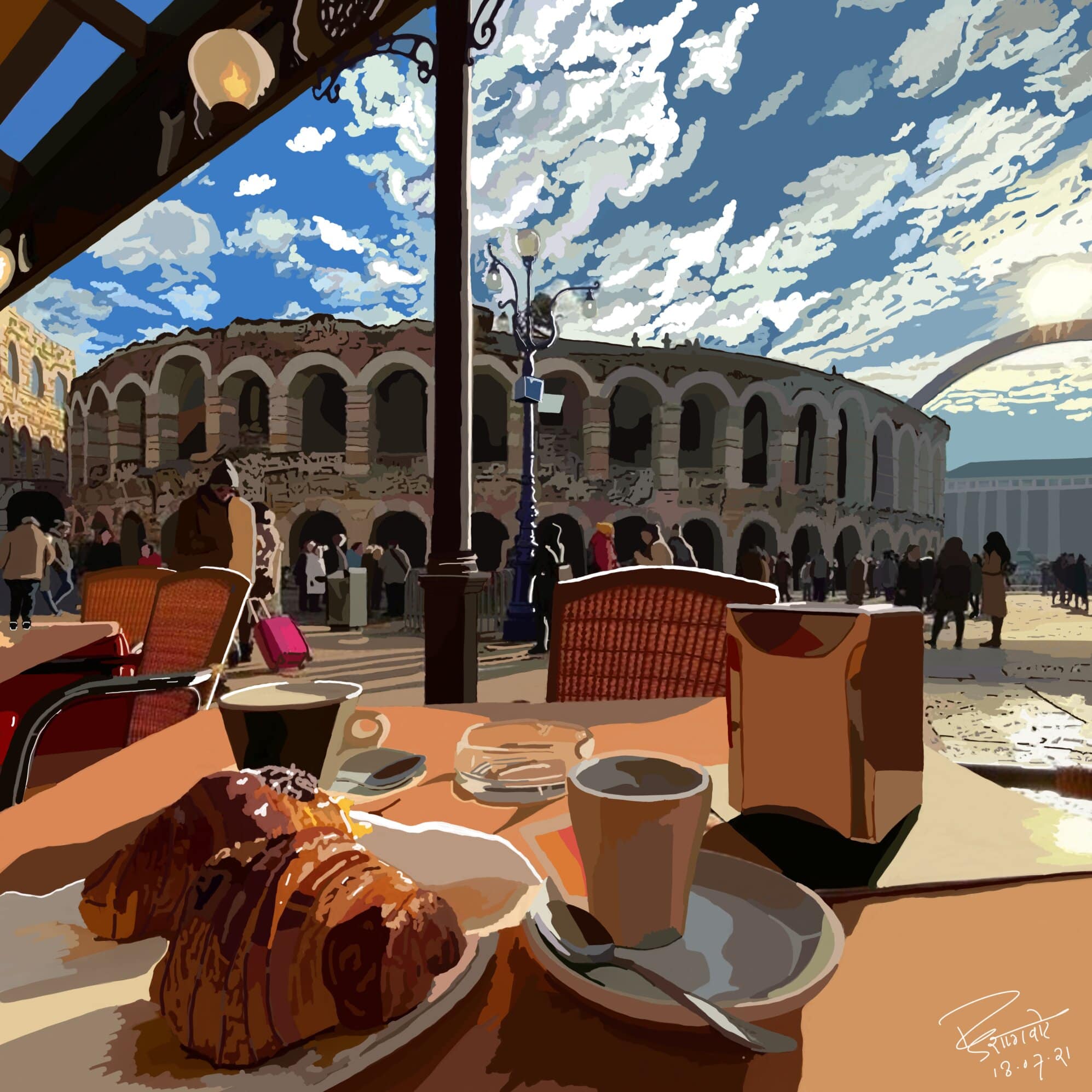
The Verona Arena is a Roman amphitheatre in the heart of Verona, Italy, built in the first century and still hosting live performances nearly two thousand years later. Standing on Piazza Bra, it ranks among the best preserved structures of its kind, and this illustration by Disha Gaware studies how the monument continues to shape daily life in the city. Unlike most ancient monuments that survive only as ruins, the Arena remains an active venue, internationally celebrated for its large scale opera performances.
The amphitheatre was originally proposed with a capacity of around 30,000 spectators and today seats roughly 22,000. It was composed in pink and white sandstone, a local material whose warm tone still defines its character. Centuries of weathering and severe earthquakes have stripped away much of the outer ring, which once carried three tiers of arches in the Tuscan order rising to about 31 meters. What remains is the inner ring, with two rows of 72 arches built entirely in white and pink sandstone. Excavations beneath the floor revealed a complex hydraulic system that brought water into the structure, both for staged water games and for cleaning after the brutal contests held there.
Why Roman amphitheatres endure
Roman amphitheatres were engineered as crowd machines, and their durability comes from principles that architects still respect. The elliptical plan distributes thousands of spectators around a central arena while giving every seat a clear sightline, and the stacked arcades transfer enormous loads down to the ground through repeated arches rather than solid walls. That system of arches and vaults made open-air assembly buildings possible at a scale that would not be matched for centuries. The same logic of tiered seating and circulation rings still informs how stadiums and concert halls are planned today.
Adapting an ancient venue for modern use is its own design challenge. Acoustics, accessibility, fire safety, and the protection of fragile stone must be balanced against the demands of staging full operatic productions for tens of thousands of people. Conservation work treats the surviving fabric as both monument and working theatre, a tension common to many heritage sites across Verona and the wider tradition of the Roman amphitheatre. Gaware’s drawing captures that layered presence, showing a building that carries its history while still gathering crowds beneath the open sky.




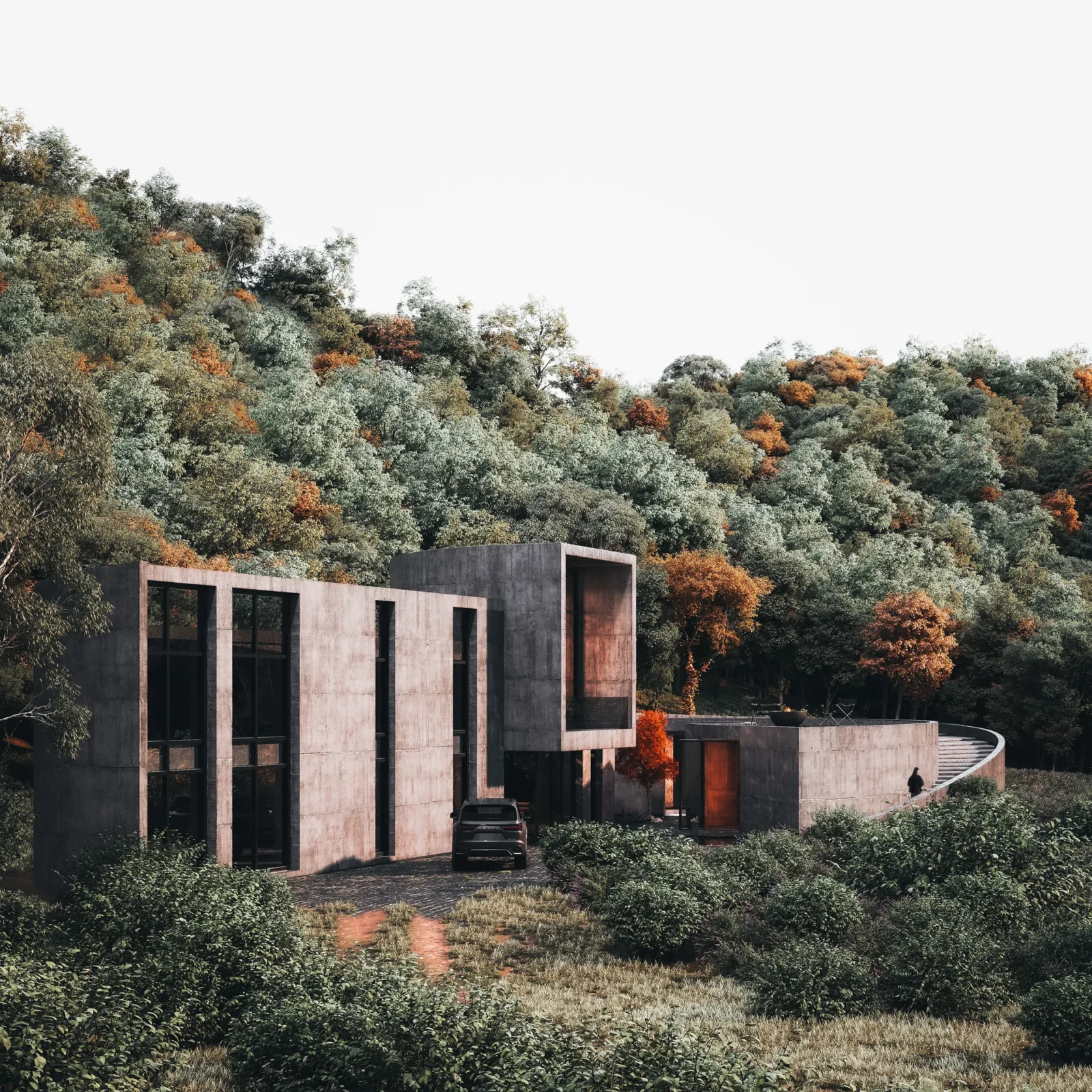
Savan House by Nobico Studio
Savan House is Nobico Studio's unbuilt concept for a forested hillside in...
illustrarch Editoral Team3 Mins read

Renaatus Irumathi
Renaatus Irumathi Residence features 69 spacious apartments designed with contemporary aesthetics, maximizing...
illustrarch Editoral Team2 Mins read

White Khamovniki
White Khamovniki is a residential tower project in Moscow that combines urban...
illustrarch Editoral Team1 Mins read

Millennium Horizon
Millennium Horizon is an innovative architectural project in the UAE that uses...
illustrarch Editoral Team2 Mins read


Leave a comment