

Urban Infill Community Centre
Fracture transforms a neglected alley in downtown Vancouver into a vibrant community centre, enhancing urban connectivity through innovative architectural design.
 illustrarch Editoral Team8 February 20191 Mins read624


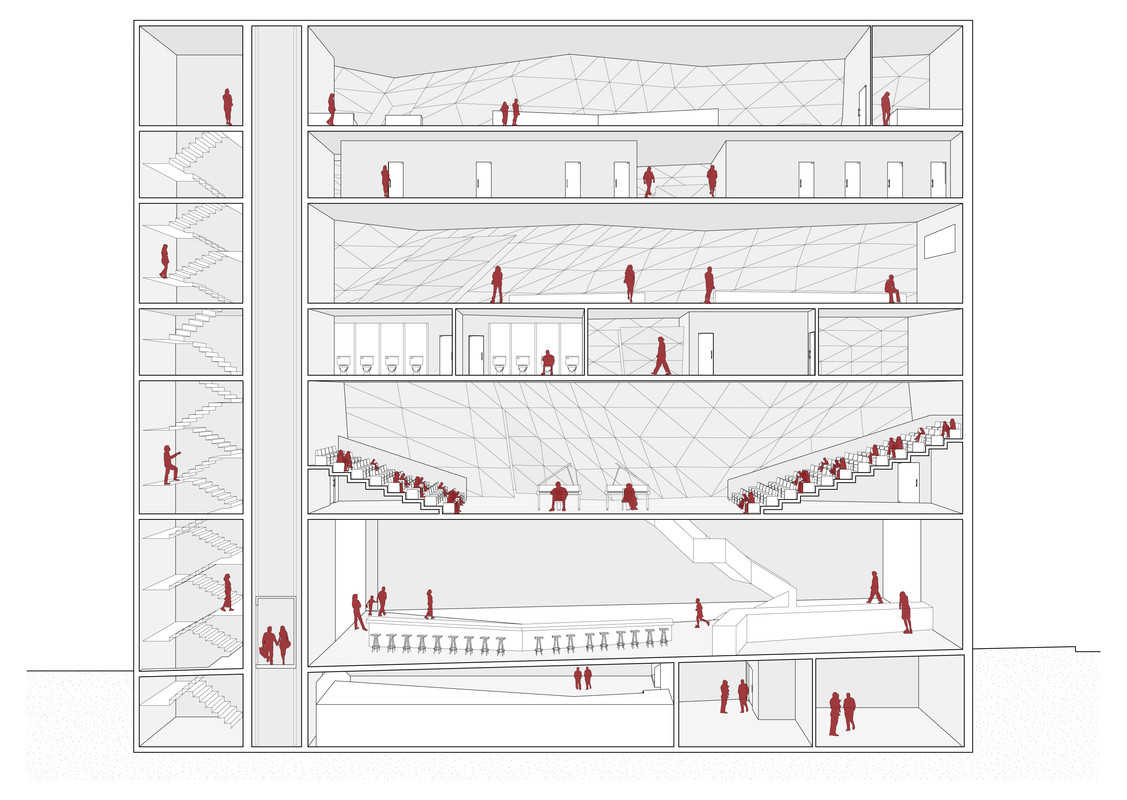

Fracture brings life to a vacant 25 foot wide alley in one of the most active parts of downtown Vancouver, turning a neglected gap in the city into a place of movement and exchange. Designed by Sarah Baxendale and Jordan Haylor, the project sits at Granville and Davie Streets, one of Vancouver’s busiest intersections, known for its vibrant atmosphere and bright night lights. The aim was to mend the fragmented relationship between the fluid flows of movement through this busy alley and the more stagnant people who reside there and use it for trade and resources.
Working with the overlooked alley is a familiar challenge in dense city centres, where leftover slivers of land between buildings often become barriers rather than connections. Vancouver in particular has explored how laneways and small interstitial sites can support public life, and Fracture takes up that question directly. The long and narrow nature of the building allowed the architects to design long and beautiful spaces that play with the light of the facade, making a tight footprint feel generous rather than cramped.
A Facade That Pulls People Through
The defining move was to split the site completely, giving a distinctive focus to the circulatory space and the programmed spaces, separated by an intricate dynamic facade. This facade interacts with both the programmed and circulatory spaces and draws people from one side to the other. From the exterior, the bright red stair and the visible movements of visitors draw people in from the street, giving life to the project. A facade that reads as both screen and threshold is a common strategy in urban design, where the edge of a building shapes how people on the street decide to enter or pass by.
To create this facade, the team worked with concrete casts and parametric modelling software, allowing for a buildable yet vivacious surface that brings light through in interesting ways. This pairing of digital design with cast material connects the project to broader currents in architecture, where computation helps tame complex geometry into something a contractor can actually build. The result reframes an empty alley in Vancouver as a space worth walking into, proof that even the smallest urban remnants can be given new purpose.

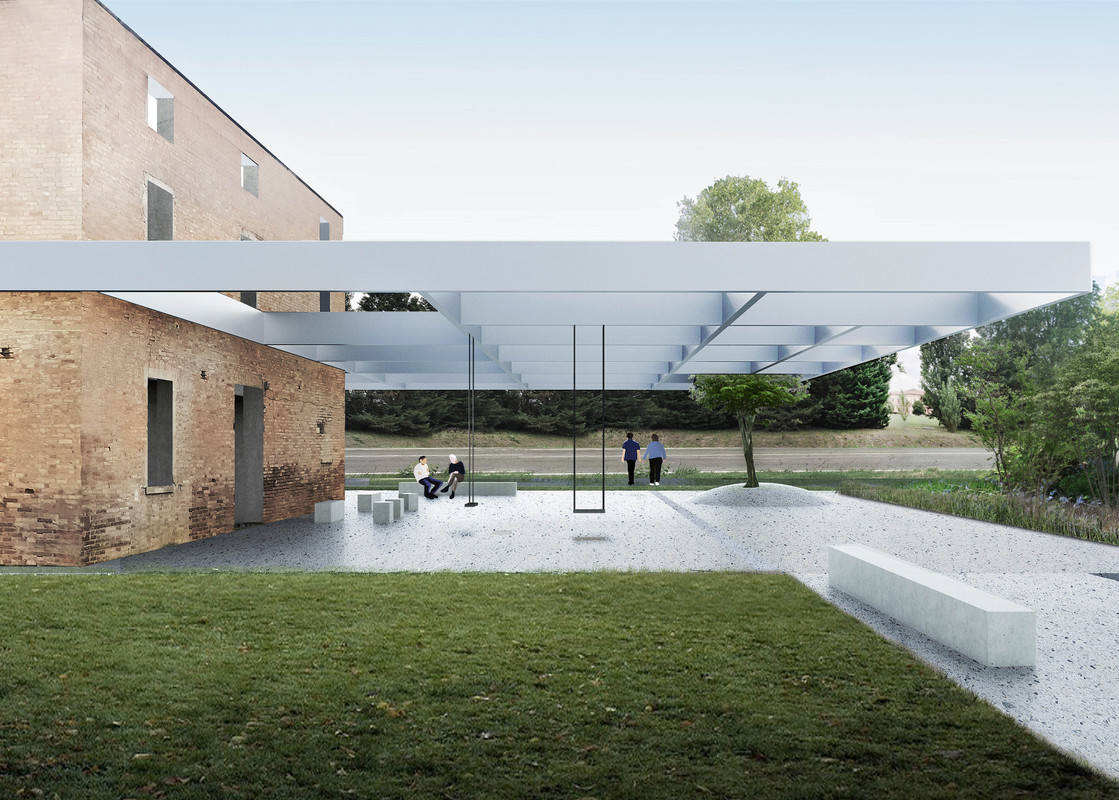

2 Comments

QNR06 Ceilândia Housing Sector by VAGA Architecture
Winner of the national competition, the QNR06 Housing Sector project in Ceilândia,...
 Elif Ayse Sen3 Mins read

Le Pont Residential Development by Shma Company Limited
Le Pont Residential Development by Shma Company Limited in Hong Kong’s Tai...
 Bahattin Duran2 Mins read

Karen Blixens Plads by COBE
Stretching across more than 20,000 square meters, Karen Blixens Plads by COBE is...
 Muhammad Abdullatef - Tifa Studio2 Mins read

Reforma Project
The Reforma Project aims to revitalize Paseo de la Reforma in Monterrey...
illustrarch Editoral Team2 Mins read


This is so cool.
Thanks.