

Productivity for Architecture Students
In this article, we will explore some of the best productivity tips for architecture students. We'll look at how to stay focused on your studies, manage your time efficiently, and use technology to help you achieve success.
 Elif Ayse Sen18 February 20236 Mins read504

Table of Contents Show
As an architecture student, it’s important to be productive and stay organized. With the right tools and strategies, you can make sure that your studies are successful.



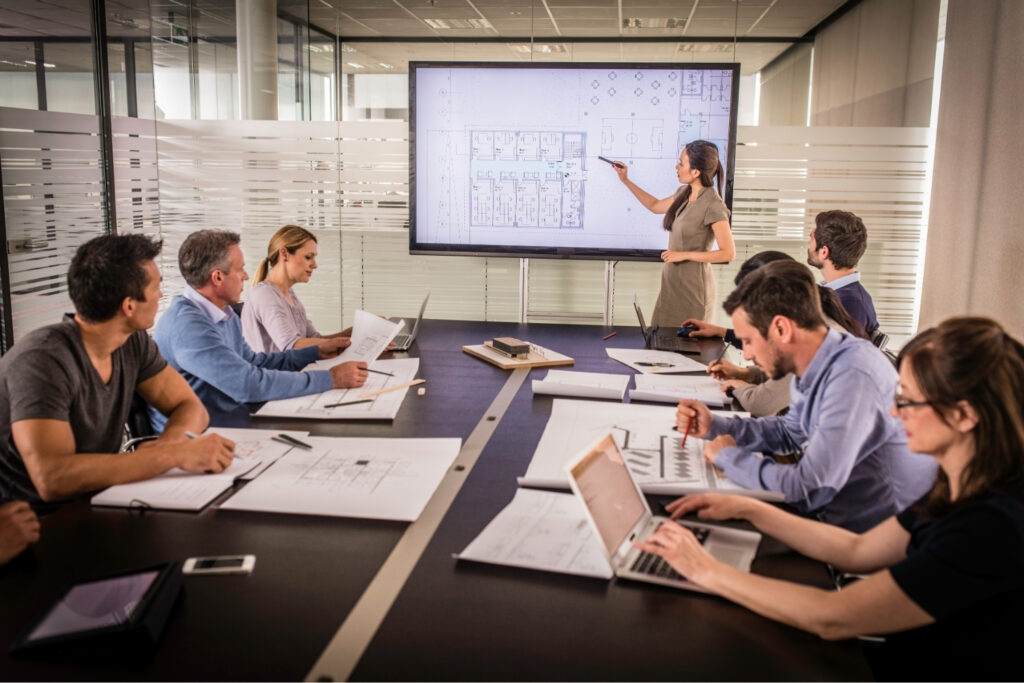
This article collects practical productivity tips for architecture students. It starts with five basic habits, then shows them at work in studio: a sample week, a way to split a design project into weekly deliverables, what to cut when time runs out, and how to protect your files. It ends with straight answers on study hours and all-nighters.

What is Productivity?
Production is the process of integrating multiple inputs to create a product or object. Inputs might be actual commodities, resources, or physical items, as well as immaterial thinking processes or mental or emotional input. We’ve all experienced putting your heart, soul, and all of your energy into something that simply doesn’t work out.
Productivity is a measure of production efficiency and effectiveness. The capacity to avoid wasting materials, resources, energy, effort, money, and time in order to get the intended outcome is referred to as efficiency.
Architecture asks for a lot of hard work, dedication and focus. With studio, lectures, model making and reviews all running at once, staying productive is hard. In studio terms, productivity means getting the drawings and models a review needs with the least wasted effort, so you still have time to think about the design itself. Our article on why architecture students struggle with time management looks at the causes; this one focuses on what to do about them.
Tips for Being Productive for Architecture Students
Do you think that your productivity is not enough? Do you find yourself sitting for hours on end and working your buttocks off, yet things always take far longer than you think they should?
Is your productivity not what you want it to be or what other architecture students appear to be?
No worries. Things will change if you begin to comprehend and adopt effective architectural productivity habits!
Being an architecture student is demanding, and productivity is often the first thing to slip. The five habits below are simple, and each one comes with a concrete studio example so you can start using it this week.
Tip #1 – Set Clear Goals and Break Them Down into Smaller Tasks
Start with a clear goal, then break it into tasks small enough to finish in one sitting. “Finish the project” is not a task. “Draw the ground floor plan at 1:100” or “cut the site model base” is. Small tasks are easier to start, easier to estimate and easier to tick off, which keeps you moving on days when the whole project feels too big.
Tip #2 – Make a Schedule and Stick to It
A daily schedule turns your task list into a plan. Block out fixed commitments first (studio sessions, lectures, workshop opening hours, travel), then place your design tasks in the gaps that are left. Keep the schedule honest: if a model always takes longer than planned, give it more time next week instead of hoping it will be faster.
Tip #3 – Prioritize the Most Important Tasks First
Start with the hardest work while your energy is highest. Getting the most difficult part of the day done first makes the rest feel lighter and stops it from being pushed back again and again. In studio, the hard task is usually a design decision (where the entrance goes, how the section works), not the drawing that follows it.

Tip #4 – Take Regular Breaks and Get Enough Sleep
Do not forget your physical and mental needs when you work late. Short breaks during long sessions help you come back to a drawing with fresh eyes, and enough sleep is what keeps your judgment sharp in the days before a review. More on sleep and all-nighters at the end of this article.

Tip #5 – Create a Dedicated Workspace with Minimal Distractions
As a designer, you should be good at designing your own space. Aim for workspaces with few distractions and a simple layout. Avoid cluttered or dark corners, keep your phone out of reach during focused work, and keep the tools for today’s task within arm’s length. You will be much more productive in a place that makes you feel good.

A Sample Studio Week
Every school timetable is different, but the pattern below shows how the five habits fit into a real week with two studio sessions and a pin-up at the end of it.
| Day | Main focus | Small tasks |
|---|---|---|
| Monday | Plan the week | Read last review notes, list this week’s deliverables, block time in your calendar |
| Tuesday | Studio session | Bring sketches and one question for the desk crit; write down feedback straight away |
| Wednesday | Design decisions | Resolve the plan or section the tutor questioned; lectures and readings in the gaps |
| Thursday | Studio session and making | Second desk crit, then workshop time for the model |
| Friday | Pin-up | Print in the morning, not at midnight; present, take notes, photograph your work |
| Weekend | Catch up and rest | Finish one slipped task, back up your files, then take real time off |
Split a Design Project into Weekly Deliverables
Studio briefs often give one final deadline and leave the rest to you. Work backwards from the final review and give every week a visible output, something you can pin up or put on the table. For an eight-week project, a plan could look like this:
- Week 1: site visit, site analysis drawings, precedent study.
- Week 2: concept diagrams and three quick massing models.
- Week 3: chosen concept developed in plan and section at a rough scale.
- Week 4: midterm review set: plans, one section, massing model, concept diagram.
- Week 5: respond to midterm feedback; structure and materials.
- Week 6: final drawings drafted; final model base and context built.
- Week 7: drawings finished, renders or perspectives, board layout tested in print.
- Week 8: final model assembled, boards printed, presentation rehearsed.
Keep the list on your desk and move tasks forward when you get ahead. If you fall behind, you will know in week 3, not in week 7. Our guide to presenting your project at a crit helps with the review weeks.
What to Cut When Time Runs Out
Sooner or later, the plan will not fit the time left. Cut in this order, from the least to the most damaging:
- Extra renders and decorative images. One clear perspective is worth more than four rushed ones.
- Finish quality on secondary drawings. Keep line weights clean, but drop textures and entourage on drawings that are not the main story.
- Model detail. A clean massing model with the right scale reads better than a detailed model with glue marks and missing parts.
- Extra drawings beyond the brief. Check the required list and deliver that first.
Do not cut the drawings the brief asks for, the concept diagram, or sleep the night before the review. Those are the things jurors judge you on.
Protect Your Files: Backups and File Naming
Losing a week of work to a dead laptop or a corrupted file is the fastest way to destroy a schedule. The 3-2-1 backup rule advises keeping three copies of your data on two different media with one copy off-site. For a student, that can mean the working files on your laptop, a copy on an external drive and a copy in cloud storage.
- Name files the same way every time, for example 2026-11-09_ProjectName_GroundFloorPlan_v03, so the newest version is always obvious.
- Save a new version before every big change instead of overwriting the old one.
- Keep linked images, textures and fonts in one project folder so layouts do not break when you move them.
- Run your backup on a fixed day, for example after every pin-up.
How Many Hours, and What About All-Nighters?
There is no single number of hours that every architecture student works. Studio courses expect time at your desk beyond scheduled classes, and the real load depends on your school, your year and the stage of the project. Instead of counting hours, track whether each week’s deliverable is done.
All-nighters feel productive but rarely are. The National Heart, Lung, and Blood Institute states that experts recommend adults sleep between 7 and 9 hours a night, and that adults who sleep less than 7 hours a night may have more health issues than those who sleep 7 or more. A weekly plan like the one above is the most reliable way to avoid working through the night before a review. For more on staying healthy through the semester, see our list of wellness essentials for architecture school.
Architecture Students Hub
This guide is part of School Life and Learning, stage 6 of our student roadmap from the first diagram to the first internship. Next stage: Concept and Diagrams, or browse every free tool and guide in the Architecture Students Hub.







Interior Design for Commercial Spaces: Enhancing Functionality and Brand Identity
Commercial interior design has to serve brand, function and regulation at once....
 Begum Gumusel4 Mins read
What Architecture Students Should Know About Structural Glass and Guardrail Code
Glass guards look minimal, but structural behavior, safety glazing, connections and guardrail...
 illustrarch Editorial Team6 Mins read
Futuro House Production Revived in Finland After Decades-Long Hiatus
A Facebook listing for abandoned moulds led to the first new Futuro...
illustrarch Editorial Team3 Mins read
Building Your Dream Home in NSW: What You Should Know About Montgomery Homes
Montgomery Homes has been building across Sydney, Newcastle, the Hunter, Wollongong and...
illustrarch Editorial Team4 Mins read






Leave a comment