

The 10 Most Iconic Buildings in the World and Their Stories
From the Great Pyramid of Giza to the Burj Khalifa, explore the top 10 most famous buildings in the world. Learn the stories, architects, and cultural significance behind these world famous buildings that shaped architectural history across civilizations.
 Begum Gumusel26 December 20258 Mins read484
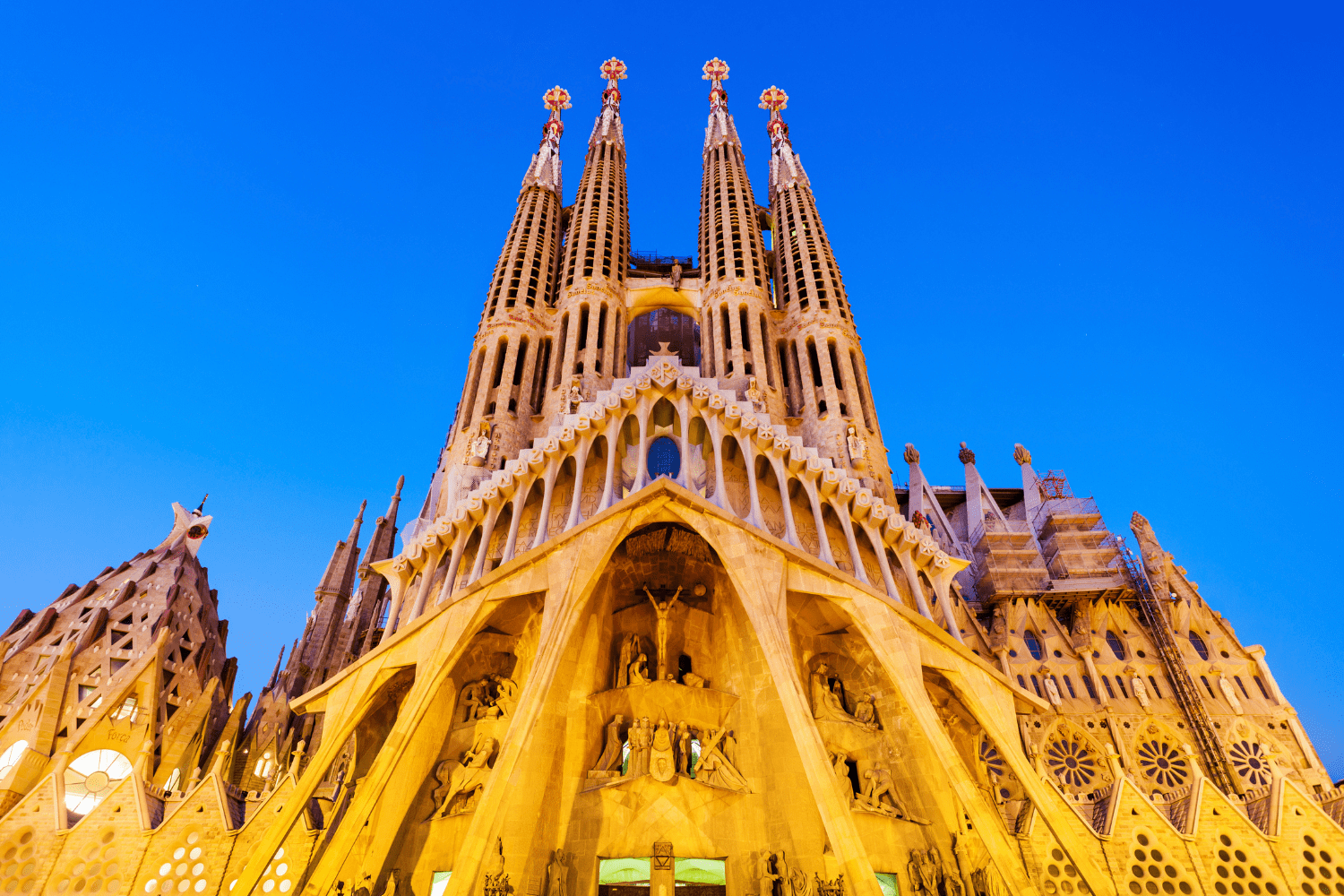
Table of Contents Show
From the ancient pyramids of Egypt to the soaring skyscrapers of Dubai, the most famous buildings in the world tell the story of human creativity, ambition, and cultural identity. Across centuries and continents, certain structures have become symbols recognized far beyond their geographic locations. These world famous buildings capture the essence of their eras, from ancient wonders to modern engineering achievements. Their forms, functions, and narratives reflect the evolution of societies and the imagination of the designers behind them. The following list highlights the top 10 famous buildings in the world and the fascinating stories that shaped their creation, influence, and enduring legacy.
What Makes a Building World Famous?
What is the most famous building in the world? The answer depends on the criteria, historical significance, architectural innovation, cultural symbolism, or sheer visual impact. The most famous buildings of the world share certain qualities: they push the boundaries of engineering, reflect the values of their time, and inspire admiration across generations. Whether it is an ancient temple or a 21st-century supertall tower, these famous buildings from around the world have shaped how we understand the intersection of architecture and art.
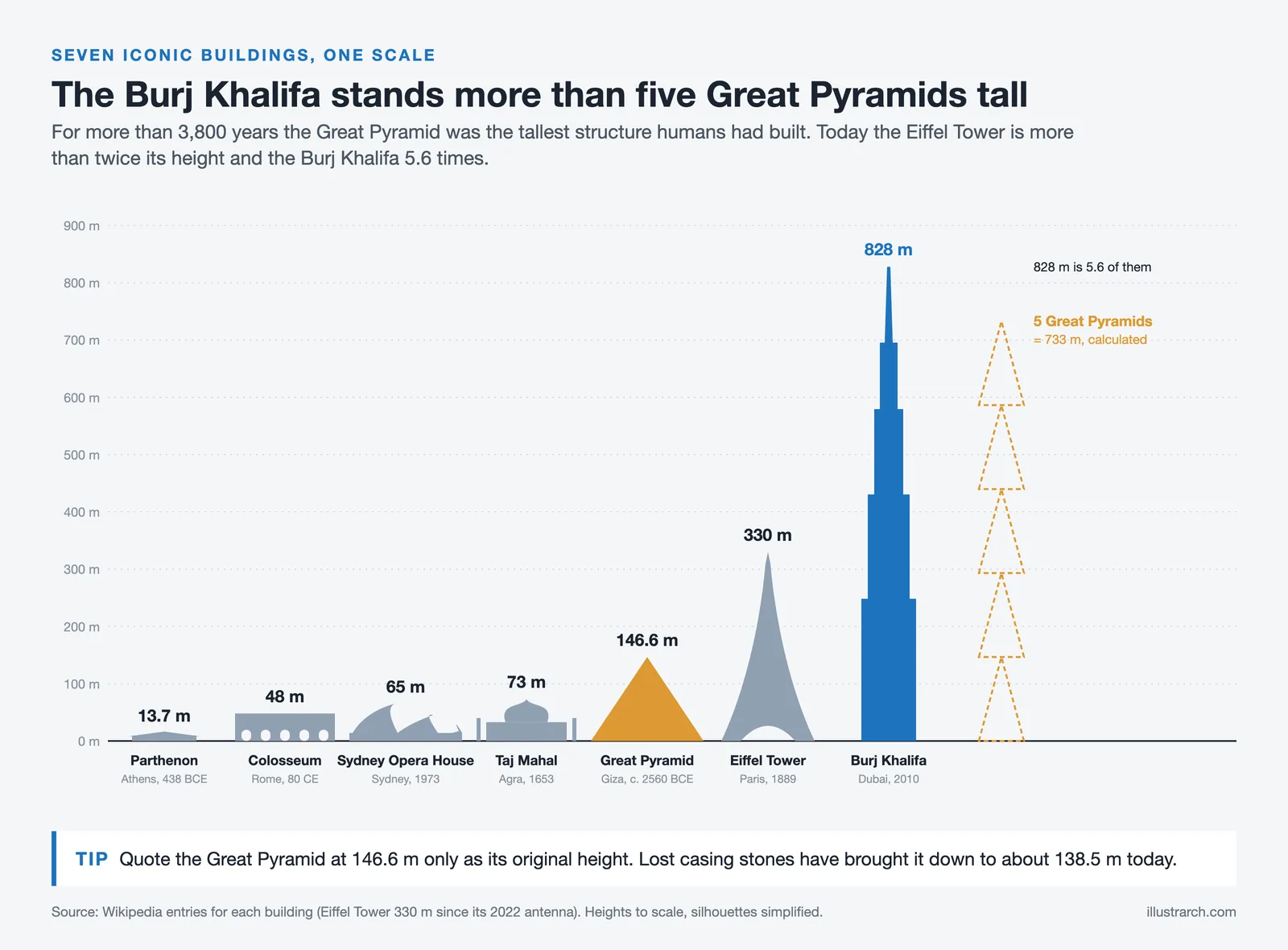
| # | Building | Location | Year Completed | Architect / Builder | Architectural Style | Height / Scale | UNESCO Status | Annual Visitors (Approx.) |
|---|---|---|---|---|---|---|---|---|
| 1 | Great Pyramid of Giza | Giza, Egypt | c. 2560 BCE | Hemiunu (attributed) | Ancient Egyptian | 146.6 m (original) | ✅ World Heritage Site (1979) | ~14.7 million |
| 2 | The Parthenon | Athens, Greece | 438 BCE | Iktinos & Kallikrates | Classical Greek (Doric) | 13.7 m high | ✅ World Heritage Site (1987) | ~3 million |
| 3 | The Colosseum | Rome, Italy | 80 CE | Vespasian & Titus (emperors) | Roman Imperial | 48 m high; 50,000 capacity | ✅ World Heritage Site (1980) | ~7 million |
| 4 | The Taj Mahal | Agra, India | 1653 | Ustad Ahmad Lahouri | Mughal (Persian-Islamic-Indian) | 73 m | ✅ World Heritage Site (1983) | ~7-8 million |
| 5 | The Eiffel Tower | Paris, France | 1889 | Gustave Eiffel | Industrial / Iron Lattice | 330 m (since 2022) | ✅ World Heritage Site (1991)* | ~7 million |
| 6 | Sydney Opera House | Sydney, Australia | 1973 | Jørn Utzon | Expressionist / Modern | 65 m | ✅ World Heritage Site (2007) | ~8.2 million |
| 7 | Burj Khalifa | Dubai, UAE | 2010 | Skidmore, Owings & Merrill (Adrian Smith) | Neo-Futurism / Modern | 828 m (163 floors) | ❌ Not listed | ~2 million (observation deck) |
| 8 | Guggenheim Museum Bilbao | Bilbao, Spain | 1997 | Frank Gehry | Deconstructivism | 24,000 m² (260,000 sq ft) | ❌ Not listed | ~1.2 million |
| 9 | Fallingwater | Mill Run, Pennsylvania, USA | 1939 | Frank Lloyd Wright | Organic Architecture | ~464 m² (5,000 sq ft) | ✅ World Heritage Site (2019) | ~180,000 |
| 10 | Great Wall of China | Northern China | 7th c. BCE: 17th c. CE | Multiple dynasties | Military / Fortification | 21,196 km total length | ✅ World Heritage Site (1987) | ~10 million |
| * The Eiffel Tower is inscribed as part of “Paris, Banks of the Seine.” Visitor figures are approximate annual averages from recent years. | ||||||||
1. The Great Pyramid of Giza
The Great Pyramid of Giza, built around 2560 BCE, stands as the last remaining Wonder of the Ancient World and one of the most famous buildings in the world. Constructed as a tomb for Pharaoh Khufu, its extraordinary precision continues to inspire awe and curiosity. Despite limited technology, the ancient Egyptians achieved remarkable accuracy in geometry, alignment, and engineering. The structure’s massive limestone blocks, intricate internal chambers, and celestial orientation reflect both architectural mastery and deep cultural reverence for the afterlife. With approximately 2.3 million blocks, each weighing up to 15 tons, the pyramid was the tallest man-made structure on Earth for over 3,800 years. Researchers have also identified golden ratio proportions in the ratio of the pyramid’s slant height to half its base, though many scholars see it as a by-product of the Egyptian seked slope system rather than a deliberate choice.

2. The Parthenon
Located on the Acropolis of Athens, the Parthenon was completed in 438 BCE as a temple dedicated to Athena. More than a religious structure, it symbolized the power and cultural sophistication of Classical Greece. The architects Iktinos and Kallikrates applied subtle optical refinements, such as curved columns and entasis, to correct visual distortion and achieve perfect harmony. Though partially ruined, the Parthenon remains a powerful emblem of democracy, philosophy, and artistic excellence. Its Doric columns and sculptural friezes have influenced architectural movements from the Neoclassical era to the present day, making it one of the world’s most famous buildings for students and professionals alike.

3. The Colosseum
Completed in 80 CE, the Roman Colosseum in Rome is one of the most recognizable amphitheaters in history. Designed to host public spectacles, gladiator battles, and dramatic performances, it could accommodate around 50,000 spectators. Its elliptical form, tiered seating, and advanced structural system using arches and concrete demonstrated the engineering prowess of the Roman Empire. The Colosseum also featured a sophisticated subterranean network of tunnels and a retractable awning system called the velarium, reflecting the Romans’ attention to both spectacle and audience comfort. Despite centuries of damage, the Colosseum still represents the architectural ambition and social dynamics of ancient Rome, earning its place among the most famous buildings of the world.

4. The Taj Mahal
Built between 1632 and 1653, the Taj Mahal in Agra, India, is an enduring symbol of love and beauty. Commissioned by Mughal Emperor Shah Jahan in memory of his wife Mumtaz Mahal, the structure is renowned for its white marble façade, intricate carvings, and meticulously planned gardens. The building harmoniously blends Persian, Islamic, and Indian architectural influences. Its changing colors under different lighting conditions give it a timeless, poetic quality. With approximately 20,000 artisans working over two decades to complete the project, the Taj Mahal remains one of the most famous buildings in the world and attracts seven to eight million visitors each year. UNESCO designated it a World Heritage Site in 1983, cementing its global significance.

5. The Eiffel Tower
The Eiffel Tower, designed by Gustave Eiffel and completed in 1889, initially faced criticism for its unconventional iron lattice form. Built for the Exposition Universelle in Paris, it soon became a beloved cultural icon. Rising 330 meters high today with its antennas, the tower showcased France’s industrial prowess and embraced emerging engineering techniques. When it was completed, it surpassed the Washington Monument to become the world’s tallest man-made structure, a title it held for 41 years until the Chrysler Building was completed in 1930. Today it remains one of the most visited landmarks in the world, welcoming approximately seven million visitors annually and symbolizing innovation, romance, and modernity.

6. The Sydney Opera House
Opened in 1973, the Sydney Opera House is a masterpiece of 20th-century architecture. Designed by Danish architect Jørn Utzon, its shell-like roof forms create a sculptural silhouette on Sydney Harbour. The building’s construction faced many challenges, but its completion transformed the global perception of Australian architecture. Utzon’s breakthrough came when he derived all shell forms from a single sphere, enabling standardized prefabrication and structural coherence. The Opera House hosts over 1,500 performances annually and represents artistic expression, cultural identity, and bold structural experimentation, making it one of the world’s most famous buildings and a UNESCO World Heritage Site.

7. The Burj Khalifa
Soaring to 828 meters, the Burj Khalifa in Dubai is currently the tallest building in the world. Completed in 2010 and designed by Skidmore, Owings & Merrill, it reflects the city’s vision for economic growth and futuristic development. Its Y-shaped floor plan provides stability against strong winds, while its sleek façade symbolizes vertical ambition. The tower features 163 floors, luxury residences, corporate suites, and observation decks offering panoramic views across the Arabian Desert. The Burj Khalifa epitomizes modern engineering excellence and the transformative rise of Dubai on the global stage, securing its position as one of the most famous buildings in world architecture.

8. The Guggenheim Museum Bilbao
Frank Gehry’s Guggenheim Museum Bilbao, opened in 1997, is celebrated for its dynamic titanium curves and sculptural form. The building revitalized the city of Bilbao, turning it into a cultural destination and inspiring the term “Bilbao Effect,” referring to how innovative architecture can stimulate urban renewal. Spanning over 260,000 square feet, the museum’s fluid geometry and interplay of light redefine the boundaries of architectural expression. Its success demonstrated that a single world famous building can transform an entire city’s economy and identity, a lesson that has influenced cultural planning worldwide.

9. Fallingwater
Fallingwater, designed by Frank Lloyd Wright in 1935, is one of the most significant examples of organic architecture. Built over a waterfall in rural Pennsylvania, the house integrates natural elements with human habitation. Wright’s cantilevered terraces, open interiors, and seamless connection to the landscape reflect a philosophy that architecture should exist in harmony with its surroundings. The house was designated a UNESCO World Heritage Site in 2019 as part of a group of Wright’s works. Fallingwater remains a masterpiece of modern residential design and one of the most famous buildings from around the world.

10. The Great Wall of China
Stretching thousands of kilometers, the Great Wall of China is not a single building but an extraordinary architectural system. Constructed over several dynasties beginning in the 7th century BCE, it served as a defensive barrier and symbol of imperial strength. Its watchtowers, stone fortifications, and rugged mountain routes demonstrate centuries of strategic planning and labor. The wall extends over 21,000 kilometers when all branches and secondary sections are included, making it the largest architectural undertaking in human history. Today, the Great Wall is a global symbol of endurance, history, and cultural identity, and one of the most famous buildings in the world.

Construction Facts & Engineering Details
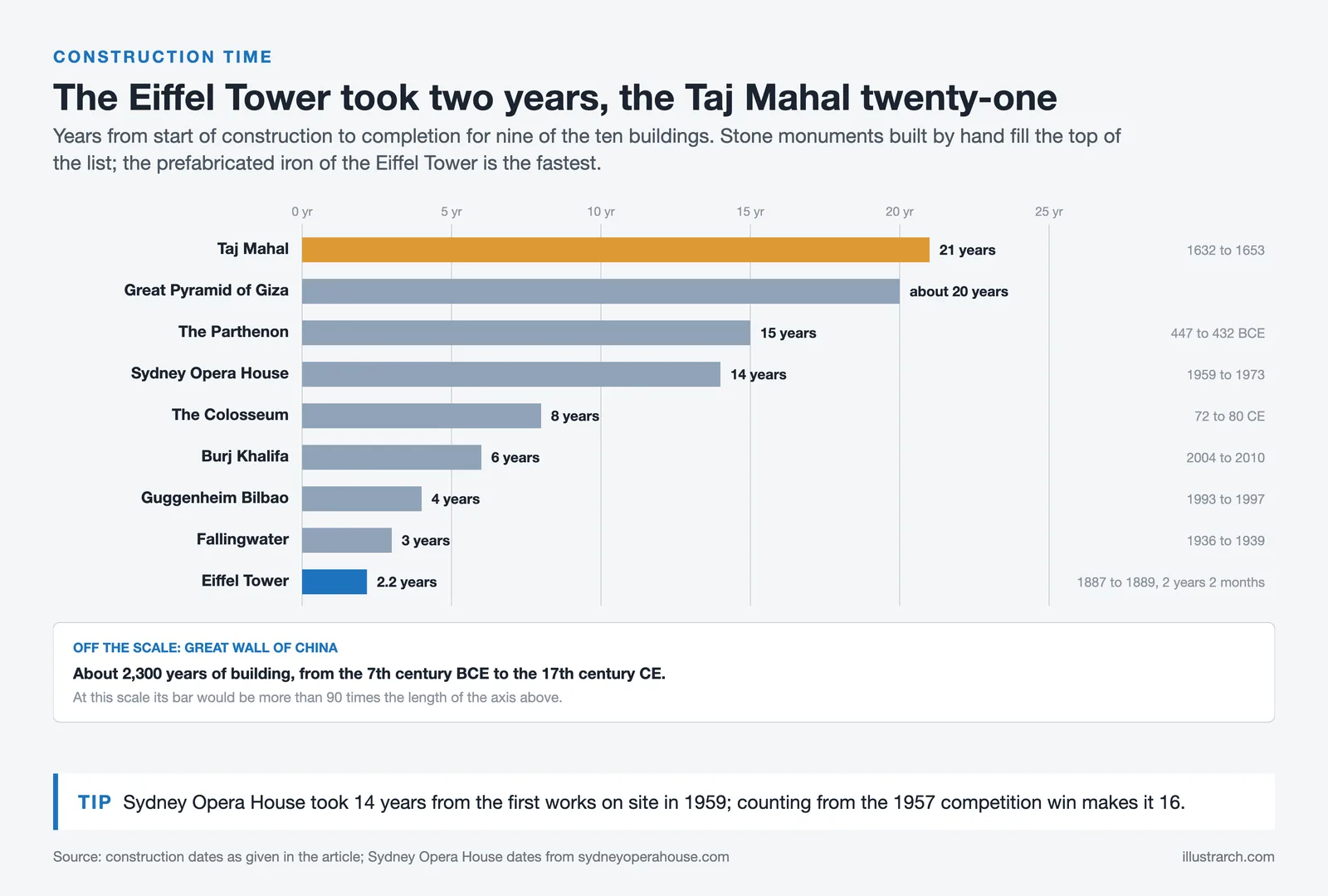
| Building | Construction Duration | Primary Material | Workforce | Estimated Cost (Adjusted to USD) | Notable Engineering Feature |
|---|---|---|---|---|---|
| Great Pyramid of Giza | ~20 years | Limestone & granite | ~20,000-30,000 workers | ~$5 billion | 2.3 million blocks |
| The Parthenon | ~15 years (447-432 BCE) | Pentelic marble | Hundreds of skilled craftsmen | Not reliably documented | Entasis and curved stylobate to correct optical illusion |
| The Colosseum | ~8 years (72-80 CE) | Travertine, tuff, concrete | ~60,000-100,000 laborers | ~$1-2 billion | 80 arched entrances; retractable velarium awning system |
| The Taj Mahal | ~21 years (1632-1653) | White Makrana marble | ~20,000 artisans | ~$1 billion | Pietra dura inlay with 28 types of gemstones; color-changing façade |
| The Eiffel Tower | 2 years, 2 months (1887-1889) | Wrought iron (puddled iron) | ~300 workers | ~$40 million | 18,038 iron pieces joined by 2.5 million rivets |
| Sydney Opera House | 14 years (1959 to 1973) | Precast concrete, granite, ceramic tiles | ~10,000 workers | ~$102 million (AUD at completion) | Shell forms derived from a single sphere for prefabrication |
| Burj Khalifa | ~6 years (2004-2010) | Reinforced concrete, steel, glass | ~12,000 workers at peak | ~$1.5 billion | Y-shaped plan for wind resistance; concrete pumped to 600+ m |
| Guggenheim Museum Bilbao | ~4 years (1993-1997) | Titanium, glass, limestone | ~2,500 workers | ~$89 million | CATIA software (from aerospace) used for complex geometry |
| Fallingwater | ~3 years (1936-1939) | Reinforced concrete, sandstone, glass | Local craftsmen | ~$155,000 (~$3.4 million today) | Cantilevered terraces extending over the waterfall |
| Great Wall of China | ~2,300 years (7th c. BCE, 17th c. CE) | Rammed earth, brick, stone, wood | Millions over centuries | ~$360 billion (estimated cumulative) | Glutinous rice mortar used in Ming-era sections |
Historical Timeline of Construction
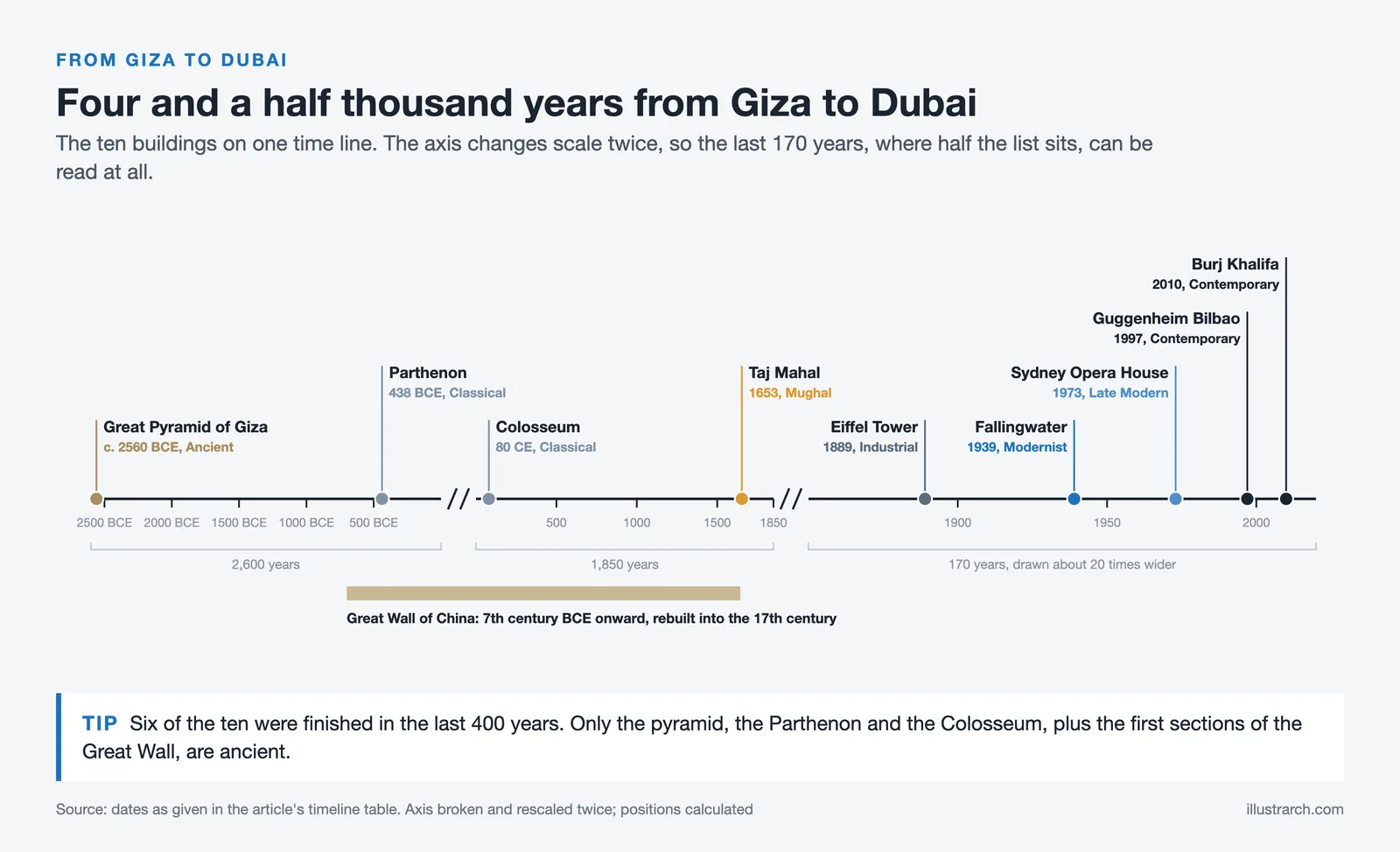
| Era | Building | Year | Original Purpose | Current Function | Key Historical Significance |
|---|---|---|---|---|---|
| Ancient | Great Pyramid of Giza | c. 2560 BCE | Royal tomb (Pharaoh Khufu) | Monument / Tourist site | Last surviving Wonder of the Ancient World |
| Ancient | Great Wall of China | 7th c. BCE onwards | Military defense | Monument / Tourist site | Largest architectural undertaking in human history |
| Classical | The Parthenon | 438 BCE | Temple to Athena | Archaeological monument | Symbol of Athenian democracy and classical proportions |
| Classical | The Colosseum | 80 CE | Amphitheater (gladiatorial events) | Archaeological monument | Largest Roman amphitheater; landmark of Roman arch and concrete engineering |
| Mughal | The Taj Mahal | 1653 | Mausoleum | Monument / Tourist site | Pinnacle of Mughal architecture; cross-cultural synthesis |
| Industrial | The Eiffel Tower | 1889 | Exposition centerpiece | Observation tower / Communication tower | Symbol of the Industrial Revolution and structural iron innovation |
| Modernist | Fallingwater | 1939 | Private residence | Museum / House tour | Defined organic architecture philosophy |
| Late Modern | Sydney Opera House | 1973 | Performing arts center | Performing arts center | Redefined expressionist architecture; 1,500+ annual performances |
| Contemporary | Guggenheim Museum Bilbao | 1997 | Art museum | Art museum | Pioneered the “Bilbao Effect” architecture as urban catalyst |
| Contemporary | Burj Khalifa | 2010 | Mixed-use supertall tower | Mixed-use (residential, offices, hotel, observation) | World’s tallest building; vertical city concept |
Why These World Famous Buildings Still Matter
These famous buildings of the world reflect humanity’s evolving relationship with design, technology, culture, and imagination. Each structure tells a unique story: whether of empire, innovation, emotion, or artistic vision. Together, they form a collective narrative of architectural achievement across civilizations. By understanding the stories behind these landmarks, we gain deeper appreciation for the creativity and ingenuity that continue to shape our built world. For architecture students and professionals seeking further inspiration, exploring the top architectural wonders to visit is an excellent next step in understanding how design shapes culture and identity.


1 Comment


Famous Buildings in Los Angeles: Icons of LA Architecture
Nine of the most famous buildings in Los Angeles profiled: architect, year,...
 illustrarch Editoral Team9 Mins read
Futuro House Production Revived in Finland After Decades-Long Hiatus
A Facebook listing for abandoned moulds led to the first new Futuro...
illustrarch Editoral Team3 Mins read

Building Your Dream Home in NSW: What You Should Know About Montgomery Homes
Montgomery Homes has been building across Sydney, Newcastle, the Hunter, Wollongong and...
illustrarch Editoral Team4 Mins read
Designing a Home Theater: Where Drapery Fits Into the Plan
In a media room the curtains are a performance layer, not decoration....
illustrarch Editoral Team3 Mins read


This article gives a nice overview of famous buildings. I didn’t know some of these facts before. It’s interesting to see how architecture can show culture.