

Concrete Block Building System: A Self-Build Guide
How self-build concrete block systems use interlocking, mortar-free blocks and steel rods to raise strong, well-insulated walls up to 50% faster, and how they stack up against ICF and standard DIY block methods.
 Elif Ayse Sen15 December 20215 Mins read706
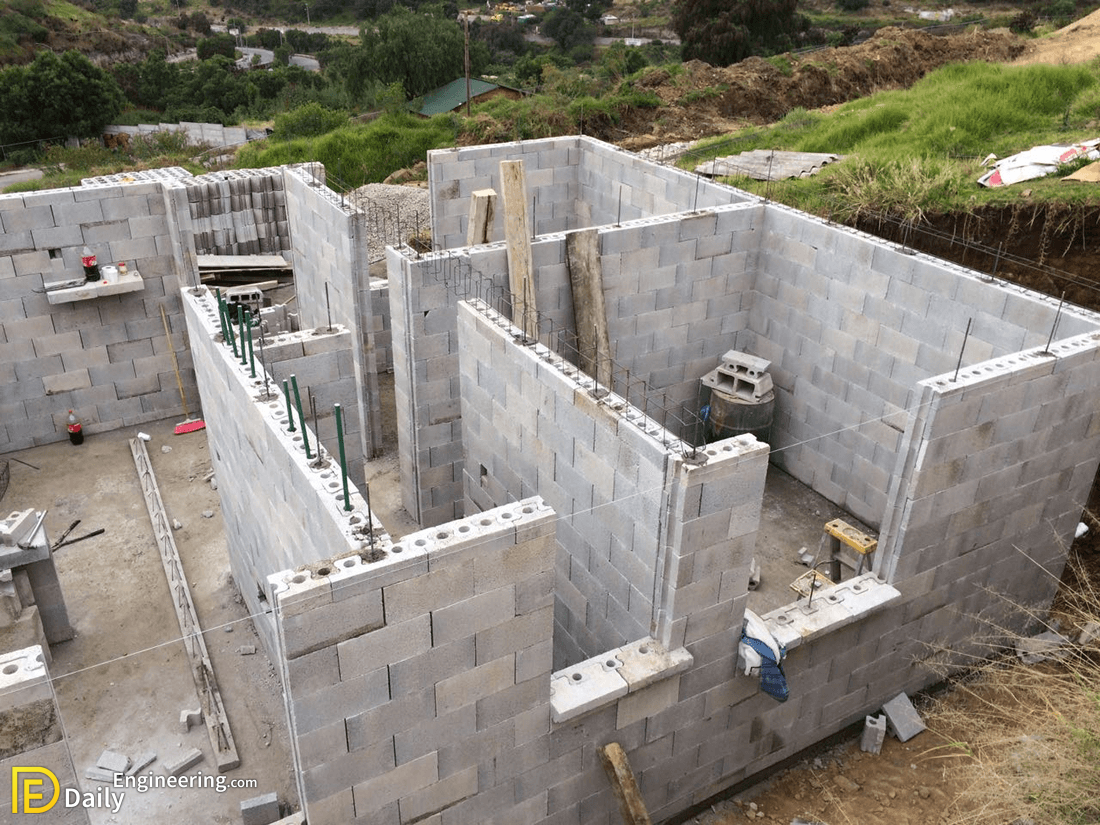
Table of Contents Show
A concrete block building system is a construction method that uses precast, often interlocking blocks to raise load-bearing walls quickly, with far less mortar, skilled labour, and site time than traditional masonry. Self-build versions let owners assemble structural walls themselves, cutting both cost and construction schedules significantly.
A growing part of the construction industry is refining ways to shrink build time and cost, and the self-build concrete block system sits at the centre of that shift. Several manufacturers now compete internationally with wall models that use fewer materials, carry more structural strength, and improve indoor comfort, all built on recognised concrete construction techniques. Many also engineer smart block geometries that adapt to different structural requirements.

One example of this approach comes from Juan Manuel Reyes of Armados Omega and architect Jorge Capistrán, who developed a low-cost building technique that cuts construction time by around 50%. It needs no binders, mixes, or expert crews because the walls rise from a set of single-module blocks. According to Reyes, the system is made up of six self-supporting, self-assembling parts, with a metal rod placed every 80 cm and no special foundation required. Because the wall carries services internally, pipes and wiring install without difficulty.
What Is a Concrete Block Building System?
A concrete block building system is a coordinated set of blocks, reinforcement, and assembly rules designed to work together as a single structural product rather than a pile of loose units. In dry-stack self-build versions, the blocks key into one another so the geometry itself carries the load, which removes the wet mortar joints that slow conventional masonry. The result is a repeatable, learnable method that a small team can master in a day. This differs from standard concrete masonry units, which still rely on an experienced mason buttering every joint by hand.
How the Self-Assembly System Works
The Armo system relies on a small family of interlocking concrete pieces that stack and key into one another like a dry-laid puzzle. Because the geometry of each block carries the load, walls rise without mortar joints or wet binders curing on site. Vertical metal rods, set roughly every 80 cm, thread through the hollow cores to tie the courses together and resist lateral forces. The continuous voids act as ready-made chases, so plumbing runs and electrical wiring drop straight into the wall rather than being chased out afterwards. A self-builder can typically learn the sequence in an afternoon and then repeat it across the whole structure.

The logic behind this assembly is simple: lengthy training and side-building systems that complicate the process or push up costs are no longer necessary. Its double-face masonry wall also gives the block high thermal resistance, so the finished structure holds comfortable interior temperatures across hot and cold seasons and stays durable over its service life.
Step-by-Step Build Sequence
A typical wall follows a clear order. First, level and mark the base course so the first row is square and true, since every course above inherits that alignment. Second, lay the self-supporting blocks dry, staggering the vertical joints between rows for strength. Third, insert the steel rods at the specified spacing and check the wall for plumb with a spirit level. Fourth, run conduit and pipework through the open cores before the wall is closed off. Finally, fit the double-face elements that complete the masonry and lock the assembly. Working in this order avoids rework and keeps the 50% time saving realistic on real sites.
📐 Technical Note
Dry-stack and surface-bonded block walls are recognised in the International Residential Code under provisions for reinforced grouted masonry, and vertical reinforcement spacing is commonly specified in the range of 600 to 1200 mm depending on wall height and lateral loads. Always confirm the exact rod diameter, grout requirement, and spacing against the engineering data supplied for your specific block system.
Comparing Interlocking, Insulated ICF, and DIY Block Approaches
Not every concrete block building system works the same way. Interlocking dry-stack blocks, insulated concrete forms (ICF), and basic DIY hollow-block walls each trade cost, speed, and thermal performance differently. The table below sets out how they compare so you can match a method to your project.
| System Type | Main Benefit | Key Consideration |
|---|---|---|
| Interlocking dry-stack blocks (e.g. Armo/Omega) | Fast mortar-free assembly, up to 50% less build time, unskilled labour possible | Base course must be dead level; accuracy errors magnify up the wall |
| Insulated concrete forms (ICF) | High thermal mass plus continuous insulation, strong airtightness | Requires a poured concrete core and bracing; higher material cost |
| Standard DIY hollow concrete block | Widely available, low unit price, familiar to most builders | Mortar joints demand skilled masons and slow the schedule |
📌 Did You Know?
Concrete is the second most-used material on Earth after water, and cement production accounts for roughly 8% of global carbon dioxide emissions, according to reporting summarised by the Portland Cement Association. Mortar-free systems that use fewer materials per square metre are one way builders trim that footprint on smaller residential projects.
Advantages and Trade-Offs
The clearest gains are speed, lower labour cost, and the ability to build without skilled masons or specialist tooling. The double-face wall delivers high thermal resistance, which keeps interiors comfortable in hot and cold climates and trims heating and cooling bills over the building’s life. There are trade-offs to weigh. Dry-stacked systems depend heavily on accurate setting-out, so a poorly levelled base course magnifies errors as the wall grows. Local building codes, seismic requirements, and inspection regimes also vary, so the system should be checked against the approvals that apply in your region. Independent guidance from bodies such as the Concrete Masonry and Hardscapes Association and the code framework published by the International Code Council is worth reviewing before you commit.
🎓 Expert Insight
“The system is made up of six self-supporting self-assembly parts, and a metal rod is placed every 80 cm without the need for a particular foundation.”
Juan Manuel Reyes, Armados Omega
Reyes points to the heart of why these systems save time: the block geometry, not a skilled hand, does the structural work, which is what makes self-assembly realistic for non-professionals.

Is It Right for Your Project?
This approach suits self-builders, small developers, and projects in remote areas where access to skilled trades and ready-mixed concrete is limited or expensive. It matches single-storey homes, boundary and garden walls, and modest extensions where repetition rewards a simple, learnable method. For multi-storey or heavily loaded structures, an engineer should confirm the rod spacing and foundation strategy for your specific loads and ground conditions. As with any emerging building product, ask the supplier for test data, warranty terms, and reference projects you can visit, so the promised savings are backed by evidence rather than marketing alone. For wider context on how concrete is being used in contemporary housing, the concrete coverage on ArchDaily and the technical overview of insulating concrete forms are useful starting points.
🏗️ Real-World Example
Armo Omega block housing (Mexico): The Armados Omega system was developed to deliver low-cost social and self-build housing, with its mortar-free interlocking blocks and 80 cm rod spacing letting owner-builders raise weather-tight, thermally efficient walls without a specialist crew or a conventional poured foundation.
Building codes, seismic rules, and inspection requirements vary by jurisdiction, and structural specifications should be verified by a licensed professional for your specific project before construction begins.
What This Means for Your Next Project
A self-build concrete block building system can genuinely compress a schedule and cut labour costs, but only when the base course is dead level and the reinforcement matches the loads your walls will actually carry. Your next step: request the manufacturer’s engineering data and at least one reference project you can inspect in person, then have a local engineer confirm the rod spacing and foundation approach before you order a single block.








Designing Exterior Concrete That Survives Freeze-Thaw Winters
Freeze-thaw cycles, not one long cold spell, are what break exterior concrete....
 illustrarch Editoral Team9 Mins read

Groupwork Completes 10-Storey Loadbearing Granite Flats in London
Groupwork's Petra Heights on Finchley Road is a 10-storey block of 22...
illustrarch Editoral Team2 Mins read

What Architecture Students Should Know About Structural Glass and Guardrail Code
Glass guards look minimal, but structural behavior, safety glazing, connections and guardrail...
illustrarch Editoral Team6 Mins read

Futuro House Production Revived in Finland After Decades-Long Hiatus
A Facebook listing for abandoned moulds led to the first new Futuro...
illustrarch Editoral Team3 Mins read


Leave a comment