

KeyshotWeb: Renderer via Browser
KeyShot Web enables users to render and share interactive 3D visuals directly from their browser, offering tools like KeyShot XR, Web Configurator, and Web Viewer.
 Elif Ayse Sen23 February 20223 Mins read440

Table of Contents Show
Would you like to use KeyShot, the popular rendering software of recent times, in a more practical and efficient way in professional life? With KeyShot Web, you can use KeyShot on many browsers including Google Chrome, Microsoft Edge, Mozilla, Opera and Safari.
KeyShot Web is a collection of solutions that deliver rich, engaging customer-centric visuals for design review, presentation, and point of sale on computers and mobile devices.
The solution is for interactive content directly from the software of KeyShot. It contains KeyShot XR + Web Configurator and Web Viewer.
While KeyShot Web Viewer enables for one-click upload to KeyShot Cloud, KeyShotXR and KeyShot Web Configurator come with an intuitive step-by-step guide. After one-click render, and all the files needed to share internally, embed online, or show in store.

Photo Source: Web – KeyShot
KeyShot Web is ideal for your customers to see different versions of renders in seconds. KeyShot Web allows you to make presentations in an alternative and practical way. It creates the chance to experience different aspects and versions of products and projects closely.
Advantages of KeyShot Web
- KeyShot XR is consist of 360° Spherical Experience, touch-enabled animated product visuals. The feature of Rotate & Zoom is available.
- Web Configurator of KeyShot Web contains countless product variations and touch enabled option.
- With Web Viewer you can share high-definition 3D visuals on the internet by a link.
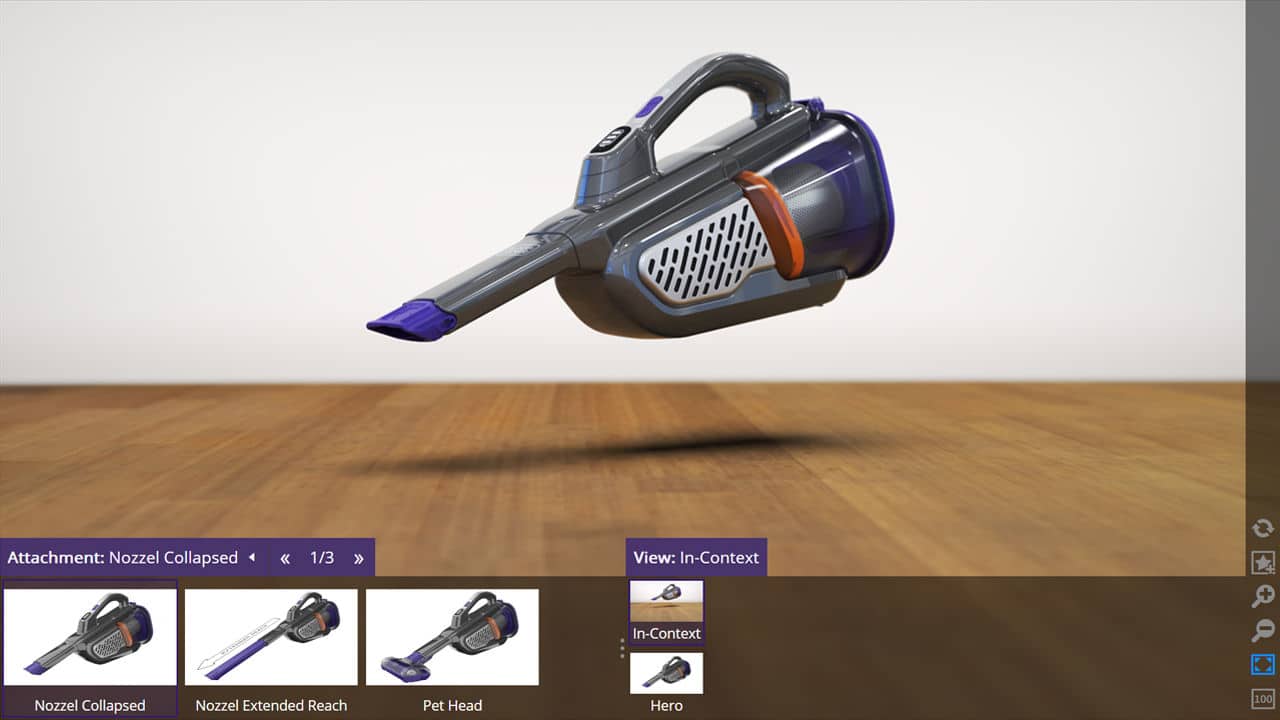
Photo Source: Web – KeyShot
See also our guide to the best AI architectural rendering tools.
How to Get Started with KeyShot Web
Begin inside KeyShot itself rather than a separate program. Open your scene, set the camera, materials and lighting exactly as you want them to appear, then choose the export route that matches your goal. For a spinnable view, select KeyShotXR and follow the step-by-step wizard to define the rotation type, the number of frames and the resolution. For a configurable product, set up your model sets and material variations first, then send them to the Web Configurator. When the export finishes you receive a folder of files, or a one-click upload to KeyShot Cloud through the Web Viewer, ready to embed or share.
KeyShotXR vs Web Configurator vs Web Viewer
The three tools solve different problems. KeyShotXR is best when you want viewers to rotate and zoom a single finished render, which suits product turntables and hero shots for a portfolio. The Web Configurator suits products with options, letting a viewer swap colours, finishes or parts on the fly, so it works well for furniture, fixtures or any design offered in several variants. The Web Viewer is the simplest path when you just need to share one high-definition 3D visual by link, with no interaction beyond viewing. Many studios use all three across a single project, depending on whether the audience is reviewing, choosing or simply approving.
Practical Tips for Sharper Web Output
Keep file size in check, because large XR exports with many frames and high resolutions can load slowly on mobile connections. Reduce the frame count or trim the resolution until the experience feels responsive, then test it on a phone before sending it to a client. Bake your lighting and materials carefully in KeyShot first, since the web output mirrors what you set there and cannot be corrected afterwards in the browser. For embeds, use the supplied HTML so the viewer inherits the correct controls, and host the asset where it will stay live for the life of the presentation.
Who Benefits Most from KeyShot Web
Architects and product designers gain the most where a static image is not enough to communicate a form. A point-of-sale display can let a customer rotate a fixture before they buy, a design review can replace slow render cycles with a link that updates as the model changes, and a remote client can explore variants without installing any software. Because it runs in Chrome, Edge, Firefox, Opera and Safari, there is no plugin to manage and no compatibility barrier, which makes it a quick way to put interactive 3D in front of people who only have a browser.








Interior Design for Commercial Spaces: Enhancing Functionality and Brand Identity
Commercial interior design has to serve brand, function and regulation at once....
 Begum Gumusel4 Mins read

Futuro House Production Revived in Finland After Decades-Long Hiatus
A Facebook listing for abandoned moulds led to the first new Futuro...
 illustrarch Editoral Team3 Mins read

Building Your Dream Home in NSW: What You Should Know About Montgomery Homes
Montgomery Homes has been building across Sydney, Newcastle, the Hunter, Wollongong and...
illustrarch Editoral Team4 Mins read

Designing a Home Theater: Where Drapery Fits Into the Plan
In a media room the curtains are a performance layer, not decoration....
illustrarch Editoral Team3 Mins read


Leave a comment