

Portfolio Checklist for Architects
Architects must submit their projects successfully to stand out among other candidates in job or school applications. Of course, this happens with a successful and well-designed architectural portfolio! How would you like to take a look at the portfolio checklist we have listed for you before preparing your portfolio?
 Elif Ayse Sen8 March 20224 Mins read518

Table of Contents Show
Architects must submit their projects successfully to stand out among other candidates in job or architecture school applications. Of course, this happens with a successful and well-designed architectural portfolio! How would you like to take a look at the portfolio checklist we have listed for you before preparing your portfolio?
Cover Design

Cover design is very important for your portfolio to attract attention and to give clues about its content and the character of your projects. The cover design should reference the rest of the portfolio, you should design according to the character and style of your content. The cover design should be both front and back.
For the front cover design, it should be written who the portfolio belongs to and the projects made between which years. The back cover can be without text as a continuation of rest of the design. However, some portfolios include contact information on the back cover. This is good design so that those who review your portfolio do not return to the first page for your contact information.
Graffic Design

Graffic design is the Use the power of graphic design to present your projects in the best way! With original and successful graphic design, it is possible to show your projects well from start to finish.
Resume & CV

What does it mean for a resume to be strong? It means having your job or internship experiences in well-known offices and including good references from there. Your CV should include your school and your experiences, your proficiency on architectural software and even how you are good at.
Projects & Content

The layout of the projects in the portfolio is quite important, try to place your projects not chronologically, starting with the best project is much better. It would be successful if the renders were edited as professionally and atmospherically as possible, and the technical drawings should be simple and clear. Try to explain your projects with architectural diagrams instead of long articles. Try to keep the content of the projects you choose in your portfolio simple and put all the visuals separately. One of the most important things for portfolio is that all projects and your entire portfolio are readable and have a character.


Download Free Portfolio Checklist
Layout and Visual Hierarchy
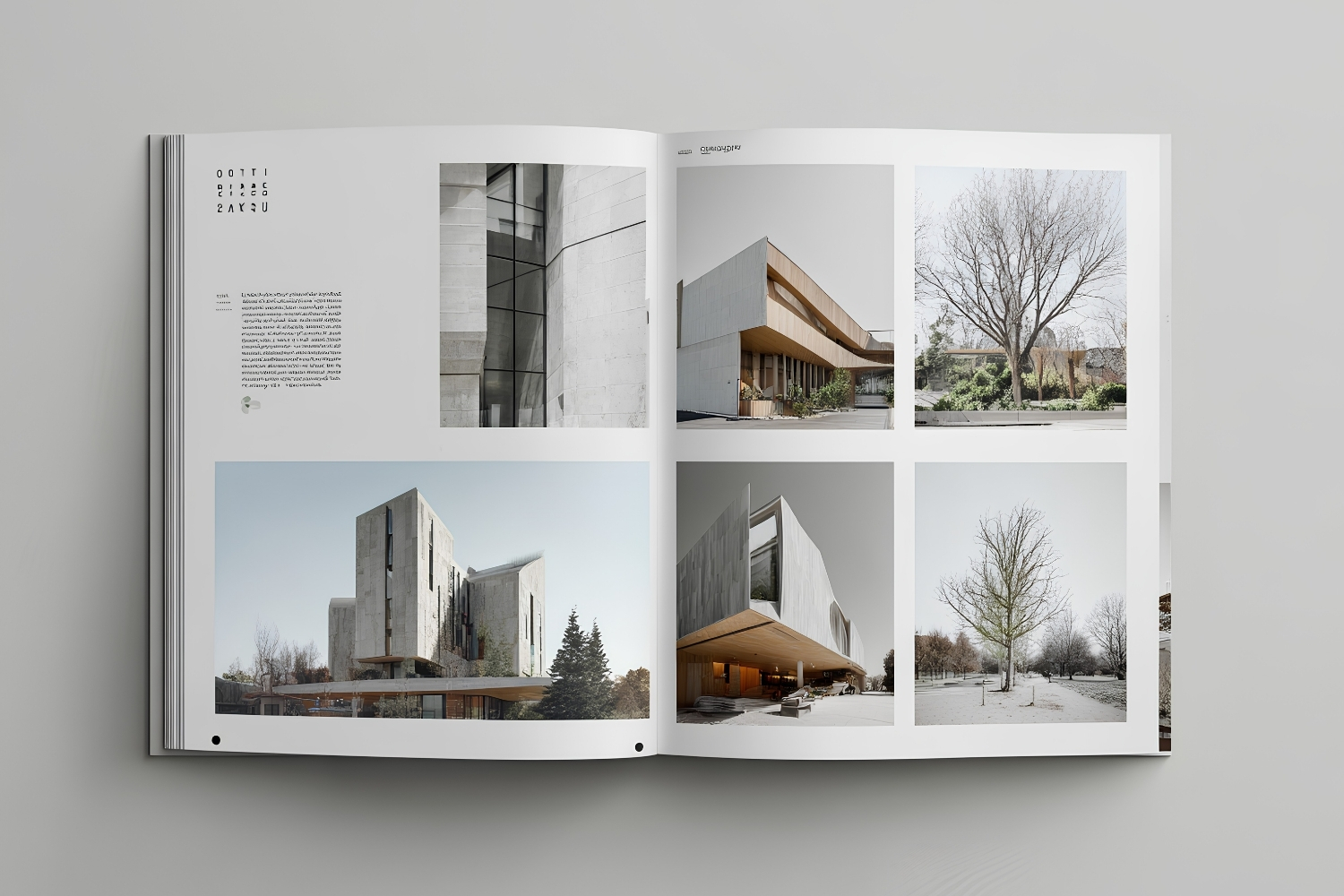
A strong portfolio guides the reader’s eye with intention. Establish a consistent grid so that margins, image sizes, and text blocks line up from page to page, which makes the whole document feel deliberate rather than assembled at the last minute. Give your best images room to breathe and resist the urge to fill every inch of the page. Generous white space reads as confidence. Keep typography simple, usually one or two typefaces, and use size and weight rather than many different fonts to signal what matters most on each spread.
Telling a Story With Each Project
Reviewers want to understand how you think, not just what you produced. For each project, briefly explain the problem, your concept, and the key decisions that shaped the result. Show a logical progression from early diagrams and sketches through to plans, sections, and final renders so the reader can follow your reasoning. A short, clear caption next to each drawing does more than a long paragraph of text. The goal is to let someone grasp the idea of a project in a few seconds and then reward closer reading with deeper detail.
Print, Digital, and File Formats
Plan for how your portfolio will actually be viewed. For email and online applications, export a compressed PDF that stays under the size limit many offices set, often around ten to fifteen megabytes, so it does not bounce. For interviews, a printed booklet shows craft and lets you control the sequence of the conversation. Keep a higher-resolution print version separate from the lightweight digital one. Always check that text remains legible and images stay sharp at the final output size before you send anything.
Tailoring to the Application
One portfolio rarely fits every opportunity. A practice known for housing will want to see your residential and detailing skills, while a school application may value conceptual range and process work. Reorder projects and trim content so the most relevant work appears first. Quality always beats quantity; a focused set of three or four strong projects is more persuasive than a long parade of average ones. Adjusting the emphasis for each recipient signals that you understand their work and are serious about the role.
Final Checks Before You Send
Small errors undermine an otherwise polished portfolio, so build in a review pass. Proofread all text for spelling and grammar, since typos in headings are especially noticeable. Confirm your contact details are correct and easy to find. Ask a peer or mentor to skim the document quickly and tell you which project they remember, which reveals whether your strongest work is landing. Finally, open the exported file on a different device to catch any broken images, font substitutions, or layout shifts before it reaches a reviewer.
- Architect portfolio checklist
- architect portfolio examples
- Architectural Portfolio Checklist
- Architectural Portfolio Fonts
- architectural portfolio templates
- architecture portfolio examples
- design portfolio checklist
- essential portfolio items for architects
- portfolio building for architects
- professional architecture portfolio









Concept Diagram Architecture: Hand-Rendered vs Digital Diagrams in a Portfolio
Hand-rendered and digital diagrams send different signals to portfolio reviewers. This piece...
 Furkan Sen5 Mins read
Hand-Rendered vs Digital Diagrams: What Works Better in a Portfolio?
A practical breakdown of hand-rendered and digital diagrams in architecture portfolios, covering...
 Sinan Ozen6 Mins read
Architecture Portfolio Layout: Designing Pages with Grid and Typography
A focused look at architecture portfolio layout, from setting up a column...
Elif Ayse Sen8 Mins read
How to Present Your Work in an Architecture Portfolio Interview
Reaching the interview means your work earned a closer look, but presenting...
Furkan Sen7 Mins read


Leave a comment