

5 Powerful Skills That All Architecture Students Should Acquire
 Furkan Sen27 May 20226 Mins read438

Table of Contents Show
The skills architecture students need go well beyond drawing and modeling. Research, design thinking, presentation, communication, and the management of time and money form the foundation that carries graduates from studio crits into professional practice. Building these abilities early makes the move from school to the office far smoother.
Architecture is a demanding course, often five years long, and the degree teaches you much more than how to produce a clean set of drawings. Some abilities you pick up on purpose, others arrive quietly through long nights and tough reviews. The five skills below are the ones that repeatedly separate confident young architects from those who struggle in their first job. Treat them as habits to practice, not boxes to tick.
Why Skills Matter More Than Grades
Employers rarely hire a portfolio alone. They hire a person who can research a brief, solve a spatial problem, explain the result, work inside a team, and hit a deadline without burning the budget. Those are transferable skills that hold their value across firms, sectors, and even careers outside design. A high grade fades into the background within months of graduating, yet the skills architecture students need keep paying off for decades. The way you think and the way you work stay with you long after the certificate is filed away.
1. Research Skills
Architecture is a creative field, and many of us treat it as an art. It is also the responsible craft of building for a community, which means understanding people, climate, structure, and code before a single line goes down. Good research turns a vague idea into a defensible decision. We are surrounded by information, but pulling out the data that actually matters is a skill you build through repetition, not something you are born with.
Strong researchers question the relevance of everything, from why a corridor is a certain width to how a material ages in a given climate. Over time that habit makes you faster and more accurate. It also shows in your work: a project grounded in precedent and site analysis reads as serious, while a project built on assumption tends to fall apart under questioning. Reading current projects on platforms like ArchDaily is one easy way to keep a steady stream of references flowing.
💡 Pro Tip
When you start a studio project, spend the first two or three days reading case studies and site history before you sketch anything. Designers who research first defend their decisions far better in juries, because every move traces back to a real constraint or precedent.
2. Design Thinking and Problem Solving
It is good to create something that looks striking, but a building also has to be practical, buildable, and matched to what the client actually needs. Design thinking is the loop you run to balance those demands: study the problem, test ideas, get feedback, and refine. A capable architect knows how to compromise between visual appeal and function without losing either one.
Every design idea starts from a concern, a constraint, or a need. Working through them with facts, measured drawings, and analysis keeps your brain agile and curious, even in daily life. The same approach that helps you resolve a tricky stair detail also helps you read a design brief and spot what the client has not said out loud. Problem solving is less about sudden inspiration and more about a steady method you can repeat under pressure.

3. Presentation Skills
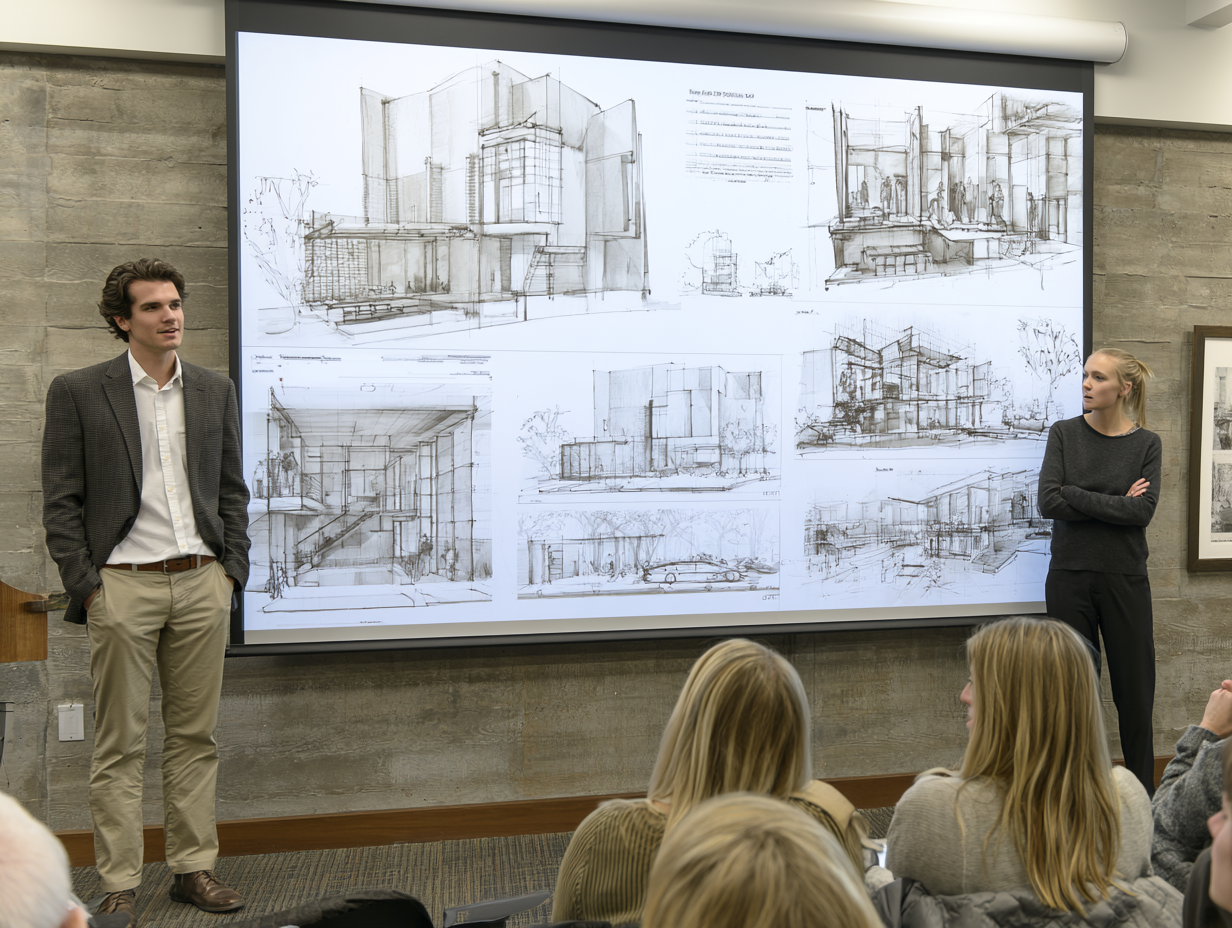
Architecture is not only about creation, it is also about expression. You have to present your ideas to others and represent yourself as a designer. Presentation covers your renders, drawings, and diagrams, but it also covers how you stand in front of a jury, how you frame a concept, and how you carry a room. A weak presentation can sink a strong design, while a clear one can lift an average scheme.
This skill grows through repetition and a bit of nerve. Every crit, every pin-up, and every client-style mock review adds to it. Graduates who can deliver a composed, confident presentation are genuinely hard to find, which makes them valuable the moment they leave college. Learning the basics of clear architectural drawing feeds directly into this, since a presentation is only as good as the work it stands on.
📌 Did You Know?
In the United States, earning a license means passing the Architect Registration Examination (ARE), a six-division exam administered by NCARB, on top of an accredited degree and thousands of logged hours of experience. The exam tests practice management and project work, not just design talent.

4. Communication Skills
Brilliant design ideas have little value if you cannot get them across. Architecture leans heavily on clear communication, and that means more than talking. It covers writing, sketching to explain, listening to a client, and reading a room during a negotiation. You will spend a large part of your career translating between people who think in spaces and people who think in budgets, schedules, or regulations.
Endless juries, group projects, and studio debates are training grounds for this. They push your verbal and non-verbal communication in equal measure. The skill matters even more once you understand how many parties sit around a single project. To see how those roles interact, it helps to compare the architect and engineer roles on a typical team, where clear communication is often the difference between a smooth project and a stalled one.

5. Management of Time and Money
From the first week of school, deadlines shape an architecture student’s life, and the all-nighter becomes almost a rite of passage. Time management is arguably the most practical skill the degree forces on you. Build a steady routine while you are a student and professional life feels far less chaotic later. Good scheduling keeps work, client coordination, and faculty feedback moving, and it cuts down on the panic that comes with last-minute submissions.
Money management belongs in the same bracket. As the old line goes, time is money, and a working architect has to understand both. How much does a physical model cost to build? How do material prices shift across a project? How do fees relate to hours spent? Asking these questions early gives you a head start on the business side of practice, which is something design studios rarely teach in depth.
💡 Pro Tip
Block your studio week the way a firm blocks billable hours. Give rough time budgets to concept, drawings, and model-making, then track where the hours actually go. The gap between your estimate and reality is the most useful project management lesson school will hand you.

One More Skill Worth Building: Digital and Software Fluency
The original five cover the human side of practice, but one more deserves a place on any modern student’s list. Firms expect graduates to arrive with working knowledge of the tools that run a studio, from BIM platforms to rendering and post-production software. You do not need to master every program, yet you should be fluent in at least one modeling tool, one drafting tool, and one image editor. Professional bodies such as the American Institute of Architects publish resources that show how digital practice keeps shifting, so treat software learning as ongoing rather than a one-time effort.
Pair that technical fluency with the five core skills and you cover both halves of the job: the thinking and the doing. A student who can research, design, present, communicate, manage a schedule, and operate the software is close to job-ready before the diploma is even printed.
How Do Architecture Students Build These Skills?
Most of the skills architecture students need are built by treating every project as practice for real work. Volunteer to present in group reviews even when you would rather hide. Keep a running file of precedents so research becomes a reflex. Set personal deadlines ahead of the official one to learn your own pace. Look up how licensure works in your country, whether that is the path to architectural licensure in the United States or the equivalent route elsewhere, so you understand where these skills lead. For a broader sense of the profession itself, even a general reference like the overview of the architect’s role helps connect studio work to working life.
None of this needs to be perfect. Architecture school is hard on the mind and the body, so protect your health while you grow, and lean on practical guides such as these wellness essentials for architecture school when the pressure climbs. Skills built under sustainable conditions last, while skills built on burnout rarely do.
Where to Go From Here
Your Next Step: Pick the one skill on this list where you feel weakest, then attach it to your current project. If presentation worries you, rehearse your next crit out loud and time it. If research is the gap, build a short precedent file before your next concept. Small repeated reps beat any last-minute cramming, and they compound across the rest of your education.







How to Present Your Work in an Architecture Portfolio Interview
Reaching the interview means your work earned a closer look, but presenting...
Furkan Sen7 Mins read

Architect vs Engineer: Roles, Salary & Key Differences
Architects and engineers both shape the built environment, but their education, daily...
Furkan Sen8 Mins read

Architecture Student Internships: How to Find, Apply & Succeed in 2026
Architecture student internships are essential for bridging academic training with professional practice....
 Sinan Ozen12 Mins read

Architect Hours of Work: How Many Hours Do Architects Really Work?
Architect hours of work range from a standard 40-hour week to 50–70...
Furkan Sen8 Mins read


Leave a comment