

Affordable Modern Interior Design: Smart Shopping & DIY Decor
Discover how to transform your living space into a modern sanctuary without spending a fortune. Learn the secrets of color coordination, upcycling, smart thrift shopping, and DIY projects that add personality and style on a budget.
 Elif Ayse Sen1 June 20245 Mins read584

Table of Contents Show
Affordable modern interior design is the practice of creating a clean, contemporary home using smart shopping, secondhand finds, and DIY decor instead of a big renovation budget. The approach leans on decluttering, a tight color palette, and a few well placed updates so a space looks current without heavy spending.
A modern room rarely depends on how much you spend. It depends on restraint, good light, and a handful of intentional pieces. With a clear plan you can refresh a living room, bedroom, or home office for the cost of a few cans of paint and a weekend of effort. The sections below break down where to save, where to spend, and how to get a custom feel on a real budget.
Start by Subtracting: The Free Reset
Before buying anything, work with what you already own. The fastest path to a contemporary look costs nothing, because modern style is built on open space and clean lines rather than more stuff.
Declutter to Reveal Clean Lines
Pull everything off surfaces and shelves, then return only what earns its place. Empty walls, clear counters, and a little breathing room around furniture instantly read as modern. This is the same principle behind minimalist design, where reducing visual noise lets the remaining pieces stand out. Decluttering also helps you see what the room actually needs before you spend a dollar.
💡 Pro Tip
Photograph a room before you start, then again after decluttering. Comparing the two shots makes it obvious which corners still feel heavy, and it stops you from buying decor that simply fills space you just cleared.
Shop Your Own Home First
Move pieces between rooms before you assume you need new ones. A chair from the bedroom can anchor a reading nook, a kitchen vase can hold pens on a desk, and art swapped wall to wall feels brand new in a different setting. Rotating textiles like throw pillows and curtains changes a room’s mood for free. This habit alone often delays or cancels half a planned shopping list.
Set a Style and Color Palette
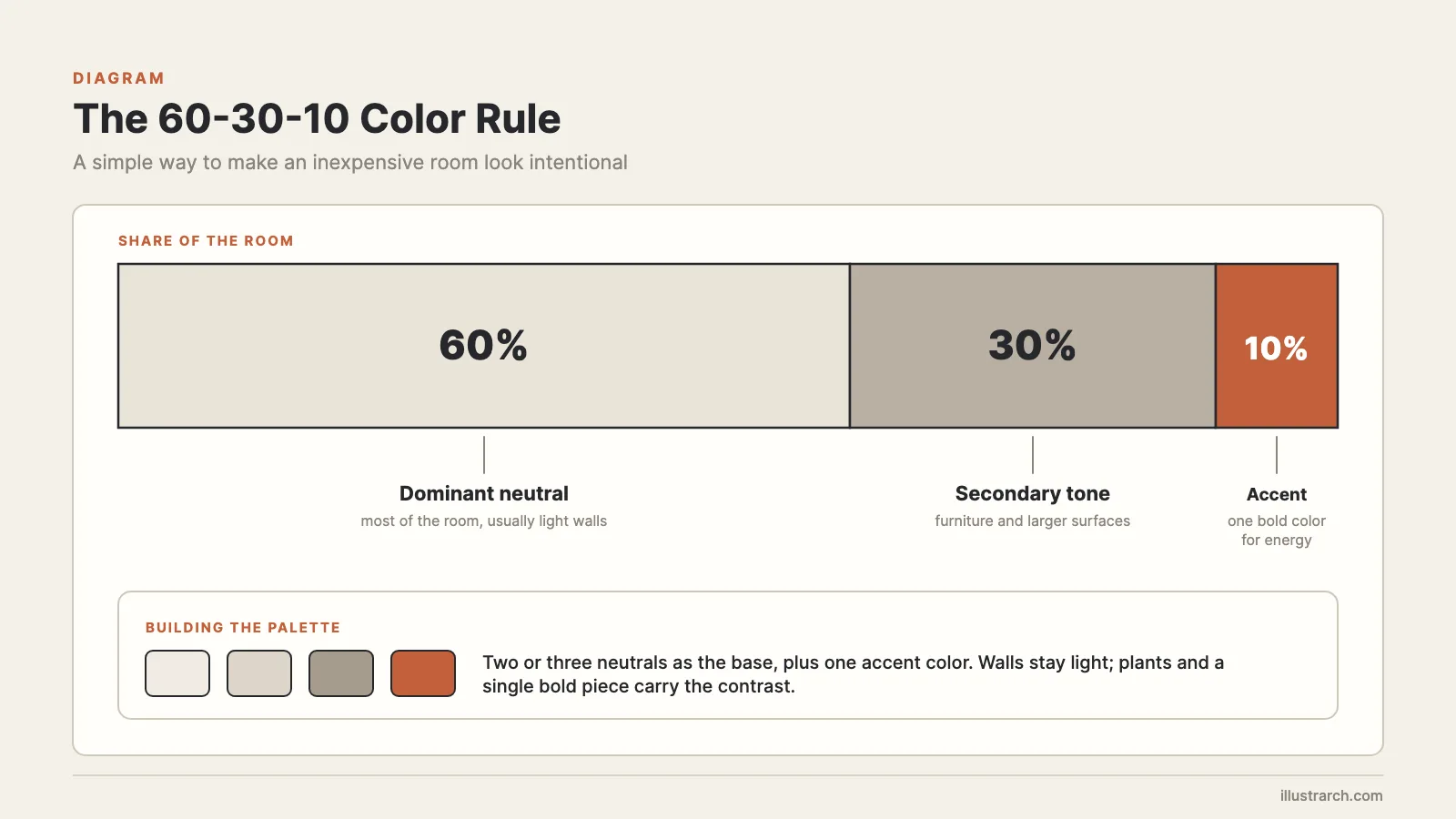
A cohesive palette is what separates a styled room from a random one. Pick a base of two or three neutrals, then add one accent color for energy. Modern interiors usually keep walls light and let furniture, plants, and a single bold piece carry the contrast. If you want a sharper sense of what defines the look, the key elements of modern interior design are worth reviewing before you commit to colors.
📌 Did You Know?
Designers often follow the 60-30-10 rule: roughly 60 percent of a room in a dominant neutral, 30 percent in a secondary tone, and 10 percent in an accent. Keeping to those proportions is a simple way to make an inexpensive room look intentional.
Smart Shopping for Affordable Decor
When you do buy, the goal is character per dollar. The best budget rooms mix sources, so nothing looks like it came from a single catalog.
Thrift, Vintage, and Secondhand Finds
Thrift stores, estate sales, and online marketplaces are full of solid wood furniture and unique objects priced far below retail. Look for good bones such as dovetail joints, real wood, and clean lines that you can refinish or restyle. A dated dresser with a coat of paint and new hardware can outperform a flat-pack piece for less money.
Shop with a list and a tape measure so you buy for the room you have, not the deal in front of you. Vintage finds also bring an age and patina that new furniture cannot fake, which gives a modern room warmth and keeps it from looking sterile. One genuine older piece per room is usually enough to set that tone.
Mix High and Low
Spend on the few items you touch and use daily, then save on everything decorative. A quality sofa or mattress is worth the investment, while pillows, art, and shelving can come from budget sources. The contrast of one good piece among affordable finds reads as intentional rather than cheap. The same logic applies to a workspace, where a single solid desk paired with thrifted accessories goes a long way, as covered in these budget-friendly home office furniture options.
Where to Spend vs Where to Save
This quick split helps you direct a limited budget toward the pieces that matter most:
| Spend On | Save On |
|---|---|
| Sofa and mattress | Throw pillows and blankets |
| Main light fixture | Wall art and prints |
| A statement rug | Shelving and storage bins |
| Quality paint | Vases, trays, and small decor |
DIY Decor That Looks Custom
DIY is where a small budget stretches the furthest. A weekend of work can change a room more than a large purchase, and the result feels personal because you made it.
Paint and Wall Treatments
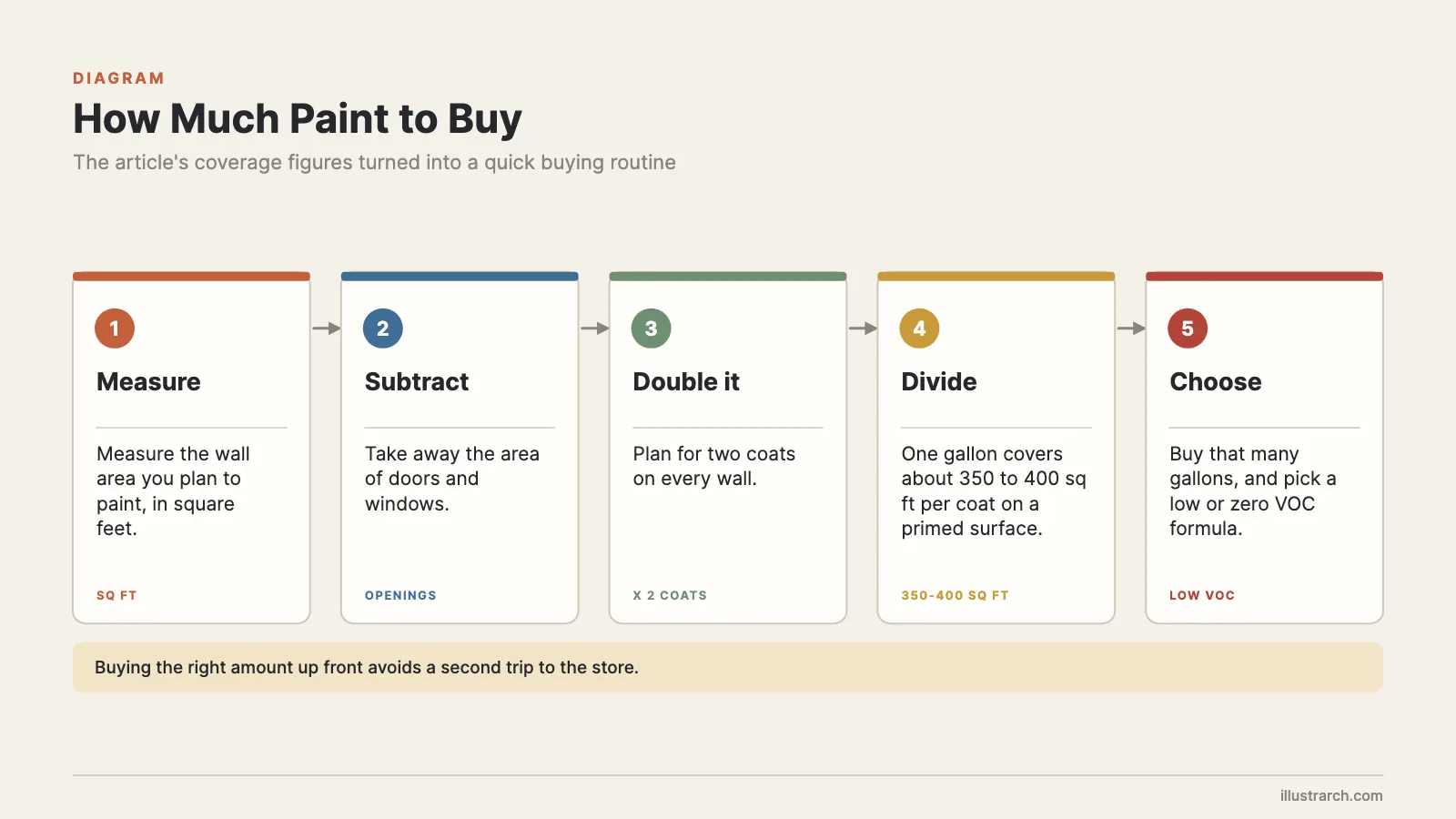
Paint is the highest impact change per dollar. A fresh neutral, a single accent wall, or peel-and-stick wallpaper can modernize a room for very little. When you choose paint, check the label for low or zero VOC formulas, since the US EPA notes that indoor VOC levels from products like paint can run far higher than outdoor levels.
📐 Technical Note
Paint coverage averages around 350 to 400 square feet per gallon for a single coat on a primed surface. Measure wall area, subtract doors and windows, and plan for two coats so you buy the right amount and avoid a second trip to the store.
Handmade Accents and Upcycled Pieces
Build simple decor from inexpensive materials: floating shelves from raw timber, framed fabric as art, or a planter from a thrifted bowl. Refinishing old furniture is a form of upcycling, which turns a discarded item into something of higher value rather than sending it to landfill. These touches give a room a custom edge that mass-produced decor cannot match.
⚠️ Common Mistake to Avoid
Buying many small decorative items at once is the fastest way to make a budget room feel cluttered and cheap. Add accents slowly, one piece at a time, and judge each against the room before bringing in the next.
Accessorize Without Overspending
The final layer is accessories, and a little goes far. Plants are the cheapest way to bring life and color into a modern space, and a few large leaves read better than many tiny pots. Group objects in odd numbers, vary their heights, and leave empty space around them. Mirrors stretch light and make small rooms feel larger, while one oversized piece of art often costs less than a wall of small frames and looks more deliberate. Lighting matters as much as objects here, so layer a warm floor lamp or a few inexpensive table lamps instead of relying on a single overhead bulb. Soft, layered light flatters a budget room and hides the small flaws that harsh ceiling light tends to reveal. For more ideas on doing this on a tight budget, see this guide to modern interiors on a budget, and browse the ArchDaily interior design archive for current looks worth borrowing.
Where to Go From Here
Your Next Step: Pick one room, declutter it completely, then list only the two or three pieces it truly needs before you spend anything. Starting with subtraction keeps your budget aimed at the changes that actually move the room toward a modern, finished feel.





How Integrated Furniture Can Shape the Architecture of Urban Interiors
Most people treat furniture as the last decision in interior architecture, yet...
 illustrarch Editoral Team2 Mins read
Architecture and Interior Design: Can Architects Specialize in Both?
Architects hold most of the skills interior design needs, from space planning...
 Furkan Sen5 Mins read
How to Make an Architecture Mood Board: A Step-by-Step Guide
A practical walkthrough for building an architecture mood board, covering how to...
Furkan Sen6 Mins read
The Power of Ambience: Role of Restaurant Design on Customer Experience
A restaurant's ambience, its lighting, layout, and decor, quietly shapes how guests...
illustrarch Editoral Team3 Mins read


Leave a comment