

Rethinking Workspaces with a Sustainable Approach
A collective workspace in Airoli, New Mumbai, redefines traditional office design by prioritizing interaction, flexibility, and sustainable architecture for modern work needs.
 illustrarch Editoral Team28 April 20191 Mins read396


A collective workspace in Airoli, New Mumbai, by architect Aditya Bhat reimagines the office as a place of interaction rather than pure production. The design of offices over the last century has bounced between rigid arrangements and organic layouts, each with limited success. With the rise of a new independent workforce, the role of the workplace has shifted, and this project pairs that cultural change with a spatial computation method that evaluates spaces with a more human approach. The combination gives rise to a new office typology demonstrated through a new-built collective workspace.
New ways of working, activity-based settings and multiple locations are beginning to substitute traditional offices, giving way to modern workplaces, and further trends are expected to follow the same direction. Flexibility, need-based space requirements, dynamic spaces that are inspiring both during the day and night, and spaces that allow for collaboration are some of the ingredients that make for an apt office today. The project looks to redefine the way business spaces have been conventionally understood.
Designing for an activity-based workplace
The contemporary office building carries a particular set of design demands. It must balance focused individual work against open collaboration, manage acoustics and daylight across deep floor plates, and remain adaptable as teams grow or reorganize. An activity-based working model responds to this by offering a range of settings rather than assigning one desk to one person, which lets a building support quiet concentration, casual meeting and group production within the same footprint. The approach here treats those settings as the building blocks of the plan.
Locating the project in Navi Mumbai places it within one of the region’s planned commercial corridors, where demand for flexible, future-ready office space continues to grow. A sustainable approach to such a workplace usually means more than energy performance alone. It draws on principles of sustainable architecture such as daylight access, natural ventilation, durable shared infrastructure and spaces that can be reconfigured rather than rebuilt as needs change over time.
By weaving together independent work patterns, activity-based settings and a human-centred reading of space, Aditya Bhat’s proposal sketches a workplace tuned to how people actually use an office now. It stands as an argument that the office, far from disappearing, is being remade around interaction, choice and adaptability.




Savan House by Nobico Studio
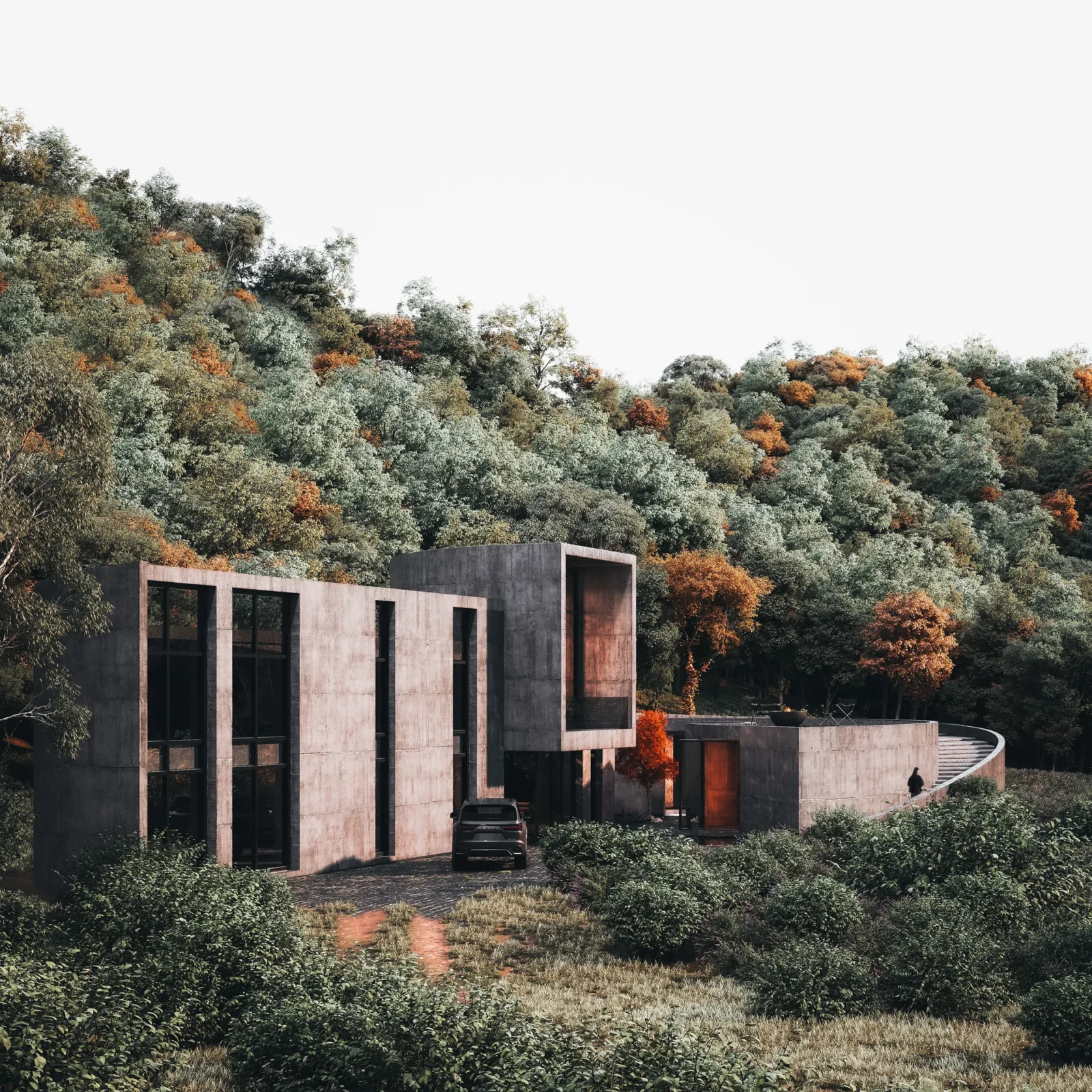
Savan House is Nobico Studio's unbuilt concept for a forested hillside in...
illustrarch Editoral Team3 Mins read

Renaatus Irumathi
Renaatus Irumathi Residence features 69 spacious apartments designed with contemporary aesthetics, maximizing...
illustrarch Editoral Team2 Mins read

White Khamovniki
White Khamovniki is a residential tower project in Moscow that combines urban...
illustrarch Editoral Team1 Mins read

Millennium Horizon
Millennium Horizon is an innovative architectural project in the UAE that uses...
illustrarch Editoral Team2 Mins read


Leave a comment