

Center for Formation and Dissemination of Circus Arts
The Center for Formation and Dissemination of Circus Arts in Lima is designed to provide specialized training spaces for circus arts, addressing a significant local deficit.
 illustrarch Editoral Team3 April 20212 Mins read357
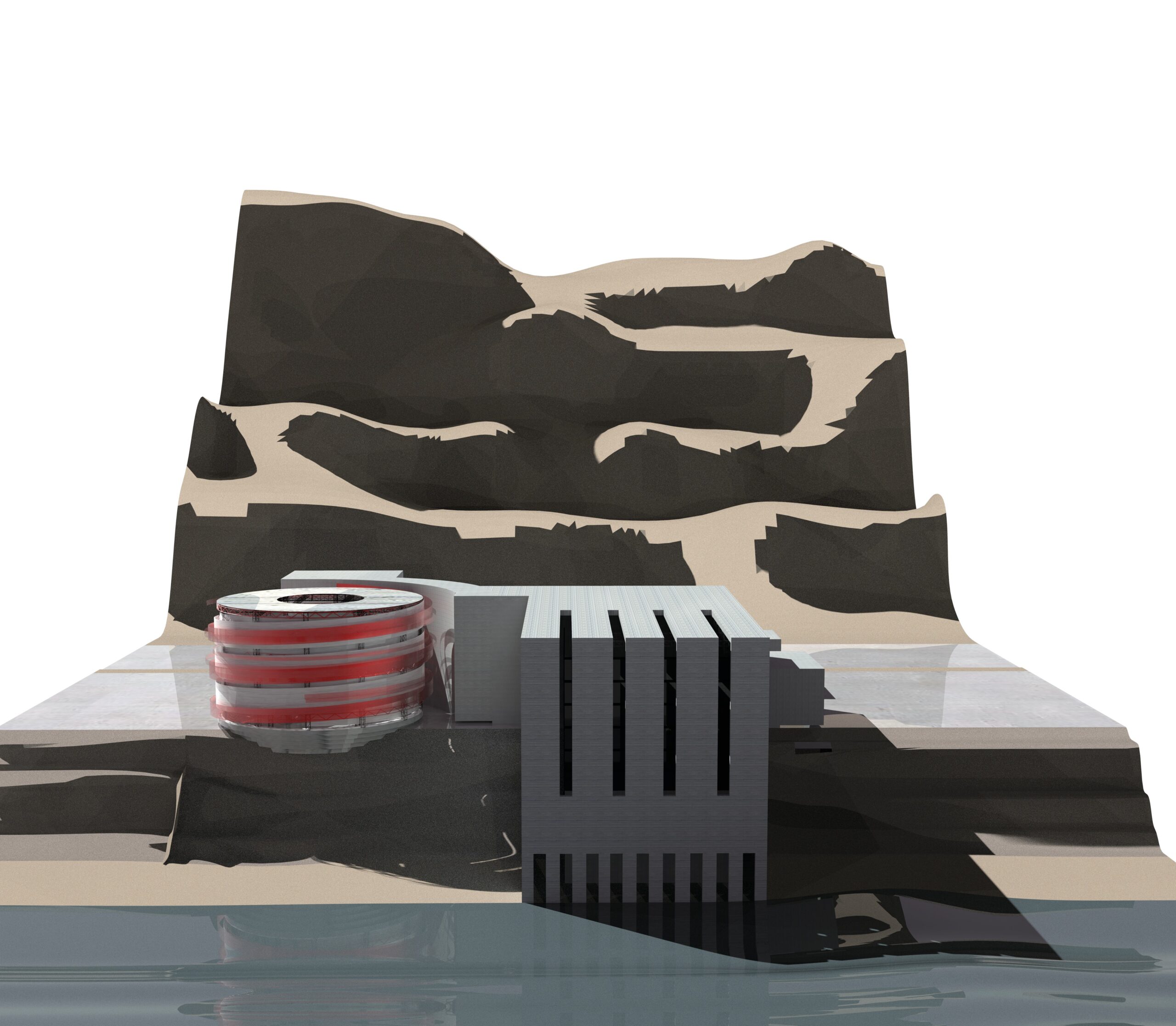


The Center for Formation and Dissemination of Circus Arts is a thesis project by Adriana Depaz Torres that proposes the revaluation of the circus show in Peru through a building dedicated to teaching this discipline. Sited on the Malecón la Herradura in Chorrillos, Lima, the project responds to a real deficit of specialized spaces for circus training in the country. Rather than treat the circus as a passing spectacle, it gives the art form a permanent home where students and educators can learn, rehearse, and perform together.
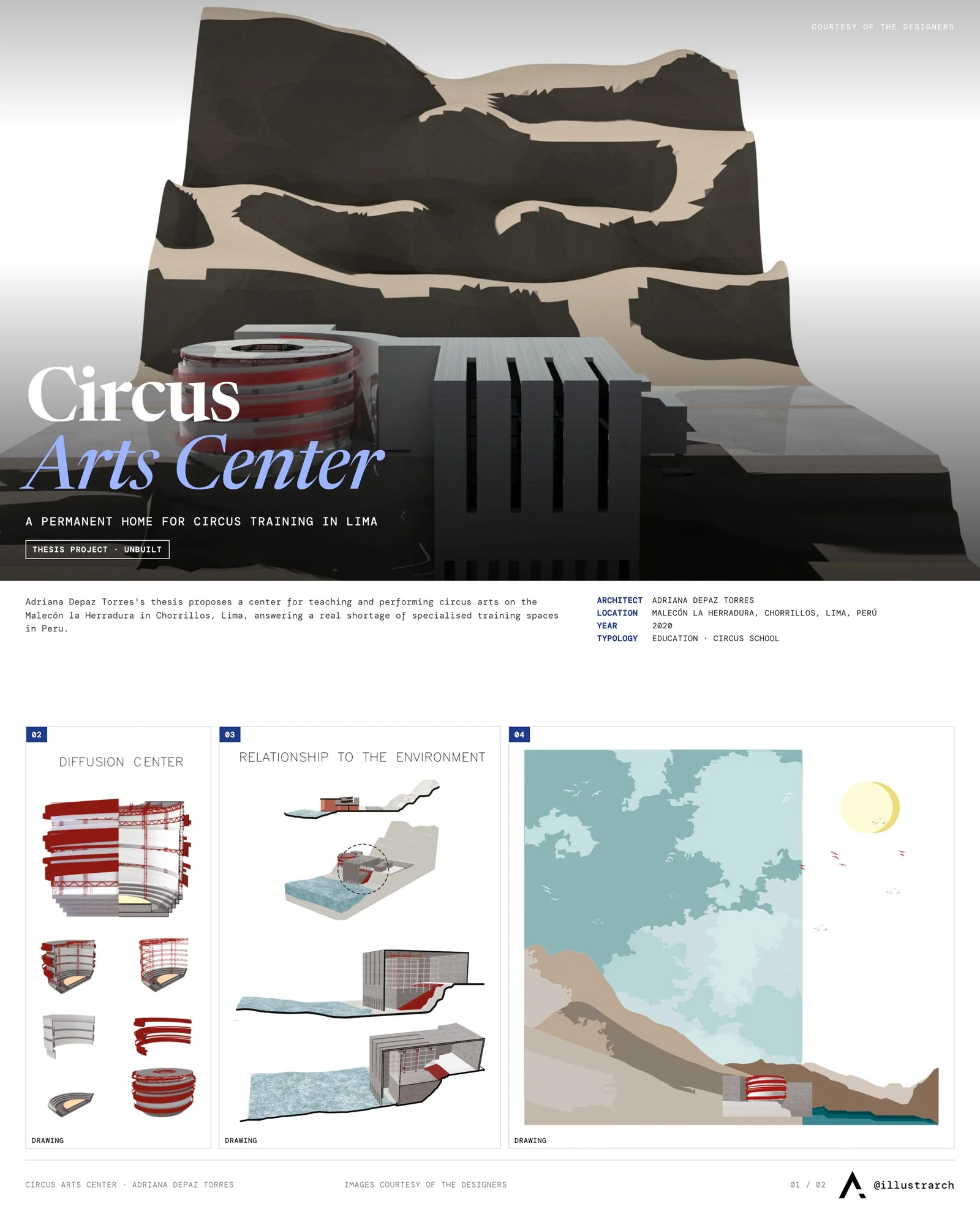
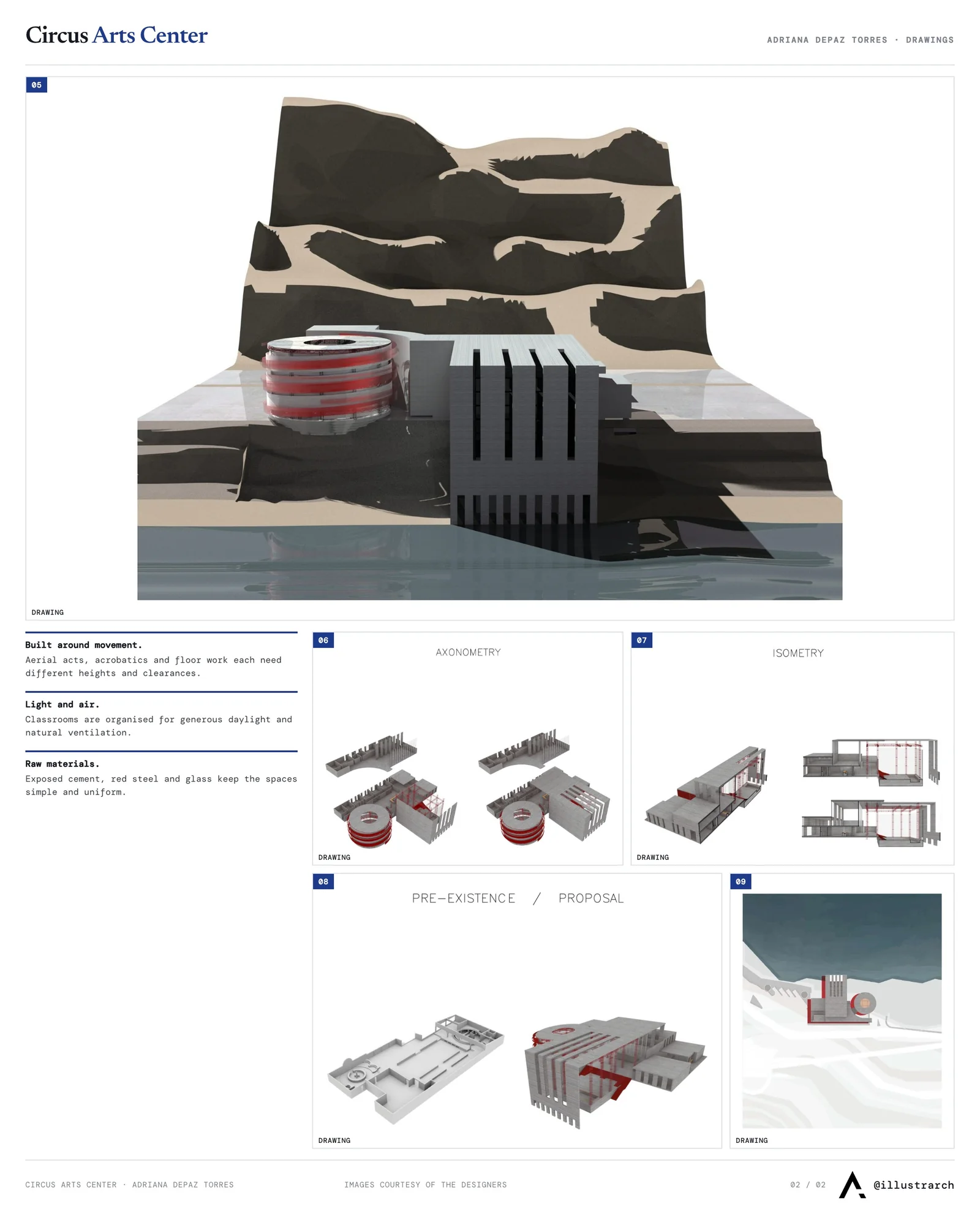
The formal approach grew out of a careful study of the primary spatial needs and functions of a training center. Students and educators are the main users, so both theoretical and practical classrooms were organized around correct distribution, generous lighting, and natural ventilation, with spatiality calibrated for the optimal performance and use of the facilities. Circus instruction is unusually demanding in spatial terms because aerial acts, acrobatics, and floor work each require very different ceiling heights, rigging, and clearances, and a center of this kind has to reconcile those needs within a single coherent plan.
Material and Site Strategy
The material palette of exposed cement, red steel, and glass gives the building uniformity, simplicity, and purity within its spaces. Working with raw and honest materials is a recurring strategy in contemporary Peruvian architecture, where exposed concrete reads as both structure and finish, reducing visual noise so that movement and performance remain the focus. By keeping the building as a single legible whole, the design holds an identity and character within the existing urban environment without altering it.
Location is central to the concept. The pre-existence sits on a beautiful boardwalk south of the capital, surrounded by nature, and one of the main strategies is to maintain a close connection with the sea so that, when the tide rises, the water can enter the building. This dialogue between architecture and shoreline turns the changing tide into part of the spatial experience, an idea well suited to a coastal district like Chorrillos. As a proposal for cultural infrastructure, the project argues that the performing arts deserve buildings as considered as those given to any other civic institution.
Learn more about the circus arts, the district of Chorrillos in Lima, and the broader field of Peruvian architecture.


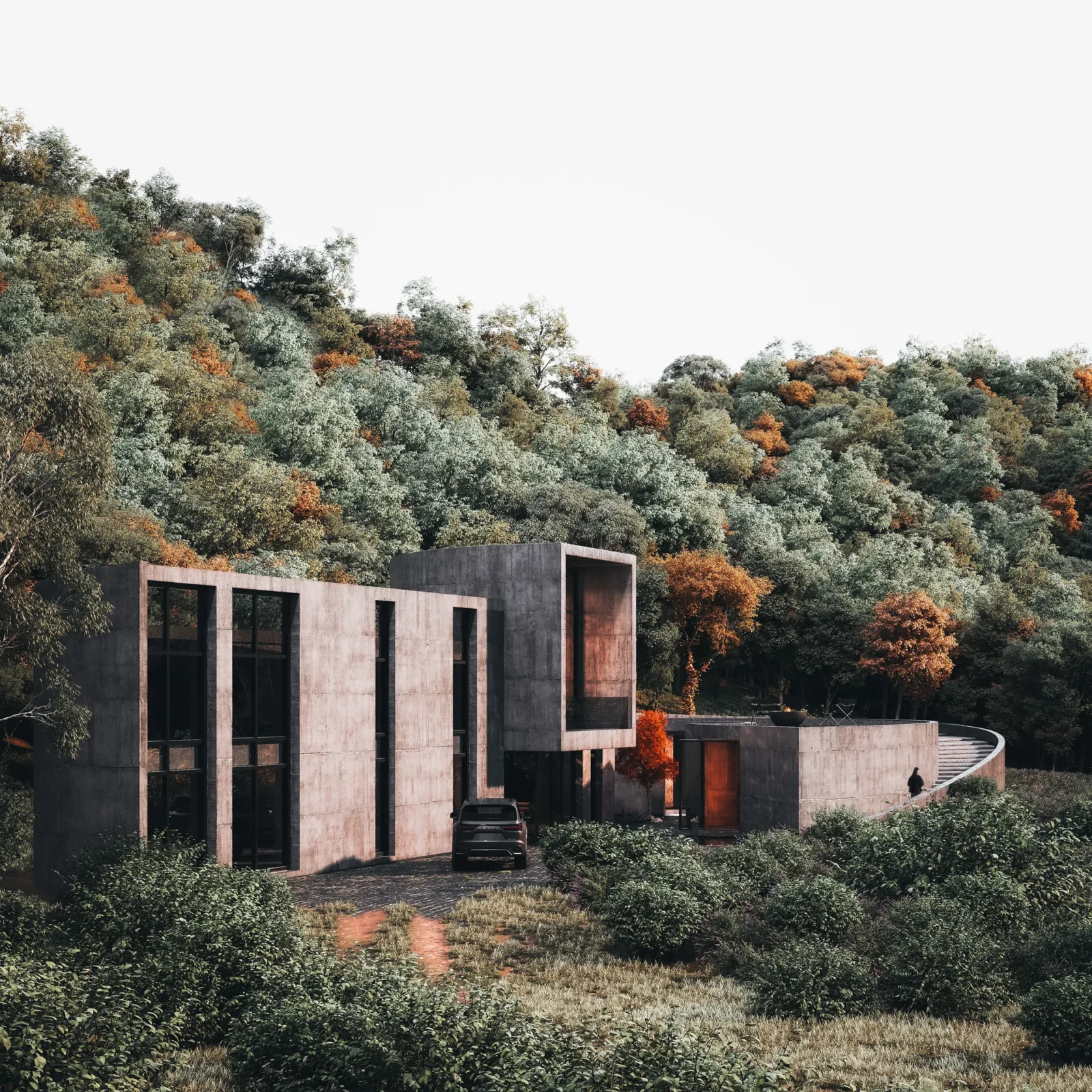
Savan House by Nobico Studio
Savan House is Nobico Studio's unbuilt concept for a forested hillside in...
illustrarch Editoral Team3 Mins read

Renaatus Irumathi
Renaatus Irumathi Residence features 69 spacious apartments designed with contemporary aesthetics, maximizing...
illustrarch Editoral Team2 Mins read
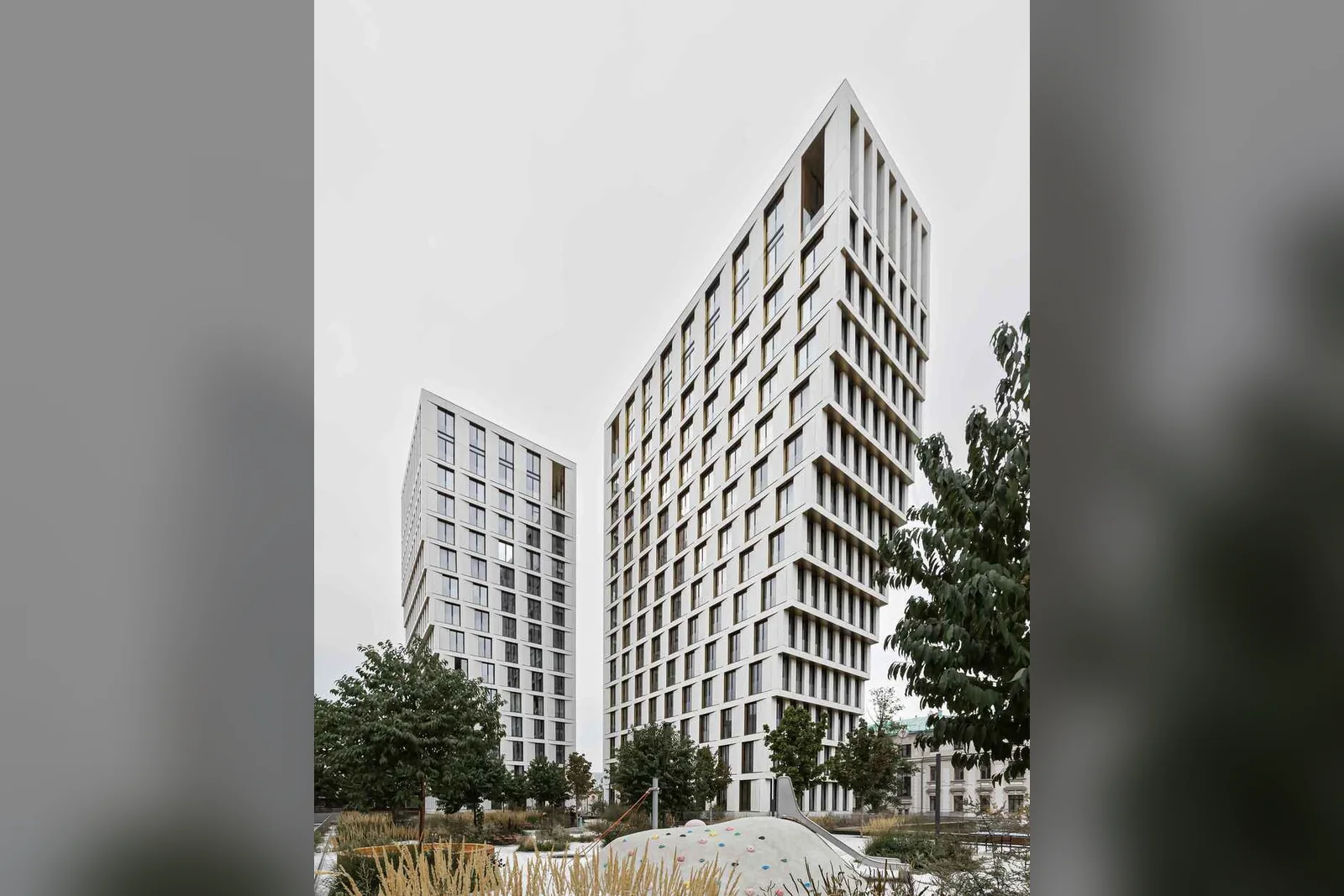
White Khamovniki
White Khamovniki is a residential tower project in Moscow that combines urban...
illustrarch Editoral Team1 Mins read
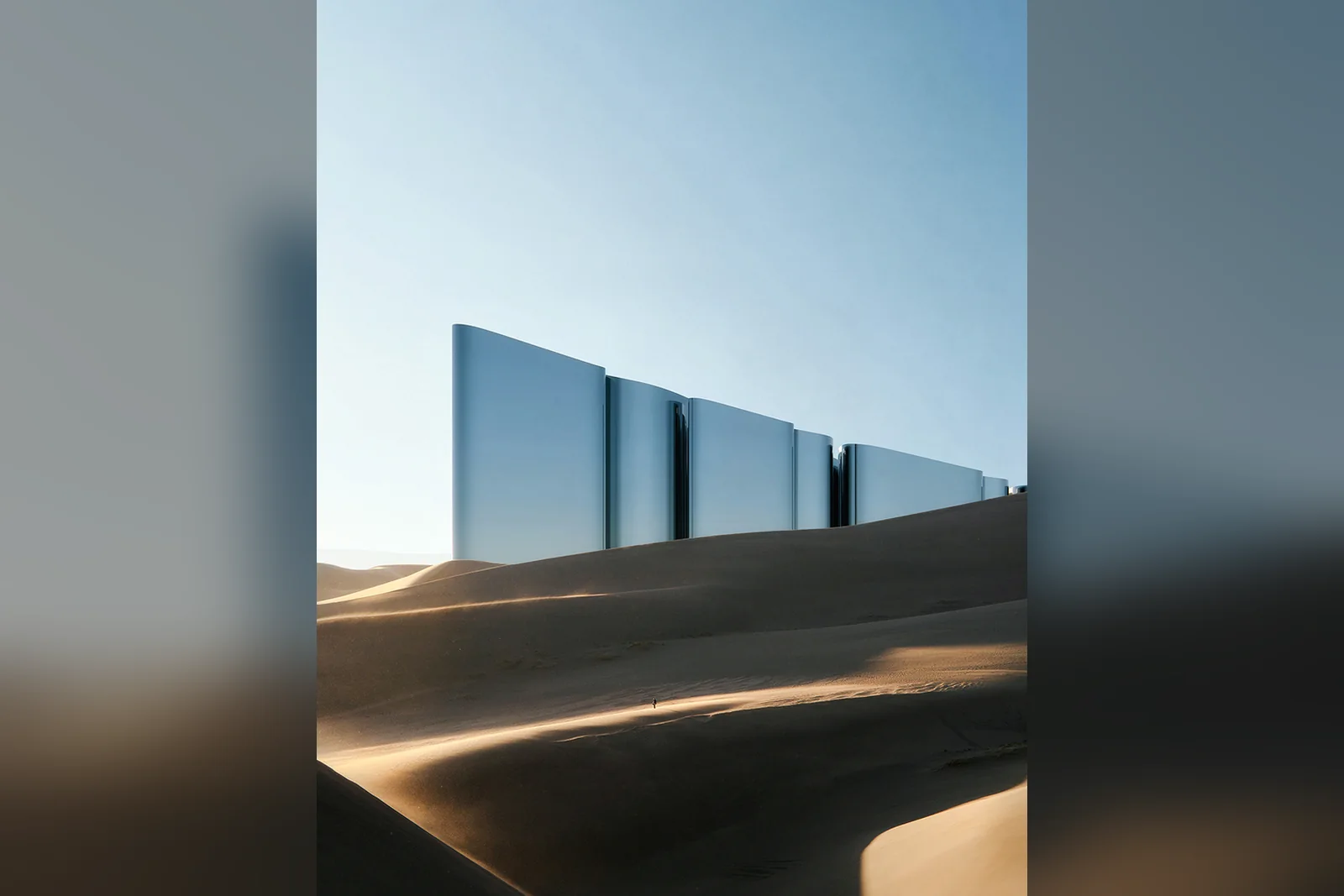
Millennium Horizon
Millennium Horizon is an innovative architectural project in the UAE that uses...
illustrarch Editoral Team2 Mins read


Leave a comment