

Explore a Guide to the Best Architectural Wonders Around the Globe
Discover 15+ architectural wonders spanning ancient pyramids, modern skyscrapers, and sustainable masterpieces. This guide explores the Great Pyramid, Taj Mahal, Burj Khalifa, hidden gems like Petra, and eco-conscious designs reshaping cities worldwide, with travel tips for every destination.
 Bahattin Duran31 January 202513 Mins read552

Table of Contents Show
The world’s best architecture tells stories you can feel before you read a single word. From ancient marvels carved with precision tools that remain a mystery, to modern masterpieces shaped by algorithms and sustainable technology, the most impressive architecture in the world continues to push the boundaries of what humans can build. This guide explores the greatest architectural wonders across centuries and continents, revealing why these structures still matter today.
As we explore some of the most iconic buildings across the globe, we’ll uncover the fascinating details that make each one extraordinary. Whether you’re drawn to the timeless elegance of historical landmarks or the bold designs of contemporary creations, famous architecture around the world offers something for every traveler, designer, and curious mind.
Why the Best Architecture in the World Still Matters
Architectural wonders encapsulate the essence of human achievement, blending artistry, engineering, and innovation. These structures tell stories of civilizations, reflecting societal values, technological advancements, and cultural evolution. They also serve as economic engines, drawing millions of visitors and generating billions in revenue each year.
Consider the numbers: the Colosseum draws over 7 million visitors annually, while the Eiffel Tower welcomes roughly 7 million as well. According to the UNESCO World Heritage Centre, sites with heritage designation see measurable boosts in tourism and local investment. Great architecture of the world does not sit passively; it actively shapes cities, economies, and cultural identities.
They serve as milestones marking human progress. From Egypt’s pyramids to Dubai’s Burj Khalifa, these landmarks demonstrate how architecture adapts to changing needs and capabilities over time.
Architectural landmarks contribute to cultural preservation. Sites like the Taj Mahal and Machu Picchu offer insights into the traditions, customs, and spiritual beliefs of the cultures that created them.
These wonders boost economies by attracting tourism. Millions visit landmarks such as the Eiffel Tower and the Colosseum annually, supporting local businesses and generating significant revenue.
They inspire future generations. By demonstrating the possibilities of creativity and ingenuity, architectural marvels encourage new ideas in design, engineering, and sustainable practices.

Historical Marvels: Architecture Wonders of the World
Historical marvels showcase the ingenuity and artistic legacy of ancient civilizations. These structures stand as enduring symbols of human achievement, connecting us to our shared heritage. Each one represents a different approach to construction, materials, and purpose, yet they all share one thing: they were built to last.
The Great Pyramid of Giza, Egypt
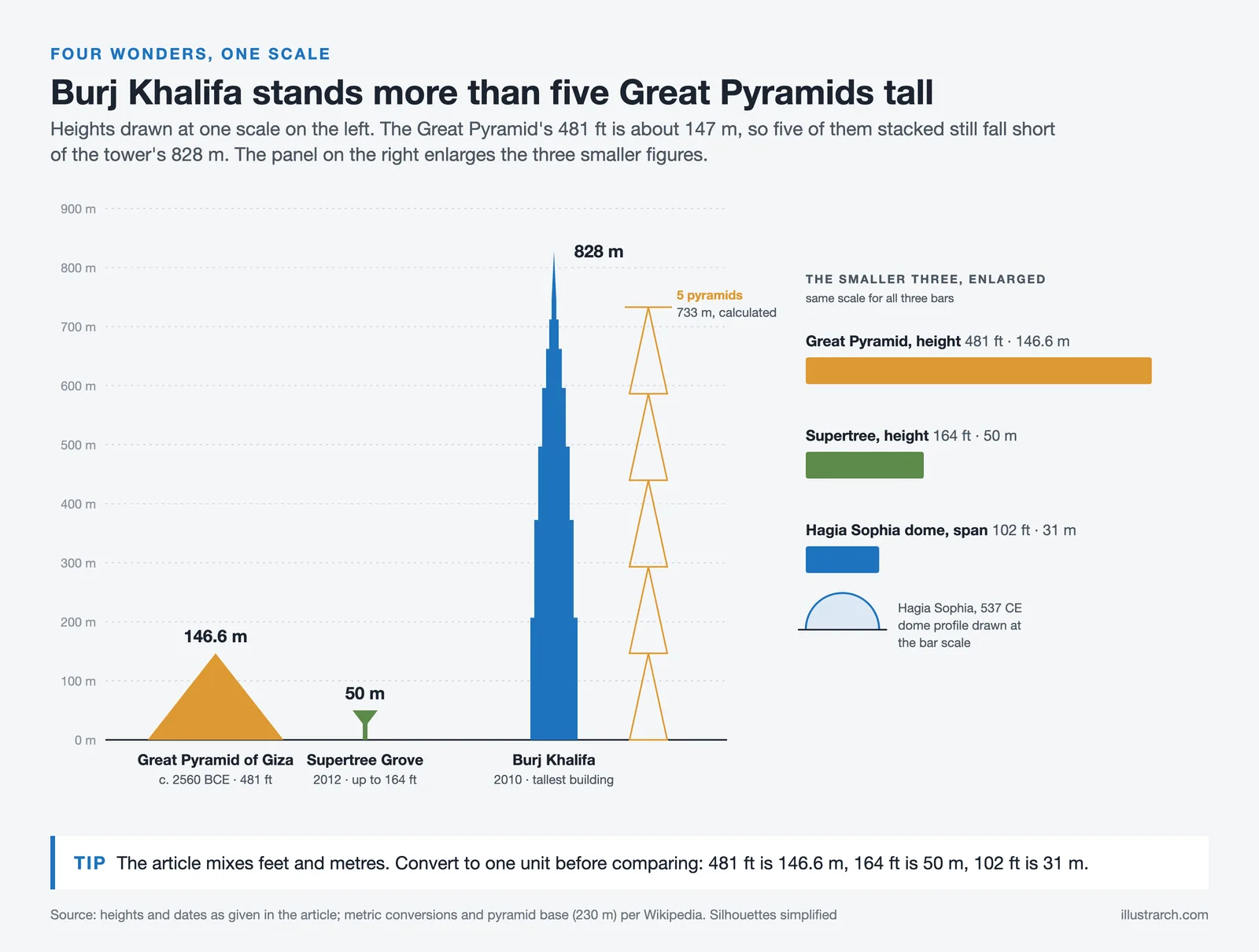
The Great Pyramid of Giza is the only surviving wonder of the ancient world. Standing at 481 feet when completed around 2560 BCE, it served as a tomb for Pharaoh Khufu. Its construction used approximately 2.3 million limestone blocks, each weighing 2.5 to 15 tons, according to records from the Encyclopaedia Britannica. The precision of its alignment with cardinal points and its complex internal chambers reveal the advanced engineering skills of ancient Egyptians. This iconic structure remains central to Egypt’s cultural identity, attracting millions of visitors annually.
The Colosseum, Italy
The Colosseum in Rome represents the grandeur of ancient Roman engineering. Built between 70-80 CE, this amphitheater could hold up to 50,000 spectators and featured advanced systems, such as a retractable awning and subterranean chambers. It hosted gladiator games and public spectacles, reflecting Roman societal values and entertainment preferences. Despite damages from earthquakes and stone looting, the Colosseum remains a defining symbol of Roman history and an essential heritage site, drawing over 7 million tourists annually.
Machu Picchu, Peru
Machu Picchu, perched at 7,970 feet above sea level in the Andes, is a testament to Incan architectural expertise. Built in the 15th century, it incorporates polished dry-stone construction and terraces that harmonize with the mountain landscape. This citadel likely served as a royal estate or religious site, underscoring the Incas’ spiritual connection to their environment. Discovered in 1911, UNESCO designated it a World Heritage Site in 1983. Machu Picchu continues to captivate global audiences, with over 1.5 million visitors exploring its ruins each year.
The Taj Mahal, India
No discussion of famous architecture around the world is complete without the Taj Mahal. Completed in 1653, this white marble mausoleum in Agra was commissioned by Emperor Shah Jahan for his wife Mumtaz Mahal. The structure merges Islamic, Persian, and Indian architectural styles, featuring intricate inlays of semi-precious stones and perfect bilateral symmetry. Reflecting pools and formal gardens enhance its sense of calm and elegance. The UNESCO listing recognizes the Taj Mahal as a masterpiece of the world’s heritage, and it receives over 7 million visitors each year.
La Sagrada Familia, Spain
Antoni Gaudi’s unfinished basilica in Barcelona has been under construction since 1882, and upon completion (projected for 2026, marking the centenary of Gaudi’s death), it will feature 18 spires and become the tallest church in the world. The design draws heavily from nature, with tree-like columns and organic forms that reject straight lines entirely. With over 4.5 million annual visitors, the Sagrada Familia is both an architectural wonder and a living construction site that demonstrates how vision can outlast a single lifetime.

Modern Architectural Gems: Great Architecture of the World
Modern architecture embodies innovation, functionality, and artistic vision, bringing contemporary design to life. These iconic structures challenge traditional norms, showcasing the possibilities of advanced engineering and creative expression. Each building on this list has redefined what a city can look like.
Burj Khalifa, UAE
The Burj Khalifa, standing at 828 meters, holds the title of the tallest building in the world. Its aerodynamic triple-lobed design, inspired by the Hymenocallis flower, ensures stability against high winds. This skyscraper, located in Dubai, features a mix of residential, commercial, and leisure spaces, including an observation deck on the 148th floor for unparalleled views. Designed by Adrian Smith of Skidmore, Owings & Merrill, the Burj Khalifa exemplifies modern engineering and sustainable technologies, such as a unique condensation collection system.
Sydney Opera House, Australia
The Sydney Opera House, a UNESCO World Heritage Site, is renowned for its sail-like shell design. Completed in 1973, Danish architect Jorn Utzon created this masterpiece, blending form and function seamlessly. Situated on Bennelong Point overlooking Sydney Harbor, it serves as a premier venue for performances, hosting over 1,500 events annually. Advanced construction techniques and innovative materials allowed these massive shells to achieve their signature curvature, which revolutionized 20th-century architecture.
Guggenheim Museum, Spain
The Guggenheim Museum in Bilbao, designed by Frank Gehry, redefined museum architecture in 1997. Its undulating titanium-clad exterior complements the natural beauty of the Nervion River. Inside, expansive gallery spaces host contemporary and modern art collections, attracting millions of visitors since its opening. The “Bilbao Effect,” credited to the museum, transformed the city’s image by boosting tourism and inspiring urban regeneration globally. Cutting-edge algorithms informed the design, blending geometry with artistic intent.
Heydar Aliyev Center, Azerbaijan
Designed by Zaha Hadid, one of the most influential architects of our time, the Heydar Aliyev Center in Baku completely rejects straight lines. Its flowing white curves seem to rise from the ground like a wave frozen in motion. Completed in 2012, the building earned the Design Museum’s Design of the Year award in 2014. The center houses a conference hall, gallery hall, and museum, and its fluid geometry challenged conventional construction methods, pushing fabrication technology forward.

Innovative Sustainable Designs: Best Architecture of the World for the Future
Sustainable architectural designs blend innovation with eco-conscious principles, demonstrating how structures can merge functionality and environmental responsibility. According to the U.S. Green Building Council, buildings account for nearly 40% of global carbon emissions, making sustainable design not just admirable but essential. These examples showcase forward-thinking approaches to creating harmony with nature.
Gardens by the Bay, Singapore
Gardens by the Bay incorporates vertical gardens and advanced climate control systems to create an urban green space. Its Supertree Grove, with structures up to 164 feet tall, supports solar panels, rainwater harvesting, and exotic plants. The Flower Dome, the largest glass greenhouse globally, and the Cloud Forest prioritize energy efficiency while immersing visitors in biodiversity. Singapore’s approach here has become a benchmark for sustainable architecture trends worldwide.
Bosco Verticale, Italy
Bosco Verticale, meaning “Vertical Forest,” features two residential towers in Milan with over 2,000 trees and shrubs integrated into their facades. This design reduces urban heat island effects and improves air quality while housing residents. Its innovative approach to greening urban environments sets a precedent for sustainable architecture in dense cities.
The Edge, Netherlands
The Edge, in Amsterdam, is considered the world’s most sustainable office building. Its smart design utilizes advanced technology to minimize energy consumption, including a rainwater collection system and a rooftop solar array generating renewable energy. The building’s interior fosters employee well-being with natural light and adaptive workspaces.

Hidden Architectural Gems Worth Discovering
Beyond the world-famous landmarks, some of the most impressive architecture in the world sits in unexpected places. These lesser-known structures reward curious travelers with unique designs and rich histories that rival any famous landmark.
Petra, Jordan
Rather than being constructed from raw materials, Petra’s structures are carved directly into vibrant rose-colored sandstone cliffs. Once a thriving trading center and the capital of the Nabataean Empire from 400 BCE to 106 CE, this ancient city was mostly abandoned by the 8th century and remained lost to the Western world for over 1,000 years. Named one of the New Seven Wonders of the World in 2007, only about 15% of the ancient city has been excavated, according to archaeological surveys, meaning most of Petra still lies underground.
Lalibela Rock-Hewn Churches, Ethiopia
In the Ethiopian highlands, eleven medieval churches were carved from single blocks of rock in the 12th century under King Lalibela. The most striking of these, Biete Ghiorgis (Church of Saint George), features a cross-shaped design visible only from above. These monolithic structures, connected by ceremonial trenches and passageways, represent one of the most remarkable architectural discoveries in Africa.
Hagia Sophia, Turkey
Few buildings have served as many purposes as Hagia Sophia in Istanbul. Originally built as a Christian cathedral in 537 CE, it later became an Ottoman mosque and then a museum before being reconverted to a mosque in 2020. Its massive dome, spanning 102 feet in diameter, appears to float above the interior thanks to concealed structural supports. The building represents the epitome of Byzantine architecture and remains a powerful example of how structures evolve alongside the civilizations they serve.
Comparing the World’s Architectural Wonders
With architecture wonders of the world spanning thousands of years and dozens of countries, it helps to see key details side by side. The following table compares some of the most celebrated structures by era, location, and distinguishing characteristics.
Architectural Wonders at a Glance
This comparison highlights how different eras, materials, and cultural contexts produced the best architecture of the world:
| Structure | Location | Era | Key Feature | Annual Visitors |
|---|---|---|---|---|
| Great Pyramid of Giza | Egypt | c. 2560 BCE | 2.3 million limestone blocks | Not officially published |
| Colosseum | Italy | 70-80 CE | 50,000-seat amphitheater | ~7 million |
| Taj Mahal | India | 1632-1653 | Perfect bilateral symmetry | ~7 million |
| Burj Khalifa | UAE | 2010 | 828m, tallest building | ~2 million |
| Sydney Opera House | Australia | 1973 | Sail-like shell design | ~8.2 million |
| Bosco Verticale | Italy | 2014 | 2,000+ trees on facades | External viewing |
Tips for Exploring Architectural Wonders
Exploring architectural wonders requires preparation to fully appreciate their cultural, historical, and artistic significance. A thoughtful approach enhances your experience and deepens your understanding of these extraordinary sites.
Planning Your Trips
Thorough planning maximizes exploration of architectural landmarks. Research site details, including opening hours, guided tour availability, and seasonal considerations, for optimal visiting conditions. Prioritize ticket reservations for popular attractions like the Colosseum or Burj Khalifa to avoid delays. Map nearby attractions to group visits efficiently and reserve accommodations near major landmarks to save transit time. Many of the world’s architectural wonders you must see require advance booking, especially during peak travel months between May and September.
Understanding Local History
Understanding historical context reveals deeper meanings behind architectural designs. Learn about the culture, period, and influence behind structures like the Great Pyramid of Giza or the Sydney Opera House. Engage with local guides or audio tours offering in-depth insights into historical significance and design philosophy. Read guidebooks, visit museum exhibits, or explore online resources covering landmark architects, construction techniques, and cultural symbolism. The American Institute of Architects (AIA) offers educational resources on architectural history and appreciation.
Capturing Iconic Structures
Capturing architectural marvels requires attention to angles, lighting, and composition. Early morning or golden hour light enhances photographs of sites like Machu Picchu or Gardens by the Bay. Use wide-angle lenses for intricate details in structures with expansive facades, such as the Taj Mahal. Opt for vantage points that highlight the scale and surroundings, such as cityscapes with the Eiffel Tower or drone views showcasing Bosco Verticale’s greenery integration.
Choosing the Right Season
Timing significantly impacts how you experience the best architecture in the world. Open-air landmarks like the Acropolis in Athens or Machu Picchu are best visited in spring or autumn to enjoy mild weather and thinner crowds. Indoor attractions such as museums, cathedrals, and cultural centers can be explored year-round, though off-peak months often provide a quieter, more rewarding experience. Always verify operational hours and closure days, as some historic landmarks restrict visiting during ceremonies or holidays.
Frequently Asked Questions
What is the most impressive architecture in the world?
Opinions vary, but structures like the Great Pyramid of Giza, the Taj Mahal, and the Burj Khalifa consistently appear on lists of the most impressive architecture in the world. The Great Pyramid remains extraordinary because it was built over 4,500 years ago with precision that modern engineers still study. For modern architecture, the Burj Khalifa’s 828-meter height and aerodynamic design represent the current peak of structural engineering.
Which country has the best architecture in the world?
Italy, Spain, France, and Japan frequently top rankings for best architecture of the world. Italy alone hosts over 50 UNESCO World Heritage Sites, many of which are architectural landmarks. Spain offers a range from Moorish palaces like the Alhambra to Gaudi’s modernist works. Japan balances ancient wooden temples with cutting-edge contemporary buildings, making it a destination for architecture lovers seeking diversity.
What are the 7 architectural wonders of the world?
The New Seven Wonders of the World, selected by a global poll in 2007, include the Great Wall of China, Petra in Jordan, Christ the Redeemer in Brazil, Machu Picchu in Peru, Chichen Itza in Mexico, the Colosseum in Italy, and the Taj Mahal in India. The Great Pyramid of Giza holds honorary status. These architecture wonders of the world span multiple continents and represent thousands of years of human building achievement.
How does sustainable architecture shape the future of building design?
Sustainable architecture, such as Bosco Verticale in Milan and The Edge in Amsterdam, integrates energy-efficient systems, green materials, and nature-based design principles. These approaches reduce carbon emissions and operational costs while improving occupant health. According to the U.S. Green Building Council, certified green buildings can reduce energy use by up to 30%. As environmental regulations tighten globally, sustainable architecture will increasingly define how cities grow.
What makes a building an architectural wonder?
An architectural wonder typically combines exceptional engineering, cultural significance, aesthetic innovation, and lasting impact. These structures push the boundaries of what is technically possible in their era, carry deep symbolic meaning for their communities, and continue to influence design thinking long after completion. Both ancient monuments and contemporary buildings can earn this distinction when they achieve something genuinely unprecedented.
Conclusion
The best architecture in the world represents the pinnacle of human creativity, history, and innovation. These structures stand as timeless symbols of cultural identity, artistic expression, and technological advancement. Each building, from ancient landmarks to modern marvels, tells a unique story, connecting us to the past while inspiring the future.
By exploring iconic sites such as the Great Pyramid of Giza, the Burj Khalifa, and Gardens by the Bay, we gain insight into their creators’ vision and the civilizations they represent. These wonders, whether historical, modern, or sustainable, continue to shape our understanding of design and cultural heritage. Through travel and thoughtful exploration, we deepen our appreciation and engage with the shared achievements of humanity.
Visitor statistics referenced above are based on publicly reported figures from site management authorities and tourism boards. Actual numbers may vary by year and season.
More Famous Landmarks and Architectural Wonders to Explore
Modern Architectural Wonders of the World
Modern architectural wonders are buildings completed since the late twentieth century that push structure, material, and form beyond what earlier engineering allowed. They pair computational design with new facade and steel systems to create shapes that read as sculpture at city scale.
| Modern Wonder | City | Completed | Architect |
|---|---|---|---|
| Burj Khalifa | Dubai | 2010 | Adrian Smith (SOM) |
| Guggenheim Museum Bilbao | Bilbao | 1997 | Frank Gehry |
| Sydney Opera House | Sydney | 1973 | Jørn Utzon |
| The Shard | London | 2012 | Renzo Piano |
| Marina Bay Sands | Singapore | 2010 | Moshe Safdie |
| Beijing National Stadium | Beijing | 2008 | Herzog & de Meuron |
| Heydar Aliyev Center | Baku | 2012 | Zaha Hadid |
| Millau Viaduct | Millau | 2004 | Norman Foster |
These projects show how digital tools changed what a landmark can be. For a country by country view of standout buildings, see our guide to architectural wonders by country, and for a wider gallery of striking buildings, browse the world’s most beautiful buildings. Dubai’s Museum of the Future is one of the newest entries to the list.
Famous Landmarks Completed in the 20th Century
Many of the world’s most recognized landmarks were finished in the twentieth century, when reinforced concrete, structural steel, and the elevator let architects build taller and span wider than ever before. The list below gathers famous landmarks completed between 1900 and 1999 with their opening years.

| Landmark | Location | Completed |
|---|---|---|
| Empire State Building | New York City | 1931 |
| Christ the Redeemer | Rio de Janeiro | 1931 |
| Golden Gate Bridge | San Francisco | 1937 |
| Fallingwater | Pennsylvania | 1937 (guest house 1939) |
| Atomium | Brussels | 1958 |
| Space Needle | Seattle | 1962 |
| Gateway Arch | St. Louis | 1965 |
| Sydney Opera House | Sydney | 1973 |
| Petronas Towers | Kuala Lumpur | 1998 |
The Empire State Building opened in 1931 and held the title of world’s tallest building for almost forty years, a reminder of how fast twentieth century engineering moved.


4 Comments





How to Book a Helicopter from Athens to Folegandros
Folegandros has no commercial airport, so ferries can make a short trip...
 illustrarch Editoral Team4 Mins read

Sedona Oak Creek Cabins for Family Vacations: 7 Kid-Friendly Retreats Compared
Seven kid-friendly cabins along Oak Creek Canyon, scored and ranked on amenities,...
illustrarch Editoral Team11 Mins read

Architectural Wonders by Country: An Interactive Map Guide
A continent-by-continent breakdown of the world's most iconic architectural wonders, organized by...
 Furkan Sen11 Mins read

Cultural Architecture Destinations: 8 Stunning Places to Visit Around the World
A focused look at the world's most stunning cultural architecture destinations, covering...
Furkan Sen12 Mins read


I think it’s interesting how buildings can tell stories and represent cultures.
It’s nice to learn about different architectural styles from around the world.
The article gives a good overview of famous structures, which is kind of neat.
I found the section on the Great Pyramid of Giza really interesting. It’s amazing to think about how it was built so long ago and still stands today. The precision in its alignment is impressive, but I wonder how they managed to move those massive limestone blocks without modern machinery.