

Top 10 Architectural Wonders of the World (Ancient and Modern)
A tour of ten of the greatest architectural wonders on earth, mixing ancient marvels like the Colosseum and Machu Picchu with modern icons such as the Burj Khalifa and Guggenheim Bilbao, plus the architect and era behind each one.
 Begum Gumusel12 December 20256 Mins read352
Table of Contents Show
Architectural wonders are the buildings and monuments that pushed engineering, artistry, and ambition further than anyone thought possible in their time. From ancient stone fortifications to record breaking skyscrapers, these structures shaped skylines, cultures, and the history of design itself. Here are ten of the most remarkable examples on the planet.
What connects a 2,000 year old Roman arena to a glass tower finished in 2010? Each one answered a real problem of its era, whether that meant defending an empire, honoring a ruler, or proving that steel and concrete could reach nearly a kilometer into the sky. The wonders below mix ancient marvels with modern icons, spread across six continents, and every one of them still teaches architects something today.
What Makes a Structure an Architectural Wonder?
A true architectural wonder does more than look impressive. It solves a structural or cultural challenge in a way no one had managed before, and it holds up as a reference point long after its builders are gone. Scale matters, but so does invention. The Colosseum introduced crowd management systems still studied by stadium designers. The Sydney Opera House forced engineers to invent new geometry to build its shells.
Longevity is the other test. Many of these sites carry UNESCO World Heritage status, which recognizes outstanding universal value to humanity. That combination of technical daring and lasting meaning separates a genuine wonder from a merely large building. For a closer look at how individual structures earn that status, our roundup of iconic buildings that inspire covers the design principles behind the most celebrated masterpieces.
💡 Pro Tip
When you study any of these landmarks, start with the structural problem the builders faced, not the finished silhouette. Ask how they moved loads, spanned openings, and worked with the materials available locally. Reading a wonder through its constraints teaches far more than admiring the final image.
The 10 Architectural Wonders of the World
The list runs from the oldest surviving marvels to the newest engineering records, so you can see how the definition of a wonder shifted across roughly two millennia.
1. The Great Wall of China
Stretching across northern China, the Great Wall was built and rebuilt over many dynasties, with most of the surviving brick and stone sections dating to the Ming period between 1368 and 1644. It was never a single continuous barrier but a network of walls, watchtowers, and garrison forts designed to control movement along the frontier. A 2012 government survey measured the full system at about 21,196 kilometers, making it the longest human made structure ever recorded.
2. The Colosseum
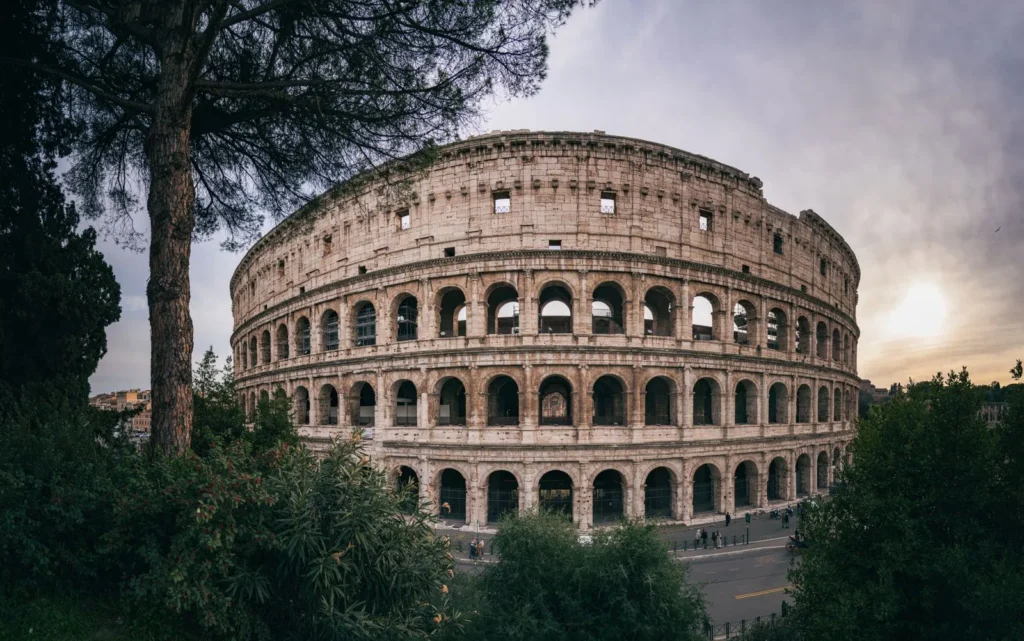
Rome’s Flavian Amphitheatre, begun under Emperor Vespasian around 72 CE and completed under Titus in 80 CE, could seat an estimated 50,000 spectators. Its layered system of arches, vaults, and numbered entrances let crowds fill and clear the arena quickly, a logic that modern stadium design still follows.
📌 Did You Know?
The Colosseum was once fitted with a retractable awning called the velarium, operated by teams of sailors who worked the ropes and masts to shade spectators from the sun. It was one of the earliest large scale tension structures, an idea that reappears in today’s cable roofed arenas.
3. The Taj Mahal
Commissioned by the Mughal emperor Shah Jahan as a mausoleum for his wife Mumtaz Mahal, the Taj Mahal in Agra, India, was largely completed around 1653. The design, often attributed to court architect Ustad Ahmad Lahauri, balances a central domed tomb with four minarets in near perfect symmetry, all clad in white marble inlaid with semiprecious stone.
4. Machu Picchu
Set high in the Andes of Peru’s Cusco Region, Machu Picchu was built by the Inca in the mid fifteenth century, likely during the reign of Pachacuti. Its terraces, dry stone walls, and water channels follow the mountain rather than fighting it, a lesson in reading terrain that resonates with sustainable design thinking today.
5. Hagia Sophia
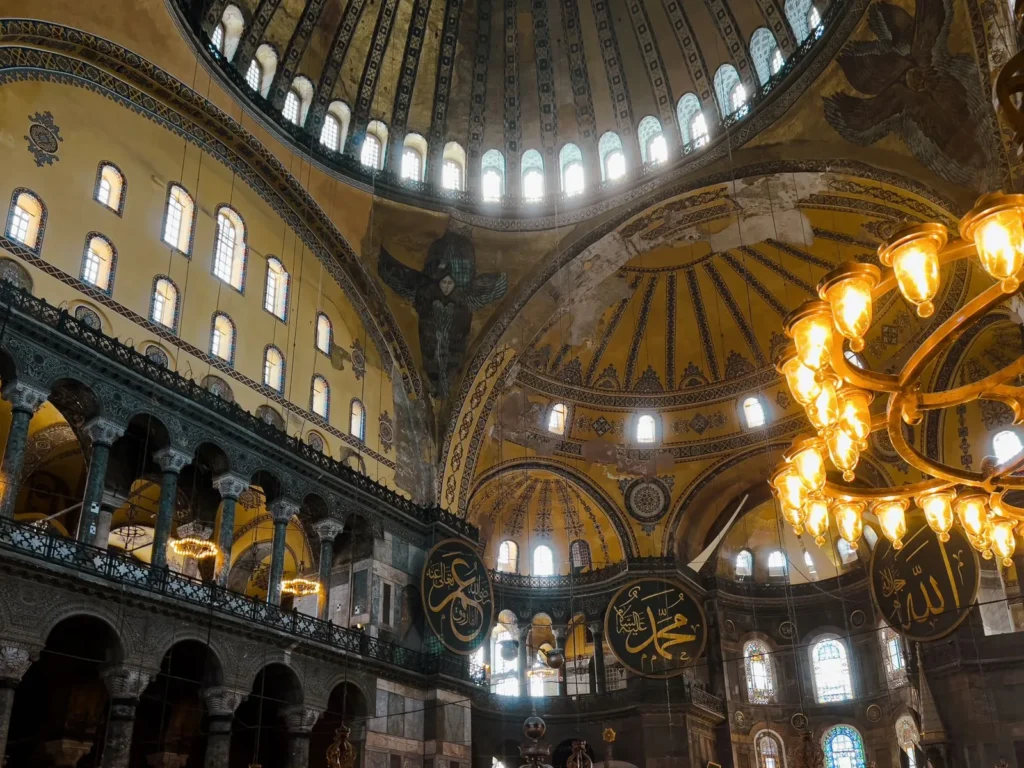
Completed in 537 CE in what is now Istanbul, Turkey, Hagia Sophia was commissioned by the Byzantine emperor Justinian I and designed by Isidore of Miletus and Anthemius of Tralles. Its enormous central dome, floating on pendentives above a light filled interior, set the template for domed sacred spaces for a thousand years.
6. The Sydney Opera House
Danish architect Jørn Utzon won the 1957 competition for the Sydney Opera House with a design of soaring white shells over Sydney Harbour. The building, completed in 1973, took years to resolve structurally because the curved roof forms had no easy engineering precedent. Utzon eventually derived every shell from the surface of a single sphere, which made mass production of the concrete ribs possible.
7. The Sagrada Família
Antoni Gaudí’s basilica in Barcelona, Spain, has been under construction since 1882 and remains unfinished. Gaudí turned to nature for his structure, using branching columns and hyperboloid vaults that behave like a forest canopy carrying the roof. Our detailed look at the Sagrada Família and Gaudí’s sacred geometry explains how those forms actually work.

8. The Petronas Twin Towers
Designed by César Pelli and completed in 1998 in Kuala Lumpur, Malaysia, the Petronas Twin Towers rise 451.9 meters and held the title of world’s tallest building until 2004. The floor plans draw on Islamic geometric patterns, and a double decker skybridge links the two towers at the 41st and 42nd floors.
9. The Burj Khalifa
At 828 meters, the Burj Khalifa in Dubai, United Arab Emirates, has been the tallest building in the world since it opened in 2010. Designed by Adrian Smith at Skidmore, Owings and Merrill, its buttressed core plan spreads wind loads across three wings, letting the tower step back as it climbs and stay stable at extreme height.
10. The Guggenheim Museum Bilbao
Frank Gehry’s titanium clad museum, opened in 1997, turned a declining industrial city into a cultural destination almost overnight. Its curving volumes were only buildable because Gehry’s team adapted aerospace software to model and fabricate the complex geometry. To understand the ideas behind it, see our profile of Frank Gehry and his sculptural approach to form.
🏗️ Real-World Example
Guggenheim Museum Bilbao (Bilbao, 1997): Within a few years of opening, the museum drew millions of visitors and helped regenerate the city’s economy, a shift so widely studied that planners now call it the “Bilbao Effect.” It shows how a single building can reshape a place far beyond its walls.
Architectural Wonders at a Glance
The table below sums up where each wonder stands and who or what era produced it.
| Wonder | Location | Era / Architect |
|---|---|---|
| Great Wall of China | Northern China | Multiple dynasties, mainly Ming (1368 to 1644) |
| Colosseum | Rome, Italy | Roman Empire, 72 to 80 CE |
| Taj Mahal | Agra, India | Mughal, completed c. 1653, Ustad Ahmad Lahauri |
| Machu Picchu | Cusco Region, Peru | Inca, mid 15th century |
| Hagia Sophia | Istanbul, Turkey | Byzantine, 537 CE, Isidore and Anthemius |
| Sydney Opera House | Sydney, Australia | Completed 1973, Jørn Utzon |
| Sagrada Família | Barcelona, Spain | Begun 1882, Antoni Gaudí |
| Petronas Twin Towers | Kuala Lumpur, Malaysia | Completed 1998, César Pelli |
| Burj Khalifa | Dubai, UAE | Completed 2010, Adrian Smith / SOM |
| Guggenheim Museum Bilbao | Bilbao, Spain | Opened 1997, Frank Gehry |
🔢 Quick Numbers
- 828 meters: height of the Burj Khalifa, the world’s tallest building since 2010 (Council on Tall Buildings and Urban Habitat).
- 21,196 kilometers: total length of the Great Wall system recorded in China’s 2012 State Administration of Cultural Heritage survey.
- 1,154 properties: sites on the UNESCO World Heritage List as of 2024, including seven of the wonders here (UNESCO World Heritage Centre).
Why These Architectural Wonders Still Matter
These landmarks are not just tourist stops. They are working case studies in how design responds to material limits, climate, faith, and power. The Great Wall shows large scale infrastructure planning. Hagia Sophia and the Sagrada Família trace how builders spanned larger and lighter interiors over centuries. The Burj Khalifa and Petronas Twin Towers show how wind, not gravity, becomes the main enemy once a tower passes a certain height.
Studying them side by side also reveals a clear line of influence. The dome logic of Hagia Sophia fed into countless later churches and mosques, while the digital fabrication behind Bilbao now shapes buildings worldwide. If you want to keep tracing that lineage, our overview of the best examples of modern architecture and the guide to Greek and Roman architecture pick up the story at both ends of the timeline.
For the primary sources behind these entries, the UNESCO World Heritage listing for the Great Wall and the official Sagrada Família and Sydney Opera House sites document their history and construction in detail. ArchDaily’s case study on the Guggenheim Bilbao covers the engineering behind Gehry’s forms.
Bottom Line: The greatest architectural wonders survive because they solved a hard problem with clarity and ambition, then kept teaching. Whether ancient or barely a generation old, each one marks a moment when builders reached past what was thought possible and left a reference the rest of us still measure against.


1 Comment


Interior Design for Commercial Spaces: Enhancing Functionality and Brand Identity
Commercial interior design has to serve brand, function and regulation at once....
Begum Gumusel4 Mins read

Famous Buildings in Los Angeles: Icons of LA Architecture
Nine of the most famous buildings in Los Angeles profiled: architect, year,...
 illustrarch Editoral Team9 Mins read
Futuro House Production Revived in Finland After Decades-Long Hiatus
A Facebook listing for abandoned moulds led to the first new Futuro...
illustrarch Editoral Team3 Mins read

Building Your Dream Home in NSW: What You Should Know About Montgomery Homes
Montgomery Homes has been building across Sydney, Newcastle, the Hunter, Wollongong and...
illustrarch Editoral Team4 Mins read


I think these buildings are interesting. They show different styles and history. It’s nice to learn about them.