

ZHA Completes New Waterfront Stadium and Sports Centre in Guangzhou
Zaha Hadid Architects has finished a major new sports complex in Guangzhou’s Nansha district, featuring a 60,000-seat stadium, indoor arena, and aquatic centre shaped with ZHA’s signature flowing forms. Inspired by local culture and climate, the design uses passive cooling and waterfront landscaping to create a sustainable and iconic public destination.
 Elif Ayse Sen3 December 20252 Mins read298
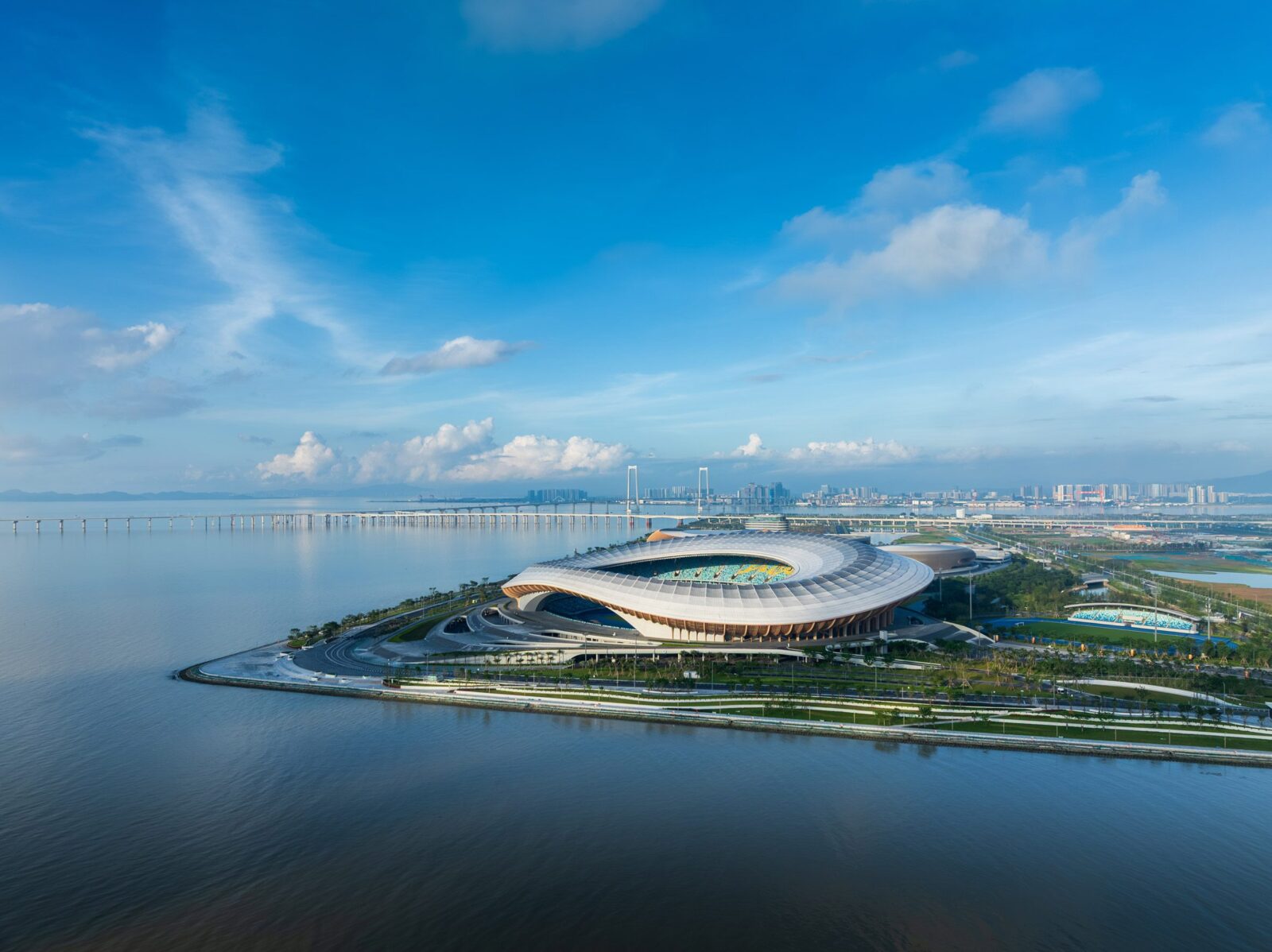
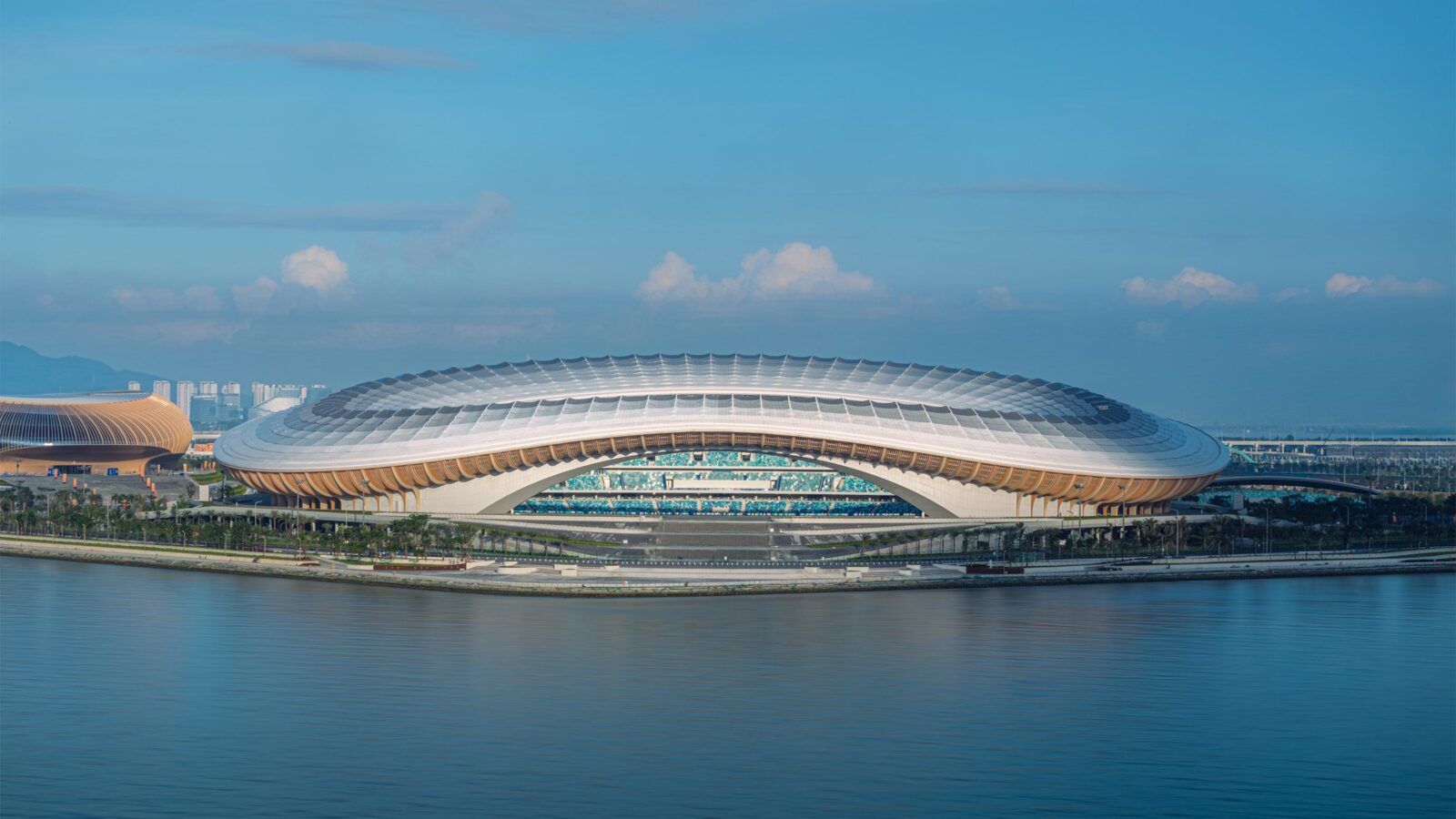
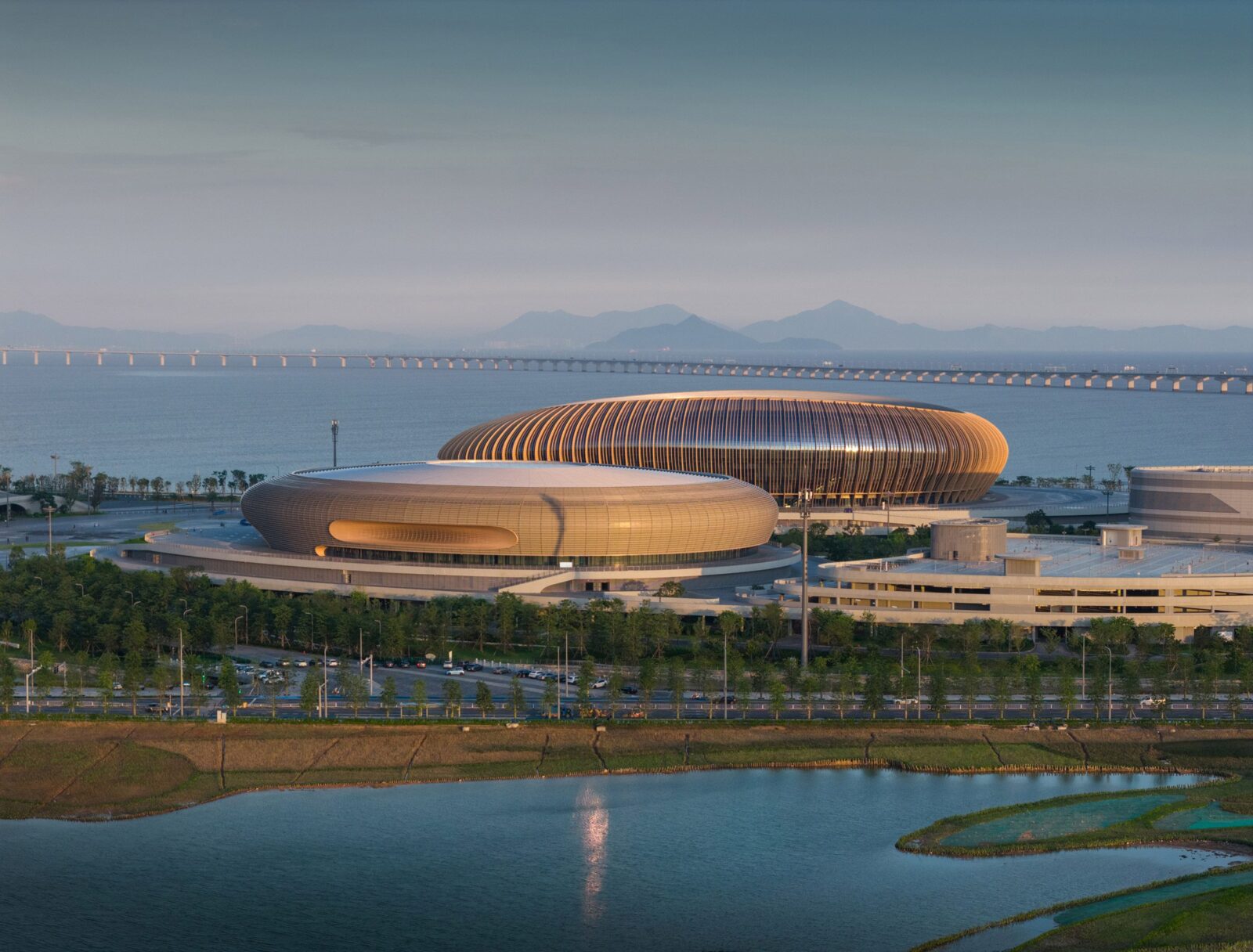
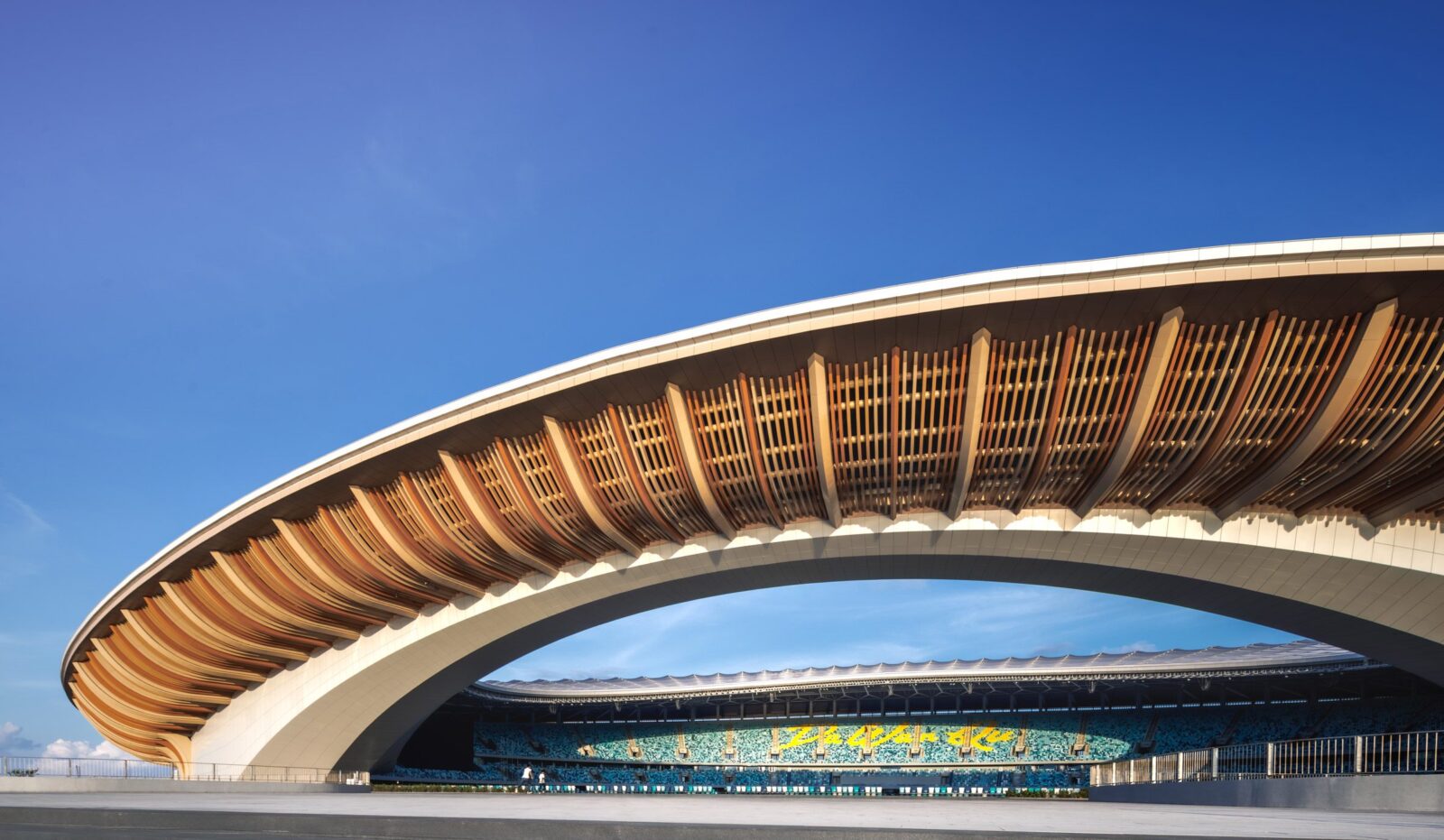

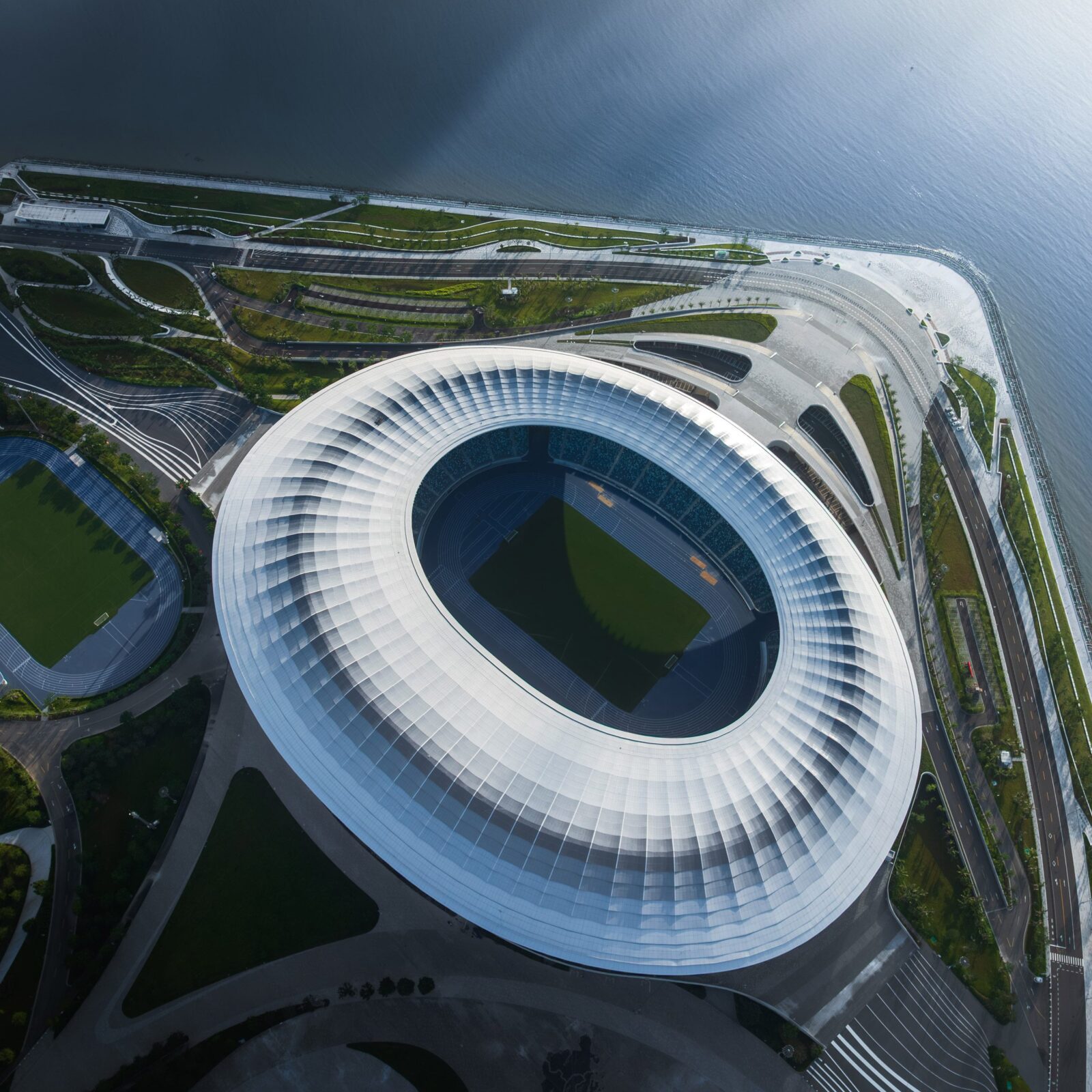

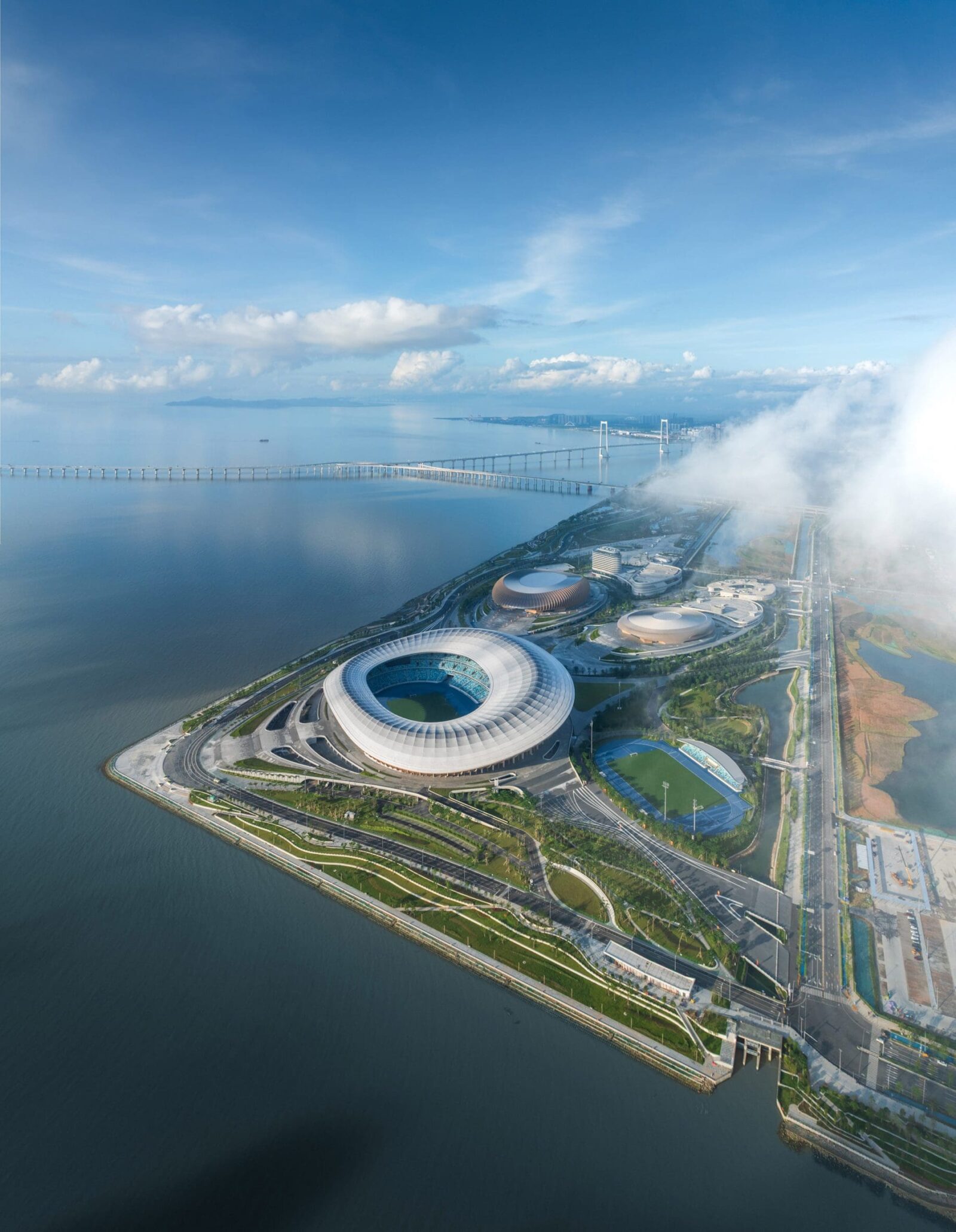


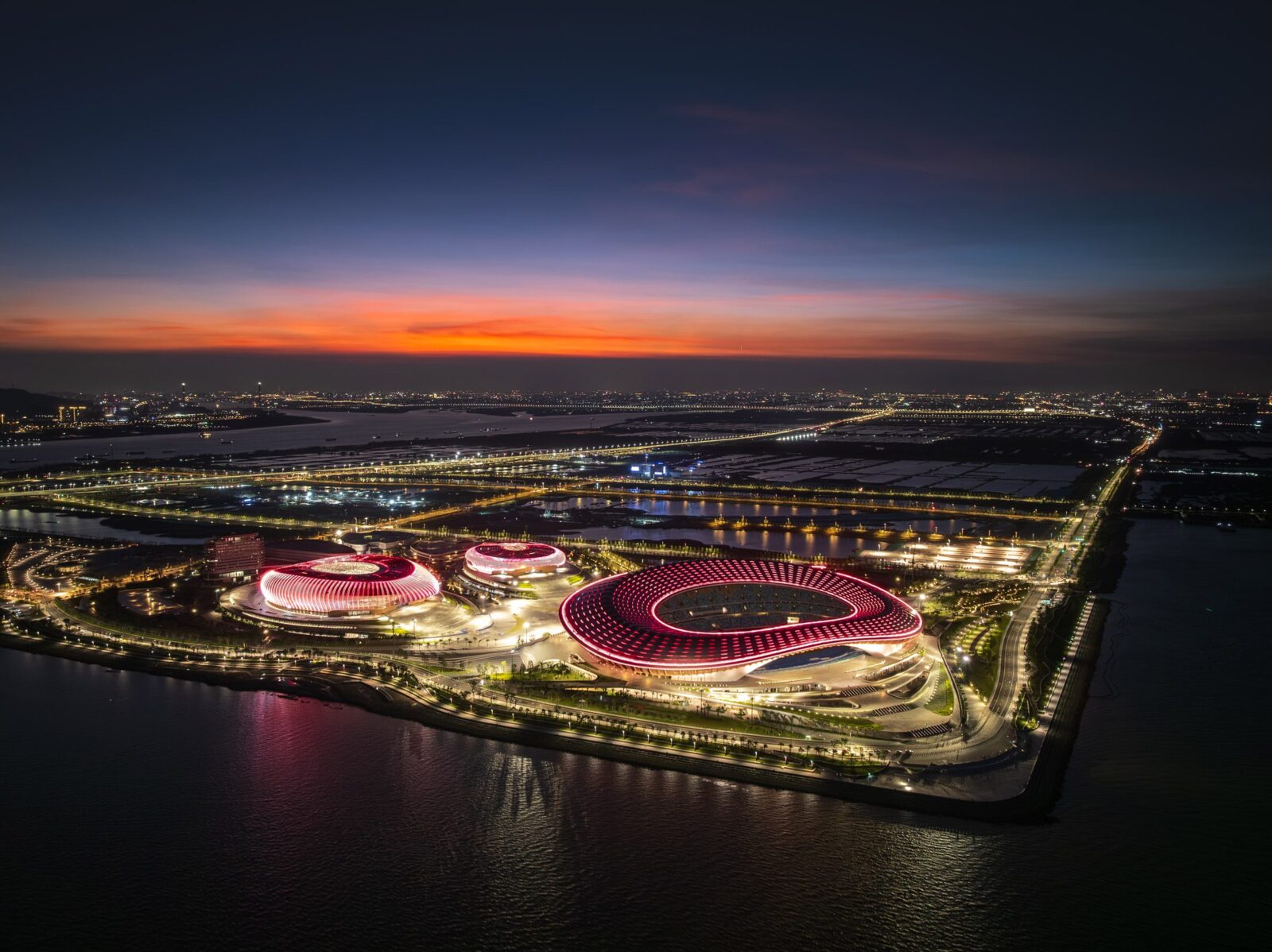
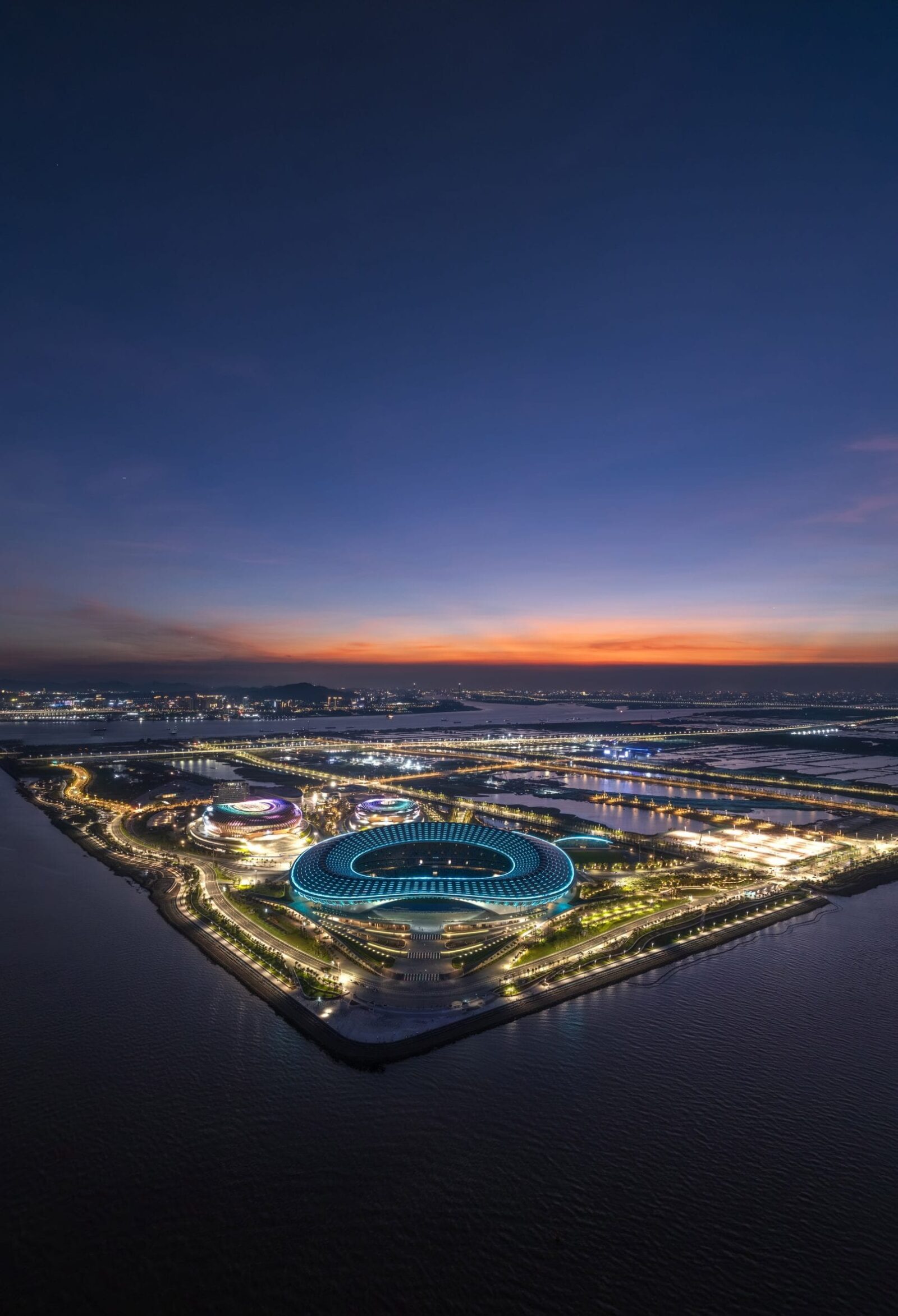
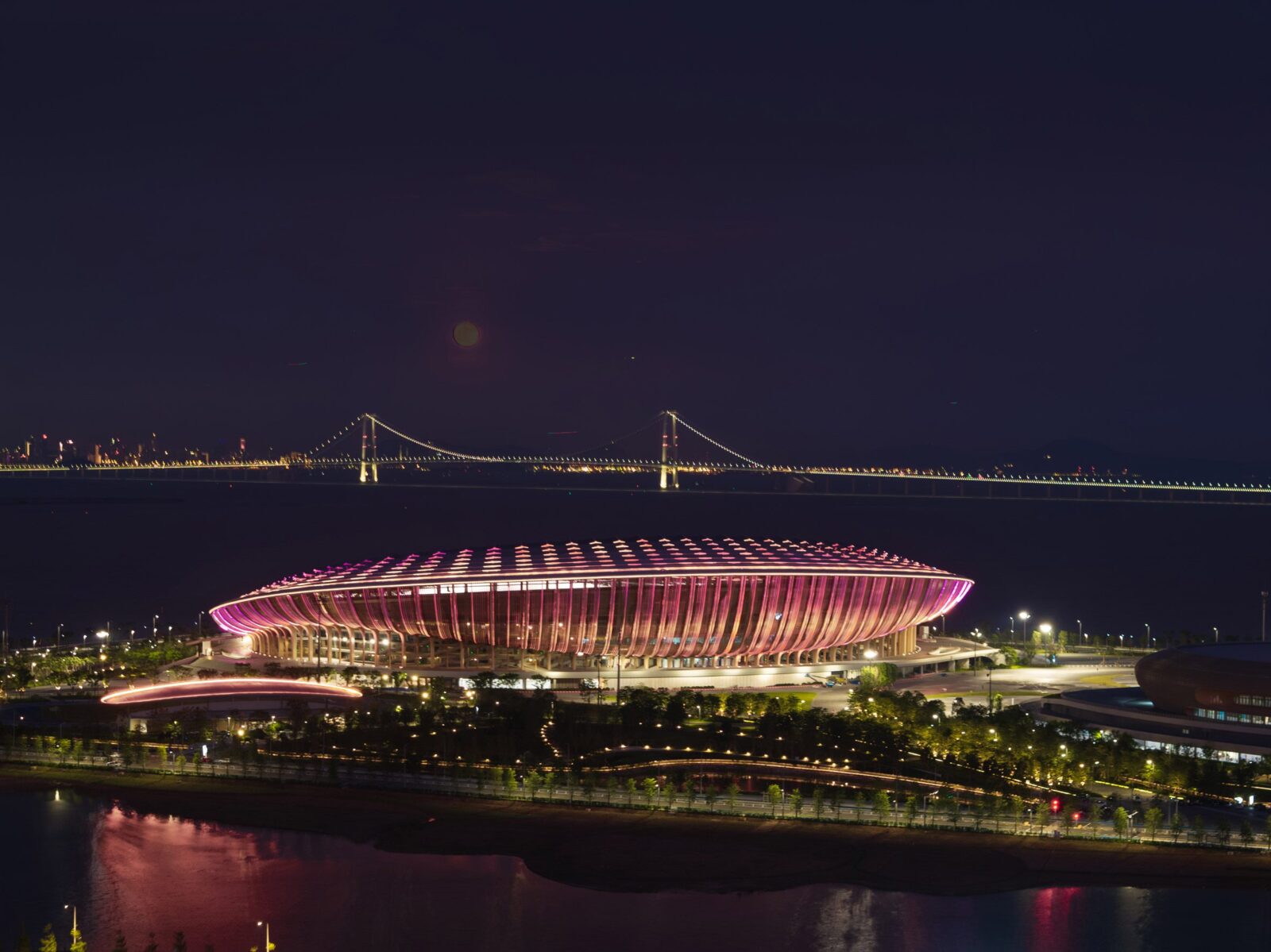



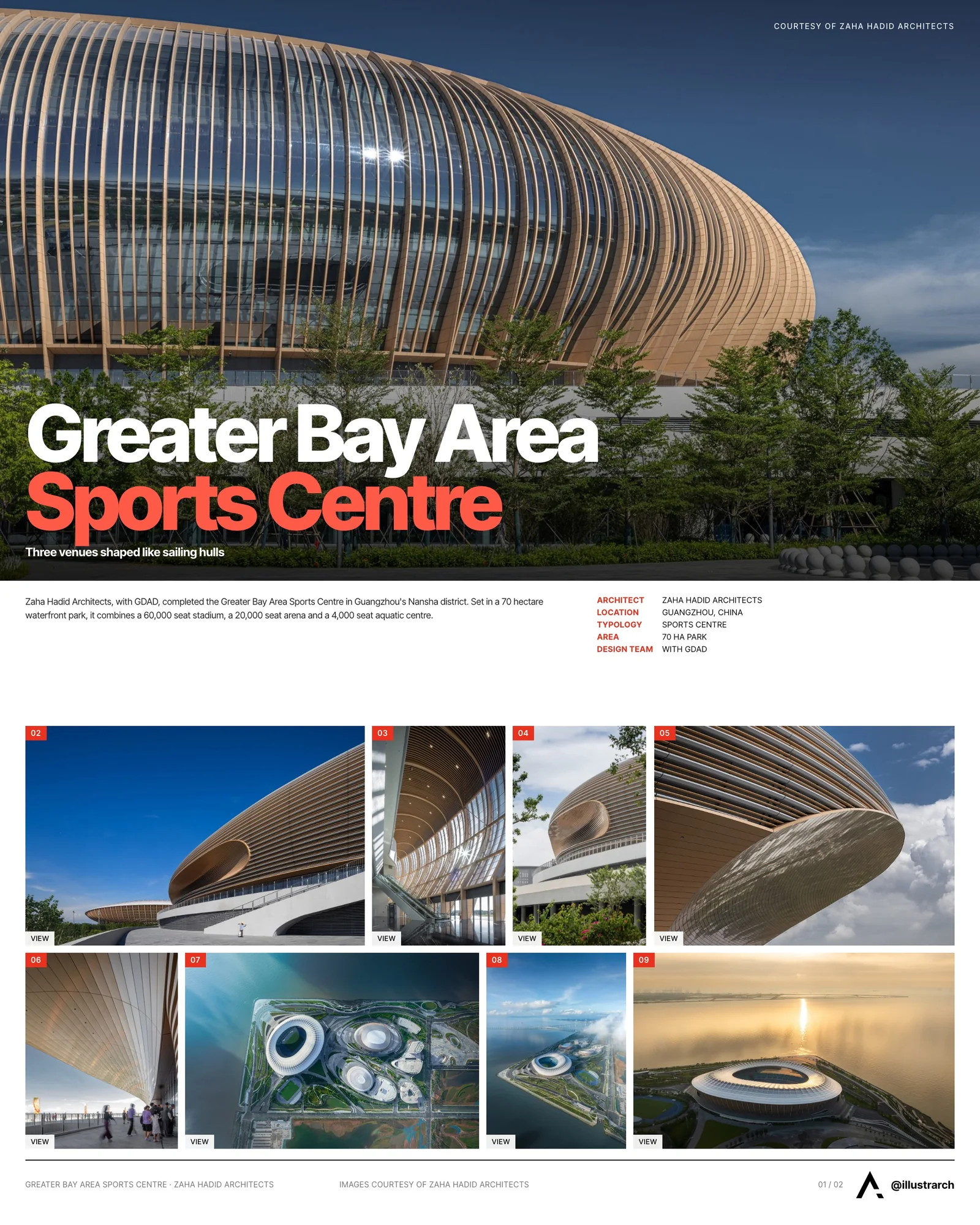
Zaha Hadid Architects (ZHA) has completed the Greater Bay Area Sports Centre in the Nansha district of Guangzhou, China. Set within a 70-hectare waterfront park, this new complex brings together a 60,000-seat stadium, a 20,000-seat indoor arena, and a 4,000-seat aquatic centre. The project also includes spaces for athletes, outdoor training areas, and sports facilities for local schools.
This development aims to become a cultural anchor for the region, hosting major sports competitions and music or community events. It is one of the most important new public projects in Nansha’s ongoing urban transformation.
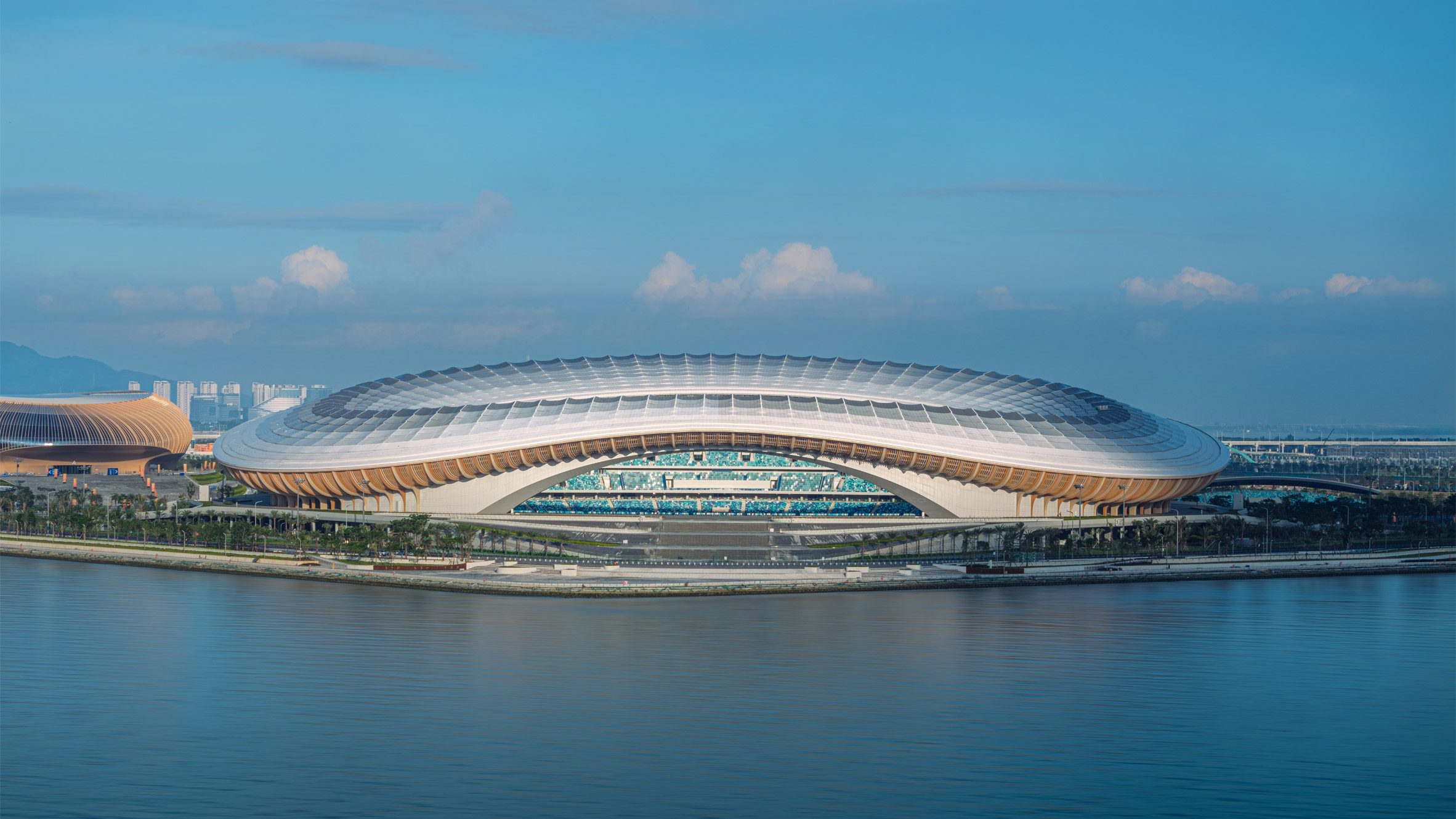
The project carries the recognizable Zaha Hadid Architects architectural style, known for fluid forms, curved geometries, and structures that appear to move with the landscape. Working with Guangdong Architectural Design and Research Institute (GDAD), the team designed a sports centre that blends with its natural surroundings while standing out as a strong architectural statement.
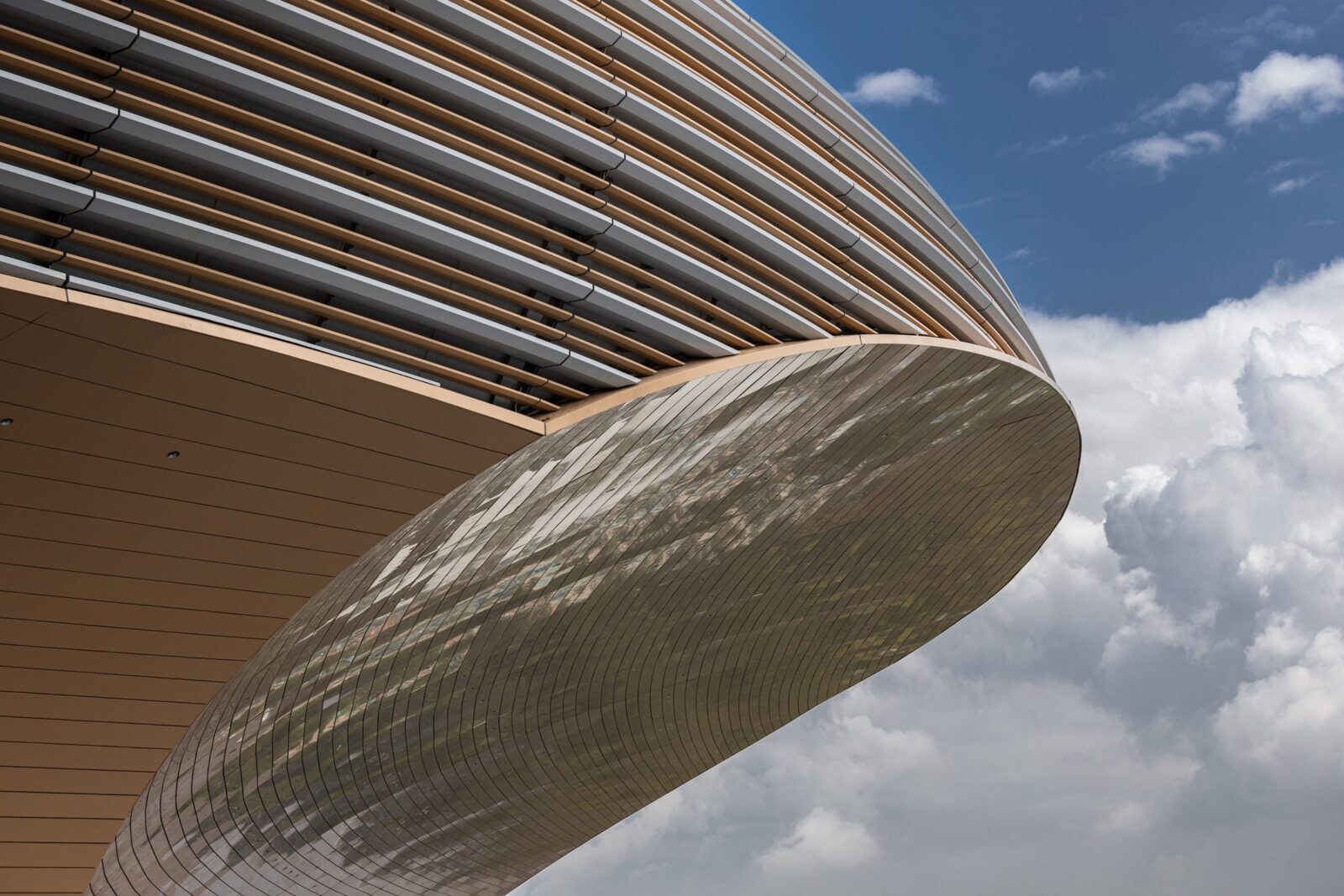
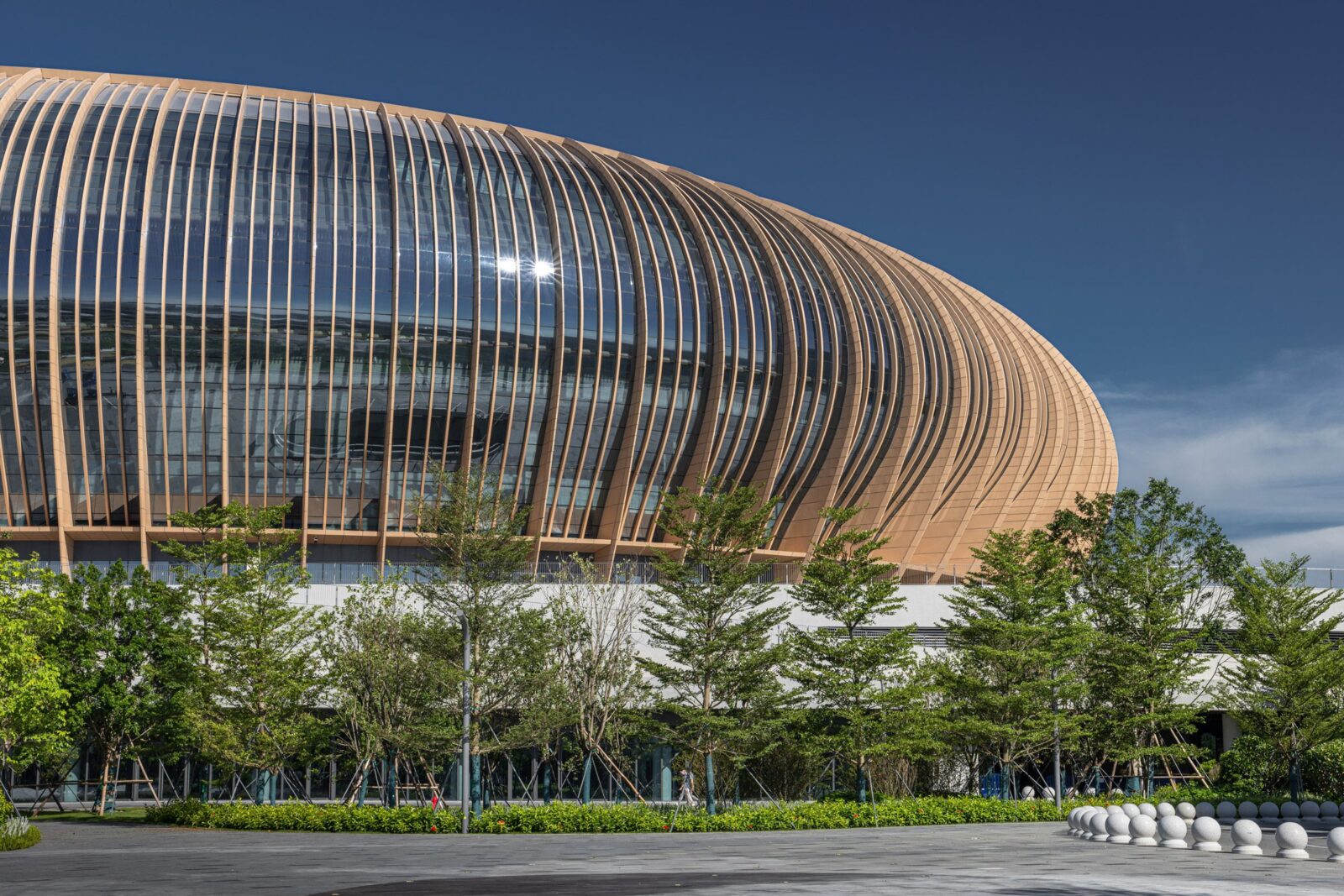
Inspired by traditional Song Dynasty sailing ships, the stadiums feature sweeping curves and smooth lines that resemble carved hulls along the waterfront. Vertical louvres wrap around each building, creating a light, dynamic appearance while shading the interiors from direct sunlight.
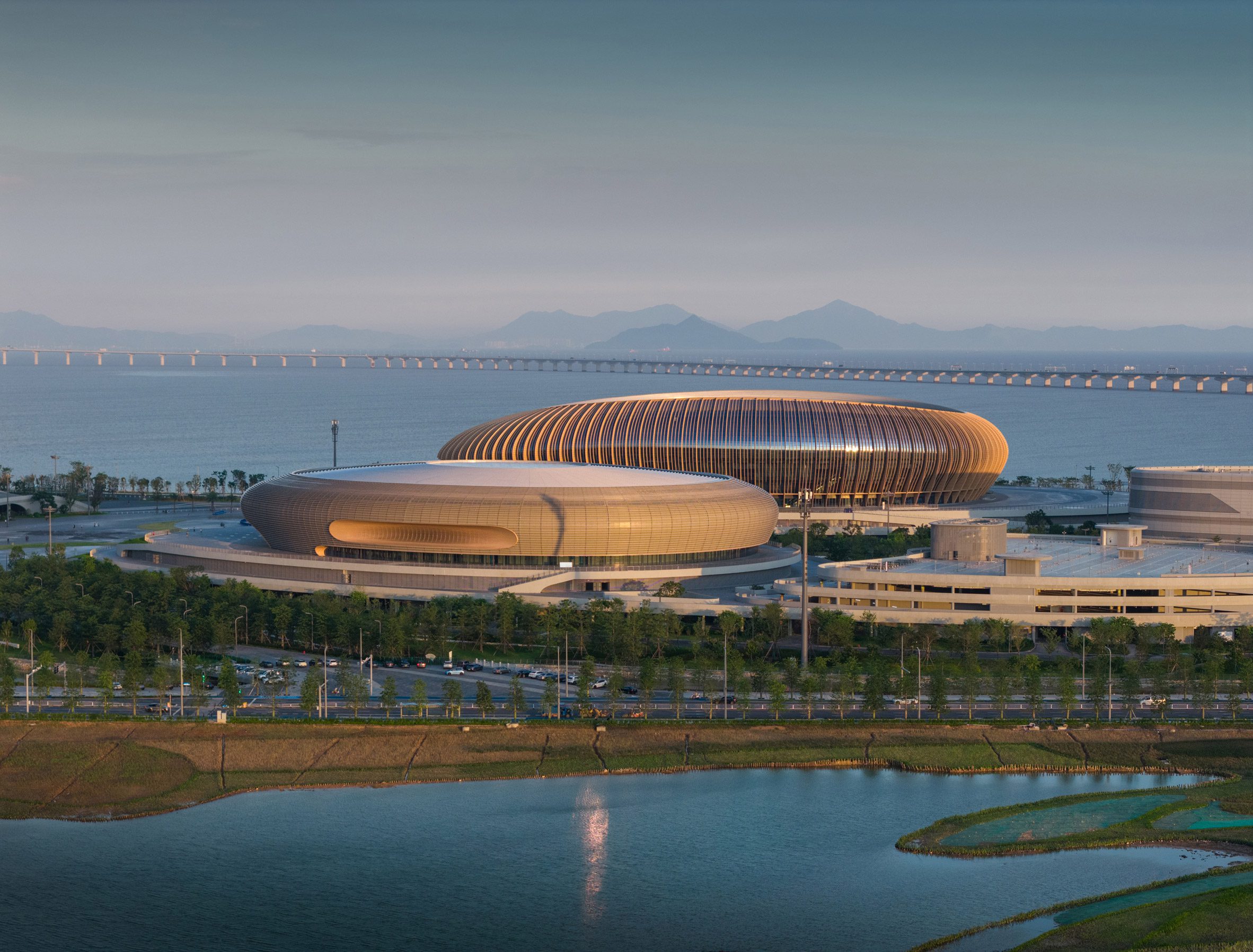
Design Inspired by Local Climate and Culture
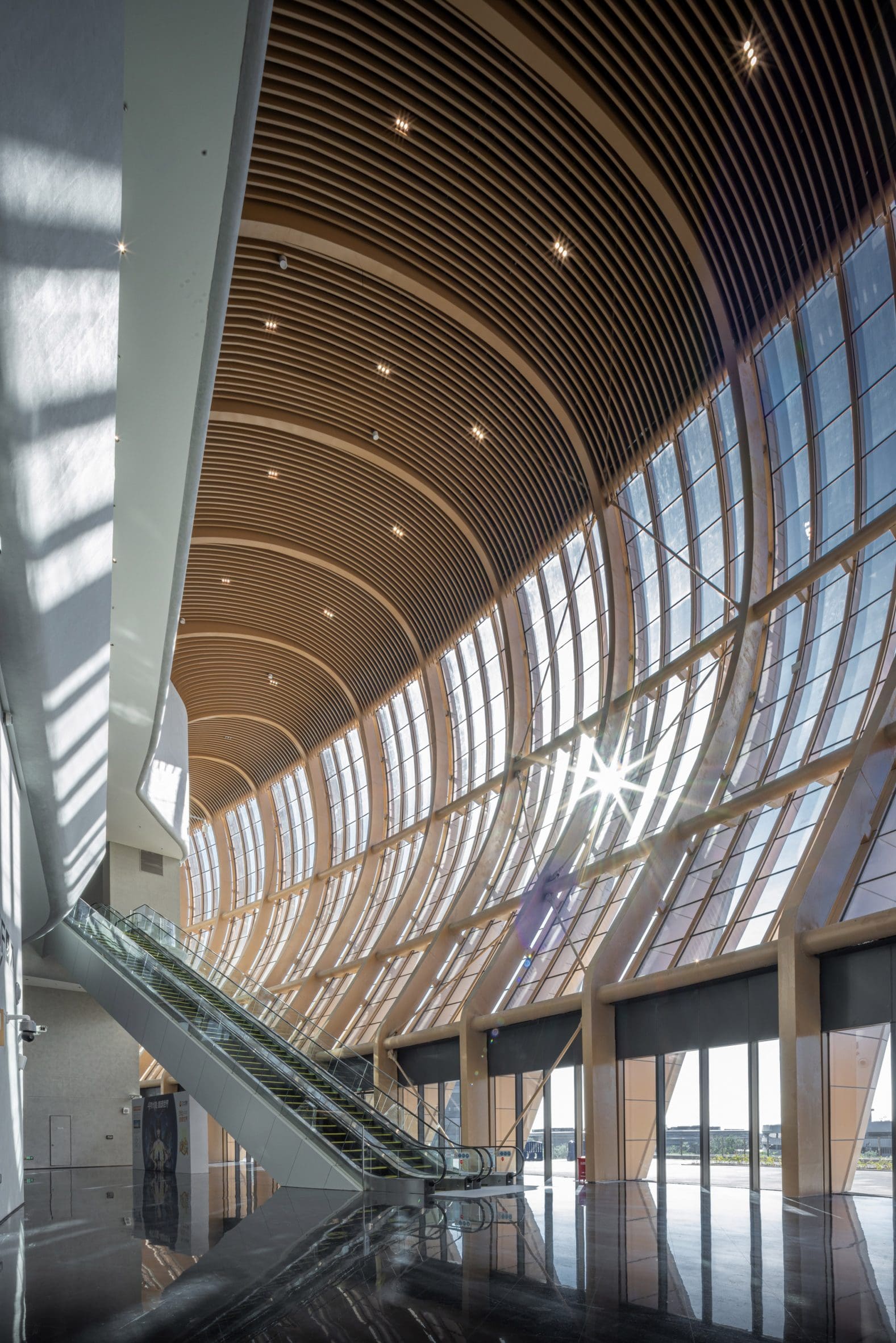
ZHA integrated ideas from Lingnan architecture, a local style known for its passive cooling strategies. Because Guangzhou has humid summers and mild winters, the buildings are shaped to improve natural ventilation.

The main stadium’s roof is built as a series of layers, similar to the folds of a traditional Chinese fan. This layered system blocks sun and rain for 60,000 spectators but also lets warm air rise and escape. Large openings in the curved façade allow cool breezes from the Pearl River estuary to flow into the stadium, improving comfort during events.

The 60,000-seat stadium includes an adjustable seating bowl, so the space can transform for different kinds of competitions and performances. The indoor arena and aquatic centre follow the same logic: flexible design, clear circulation, and comfortable viewing spaces.
Together, the three venues support a full range of sports, track and field, basketball, swimming, and community activities, making the centre a year-round destination.
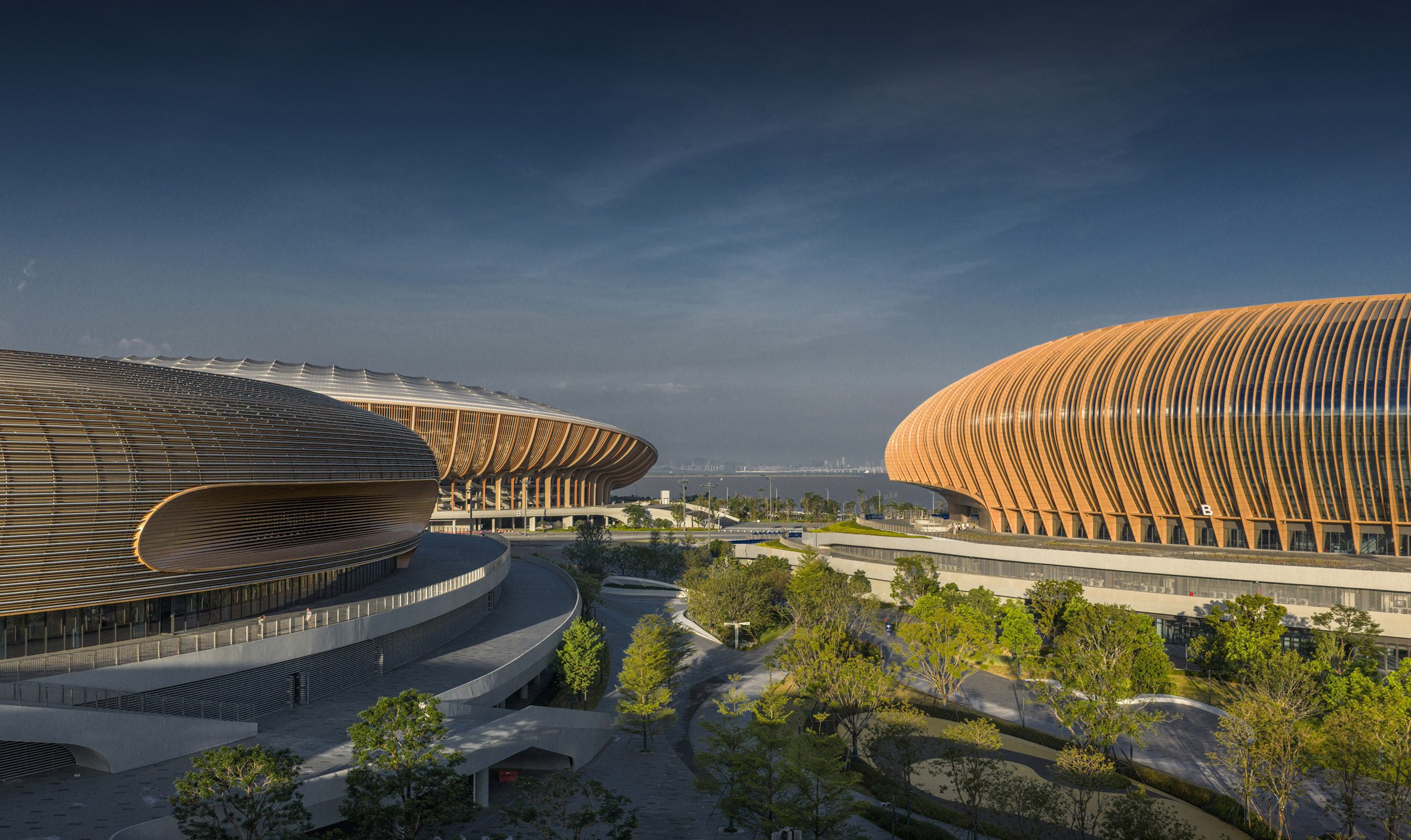
The site includes new wetland areas designed to protect the waterfront from flooding and manage rising water levels. These natural systems help absorb excess rainwater and maintain ecological balance. The sports centre becomes not only a public destination but also a tool for environmental resilience.
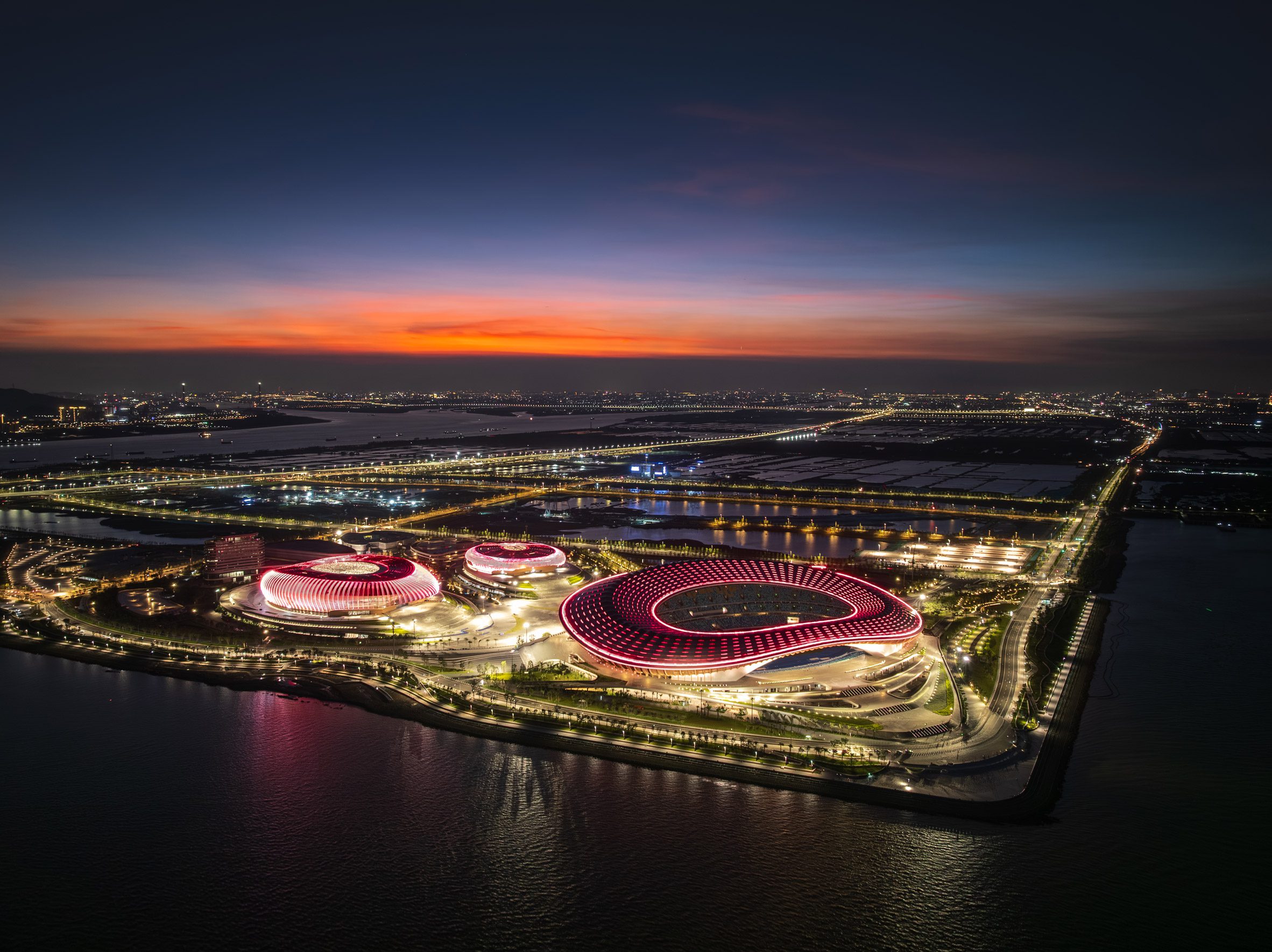
This sports centre is an important milestone for Guangzhou. It adds world-class sports infrastructure, strengthens the identity of the waterfront, and demonstrates how large public projects can mix culture, sustainability, and expressive design.
Zaha Hadid Architects continues expanding its presence in China with recent works such as a flowing footbridge in Hangzhou and a sculptural tower in Shenzhen. The Greater Bay Area Sports Centre is another example of how ZHA’s futuristic style and thoughtful planning shape new urban experiences.





Herzog & de Meuron Builds Amherst College Student Center Atop Old Foundations
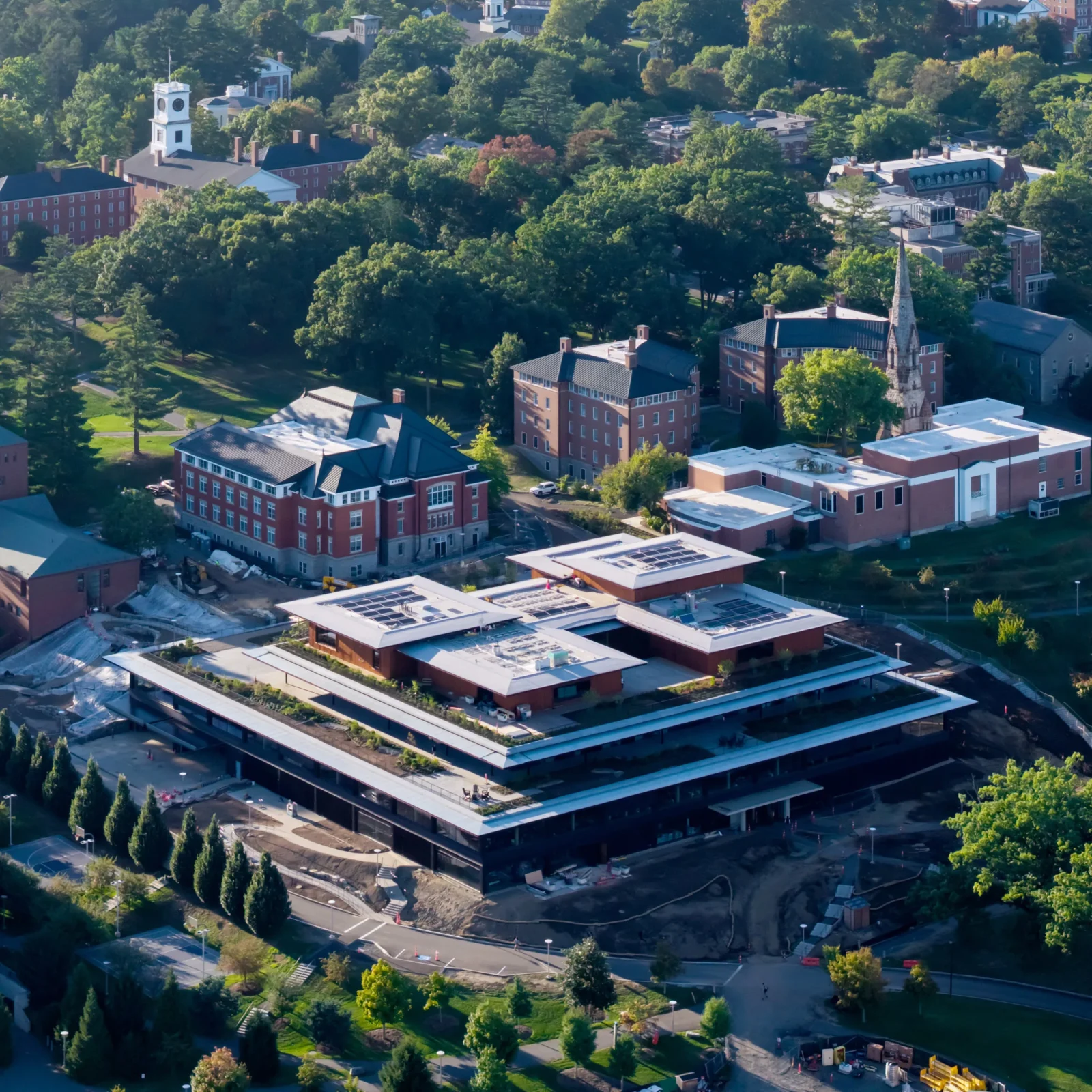
Herzog & de Meuron built a mass-timber student center at Amherst College...
 illustrarch Editoral Team2 Mins read

Brussels’s €230m Kanal Museum Nears Opening as Questions Grow over Its Future Funding
Housed in a converted Citroën garage, Brussels's Kanal museum opens on 28...
illustrarch Editoral Team1 Mins read

MoMA’s Full Disclosure Exhibition Traces Information Design from Hand-Drawn Data to AI Memories
Full Disclosure: The Edge of Information Design, curated by Paola Antonelli, is...
illustrarch Editoral Team2 Mins read
Zumthor’s Three New Buildings Open at Fondation Beyeler in Riehen
Peter Zumthor's Wyss Museum, Ammann Pavilion and Erlen Torhaus open at Fondation...
illustrarch Editoral Team4 Mins read


Leave a comment