

Sagrada Familia Highest Point: The Tower of Jesus Christ Reaches 172.5 Meters
On February 20, 2026, the Sagrada Familia reached 172.5 meters after workers placed the final cross piece on the Tower of Jesus Christ. This article covers the construction milestone, tower architecture, and what remains before full completion.
 Elif Ayse Sen23 February 20269 Mins read228

Table of Contents Show
After 144 years of continuous construction, the Sagrada Familia reached its highest point on February 20, 2026. Workers used a crane to place the upper arm of a monumental cross atop the Tower of Jesus Christ, bringing the basilica to its full planned height of 172.5 meters (566 feet). The moment was watched by thousands of spectators gathered in Barcelona’s streets and livestreamed around the world. It was not just an engineering feat. It was the fulfillment of a vision that Antoni Gaudi set in motion over a century ago, knowing he would never see it finished.
The completion of the central tower’s exterior marks the single most significant milestone in the basilica’s modern construction history. Barcelona now holds the record for the world’s tallest church, and the scaffolding surrounding the tower is set to come down by June 2026 for the centenary celebrations of Gaudi’s death. Yet for all its symbolic weight, the Sagrada Familia construction is far from over. Interior work, facade detailing, and a controversial entrance stairway remain on the schedule for years to come.

What Happened on February 20, 2026
At approximately 11 a.m. local time, a crane lifted the final piece of the cross into position at the top of the Tower of Jesus Christ. The upper arm, measuring 4.5 by 4.5 by 4.9 meters, locked into place above the four lateral arms, the central core, and the lower arm that had already been installed in previous months. According to the Sagrada Familia Foundation, the cross was hoisted in seven combined sections between October 2025 and February 2026.
High winds had delayed the operation by several days. Once conditions improved, the final lift proceeded smoothly. Head architect Jordi Fauli told reporters that it was a day the team had been eagerly awaiting. Following a longstanding tradition in Catalan construction, a Catalan flag was raised at the top of the tower to signal that the structural work was complete and no incidents had occurred during the process.
Inside the upper arm of the cross, a sculpture of the Agnus Dei (Lamb of God) by Italian artist Andrea Mastrovito will be installed. Gaudi originally envisioned this lamb at the center of the cross, visible from within the structure itself. That artistic detail ties the engineering achievement back to the deeply personal, faith-driven design philosophy that guided every element of the basilica.

Sagrada Familia Height: Breaking Down the Numbers
The Sagrada Familia height now stands at 172.5 meters from ground level to the tip of the cross on the Tower of Jesus Christ. To put that in perspective, the cross alone is 17 meters tall, roughly the height of a five-story building, and 13.5 meters wide. The terminal section beneath the cross adds another 29 meters, and its construction began in May 2025.
Gaudi chose the height of 172.5 meters deliberately. He believed that human creation should not surpass God’s work, so he designed the tower to sit just below the peak of Montjuic hill in Barcelona. That philosophical restraint gave the basilica a ceiling that was symbolic rather than arbitrary.
Height Comparison With Other Tall Churches
The following table shows how the Sagrada Familia compares to other notable tall churches around the world.
| Church | Location | Height | Completion Year |
|---|---|---|---|
| Sagrada Familia | Barcelona, Spain | 172.5 m (566 ft) | Ongoing (tower topped 2026) |
| Ulm Minster | Ulm, Germany | 161.5 m (530 ft) | 1890 |
| Cologne Cathedral | Cologne, Germany | 157.4 m (516 ft) | 1880 |
| Rouen Cathedral | Rouen, France | 151 m (495 ft) | 1876 |
| St. Peter’s Basilica | Vatican City | 136.6 m (448 ft) | 1626 |
The Sagrada Familia officially overtook Ulm Minster as the world’s tallest church in October 2025, when the lower arm of the cross brought the tower to 162.91 meters. The February 2026 placement added the remaining height to reach the final 172.5-meter mark.

La Sagrada Familia Towers: The Complete 18-Tower System
The towers of the Sagrada Familia form one of the most complex tower systems ever designed for a religious building. Gaudi planned 18 towers in total, each representing a figure from the New Testament. They are arranged in a specific hierarchy that reflects Catholic theology through vertical scale.
The tower arrangement breaks down as follows. Twelve towers represent the Apostles and are distributed across the three facades, four per facade. Their heights range between 98 and 112 meters depending on their position. Four towers represent the Evangelists (Matthew, Mark, Luke, and John), each topped with symbolic sculptures: an angel, a lion, an ox, and an eagle respectively. These four were completed in 2023 and stand at 135 meters. One tower is dedicated to the Virgin Mary, and it is internally connected to the central Tower of Jesus Christ. The center tower of the Sagrada Familia, the Tower of Jesus Christ, rises from four monumental columns at the crossing of the basilica. It has a twelve-sided floor plan and consists of 12 levels of prefabricated stone panels, with construction beginning at 85 meters on October 16, 2018.
As of February 2026, all six central towers (the Tower of Jesus Christ, the four Evangelist towers, and the Tower of the Virgin Mary) have their exteriors completed. The remaining work involves the Glory facade towers and interior finishing across the complex.
Sagrada Familia Architecture: How Gaudi Reinvented Sacred Design
The Sagrada Familia architecture breaks nearly every convention of traditional church design. Gaudi inherited a standard neo-Gothic plan when he took over from the original architect, Francisco de Paula del Villar, in 1883. He kept the Latin cross floor plan but transformed everything else.
Instead of flying buttresses, Gaudi developed a system of angled columns and hyperboloidal vaults that distribute structural loads internally. The interior columns branch like trees, shifting from polygonal cross-sections at the base to circular forms at the top. The central nave soars to 45 meters and feels like walking through a stone forest, with light filtering through circular apertures in the vaults finished with Venetian glass tiles in green and gold. According to ArchDaily’s documentation of the project, this system eliminated the need for external structural support entirely.
Gaudi worked with ruled surfaces (hyperboloids, paraboloids, helicoids, and conoids) that could be constructed from straight lines. This was not merely an aesthetic choice. These forms are inherently stable and allow for thinner, lighter structural elements with improved acoustics and natural light distribution. He developed the designs using plaster models, including a famous inverted string-and-weight model that derived column angles from gravity itself.
The three facades tell a complete narrative. The Nativity facade (east) celebrates Christ’s birth, the Passion facade (west) depicts the Crucifixion, and the Glory facade (south) will represent divine glory. Each facade is flanked by four Apostle towers, and the sculptural programs across all three tell the story of Christianity from beginning to end.

La Sagrada Familia Construction: 144 Years of Progress and Setbacks
The la Sagrada Familia construction timeline reads like a condensed history of 20th and 21st-century Spain. The first stone was placed on March 19, 1882, under architect Francisco de Paula del Villar. When disagreements between Villar and the project’s promoters led to his resignation in 1883, the 31-year-old Gaudi took over and spent the remaining 43 years of his life on the project.
By the time Gaudi died in 1926 (struck by a tram at the age of 73), only one of the 18 towers, the Tower of Barnabas, had been completed. Less than a quarter of his grand vision existed in physical form. The Spanish Civil War in 1936 dealt another blow when anarchists set fire to the crypt and destroyed most of Gaudi’s original plans, plaster models, and workshop documentation.
Reconstruction of the plans began in 1939 under Francesc de Paula Quintana, who pieced together surviving fragments with published photographs and drawings from the Temple Albums. Progress remained slow for decades, funded entirely by private donations with no government support. The project gained momentum in the late 20th century as the basilica became a major tourist destination. Revenue from entrance tickets became the primary funding source, generating approximately 134 million euros in 2024 alone.
The adoption of computer-aided design and CNC (computerised numerical control) fabrication accelerated the pace dramatically. By 2010, the construction passed its midpoint. In 2014, chief architect Jordi Fauli announced the building was 70 percent complete. The COVID-19 pandemic disrupted the timeline when tourism revenue dropped to near zero, but work continued and the use of prefabricated stone panels, engineered by Arup, allowed faster assembly with reduced weight.
Is the Sagrada Familia Finished? What Remains
The short answer: no. While the highest point of the Sagrada Familia has been reached and all six central towers are externally complete, significant work remains. Interior construction inside the Tower of Jesus Christ will continue through 2027 and 2028, according to the Sagrada Familia Foundation’s official statements. The Glory facade, which will serve as the basilica’s main entrance, still needs its towers and sculptural program completed.
Perhaps the most controversial remaining element is a planned monumental stairway leading to the Glory facade entrance. This project would require the demolition of existing residential buildings along Carrer de Mallorca, displacing over 1,000 residents. The timeline for this element extends well into the 2030s, and its execution depends on approvals from Barcelona’s city government.
Xavier Martinez, head of the construction department at the Sagrada Familia, told reporters that overall completion could happen within about ten years if everything proceeds smoothly. Decorative details, sculptures, and artistic finishing work are expected to continue until approximately 2034. The grand inauguration of the Tower of Jesus Christ is scheduled for June 10, 2026, chosen to coincide with the centenary of Gaudi’s death.

The Cross: Materials, Engineering, and Symbolism
The cross crowning the Tower of Jesus Christ is far more than an ornament. It is a carefully engineered structure manufactured in Germany in 2025, then shipped to Barcelona in modules and pre-assembled on a work platform 54 meters above the central nave. The cross weighs approximately 100 tonnes and features a double-twist geometry that Gaudi also applied to the basilica’s columns.
The exterior cladding uses white glazed ceramic and glass, two materials chosen for their radiance and weather resistance. Gaudi specified that the cross should shine by day and illuminate by night. Plans call for spotlights on the Evangelist and Apostle towers to light the pinnacle after dark. If Barcelona’s city government grants permission, light beams will also project from each of the cross’s four arms, turning the tower into what the basilica’s rector, Reverend Josep Turull, described as a spiritual lighthouse.
Inside the cross, a visitor platform is planned and expected to open to the public by 2027. This hollow structure will offer panoramic views of Barcelona from the highest point of the Sagrada Familia, a perspective that Gaudi imagined when he wrote about contemplating the surroundings from the cross’s arms.

Gaudi’s Centenary: The 2026 Celebrations
The timing of the tower’s completion is no accident. Antoni Gaudi died on June 10, 1926, and the Sagrada Familia Foundation has organized a year-long series of commemorative events under the banner of “Gaudi Year 2026.” According to the official centenary website, programming began in autumn 2025 and will continue through December 2026.
Key events include the tower inauguration on June 10, public open days, exhibitions about the Tower of Barnabas (the only tower Gaudi saw completed during his lifetime, finished on November 30, 1925), and a Christmas concert with the Escolania of Montserrat. The Vatican also recognized the milestone. In April 2025, Pope Francis signed a decree recognizing Gaudi’s “heroic virtues,” officially placing the architect on the path to sainthood.
For Barcelona, the centenary is both a celebration and an economic engine. The basilica welcomed roughly 4.8 million paying visitors in 2024, a 2.7 percent increase over 2023, and the centenary year is projected to push those numbers higher. Entrance fees remain the primary funding mechanism for ongoing construction. Visitors planning a trip during the centenary year can compare Sagrada Familia tickets before they travel, since entry to the basilica is sold for timed slots.
The Significance of the Highest Point for Architecture
The Sagrada Familia’s achievement resonates beyond religious architecture. It demonstrates that a project conceived with 19th-century tools can be realized using 21st-century technology without betraying the original vision. The transition from hand-built plaster models to parametric 3D modeling and prefabricated CNC-cut stone panels represents one of the most successful bridges between analog and digital construction methods in architectural history.
For architects and students, the basilica offers lessons in structural honesty. Gaudi’s ruled surfaces were not decorative conceits but load-bearing geometries that eliminated the need for external buttressing. His catenary arches work with gravity rather than against it. The biomimetic principles visible in the tree-like columns anticipated modern parametric and nature-inspired design methods by nearly a century.
The project also stands as proof that architecture can maintain continuity across generations of designers. Since Gaudi’s death, more than half a dozen architects have led the construction, each working from reconstructed plans while adapting to new technologies. As Britannica notes, the result is a collaboration spanning centuries, where each generation contributes without erasing what came before.
Construction data and milestone dates referenced in this article are based on official announcements from the Sagrada Familia Foundation (sagradafamilia.org) and reporting by the Associated Press.



Groupwork Completes 10-Storey Loadbearing Granite Flats in London
Groupwork's Petra Heights on Finchley Road is a 10-storey block of 22...
 illustrarch Editoral Team2 Mins read
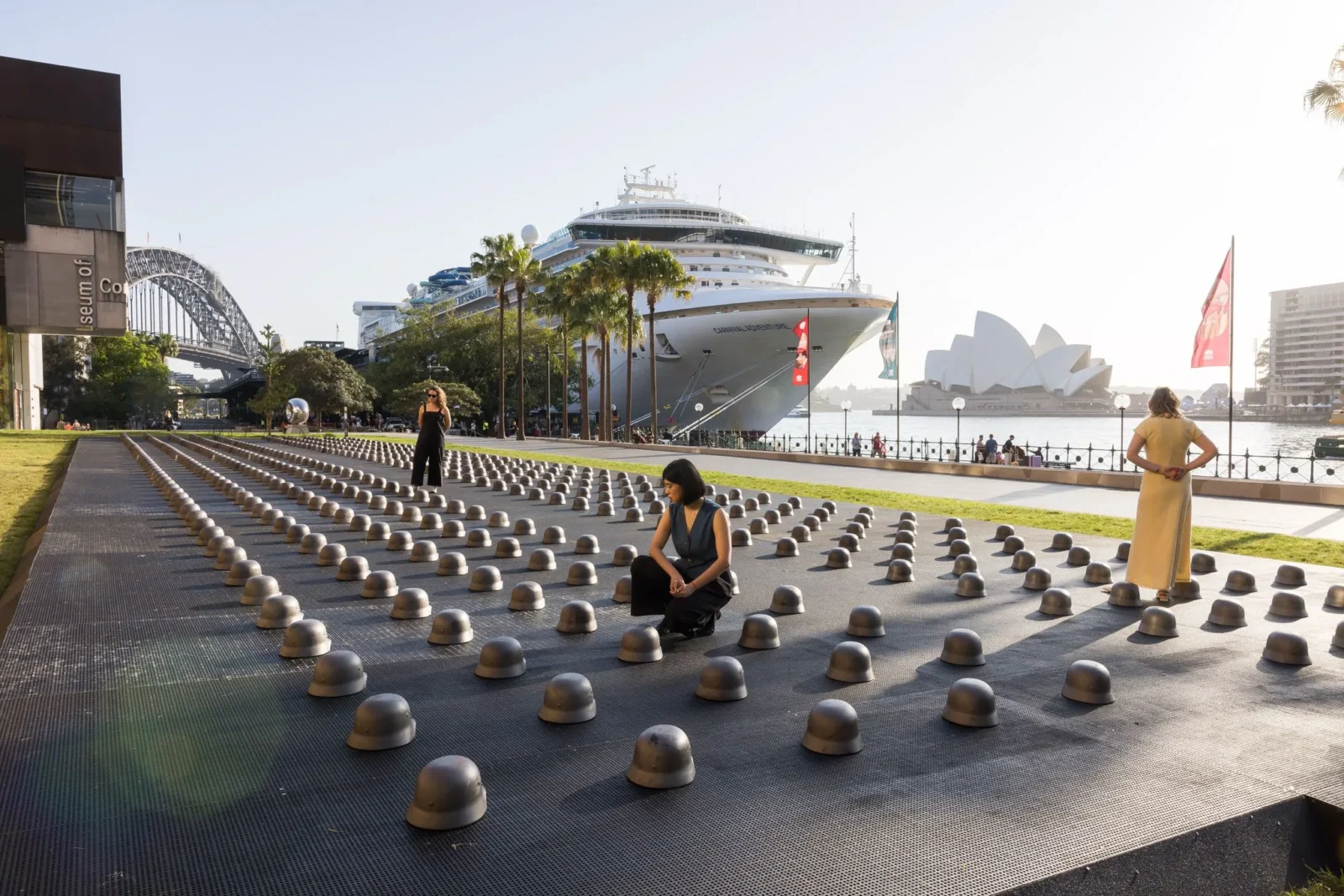
Ai Weiwei Installs 500 Cast-Iron Helmets Outside Sydney Museum
Ai Weiwei's 500 cast-iron helmets opened outside Sydney's MCA on 25 September,...
illustrarch Editoral Team2 Mins read
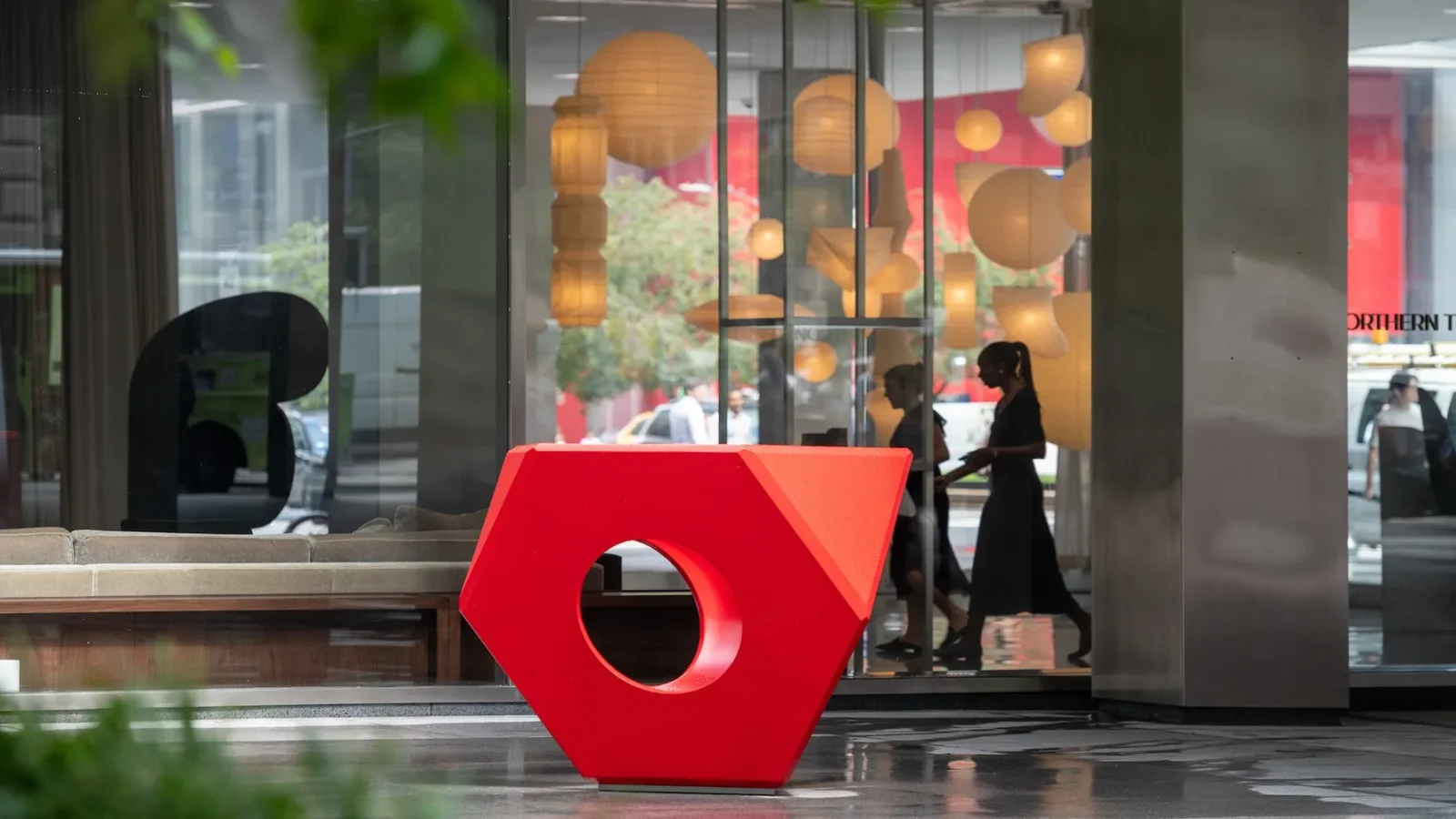
Isamu Noguchi at Lever House Traces Sculptor’s Decades-Long Collaboration with Bunshaft
Lever House's new exhibition pairs Noguchi sculptures with unbuilt garden designs made...
illustrarch Editoral Team2 Mins read
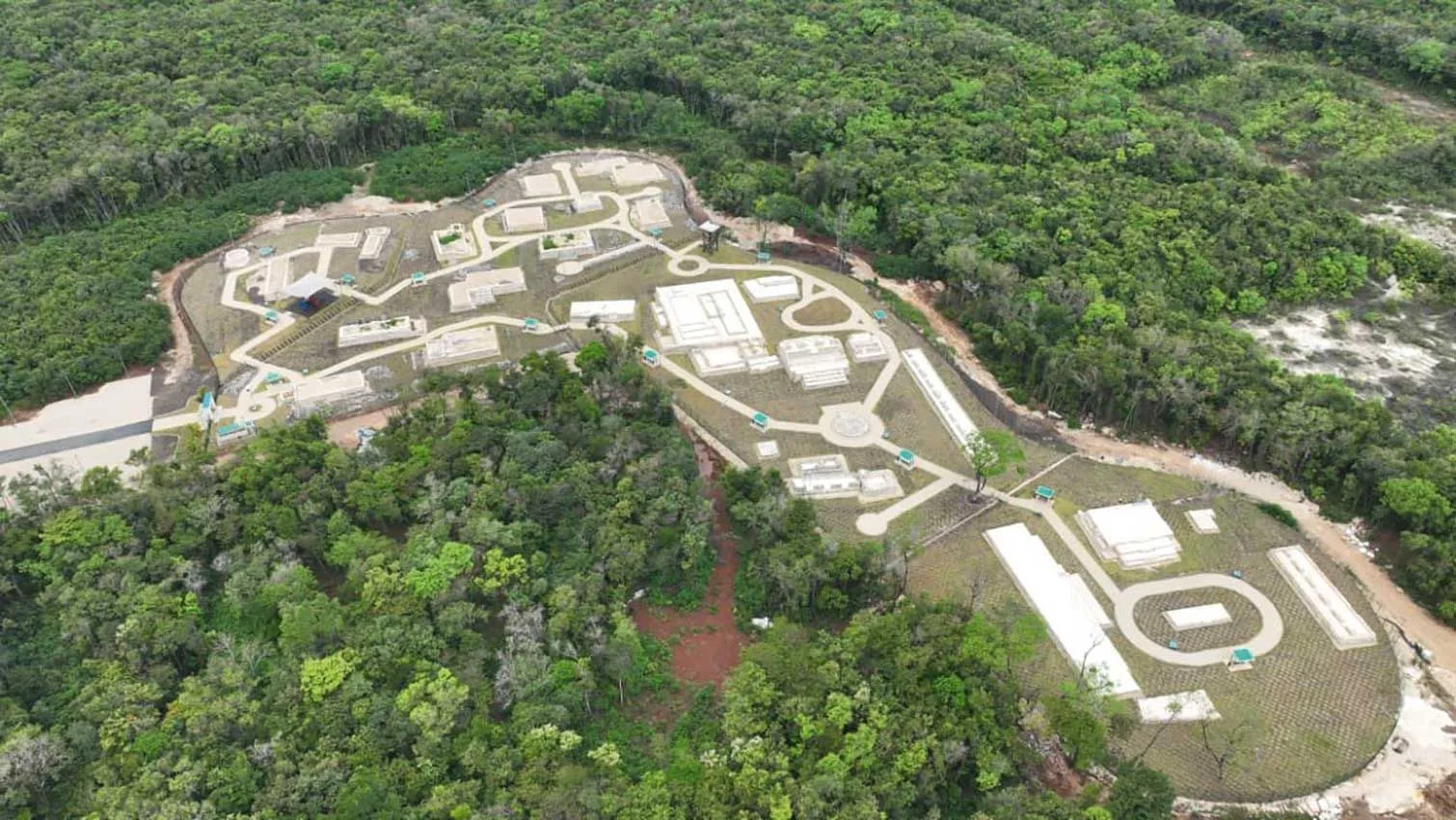
Relocated Maya Structures at Mexico’s Balam Tun Memory Park Face Legal Challenge
INAH archaeologists have filed a complaint against 26 officials over Balam Tun...
illustrarch Editoral Team2 Mins read


Leave a comment