

Balance in Architecture: From the Parthenon to Modern Design
Learn how balance in architecture connects beauty and practicality through symmetrical, asymmetrical, and radial design. Explore the Parthenon, Fallingwater, and more iconic examples of balanced architecture that prove form and function are inseparable.
 Elif Ayse Sen1 February 202610 Mins read883

Table of Contents Show
What Is Balance in Architecture?
Balance in architecture is the deliberate distribution of visual weight across a structure so that every element feels stable and harmonious. Whether a designer works with identical mirrored halves or contrasting masses that still hold together visually, balanced architecture ensures that no single portion of a building overwhelms the rest. At its core, the challenge of balancing beauty and practicality is one that architects and designers face in every project. On one hand, a building must be functional and serve its intended purpose, while on the other hand, it must also be aesthetically pleasing and visually appealing, reflecting the timeless relationship between architecture and beauty. Understanding how balance operates, through symmetry, asymmetry, and radial arrangements, gives architects the vocabulary they need to create structures that look right and work right.
The idea of balance in architecture stretches back thousands of years. Ancient Greek temples used precise proportional systems to achieve visual equilibrium, while modern architects explore dynamic, off-center compositions that still feel resolved. Today, architectural balance remains one of the most fundamental design principles in architecture, shaping everything from private homes to cultural institutions. As we move through 2025 and into 2026, the enduring beauty of architecture continues to depend on how well designers master this principle.
Types of Balance in Architecture: Symmetrical, Asymmetrical, and Radial
Symmetrical Balance in Architecture
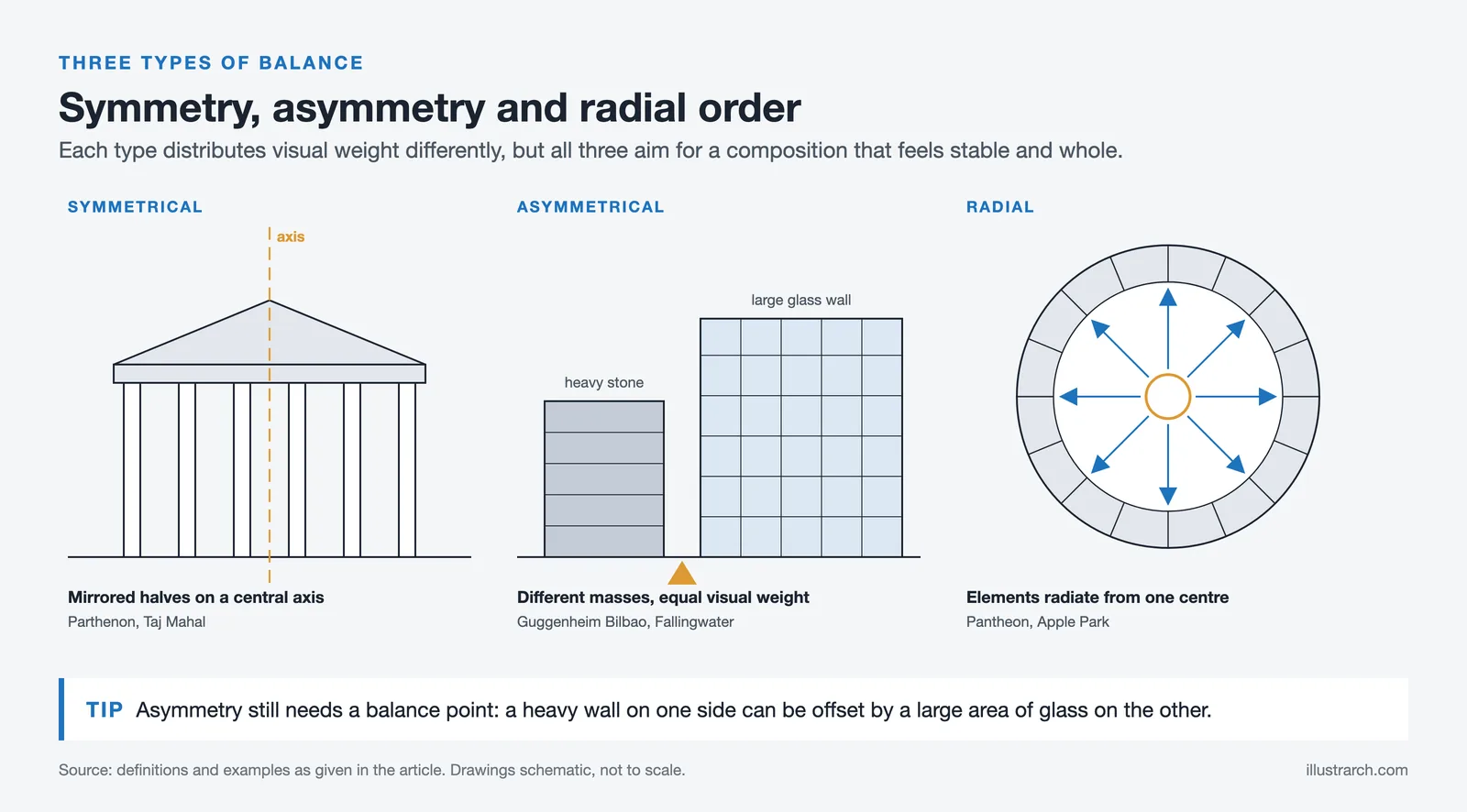
Symmetrical balance in architecture occurs when elements on one side of a central axis mirror those on the other. This approach produces a sense of order, formality, and permanence. Classical buildings such as the Parthenon in Athens and Renaissance palaces rely heavily on balance and symmetry in architecture to convey authority and grandeur. When you stand before a symmetrically balanced façade, your eye naturally finds the center, creating an immediate feeling of calm and stability. Symmetrical designs also simplify structural engineering because loads distribute evenly, making this an example of practicality in architecture where beauty and function converge. This is one reason why the five essential principles of architecture design consistently list balance at the top.
Asymmetrical Balance in Architecture
Asymmetrical balance in architecture achieves visual equilibrium without identical mirroring. Instead of repeating the same element on both sides, designers use contrasting forms, materials, textures, or colors that carry equal visual weight. A heavy stone wall on one side of a building might be counterbalanced by a large glass curtain wall on the other, different in material yet equal in visual presence. This approach gives architects far greater creative freedom while still delivering a composition that feels resolved. Many contemporary architectural designs favor asymmetrical balance because it creates dynamic, engaging façades that reflect modern sensibilities. The practicality of asymmetrical balance lies in its flexibility: architects can respond to site constraints, views, and program requirements without sacrificing visual harmony.
Radial Balance in Architecture
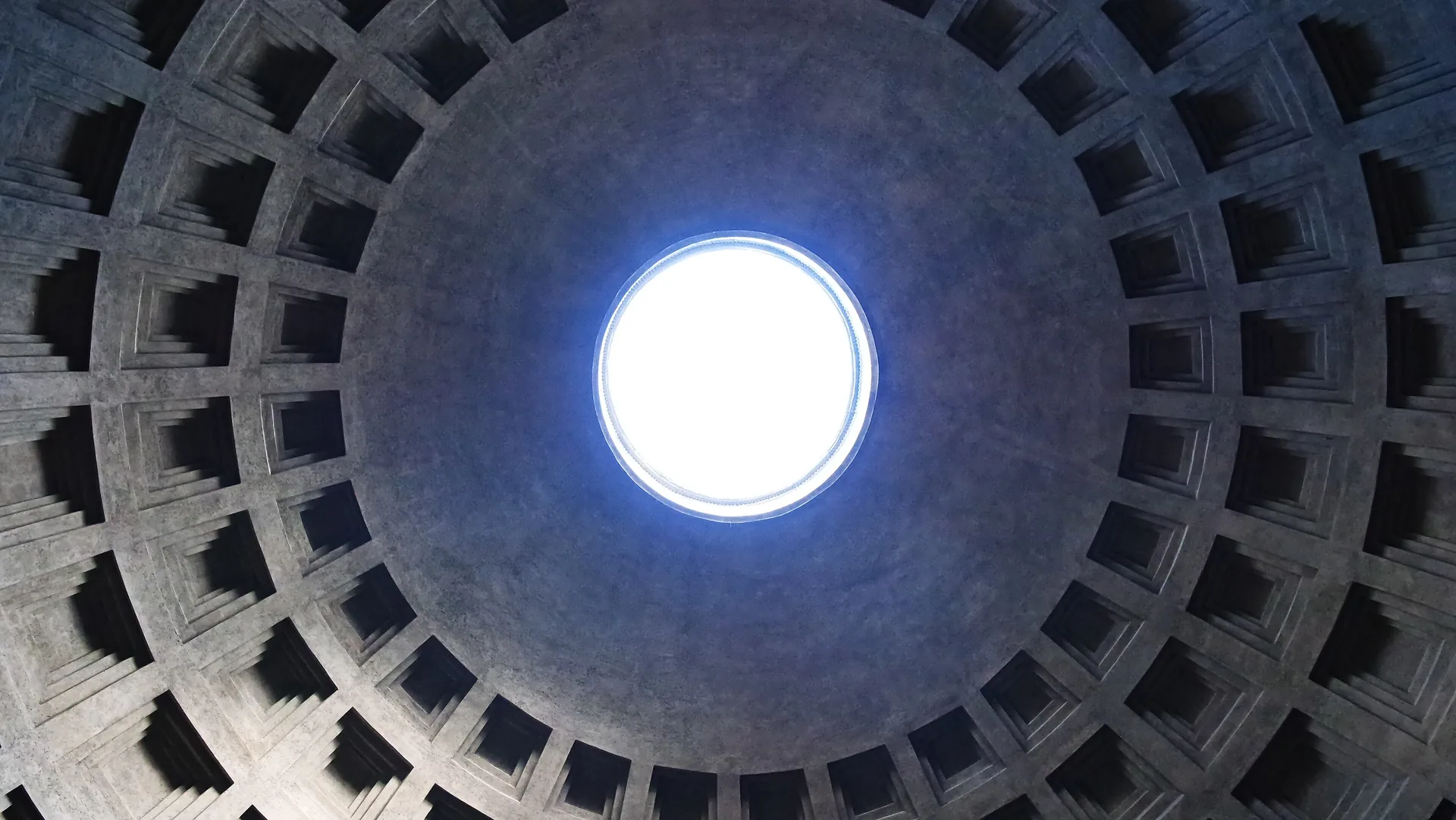
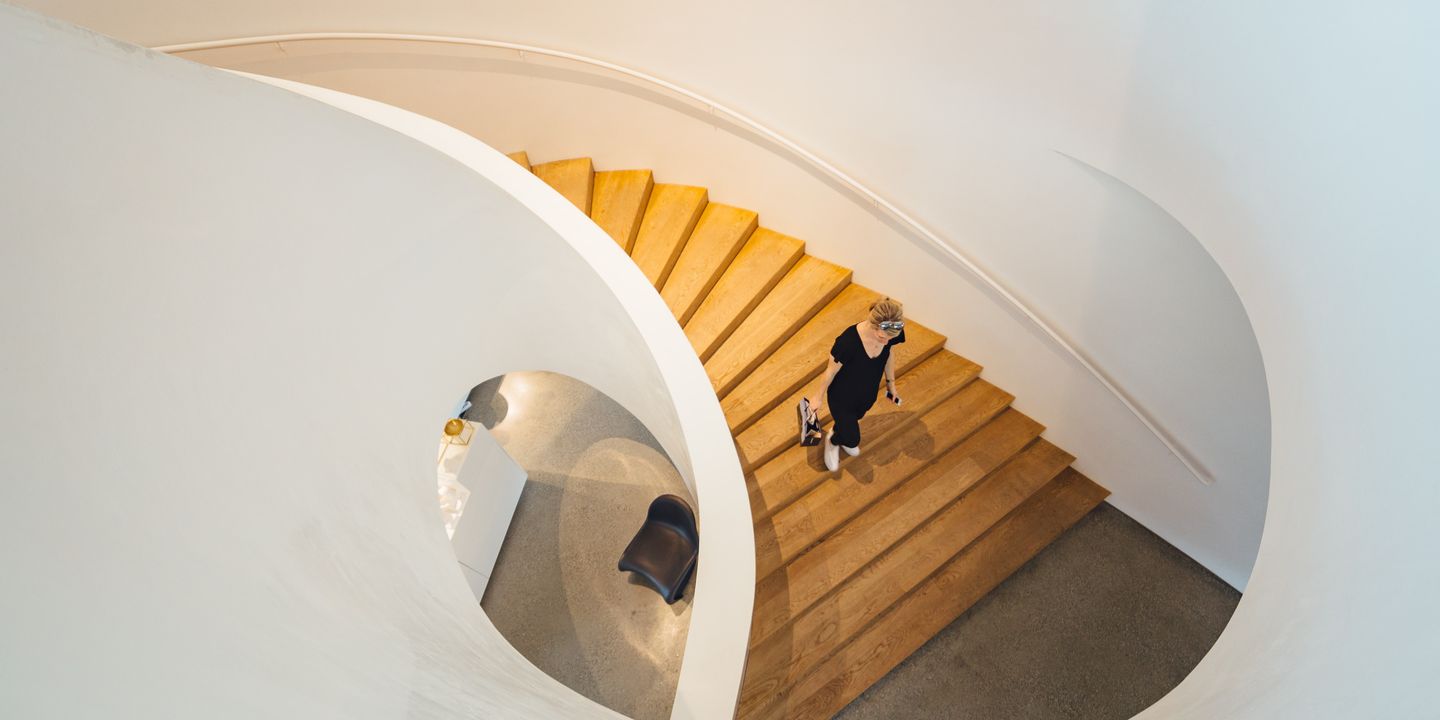
Radial balance in architecture organizes elements around a central point rather than along a linear axis. Think of a domed cathedral, a circular amphitheater, or a spiral staircase: every component radiates outward from the center, creating equal visual weight in every direction. Radial compositions naturally draw the eye inward, making them ideal for spaces meant to focus attention, places of worship, legislative chambers, and memorial halls. The Pantheon in Rome is one of the most celebrated examples of radial balance, where the oculus at the center of the dome serves as the focal point for the entire interior.
Why Beauty in Architecture Still Matters
Beauty in architecture is far more than surface decoration, it is the quality that transforms a functional shelter into an experience that elevates the human spirit. The ancient Roman architect Vitruvius identified three essential qualities every building must possess: firmitas (solidity), utilitas (utility), and venustas (beauty). This triad, often called the Vitruvian virtues, remains remarkably relevant in contemporary practice. The beauty of architecture emerges when proportion, material, light, and spatial arrangement work together to produce an emotional response: whether that is awe inside a cathedral or calm within a minimalist home.
Recent research in neuroaesthetics confirms that well-designed spaces measurably reduce stress and improve cognitive performance. In 2025, as cities grapple with housing shortages, climate targets, and post-pandemic work patterns, the argument for architecture and beauty is stronger than ever: buildings that people find beautiful are buildings they maintain, cherish, and preserve for future generations. When architects balance aesthetic ambition with functional rigor, the result is a structure whose beauty serves a deeply practical purpose, longevity.
Practicality in Architecture: Where Function Meets Form
Prioritize Function
The primary function of the building should always be the first consideration in the design process. Practicality in architectural design means the design should be informed by the needs of the users and the intended purpose of the space. By prioritizing function, architects can create buildings that are not only practical and efficient, but also meet the needs of their users and contribute to the overall well-being of the community.
How can we prioritize function?
1-The design should be informed by the needs of the users. For example, a school building should be designed with the needs of students and teachers in mind, including classroom sizes, specialized spaces, and accessibility features.
2-The building should be designed to ensure the safety and security of its occupants. This may include features such as fire exits, emergency lighting, and security systems.
3-The design should prioritize sustainability, incorporating features such as energy-efficient systems, green materials, and water-saving fixtures.
4-The design should take into account the long-term maintenance and upkeep of the building. This may include features such as durable materials and easy-to-clean surfaces.
5- The design should be mindful of the project budget, balancing function and aesthetics to create a practical and cost-effective design.
6-The design should meet all necessary regulatory requirements, including building codes, zoning regulations, and accessibility standards.

Practicality Examples in Everyday Architecture
Understanding practicality is easier when we look at concrete practicality examples across building types. A hospital corridor wide enough for two gurneys to pass is a practicality example rooted in life-safety requirements. An open-plan office that can be reconfigured with modular partitions is another example of practicality that balances efficiency with changing workplace needs. Residential kitchens designed around the “work triangle” (sink, stove, refrigerator) illustrate how spatial planning serves daily routines. Even the orientation of a building to maximize passive solar gain is a practicality choice that reduces energy costs for decades. These practicality examples show that function-first thinking does not have to come at the expense of aesthetics: when handled skillfully, practical decisions become the foundation upon which the beauty of architecture is built. For deeper insight into how architects merge creativity with real-world constraints, explore the architecture design process.
Consider the Context
The building should be designed to fit within its surrounding context, whether it is a natural landscape or an urban environment. The design should take into account the local climate, culture, and history. Contextual awareness is essential for achieving balance in architecture because a structure that ignores its surroundings, no matter how internally balanced, will feel out of place. Architects who study site conditions, prevailing winds, sun paths, and neighboring structures can create designs where symmetry and balance in architecture respond to real-world conditions rather than abstract ideals.
Emphasize Simplicity
Simple designs can often be the most practical and efficient. A minimalist approach can help to prioritize function while still achieving a visually pleasing design. Simplicity also reinforces balance: when there are fewer competing elements, it becomes easier for the viewer to perceive equilibrium. Many of the most enduring architectural works blend ancient wisdom with modern minimalism, proving that restraint and balance go hand in hand.
Incorporate Natural Elements
The use of natural materials and forms can help to create a visually appealing design that also has practical benefits. For example, natural light can be incorporated into the design to reduce energy costs and improve the well-being of the building’s occupants. Natural elements also contribute to balance by creating a dialogue between the built environment and the landscape, an approach deeply connected to how architecture influences the human mind. In 2025 and 2026, biophilic design has moved from niche trend to mainstream practice, further proving that nature-inspired beauty in architecture offers measurable health and energy benefits.
How Does the Parthenon Reflect Balance and Order in Its Architecture?
The Parthenon in Athens, completed in 438 BCE, is perhaps the most cited example of balance in architecture in the Western canon. Its designers, Ictinus and Callicrates, employed a consistent 9:4 ratio across the façade, the same proportion governs the relationship between the building’s width and height, and between the column spacing and column diameter. This mathematical rigor produces a sense of inevitability: every element appears exactly where it should be.
What makes the Parthenon especially remarkable is its use of optical refinements to perfect the perception of balance. The columns lean slightly inward, the stylobate curves gently upward at the center, and each column swells subtly at its midpoint (a technique called entasis). These adjustments counteract optical illusions that would otherwise make straight lines appear to sag or lean. The result is a building that looks perfectly balanced even though, geometrically, almost no line in it is truly straight. This masterful interplay of math and perception makes the Parthenon a timeless reference for understanding the golden ratio in architecture and the broader principles of symmetrical balance in architecture. The Parthenon remains the ultimate proof that architecture and beauty are inseparable when proportion and purpose align.
Balance Form and Function: The Architect’s Core Challenge
The form of the building should not compromise its function, and vice versa. A well-designed building should achieve a balance between form and function, so that it is both practical and visually appealing. By balancing form and function, architects can create buildings that are both aesthetically pleasing and practical. The form of the building should not compromise its function, and vice versa. Instead, they should work together to create a cohesive design that meets the needs of its users and contributes to the overall well-being of the community.
Cohesive design: The form of the building should complement its function, and vice versa. This means that the design should be cohesive and work together as a whole.
Attention to detail: Small details can make a big difference in the overall form and function of a building. Architects should pay attention to details such as material choices, lighting, and texture to ensure that they contribute to the overall design.
Flexibility: A building’s form and function should be flexible enough to accommodate changing needs over time. This may include designing spaces that can be easily reconfigured or adapted for different uses.
Aesthetics: While function is important, aesthetics are also a key consideration in architectural design. The form of the building should be visually appealing and contribute to the overall character of the surrounding area. The beauty of architecture shines brightest when aesthetics and practicality reinforce each other rather than compete.
Innovation: Architects should strive to be innovative in their designs, incorporating new technologies and materials that can improve the form and function of a building. For guidance on how architecture and design work together, understanding their complementary roles is essential.
What Is Performance Balance in Computer Architecture?
While this article focuses on physical building design, the term “performance balance” also appears in computer architecture, where it describes the optimization of hardware components, processors, memory, storage, and bandwidth, so that no single bottleneck limits overall system throughput. In computing, performance balance in computer architecture means ensuring that data can flow smoothly between components, much like how physical balance in architecture ensures that structural loads distribute evenly. Both disciplines share a core principle: every part of the system must work in proportion to the others to achieve peak efficiency. For architects interested in the role of math in architecture, this cross-disciplinary parallel highlights how universal the concept of balance truly is.
Real-World Examples of Balanced Architecture
Understanding balance in theory is valuable, but examining real-world structures reveals how architects translate these principles into built form. Here are several notable examples of balance in architecture that also demonstrate the intersection of beauty in architecture and practicality:
Taj Mahal, India, A masterclass in symmetrical balance in architecture, with identical elements mirrored on either side of the central dome and reflecting pool. The result is a monument of extraordinary serenity that exemplifies the beauty of architecture at its most refined.
Guggenheim Museum Bilbao, Spain: Frank Gehry’s titanium-clad design demonstrates asymmetrical balance in architecture. Curving, seemingly random forms achieve equilibrium through careful massing and material contrast, a powerful example of practicality in managing complex structural loads while achieving expressive form.
Apple Park, Cupertino: Norman Foster’s circular campus is a contemporary example of radial balance in architecture, where workspaces, landscaping, and circulation all radiate from a central courtyard. It stands as one of the most ambitious balanced architecture projects of the 21st century.
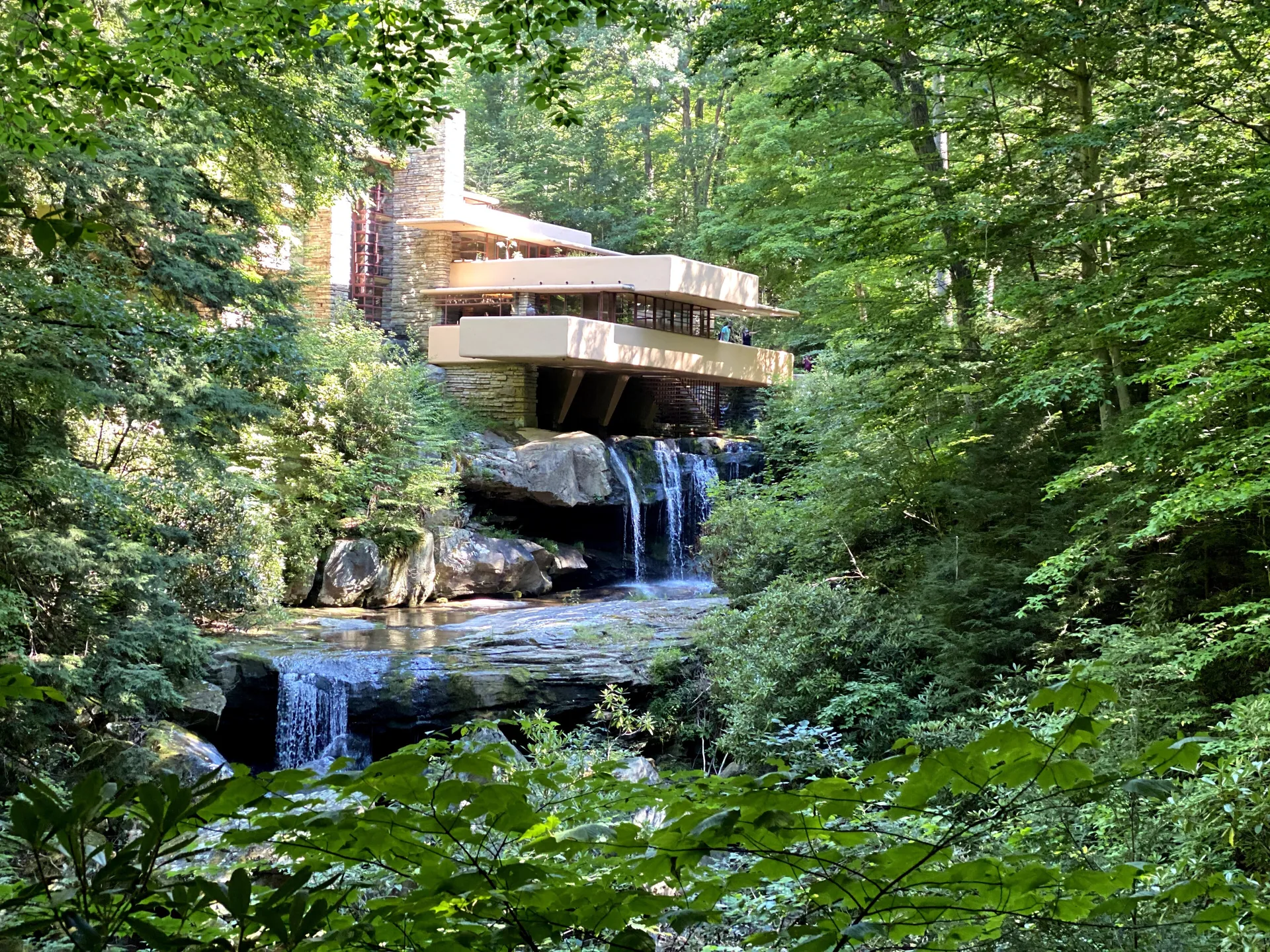
Fallingwater, USA: Frank Lloyd Wright’s cantilevered masterpiece uses asymmetrical balance to create dramatic horizontal planes that appear to float over a waterfall, proving that balance does not require symmetry.
Sydney Opera House, Australia, Jørn Utzon’s iconic shell forms demonstrate how architecture and beauty merge with engineering innovation to create one of the world’s most recognizable structures. The interlocking sail-like roofs achieve visual balance despite their seemingly organic asymmetry.
Each of these structures demonstrates that balanced architecture can take many forms. What unites them is the designer’s intentional control of visual weight, whether through mirroring, contrasting, or radiating elements, to create a composition that feels whole. For more examples of how the golden ratio has guided architectural design from ancient times, explore the proportional systems that underpin many of these iconic buildings.
Free Online Golden Ratio Calculator
Nearest Fibonacci Numbers
Golden Rectangle
Image Golden Ratio Overlay

Architecture and Beauty: Collaboration That Creates Lasting Impact
Collaborate with Other Professionals
Architects and designers should work closely with engineers, builders, and other professionals to ensure that the design is practical and meets all necessary requirements. Achieving balance in architecture is rarely a solo endeavor. Structural engineers verify that loads distribute evenly, landscape architects ensure the building sits harmoniously within its site, and interior designers carry principles of symmetry and balance in architecture into every room. This collaborative approach is what separates competent buildings from truly outstanding architectural design.
In 2025, collaboration increasingly involves digital tools such as BIM (Building Information Modeling) and AI-assisted design platforms that allow multidisciplinary teams to test balance, structural performance, and aesthetic outcomes in real time. The American Institute of Architects (AIA) emphasizes that integrated project delivery leads to buildings where beauty in architecture and practicality are optimized simultaneously rather than treated as competing priorities.
In conclusion, balancing beauty and practicality in architectural design is a complex process that requires careful consideration of many factors. By prioritizing function, considering the context, emphasizing simplicity, incorporating natural elements, balancing form and function, and collaborating with other professionals, architects and designers can create buildings that are both functional and aesthetically pleasing. Whether you are drawn to the formal clarity of symmetrical balance in architecture, the dynamic energy of asymmetrical compositions, or the centripetal pull of radial designs, the pursuit of balance architecture remains one of architecture’s most enduring and rewarding challenges. The beauty of architecture lies not in choosing between form and function, but in the art of uniting them.


3 Comments





Overlapping Concrete Walls and One Roof Shape a House in Okinawa
IGArchitects built Overlapping Spaces in Okinawa from reinforced concrete walls, columns and...
 illustrarch Editoral Team1 Mins read
Futuro House Production Revived in Finland After Decades-Long Hiatus
A Facebook listing for abandoned moulds led to the first new Futuro...
illustrarch Editoral Team3 Mins read
Building Your Dream Home in NSW: What You Should Know About Montgomery Homes
Montgomery Homes has been building across Sydney, Newcastle, the Hunter, Wollongong and...
illustrarch Editoral Team4 Mins read
Designing a Home Theater: Where Drapery Fits Into the Plan
In a media room the curtains are a performance layer, not decoration....
illustrarch Editoral Team3 Mins read


I agree that buildings need to be useful for people. It’s good to see some tips on how to balance design and function.
The points about using natural light and materials are interesting. It seems like a good idea for saving energy too.
This article talks about balance in architecture. It explains how buildings need to look good and work well at the same time. There are different types of balance, like symmetrical and asymmetrical. I learned some new things, but it was a bit long.