

Perfection in Landscape, Salt Series – Tom Hegen
Tom Hegen's Salt Series showcases the vibrant colors of salt ponds, revealing how varying salinity levels influence the growth of different micro-organisms.
 Begüm Şardan19 June 20193 Mins read317
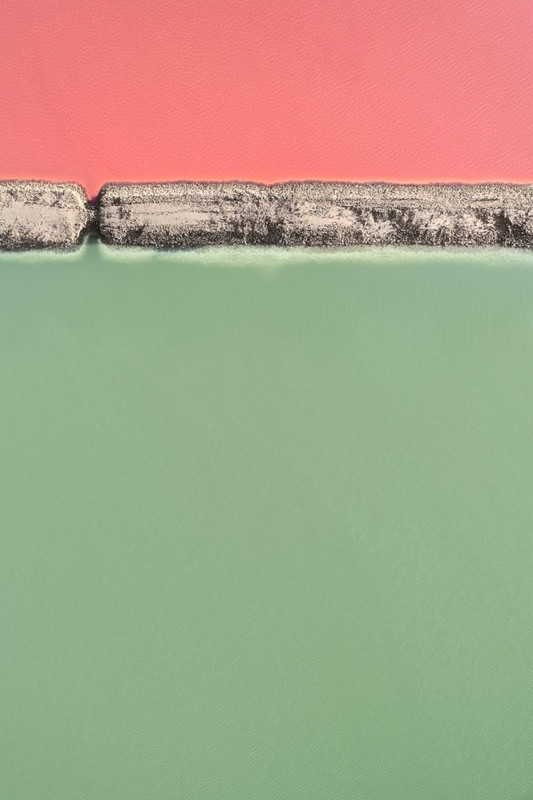
Table of Contents Show
Tom Hegen is a photographer and designer from Munich, Germany. You might know him from his Adobe Design Achievement in 2018, and exhibitions, publications as well. However, I want to show you his photographer side.
Tom says ‘I focus on aerial photography projects that show impact of human presence on earth. As a photographer I am interested in the relationship between man and nature. In my aerial photography I focus on landscapes that have been heavily transformed by human intervention. I am trying to sensitize the viewer for those subjects by taking a look on the extraordinary forces impacting our environment.‘

Even he has so many, I want to introduce you with the Salt Series. As architects, we need to understand landscape clearly. Sometimes it can be complicated, sometimes it can be perfect as it is. Now we will see perfect examples for second option.
You can see in the photos below, how precise the mother nature is, without changing or adding anything. Even the colors are perfectly matching and unique.
I know that you have already started to think about how can it be possible to have that bright colors for the landscape. The answer is explained by Hegen, ‘Sea salt comes from natural evaporation of seawater out of artificial created ponds. The color of the water indicates the salinity of the ponds. Micro-organisms change their hues as the salinity of the pond increases. The colors can vary from lighter shades of green the vibrant red. Although the sea salt industry covers large areas around the world, the salt ponds and marshes are an important habitat for many species like birds, shellfishes or micro-organisms. ‘

As you can see, some of them are not ‘that simple’ we can say. But somehow they have that harmony like a pattern. For the other series he has, each one has a different characteristic expression, but they are all telling you something. So, for the ones who are curious about his works and him, I strongly recommend you to go his website , Tomhegen and please check for the series and of course, don’t forget to get inspired from mother nature ! She has all the answers!


Why Salt Ponds Look So Colorful
The vivid pinks, reds, and greens captured in the Salt Series are not edited or staged, they come from biology and chemistry working together. As seawater evaporates in shallow ponds, the salinity rises, and different micro-organisms thrive at different salt levels. Algae such as Dunaliella salina produce orange and red pigments to protect themselves in the most extreme, salty conditions, while less salty ponds support greener organisms. The result is a natural gradient of color that shifts as the water concentrates, which is why a single salt works can contain so many distinct hues side by side.
What Aerial Photography Reveals to Architects
Looking at landscape from above changes how we read it. Patterns that are invisible at ground level, such as the geometric grids of evaporation ponds, become clear and almost abstract from the air. For architects and landscape designers, this perspective is a reminder that human intervention leaves legible marks on the land, and that those marks can be beautiful, troubling, or both at once. Aerial study helps designers understand scale, circulation, and the relationship between built systems and natural ones, which is exactly the dialogue Hegen explores in his work.
Lessons for Landscape Design
The Salt Series carries a quiet lesson for anyone shaping outdoor space. Sometimes the strongest design move is restraint, letting natural processes generate form and color rather than imposing them. The salt ponds are functional industrial sites, yet their honest geometry and natural palette feel resolved and complete. Designers can take inspiration from this by working with existing site conditions, water, soil, vegetation, and time, instead of overriding them. The harmony Hegen photographs is the harmony of a system left to do what it does.
Habitat Value Behind the Beauty
It is easy to read these images purely as art, but the salt marshes and ponds they depict are living habitats. They support migrating birds, shellfish, and the very micro-organisms that paint the water. Saltworks around the world double as feeding and breeding grounds for wildlife, which makes them an example of how an industrial landscape can coexist with ecology. For viewers, the takeaway is that the aesthetics on the surface sit on top of a functioning ecosystem, and that both are worth protecting.






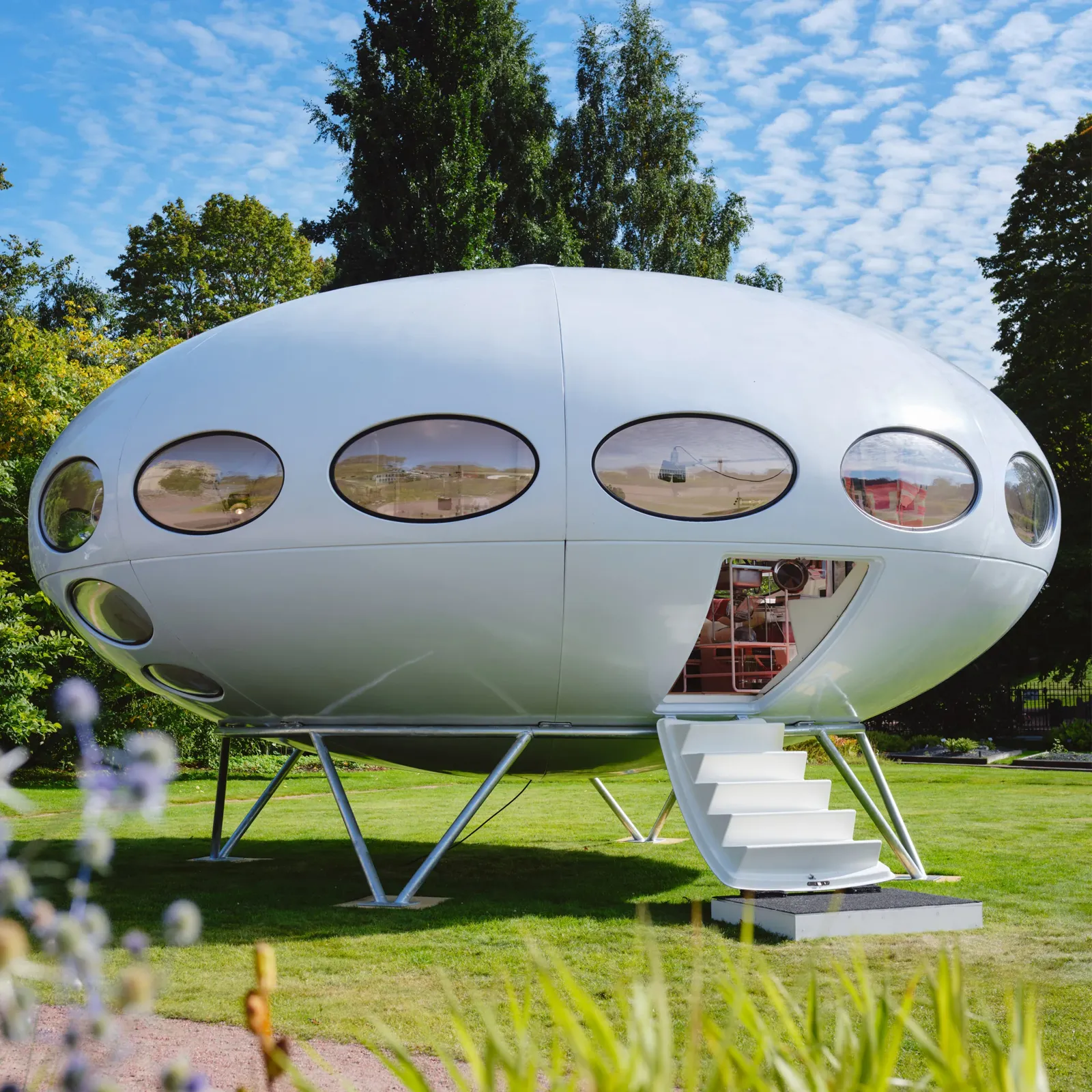
Futuro House Production Revived in Finland After Decades-Long Hiatus
A Facebook listing for abandoned moulds led to the first new Futuro...
 illustrarch Editoral Team3 Mins read

Building Your Dream Home in NSW: What You Should Know About Montgomery Homes
Montgomery Homes has been building across Sydney, Newcastle, the Hunter, Wollongong and...
illustrarch Editoral Team4 Mins read

Designing a Home Theater: Where Drapery Fits Into the Plan
In a media room the curtains are a performance layer, not decoration....
illustrarch Editoral Team3 Mins read

Oscar Niemeyer’s Cathedral of Brasília: The Hyperboloid Concrete Hymn
The Cathedral of Brasília reads as a single gesture, yet it stood...
 Furkan Sen7 Mins read


Leave a comment