

What Makes a Bathroom Truly High-End? The Decisions You Don’t See
High-end bathrooms prioritize technical design choices, such as optimal circulation space, durable materials, and layered lighting.
 Muhammad Abdullatef - Tifa Studio16 May 20263 Mins read142
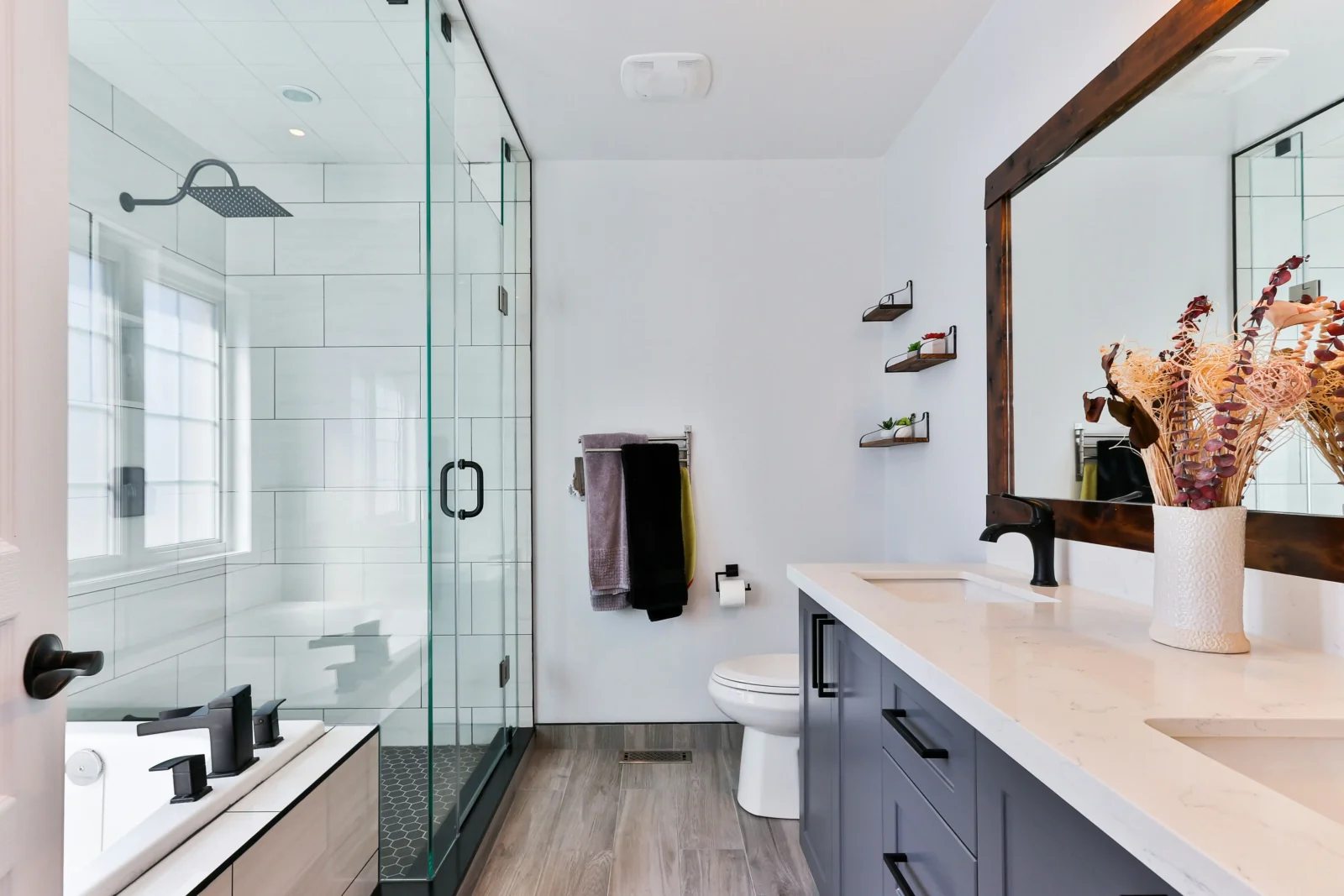
Table of Contents Show
It’s easy to spot a luxury bathroom in a photo, but it’s much harder to tell which ones will still work just as well ten years down the line. The real difference usually isn’t about the finishes you see, but the decisions made early on, before anything is installed. When you think of the bathroom as a technical space first, it tends to last longer, and comfort is something you actually build in from the beginning.
Circulation That Survives Real Use
A bathroom begins to work properly when movement has room to happen without interruption. In practice, that means setting clear minimum clearances and sticking to them even when space feels tight. A vanity, for example, works best when you allow at least 70 to 90 cm of standing clearance in front of it. Anything less begins to feel restrictive when two people share the space or when storage drawers open. Around a toilet, 20 cm on each side as an absolute minimum is common in compact layouts, but 25 to 30 cm creates noticeably better comfort over time. These numbers sound small, but they determine whether daily routines feel natural or slightly compressed. High-end design often hides in these margins.

Materials Chosen for Behaviour, Not Just Appearance
Stone, porcelain, terrazzo, microcement. Each one carries a different long-term personality once water, heat, and cleaning cycles begin to act on it. Marble, for instance, delivers depth and variation, yet it requires sealing roughly every 6 to 12 months depending on use. Porcelain slabs, by contrast, are non-porous and tolerate aggressive cleaning without degradation, which is why they often outperform natural stone in shower environments. A practical detail that often gets overlooked is slip resistance. Flooring in wet zones should ideally reach at least R10 to R11 slip rating to remain safe when water and soap accumulate. It is not a design detail you notice immediately, but it becomes one you rely on every day.
Lighting Planned in Layers, Not Fixtures
High-end bathrooms rarely succeed with a single overhead light. They rely on layers that support different tasks without conflict. At the mirror, vertical lighting placed at approximately eye level (around 160 to 170 cm from finished floor) reduces facial shadows far more effectively than ceiling downlights. A good target is around 300 to 500 lux at face level for grooming tasks. General ambient lighting can sit lower, often around 150 to 200 lux, enough to keep the room legible without creating glare on reflective surfaces. If you include dimming, you gain control over how the space shifts between morning function and evening recovery.
Storage That Follows Reach
The most effective vanity drawers sit within a reach zone of roughly 40 to 120 cm from the floor, which reduces bending and unnecessary stretching during daily routines. Shallow storage, around 10 to 15 cm deep, often works better than deeper cabinets for everyday items. It prevents stacking and keeps visibility clear. Deeper storage, closer to 30 to 40 cm, belongs further down or in concealed wall recesses where bulk items do not interfere with daily use. What all this means when it comes to efficiency is that when storage is properly distributed, the bathroom stays visually calm without requiring constant tidying.

Why Electrical Design Defines the Entire Bathroom
This is the point where design either holds together or begins to quietly fail. A qualified electrician is a key player in all of this, as he determines whether lighting, heating, ventilation, mirrors, and waterproof systems function safely and consistently over time. Bathrooms operate under strict electrical zoning rules for good reason. Water and electricity share the same space, and precision here is non-negotiable. For example, lighting inside shower zones must meet appropriate IP65 ratings or higher, depending on placement. Underfloor heating circuits require correct load calculation to avoid overload, especially in larger bathrooms where systems often exceed 100 to 150 watts per square metre. Also, an experienced electrician ensures circuits are separated properly, so a fault in one system does not compromise another. This is not visible in the finished space, but it defines whether the room remains safe, serviceable, and durable.
When we think of high-end bathrooms, we usually think of shiny tiles, beautiful countertops, decor and such, but high-end bathrooms actually start with measured decisions that respect how people actually use space. When circulation, materials, lighting, storage, and technical systems align with this level of precision, the result is a space that continues to work reliably, long after the design process has ended.



Futuro House Production Revived in Finland After Decades-Long Hiatus
A Facebook listing for abandoned moulds led to the first new Futuro...
 illustrarch Editoral Team3 Mins read
Building Your Dream Home in NSW: What You Should Know About Montgomery Homes
Montgomery Homes has been building across Sydney, Newcastle, the Hunter, Wollongong and...
illustrarch Editoral Team4 Mins read
Designing a Home Theater: Where Drapery Fits Into the Plan
In a media room the curtains are a performance layer, not decoration....
illustrarch Editoral Team3 Mins read

Oscar Niemeyer’s Cathedral of Brasília: The Hyperboloid Concrete Hymn
The Cathedral of Brasília reads as a single gesture, yet it stood...
 Furkan Sen7 Mins read


Leave a comment