

Inspirational Facade Designs
The first of the inspiring facade designs is from the successful based in Netherlands architecture office MVRDV, which we can cite as an example with its many projects.
 Elif Ayse Sen12 March 20225 Mins read510

Table of Contents Show
Inspirational facade designs share one trait: material, light, and form push toward a single clear idea instead of competing for attention. The projects below, from MVRDV, OMA, 3XN, Lacime Architects, and a five-firm collaboration in Miami, show how secondary skins, parametric variation, and tight material palettes turn a building’s outer wall into its strongest statement.
A facade is the first thing anyone reads about a building, and often the only part the public ever touches with its eyes. The five examples gathered here are not united by style. They range from a colorful experimental block to a reflective corporate campus and a parking garage dressed as an art gallery. What ties them together is intent. Each design treats the outer surface as a place to solve real problems, control daylight, frame views, and give a flat wall depth, while still saying something memorable. If you are building a personal library of facade designs to draw from, start with projects that hold an idea at every scale.
Five Facades Worth Studying
MVRDV and the Art of Controlled Contrast
The Rotterdam practice MVRDV, founded in 1992, built its reputation on facades that mix materials most architects would keep apart. Their work uses gaps, permeable screens, and reflective surfaces inside one design language, so contrast reads as a plan rather than an accident. The Crystal Houses project in Amsterdam pushes this idea to an extreme, rebuilding a heritage shopfront in cast glass bricks that fade into traditional masonry higher up the wall. It is a clear demonstration that a facade can be experimental and respectful at the same time. You can see the full range of their surface experiments on the official MVRDV site.
OMA Axel Springer Campus, Berlin

The Axel Springer Campus by OMA in Berlin earns its place through a single bold move. A diagonal cut carves a 45-meter terraced valley through the center of the block, and the facade folds to follow it. From the street the building presents an ordinary grid, but the inner face breaks into a faceted, mirrored surface that changes with the daylight and reads completely differently after dark. This is volumetric design doing the heavy lifting, where the contrast between a calm outer wall and a fractured reflective core gives the project two identities in one envelope. OMA documents the scheme on its Axel Springer Campus project page.
Lacime Architects and the Parametric Screen

The Xiangcheng District Planning Exhibition Hall in Suzhou, China, designed by Lacime Architects, wraps a relatively simple volume in a steel lattice that behaves as a second skin. The light, three-dimensional parametric design keeps the surface from ever feeling flat or repetitive. The steel elements are not structure in the strict sense; they are an expressive outer layer that filters light and casts shifting shadows across the glass behind. It is a clean example of how computation can vary a single component across a whole elevation without resorting to ornament.
3XN Horten Headquarters, Copenhagen

The Horten Headquarters in Copenhagen, by the Danish office 3XN, proves you do not need exotic geometry to make a wall move. The facade is built from parallel angled window bays that catch light at different angles, producing a rippling, three-dimensional rhythm from what is essentially a repeated detail. The lesson here is restraint. A disciplined piece of repetition, applied across an entire elevation, can read as richly as any complex algorithm. 3XN keeps a record of the project and its faceted glazing on the 3XN practice site. For a related take on how repeated structural elements can become the whole architectural expression, see our look at high-tech buildings that turned structure into spectacle.
📌 Did You Know?
The Miami Museum Garage hides a parking structure behind seven storeys of art. Five separate firms, WORKac, J. MAYER. H., Clavel Arquitectos, Nicolas Buffe, and K/R, were each handed one section of the same facade and told to design it independently. The result is a single building that reads as five competing manifestos stitched into one street wall.
Miami Museum Garage, Design District

The Miami Museum Garage sits in the busy Design District and refuses to behave like a parking structure. Developer Craig Robins and curator Terence Riley invited five practices, WORKac, J. MAYER. H., Clavel Arquitectos, Nicolas Buffe, and Riley’s own firm K/R, to each design a slice of the exterior. The sections clash on purpose, from cartoonish stacked cars to bold graphic panels, yet they hold together as one of the most talked-about street walls in the city. It is the clearest argument in this list that a facade can be an exhibition in its own right.

What Makes a Facade Memorable
The projects gathered here share a common lesson: a strong facade is rarely about a single dramatic gesture. Each example works because several design decisions reinforce one another. MVRDV combines contrasting materials within one design language, OMA uses a reflective inner skin to give the Axel Springer building two readings by day and night, and Lacime Architects lets steel elements act as a parametric outer layer. A facade becomes memorable when material, light, and form agree on the same idea instead of pulling in different directions.
The Role of the Secondary Facade
Several of these buildings rely on a secondary facade, an outer layer set in front of the weatherproof envelope. This double-skin approach does real work beyond appearance. It can shade interiors and cut solar gain, frame views, and create the depth and shadow that flat walls cannot. In the Xiangcheng exhibition hall the steel framework reads as a three-dimensional screen, while the OMA campus uses its mirrored inner face to turn the building into a changing surface. For designers, the takeaway is that separating the expressive layer from the technical one gives freedom to sculpt a facade without hurting performance.
💡 Pro Tip
When you design a secondary or double-skin facade, plan the maintenance access before you finalize the outer pattern. Steel screens, fins, and reflective panels collect dirt and need cleaning routes, so leave a service gap of at least 600 mm between the two layers. Skipping this step on site usually means cherry pickers and recurring costs the client never budgeted for.
Parametric and Volumetric Strategies
Parametric design lets architects vary a repeated element across a surface, so panels, fins, or openings shift gradually to follow light, views, or structure. The result is a facade that feels alive rather than uniform. The 3XN Horten Headquarters reaches a related effect through parallel angled windows that produce a three-dimensional rhythm without complex geometry. Whether driven by computation or by careful repetition, these volumetric strategies prove that movement and depth can come from disciplined variation. The same logic now shapes infrastructure, as our piece on parametric design in bridge architecture shows.
Choosing Materials That Work Together
Harmony across mixed materials is one of the hardest things to pull off on a facade. The MVRDV approach shows the method clearly: surfaces differ in texture and transparency yet stay tied to one design language through proportion, color, and detailing. Reflective glass, permeable screens, and solid panels can coexist when they share a logic. A practical way to design an impressive facade is to limit the palette and let one material lead while the others support it, so contrast reads as deliberate. Recent projects such as the Sou Fujimoto facade for House of Dior in Osaka follow exactly this principle, with one expressive material carrying the whole street presence.
If you want to widen your reference set beyond the five projects here, the editors at ArchDaily keep a running collection of cladding studies and built examples on their facade topic page, which is a useful place to track how material choices play out across climates and budgets.
The Bigger Picture
It is tempting to read these facades as surface drama, but each one is really an argument about how a building meets the public. A garage can host five artists, a media campus can split itself in two, and a repeated window can make a quiet office shimmer. The most inspiring facade designs are the ones that solve a practical problem and tell a story in the same move, which is exactly why they keep rewarding a second look.

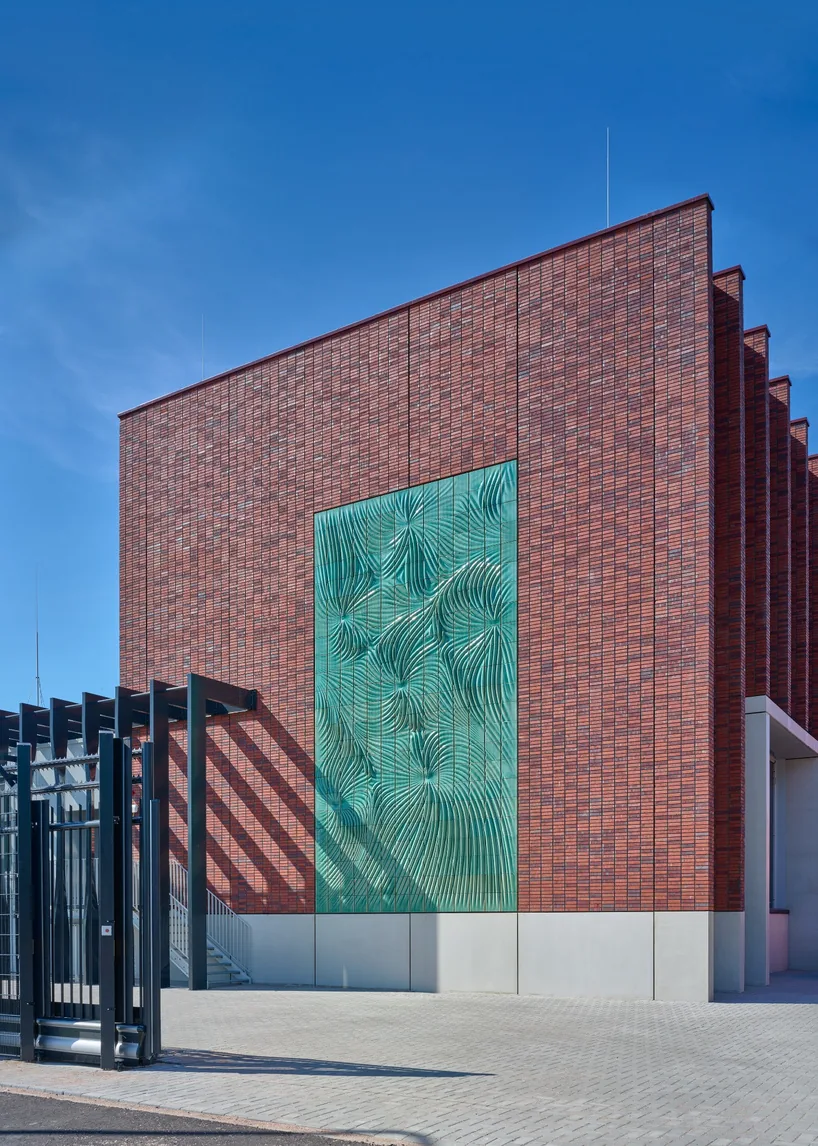
Studio RAP Clads Beverwijk Substation with 3D Printed Ceramic Facade
Studio RAP and Powerhouse Company clad a Dutch 150 kV switchstation with...
 illustrarch Editoral Team2 Mins read

Facade Design: 10 Ways to Design an Impressive Building Facade
Building facade design is a critical aspect of architecture that goes beyond...
Elif Ayse Sen9 Mins read

Step-by-Step Process for Crafting Dynamic Facade Designs
This practical guide breaks down the full process of crafting dynamic facade...
Elif Ayse Sen16 Mins read

How Facades Tell Cultural Stories
How facades tell cultural stories—decode symbols, materials, and climate cues with regional...
 Sinan Ozen4 Mins read


Leave a comment