

Repetition Act
Repetition Act is an architectural project that reinterprets a ruined castle in Italy by creating a new structure that respects and highlights the existing historical fabric.
 illustrarch Editoral Team15 July 20191 Mins read356


Repetition Act restores the monumentality of a ruined castle in Italy by recreating its founding gesture, the act of building the surrounding wall. Designed by Enrico Capanni with Arianna Giulianelli, Roberto Miglionico and Andrea Pintus, the project treats the wall as a base, a monolithic platform on top of which the new construction stands. The result is a measured comparison between the ancient and the new, and a reading of the relationship between landscape and ruins.
The approach here differs completely from the one adopted inside the Rocca, where the ruins become a fence. The new dry building covers what was already present without ever touching it. The monolithic basement is separated from the surrounding walls by a promenade that runs around the castle, so the historic fabric is read from a respectful distance. The inner space is devoted to the discovery of the site and the environment around it.
Building on a ruin
Working with a ruin is one of the more demanding situations in architecture. A surviving structure carries memory and weight, so the designer has to decide how much to reveal, how much to protect, and how the new layer should announce itself. Many contemporary interventions in architectural conservation favour a clear distinction between old and new, where added elements stay legible rather than imitating the original. Repetition Act follows that logic, letting the basement read as a deliberate insertion above the inherited stone of the castle.
The interior unfolds in three parts. The first is a construction that covers the archaeological remains like a shell, sheltering them while keeping them visible. The second is a system of cantilevered paths that offer visitors shifting points of view and guide movement through the site. These paths lead to the third part, the extension of the Mastio tower, which houses a camera obscura. Inside that room the surrounding landscape of Italy projects itself onto the wall, turning the act of looking into a quiet, framed event.
By separating the new volume from the old walls and choreographing how the ground is approached, the project lets the ruin keep its presence while giving the visitor fresh ways to see it. Repetition Act reads less as a building added to a site and more as a careful argument about how to inhabit history.





Savan House by Nobico Studio
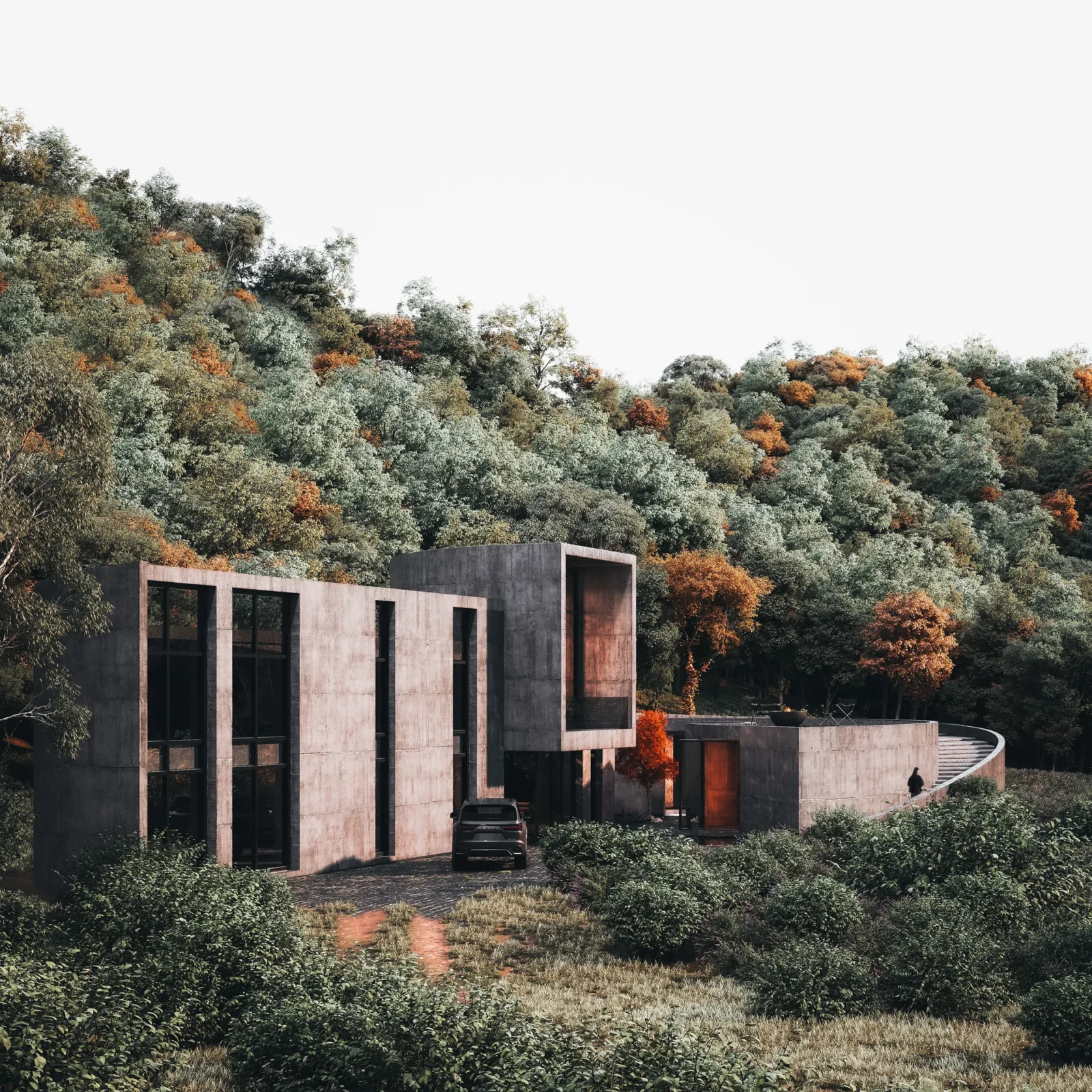
Savan House is Nobico Studio's unbuilt concept for a forested hillside in...
illustrarch Editoral Team3 Mins read

Renaatus Irumathi
Renaatus Irumathi Residence features 69 spacious apartments designed with contemporary aesthetics, maximizing...
illustrarch Editoral Team2 Mins read

White Khamovniki
White Khamovniki is a residential tower project in Moscow that combines urban...
illustrarch Editoral Team1 Mins read

Millennium Horizon
Millennium Horizon is an innovative architectural project in the UAE that uses...
illustrarch Editoral Team2 Mins read


Leave a comment