

Targ Blonie Market by Aleksandra Wasilkowska Architectural Studio
A comprehensive architectural overview of the redesigned Targ Blonie Market by Aleksandra Wasilkowska Architectural Studio, highlighting its park, bazaar hybrid concept, ecological features, community impact, and innovative urban design strategies.
 Begum Gumusel9 December 20253 Mins read257


Table of Contents Show
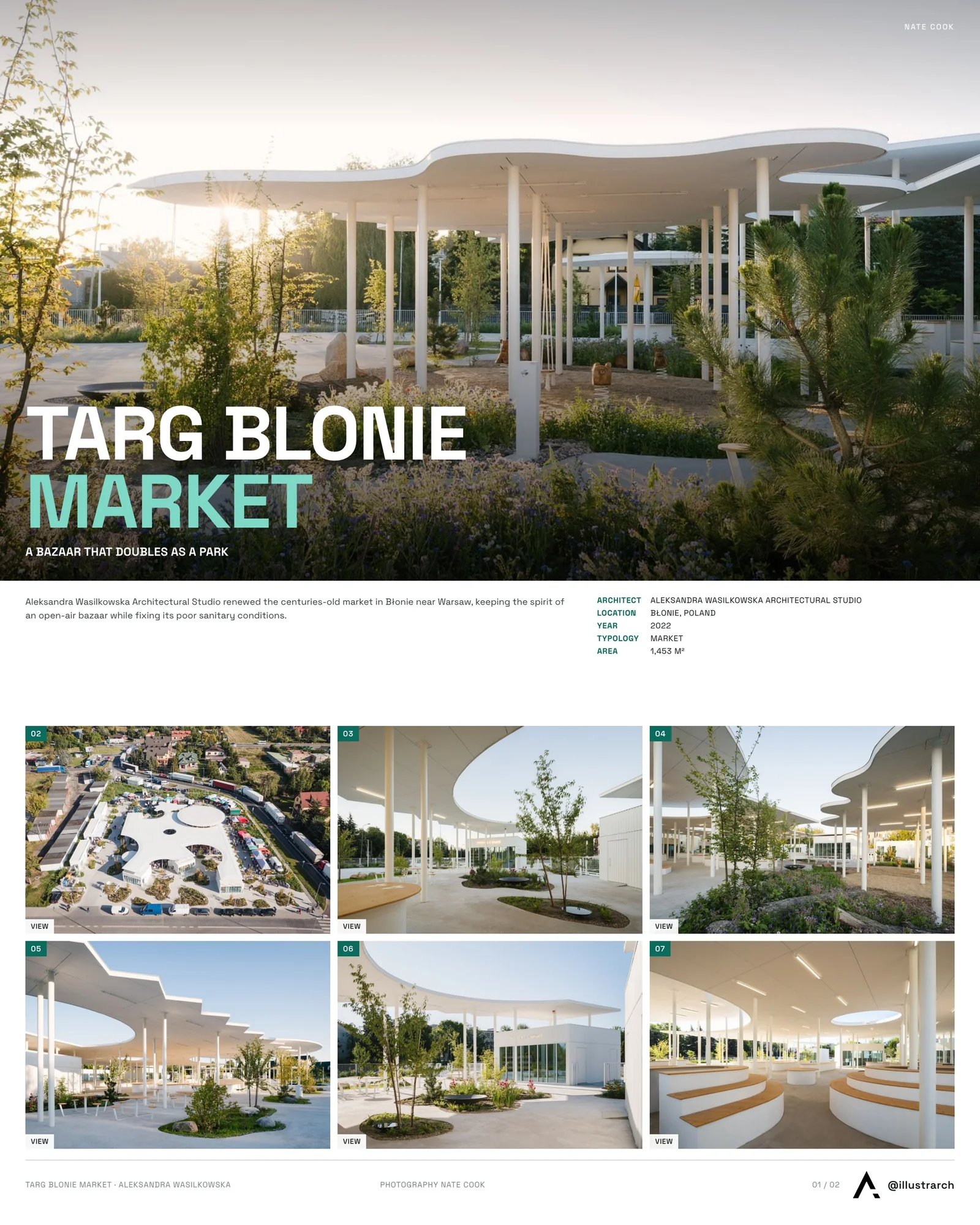
The transformation of Targ Blonie Market by Aleksandra Wasilkowska Architectural Studio reimagines how public spaces can support resilient food systems, social cohesion, and ecological well-being. Rooted in centuries of market tradition in the commune of Blonie near Warsaw, the renewed site reflects a modern vision of community-centered design while preserving the essence of an open-air bazaar.
Rethinking Food, Space, and Urban Resilience
Food consumption patterns profoundly influence the way cities grow and operate. Markets, especially those offering locally sourced products, play a vital role in creating healthier and more resilient urban environments. The revitalization of Targ Blonie Market responds directly to global challenges such as climate instability, rising food insecurity, and increasing social inequalities. By strengthening short supply chains and ensuring equitable access to affordable, good-quality food, the new design reinforces the importance of bazaars as engines of micro-entrepreneurship, neighborly relationships, and social equity.
For over 15 years, architect Aleksandra Wasilkowska has explored the concept of shadow architecture, a term describing informal trading structures, street markets, and temporary commercial environments. Her long-term research informs the redesign of Targ Blonie, a site cherished by the local community for generations. Previously, the market suffered from inadequate sanitary conditions and limited infrastructure. The municipality decided to modernize it while preserving its cultural and economic significance, resulting in a renewed space where tradition and contemporary needs coexist.
A Multifunctional Structure Bridging Park and Marketplace
The central idea behind the redevelopment was to craft a hybrid public space that functions as both an active marketplace and a welcoming urban park. A series of bright white, multifunctional roofs anchor the design, reflecting sunlight and offering protection from rain. These structures create a comfortable microclimate, enabling year-round use and flexibility. When the market is closed, the stepped wooden vendor platforms double as informal seating, encouraging spontaneous social interactions.
Around the main roofed area, new commercial and service pavilions enhance the functionality of the market. Their corrugated white facades and large glazed openings create a cohesive architectural identity, blending durability with simplicity. Additional essential facilities, including restrooms and an administrative building, expand the usability of the square and support day-to-day operations.
Accessibility, Social Interaction, and Human-Centered Circulation
At the heart of the redesigned market lies a playful and interactive community zone featuring a bar, children’s playground, and a large shared table intended for gatherings. The layout embraces inclusivity, with a smooth concrete surface free of curbs, ensuring easy circulation for pedestrians, wheelchair users, cyclists, and even skateboarders. A surrounding access road supports efficient delivery routes for vendors and accommodates itinerant agricultural traders, preserving the dynamic character of the bazaar.

Ecological Design and Biodiversity at the Core
Environmental regeneration was a foundational principle of the project. The market is surrounded by naturalistic green islands featuring pine trees, alders, multi-stem hornbeams, and beeches. As these trees mature, they will provide shade, enhance air quality, and support local wildlife. Climbing plants such as clematis and wisteria introduce softness and seasonal color, while multi-species flower meadows nurture pollinators and enrich the ecological value of the site.
Rainwater management plays a crucial role in the landscape strategy. The geometry of the square directs runoff toward rain gardens, meadows, and planting zones, helping water infiltrate naturally into the soil. Rain bowls collect water from the roof, ensuring that excess moisture supports plant life. These interventions contribute to a healthier microclimate and reduce the burden on municipal drainage systems.
Furniture, Play, and the Human Experience
A variety of custom-designed urban furniture pieces complete the environment. White circular information boards, bicycle racks, boulders, and insect houses enhance functionality and ecological engagement. Beneath the distinctive organic roof structure, a play garden featuring wooden animal-shaped rockers invites children to explore and interact with nature. These details create a space that feels both functional and playful, encouraging visitors of all ages to spend time outdoors.
A Community-Centered Space for a Sustainable Future
The redesigned Targ Blonie Market stands as a powerful example of how architecture can strengthen community resilience, support local economies, and respond proactively to environmental challenges. By merging a park with a traditional bazaar, the project enhances the urban microclimate, nurtures biodiversity, and safeguards access to locally produced food, all essential qualities in an era marked by climate uncertainty and evolving social needs.
Photography: Nate Cook






A Market of Vibrant Buffer by Studio D’Arkwave
A Market of Vibrant Buffer by Studio D’Arkwave reimagines the traditional Jiezi...
Begum Gumusel3 Mins read

Tainan Market by MVRDV
MVRDV’s Tainan Market transforms Taiwan’s traditional wholesale market into a green civic...
Begum Gumusel3 Mins read

Harbourside Canopy by B+P Architects
Harbourside Canopy by B+P Architects transforms a working harbor edge into a...
Begum Gumusel3 Mins read
Nicolas Bravo Market by AIDIA STUDIO
AIDIA STUDIO’s Nicolas Bravo Market in Mexico blends commerce, culture, and community....
Begum Gumusel3 Mins read


Leave a comment