

Crossing Frontiers
Crossing Frontiers presents a master plan for Camurí Grande that integrates social housing, public infrastructure, and local economy along Venezuela's Central Coast.
 illustrarch Editoral Team19 January 20191 Mins read347
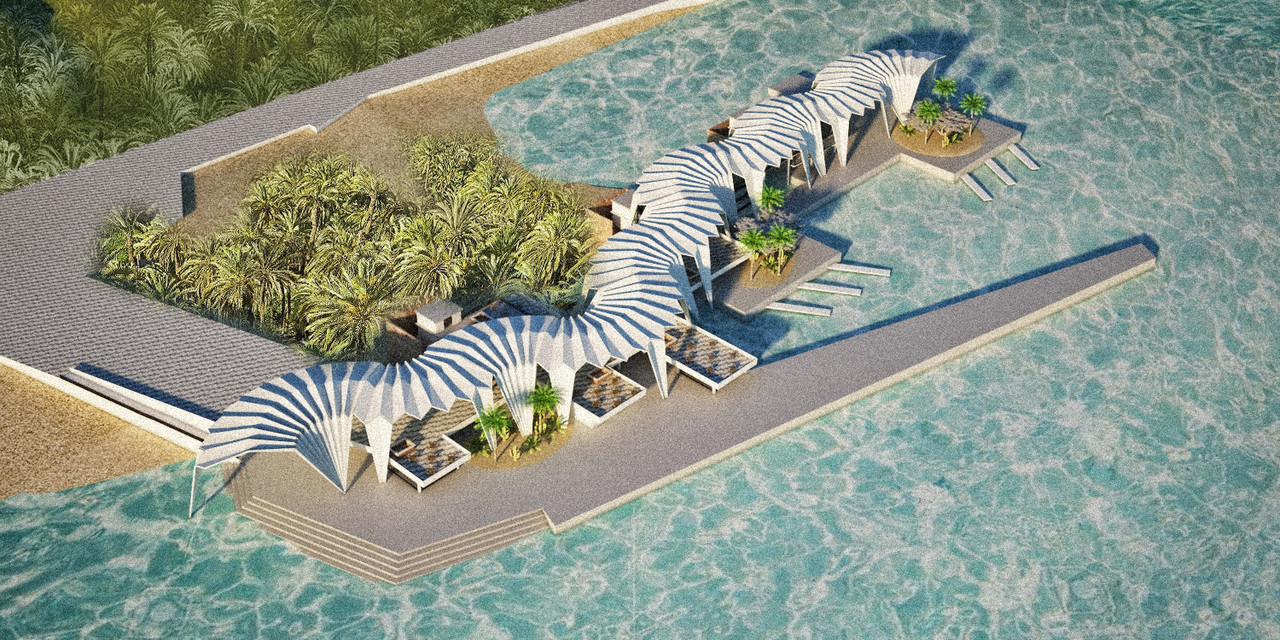


Crossing Frontiers reimagines the Central Coast of Venezuela as a working seam between the city of Caracas and the Caribbean Sea. Designed by Mauro Izarra together with Arianna Torres and Fabrizio Santoro, the project responds to Camurí Grande in Vargas as a place that has long served as a door to the capital from other nations and a setting with particular conditions for the enjoyment of its citizens. After the Tragedy of Vargas, the state has remained in poor condition, with plans for development and rebuilding executed to a limited potential. The proposal treats that gap as an opening rather than a fixed limit.
Set within a master plan for the community of Camurí Grande, the design offers a strategic and systematic answer to the long extension of beaches along this coast. It works with both transversal and longitudinal conditions, taking the typologies already present on the spot as a starting point and drawing on Venezuelan culture and vernacular elements. The aim is a set of building programs that strengthen the local economy, support tourism, and build a sense of identity. Across the 3.5 kilometers of beach that define the sector, the scheme weaves the sea with the town and the mountain, giving Caracas a renewed facade from the water.
A Social Housing Strategy Anchored in Public Life
As a social housing proposal, the work understands that homes alone do not rebuild a community. Coastal settlements like those in Venezuela carry the dual pressure of welcoming visitors while protecting the daily routines of residents, and the most durable answers tie shelter to shared infrastructure, livelihood, and movement. Building near a shoreline also asks for careful attention to flooding, erosion, and the memory of past disaster, which makes a layered relationship between sea, town, and mountain a practical as well as a poetic decision.
Three main projects carry the development forward: a Fishing Pier, a Fish Market, and a Recreation and Sports Center. Together they organize a daily rhythm of work, exchange, and leisure along the Caribbean Sea, giving the housing fabric a public spine. The pier grounds the fishing economy, the market turns that catch into local trade, and the sports center returns the beach to the community as shared ground. Read as one system, Crossing Frontiers shows how careful planning can stitch a fractured coastline back into the life of the city.





The Entwine Confluence by Sara Fernandes
The Entwine Confluence is Sara Fernandes's unbuilt community center for Gresham: meeting...
illustrarch Editoral Team3 Mins read
Community Housing in Villy by Madeleine architectes & Studio Francois Nantermod
A cooperative housing project in Villy transforms a grandfather’s home into the...
 Begum Gumusel3 Mins read
The Street: A Community Clubhouse Inspired by Indian Bylanes
Studio VDGA’s The Street in India reimagines suburban community architecture, blending traditional...
 Elif Ayse Sen2 Mins read

Housing NOW by Blue Temple
Housing NOW by Blue Temple in Myanmar is a modular bamboo housing...
Begum Gumusel3 Mins read


Leave a comment