

Top Tiny House Interior Design Tips and Tricks for Maximizing Space and Style
Discover chic, cozy tiny house interior design tips to maximize your space! Learn how minimalist decor, light palettes, and natural elements can transform your small home. Find practical advice for efficient kitchen layouts, space-saving bathrooms, smart bedroom arrangements, and innovative storage solutions.
 Furkan Sen5 October 202418 Mins read667
Table of Contents Show
Living in a tiny house doesn’t mean sacrificing style or comfort. In fact, with the right interior design tips and tricks, we can transform even the smallest spaces into functional and beautiful homes. Whether we’re downsizing by choice or necessity, clever design can make all the difference.
From multi-purpose furniture to smart storage solutions, there are countless ways to maximize every square inch. Let’s explore some of the best strategies to create a cozy and efficient living space that feels anything but cramped.

Tiny House Interior Design at a Glance: Key Statistics
Before diving into design strategies, it helps to understand the landscape of tiny house living. The numbers below paint a clear picture of why smart interior design matters so much in these compact spaces.
| Metric | Data |
|---|---|
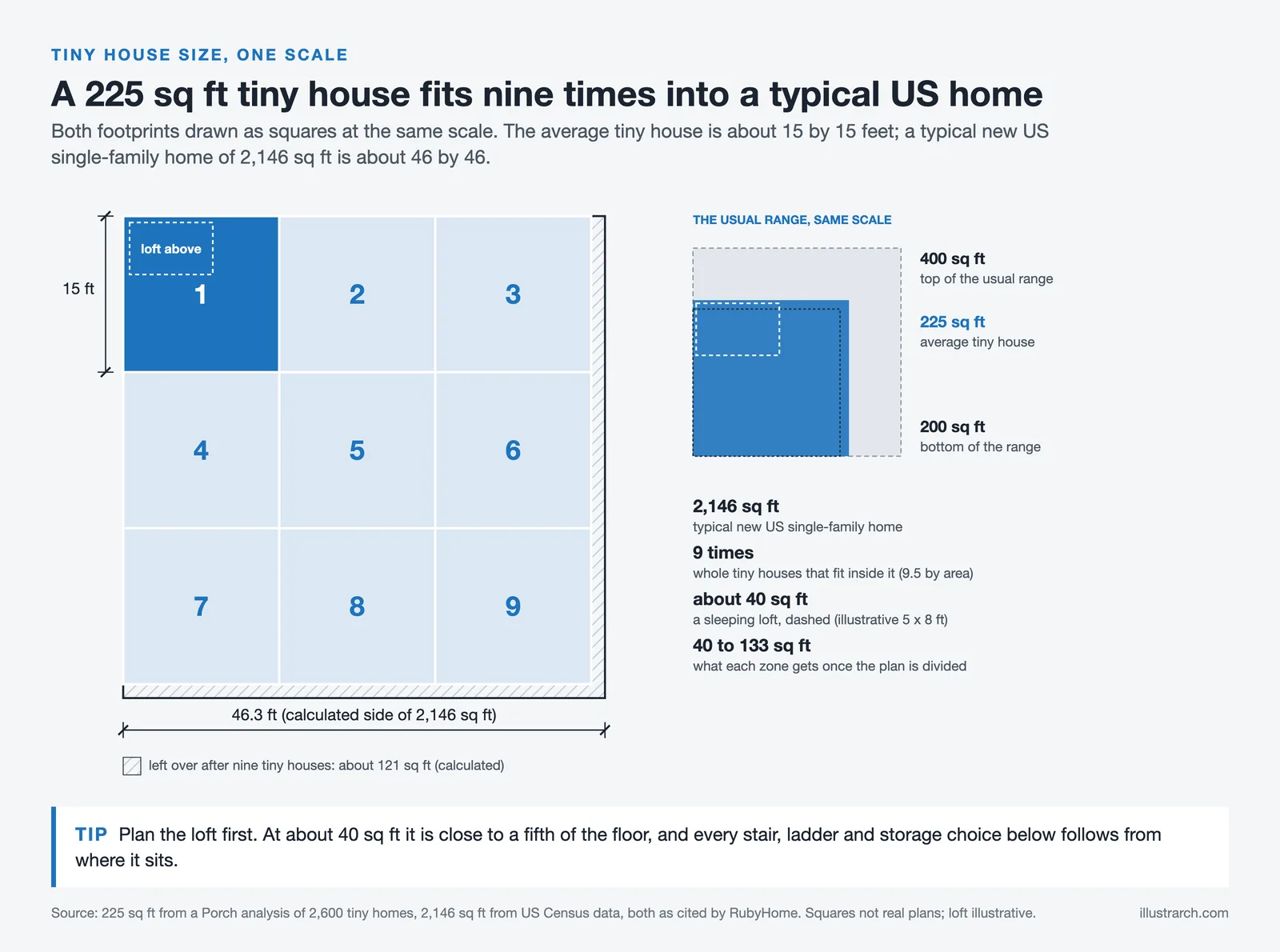
| Average Tiny House Size | 225 sq ft (vs. 2,146 sq ft for standard homes) |
| Typical Livable Range | 200-400 sq ft |
| Average Loft Bedroom Area | ~40 sq ft |
| Average Tiny Home Price | $30,000-$67,000 |
| Global Tiny Home Market (2024) | $21.9 billion (projected $29.9B by 2033) |
| Ecological Footprint Reduction | 45% lower than average American |
| LED Energy Savings | 90% less energy, averaging 200 kWh/year |
| Millennial Ownership Rate | ~70% of US tiny house owners |
Maximizing Space in Tiny Houses
Smart design can make even the smallest areas functional and beautiful. With the average tiny home measuring just 225 square feet, roughly 9 times smaller than a standard US home, every design decision becomes critical. We’ll explore essential tips to maximize space in tiny houses.
Multi-Functional Furniture
Designing with multi-functional furniture increases utility. Sofa beds transform living areas into guest rooms. Fold-out tables serve as dining tables and desks. Storage ottomans provide seating and extra storage. Incorporating such pieces maximizes functionality without sacrificing style.
💡 Pro Tip: When shopping for multi-functional furniture, always measure your space first, the rule of “measure twice, buy once” is especially critical in tiny homes where even 2 inches can make a difference. Prioritize pieces that serve at least two functions, such as a coffee table with built-in storage or a dining bench with hidden compartments.
Vertical Storage Solutions
Vertical space often goes underutilized. Install shelves above doorways for additional storage. Use tall bookcases to store books and decorative items. Hang hooks on walls for coats, bags, and kitchen tools. Vertical storage keeps floor space open while offering essential storage.
Keep in mind that tiny homes calculate ground square footage, not vertical area. By taking advantage of walls and ceilings, with floating shelves, pegboards, and ceiling-mounted racks, you can effectively double or triple your available storage capacity without losing any floor space.
Clever Use of Nooks and Crannies
Small spaces benefit from the clever use of nooks and crannies. Turn the area under stairs into cabinets or bookshelves. Use corner units to make use of tight spaces. Place pull-out drawers under beds for extra storage. These strategies transform unused areas into valuable storage solutions.
💡 Pro Tip: Staircase drawers are one of the most underused storage solutions in tiny homes. By converting the underside of each stair into a pull-out drawer, you can gain 15-25 cubic feet of hidden storage, perfect for shoes, seasonal clothing, or kitchen items.

Multi-Functional Furniture Comparison Guide
Choosing the right multi-functional furniture can be overwhelming. This comparison table breaks down the most popular space-saving furniture types, their typical space savings, and best use cases for tiny house interiors.
| Furniture Type | Primary Function | Secondary Function | Space Saved | Best For |
|---|---|---|---|---|
| Murphy Bed (Wall Bed) | Sleeping | Wall cabinet / desk when folded | Up to 50% floor space | Studios, loft-free tiny homes |
| Convertible Sofa Bed | Seating | Guest bed / main sleeping area | Eliminates need for separate bed | Living areas, guest accommodations |
| Storage Ottoman | Seating / footrest | Hidden storage for blankets, games | Replaces coffee table + storage bin | Living rooms, entryways |
| Fold-Down Wall Table | Dining table | Work desk / craft surface | Frees entire dining area when folded | Kitchens, home offices |
| Loft Bed System | Sleeping (elevated) | Creates space below for living/office | Doubles usable floor area | Homes with ceiling height ≥ 10 ft |
| Staircase with Drawers | Access to loft | Storage in each step | 15-25 cu ft of hidden storage | Two-story tiny homes |
| Transforming Coffee Table | Coffee table | Dining table / desk (height-adjustable) | Eliminates need for separate dining table | Open-plan living areas |
| Kitchen Cart (Rolling) | Extra counter space | Storage + portable prep station | Movable: tuck away when not needed | Tiny kitchens with limited counter |
Design Aesthetics for Tiny Houses
Maximizing style and comfort in tiny houses isn’t limited to functional furniture. We also need to focus on design aesthetics.
Minimalist Decor
Minimalist decor creates a clean and uncluttered space. We should select a few high-quality pieces rather than many smaller items to avoid overcrowding. In tiny houses, functionality is key, so choose furniture with hidden storage or dual purposes. For example, opt for a coffee table that doubles as storage.
The minimalist approach aligns perfectly with the philosophy behind the tiny house movement, the desire to simplify life and reduce unnecessary possessions is one of the top motivators for downsizing. Clean lines, sleek finishes, and Scandinavian-inspired design elements continue to dominate tiny house interiors.
💡 Pro Tip: Follow the “one in, one out” rule. For every new decorative item or piece of furniture you bring into your tiny home, remove one. This discipline prevents gradual clutter accumulation and maintains the minimalist aesthetic that makes small spaces feel larger.
Light Color Palettes
Light color palettes make tiny spaces feel larger. We should use whites, pastels, and light grays to reflect more light. Painting walls white and incorporating light-colored furnishings will add a sense of openness. If we want contrast, use darker accents sparingly through pillows or throw blankets.
Incorporating Natural Elements
Incorporating natural elements introduces warmth. We can use wood, stone, and plants to create a cozy atmosphere. Wooden floors, exposed beams, or a stone backsplash can add texture. Small potted plants or hanging greenery also boost air quality and visual appeal.
Biophilic design, which emphasizes connection between indoor spaces and nature, is a major trend in tiny house interiors. Large windows, natural textures like reclaimed wood and bamboo, and indoor gardens or living walls are becoming standard features that promote both wellbeing and visual richness.
💡 Pro Tip: Reclaimed wood adds both character and sustainability to tiny homes, though it typically adds $5,000-$10,000 to material costs. For a budget-friendly alternative, use reclaimed wood selectively as an accent wall or for open shelving, rather than throughout the entire interior.

Tiny House Design Styles: Comparison Table
Different design styles work differently in compact spaces. This table helps you choose the right aesthetic approach based on your preferences and the unique characteristics of your tiny home.
| Design Style | Key Characteristics | Best Color Palette | Materials | Space Impact |
|---|---|---|---|---|
| Scandinavian Minimalist | Clean lines, functional simplicity, hygge warmth | White, light gray, soft beige | Light wood, linen, wool | Maximizes perceived space |
| Modern Industrial | Raw textures, open concept, urban edge | Charcoal, white, metallic | Metal, concrete, exposed brick | Works in higher-ceiling tiny homes |
| Rustic / Cabin | Natural warmth, handcrafted feel, cozy ambiance | Warm browns, forest green, cream | Reclaimed wood, stone, leather | Creates intimate atmosphere |
| Japandi | Wabi-sabi meets Nordic design, intentional simplicity | Muted earth tones, off-white, charcoal | Natural wood, bamboo, ceramic | Ideal for very small spaces |
| Coastal / Bohemian | Relaxed, light, nature-inspired | Ocean blues, white, sandy beige | Rattan, light wood, cotton | Bright and airy feel |
| Luxury Modern | High-end finishes, smart tech, bespoke details | Neutral + black/gold accents | Marble, hardwood, designer fabrics | Premium feel in compact footprint |
Practical Tips for Tiny House Interiors
Designing the interior of a tiny house presents unique challenges. With thoughtful planning, we can create efficient, comfortable, and aesthetically pleasing spaces.
Efficient Kitchen Layouts
In tiny houses, kitchens require smart planning to make the most of limited space. Using compact appliances and multi-functional items like a combination microwave-oven can save significant space. Installing pull-out pantry shelves maximizes storage while keeping items accessible. Corner cabinets with Lazy Susans help utilize otherwise wasted space. Keeping countertops clear boosts functionality and lends a sense of openness.
💡 Pro Tip: Use a magnetic knife strip and pegboard backsplash in your tiny kitchen. Wall-mounted storage for utensils, pots, and pans frees up valuable drawer and counter space, the two most precious commodities in a compact kitchen. Sliding pantry shelves are a game-changer that let you access every inch of deep cabinet space.
Space-Saving Bathroom Ideas
Bathrooms in tiny houses benefit from space-saving solutions. Implementing wall-mounted sinks frees up floor space. Installing a wet bath, which combines the shower and toilet area, can optimize the use of available square footage. Using sliding doors instead of traditional swing doors minimizes space consumption. Floating shelves provide storage without crowding the room.
Another popular solution is the composting toilet, which eliminates the need for traditional plumbing and saves both space and water. Over-the-toilet shelving and corner-mounted storage units can effectively double your bathroom storage without requiring additional floor area.
Smart Bedroom Arrangements
Bedrooms in tiny houses need to be both comfortable and efficient. Elevating the bed using a loft design creates extra space underneath for storage or additional living areas. The average loft bedroom in a tiny house uses approximately 40 square feet, so making every inch count is essential. Murphy beds that fold away when not in use can substantially increase floor space during the day. Installing built-in storage solutions, such as drawers under the bed or wall-mounted shelves, helps keep the room organized and clutter-free.
💡 Pro Tip: If you’re choosing between stairs and a ladder for your loft bedroom, consider this trade-off: stairs take up more floor space but can double as storage drawers in each step, while ladders save maximum floor space but offer no storage. For most tiny homeowners, stairs with built-in drawers provide the best overall value.
Room-by-Room Space Optimization Guide
Each room in a tiny house has unique challenges and opportunities. This table provides a quick reference for the most effective space-saving strategies per area.
| Room | Top 3 Space-Saving Strategies | Must-Have Items | Common Mistakes to Avoid |
|---|---|---|---|
| Kitchen | Pull-out pantry shelves, wall-mounted utensils, compact appliances | Combo microwave-oven, Lazy Susan corner cabinet, magnetic knife strip | Overcrowding countertops, oversized appliances, ignoring vertical wall space |
| Bathroom | Wet bath design, wall-mounted sink, sliding barn door | Over-toilet shelving, corner shelves, composting toilet | Swing-out doors, bulky vanities, neglecting corner space |
| Bedroom | Loft bed, Murphy bed, under-bed drawers | Built-in headboard storage, wall-mounted reading lights, staircase drawers | Standard-height bed with wasted space below, no built-in storage |
| Living Area | Convertible sofa, fold-down table, transparent/reflective furniture | Storage ottoman, floating shelves, mirrors | Too much heavy furniture, dark colors, blocking natural light |
| Home Office | Pull-down wall desk, floating shelves, multi-use table | Foldable chair, clip-on task light, wall organizer | Dedicated permanent desk in small footprint, cable clutter |
| Entryway | Wall hooks, shoe hanging rack, magnetic mail board | Over-door organizer, slim bench with storage, coat hooks | Floor-standing coat rack, shoe pile on the ground |
Innovative Storage Solutions
In tiny houses, we maximize every available inch. Innovative storage solutions help us maintain an organized and clutter-free space.
Under-Floor Storage
We can make the most of unused space by incorporating under-floor storage. This approach lets us store seasonal items, shoes, and even pantry goods. For instance, an elevated platform can house pull-out drawers or hinged compartments, providing discreet storage that’s easily accessible.
Built-In Cabinets and Shelves
Built-in cabinets and shelves offer customized storage for our tiny homes. By integrating these into walls, we save floor space and maintain a streamlined look. For examples, cabinets can fit into nooks, while shelves can double as a desk area or display unit. Properly designed built-ins add functionality without sacrificing aesthetics.
💡 Pro Tip: Hidden storage behind mirrors or removable wall panels is a growing trend in tiny homes. These concealed compartments maintain a clean, uncluttered visual while providing surprisingly spacious storage for valuables, documents, or seasonal items. A full-length mirror with hidden shelving behind it serves triple duty: mirror, decor, and storage.
Collapsible and Foldable Designs
Collapsible and foldable designs provide flexible storage options. Tables, chairs, and beds that fold away when not in use free up valuable floor space. A wall-mounted drop-leaf table can serve as a dining area, and foldable chairs can be stored in a closet. These designs ensure our tiny homes stay versatile and efficient.
Lighting and Illumination Tips
Effective lighting enhances the perception of space in a tiny house. Good lighting design can make the house feel more open and inviting.
Natural Light Optimization
Maximizing natural light creates a bright, airy atmosphere. Large windows, skylights, and glass doors bring in more daylight. Installing mirrors opposite windows reflects light, amplifying the effect. Light-colored walls and ceilings also help by reflecting more light throughout the space.
💡 Pro Tip: Place mirrors strategically opposite windows or light sources, this technique can effectively double the natural light in a room. In tiny homes, a well-placed mirror doesn’t just brighten the space; it creates an optical illusion of depth that makes the room feel significantly larger than its actual dimensions.
Layered Lighting Strategy
Implementing a layered lighting strategy ensures balanced illumination and flexibility. Combine ambient, task, and accent lighting to address varied needs. Ambient lights provide general illumination, task lights focus on specific activities like cooking or reading, and accent lights highlight architectural features or decor. Dimmers allow for adjustable light levels, enhancing mood and functionality.
Space-Enhancing Lighting Fixtures
Select space-enhancing lighting fixtures to add style without consuming space. Recessed lighting, wall-mounted lamps, and pendant lights extend illumination without taking up floor space. Track lighting offers versatility, allowing lights to be directed where needed. Choosing fixtures that match the tiny house aesthetic seamlessly integrates them into the design.
LED lighting is particularly effective in tiny homes, it uses approximately 90% less energy than incandescent bulbs, keeping both energy costs and heat output minimal. This is especially important in a compact space where excess heat from traditional bulbs can noticeably affect comfort levels.
Lighting Types Comparison for Tiny Houses
| Lighting Type | Purpose | Best Locations | Space Impact | Energy Efficiency |
|---|---|---|---|---|
| Recessed (Can) Lights | Ambient / general | Ceiling throughout, hallways | Zero floor/wall space used | High (LED versions) |
| Pendant Lights | Task / accent | Kitchen island, dining area | Hang from ceiling, no surface needed | Medium: High |
| Wall Sconces | Ambient / accent | Bedroom, living area, bathroom | Eliminates need for table lamps | High |
| Under-Cabinet LEDs | Task lighting | Kitchen counters, closets | Hidden, illuminates work areas | Very High |
| Track Lighting | Flexible directional | Living area, gallery walls | Adjustable, one fixture covers multiple zones | High |
| LED Strip Lights | Accent / mood | Under loft, toe kicks, shelves | Nearly invisible installation | Very High |
| Skylights / Solar Tubes | Natural daylight | Kitchen, bathroom, loft | Uses roof space, maximizes daylight | Free (natural light) |
Smart Technology Integration for Tiny Houses
In 2025 and beyond, smart home technology is transforming how we live in compact spaces. Integrating AI-powered systems allows tiny homeowners to automate climate control, lighting, and security, reducing the need for physical switches, thermostats, and control panels that consume precious wall space.
Voice-activated assistants can control multiple systems simultaneously, while smart thermostats with zoned heating and cooling ensure efficient energy use in smaller volumes. Automated blinds and motorized skylights optimize natural light without manual effort, and smart locks eliminate the need for bulky key storage. These technologies don’t just add convenience, they actively help maximize the usable space in a tiny home.
💡 Pro Tip: When budgeting for a tiny house, allocate 5-10% of your total build cost toward smart home technology. The investment pays off quickly through reduced energy bills, and the automation eliminates the need for physical controls and switches that would otherwise consume limited wall and counter space.
Sustainable Design Considerations
Sustainability is a core motivation for many tiny house dwellers, with residents enjoying a 45% smaller ecological footprint compared to the average American. Here are key sustainable design elements to consider for your tiny house interior:
Eco-friendly materials like reclaimed wood, bamboo flooring, and recycled metal are increasingly popular choices. Bamboo is especially practical, it’s fast-growing, durable, and sequesters carbon over its lifespan. Solar panels paired with battery storage enable off-grid living, while composting toilets and rainwater harvesting systems reduce dependence on municipal utilities. Energy-efficient mini-split HVAC systems provide targeted heating and cooling at a fraction of the energy cost of traditional systems, and passive solar design principles, used in a large number of tiny homes, can cut heating costs significantly.
Tiny House Interior Design Budget Breakdown
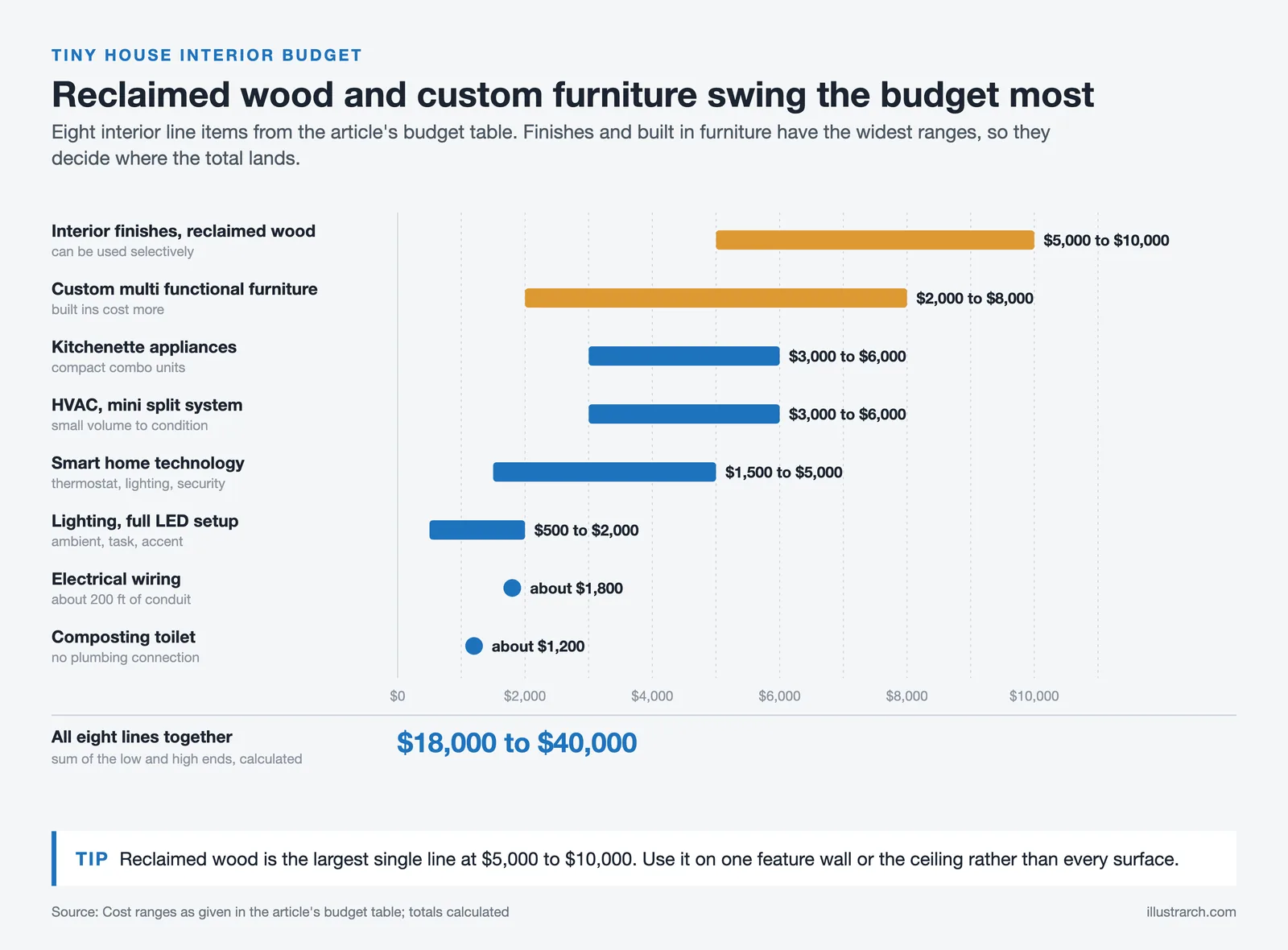
Understanding the costs associated with tiny house interior design helps set realistic expectations and prioritize spending. Here’s a general overview of typical interior component costs.
| Interior Component | Estimated Cost Range | Notes |
|---|---|---|
| Kitchenette Appliances | $3,000-$6,000 | Compact combo units save space and cost |
| HVAC (Mini-Split System) | $3,000-$6,000 | Efficient heating/cooling for small volume |
| Interior Finishes (Reclaimed Wood) | $5,000-$10,000 | Can use selectively to reduce costs |
| Composting Toilet | ~$1,200 | Eliminates plumbing, saves water |
| Electrical Wiring | ~$1,800 | Avg. 200 ft of conduit needed |
| Custom Multi-Functional Furniture | $2,000-$8,000 | Built-ins cost more but maximize space |
| Smart Home Technology | $1,500-$5,000 | Thermostat, lighting, security, voice control |
| Lighting (Full LED Setup) | $500-$2,000 | Layered approach: ambient + task + accent |
What Are Creative Touches for a Tiny House Interior?
Beyond the basics, small touches give a tiny home character. Vertical gardens and trailing plants add life without using floor space, while mirrors and reflective surfaces bounce light around and make rooms feel larger. A cosy reading nook tucked under a loft or by a window creates a sense of retreat, and using awkward corners and nooks for built-in shelving turns dead space into storage. These details make a compact interior feel personal rather than cramped.
Conclusion
Optimizing every inch of tiny house interiors is essential to create a functional, stylish, and comfortable living space. Efficient use of space-saving furniture and multi-functional pieces can make a significant difference. Prioritizing practical storage solutions, such as under-floor storage and collapsible designs, helps maintain organization without compromising style.
Consider brightening up the interiors with a minimalist decor, as light color palettes and natural elements like wood and plants can enhance the overall ambiance. Effective lighting design, particularly through layered lighting and natural light optimization, further contributes to a spacious and inviting atmosphere.
With the tiny house market projected to reach $29.9 billion by 2033 and more homeowners embracing compact living, investing in smart interior design is more relevant than ever. Whether you’re building new or renovating an existing tiny home, the strategies outlined above, combined with modern smart home technology and sustainable materials, can transform your compact space into a home that’s both beautiful and remarkably efficient.
Frequently Asked Questions (FAQ)
What is the best furniture for a tiny house?
The best furniture for a tiny house serves multiple functions. Murphy beds, convertible sofa beds, storage ottomans, fold-down wall tables, and transforming coffee tables are among the top choices. Prioritize pieces that offer hidden storage and can be folded or collapsed when not in use. Custom built-in furniture, while more expensive, provides the most space-efficient solutions because it’s tailored to your exact dimensions.
How do you make a tiny house feel bigger?
To make a tiny house feel bigger, use light color palettes (whites, pastels, light grays) on walls and ceilings to reflect more light. Maximize natural light with large windows and skylights. Place mirrors strategically opposite windows to create depth. Choose transparent or reflective furniture surfaces, maintain an open floor plan, and keep vertical lines clean using tall, slim shelving rather than wide, bulky furniture.
What is the average size of a tiny house interior?
The average tiny house interior is approximately 225 square feet, with most popular models ranging between 200 and 400 square feet. The generally accepted US standard for a tiny house is anything under 400 square feet. When divided into rooms, living area, kitchen, bathroom, and sleeping loft, each functional zone typically occupies 40 to 133 square feet.
How much does it cost to furnish a tiny house interior?
The cost to furnish a tiny house interior varies widely based on quality and customization. Budget-friendly approaches using off-the-shelf multi-functional furniture typically cost $3,000-$8,000. Mid-range setups with some custom built-ins run $8,000-$15,000. High-end or fully custom interiors with premium materials, smart home technology, and bespoke furniture can reach $20,000-$40,000 or more. Overall, the average completed tiny home costs between $30,000 and $67,000 including construction and interiors.
What are the best storage solutions for tiny houses?
The most effective tiny house storage solutions include under-floor compartments, staircase drawers, wall-mounted shelving, hidden storage behind mirrors and wall panels, pull-out pantry shelves, ceiling-mounted racks, and furniture with built-in storage (such as beds with drawers, storage ottomans, and benches with hidden compartments). The key is to utilize all three dimensions, floor, walls, and ceiling, rather than relying solely on floor-level storage.
What is the best color scheme for a tiny house?
The best color schemes for tiny houses are predominantly light, whites, off-whites, light grays, and soft pastels make spaces feel larger by reflecting more natural and artificial light. Scandinavian-inspired palettes with light wood tones work especially well. Use darker or bolder accent colors sparingly through accessories like throw pillows, artwork, or a single statement wall to add personality without visually shrinking the space.
How do you design a tiny house kitchen?
Design a tiny house kitchen by prioritizing compact, multi-functional appliances (such as combo microwave-ovens), installing pull-out pantry shelves, using Lazy Susan corner cabinets, and mounting utensils and cookware on walls with magnetic strips or pegboards. Keep countertops clear, use vertical space with hanging storage, and consider a rolling kitchen cart for extra prep surface that can be moved when not needed. Sliding pantry shelves are one of the most impactful upgrades for tiny kitchens.
What lighting works best in tiny houses?
A layered lighting approach works best in tiny houses: combine ambient lighting (recessed ceiling lights), task lighting (under-cabinet LEDs, pendant lights over kitchen areas), and accent lighting (LED strip lights under lofts or along shelves). LED fixtures are ideal because they use significantly less energy and produce minimal heat. Maximize natural light with large windows, skylights, and strategically placed mirrors. Dimmers on all circuits add flexibility for different moods and activities.
Is smart home technology worth it in a tiny house?
Yes, smart home technology is particularly valuable in tiny houses. Voice-activated controls eliminate the need for physical switches and panels that consume wall space. Smart thermostats provide efficient climate control for the small volume, and automated lighting systems can be pre-programmed for different activities. The $1,500-$5,000 investment typically pays for itself through energy savings, and the space saved by eliminating traditional controls is especially impactful in a compact living environment.
What are the 2025 trends in tiny house interior design?
Key 2025 trends in tiny house interior design include AI-integrated smart home systems, biophilic design with living walls and large windows, sustainable and reclaimed materials, modular and customizable prefab interiors, vertical living solutions with loft optimization, personalized design that reflects individual style, and energy-efficient appliances designed specifically for compact spaces. Multi-functional, transformable furniture continues to evolve with more sophisticated mechanisms and premium finishes.
Helpful Resources and Tools
Last updated:

3 Comments



Tiny House Water Systems: Your Complete Guide to Plumbing, Rainwater Harvesting and Off-Grid Solutions
A practical guide to designing a tiny house water system, covering PEX...
 Bahattin Duran14 Mins read
Off-Grid Tiny House Living: Complete Setup Guide for Beginners
This guide walks you through every stage of setting up an off-grid...
Bahattin Duran15 Mins read
Tiny House with Loft: Design Ideas, Plans and Building Tips for Vertical Living
A complete guide to designing and building a tiny house with loft,...
Bahattin Duran15 Mins read
8+ Best Tiny Home Communities in Michigan: Great Lakes Tiny Living Guide
Explore tiny home communities in Michigan. Great Lakes lifestyle, affordable land, and...
Bahattin Duran18 Mins read


This article has some useful tips for small spaces.
I think the ideas about multi-functional furniture are interesting.
The section on lighting seems helpful for tiny houses.