

Hagia Sophia: Byzantine Architecture That Shaped History
Hagia Sophia in Istanbul stands as one of the most architecturally significant buildings ever constructed. Built in 537 AD under Emperor Justinian I, it introduced pendentive dome engineering that influenced centuries of religious architecture across both the Byzantine and Ottoman worlds, and continues to shape how architects think about domed space today.
 Furkan Sen22 April 20269 Mins read180
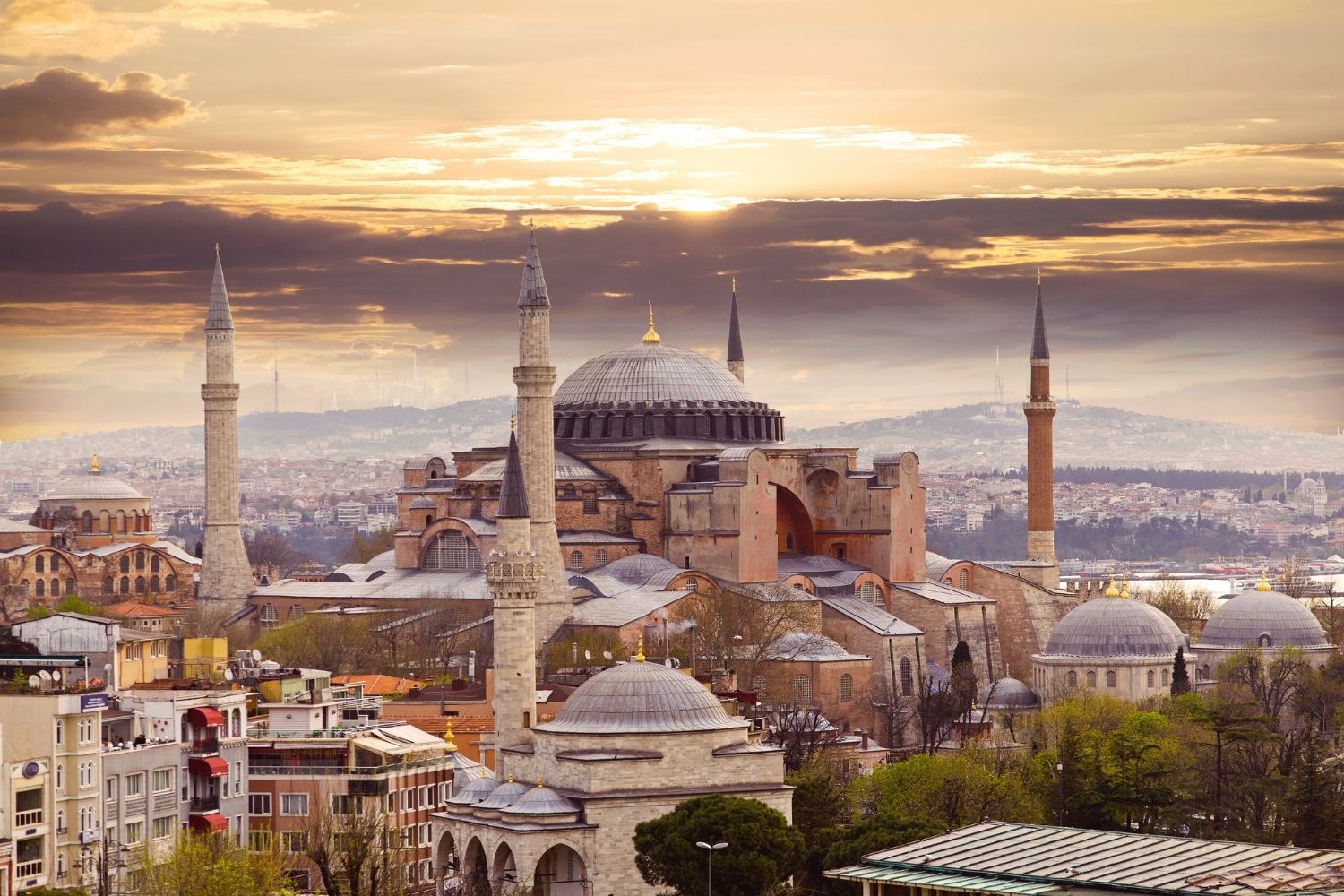
Table of Contents Show
Hagia Sophia is a sixth-century Byzantine structure in Istanbul, Turkey, widely regarded as one of the most significant buildings in architectural history. Completed in 537 AD under Emperor Justinian I, it introduced dome engineering techniques—most notably the use of pendentives—that influenced religious architecture across the Byzantine and Ottoman empires, and left a structural legacy still studied in architecture schools today.
What Is Hagia Sophia? Definition and Origins
The definition for Hagia Sophia traces back to the Greek Ἁγία Σοφία (Hagía Sophía), meaning “Holy Wisdom.” In Turkish it is known as Ayasofya. Originally commissioned as the principal cathedral of the Byzantine Empire, the church of Hagia Sophia was built on the site of two earlier basilicas that had burned during civil unrest. Emperor Justinian I chose the location deliberately: the Sultanahmet district in Constantinople, the empire’s capital, where the building would dominate the city’s skyline and announce imperial authority through scale alone.
Construction began in 532 AD following the Nika Riots, which devastated much of Constantinople. Justinian reportedly vowed to rebuild the city’s great church on an unprecedented scale, and he delivered on that promise. The project was entrusted to two Greek mathematicians, Anthemius of Tralles and Isidore of Miletus, rather than conventional master builders—a choice that proved consequential for the outcome.
📌 Did You Know?
For approximately 800 years after its completion, Hagia Sophia held the distinction of being the largest enclosed building in the world. The Statue of Liberty could fit beneath its dome with room to spare. It was not surpassed in dome span until the construction of the Florence Cathedral dome by Brunelleschi in 1436—nearly a millennium later.
The Architecture of Hagia Sophia: Structural Innovation in the 6th Century
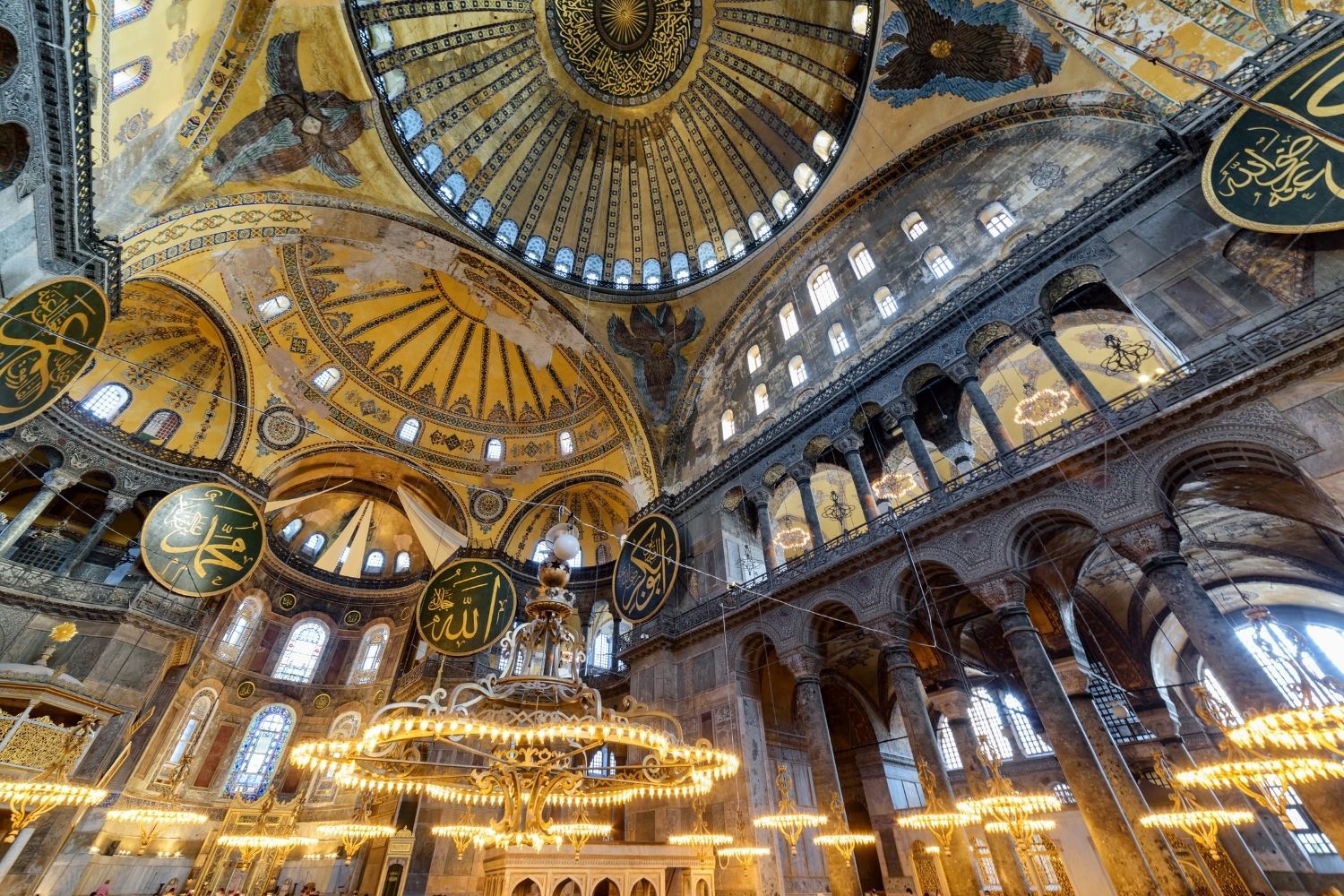
What makes hagia sophia architecture so studied is the audacity of its structural system. Before Anthemius and Isidore tackled the problem, placing a circular dome over a rectangular floor plan required either a massive solid drum (limiting interior space) or a series of compromises that reduced the dome’s apparent scale. Their solution was to use pendentives—concave triangular surfaces that create a smooth geometric transition from the square base to the circular base of the dome—allowing the enormous central dome to float above an open, column-free interior.
The central dome measures approximately 31.87 meters (104.6 feet) in diameter and rises 55.6 meters (182 feet) above the marble floor. Forty arched windows ring its base, flooding the interior with natural light and generating the famous visual effect that the dome appears to hover unsupported. The sixth-century historian Procopius described it as though the dome were “suspended from heaven by a golden chain.” That sense of levitation was not accidental—it was an engineered spatial effect, achieved by dissolving the visual weight of the structure through light.
📐 Technical Note
The central dome of Hagia Sophia rests on four massive pendentives, which channel the dome’s load through four large arches down to four primary piers embedded in the building’s thick exterior walls. Two large semi-domes on the east and west axes extend the usable floor area while simultaneously buttressing the central dome laterally. This system—central dome, pendentives, four arches, semi-domes, and piers—became the structural template for Ottoman mosque design for centuries.
The floor plan merges two typologies that were previously kept separate. Hagia sophia istanbul combines the longitudinal basilica plan (suited to processional liturgy) with a centralized domed space (suited to gathering and ceremony). The result is a hybrid: a building that feels both directional and infinite, guiding movement from narthex to altar while simultaneously creating a domed volume that seems to have no single focal wall. This spatial ambiguity was deliberate—it allowed the church to function as both a place of worship and a setting for imperial ceremony.
For a detailed analysis of the dome’s pendentive system and its interior spatial effects, our guide to Hagia Sophia interior architecture covers the engineering and mosaic programs in depth.
💡 Pro Tip
When studying the Hagia Sophia plan for academic or design purposes, pay attention to how the semi-domes function structurally, not just spatially. They are not decorative expansions of the interior—they actively absorb lateral thrust from the central dome and redirect it toward the perimeter piers. Understanding this load path is essential for grasping why the building has survived over a dozen significant earthquakes.
Hagia Sophia History: From Byzantine Cathedral to Grand Mosque
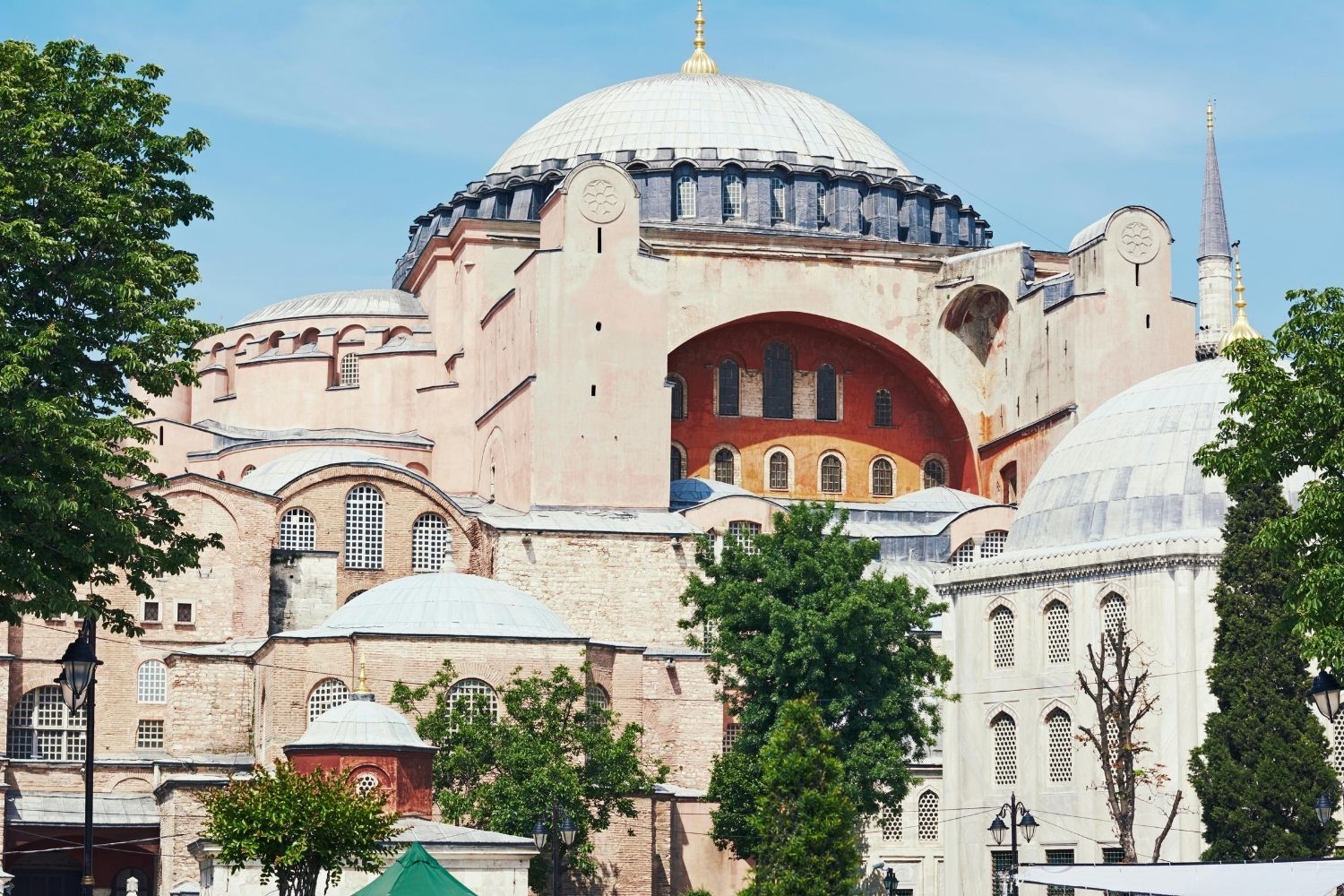
The hagia sophia history spans nearly fifteen centuries of continuous use and transformation. The church of Hagia Sophia served as the religious center of the Eastern Roman Empire from 537 AD until 1453—a period of 916 years as a Christian cathedral. During this time it functioned as the seat of the Ecumenical Patriarch of Constantinople and the site of Byzantine imperial coronations.
The building’s history was not without trauma. The original dome partially collapsed in 558 AD following a series of earthquakes, just 21 years after completion. Isidore the Younger, nephew of the original engineer, rebuilt it with a modified profile: a steeper curve and the addition of the forty windows around the base, which reduced the dome’s weight while increasing natural light. This rebuilt dome, completed in 563 AD, is essentially what visitors see today.
After the Ottoman conquest of Constantinople in 1453, Sultan Mehmed II converted the hagia sophia church into a mosque within days of entering the city. Islamic additions were made carefully and without destroying the Byzantine structure: a mihrab (prayer niche) was added to orient worshippers toward Mecca, a minbar (pulpit) was installed, and four minarets were constructed outside over the following decades. Byzantine mosaics were largely plastered over rather than destroyed—a decision that would later allow their partial recovery.
In 1934, Mustafa Kemal Atatürk’s government converted Hagia Sophia into a secular museum, accessible to all visitors regardless of religious background. That status held until 2020, when a Turkish court ruling and subsequent presidential decree returned it to active use as a mosque—the hagia sophia grand mosque—while keeping it open to tourists outside prayer times.
🎓 Expert Insight
“Hagia Sophia carries both the history of Christianity and Islam within its walls.” — Joan Branham, Professor of Art History, Providence College
Branham’s observation, drawn from her research in Byzantine sacred space, captures why the building defies easy categorization. Its architectural core—the dome, the pendentives, the spatial logic—served successive ideologies without requiring fundamental structural change. The building absorbed transformation rather than resisting it.
How Hagia Sophia Influenced Later Architecture
The impact of istanbul’s hagia sophia on subsequent architectural traditions is difficult to overstate. The Ottoman imperial mosque typology—centralized domed space, semi-domes on the axes, exterior minarets—was developed in direct dialogue with Hagia Sophia. Mimar Sinan, the master Ottoman architect of the sixteenth century, spent his career working through the structural and spatial problems it posed.
Sinan described his goal with the Selimiye Mosque in Edirne as surpassing Hagia Sophia’s dome. While the Hagia Sophia dome rests on four massive piers with a complex arrangement of semi-domes, Sinan’s solution at Selimiye used eight slimmer piers, achieving a comparable span with less visual mass and a more unified interior space. The dialogue between the two buildings represents one of architecture’s most sustained structural conversations across a span of over a thousand years.
The influence extended beyond the Islamic world. Renaissance architects in Europe studied the Byzantine dome and pendentive system carefully. The dome of St. Peter’s Basilica in Rome, designed by Michelangelo and completed after his death, draws on principles established at Hagia Sophia, filtered through Brunelleschi’s Florence Cathedral dome. The idea that a vast circular dome could crown a major religious building—visually dominating a city’s skyline—can be traced directly to the precedent set by ayasofya hagia sophia in 537 AD.
Ottoman architecture’s relationship to this legacy is explored in greater depth in our article on the legacy of Ottoman architecture. For the broader context of Byzantine influence across European architectural history, see our history of architecture overview.
🏗️ Real-World Example
Sultan Ahmed Mosque (Istanbul, 1616): Known popularly as the Blue Mosque, this Ottoman structure was built directly across from Hagia Sophia and was explicitly designed to compete with it visually and spatially. Its architect, Sedefkâr Mehmed Agha, adopted the cascading semi-dome system and the central dome formula refined from the Hagia Sophia prototype. The Blue Mosque’s addition of six minarets—unprecedented at the time and controversial for rivaling the mosque at Mecca—reflects the ongoing political significance of Hagia Sophia as a benchmark of sacred architectural ambition.
Hagia Sophia and Istanbul’s Architectural Identity
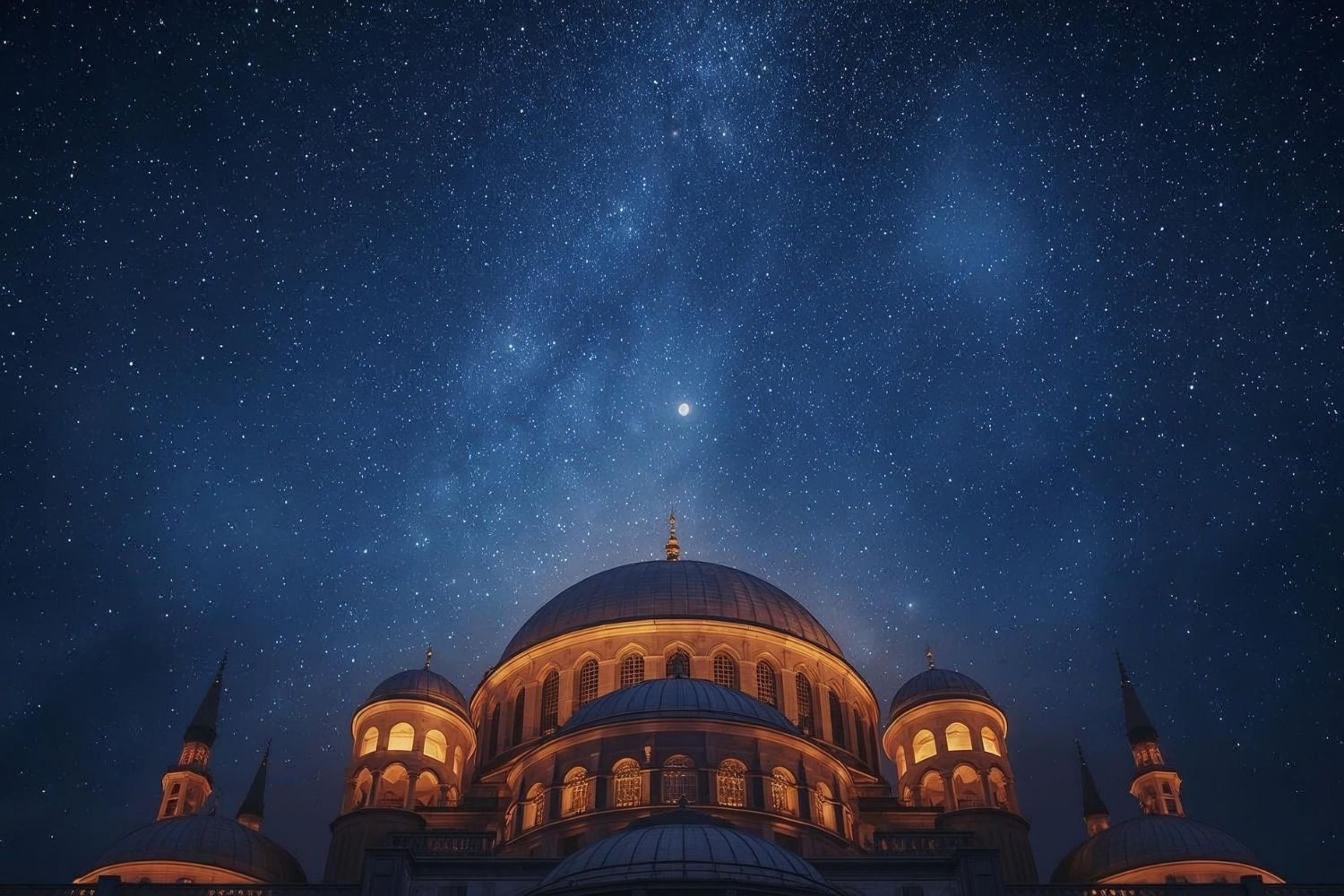
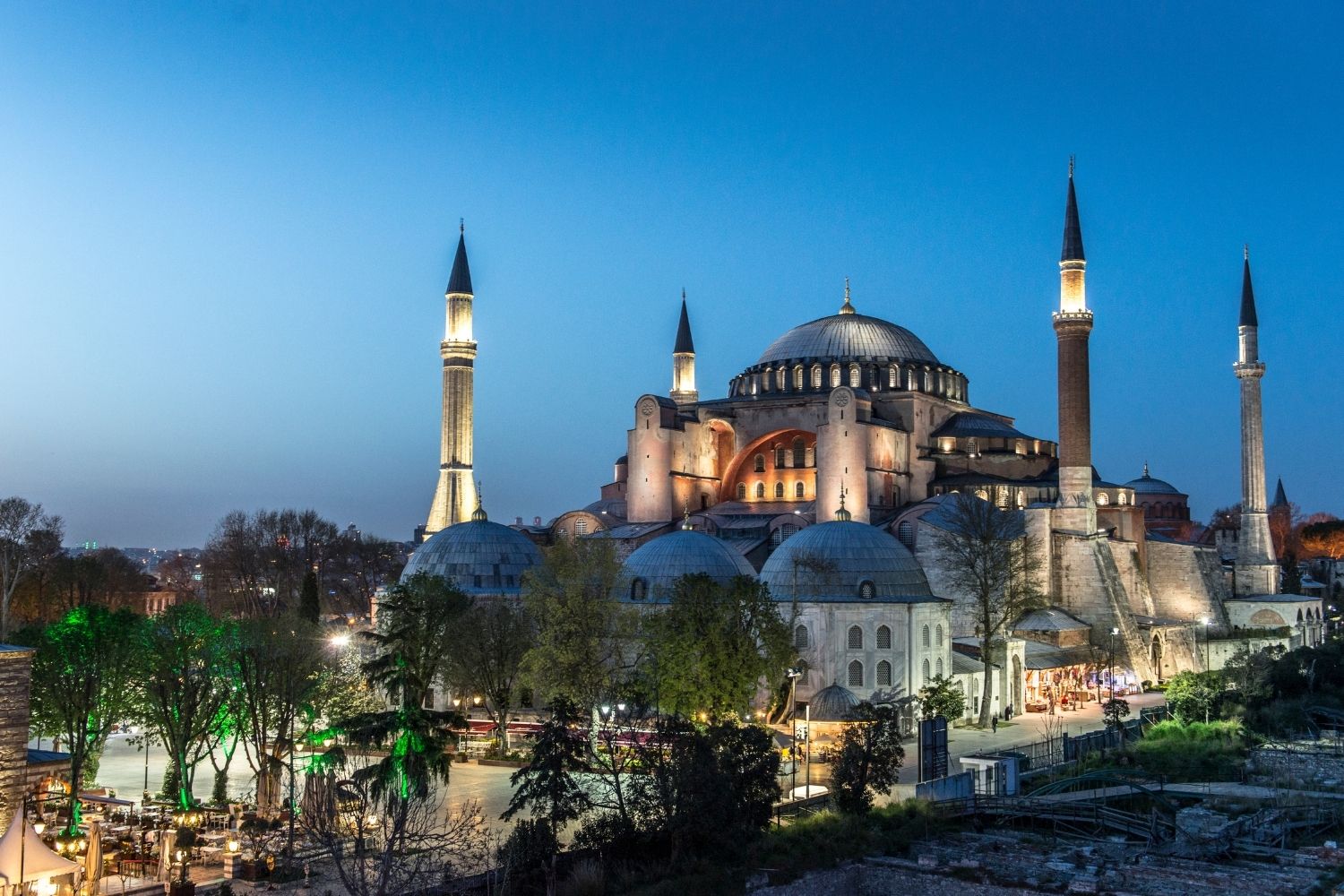
Hagia sophia in istanbul turkey occupies a unique position in the city’s urban fabric. Located in the Sultanahmet district, it sits within a dense concentration of major monuments: the Blue Mosque to the west, Topkapı Palace to the northeast, the Hippodrome directly adjacent. This clustering was not accidental—it reflects the long history of the area as the civic and ceremonial heart of successive empires.
The building’s silhouette—broad dome flanked by four minarets—has become inseparable from Istanbul’s skyline and identity. For architects visiting the city, understanding hagia sophia istanbul means understanding how Byzantine spatial logic was absorbed, transformed, and extended by Ottoman builders over several centuries. Our guide to Istanbul as a living museum of architecture places Hagia Sophia within the broader architectural context of the city’s Byzantine and Ottoman layers.
⚠️ Common Mistake to Avoid
A common error in architectural education is describing Hagia Sophia as either a “Byzantine building” or an “Ottoman mosque” as if those were competing identities. The building is both, and neither label captures it fully. Its structural system is Byzantine; its minarets and mihrab are Ottoman; its current use is Islamic; its mosaics are Christian. Treating it as a single-identity monument leads to incomplete analysis. The building’s significance lies precisely in how it absorbed and survived successive appropriations without losing its spatial coherence.
Why Hagia Sophia Still Matters to Architects Today
The hagia sophia mosque and monument continues to be a reference point in architectural education and practice for reasons that go beyond historical curiosity. The structural problem it solved—how to place a circular dome over a rectangular plan with minimal visible support—remains a live design challenge. The pendentive system it developed is still used and studied in structural engineering courses worldwide.
Beyond structure, the building raises questions that are directly relevant to contemporary practice. How do you design a space that serves radically different ritual programs? How does architecture absorb political transformation? When does adaptation become erasure? These are not academic questions for historians—they are design problems facing anyone working on heritage buildings, adaptive reuse projects, or civic structures that must serve multiple communities.
The hagia sophia architecture also offers a model for how light can be treated as a structural material. The ring of windows at the dome’s base, the galleries that admit lateral light, the reflective gold mosaic surfaces—these are not decorative choices. They are spatial tools, used to dematerialize the building’s mass and generate a sense of boundlessness inside a finite structure. That approach remains influential in contemporary sacred architecture and in any design context where the goal is to create volume without heaviness.
💡 Pro Tip
If you are studying Hagia Sophia for a design or history project, look at the building in section rather than plan. The plan shows the hybrid basilica-centralized layout, but the section reveals what makes the structure exceptional: the way the dome, semi-domes, and arches create a cascading volumetric sequence that builds upward from the floor to the crown. No floor plan drawing fully communicates the spatial experience that results.
For architects interested in how sacred architecture across different traditions handles the relationship between structure and spiritual experience, our article on iconography and symbolism in Christian church design provides useful comparative context. The relationship between Byzantine, Romanesque, and Gothic approaches is covered in our Baroque vs. Romanesque architecture comparison.
✅ Key Takeaways
- Hagia Sophia was completed in 537 AD under Emperor Justinian I and was designed by mathematicians Anthemius of Tralles and Isidore of Miletus, not conventional builders—a choice that produced an unprecedented structural system.
- Its central innovation was the large-scale use of pendentives to place a circular dome over a rectangular plan, solving a structural problem that had limited dome architecture for centuries.
- The building served as a Christian cathedral for 916 years, an Ottoman mosque from 1453, a secular museum from 1934, and was reconverted to an active mosque in 2020—each transition layering new meaning without destroying the underlying structure.
- Mimar Sinan and the entire Ottoman imperial mosque tradition developed directly in response to the spatial and structural challenges Hagia Sophia posed, making it the direct ancestor of buildings like the Selimiye Mosque and Sultan Ahmed Mosque.
- Its relevance to contemporary architecture lies in its approach to dome engineering, light as a spatial material, and the design of buildings that must serve multiple and sometimes competing functions across long periods of time.
Visiting the Hagia Sophia Grand Mosque Today
The hagia sophia grand mosque is open to visitors daily, though access is restricted during the five daily prayer times. Non-Muslim visitors are welcome outside these hours. Entry to the main space is free of charge. The building is located in the Sultanahmet district of Istanbul, a short walk from the Sultanahmet tram stop on the T1 line.
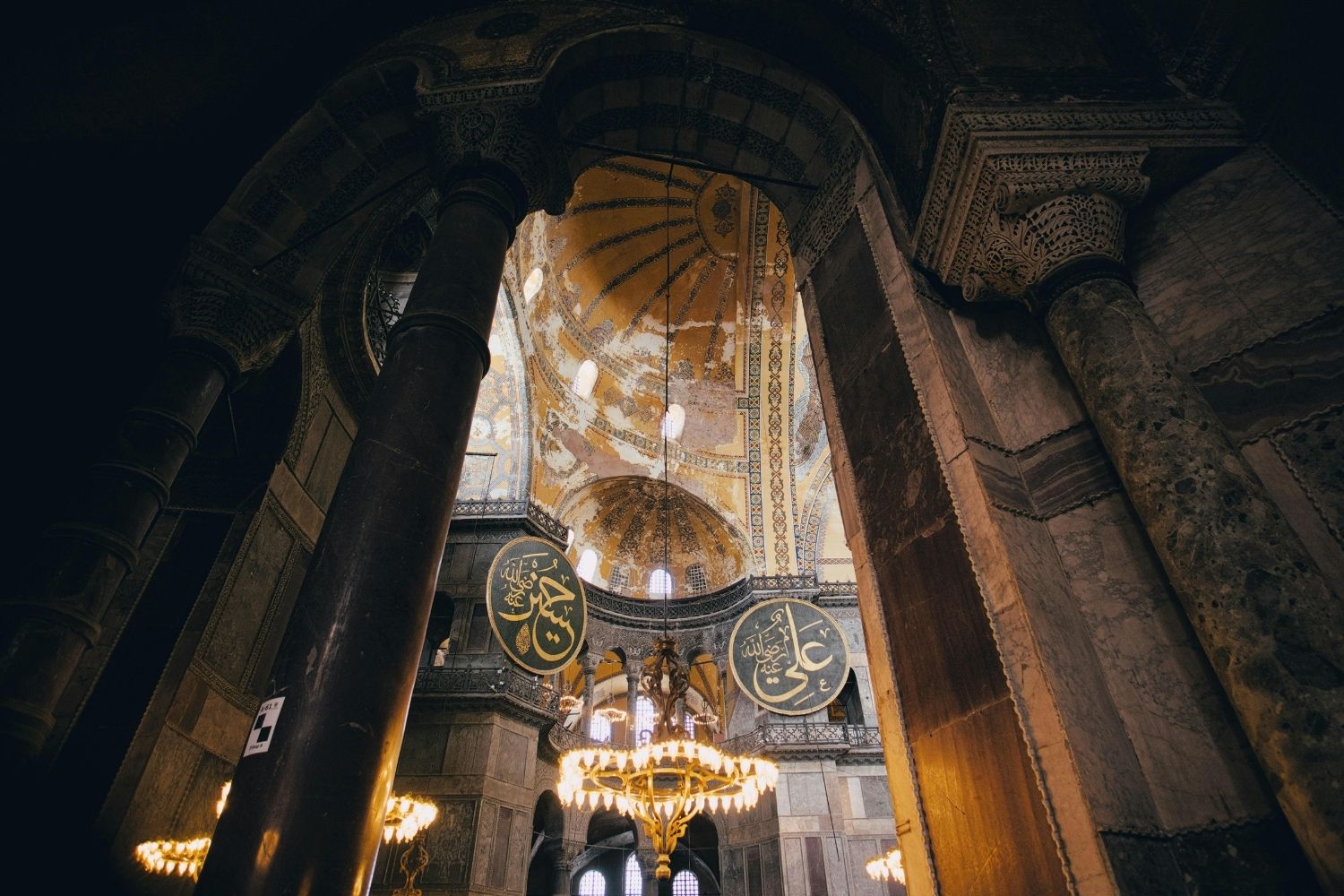
Key elements to observe during a visit include the original Byzantine floor mosaics near the entrance, the surviving figurative mosaics in the upper galleries (partially covered during prayer times), the Ottoman calligraphic medallions suspended from the dome’s pendentives, and the transition from the outer narthex through the inner narthex into the main domed space—a spatial sequence designed to build anticipation before the full interior is revealed.
UNESCO has listed the Historic Areas of Istanbul, including the Hagia Sophia site, as a World Heritage Site since 1985, recognizing the area’s outstanding universal value as a concentration of monuments that span Byzantine and Ottoman civilizations.
External Resources:
UNESCO World Heritage – Historic Areas of Istanbul
Encyclopaedia Britannica – Hagia Sophia
Metropolitan Museum of Art – Hagia Sophia and the Byzantine Tradition
ArchDaily – Hagia Sophia Coverage
Royal Institute of British Architects (RIBA)




Relocated Maya Structures at Mexico’s Balam Tun Memory Park Face Legal Challenge
INAH archaeologists have filed a complaint against 26 officials over Balam Tun...
 illustrarch Editoral Team2 Mins read
Allies and Morrison Win Approval to Restore Barbican Sculpture Court
City of London Corporation approves Allies and Morrison's plan to restore the...
illustrarch Editoral Team2 Mins read
The Great Wall of China: History, Architecture, and Enduring Legacy
A detailed architectural exploration of the Great Wall of China covering its...
Furkan Sen7 Mins read
Prague Architecture: How Charles Bridge and Prague Castle Built Bohemian Gothic
Charles Bridge and Prague Castle explained as architecture: the 1357 bridge under...
Furkan Sen6 Mins read


Leave a comment