

10 Captivating Tiny Homes That’ll Have You Dreaming of Moving Into One
From treetop hideaways and solar‑powered skoolies to minimalist A‑frames perched on alpine slopes, this roundup of 101 ingenious tiny houses reveals how thoughtful design, resource‑savvy construction, and a dash of wanderlust can turn the smallest footprints into truly expansive ways of living.
 Furkan Sen25 May 202519 Mins read444

Table of Contents Show
Downsizing has shifted from a fringe experiment to a celebrated design frontier, inspiring architects, DIY builders, and digital nomads to prove that a home’s true value is measured in creativity rather than square footage. Tiny houses are no longer just charming curiosities parked on rural backroads; they’re full‑time residences, mobile studios, and off‑grid retreats that embody thoughtful craftsmanship, eco‑conscious living, and an adventurous spirit of freedom. From tree‑canopy hideaways and solar‑powered skoolies to angular A‑frames perched on Alpine slopes, each space in this collection challenges the notion that comfort demands excess. Whether you dream of shedding a bloated mortgage, traveling with your home hitched behind you, or simply re‑imagining how sustainable a footprint you can leave on the planet, these 10 awe‑inspiring tiny homes reveal that less floor area can open vast horizons of possibility. Step inside, peer over rooftop decks, and let your own small‑space dreams take flight.
💡 Pro Tip: Before diving into design inspiration, clarify your primary goal, full‑time living, weekend retreat, or mobile travel. Each path demands different foundation types, insulation levels, and legal classifications that significantly affect your budget and build timeline.
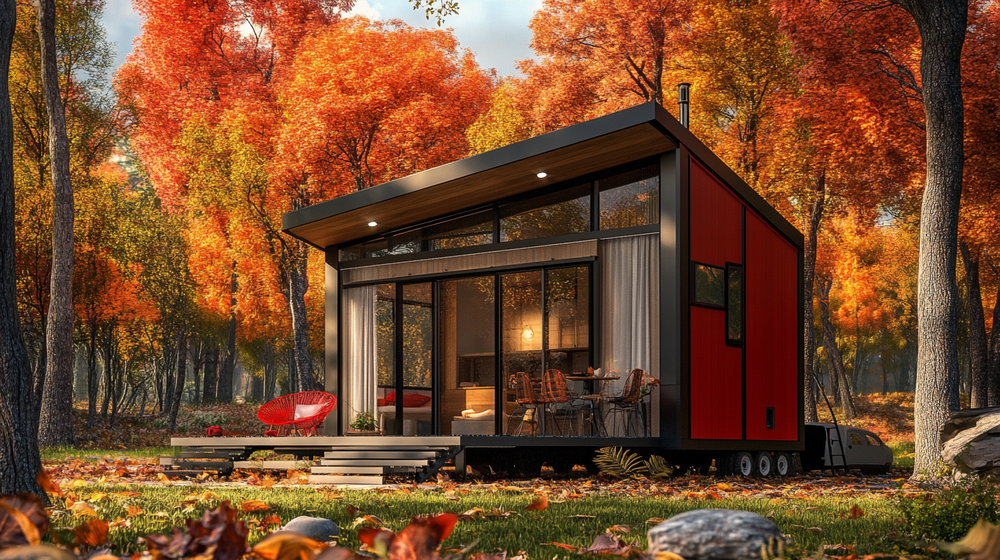
Tiny House vs. Traditional Home: Key Comparisons at a Glance
Understanding how tiny homes stack up against conventional houses is essential for any prospective builder or buyer. The table below summarizes the most critical differences based on current industry data.
| Comparison Criteria | Tiny Home (100-400 sq ft) | Traditional Home (~2,150 sq ft) |
|---|---|---|
| Average Cost | $30,000-$80,000 | $300,000-$500,000+ |
| Cost per sq ft | $150-$450 | $150-$200 |
| Annual Energy Use | ~914 kWh | ~10,715 kWh |
| CO₂ from Heating (per year) | ~558 lbs | ~8,000 lbs |
| Light Bulbs Needed | ~6 | ~45 |
| Lumber Required | ½ logging truck | 7 logging trucks |
| Mortgage‑Free Owners | ~68% | ~30% |
| Build Time | 4-6 months | 7-12 months |
| Mobility | THOW models fully towable | Permanent foundation |
1. Erika’s Map‑Ceiling Cottage
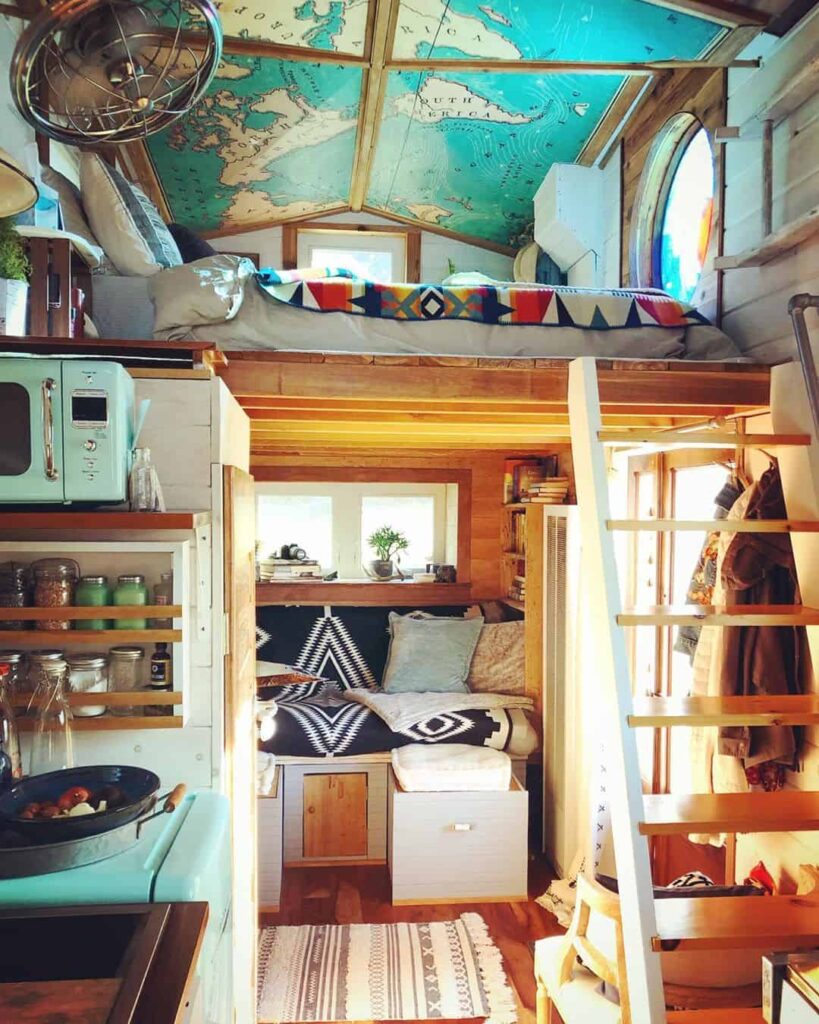
Perched on a triple‑axle trailer and trimmed in cedar, Erika’s 260‑square‑foot cottage proves that wanderlust can be built right into your rafters. She laid a vintage National Geographic world map across tongue‑and‑groove roof panels, then sealed it beneath clear resin, so every glance upward invites route‑planning daydreams. A wall of French doors washes the living area in light, doubling the visual space, while a built‑in sofa hides pull‑out storage for camping gear. The galley kitchen feels unexpectedly spacious thanks to a mirrored backsplash and slide‑out dining table. Sleeping quarters tuck into a full‑height loft with skylights perfectly aligned for stargazing; solar panels on the opposite pitch feed a lithium battery bank that powers induction cooking, radiant‑film flooring and the writer’s laptop for marathon travel‑memoir sessions. When the road calls, the house hitches behind a heavy‑duty pickup, her ceiling map literally guiding the next chapter.
🏗️ Architect’s Note: French doors in a tiny home aren’t just aesthetic, they dissolve the boundary between interior and exterior, making a 260 sq ft space feel twice its size. For best results, orient them toward the longest unobstructed view line from your lot or parking spot.
2. Rustic Treehouse Refuge
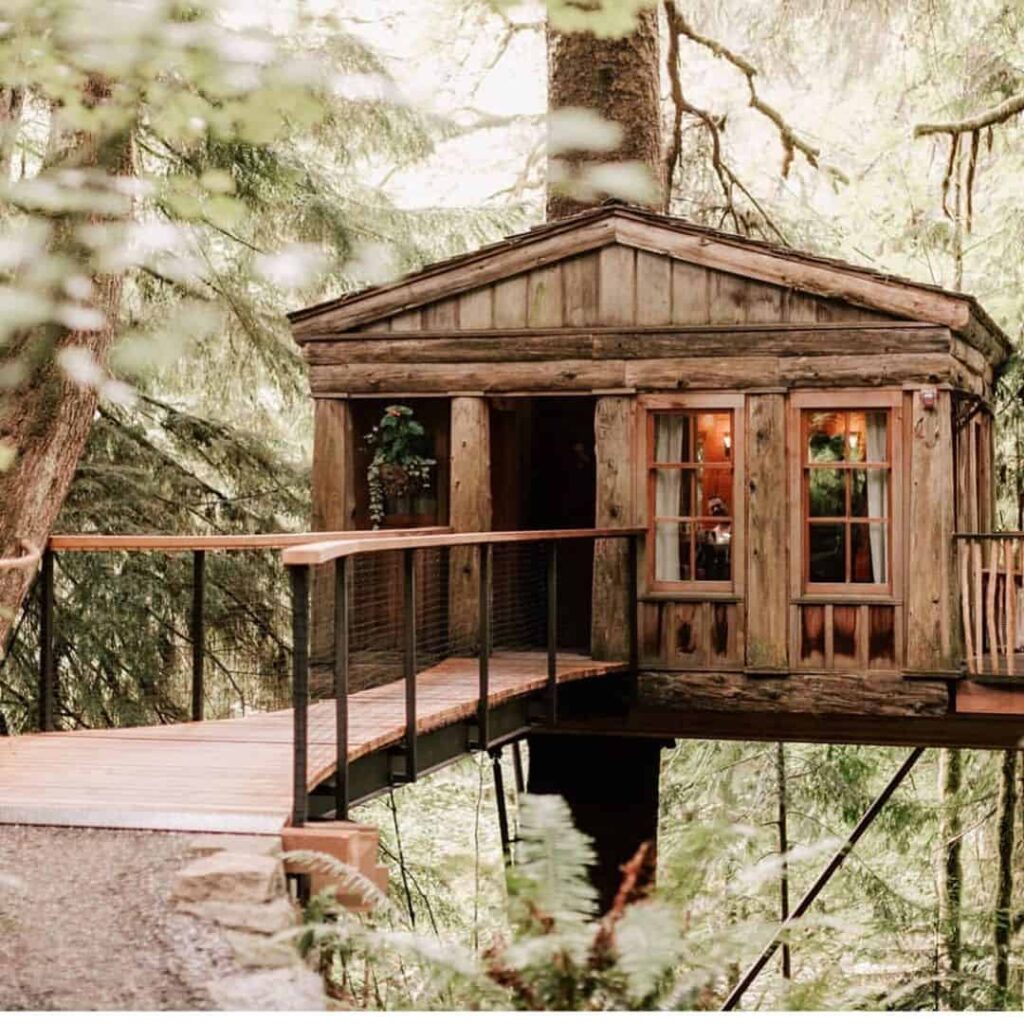
Ten feet above a mossy forest floor, this octagonal hideaway wraps around a sturdy Douglas‑fir trunk like a snug wooden scarf. The owners framed the platform with recycled telephone poles, minimizing fresh lumber and letting the building sway gently with the wind. Inside, knotty‑pine walls meet a reclaimed‑tin ceiling that amplifies the patter of rain into soothing percussion. A cast‑iron wood stove, salvaged from a 1920s fishing cabin, anchors the single open room, while window seats carved into each facet invite reading marathons among the branches. Clever rope‑and‑pulley cupboards lift out of the way when not in use, preserving precious floor area for yoga or board games. At night, a lofted queen bed hovers just below clerestory windows, letting moonlight filter through cedar canopies. The treehouse‘s water comes from a rain catchment barrel perched higher in the crown, delivering low‑pressure gravity flow to a copper sink and outdoor shower.
3. Modern Barn Micro‑Home
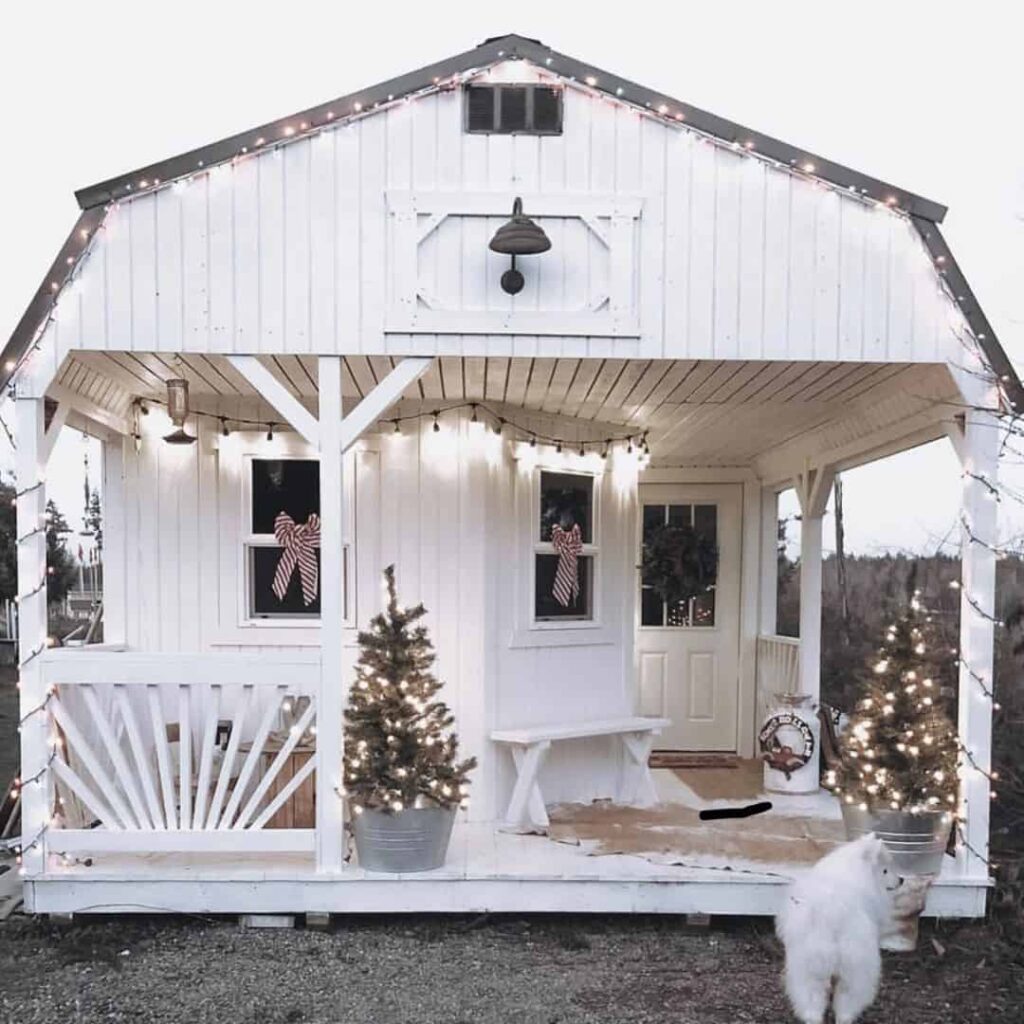
From the road this home looks like a classic New England barn, crisp white board‑and‑batten siding, a black gambrel roof and a big sliding door, but step closer and the miniature scale becomes clear. At 24 feet long and 13 feet tall, the barn’s footprint is barely the size of two parking spaces, yet its interior rises to a 16‑foot peak, making room for a full second‑level bedroom. A steel cable railing keeps the loft airy, while fibreglass skylights in the gambrel faces flood both floors with daylight. Downstairs, a fold‑away wall bed turns the central hall into a guest suite, and pocket doors close off a surprisingly elegant bathroom clad in slate tile. To keep the barn bright through long winters, the owners integrated phase‑change plaster behind south‑facing windows, storing solar heat by day and releasing it at night, trimming their grid use to a whisper. A cantilevered deck extends living space outdoors without breaking the tiny footprint rule.
💡 Pro Tip: Phase‑change materials (PCMs) embedded in walls or plaster can store and release thermal energy, reducing heating costs by up to 25% in cold climates. They’re especially effective in compact homes where consistent temperature is critical.
4. Winter Stargazer Cabin
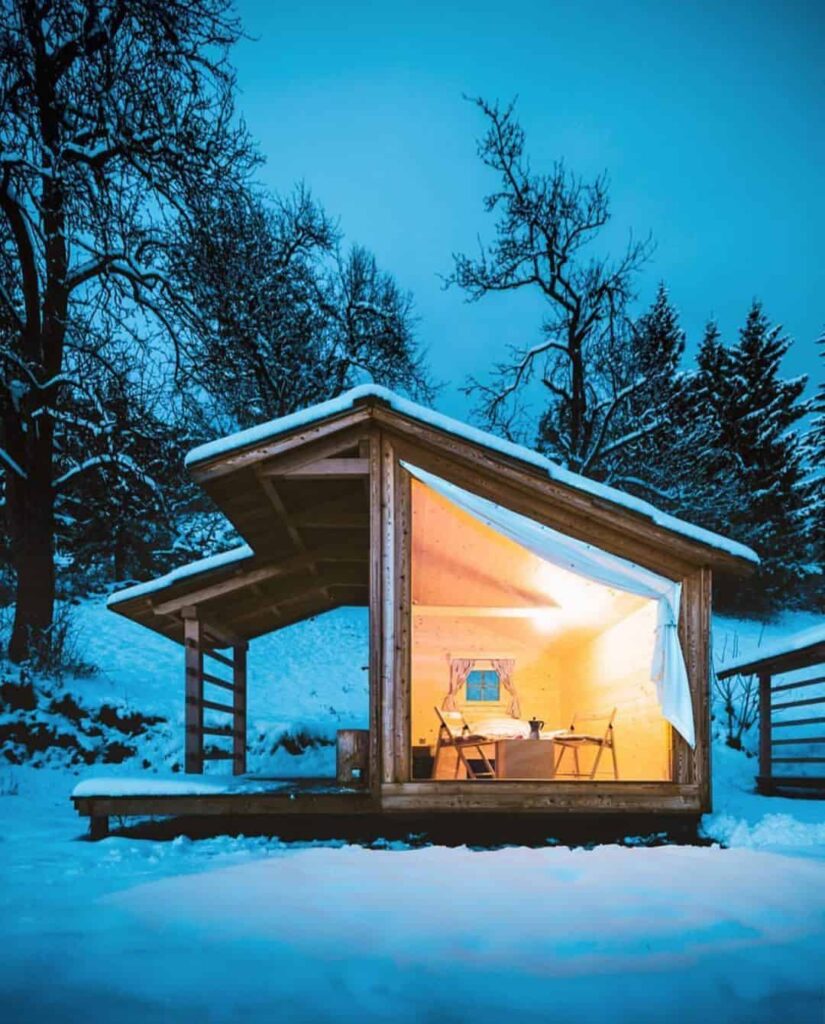
Set on helical piles in a snowy meadow, this 200‑square‑foot cabin was designed for astronomers who refuse to hibernate. One entire wall, hinged like a giant jaw, swings upward on gas pistons to expose the interior to the night sky, turning the edge of the bed into a front‑row observatory. When closed, triple‑pane glazing and sheep‑wool insulation keep interior temps cozy even at −20 °C. The cabin’s compact wood stove doubles as a hot‑plate, and a built‑in bench along the opposite wall conceals a slide‑out telescope mount. Birch plywood cabinetry follows the angled roofline, eliminating wasted air pockets, while LED star maps recessed into the ceiling trace constellations visible overhead each season. Outside, a covered deck, protected by that big folding wall, lets residents sip dawn coffee while pink alpenglow ignites the surrounding peaks.
5. A‑Frame Time Capsule
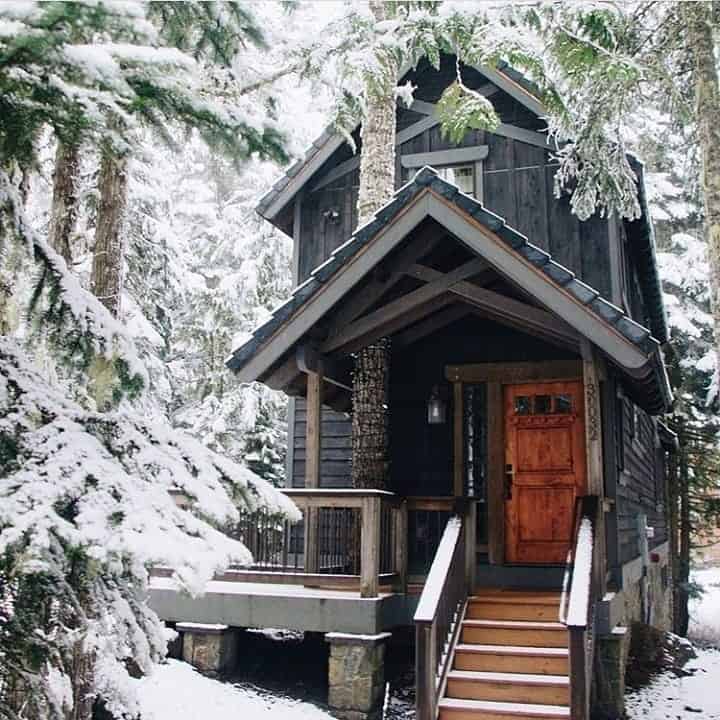
Every board in this steep‑roofed 196‑square‑foot A‑frame was milled from beetle‑kill pine, giving the walls a silvery patina that hints at Western mining‑town history. The 60‑degree roof angle sheds heavy snow with ease and creates a soaring cathedral interior where exposed king‑post trusses converge like ribs in a gothic chapel. A single‑run ladder stair climbs to a snug loft that holds only a mattress and a circular window framing sunrise over the timberline. Below, a compact kitchenette hides beneath that stair: pivoting treads reveal pantry cubbies stocked for backcountry weekends. The owners embedded radiant copper piping in the poured‑concrete floor, heated by a rooftop evacuated‑tube solar array, meaning they burn zero fuel for nine months of the year. At the gable end, steel‑framed doors fold completely aside to reveal a deck floating over a creek, luring trout in summer and reflecting a crackling fireplace in winter.

Tiny Home Cost Breakdown by Type
Tiny homes come in many forms, and the cost varies dramatically depending on the type of structure you choose. The following table provides a realistic cost framework for each category based on current market data.
| Tiny Home Type | Average Cost Range | Key Considerations |
|---|---|---|
| DIY Build (On Foundation) | $30,000-$60,000 | Requires building skills; most affordable option |
| Custom Builder (On Foundation) | $50,000-$150,000 | Professional quality; zoning compliance easier |
| Tiny House on Wheels (THOW) | $45,000-$100,000 | Trailer cost ~$7,000 extra; classified as RV in many states |
| Prefab Kit | $4,000-$80,000 | Shell‑only kits cheapest; fully finished kits highest |
| Shipping Container Home | $20,000-$50,000 (single) | Multi‑container builds can reach $250,000+ |
| Skoolie / Bus Conversion | $30,000-$80,000 | Bus acquisition $4,000-$10,000; interior build adds cost |
| A‑Frame Cabin | $40,000-$120,000 | Excellent snow‑shedding; kit options available |
| Treehouse | $25,000-$100,000+ | Structural engineer assessment recommended; permits vary widely |
📊 Expert Insight: Although tiny homes cost more per square foot ($150-$450) than traditional homes ($150-$200), your total investment remains dramatically lower. A tiny home still requires a full kitchen, bathroom, electrical panel, and HVAC, these fixed system costs simply get spread across far less floor area.
6. Charred‑Wood Forest Dwelling
Protected by shou‑sugi‑ban siding the colour of midnight, this off‑grid pod all but disappears among towering cedars until sunlight kisses its matte surface and reveals intricate grain. The architects designed around an existing sapling, piercing the wrap‑around porch so the young tree can mature as a living sundial. Inside, Japanese minimalism reigns: tatami‑style seating around a low table that converts into a futon platform at night, birch panels that slide to reveal or conceal storage, and a soaking tub hewn from local basalt that stays hot for hours thanks to its mass. A 3 kW solar roof charges a salt‑water battery bank, running induction cooking, a composting toilet fan and dimmable paper‑lantern lights. Rainwater filters through a green‑roof moss layer before trickling into cisterns. The entire 180‑square‑foot structure rests on screw piles, so it can be unscrewed and relocated without leaving a scar on the forest floor.

🌿 Sustainability Note: Shou‑sugi‑ban (yakisugi) charring creates a naturally fire‑resistant, pest‑proof, and UV‑stable exterior that can last 80+ years without chemical treatment. It’s a centuries‑old Japanese technique increasingly adopted by modern architects for both tiny and full‑scale projects.
7. “Little House on the Highway” Skoolie
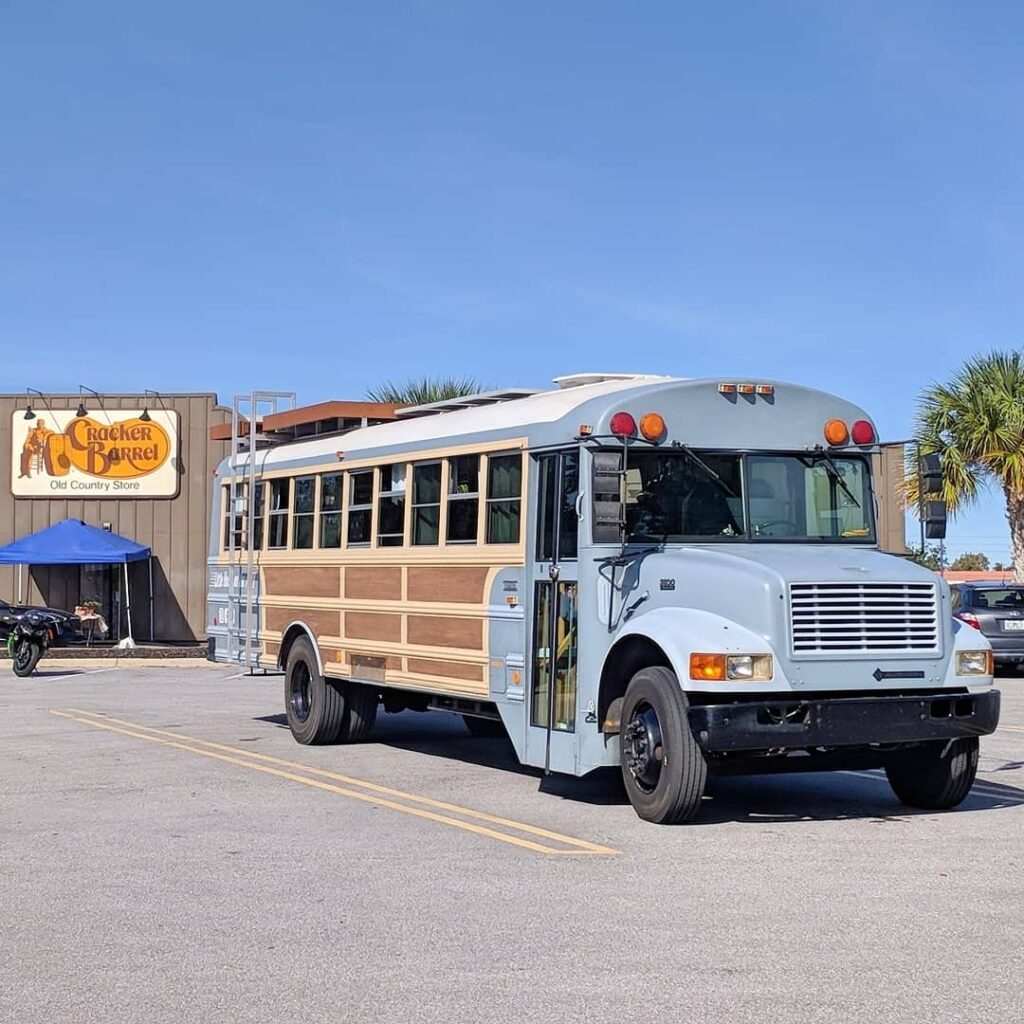
Once a 25‑foot 1999 Blue Bird short bus, this rolling cottage now sports cedar clapboards, a corrugated‑steel skirt and, most eye‑catching of all, a cedar‑deck rooftop patio accessed by a salvaged fire escape ladder. Inside, the original high ceiling remains, but the floor has been raised in sections to create “basement” bins storing camping gear and surfboards. The galley kitchen features a farmhouse sink sourced from a Victorian tear‑down and powered by a 40‑gallon freshwater tank under the counter; greywater irrigates onboard planters that sprout herbs in the windshield during long layovers. A reclaimed‑oak table hinges down to give six friends a place for roadside dinners, while the rear lounge converts into a queen bed beneath reclaimed‑stained‑glass clerestories. Solar panels hug the roofline without interrupting the patio view, and a diesel heater taps the bus’s main tank, making four‑season travel a snap. Parked at sunset, the skoolie glows like a lantern on the horizon.
8. Barista‑Level Van Kitchen
Built inside a long‑wheelbase Mercedes Sprinter, this van was laid out by two former coffee‑shop owners who refused to compromise on culinary ritual. The star is a full‑sized manual‑lever espresso machine secured to a quartz composite counter; a 300‑amp‑hour lithium battery bank and 2000‑watt inverter keep the boiler humming even in the desert. Opposite, a slide‑out induction cooktop pairs with a Japanese donabe oven for artisanal bread on the go. Upper cabinets, with tambour doors that won’t swing while driving, store an arsenal of spices in magnetic jars. A slim fridge lives beneath a bamboo chopping station that pulls out to double the workspace. Clever engineering hides plumbing in the van’s C‑pillars: a 25‑gallon freshwater tank feeds a copper coil water heater warmed by engine coolant after long drives. At the rear, a pull‑down projection screen turns parking spots into nightly movie cafés, complete with latte art and homemade focaccia.
⚡ Pro Tip: For van and skoolie builds, size your electrical system before your floorplan. A 300Ah lithium battery bank paired with a 2000W inverter can power demanding appliances like espresso machines, but only if you pair it with adequate solar input (400-600W panels minimum) and alternator charging for cloudy spells.
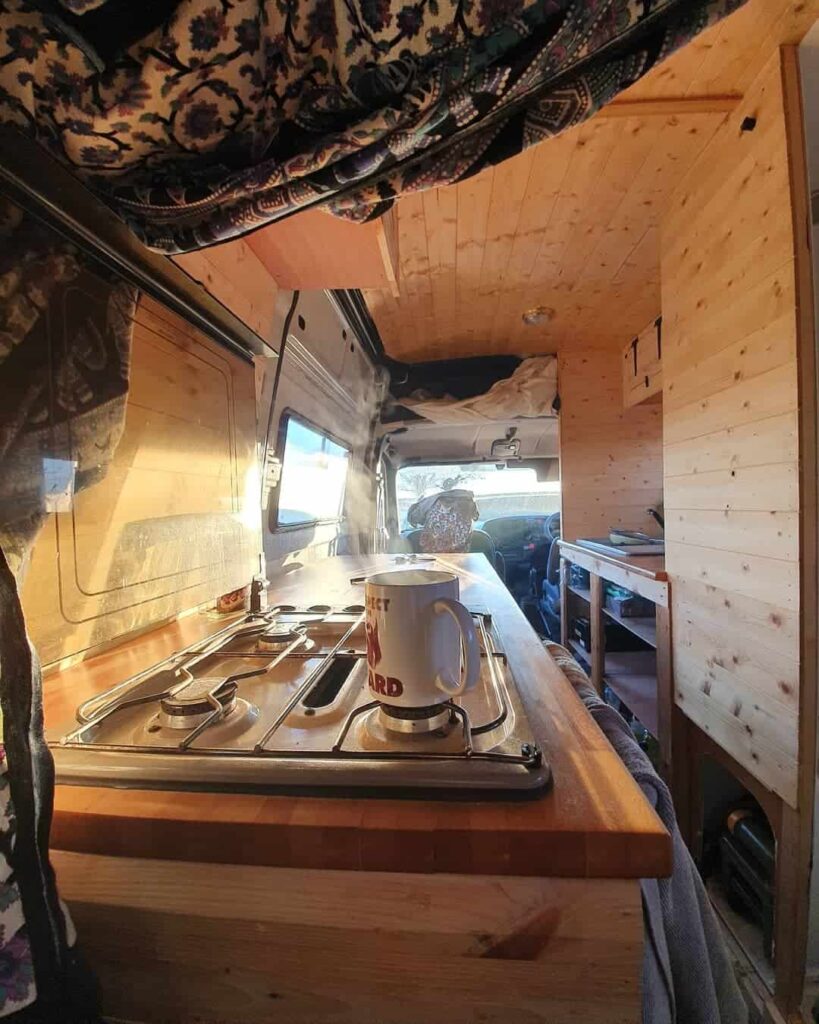
9. Finnish Solar Sprinter
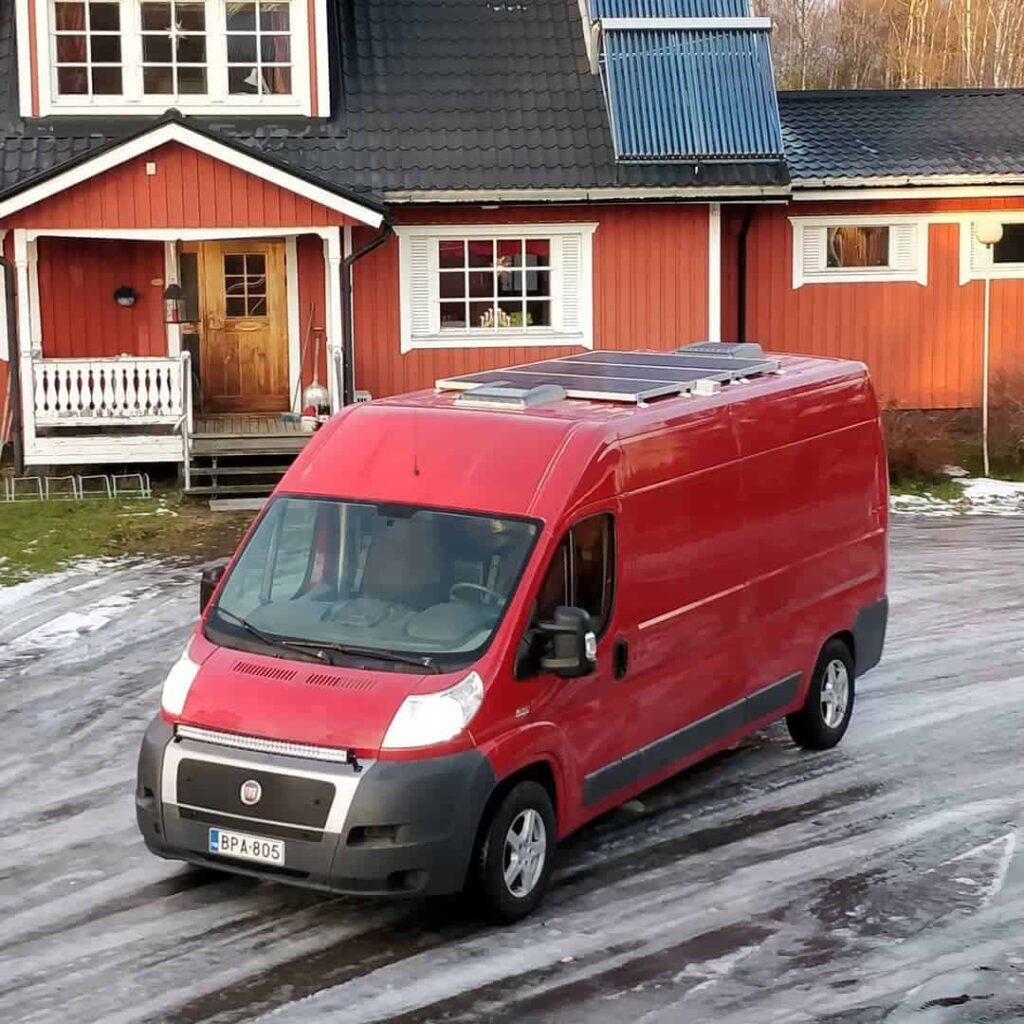
Designed for Lapland photographers chasing auroras, this Sprinter’s roof bristles with bifacial solar panels angled to catch low winter sun and reflectivity off snow. The builders installed twin MaxxAir fans for cross‑breeze in mosquito season and a diesel air heater to tame −30 °C nights. Interior walls wear quilted felt that doubles as acoustic dampening, an essential feature for recording wild‑soundscapes. The bed platform glides forward on industrial sliders, revealing a workstation where two people can edit photos while seated on floor cushions warmed by a hydronic loop. Large‑format drawers underneath swallow tripods, snowshoes and insulated camera cases. Windows are few by design, but a stargazing hatch above the pillow allows lens‑up sky watching without leaving the duvet. Portable lithium packs recharge under‑chassis from the alternator during long drives between Arctic camps, ensuring camera batteries and drone rigs are always ready when the northern lights flare.
10. Stationary Garden Bus
When its transmission finally failed, a chartreuse 40‑foot school bus found new life as the anchor of a suburban permaculture plot. Mechanics removed the engine, freeing space for a greenhouse vestibule that now hosts seedling trays warmed by residual thermal mass from the steel firewall. The bus interior remains largely open: hardwood floors reclaimed from a bowling alley stretch the length, and former overhead luggage racks hold drying herbs. Mid‑ship stands a wood‑fired rocket‑mass heater sculpted from cob, its bench snaking along the windows, radiating warmth deep into the night. Roof joists support a living roof of strawberries and creeping thyme, watered by drip‑lines fed from greywater barrels stationed at the rear bumper. Where a wheelchair lift once sat, a sliding patio door now opens onto a cedar deck, bridging the gap between bus and vegetable rows. Neighbours often forget they’re sitting inside a retired diesel giant as they sip mint tea brewed from leaves plucked overhead.

Tiny Home Environmental Impact: By the Numbers
One of the most compelling reasons the tiny house movement continues to grow is its measurable environmental impact. The data below illustrates just how dramatically a smaller footprint translates to reduced resource consumption.
| Environmental Metric | Tiny Home | Average US Home | Reduction |
|---|---|---|---|
| Annual electricity consumption | ~914 kWh | ~10,715 kWh | ~93% |
| Daily energy demand | 3 to 4 kWh | 26 to 33 kWh | ~88% |
| CO₂ from heating (annual) | ~558 lbs | ~8,000 lbs | ~93% |
| Construction lumber | ½ truck | 7 trucks | ~93% |
| Overall energy use vs. traditional | Tiny homes use approximately 7% of the fuel and electricity of an average‑sized home | ||
🌍 Why This Matters: Residential buildings account for roughly 20% of total US greenhouse gas emissions. Each tiny home that replaces a conventional dwelling removes the equivalent of several cars’ worth of annual CO₂ from the atmosphere. When paired with solar panels (which can fully power a 3 to 4 kWh daily demand), a tiny home can approach net‑zero operation.
Tiny House Zoning: State‑by‑State Readiness Overview
Zoning is the single biggest hurdle, or opportunity, for aspiring tiny homeowners. Regulations vary not only by state but often by county and city. The table below provides a general readiness snapshot to help you start your research.
| Friendliness Level | States / Regions | Notes |
|---|---|---|
| 🟢 Very Friendly | California, Oregon, Colorado, Texas, Maine | Progressive ADU laws, designated THOW zones, Appendix Q adoption |
| 🟡 Moderately Friendly | Florida, Georgia, Tennessee, Michigan, Washington | Foundation homes easier to approve; THOWs may require special permits |
| 🟠 Mixed / Emerging | Arizona, North Carolina, Pennsylvania, Missouri | Rural counties often more flexible; urban zones restrictive |
| 🔴 Restrictive | New York, North Dakota, Alaska, Alabama, Wisconsin | Strict minimum sq ft requirements; limited THOW options |
⚖️ Pro Tip: Always check your local county and city regulations, not just state‑level laws. It’s common for one city to welcome tiny homes while a neighboring county bans them. Contact your local planning and zoning department directly, and search for terms like “accessory dwelling unit,” “minimum dwelling size,” or “manufactured home” in their ordinances.
Before you click away or fold your laptop shut, linger a moment with the feelings that each of these tiny homes stirred, curiosity, possibility, maybe even a flicker of daring you haven’t felt since childhood forts and treehouses. The great secret of the small‑space movement is not merely that it saves on lumber, energy, or mortgage payments, though it certainly can. Its real power lies in how radically it reframes the question of what a home should do for your soul. When every inch must justify its existence, design turns into an act of listening: to daily rituals, to the seasons, to the land beneath the footings or the road under the wheels. Windows align with sunrise because someone noticed where the first light falls on a mug of coffee. Lofts hover just above stoves so that winter warmth rises naturally while bread bakes below. Storage tucks into staircase risers because the builder asked, “What if the climb itself could carry my memories?”
Such attention invites a quieter, slower kind of abundance, one measured not in square meters but in moments reclaimed. Instead of cleaning spare bedrooms you never use, you might hike longer, read another chapter, linger over dinner as twilight deepens outside a picture window the size of a painting. Instead of working extra shifts to cover rent, you might funnel that energy toward a passion project, or toward travel, joining the community of roving skoolies, van dwellers, and cabin keepers who trade decor updates across internet forums like postcards from a lighter world.
Of course, tiny living isn’t a universal remedy. Zoning codes can be stubborn, families have spatial needs, and not everyone dreams of composting toilets or sleeping loft ladders. Yet the stories gathered here prove that small‑footprint design can serve as a vibrant laboratory for any scale of life. You might harvest just one idea, a fold‑down deck, a multifunctional bookshelf stair, a cedar‑scented sleeping nook, and let it transform your existing home. Or you might feel the unmistakable tug to build anew, drafting blueprints on napkins, scouting tow‑vehicles, counting stars from a future rooftop perch. Wherever you land on the spectrum, these 10 inspiring spaces remind us that our dwellings can be tailored to hold exactly what we love and nothing more, leaving the rest of the world wonderfully open for exploration.
Essential Tiny Home Design Checklist
Whether you’re building from scratch or converting a vehicle, this checklist covers the critical decisions every tiny home project demands. Use it as a starting framework before engaging an architect or builder.
| Category | Key Decisions | Common Mistakes to Avoid |
|---|---|---|
| Foundation | Trailer, screw piles, concrete slab, or helical piles | Choosing THOW without checking if your area allows full‑time RV living |
| Insulation | Spray foam, sheep wool, rigid board, or SIPs | Under‑insulating a THOW: mobile homes face wind chill from all sides |
| Energy System | Grid‑tie, solar + battery, or hybrid | Undersizing battery bank or inverter for actual load requirements |
| Water | Municipal hookup, rain catchment, or onboard tank | Ignoring greywater regulations; not insulating pipes for freeze protection |
| Heating / Cooling | Mini‑split heat pump, wood stove, radiant floor, or diesel heater | Oversizing HVAC: a 200 sq ft space needs far less BTU than you think |
| Storage | Under‑floor, staircase integration, wall cavities, loft edges | Planning storage as an afterthought rather than a primary design driver |
| Loft Design | Sleeping loft, storage loft, or main‑floor bedroom | Insufficient headroom in sleeping loft; poor ventilation leading to heat buildup |
| Legal / Zoning | ADU, THOW/RV classification, building permit pathway | Starting construction before verifying local minimum dwelling size requirements |
🔑 Pro Tip: The most successful tiny home builds start with a detailed lifestyle audit. Track your daily routines for two weeks, cooking habits, work‑from‑home hours, hobbies, storage needs, and design your layout around those real patterns rather than generic floor plans found online.
Tiny House Market Snapshot (2025-2029)
The tiny home movement is no longer a niche trend, it’s a rapidly expanding market segment with real financial and demographic data backing its growth.
| Market Statistic | Data |
|---|---|
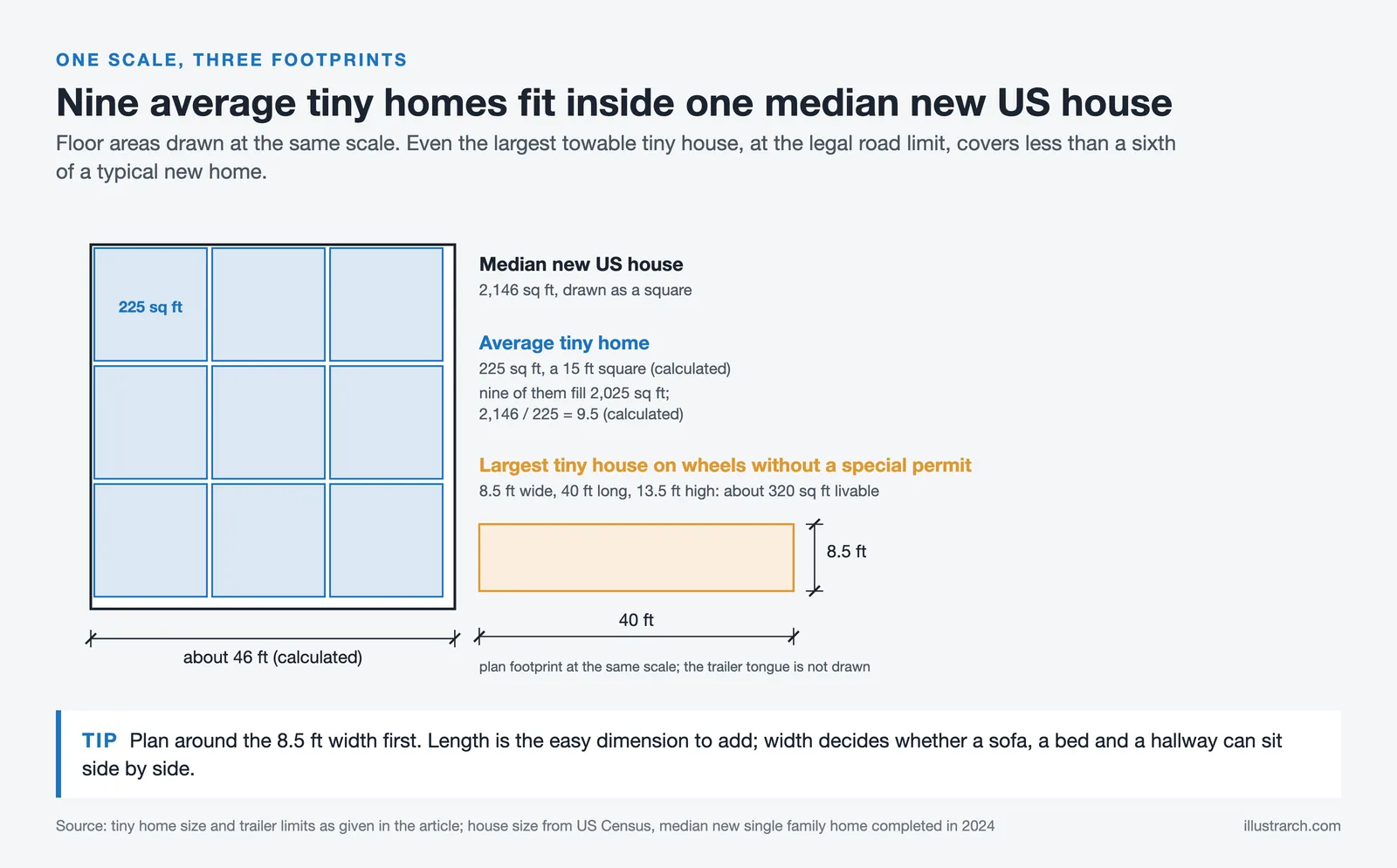
| Average tiny home size | 225 sq ft (compared to 2,146 sq ft for the median new US single family home completed in 2024) |
| Estimated tiny homes in the US | ~10,000 |
| Average tiny home price | $67,000 (87% cheaper than median US home at $512,800) |
| Projected global market growth (2024-2029) | +$3.71 billion at 4.2% CAGR |
| North America’s share of growth | 55% |
| Tiny homeowners with zero mortgage | 68% |
| Owners with less debt than average American | 89% |
| Percentage who report increased savings | 58% |
| Gender split of tiny home community | 55% women / 45% men |
| Max THOW dimensions (no special permit) | 8.5′ wide × 40′ long × 13.5′ high (~320 sq ft livable) |
Frequently Asked Questions About Tiny Homes
How much does it cost to build a tiny house?
Building a tiny house typically costs between $30,000 and $80,000, with the national average around $45,000-$67,000 depending on size, materials, and customization level. DIY builds sit at the lower end, while custom professional builds with luxury finishes can exceed $150,000. A prefab tiny home kit can start as low as $4,000 for a shell‑only package. Keep in mind that land, permits, utility hookups, and site preparation are usually not included in these estimates.
Can you legally live in a tiny house full‑time?
Yes, but legality depends entirely on your location. States like California, Oregon, Colorado, Texas, and Maine have progressive regulations that support tiny homes as ADUs (accessory dwelling units) or even primary residences. However, many municipalities still enforce minimum square footage requirements (often 400-1,000 sq ft) that can exclude tiny homes. Tiny houses on wheels (THOWs) are frequently classified as recreational vehicles and may only be permitted in RV parks or designated tiny home communities for full‑time occupancy. Always consult your local planning and zoning department before building or purchasing.
How much energy does a tiny home use compared to a traditional house?
A typical tiny home uses approximately 7% of the energy consumed by a standard American house. While the average US household uses about 10,715 kWh annually, a tiny home of around 186 square feet uses roughly 914 kWh. This dramatic reduction comes from less space to heat and cool, fewer lighting fixtures (6 vs. 45 bulbs), and the ability to run entirely on solar power with a daily demand of just 3 to 4 kWh. Heating a tiny home produces approximately 558 lbs of CO₂ per year versus about 8,000 lbs for a conventional home.
What is the best foundation type for a tiny house?
The best foundation depends on your intended use. For permanent placement, a concrete slab ($6-$14 per sq ft) or helical/screw piles offer stability and meet most building codes. For mobility, a purpose‑built tiny house trailer ($4,500-$11,000) is essential, these come in bumper‑pull, gooseneck, and 5th wheel configurations. Screw piles are increasingly popular because they allow secure placement with minimal site disturbance and can be removed without leaving a permanent mark on the land.
Are tiny homes a good investment?
Tiny homes offer significant lifestyle and financial benefits, 68% of owners carry no mortgage and 89% report less debt than the average American. However, they aren’t a traditional financial investment: most tiny homes depreciate rather than appreciate, especially highly customized models and THOWs. They’re best viewed as a cost‑of‑living reduction strategy rather than an equity‑building tool. If your goal is financial freedom, lower monthly expenses, and reduced environmental impact, a tiny home can be an excellent investment in quality of life.
How long does a tiny house last?
With proper construction and regular maintenance, a tiny home can last between 30 and 50 years. Factors that affect longevity include the quality of building materials, the type of foundation (permanent foundations generally extend lifespan), climate exposure, and the quality of insulation and weatherproofing. THOWs may experience more wear due to road vibration and exposure, but well‑built models from certified builders remain structurally sound for decades.
What are the biggest challenges of tiny house living?
The most commonly cited challenges include limited storage and living space (especially for couples or families), navigating complex and inconsistent zoning regulations, difficulty obtaining traditional mortgage financing (most require personal loans or RV financing), potential depreciation in resale value, and the psychological adjustment to living in 100-400 square feet. Climate considerations also matter, extreme cold or heat requires careful insulation and HVAC planning to maintain comfort in such a compact space.
Can you finance a tiny house with a mortgage?
Traditional mortgages typically don’t cover tiny homes, especially THOWs. Financing options include personal loans, RV loans (if the home is RVIA‑certified), chattel loans for manufactured homes, and specialized tiny house financing programs offered by some builders and lenders. Some foundation‑based tiny homes on purchased land may qualify for home equity loans or construction loans, depending on local classification. Many tiny homeowners choose to pay in cash, which is a contributing factor to the high mortgage‑free ownership rate in the community.
Last updated:
- DIY tiny house modern tiny homes
- eco-friendly tiny homes custom tiny homes
- energy-efficient tiny homes
- off-grid tiny homes luxury tiny homes
- rustic tiny homes tiny home lifestyle
- space-saving tiny homes
- tiny home designs affordable tiny homes
- tiny home floor plans sustainable tiny homes
- tiny homes
- tiny house inspiration portable tiny homes






Tiny House Water Systems: Your Complete Guide to Plumbing, Rainwater Harvesting and Off-Grid Solutions
A practical guide to designing a tiny house water system, covering PEX...
 Bahattin Duran14 Mins read
Off-Grid Tiny House Living: Complete Setup Guide for Beginners
This guide walks you through every stage of setting up an off-grid...
Bahattin Duran15 Mins read
Tiny House with Loft: Design Ideas, Plans and Building Tips for Vertical Living
A complete guide to designing and building a tiny house with loft,...
Bahattin Duran15 Mins read
8+ Best Tiny Home Communities in Michigan: Great Lakes Tiny Living Guide
Explore tiny home communities in Michigan. Great Lakes lifestyle, affordable land, and...
Bahattin Duran18 Mins read


Leave a comment