

Self-Sufficient 3D-Printed House: WASP’s Itaca Model
WASP's Itaca project in Northern Italy is the first certified self-sufficient 3D-printed house, built using four synchronized robotic arms and natural materials like lime and rice husks. This article explores how Itaca's mandala-inspired design, circular micro-economy model, and off-grid systems are setting a new benchmark for sustainable housing worldwide.
 Elif Ayse Sen12 February 20267 Mins read205

Table of Contents Show
The idea of a self-sufficient 3D-printed house has moved from speculative concept to certified reality. Italian company WASP (World’s Advanced Saving Project) has completed Itaca, the country’s first certified 3D-printed residential structure, located in the Shamballa open-air laboratory in the hills of Northern Italy. The project integrates additive manufacturing with natural, locally sourced materials to create a fully functional, off-grid farm designed to house four people while producing its own food and energy. Itaca represents a powerful proof of concept: that 3D printed houses can meet rigorous building standards, including earthquake resistance, while operating on principles of circular economy and environmental stewardship.
More than a technological showcase, Itaca proposes a replicable model for self-sufficient housing that could be deployed in remote areas, disaster zones, or regions with limited infrastructure. By combining the speed and precision of robotic construction with centuries-old building wisdom, WASP is charting a compelling path for the future of residential architecture.

What Is WASP’s Itaca Project and Why Does It Matter?
Itaca is a 3D printing house initiative developed by WASP 3D Build, the construction-focused division of WASP, within the Shamballa complex — an eight-hectare open-air laboratory dedicated to sustainable living research. First announced by WASP founder Massimo Moretti at Italian Tech Week in Turin, the project was conceived as a response to overlapping crises in housing, energy, climate, and migration.
The core thesis behind Itaca is deceptively simple: within a circular area of roughly 33 meters in diameter, it should be possible to sustain a family of four — two adults and two children — entirely off the grid, without connections to municipal electricity, water, gas, or sewer systems. The project draws inspiration from space habitat research, applying technologies originally explored for lunar colonization to improve quality of life in resource-scarce environments on Earth.
What sets Itaca apart from earlier 3D printing in architecture experiments is its certification. Built in compliance with Italian and European building regulations — among the most stringent in the world due to Italy’s seismic activity — Itaca demonstrates that 3D-printed construction can meet the same structural and safety standards as traditionally built homes.

How 3D Printing Houses Works: The Crane WASP System
At the heart of Itaca’s construction is the Crane WASP system, a modular large-scale 3D concrete house printer capable of operating in remote locations with minimal infrastructure. For Itaca, WASP deployed an upgraded configuration featuring four robotic arms positioned at the vertices of a hexagonal structure. This multi-arm setup enables the simultaneous printing of four wall sections, dramatically accelerating the building process.
When all four arms operate in coordination, the structural shell of a house can be completed in as little as two days. Each of Itaca’s four main walls stands 380 cm tall and required approximately 24 hours to print. The total building area spans 164.9 square meters, with a layout inspired by the geometry of a mandala — a square inscribed within a circle, featuring central openings on each side.
Rather than using conventional concrete, the Crane WASP system extruded a lime-based mixture for the facades. This material choice allows the walls to regulate temperature through natural thermal exchange, significantly reducing the need for mechanical heating and cooling. The wall cavities were then filled with rice husks sourced from agricultural waste, providing natural insulation with a minimal carbon footprint. This approach to local materials and low-tech architecture demonstrates how advanced fabrication can work hand in hand with vernacular building knowledge.

3D House Printing vs. Traditional Construction Methods
The following table highlights the key differences between WASP’s 3D house printing approach and conventional construction techniques:
| Feature | WASP 3D Printing | Traditional Construction |
|---|---|---|
| Wall Construction Speed | Structural shell in 2 days | Several weeks to months |
| Primary Materials | Lime-based mixture, rice husks | Concrete, steel, bricks |
| Labor Requirements | Minimal on-site crew | Large specialized workforce |
| Embedded Systems | Heating and electrical during printing | Post-construction installation |
| Transportability | Printer fits in shipping container | Heavy equipment and supply chains |
| Material Sourcing | Locally sourced, zero-kilometer | Often transported long distances |
| Carbon Footprint | Significantly lower | Higher due to cement and transport |
Self-Sufficient House Design: How Itaca Achieves Off-Grid Living
Itaca’s ambition goes well beyond the printed walls. The project is designed as a comprehensive self-sufficient house design that integrates food production, water management, and energy generation into a single interconnected system.
The ventilation design is particularly noteworthy. Air circulates continuously through the interior spaces using passive systems — no mechanical HVAC required. This transforms Itaca into what WASP describes as a “living house,” one that responds to environmental conditions naturally, reducing both energy consumption and long-term maintenance costs. Radiant heating systems and electrical wiring are embedded directly into the walls during the printing process, eliminating the need for invasive post-construction work.
On the energy side, a green roof combined with a solar panel system is installed to provide insulation and generate electricity. Two rainwater collection basins built on the surrounding grounds support water recovery, control soil erosion, and irrigate crops. WASP has also integrated 3D-printed vertical hydroponic systems for year-round vegetable production using minimal water — a significant step toward true food self-sufficiency for the household.
An AI-powered automatic garden is currently in development for the Shamballa site, further advancing the concept of a self-sufficient tiny house ecosystem where technology and nature operate in symbiosis. The entire model runs on what WASP calls a “circular micro-economy,” where waste outputs from one system serve as inputs for another — organic waste feeds composting, which enriches soil, which grows food, which sustains the residents.

3D Printed Houses and Earthquake Resistance: Meeting Regulatory Standards
One of the most significant achievements of the Itaca project is its compliance with seismic building codes. Italy’s regulatory framework for construction is among the most demanding in Europe, given the country’s high susceptibility to earthquakes. Achieving certification under these conditions required WASP to engineer the printed walls with internal reinforcement columns capable of withstanding seismic loads while also supporting the roof structure.
This milestone matters for the broader 3D printed buildings industry because it directly addresses one of the most persistent criticisms of additive construction: that it remains an experimental novelty rather than a viable alternative to conventional building. By demonstrating regulatory compliance in a high-seismic zone, WASP has proven that 3D print house technology is ready for real-world deployment beyond pilot projects and prototypes.
The walls are 60 cm thick, with cavities filled with rice husks for thermal insulation. This dual function — structural integrity and thermal performance — showcases how thoughtful self-sufficient house engineering can eliminate the need for separate insulation systems, reducing material use and construction complexity.

From TECLA to Itaca: WASP’s Journey in 3D Printing Houses
Itaca builds on over a decade of research and development at WASP. The company’s journey began with a singular mission: to use 3D printing technology to address global housing challenges sustainably.
In 2018, WASP completed Gaia, the first 3D-printed earth building, using a soil-based mixture at a fraction of conventional costs. The project demonstrated the feasibility of using locally sourced, natural materials in additive construction. In 2021, WASP partnered with Mario Cucinella Architects (MCA) to build TECLA, the world’s first house 3D-printed entirely from local clay. Completed in around 200 hours of printing using just 6 kWh of energy, TECLA proved that carbon-neutral, zero-waste housing was technically achievable.
Itaca represents the next evolution of this vision. Where TECLA was primarily a material and design demonstrator, Itaca is a fully integrated living system — a certified, earthquake-resistant structure with embedded energy, water, and food production capabilities. The progression from Gaia to TECLA to Itaca illustrates how 3D printing houses technology has matured from experimental curiosity to practical, standards-compliant construction.

The Shamballa Laboratory: A Living Model for Self-Sufficient Housing
Itaca is just one component of Shamballa, WASP’s ambitious open-air laboratory covering eight hectares of previously uncultivated farmland in the Massa Lombarda region. The site is managed jointly by WASP 3D Build and Olfattiva, both part of the CSP S.r.l. group, with over €1 million invested to date.
Beyond Itaca, Shamballa’s plans include a conference hall with a green roof for education and international collaboration, sanitary infrastructure, rest areas, and micro-architectures designed to promote biodiversity. As part of WASP’s reforestation initiative, over 500 local fruit tree varieties and approximately 50,000 aromatic medicinal plants are being cultivated on the grounds.
The official public opening of Shamballa is scheduled for spring 2026. The laboratory is conceived as an open-source project — a space where researchers, architects, and communities can participate, learn, and adapt the model for their own contexts. This collaborative ethos aligns with WASP’s broader mission of democratizing sustainable architecture through digital fabrication and knowledge sharing.
For the symbiotic design community, Shamballa represents a rare opportunity to study an integrated self-sufficient system operating at full scale — not a simulation or a render, but a functioning ecosystem where architecture, agriculture, energy production, and biodiversity coexist and reinforce one another.

Global Implications: Can 3D-Printed Self-Sufficient Homes Solve the Housing Crisis?
The United Nations estimates that by 2030, roughly 3 billion people will need access to affordable, adequate housing. Traditional construction methods alone cannot meet this demand, particularly in regions with limited infrastructure, skilled labor shortages, or material supply chain constraints. This is precisely where 3D printed houses offer their most compelling value proposition.
The Crane WASP system is specifically designed for accessibility. It can be disassembled, shipped in standard containers, and reassembled on site — even in remote locations with no existing infrastructure. The system relies on locally sourced materials and digital construction files that can be transmitted and adapted for different climates and geographies. The United Nations Development Programme (UNDP) has already acquired a Crane WASP unit to print affordable homes in Colombia, where over 3.7 million households face a housing deficit.
The open-source philosophy behind Itaca amplifies this potential. WASP intends to share its learnings and construction data so that communities worldwide can build their own versions of self-sufficient housing — adapted to local climates, materials, and cultural contexts. This approach to 3D construction could be particularly transformative for communities recovering from natural disasters, where rapid deployment and material flexibility are critical.
Of course, challenges remain. Regulatory frameworks in most countries have not yet caught up with additive construction technology. Material strength limitations, printing speed in varied weather conditions, and the upfront cost of the machinery itself (a Crane WASP unit is valued at approximately $180,000) present real barriers to widespread adoption. But projects like Itaca demonstrate that these barriers are being systematically addressed.

The Future of Self-Sufficient 3D-Printed House Design
WASP’s Itaca project is more than a single building — it is a statement about what architecture can become when technology serves ecological and humanitarian goals rather than purely commercial ones. The convergence of 3D printed construction methods, circular economy principles, and passive design strategies in a single certified structure marks a significant milestone for the industry.
As Massimo Moretti, WASP’s founder, has articulated: the technologies being developed for space colonization should first be applied here on Earth, to make even the most challenging environments habitable. Itaca embodies this philosophy — a self-sufficient 3D-printed house that proves we already have the tools to build differently. What remains is the collective will to scale these solutions and the regulatory flexibility to let them flourish.
For architects, planners, and policymakers watching the evolution of 3D-printed architecture, Itaca offers both inspiration and evidence. The future of self-sufficient house design is not a distant aspiration — it is being printed, layer by layer, in the hills of Northern Italy.




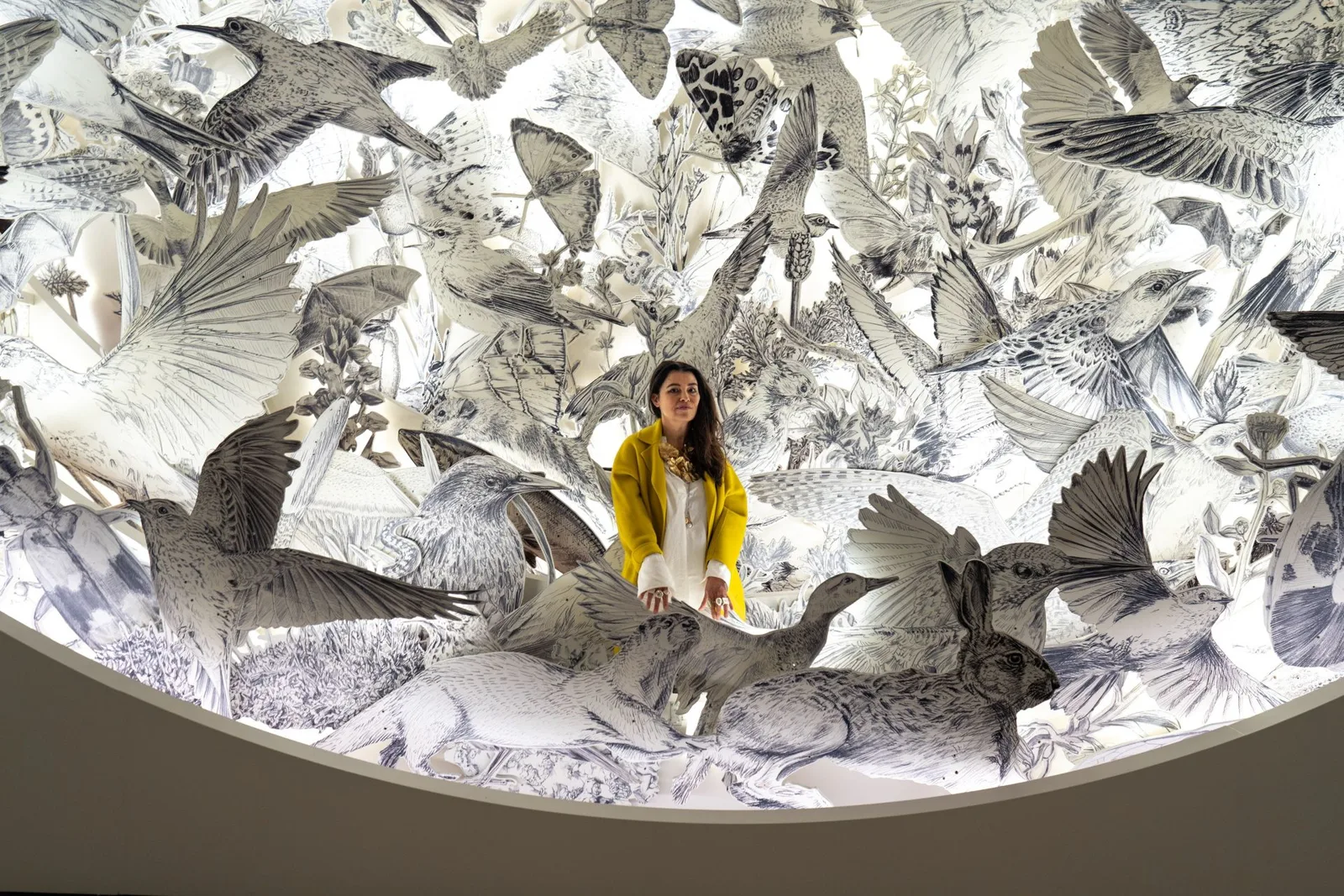
Es Devlin: Other Worlds Opens at London’s Design Museum with a 2,000-Book Kinetic Library
Es Devlin: Other Worlds, the multidisciplinary artist and designer's first European retrospective,...
 illustrarch Editoral Team1 Mins read
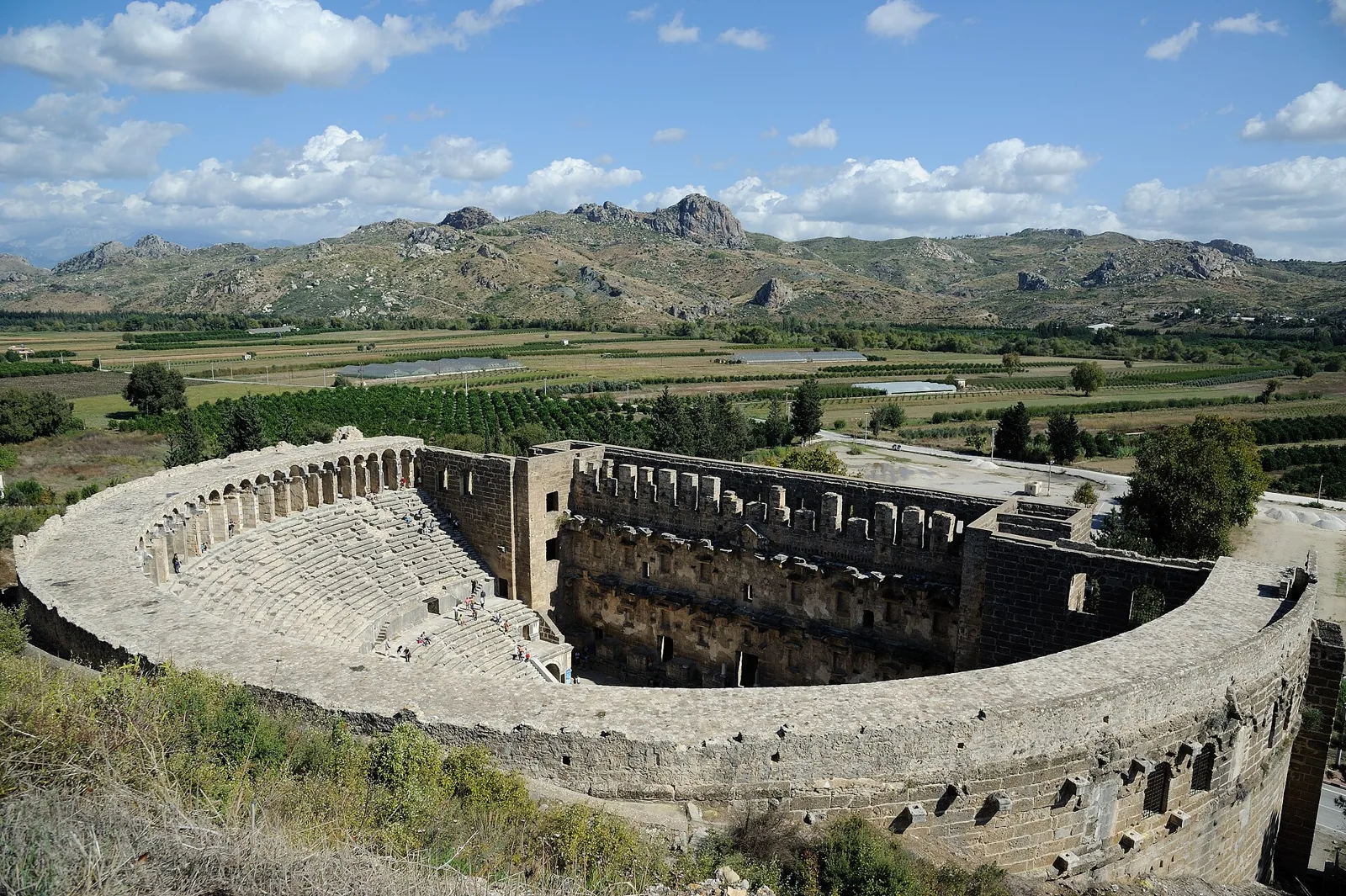
Aspendos Excavation Uncovers 6,000-Year-Old Settlement Traces Near Antalya
Digs beneath Aspendos shop floors turned up Chalcolithic pottery and tools, pushing...
illustrarch Editoral Team2 Mins read
Vitra Museum Stages First Major Geoffrey Bawa Retrospective in Decades
Vitra Design Museum opens the first major Geoffrey Bawa retrospective in 20...
illustrarch Editoral Team2 Mins read
Neom Stadium, the Elevated 2034 World Cup Venue, Reportedly Shelved by Saudi Arabia
Two sources told Reuters that Saudi Arabia has put the 46,000 seat...
illustrarch Editoral Team2 Mins read


Leave a comment