

Sci-Fi Architecture: 15 Futuristic Buildings That Are Real
Discover 11 real-world science fiction buildings that blur the line between imagination and reality. From futuristic skyscrapers to nebula-shaped museums, explore how sci-fi architecture is reshaping global skylines and beyond.
 Elif Ayse Sen14 November 202513 Mins read676
Table of Contents Show
Science fiction has long been a source of inspiration for architects and city planners, shaping what we now recognize as sci-fi architecture, a design philosophy where futuristic vision meets real-world engineering. Dazzling sci-fi skyscrapers, sprawling space colonies, and underwater utopias represent both our wildest dreams and our most vivid imaginings of the future. The relationship between science fiction and architecture runs deep: from the towering cityscapes of Fritz Lang’s Metropolis (1927) to the neon-lit megastructures of Blade Runner, fictional worlds have consistently pushed architects to reimagine what buildings can be.
Over the decades, several architectural marvels inspired by these visionary tales have sprung from the pages of sci-fi novels and the frames of films to become a part of our real-world skyline. Updated for 2025, here is a journey through some of the most iconic science fiction buildings that blur the line between imagination and reality, plus recently completed projects that prove the genre’s influence on architecture is stronger than ever.
What Is Sci-Fi Architecture?
Sci-fi architecture, sometimes called science fiction architecture, refers to a design approach that draws direct inspiration from futuristic, speculative, or otherworldly aesthetics found in science fiction media. These sci-fi buildings typically feature organic curves, adaptive facades, unconventional materials, and forms that seem to defy gravity or conventional construction logic. The term encompasses everything from completed real-world structures to ambitious proposals that push the limits of engineering.
What sets architecture science fiction apart from conventional futurism is its narrative quality: each building tells a story, evoking worlds imagined in novels by Isaac Asimov, films like Blade Runner 2049, or the visual language of concept artists working in Hollywood. This storytelling dimension is what makes science fiction and architecture such a powerful combination, design becomes not just functional, but a vision of the future made tangible.
Iconic Sci-Fi Inspired Buildings Around the World
The following science fiction architecture examples demonstrate how visionary design can transform urban landscapes into something that feels plucked from another era, or another galaxy entirely. Each sci-fi building on this list showcases the remarkable fusion of advanced construction techniques, bold aesthetics, and narrative-driven design.
The Lotus Building: Wujin, China
Rising from the shimmering surface of a man-made lake in China’s Jiangsu Province, the Lotus Building is one of the most visually striking examples of sci-fi architecture in Asia. Designed by the Australian firm Studio505, the structure consists of three interconnected petal-like volumes clad in steel and glass, each one unfolding outward like the bloom of a giant lotus flower. The building spans over 32,000 square meters and serves as a civic hub for the Wujin district, housing exhibition halls, conference rooms, and public gathering spaces. At night, an LED lighting system transforms the petals into a glowing, color-shifting spectacle that mirrors the bioluminescent flora one might encounter on an alien planet in a science fiction film. The Lotus Building is a powerful demonstration of how organic forms drawn from nature can produce science fiction architecture that feels simultaneously ancient and futuristic, a harmony between ecology and technology that sci-fi authors from Ursula K. Le Guin to Kim Stanley Robinson have long imagined.
Florida Polytechnic University: Lakeland, USA
The Innovation, Science, and Technology Building at Florida Polytechnic University is perhaps Santiago Calatrava’s most sci-fi creation on American soil. Completed in 2014, this 162,000-square-foot academic building immediately recalls the sleek hull of an interstellar vessel. Its most remarkable feature is the kinetic facade: 94 individual aluminum louvers mounted on the roof structure that rotate automatically in response to the angle of sunlight, tracking the sun throughout the day like the adaptive shell of a spacecraft adjusting to atmospheric conditions. This responsive skin reduces solar heat gain inside the building while flooding the interior with filtered natural light, a concept that echoes the intelligent, self-regulating habitats that science fiction writers have described for decades. The elongated, wing-like canopy stretching over the entrance creates a dramatic sense of arrival, as though one is boarding a vessel rather than entering a university. Calatrava’s design earned immediate comparisons to the kind of structures found in Star Trek starbases and the streamlined architecture of 2001: A Space Odyssey.

Gardens by the Bay: Singapore
Singapore’s Gardens by the Bay is an awe-inspiring synthesis of natural beauty and architectural genius that has become one of the most photographed science fiction buildings of the 21st century. The centerpiece of the complex is the Supertree Grove: a cluster of 18 tree-like vertical structures ranging from 25 to 50 meters in height, each one functioning as a living vertical garden covered in over 162,900 plants from more than 200 species. The Supertrees are far more than sculptural, they are environmental engines, collecting rainwater, generating solar energy through photovoltaic cells on their canopies, and serving as air exhaust vents for the adjacent conservatories. Walking along the 128-meter OCBC Skyway suspended between two Supertrees at 22 meters above ground feels like traversing a pathway on a terraformed planet from a Star Trek episode. The two massive conservatories, the Flower Dome and Cloud Forest, replicate varied global climates under glass, echoing the controlled biosphere environments of space colonies described in countless science fiction and architecture narratives. Designed by Grant Associates with Wilkinson Eyre Architects, the entire complex demonstrates how the future of architecture embraces both sustainability and spectacle on a monumental scale.
The Dynamic Tower: Dubai (Proposed)
Envisioned by Italian-Israeli architect David Fisher, the Dynamic Tower is one of the most ambitious proposed sci-fi skyscrapers ever conceived. Standing at a planned 420 meters with 80 floors, this rotating tower would allow each floor to rotate independently and continuously at 360 degrees, powered by 79 horizontal wind turbines placed between the levels. Residents would be able to choose their view at any moment, facing the Arabian Gulf at breakfast and the desert skyline by dinner, using voice commands from their apartments. The building would also be the world’s first prefabricated skyscraper, with each floor unit manufactured off-site in a factory and then assembled around a central concrete core. Fisher has described the Dynamic Tower as a building that is never the same shape twice, constantly morphing its silhouette against the Dubai sky. The concept feels like something lifted directly from a Philip K. Dick novel or the shifting cityscapes of Inception, and it exemplifies Dubai’s relentless push towards science fiction architecture that defies every conventional expectation of what a building should be.
Kingdom Centre: Riyadh, Saudi Arabia
Soaring 302 meters above the Saudi capital, the Kingdom Centre is one of the most iconic sci-fi buildings in the Middle East. Designed by Ellerbe Becket and Omrania & Associates, the tower is instantly recognizable for the massive inverted parabolic arch cut into its summit, a void that gives the building its famous “bottle opener” silhouette. The 99-floor structure contains a luxury hotel, office spaces, a shopping mall, and luxury apartments, but it is the sky bridge spanning the top of the arch at the 99th floor that truly defines the experience. Visitors standing on the enclosed bridge at 300 meters above street level are rewarded with 360-degree panoramic views of Riyadh’s vast desert landscape, creating a sensation not unlike standing on the observation deck of a Star Wars-era Coruscant tower. The Kingdom Centre won the Emporis Skyscraper Award in 2002, and its distinctive form has become a symbol of how Gulf states are building real-world science fiction architecture that rivals anything imagined in cinema.

The Metropol Parasol: Seville, Spain
Also known locally as “Las Setas” (The Mushrooms), the Metropol Parasol in Seville’s Plaza de la Encarnación is the largest wooden structure in the world, and one of the most alien-looking buildings in Europe. Designed by German architect Jürgen Mayer H. and completed in 2011, the structure rises as six enormous parasol-like forms connected by a waffle-grid lattice of laminated birch timber supported by concrete pillars. The entire complex measures approximately 150 meters long, 70 meters wide, and 26 meters tall, covering a Roman archaeological site beneath while providing shade, market space, and a rooftop walkway above. From certain angles, the Metropol Parasol resembles nothing so much as a colony of colossal alien mushrooms or a living organism that has grown over the historic city center. The undulating rooftop walkway offers sweeping views of the Seville cathedral and the Andalusian skyline, proving that science fiction building concepts can be realized with unexpected, sustainable materials rather than steel and glass alone.
The Oculus: New York City, USA
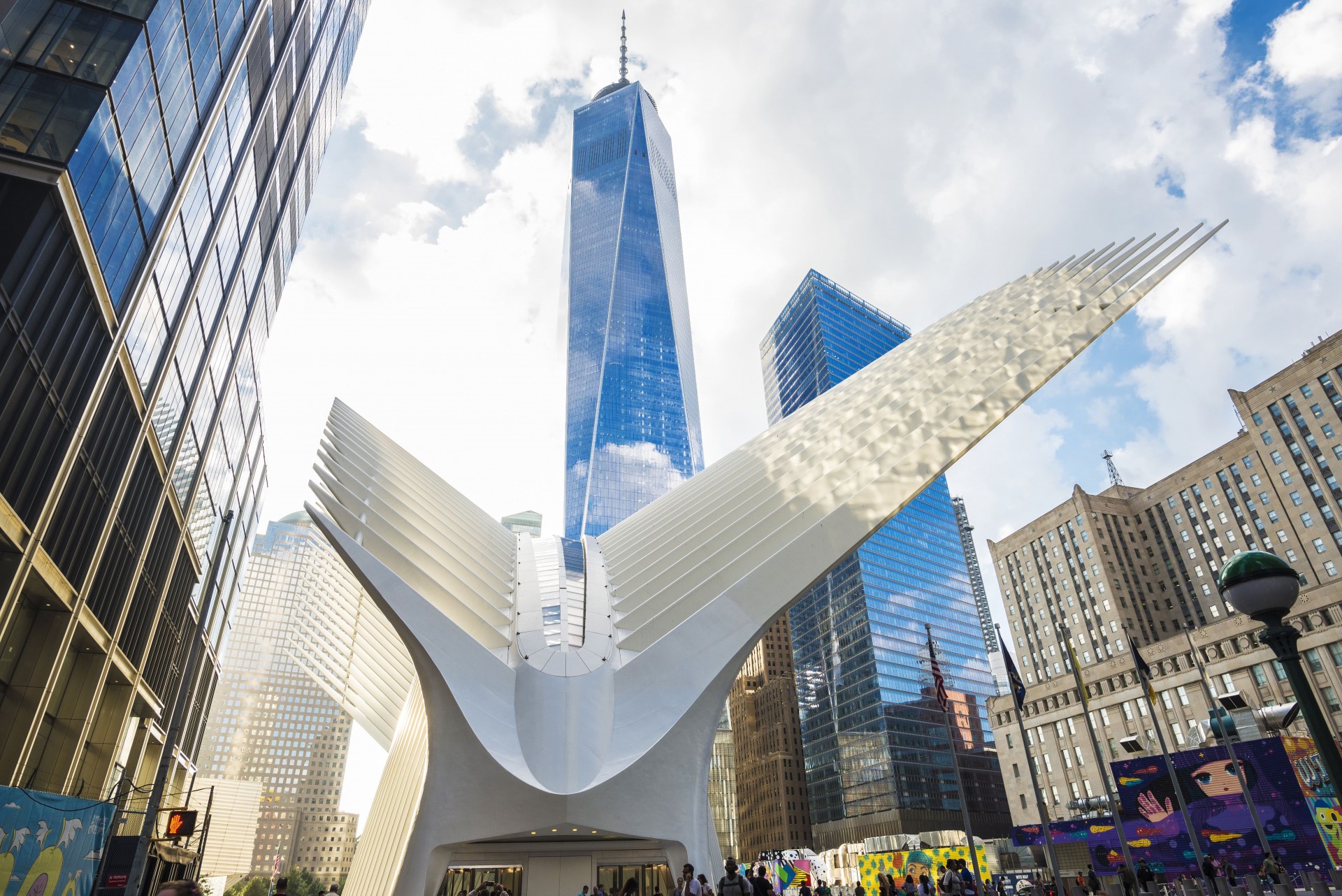
Designed by Santiago Calatrava and opened in 2016 at a cost of approximately $4 billion, the Oculus is the main hall of the World Trade Center Transportation Hub in Lower Manhattan. From the outside, the structure appears as a massive skeletal creature with two wing-like steel ribs spreading upward from a central spine: Calatrava has described the design as a bird being released from a child’s hands. The interior is equally dramatic: a soaring white ribbed hall bathed in natural light from a central skylight that stretches 335 feet along the building’s spine. Every year on September 11th, the skylight opens to allow direct sunlight to pour into the hall in alignment with the time of the attacks, creating a powerful memorial moment through architecture. The Oculus serves approximately 300,000 commuters daily, connecting PATH trains from New Jersey to 11 New York City subway lines, yet its cathedral-like interior and skeletal exterior make it feel more like a docking station from a distant galaxy than a transit hub. It is one of the most visceral examples of how sci-fi architecture can serve deeply human, civic purposes.
Heydar Aliyev Center: Baku, Azerbaijan
Completed in 2012 and designed by the late Zaha Hadid, the Heydar Aliyev Center in Baku is widely considered one of the purest expressions of sci-fi architecture ever built. The 57,500-square-meter cultural complex is defined by a single continuous surface that folds, rises, and curves without a single sharp angle, the roof, walls, and floor merge into one unbroken fluid form clad in white glass-fiber reinforced concrete (GFRC) panels. The building houses a conference center, a museum, and a gallery, but it is the exterior that leaves visitors speechless: from every vantage point, the structure appears to shift and ripple, as though it were a living organism or a structure grown rather than built. Hadid’s team used advanced parametric design software to develop the complex doubly-curved surfaces, and the construction required over 12,000 unique GFRC panels, no two alike. The Heydar Aliyev Center won the Design Museum’s Design of the Year award in 2014 and remains one of the most recognizable science fiction buildings on the planet, a structure that proves architecture can achieve the impossible fluidity that was once confined to CGI in films like Arrival.
New Sci-Fi Architecture Projects Completed in 2024-2025
The connection between architecture and science fiction continues to deepen, with several recently completed and upcoming projects pushing the boundaries of what buildings can look like. These new additions to the global skyline reinforce that sci-fi architecture is not just a nostalgic genre, it is the active frontier of contemporary design.
Chengdu Science Fiction Museum: China (2023)
Designed by Zaha Hadid Architects, the Chengdu Science Fiction Museum was built specifically to host the 81st World Science Fiction Convention (Worldcon), making it the first purpose-built venue for the event in its eight-decade history. The museum’s form is inspired by a nebula, with a vast undulating aluminum-clad roof that spans approximately 60,000 square meters without internal columns, creating a single continuous interior space that feels like the inside of a cosmic cloud. The structure sits beside Jingrong Lake, and its reflective metallic skin shifts color with the changing light, appearing silver at midday and deep violet at dusk. Inside, the museum hosts permanent exhibitions on the history and future of science fiction literature, film, and technology, with galleries dedicated to Chinese sci-fi authors like Liu Cixin, whose Three-Body Problem trilogy has reshaped global perceptions of the genre. The Chengdu Science Fiction Museum is now one of the most recognized science fiction buildings globally, a structure that is itself a tribute to the genre it celebrates.
Lucas Museum of Narrative Art: Los Angeles, USA (Opening 2026)
Founded by Star Wars creator George Lucas and designed by Beijing-based MAD Architects, the Lucas Museum of Narrative Art is perhaps the purest embodiment of how science fiction and architecture converge in 2025. Currently nearing completion in Exposition Park, Los Angeles, the 300,000-square-foot museum resembles a smooth, organic spacecraft hovering above a lush green landscape, its elevated form floating on pilotis creates an open public park beneath the building itself. The museum will house George Lucas’s personal collection of over 100,000 artworks, including paintings, illustrations, comic art, and extensive sci-fi concept art and props from the Star Wars and Indiana Jones franchises. MAD founder Ma Yansong has described the building as a structure that aims to dissolve the boundary between the built form and the natural landscape, much like the terrain-integrated cities imagined in science fiction. With its continuous curved surfaces, lack of visible structural edges, and elevated floating profile, the Lucas Museum may be the most literal translation of a sci-fi building concept into built reality that the world has ever seen.
Yidan Center: Shenzhen, China (Nearing Completion)
This striking project by Zaha Hadid Architects features a rippled, canyon-inspired form with a dramatic void carved through its center. The twin-tower complex rises from a shared podium, with the two volumes connected by sky bridges and wrapped in a parametric facade of undulating glass panels that create the impression of geological strata compressed and folded by tectonic forces. Observers have noted that the building looks like an alien megastructure transplanted into Shenzhen’s already futuristic skyline, further cementing the city as a global hub for sci-fi architecture. The Yidan Center will serve as a mixed-use complex housing offices, retail, and cultural spaces, demonstrating that even commercial real estate can embody the spirit of science fiction architecture when placed in the right hands.
Seoul Robot & AI Museum (RAIM): South Korea (2024)
Designed by Melike Altınışık Architects, the Seoul Robot & AI Museum is the world’s first institution dedicated entirely to robotics and artificial intelligence. Located in Seoul’s Changbai New Economic Center, this futuristic museum features a sculptural, spherical form clad in iridescent metallic panels that shift between silver and deep blue depending on the viewing angle. The design was conceived as a living demonstration of the technologies it houses, portions of the building’s facade and interior were fabricated using robotic construction techniques, making RAIM one of the first buildings in the world to be partially built by the very robots it exhibits. The museum’s flowing, aerodynamic silhouette and reflective skin make it appear as though a piece of advanced alien technology has landed in the middle of Seoul, embodying the spirit of science fiction architecture brought to life in the most literal way possible.
Recent Projects by BIG and Others (2024-2025)
Recent projects from firms like BIG (Bjarke Ingels Group) continue to deliver buildings that look plucked from science fiction. From parametric canopies and twisted residential towers to AI-optimized structural forms that no human designer could have conceived alone, these projects prove that architecture science fiction is increasingly mainstream. The growing accessibility of computational design tools means that what once required Hollywood-level budgets to render as visual effects can now be engineered, fabricated, and built, turning the sci-fi buildings of the imagination into the addresses of everyday life.
These structures, borne out of the human imagination, show that the boundary between fiction and reality is often just a well-placed brick or a beam away. As we progress further into the 21st century, it’s thrilling to ponder the next sci-fi dreams that will rise from our books and screens, to stand tall and proud in our cities. The future, it seems, is now.
How Science Fiction Shapes Architectural Design
Creating an architectural marvel, especially one inspired by the boundless universe of science fiction, requires a comprehensive design process. This process is an intricate dance between imagination, technology, and practicality. From early concept films like Metropolis to modern blockbusters like Dune and Blade Runner 2049, architecture science fiction has always been a two-way conversation, movies inspire buildings, and real buildings inspire movie sets.
The journey typically begins with a source of inspiration drawn from sci-fi media, films like Star Wars, Blade Runner, and 2001: A Space Odyssey have left lasting imprints on modern facade design and spatial thinking. Architects then develop a narrative around the design, giving it depth and cultural relevance. Just as every science fiction building in a film serves a story, real-world sci-fi buildings benefit from a compelling concept that connects form to meaning, the Oculus as a bird of peace, the Lotus Building as a blooming flower, or the Chengdu Museum as a nebula.
Material exploration is equally critical to the process. Since many sci-fi designs demand materials that offer both form and function, architects conduct thorough research into the latest construction technologies. Advances in parametric design, 3D-printed concrete, adaptive glass, and GFRC paneling have made previously impossible science fiction architecture concepts achievable in the real world. At the same time, any structure must exist harmoniously within its environment and cultural context, requiring research into local ecology, climate, and social practices, considerations that many future building designs increasingly prioritize.
Regulatory compliance remains essential even when the vision is as bold as a sci-fi skyscraper that rotates or a museum shaped like a cosmic cloud. And in 2025, tools like AI-driven generative design and robotic fabrication are enabling architects to realize science fiction architecture concepts that were technically impossible just a decade ago. From algorithmically optimized structural forms to digitally fabricated facades, technology is closing the gap between sci-fi dreams and built reality faster than ever.

Famous Architects Shaping Sci-Fi Architecture
Several visionary architects have become synonymous with the sci-fi architecture movement, and their work consistently blurs the boundary between built environment and speculative fiction.
Zaha Hadid Architects (ZHA) is perhaps the most influential firm in the science fiction architecture space. Their portfolio, from the Chengdu Science Fiction Museum to the Heydar Aliyev Center and the Yidan Center in Shenzhen, defines what sci-fi design looks like in practice. ZHA’s use of fluid geometry and parametric tools has set the benchmark for futuristic building design worldwide, and the firm continues to push boundaries even after the passing of its legendary founder.
Santiago Calatrava occupies a unique position in the world of architecture science fiction. With projects like the Oculus in New York and the Florida Polytechnic building, Calatrava’s skeletal, kinetic structures evoke spacecraft and organic creatures alike. His engineering-driven approach, where structure becomes ornament, produces buildings that feel alive, as though they could unfold their wings and take flight.
MAD Architects, led by Ma Yansong, is behind the Lucas Museum of Narrative Art and numerous organic-form towers across China. Their work channels sci-fi building aesthetics into livable, community-centered design, proving that futuristic architecture need not be cold or alienating, it can be warm, human, and deeply connected to nature.
Bjarke Ingels Group (BIG) is known for ambitious megastructure concepts, including their involvement in NEOM’s The Line, a proposed 170-kilometer-long linear city in Saudi Arabia that reads more like a science fiction building than anything in conventional urban planning. BIG consistently produces designs that challenge the scale, form, and function of what architecture can be.
Why Science Fiction and Architecture Continue to Converge
The enduring relationship between science fiction and architecture is rooted in a shared ambition: to envision worlds that don’t yet exist. Sci-fi literature, from H.G. Wells’ descriptions of future cities to Kim Stanley Robinson’s climate-adaptive urbanism, has consistently challenged architects to think beyond the constraints of current technology. In return, real-world architectural innovation provides the visual vocabulary that makes fictional worlds believable on screen.
As technologies like AI-driven generative design and sustainable smart materials become mainstream, the gap between the sci-fi buildings we imagine and the ones we construct continues to narrow. Projects like NEOM’s The Line in Saudi Arabia read more like science fiction than conventional urban planning. Meanwhile, the growing field of space architecture is designing buildings for other worlds.
The influence of science fiction on architecture also extends to how we think about sustainability. Many sci-fi buildings in literature feature self-sustaining energy systems, vertical farms, and adaptive climatic shells, ideas that are now becoming reality through green facade technologies and net-zero building standards. The Royal Institute of British Architects (RIBA) and other professional bodies have increasingly recognized that speculative design thinking, the kind rooted in science fiction, is essential for tackling climate challenges in the built environment.
Whether it’s a sci-fi skyscraper piercing the clouds of Dubai or a nebula-shaped museum in Chengdu, architecture science fiction reminds us that the most transformative designs often begin as the wildest dreams. The architects who dare to look to science fiction for inspiration are the ones shaping the skylines of tomorrow, and in many cases, the skylines of today.


2 Comments


Futuro House Production Revived in Finland After Decades-Long Hiatus
A Facebook listing for abandoned moulds led to the first new Futuro...
 illustrarch Editoral Team3 Mins read
Building Your Dream Home in NSW: What You Should Know About Montgomery Homes
Montgomery Homes has been building across Sydney, Newcastle, the Hunter, Wollongong and...
illustrarch Editoral Team4 Mins read
Designing a Home Theater: Where Drapery Fits Into the Plan
In a media room the curtains are a performance layer, not decoration....
illustrarch Editoral Team3 Mins read
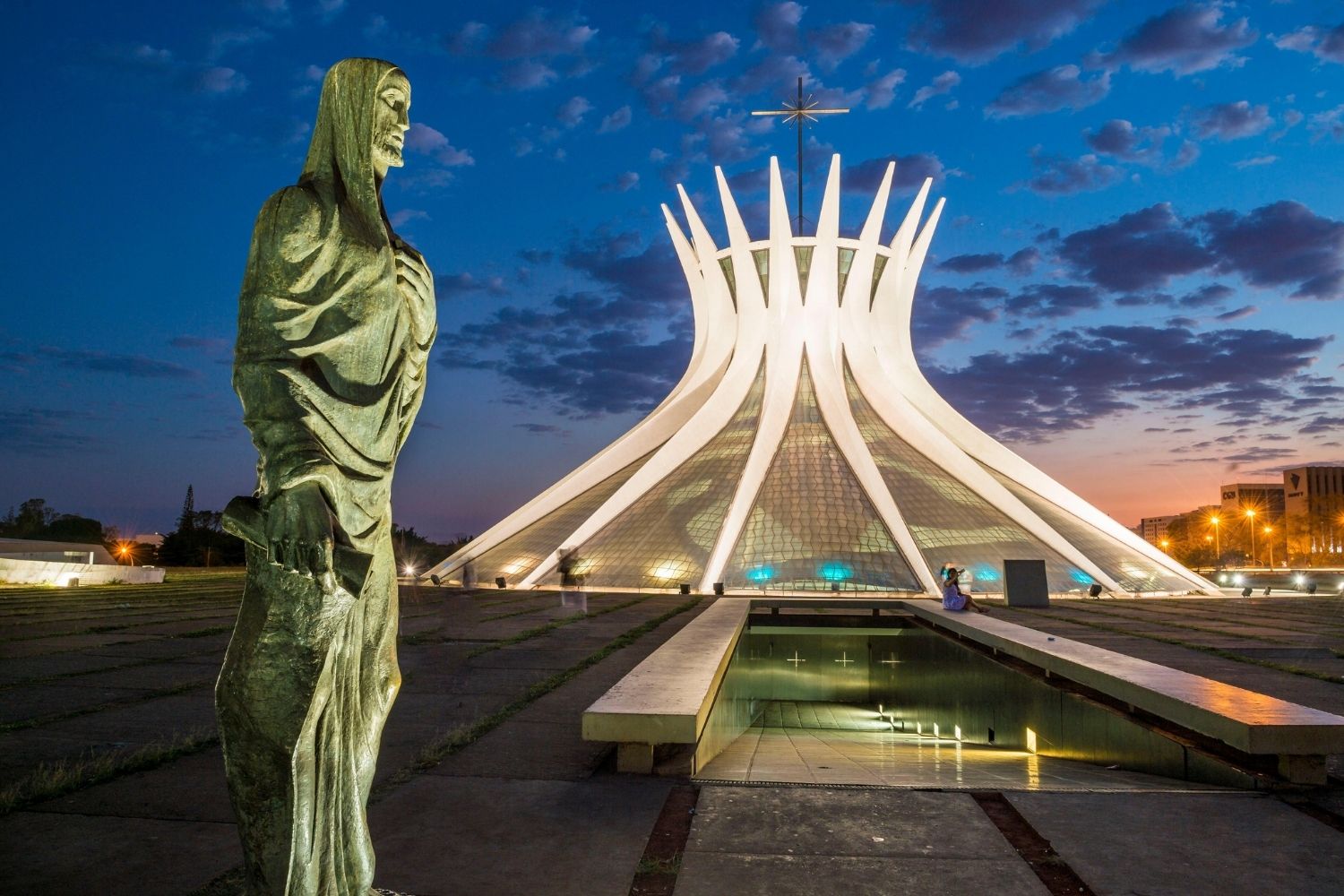
Oscar Niemeyer’s Cathedral of Brasília: The Hyperboloid Concrete Hymn
The Cathedral of Brasília reads as a single gesture, yet it stood...
 Furkan Sen7 Mins read


This article talks about interesting buildings inspired by sci-fi. Some of the designs are cool and unique. I like how they mix nature with modern architecture.
So, architects are now taking notes from sci-fi movies? What a groundbreaking revelation. I mean, who would have thought that futuristic buildings could be inspired by fictional worlds? The Innovation Building looks like a spaceship, but sure, let’s just call it ‘advanced design’ and pretend it’s not just a glorified art project. And Gardens by the Bay? Wow, such originality. Nothing says creativity like vertical gardens that look straight out of Avatar.