

Seoul Robot & AI Museum by Melike Altınışık Architects
A pioneering cultural institution, the Seoul Robot & AI Museum by MAA merges futuristic architecture with cutting-edge technology, setting a new global standard for museums dedicated to robotics and artificial intelligence.
 Begum Gumusel31 December 20253 Mins read246
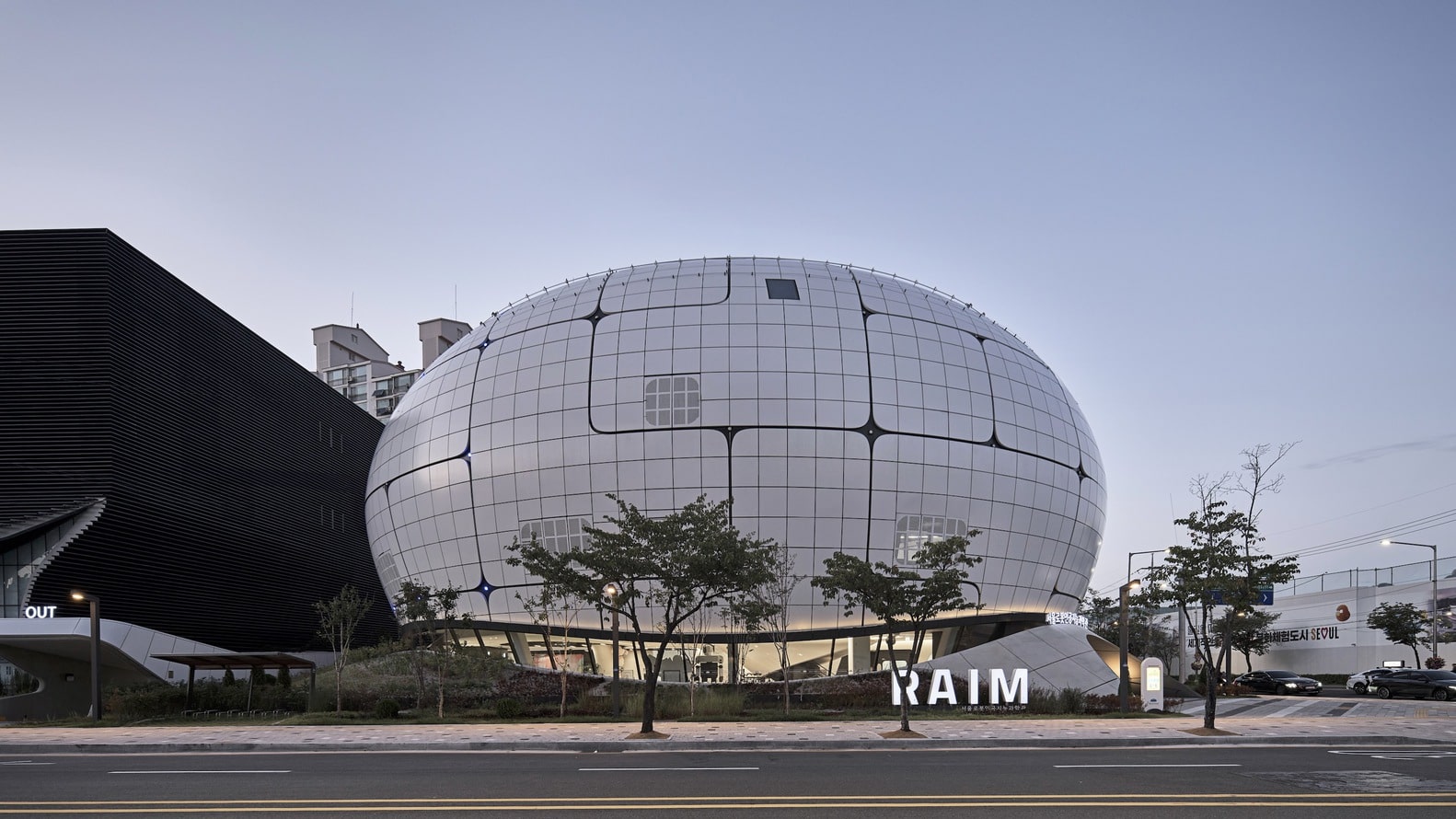
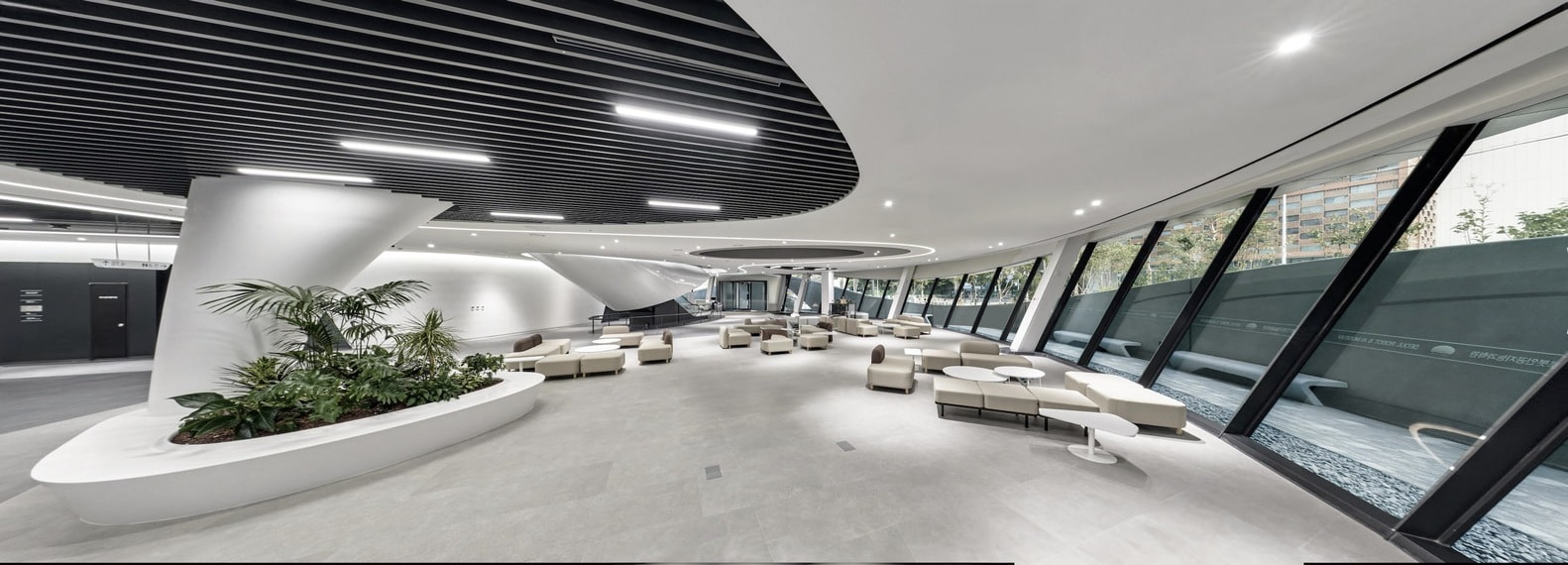
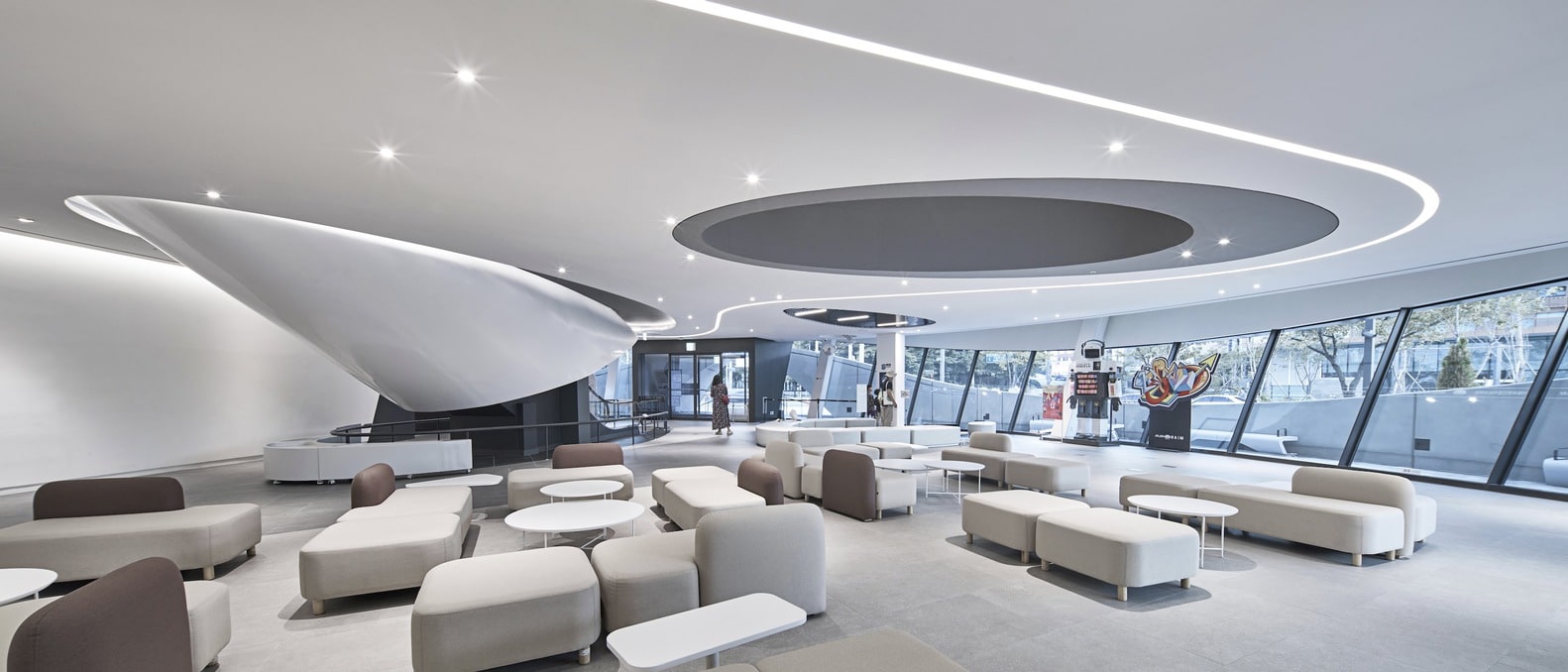
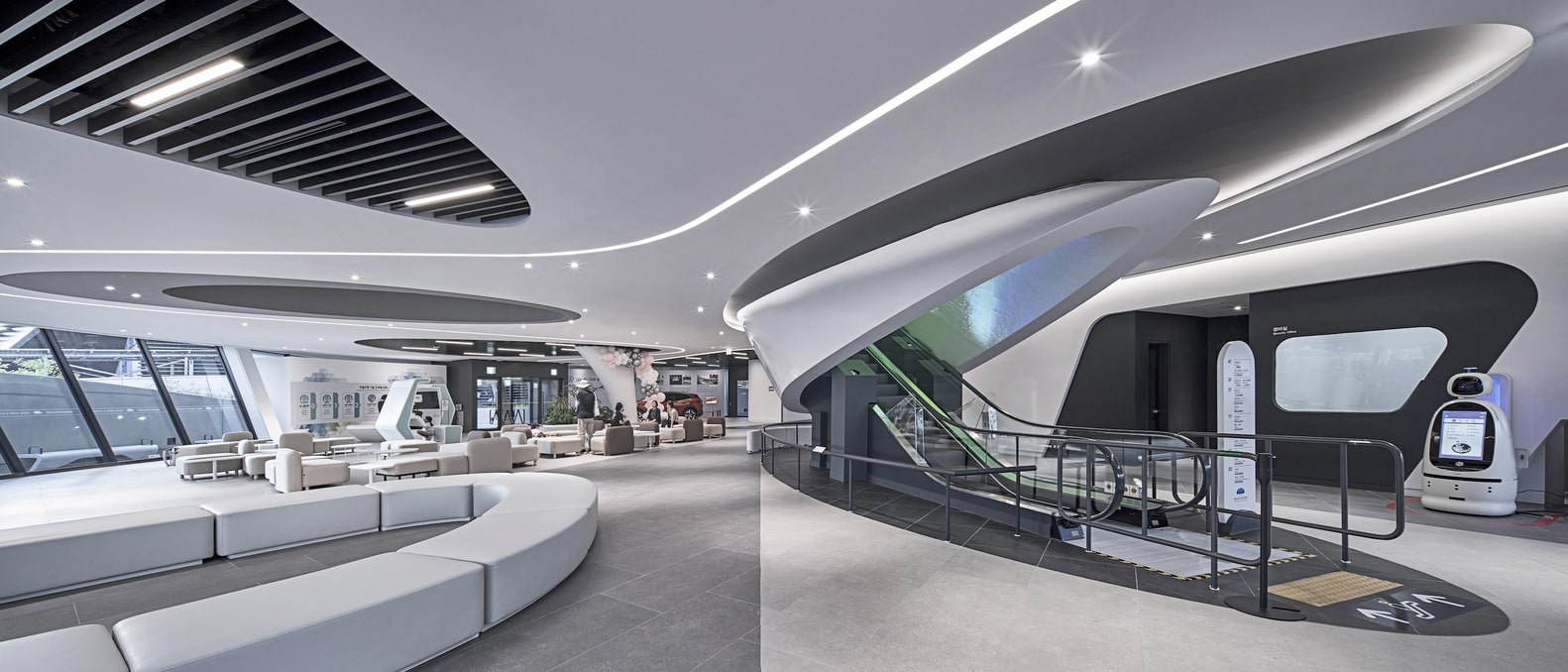
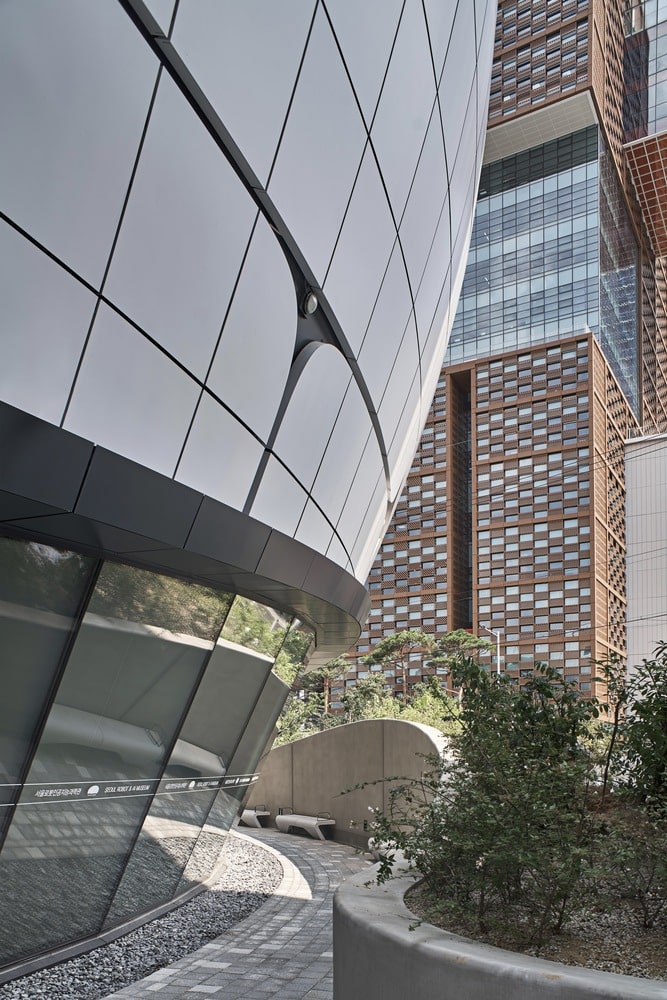
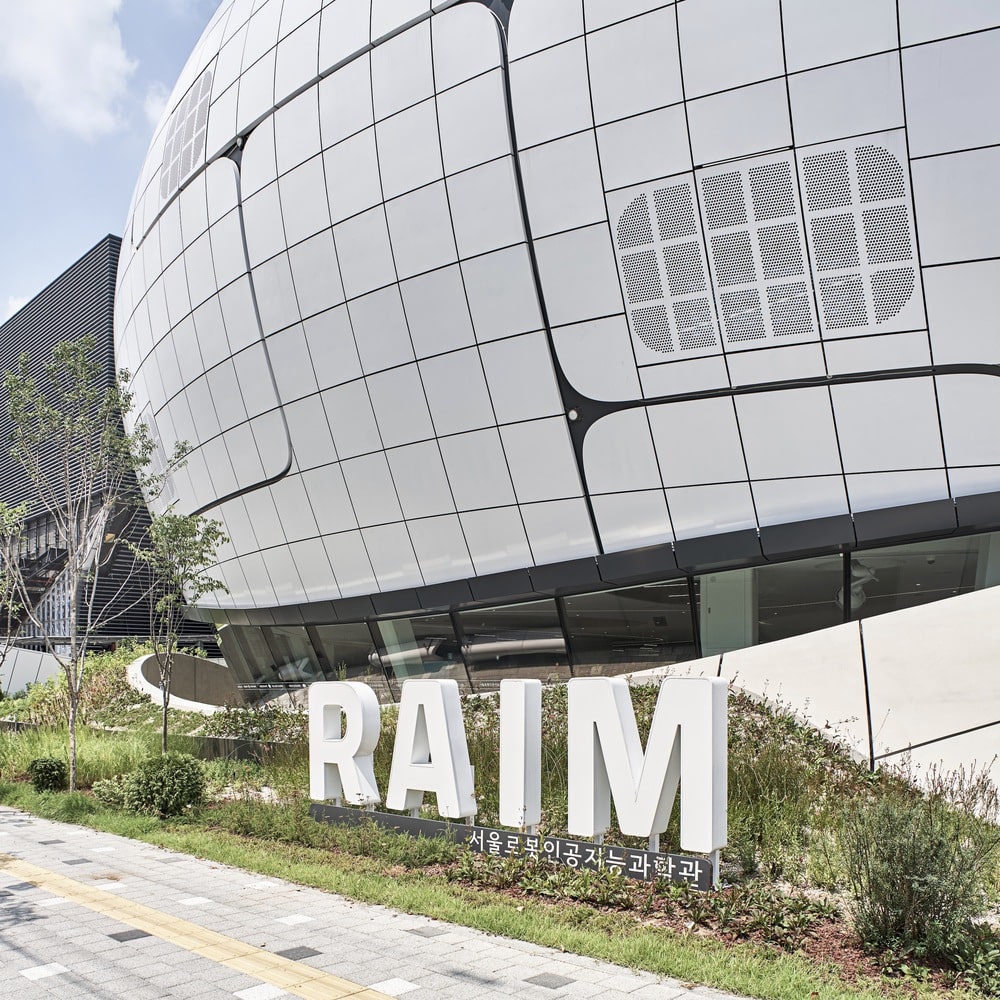
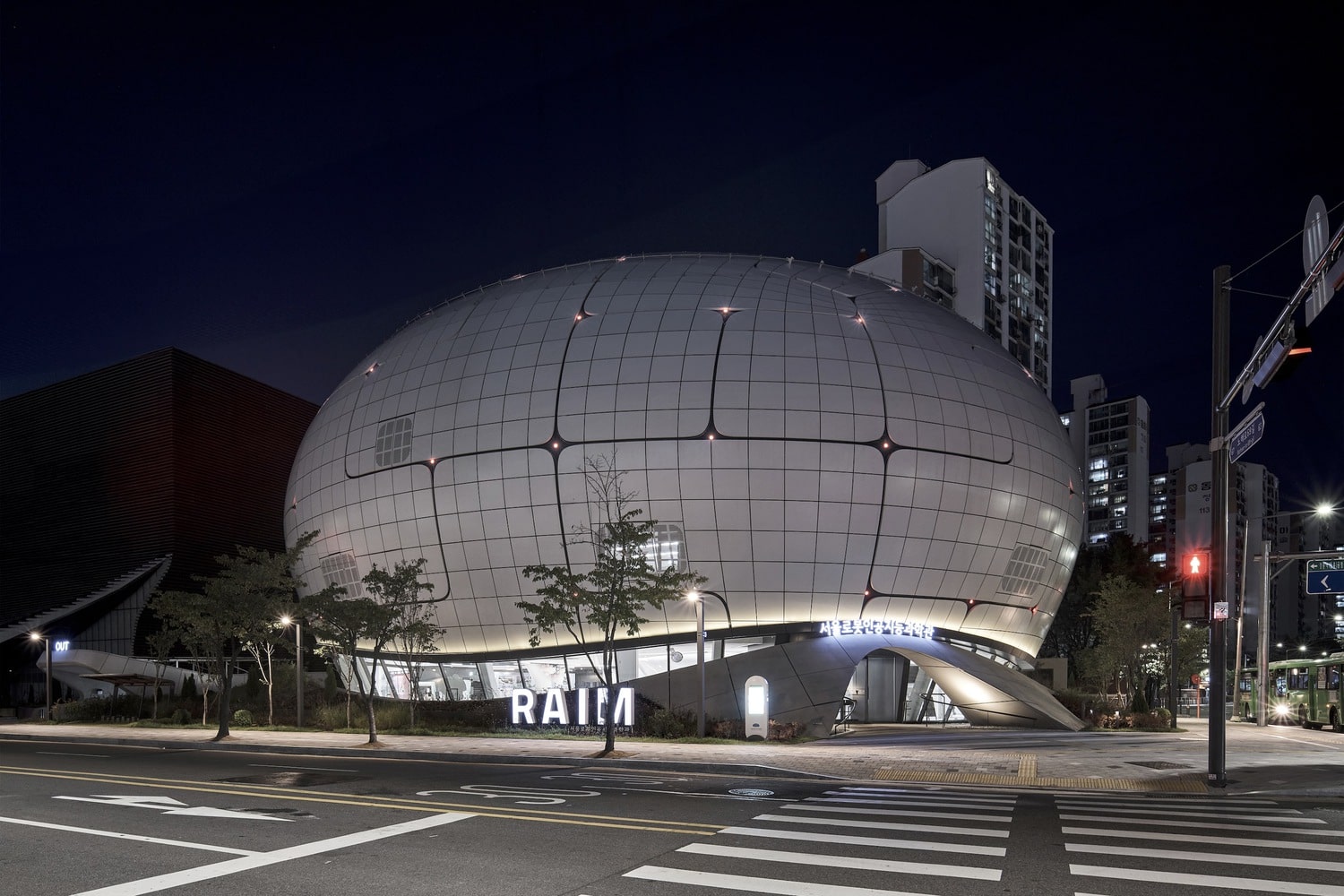
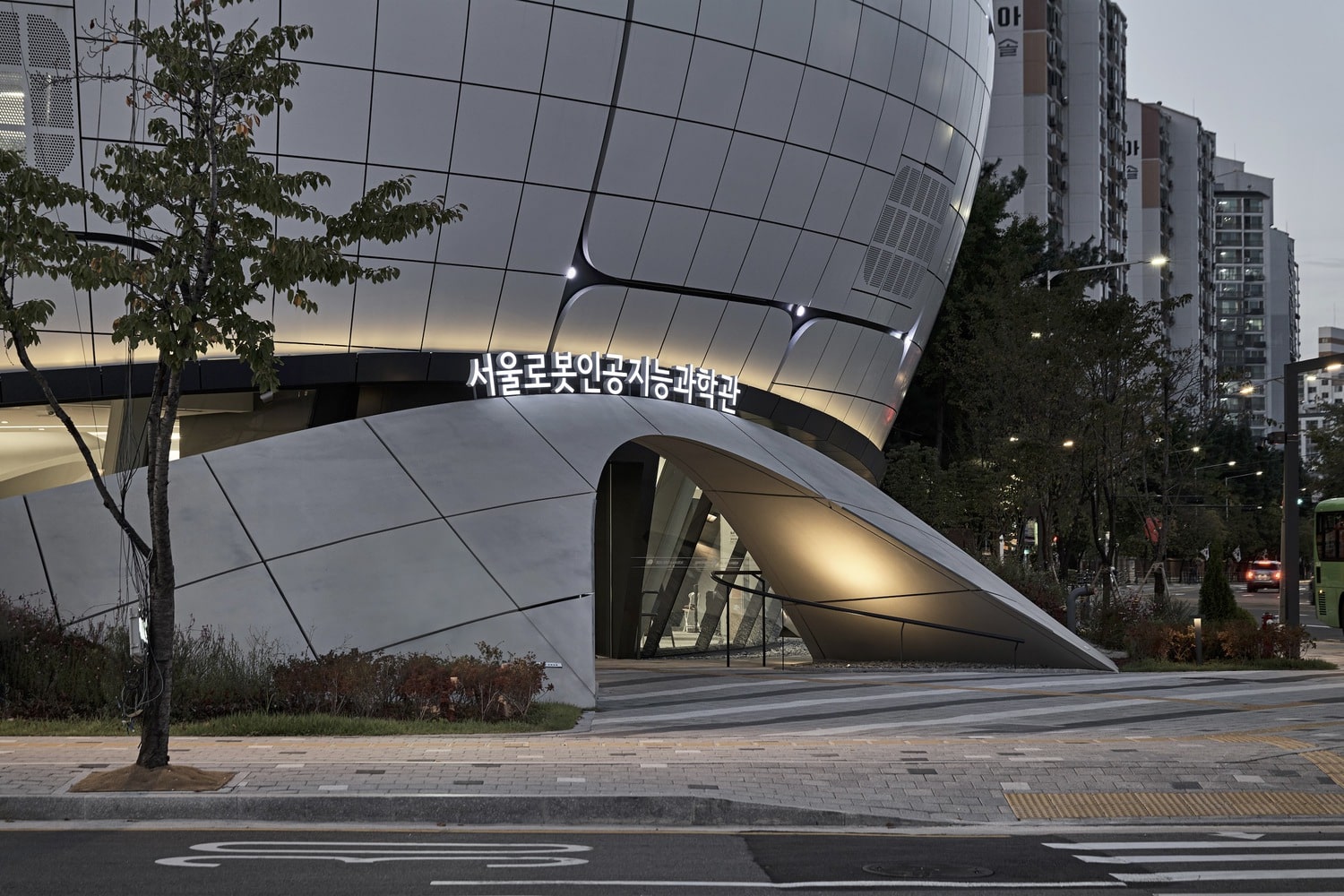
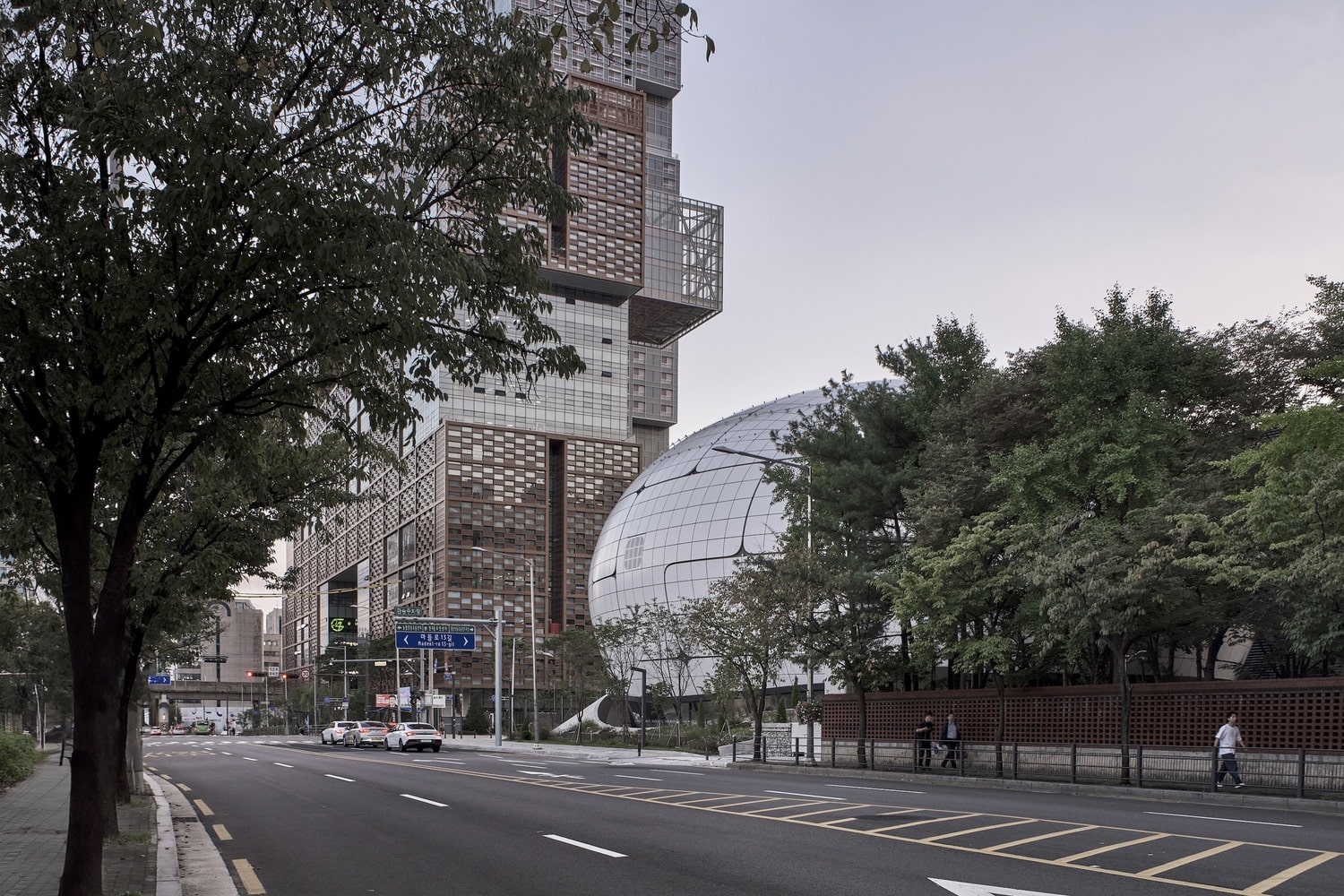
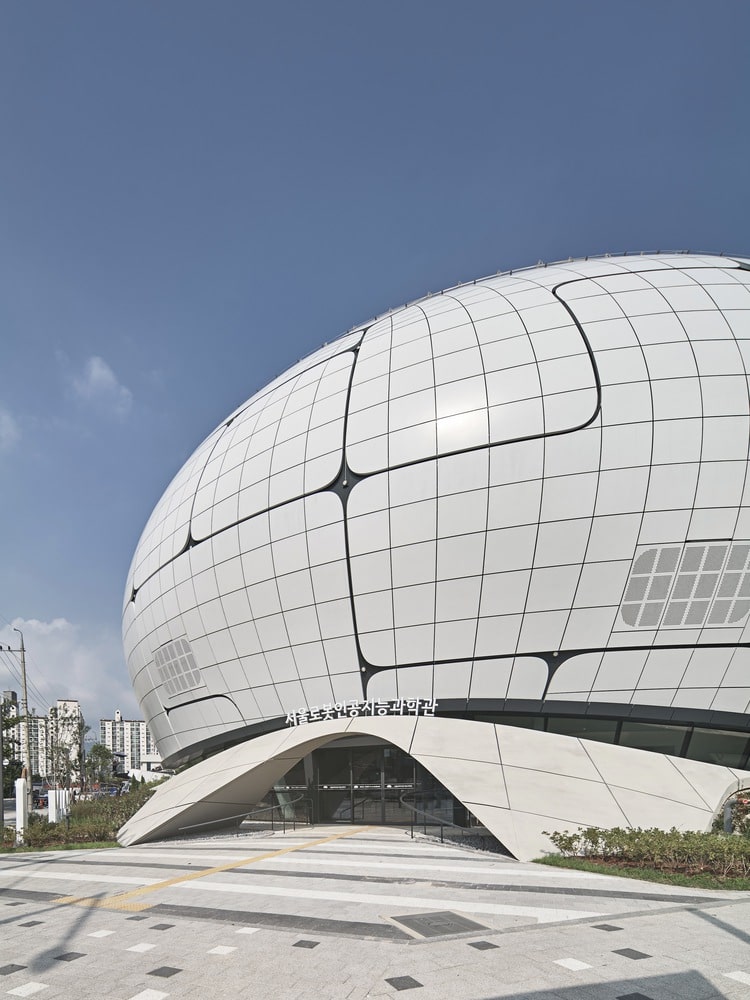
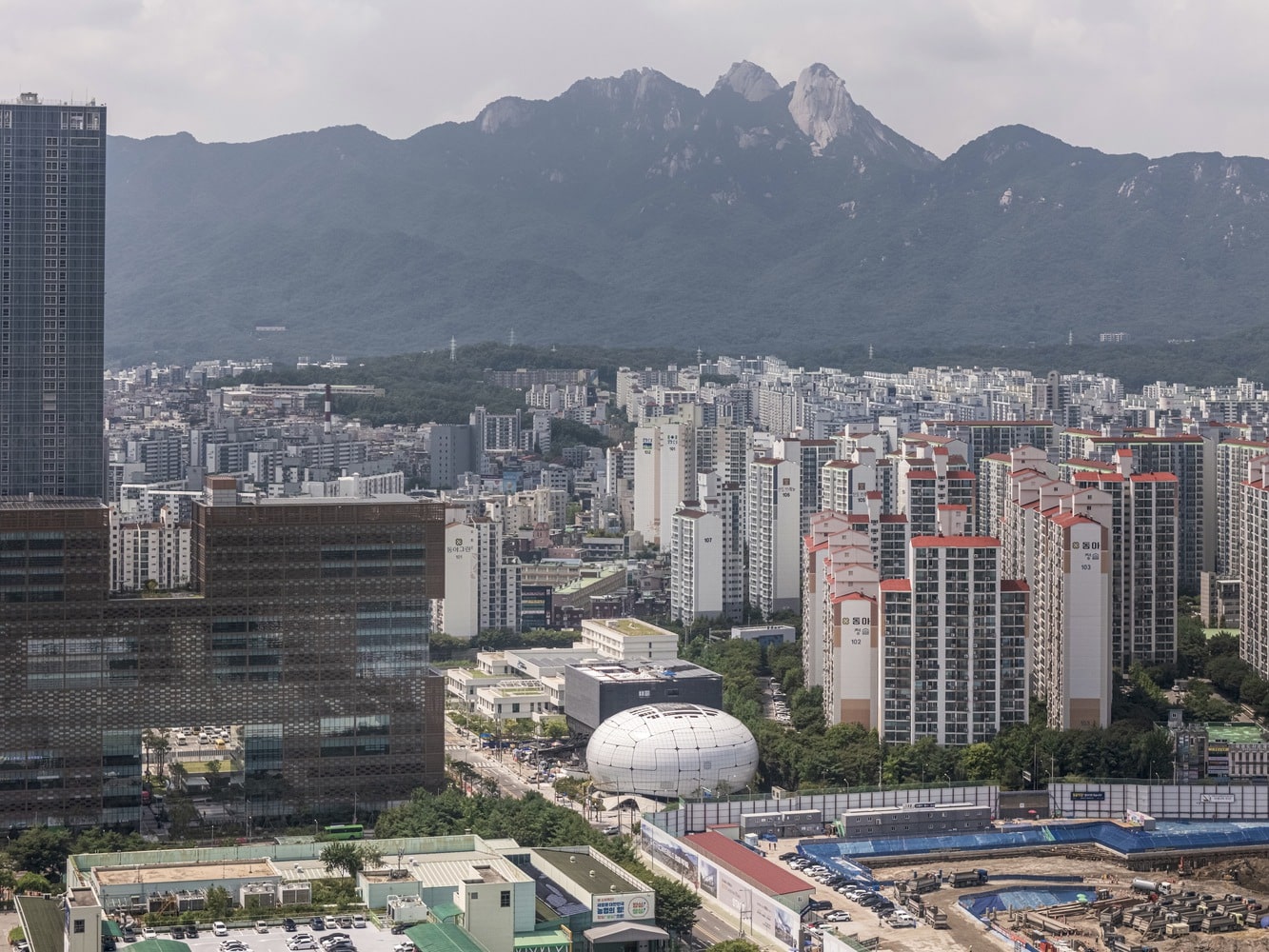
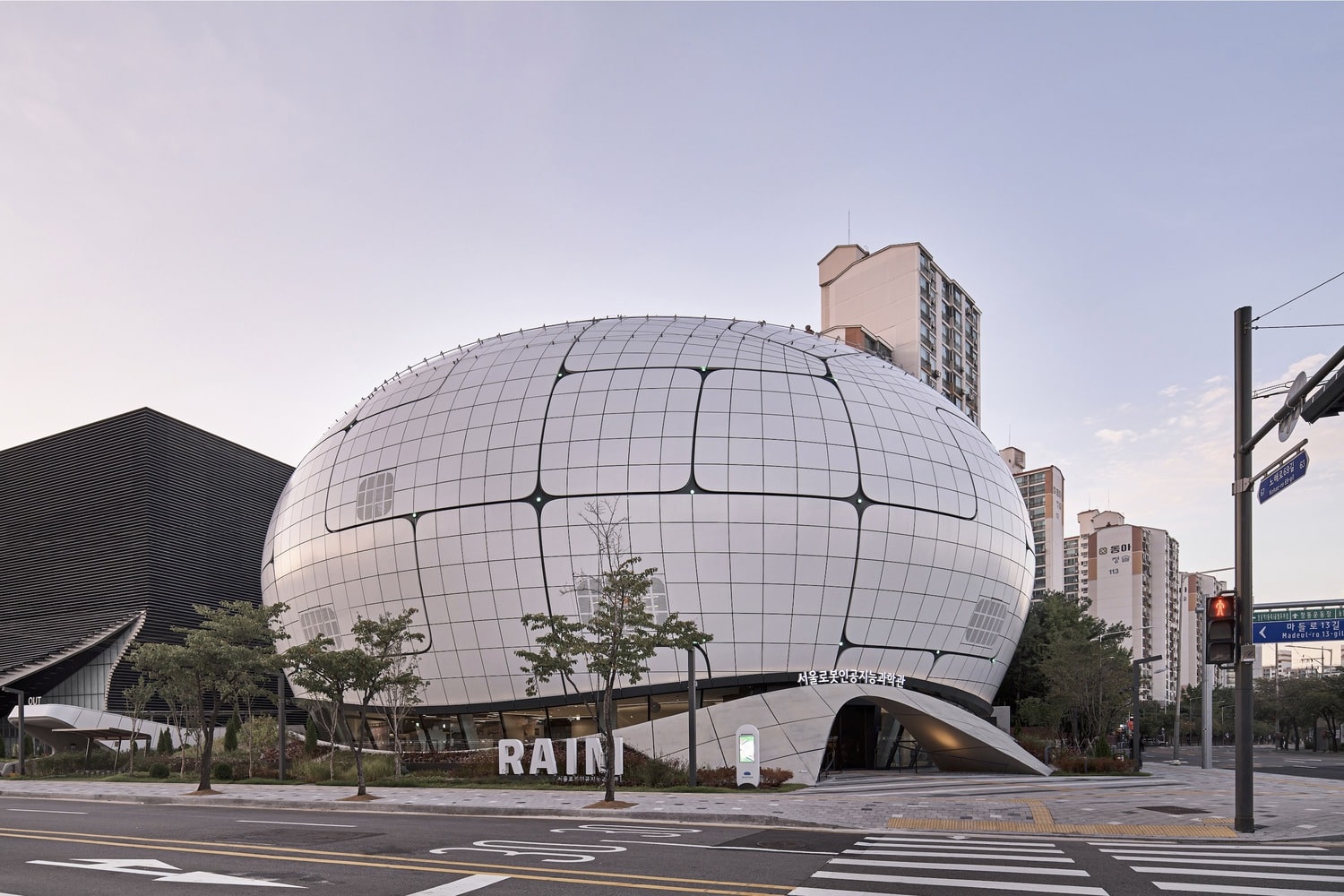
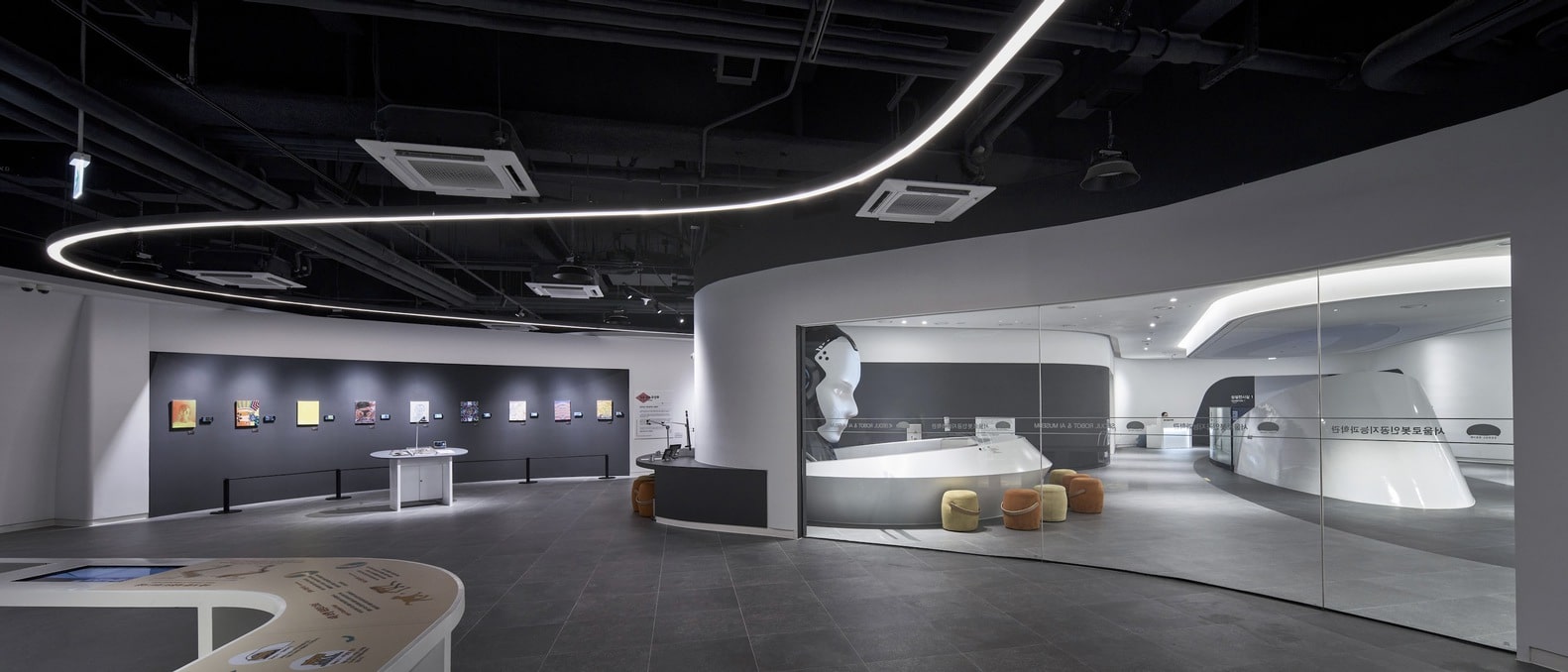
Table of Contents Show
Opening its doors to the public in Seoul, the Seoul Robot & AI Museum (RAIM) marks a historic milestone: the world’s first museum dedicated entirely to robotics and artificial intelligence. Designed by Melike Altınışık Architects (MAA), winner of the international competition, the project was realized between 2019 and 2024 in collaboration with Withworks. RAIM stands as a visionary cultural institution, positioned at the forefront of the 4th Industrial Revolution and setting new standards for smart architecture, fabrication, and construction.

A Spherical Architecture Inspired by Technology
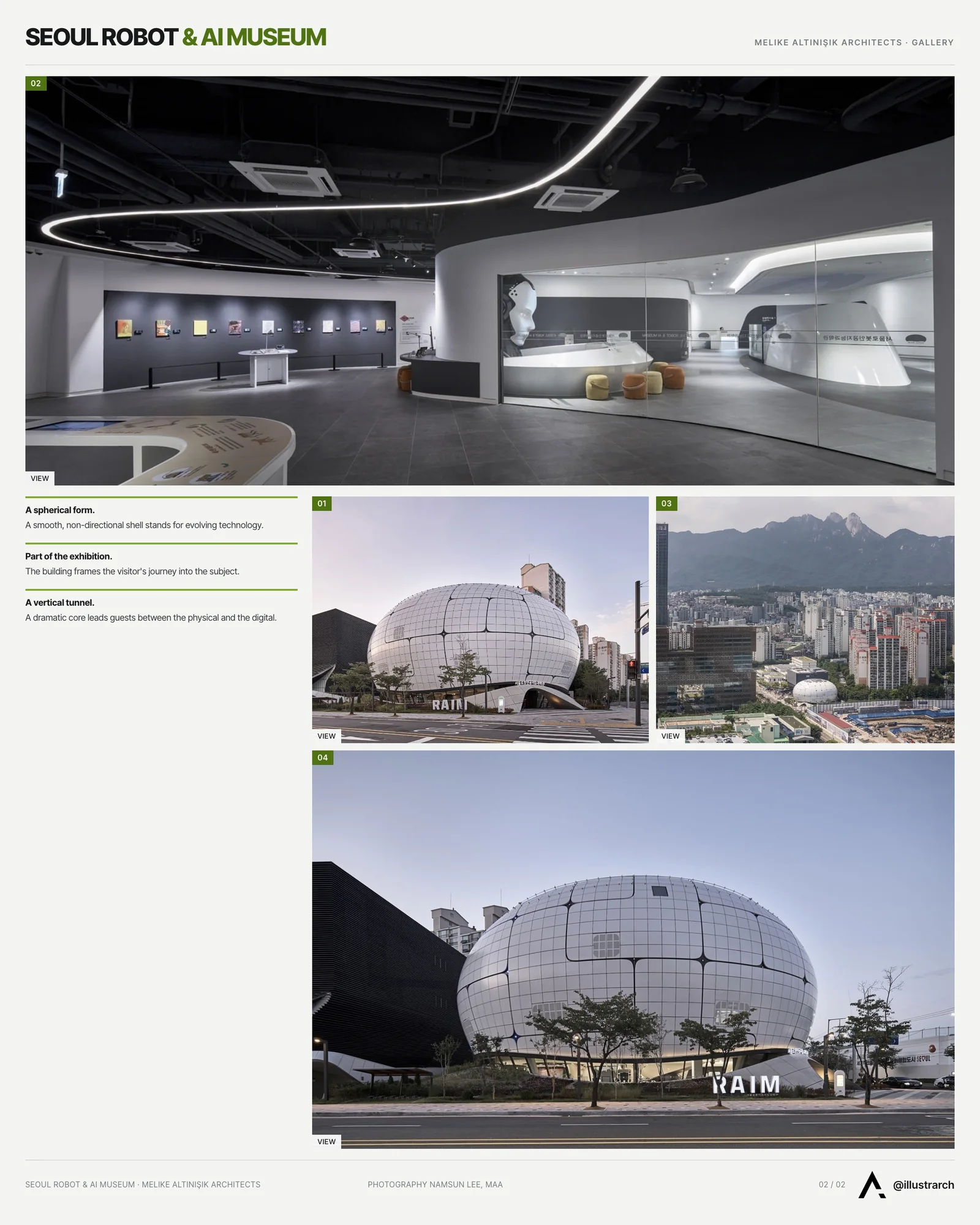
MAA’s architectural manifesto for the museum establishes a design language shaped by fluidity, innovation, and technological intelligence. The building’s spherical, non-directional form embodies the continuous evolution of AI and robotics. Its surface appears smooth and organic, signaling a break from traditional notions of museum architecture.
More than an exterior shell, the architecture becomes part of the exhibition itself. RAIM’s sculptural form frames the visitor’s journey into an immersive world where the boundaries between technology, science, and design dissolve. The building behaves as a narrative device, symbolizing the speed, flexibility, and dynamism that define modern technological advancements.
A Hub for Seoul’s Innovation Ecosystem
Strategically located in the northeastern district of Seoul, RAIM enhances the region’s growing technology cluster. Designed as a collaborative platform, the museum aims to bring together:
- Universities and research institutes
- Tech startups and corporate innovators
- The general public and community groups
Through exhibitions, workshops, hands-on experiences, and educational programs, RAIM positions itself as a catalyst for science communication and community engagement. Its integration into the broader cultural network, alongside the Seoul Museum of Photography and the Startup & Cultural Industrial Complex, supports the ongoing revitalization of Chang-dong Sanggye, both economically and culturally.
Architecture as a Living Exhibition
Lead architect Melike Altınışık describes RAIM as a “living organism,” where the architecture and the technologies it features work together seamlessly. Smart systems guide the building from design to operation, creating an environment that responds to both visitors and the exhibited machines.
Spatial Journey
- Entrance level: Visitors are greeted by robots before entering a fluid ground-floor space with a café, ticketing, and gathering areas.
- Vertical exhibition tunnel: A dramatic core element that transports guests into a world suspended between physical and digital realms.
- Upper levels: Flexible galleries host permanent and rotating exhibitions.
- Second floor: Dedication to education, administration, and research support functions.
- Basement levels: Parking and technical facilities ensure operational efficiency.
This spatial choreography reinforces the museum’s purpose: to encourage discovery, exploration, and interaction with emerging technologies.
Advanced Construction Techniques for a New Era
RAIM’s fabrication is as groundbreaking as its concept. The project introduces construction methodologies that align with Industry 4.0 innovations.
Key Innovations
- Building Information Modeling (BIM): Ensures absolute precision for the museum’s complex geometry.
- Off-Site Construction (OSC): Allows for high-quality components to be fabricated in controlled environments.
- Laser CNC and robotic welding: Achieve the seamless, curved façade surfaces.
- Reverse engineering workflows: Translate digital forms into physical, buildable systems.
The vertical exhibition tunnel, one of the museum’s most technically demanding components, was built using methods typically seen in aerospace and marine industries, underscoring the museum’s experimental spirit.
A Future-Facing Architectural Landmark
More than a cultural venue, the Seoul Robot & AI Museum represents a paradigm shift in the way architecture interacts with emerging technologies. Through its futuristic form, smart construction, and educational mission, it exemplifies how built environments can evolve alongside technological innovation.
RAIM signals a new era of architecture where buildings are dynamic, interactive, and deeply integrated with the subjects they house. As Korea continues to lead in robotics and AI, the museum stands as an icon, both a reflection of present advancements and a catalyst for future breakthroughs.
Photography: Namsun Lee, MAA



Allentown Art Museum Leaves Its Venturi, Scott Brown Addition for a New Studios Architecture Building
The Allentown Art Museum is moving to a new Studios Architecture building...
 illustrarch Editoral Team2 Mins read

Wisdome Stockholm by Elding Oscarson
Elding Oscarson extends the Swedish Museum of Technology in Stockholm with Wisdome,...
illustrarch Editoral Team2 Mins read
Zumthor’s Three New Buildings Open at Fondation Beyeler in Riehen
Peter Zumthor's Wyss Museum, Ammann Pavilion and Erlen Torhaus open at Fondation...
illustrarch Editoral Team4 Mins read
Frida Escobedo Studio to Design MALBA Underground Wing in Buenos Aires
MALBA has tapped Frida Escobedo Studio to build a subterranean expansion beneath...
illustrarch Editoral Team2 Mins read


Leave a comment