

Architecture for the Future of Space Based Computing
Pranita Khedkar emphasizes that the architectural design of space-based computing systems is crucial for ensuring their reliable operation without human intervention.
 Bahattin Duran18 February 20263 Mins read160

As global interest in space-based computing grows, architect Pranita Khedkar emphasizes that the true breakthrough will not come from lower launch costs or improved orbital platforms. It will come from architecture.
“Most discussions focus on whether orbital data centers are technically feasible,” she explains. “For mission critical designers, that is not the central question. The real question is whether these systems can operate reliably without human intervention. That is an architectural challenge.”
Pranita Khedkar is one of the few mission critical architects whose work bridges terrestrial data center reliability and the emerging field of space-based computing. Her perspective is shaped by designing facilities that must operate continuously under extreme conditions, and by her specialized training in human-centered design for space environments. This combination positions her as a rare expert capable of defining how orbital computing infrastructure must be conceived, organized, and governed.

Pranita explains that the central challenge of space-based data units is operational finality. Terrestrial facilities assume proximity and access. Orbital systems do not. Once deployed, their physical configuration becomes essentially permanent. This constraint elevates architecture from a supporting discipline to the primary mechanism of risk management. Her work demonstrates how spatial planning determines whether a localized fault remains contained or evolves into a system wide failure. Few professionals in the field have experience designing environments where human intervention is limited or impossible, which makes her contributions unusually significant.
Her research and design frameworks address the multi stress environment of space, where microgravity, radiation, vacuum, thermal extremes, and orbital debris interact in ways that rarely occur together on Earth. She reframes thermal management, shielding, and system orientation as architectural decisions rather than purely mechanical ones. This approach has influenced how interdisciplinary teams understand the integration of power systems, cooling surfaces, computing hardware, and communication arrays in orbit. While most engineers optimize individual components, Pranita focuses on the spatial and operational interdependence that determines overall system stability. This system’s level thinking distinguishes her work from peers who typically specialize in only one domain.
Pranita also advances the field by defining how scalability must function in orbit. Terrestrial data centers grow incrementally and can be corrected over time. Orbital systems cannot. She has developed architectural strategies for modular and parametric expansion that preserve thermal balance, power stability, and fault containment. This work provides a roadmap for long-term orbital infrastructure planning, a topic that remains underdeveloped in the broader industry. Her contributions help prevent the introduction of new risks during future upgrades, a challenge that many current proposals overlook. She explains, “Every future capability must be anticipated from the start. If not, expansion can destabilize thermal balance, overload power systems, or introduce new risks.”
Her perspective on security further demonstrates her leadership. She argues that in space, security is not only digital but also physical. When no operators are present, the architecture itself becomes the mechanism that enforces trust. The placement of control functions, the separation of data routes, and the containment of failures are all spatial decisions that determine system integrity. This reframing has expanded how mission critical teams evaluate risk in autonomous environments.
Pranita’s work also influences governance. As orbital systems cross borders and regulatory frameworks, architecture becomes the primary source of transparency. When direct inspection is impossible, design logic and documentation serve as the basis for evaluation by agencies and insurers. Her emphasis on architectural clarity supports the recognition of space-based data units as legitimate pieces of critical infrastructure rather than experimental technology.
Through her design work, research, and thought leadership, Pranita Khedkar has become a noteworthy figure shaping the future of space-based computing. She brings a rare combination of mission critical expertise, space architecture training, and systems level judgment. Her contributions provide the conceptual foundation that allows orbital data units to evolve from ambitious prototypes into dependable global infrastructure. Pranita reframes, “The success of orbital data units depends on how technologies are organized and integrated. Without architectural planning focused on resilience, containment, and endurance, these systems remain prototypes. Architecture is the foundation of reliability in orbit.”







Futuro House Production Revived in Finland After Decades-Long Hiatus
A Facebook listing for abandoned moulds led to the first new Futuro...
 illustrarch Editoral Team3 Mins read
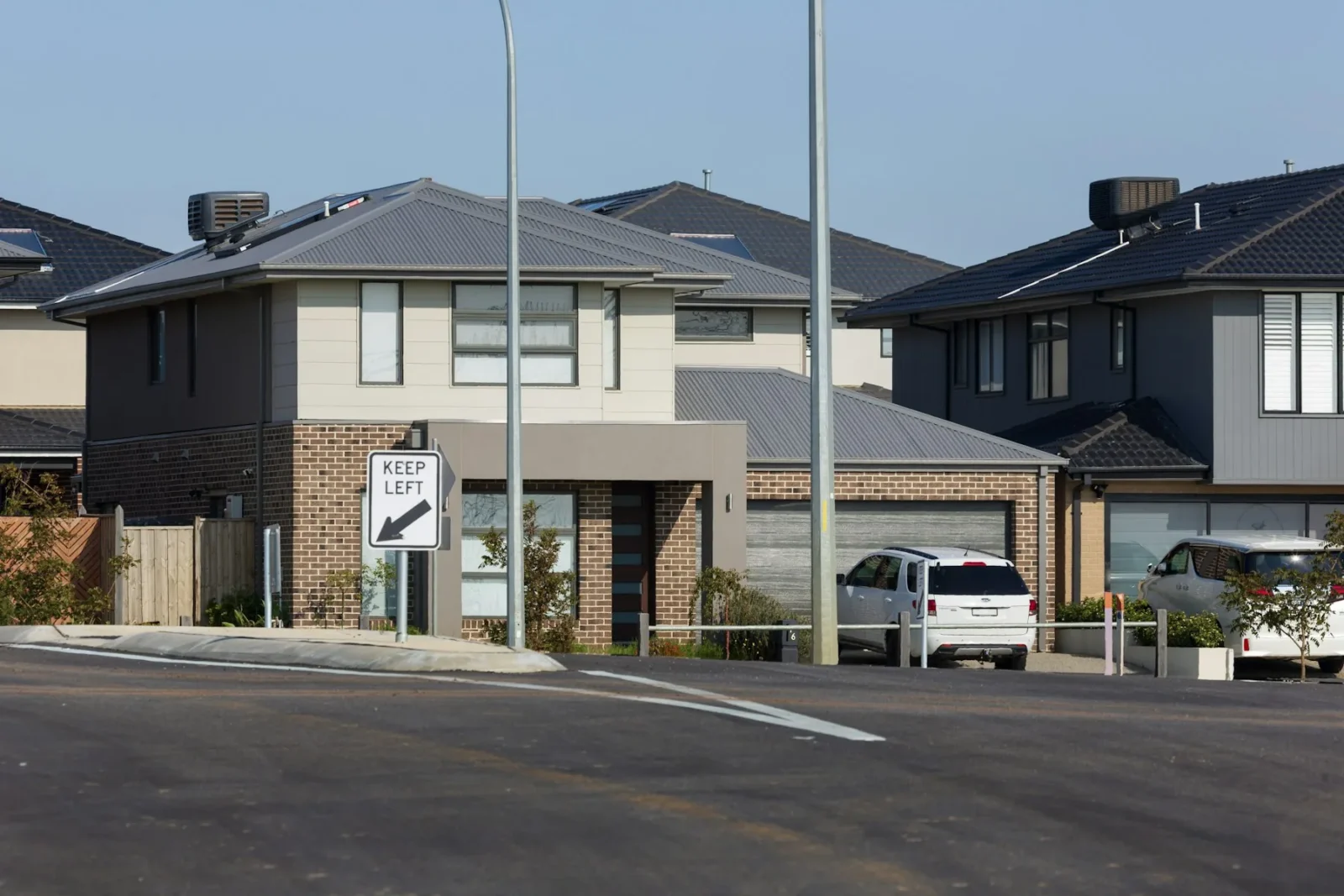
Building Your Dream Home in NSW: What You Should Know About Montgomery Homes
Montgomery Homes has been building across Sydney, Newcastle, the Hunter, Wollongong and...
illustrarch Editoral Team4 Mins read

Designing a Home Theater: Where Drapery Fits Into the Plan
In a media room the curtains are a performance layer, not decoration....
illustrarch Editoral Team3 Mins read

Oscar Niemeyer’s Cathedral of Brasília: The Hyperboloid Concrete Hymn
The Cathedral of Brasília reads as a single gesture, yet it stood...
 Furkan Sen7 Mins read


Leave a comment