

S.O.S East 02
S.O.S East 02 is a school design by Lucas Bastos that integrates educational facilities with public spaces to enhance community engagement in Jardim Santo Antonio, São Paulo.
 illustrarch Editoral Team20 December 20192 Mins read392


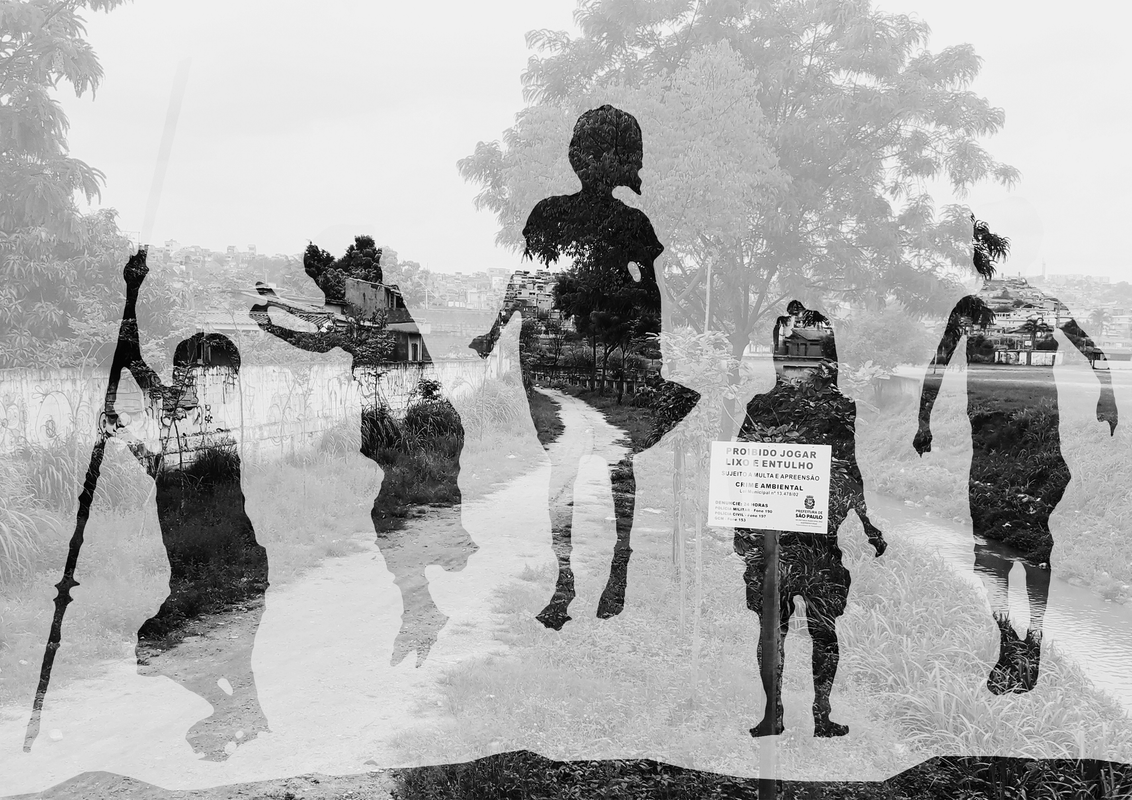


S.O.S East 02 is an elementary school proposal by Lucas Bastos that treats education as an instrument of urban repair, serving the Jardim Santo Antonio neighborhood on the border of Sao Miguel Paulista and Itaim Paulista in the East Zone 2 of Sao Paulo, Brazil. The project responds to the needs for public spaces and facilities in some of the most deprived subprefectures of the city, and proposes a building that shares part of its life with the people around it.

The proposal receives the use of an elementary school and aims to share part of its activities, such as sports, leisure and culture, with the local community. Rather than sealing the classroom off from the street, Bastos opens the school toward its neighbors, so the same courts, halls and gathering areas that serve students during the day can serve families and residents outside school hours. This double use is a familiar strategy in the design of public schools, where limited civic budgets reward buildings that can hold more than one role.
A school that doubles as public space
The proposal also unites the requalification of space through the implementation of a linear park, since the stream present on the site is today a barrier that damages the landscape of the urban environment. By turning the watercourse from an edge into a shared green spine, the design follows a logic common to the linear park, which uses a continuous strip of landscape to stitch divided neighborhoods back together and to give residents safe, walkable open ground. The park becomes the connective tissue that ties the school to the blocks it sits among.

Designing for this kind of overlap asks the architect to think about thresholds, sightlines and access more than about a single front door. A building that welcomes the public must manage where children stay protected and where the gates can swing open, and it must make the leisure and sports spaces legible from the street so they read as an invitation rather than an institution. The connection between formal learning and everyday community life is at the heart of the scheme, an idea that places it within the long tradition of school design used as a civic anchor.
Education, when connected to public and community spaces, has the power to change the vitality of its surroundings, establishing a relationship between the equipment and the community. In Bastos’s reading of the East Zone 2, that relationship is the real project, and the school is simply the most generous way to begin it.



Savan House by Nobico Studio
Savan House is Nobico Studio's unbuilt concept for a forested hillside in...
illustrarch Editoral Team3 Mins read

Renaatus Irumathi
Renaatus Irumathi Residence features 69 spacious apartments designed with contemporary aesthetics, maximizing...
illustrarch Editoral Team2 Mins read

White Khamovniki
White Khamovniki is a residential tower project in Moscow that combines urban...
illustrarch Editoral Team1 Mins read

Millennium Horizon
Millennium Horizon is an innovative architectural project in the UAE that uses...
illustrarch Editoral Team2 Mins read


Leave a comment