

Utopia
Utopia is a speculative architecture project by Peter Wheatcroft that envisions a dystopian industrial city within a single mega structure designed for living and working.
 illustrarch Editoral Team5 December 20211 Mins read409

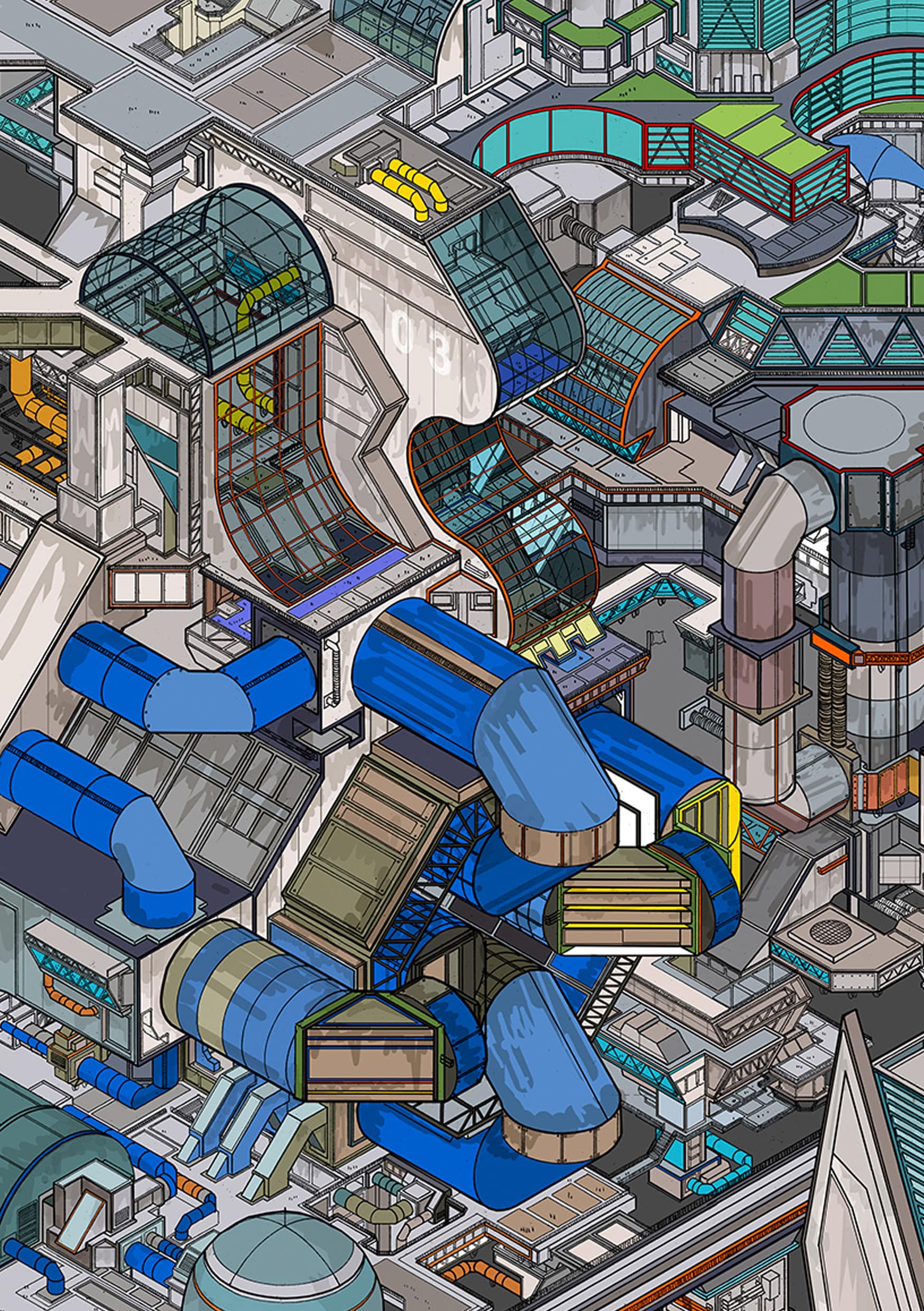
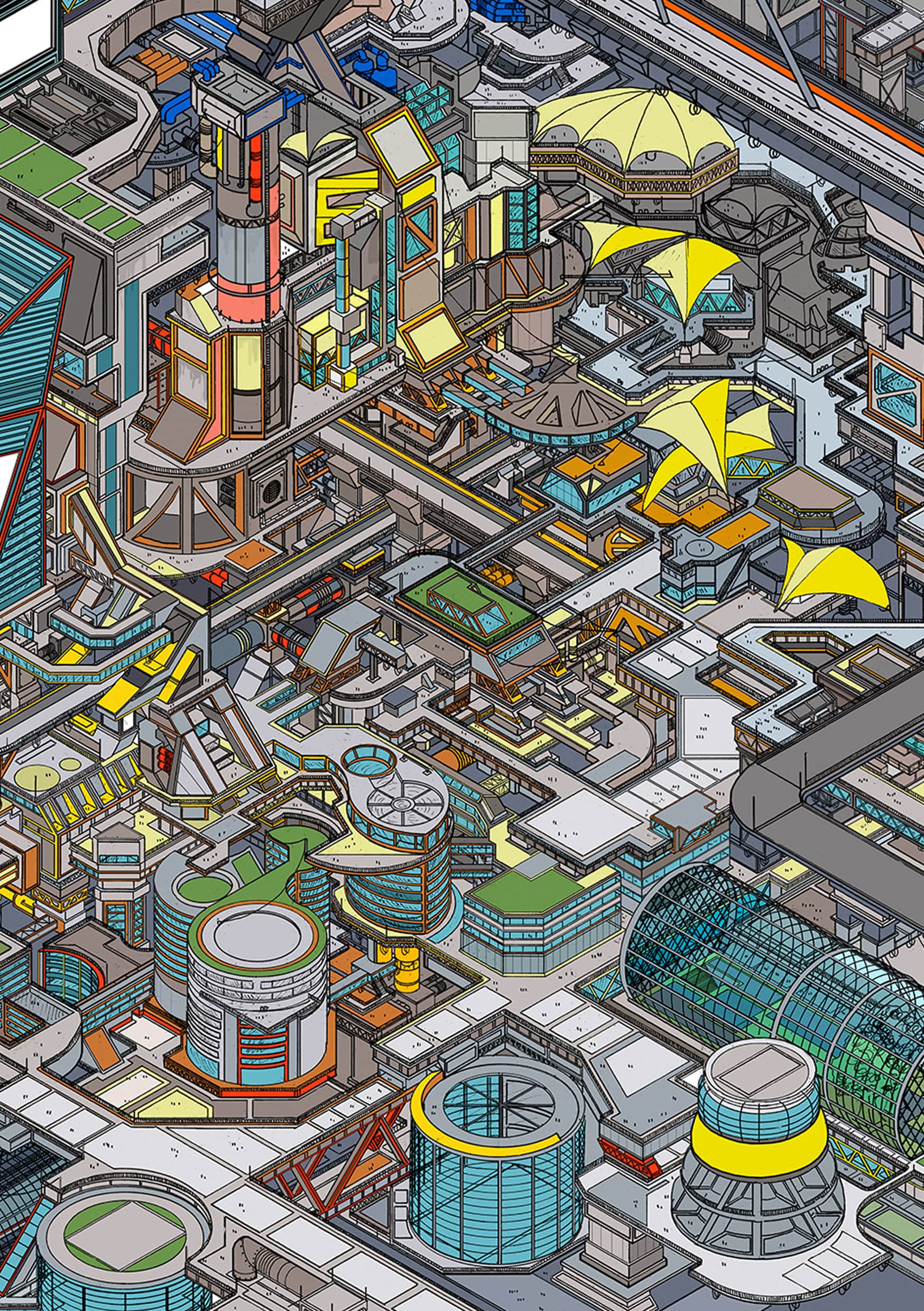
Utopia is a speculative architecture project that imagines an entire industrial city housed within a single dystopian mega structure of metal and concrete, where people both live and work. Designed by Peter Wheatcroft in 2020, the proposal treats the city as one continuous machine, with its power cables and utility infrastructure left fully exposed so that the various sub systems and components keeping the city alive can be maintained with ease.
At the heart of the complex sits the central business district, where the companies and corporations that run the place are headquartered. This core is stitched into the rest of the city by elevated walkways and a high-speed train terminal located at the base of the buildings, giving the dense vertical settlement the kind of layered circulation that defines much speculative urban thinking. Speculative design like this lets architects test extreme ideas about density, infrastructure, and social order without the constraints of an immediate site or budget.
Infrastructure as Architecture
To sustain efficiency and constant technological advancement, the Research and Development hub sits to the west of the business district. Its close ties to the commercial areas allow new systems to move quickly from invention into the working frame of the city, including the nuclear power generation facilities placed in the south west of the complex. Locating heavy energy production at the edge while keeping research central reflects a logic familiar to anyone who studies how real cities zone their most hazardous and most valuable functions.
The residential districts on the eastern side are imagined as dense and complex neighbourhoods, where police drones patrol the alleyways and streets to maintain public safety and security. This surveilled, tightly packed housing carries the unmistakable atmosphere of dystopian fiction, where order is purchased at the cost of openness. The housing finally connects to a university district that archives and catalogues knowledge for public distribution, closing the loop between living, working, and learning.
As a work of paper architecture, Utopia uses an invented city to ask hard questions about who controls infrastructure and how much freedom a perfectly efficient settlement can really hold. The project sits within a long tradition of the arcology, the idea of a self-contained structure that compresses an entire population into one building. Wheatcroft leaves the answer deliberately unresolved, inviting the viewer to decide whether this exposed, drone-patrolled world is a promise or a warning.


Savan House by Nobico Studio
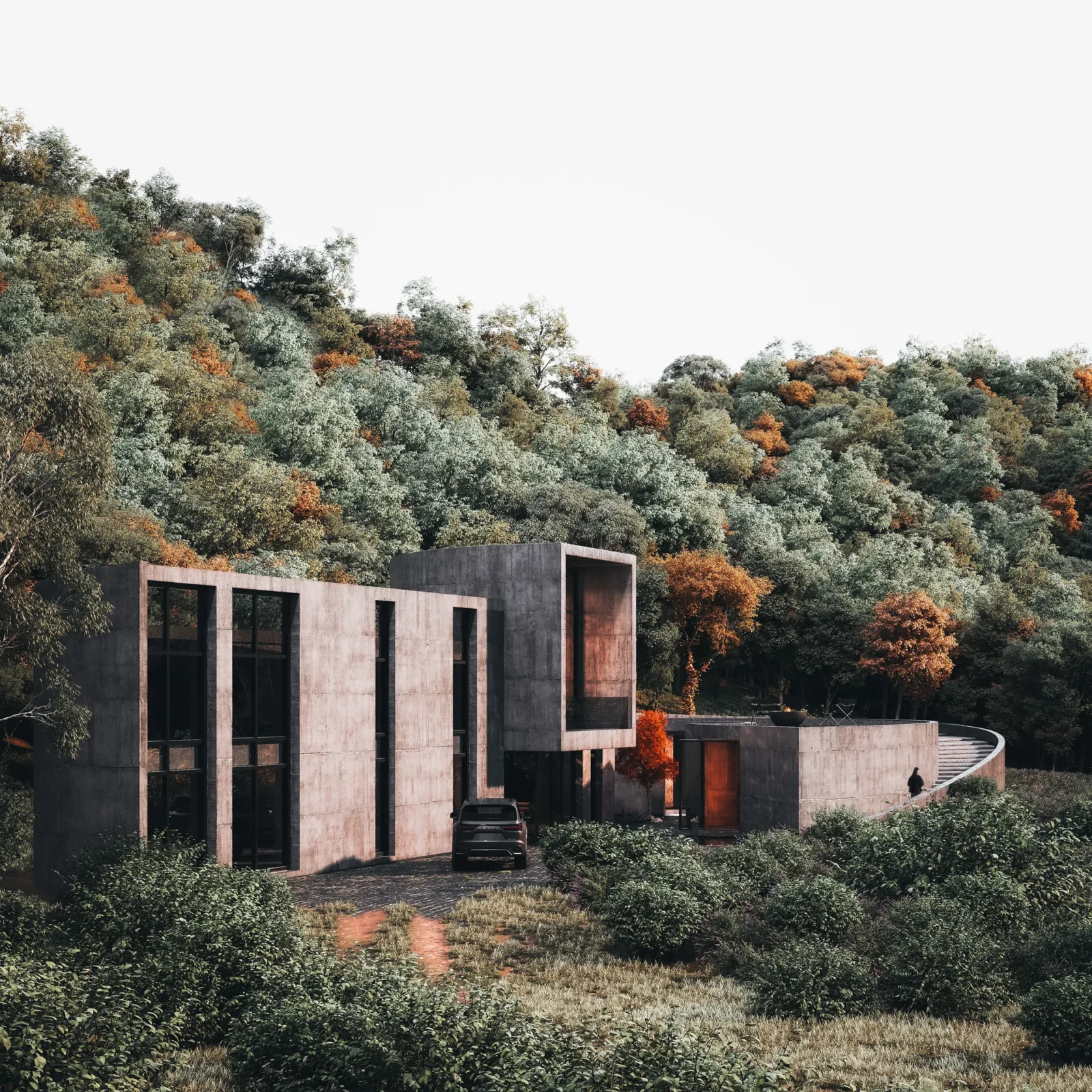
Savan House is Nobico Studio's unbuilt concept for a forested hillside in...
illustrarch Editoral Team3 Mins read

Renaatus Irumathi
Renaatus Irumathi Residence features 69 spacious apartments designed with contemporary aesthetics, maximizing...
illustrarch Editoral Team2 Mins read

White Khamovniki
White Khamovniki is a residential tower project in Moscow that combines urban...
illustrarch Editoral Team1 Mins read

Millennium Horizon
Millennium Horizon is an innovative architectural project in the UAE that uses...
illustrarch Editoral Team2 Mins read


Leave a comment