

Efficiency in Motion: Casa 350, A Swift Modular Dwelling
Casa 350 is a modular dwelling designed for rapid construction in Brazil, featuring a metal structure, efficient assembly, and a layout that maximizes natural light and space.
 Elif Ayse Sen3 December 20231 Mins read398


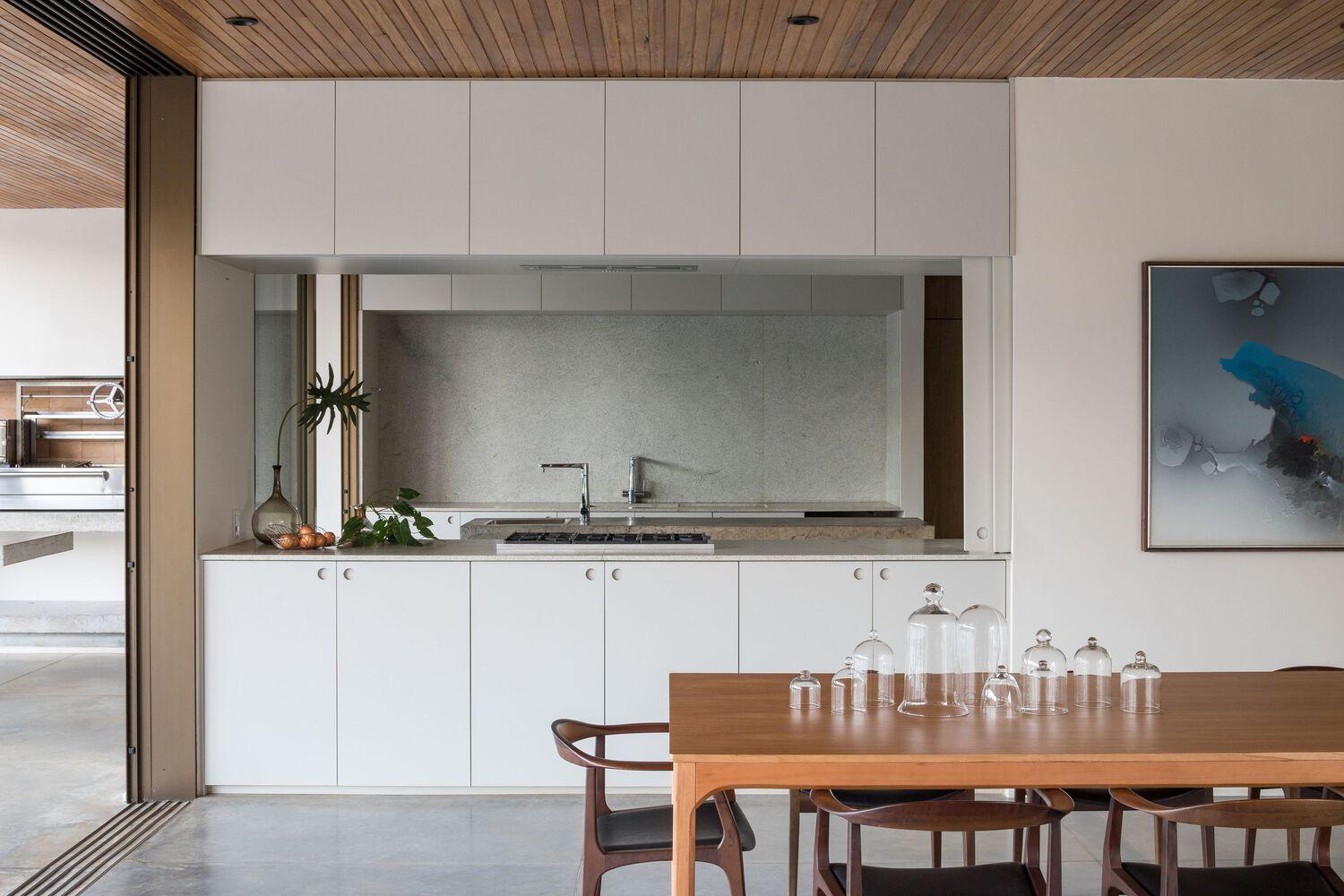


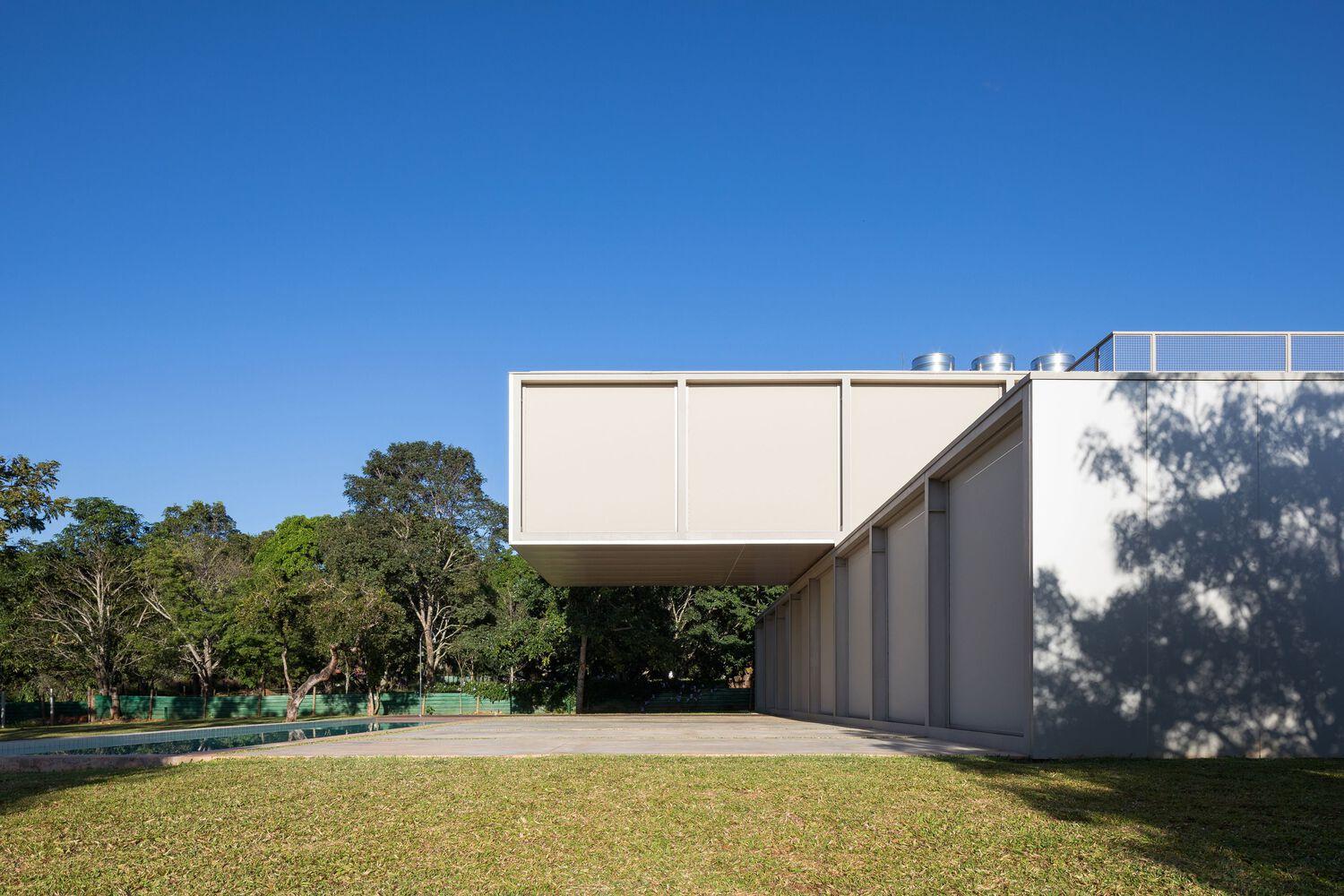


Casa 350 by BLOCO Arquitetos answers the demand for a quick-build home in Brasil, where modular ingenuity and efficient assembly shape every decision. The project’s foundation lies in the need for rapid construction, which influenced its modularity, finishing options, and choice of materials. A pragmatic decision to use a metal structure was dictated by budget constraints, material availability, and the need for swift assembly, while local labor contributed the wooden ceilings and ground floors that add a touch of craftsmanship to the predominantly prefabricated structure.
The house is organized as a two-volume plan intersected perpendicularly and set on a regular grid of 350x350cm in a metal frame, the dimension that gives the project its name. The ground floor holds the social and service areas, oriented to face north and south with a pool at its center, while the upper volume houses the bedrooms positioned to capture the morning sun. On each end of the upper floor, 7-meter cantilevers create covered areas below that work as extensions of balconies, social spaces, and car shelters, with motorized, retractable, translucent awnings giving control over natural light and privacy.
Why modular logic suits a fast house
Modular and prefabricated approaches reward discipline. By fixing a repeating structural grid, BLOCO Arquitetos could coordinate fabrication off site and assembly on site, cutting the time and uncertainty that slow conventional masonry. The construction detailing reflects this mixed strategy: cast-in-place concrete for ground floor slabs, steel deck for the first floor and roof, dry-wall for internal partitions, common masonry for external perimeter walls, and composite aluminum panels for blind walls without protective eaves. The external finishes pair plaster, paint, and composite aluminum, giving the efficiently built dwelling a clean and modern face.
This balance between an industrial kit of parts and hand-built timber elements is common in contemporary modular building, where speed and repetition do not have to erase warmth. The cantilevers and oriented volumes also show how passive solar thinking guides plan and section together, a concern central to sustainable architecture and to the way houses respond to the strong light of Brazil. Casa 350 reads as a study in how constraints, handled well, can produce a generous and adaptable home.






Modern Architecture Prefab Homes: The Complete Guide to Modular Design and Construction
Modern architecture prefab homes are transforming how we design and build residences,...
 Furkan Sen12 Mins read

The Future of Modular Structures in Architectural Design: Sustainability, Innovation, and Efficiency
Explore the future of modular structures in architecture, where efficiency, sustainability, and...
 Sinan Ozen5 Mins read

Modular Architecture in Small-Town America: A Survival Guide for the Future
Modular architecture is transforming small-town America by providing efficient, cost-effective building solutions...
 Begum Gumusel2 Mins read

Modular Affordable Housing: A Practical Guide for 2026
Modular affordable housing builds homes in factories to cut costs and time....
Sinan Ozen5 Mins read


Leave a comment