

Classical Architecture vs Deconstructivism: Harmony vs Fragmentation
Classical architecture and deconstructivism sit at opposite ends of the architectural spectrum. This article breaks down their core philosophies, defining visual characteristics, landmark buildings, and the ongoing debate between order and chaos in design.
 Sinan Ozen18 April 20267 Mins read0
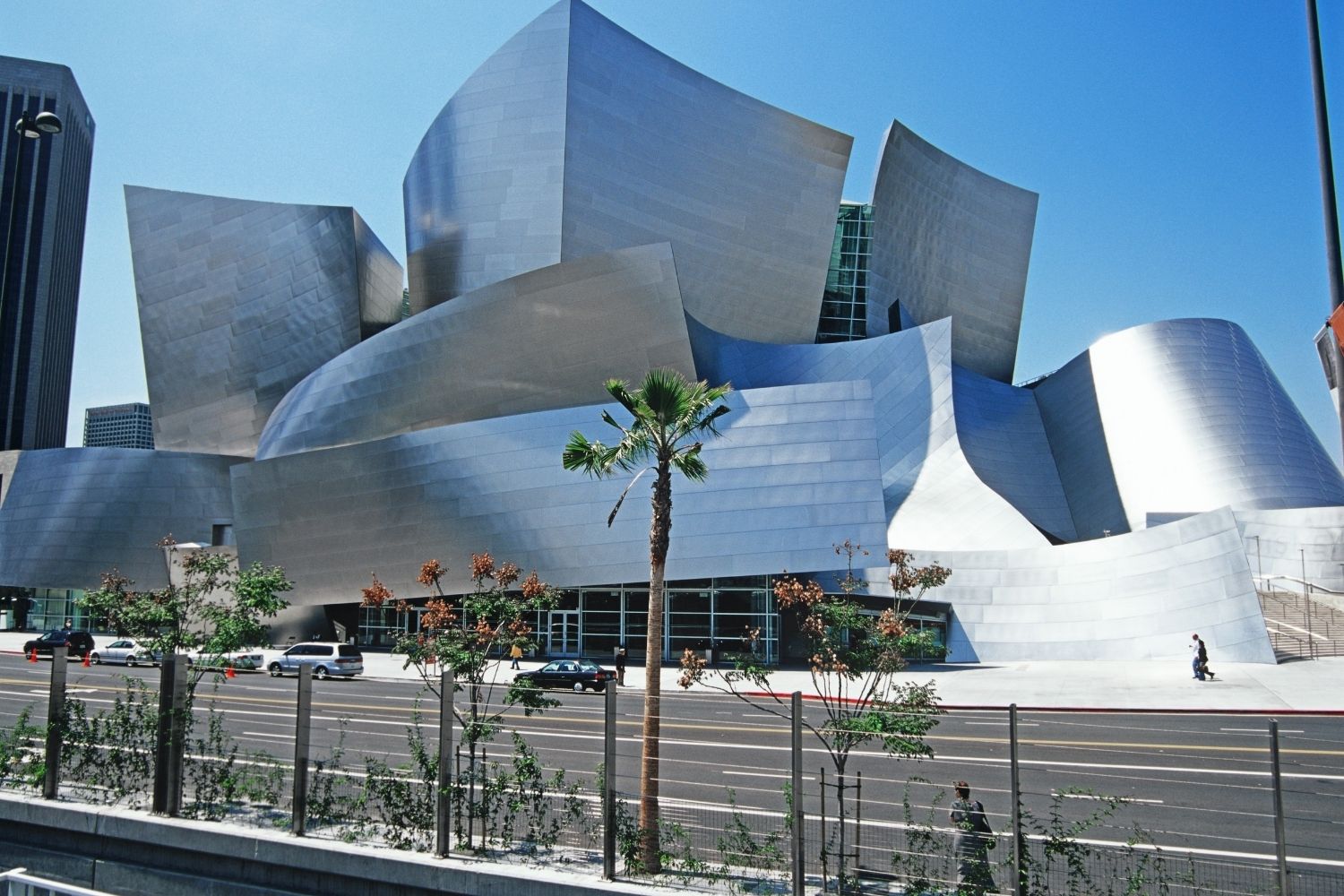
Table of Contents Show
Classical architecture vs deconstructivism represents one of the sharpest philosophical divides in the history of design. Classical architecture builds on symmetry, proportion, and enduring order drawn from ancient Greece and Rome. Deconstructivism, by contrast, deliberately fragments those rules, replacing harmony with controlled chaos and predictability with dissonance.
What Is Classical Architecture?
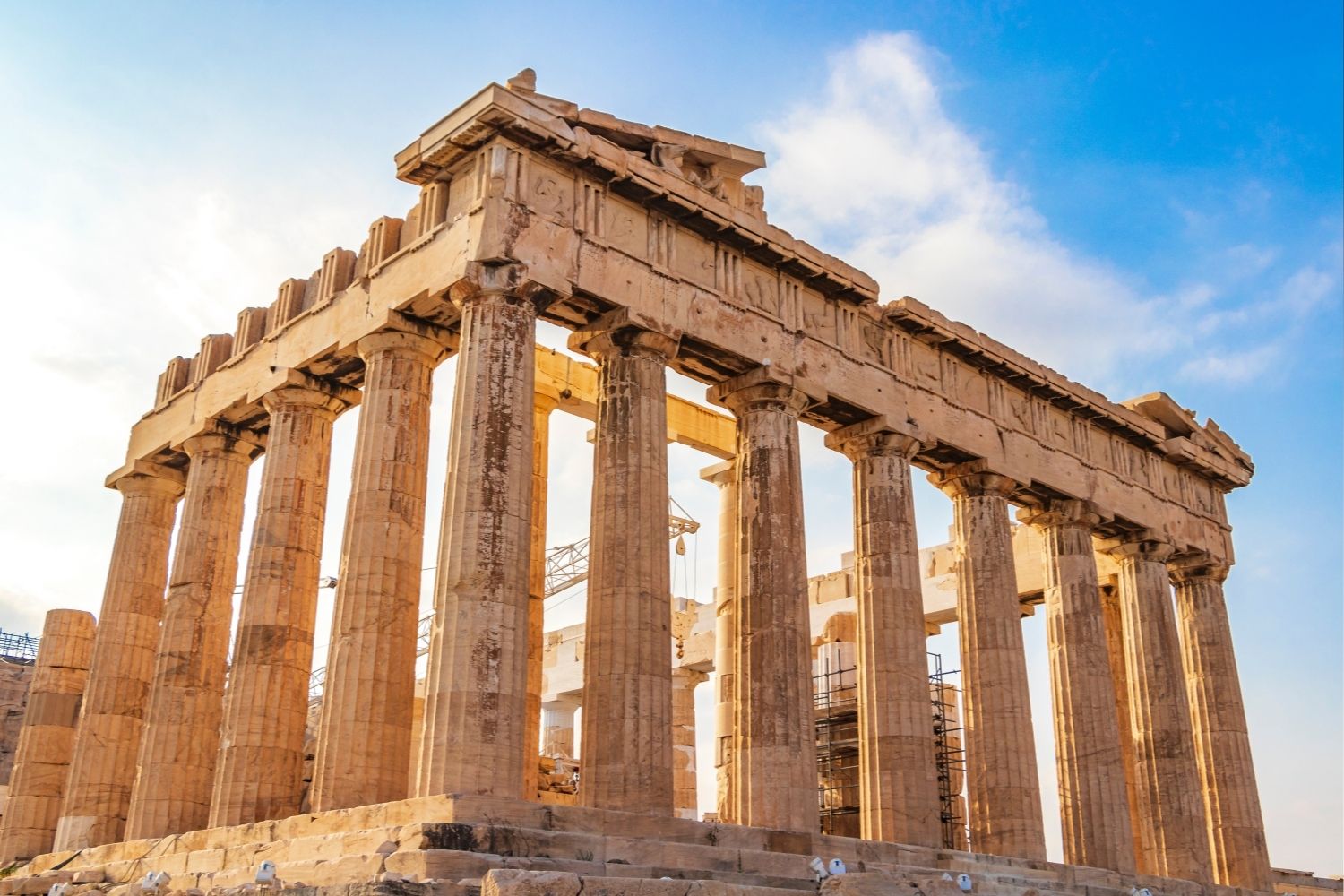
Classical architecture originated in ancient Greece around the 5th century BCE and was later absorbed and expanded by Rome. At its core, the style is governed by a set of principles that have remained largely consistent across millennia: symmetry, mathematical proportion, geometric clarity, and the structural logic of the column orders. The three primary orders, Doric, Ionic, and Corinthian, defined how columns, capitals, and entablatures related to one another and to the overall composition of a building.
The Parthenon in Athens remains the canonical reference point. Designed in the Doric order and completed in 438 BCE, it demonstrates refined proportions, optical corrections to compensate for perspective distortion, and an integration of geometry with human perception that architects have studied for over two millennia. You can explore the full vocabulary of this style in our guide to essential classical architecture terms.
Classical style architecture was not a single frozen moment. It experienced significant revivals, first through Renaissance Italy in the 15th century and again through Neoclassicism in the 18th and 19th centuries. Each revival reinterpreted the original orders while preserving the underlying logic of harmony, permanence, and civic dignity. Government buildings, universities, and cultural institutions around the world still draw on classical principles today.
📌 Did You Know?
The columns of the Parthenon are not perfectly straight. They curve outward slightly, a technique called entasis, to counteract the optical illusion that perfectly straight columns appear concave. This level of perceptual refinement in a building from 438 BCE illustrates how deeply classical architects understood human visual experience.
What Is Deconstructivism in Architecture?
Deconstructivism emerged in the 1980s as a reaction against the rigid rationalism of modernism and the historical nostalgia of postmodernism. The movement gained international attention through the 1982 Parc de la Villette design competition in Paris and crystallized publicly at the Museum of Modern Art’s 1988 Deconstructivist Architecture exhibition in New York, organized by Philip Johnson and Mark Wigley.
Architecture deconstructivism draws its theoretical foundation from the philosophical writings of Jacques Derrida, whose concept of deconstruction challenged the idea that systems of meaning are stable or unified. Applied to buildings, this translated into fragmented forms, asymmetry, non-linear geometries, and deliberate visual tension. As the MoMA exhibition catalogue stated, deconstructivist architecture gains its force by challenging the values of harmony, unity, and stability, proposing instead that flaws are intrinsic to the structure.
The architects most associated with the movement, including Frank Gehry, Zaha Hadid, Daniel Libeskind, Peter Eisenman, Rem Koolhaas, Bernard Tschumi, and Coop Himmelb(l)au, largely rejected the label. Many argued they were not part of a unified movement but simply working against the conventions modernism had imposed. Our existing article on constructivism vs deconstructivism covers the distinction in detail.
⚠️ Common Mistake to Avoid
Many people assume deconstructivism is simply buildings that look unusual or futuristic. The distinction matters: deconstructivism is a philosophically grounded challenge to the idea that architecture must express order, stability, and unity. Buildings that merely look asymmetrical or angular are not automatically deconstructivist. The movement’s core claim is that fragmentation is not a failure of design but an honest acknowledgment of complexity.
Classical Architecture vs Deconstructivism: Core Philosophy
The philosophical gap between these two approaches runs deep. Classical architecture assumes that beauty is grounded in objective principles: the right proportion, the correct column order, the harmonious relationship between parts. Vitruvius, writing in the 1st century BCE, articulated this through three principles: firmitas (structural solidity), utilitas (functional purpose), and venustas (beauty). Classical buildings are meant to feel inevitable, as if they could not have been designed any other way.
Deconstructivism starts from the opposite premise. It rejects the idea that any design principle is universal or neutral. Order, in the deconstructivist view, is an ideological construct, not a natural law. By fracturing forms, colliding volumes, and destabilizing expected relationships between floor, wall, and roof, deconstructivist buildings force the viewer to question assumptions about what a building should be.
🎓 Expert Insight
“A building is not just a place to be but a way to be.” — Peter Eisenman, architect and theorist
Eisenman, one of the most articulate voices of the deconstructivist movement, consistently argued that architecture carries meaning beyond function and shelter. His position represents a direct challenge to classical architecture’s assumption that a building’s purpose is to create harmony and serve human needs through resolved, balanced form.
Comparison Table: Classical Architecture vs Deconstructivism
The following table summarizes the defining differences across key architectural dimensions:
| Feature | Classical Architecture | Deconstructivism |
|---|---|---|
| Core philosophy | Harmony, proportion, universal order | Fragmentation, instability, questioning norms |
| Form language | Symmetry, geometric clarity, column orders | Asymmetry, non-linear geometry, colliding volumes |
| Relationship to history | Draws directly from Greek and Roman precedent | Rejects historical references as ideological constructs |
| Primary materials | Marble, stone, brick, stucco | Steel, titanium, glass, raw concrete |
| Visual effect on viewer | Calm, resolved, dignified | Tension, disorientation, provocation |
| Era of origin | 5th century BCE (Greece) | 1980s (USA, Europe) |
| Key figures | Vitruvius, Palladio, Schinkel | Gehry, Hadid, Libeskind, Eisenman |
Landmark Buildings: Classical Architecture Examples
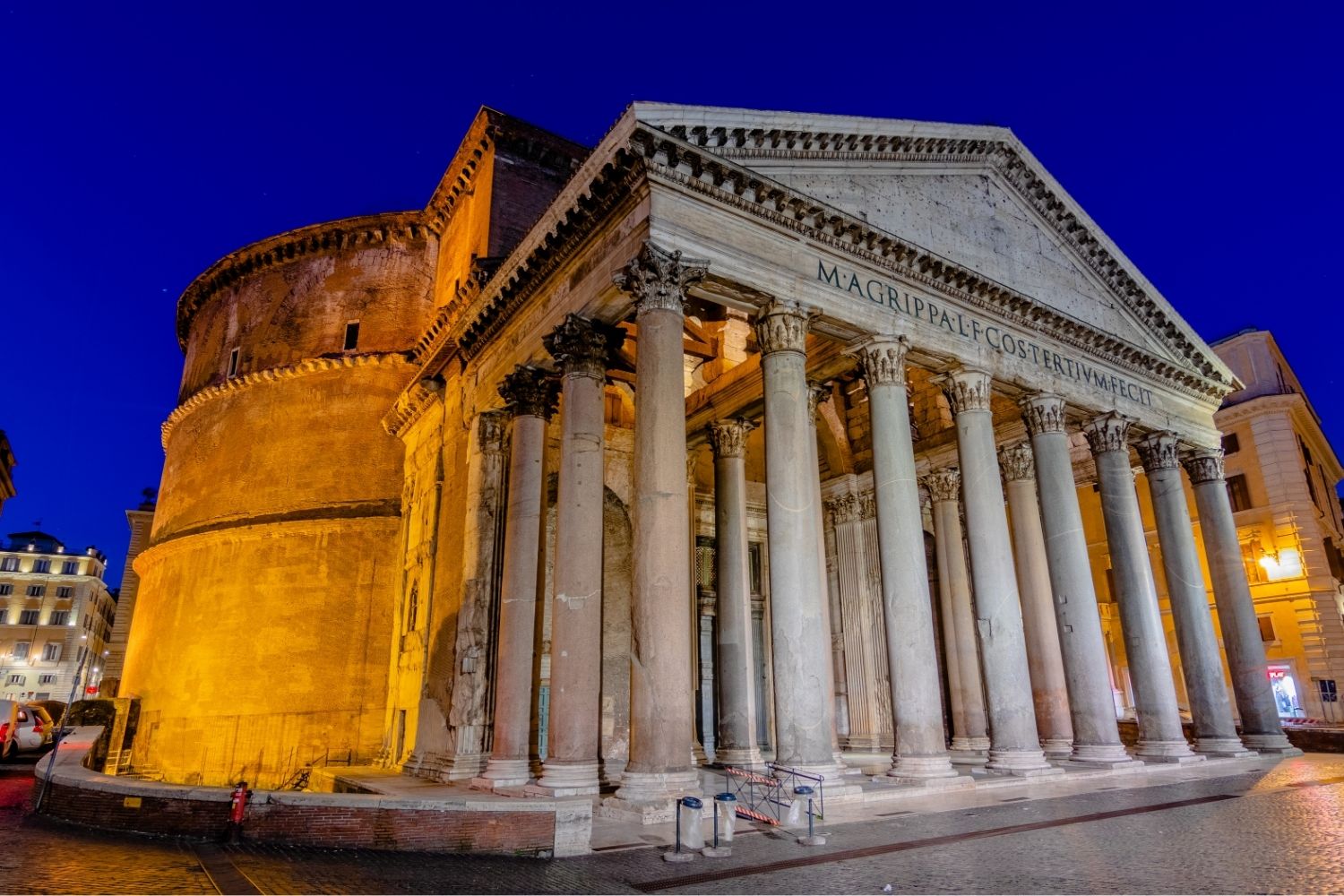
Classical architecture’s defining structures span more than 2,000 years, yet they share consistent characteristics. The Parthenon in Athens (438 BCE) established the Doric order’s proportional system. The Pantheon in Rome (128 CE) demonstrated classical architecture’s capacity for structural ambition, with its unreinforced concrete dome remaining the world’s largest of its type nearly two millennia later. The seven most influential buildings of ancient Greece and Rome trace how these foundational principles were developed and tested.
In their later revival phases, classical principles shaped buildings like the U.S. Capitol, the Brandenburg Gate in Berlin, and the Panthéon in Paris, all using columns, pediments, and symmetrical massing to communicate civic authority and institutional permanence. For a broader view of how classical style connects to later periods, see our overview of architectural styles from the past to the present.
💡 Pro Tip
When analyzing a classical building, start with the column order. Doric columns are the most austere, with no base and a plain capital. Ionic columns introduce scroll volutes and a more slender profile. Corinthian columns are the most ornate, with elaborate acanthus leaf capitals. Identifying the order immediately reveals the building’s period, regional tradition, and intended tone, whether martial, civic, or ceremonial.
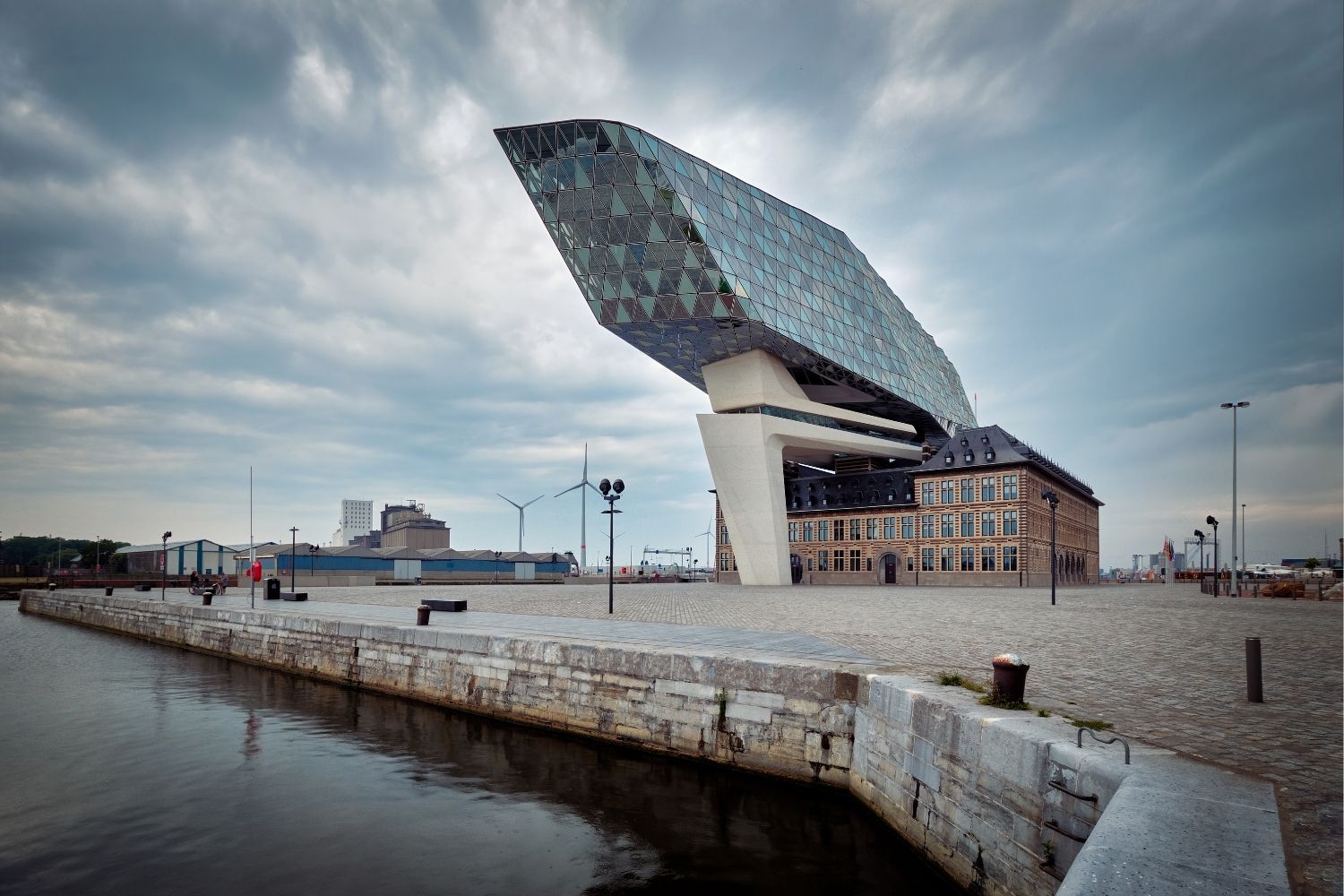
Landmark Buildings: Deconstructivism Architecture Examples
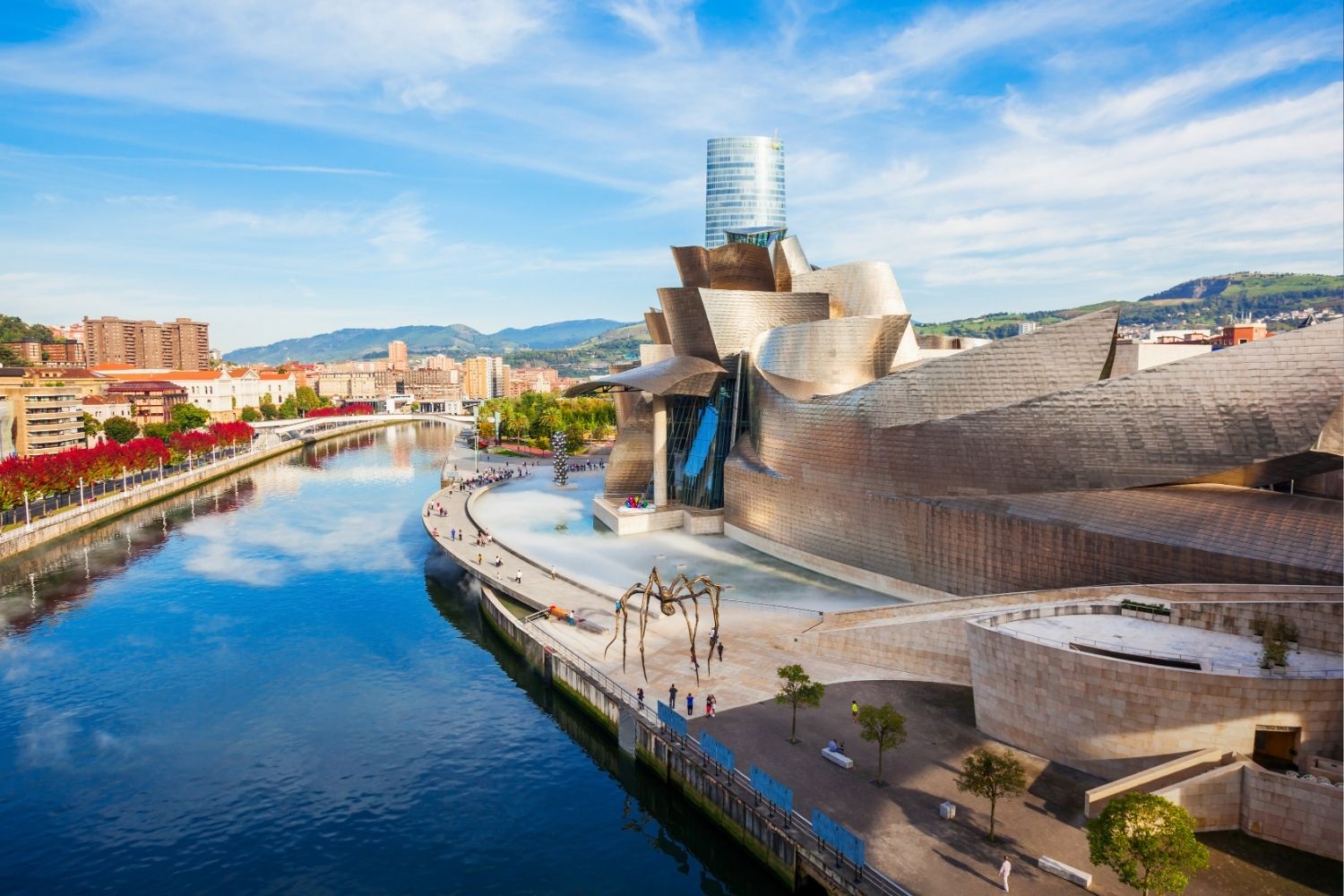
The most widely discussed deconstructivist building is Frank Gehry’s Guggenheim Museum Bilbao, completed in 1997. Its titanium-clad, curved surfaces and colliding volumes appear in constant motion from every angle. Beyond its visual impact, the building transformed Bilbao’s economy and urban profile, a phenomenon that became known as the “Bilbao Effect,” demonstrating that deconstructivist design could generate significant cultural and economic capital for cities willing to commission it.
Daniel Libeskind’s Jewish Museum Berlin (2001) uses deconstructivism differently. The building’s zigzagging zinc form, irregular window slashes, and deliberate voids are not aesthetic choices in isolation. They are a spatial argument: the architecture itself carries the history of absence, dislocation, and loss. Zaha Hadid’s MAXXI National Museum of 21st Century Arts in Rome employs flowing intersecting geometries that destabilize the boundary between interior and exterior.
🏗️ Real-World Example
Jewish Museum Berlin (Berlin, 2001): Designed by Daniel Libeskind, the museum’s deconstructivist form includes 49 voids, sealed spaces that cut through the building’s interior as permanent, inaccessible absences. Libeskind described the design as giving spatial form to the void left by the Holocaust. The building received more than 350,000 visitors before any exhibits were installed, evidence that its architecture alone carried sufficient meaning to draw international audiences.
How the Two Styles Approach Proportion and Scale
Proportion is where the contrast becomes most technically concrete. Classical architecture treats proportion as a governing system. The relationship between proportion and scale in classical buildings follows precise ratios, often referencing the Golden Ratio or the column order’s internal proportional logic. A building’s height, width, and decorative elements are calibrated so that no single part overwhelms or underwhelms the whole.
Deconstructivism treats proportion as a convention to be disrupted. Volumes collide without resolving into a unified composition. Walls tilt at angles that produce unease rather than stability. Rooflines fragment rather than converge. The result is buildings that feel incomplete or in tension, not because they lack structural integrity but because they deliberately refuse the visual resolution classical architecture considers essential.
💡 Pro Tip
A practical way to distinguish these styles in person: stand in front of a building and ask whether your eye is drawn to rest at a central point. Classical buildings pull your gaze toward symmetrical focal points, a pediment, a portico, a dome. Deconstructivist buildings resist this. They deflect, redirect, and refuse resolution. If you feel slightly unsettled without knowing why, you are likely looking at a building with deconstructivist intent.

Can Classical and Deconstructivist Ideas Coexist?
The two approaches have traditionally been positioned as incompatible. Classical revivalists argue that proportion and harmony reflect permanent human values. Deconstructivists argue that those values serve ideological functions that should be questioned. However, architectural practice has produced some interesting hybrids and dialogues.
New Classical architecture, practiced by figures like Robert A.M. Stern and Quinlan Terry, uses classical proportional systems and column orders while employing contemporary materials and construction technology. This current in design, distinct from both traditional classicism and deconstructivism, suggests that classical principles can be applied without becoming anachronistic. Our comparison of neoclassical vs modern architecture covers this territory in greater depth.
On the other side, some contemporary architects have found ways to reference classical formal logic through digital tools, using computational design to generate proportional systems that echo classical precedent while producing entirely non-traditional forms. The dialogue between these traditions remains one of architecture’s most generative tensions.
✅ Key Takeaways
- Classical architecture is built on symmetry, mathematical proportion, and the Greek and Roman column orders, a system that shaped Western design for over 2,000 years.
- Deconstructivism emerged in the 1980s as a deliberate rejection of order, using fragmentation, asymmetry, and non-linear form to challenge assumptions about what buildings should be.
- The philosophical gap is as significant as the visual one: classical design assumes proportion reflects universal values; deconstructivism treats those values as ideological constructs to be dismantled.
- Landmark deconstructivist buildings such as the Guggenheim Bilbao and the Jewish Museum Berlin demonstrate that fragmentation can carry genuine cultural weight and generate lasting public impact.
- Both traditions continue to influence contemporary architecture, sometimes in dialogue with each other through hybrid approaches that draw on classical proportional logic while employing non-traditional form.
For architects and students, understanding classical architecture’s Greek and Roman foundations provides the clearest reference point for recognizing what deconstructivism was reacting against. The tension between these two positions, harmony versus fragmentation, order versus disruption, remains one of the most productive arguments in contemporary architectural discourse. Further reading on the relationship between postmodernism and modernism places both movements within the broader trajectory of 20th-century architectural thought.






Brutalist Architecture: The Complete Guide to Concrete Modernism
Brutalist architecture is an architectural style that emerged in the 1950s and...
 Bahattin Duran17 Mins read

Contemporary Vernacular Architecture: How Tradition Shapes Modern Design
Contemporary vernacular architecture reinterprets centuries of local building wisdom through modern design...
 Elif Ayse Sen14 Mins read

Islamic Architecture vs Gothic Architecture: Sacred Geometry East and West
Islamic architecture and Gothic architecture both emerged as expressions of sacred space,...
 Furkan Sen9 Mins read

Art Nouveau vs Art Deco: Flowing Nature vs Geometric Glamour
Art nouveau embraces flowing organic forms inspired by nature, while art deco...
Furkan Sen9 Mins read


Leave a comment