

Cantilevers in Architecture: How They Work, Types, and Iconic Examples
Cantilevers allow architects to create dramatic overhanging forms without visible support columns. This guide covers the structural mechanics behind cantilevers, common materials and types used in buildings, real-world examples from Fallingwater to the CCTV Headquarters, and practical design considerations for architects and students.
 Furkan Sen19 May 202610 Mins read0
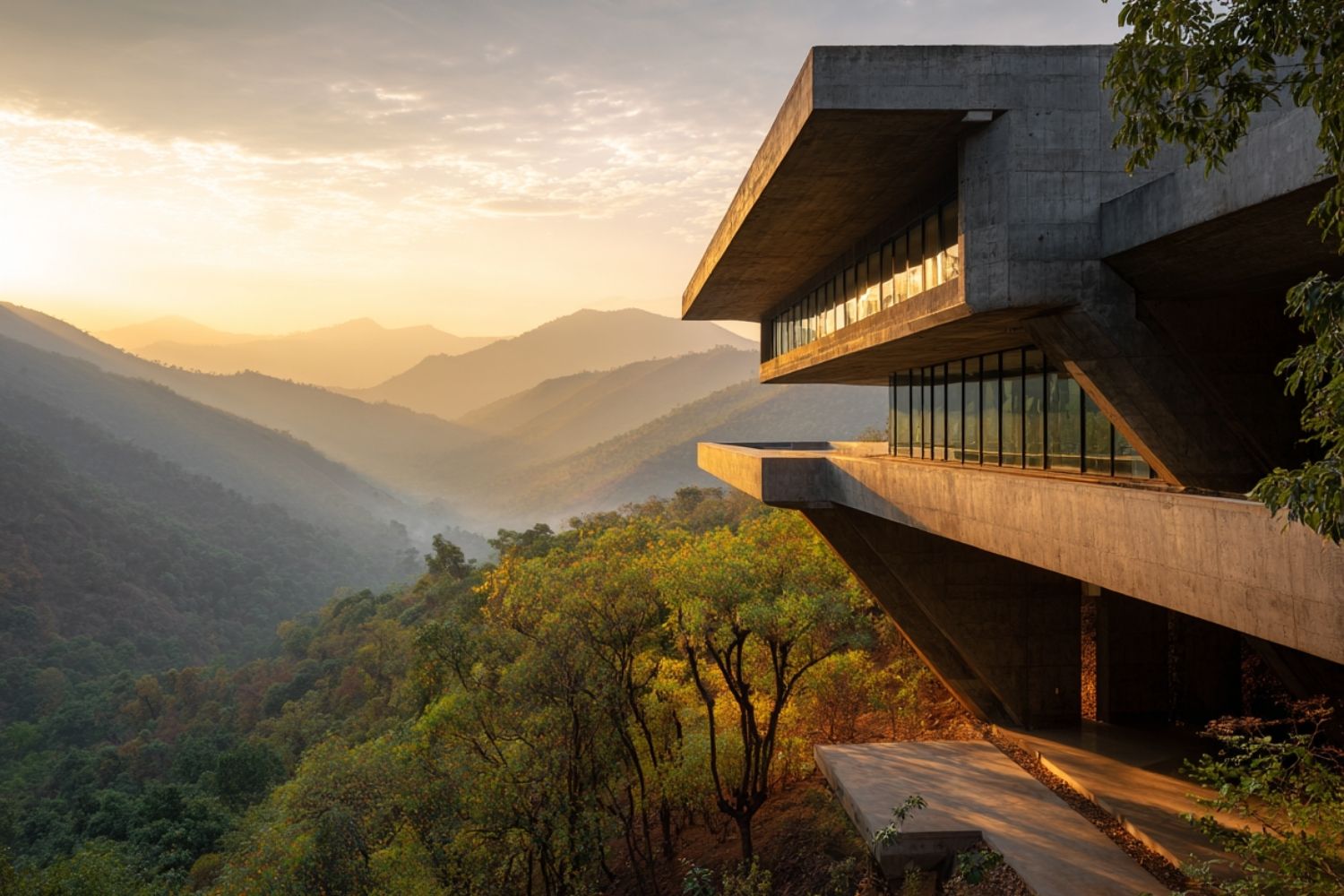
Table of Contents Show
A cantilever in architecture is a structural element anchored at only one end, projecting horizontally into open space without support at the other end. Cantilevers make possible the balconies, overhanging roofs, and dramatic projecting volumes that give many modern buildings their visual tension between weight and weightlessness.
Walk past a building with a bold overhang that seems to float above the street and you are looking at a cantilever at work. The principle is old, older than steel or concrete. Timber brackets supporting overhanging upper floors in medieval half-timbered houses relied on the same physics. What changed over the past century is scale. Reinforced concrete and structural steel let architects push cantilevers from a few feet to dozens of meters, turning a simple structural idea into one of architecture’s most expressive tools.
This guide breaks down how cantilevers actually work, the materials and structural systems behind them, the types you will encounter in practice, and the buildings that pushed the concept to its limits.
What Does Cantilever Mean in Architecture?
To define cantilever in architecture in plain terms: it is a rigid structural member fixed at one end to a support, usually a wall, column, or core, with its opposite end free and unsupported. The fixed end must resist both the vertical load (shear) and the rotational force (bending moment) that the load creates. Every balcony stepping out from an apartment tower and every stadium roof reaching over spectators without columns blocking the view relies on this principle.
The word itself comes from the combination of two terms. While its exact etymology is debated, “cantilever” appeared in English engineering texts by the 17th century. By the 19th century, engineers were building cantilever bridges spanning hundreds of meters, proving that the concept could work at very large scales.
📐 Technical Note
The bending moment in a cantilever increases linearly from the free end to the fixed support, reaching its maximum at the point of fixity. For a uniformly distributed load, the maximum moment equals wL²/2, where w is the load per unit length and L is the cantilever span. This is why the connection detail at the support is the most critical part of any cantilever design, as specified in structural codes like Eurocode 2 (EN 1992) for concrete and AISC 360 for steel.
How Do Cantilevers Work? The Structural Mechanics
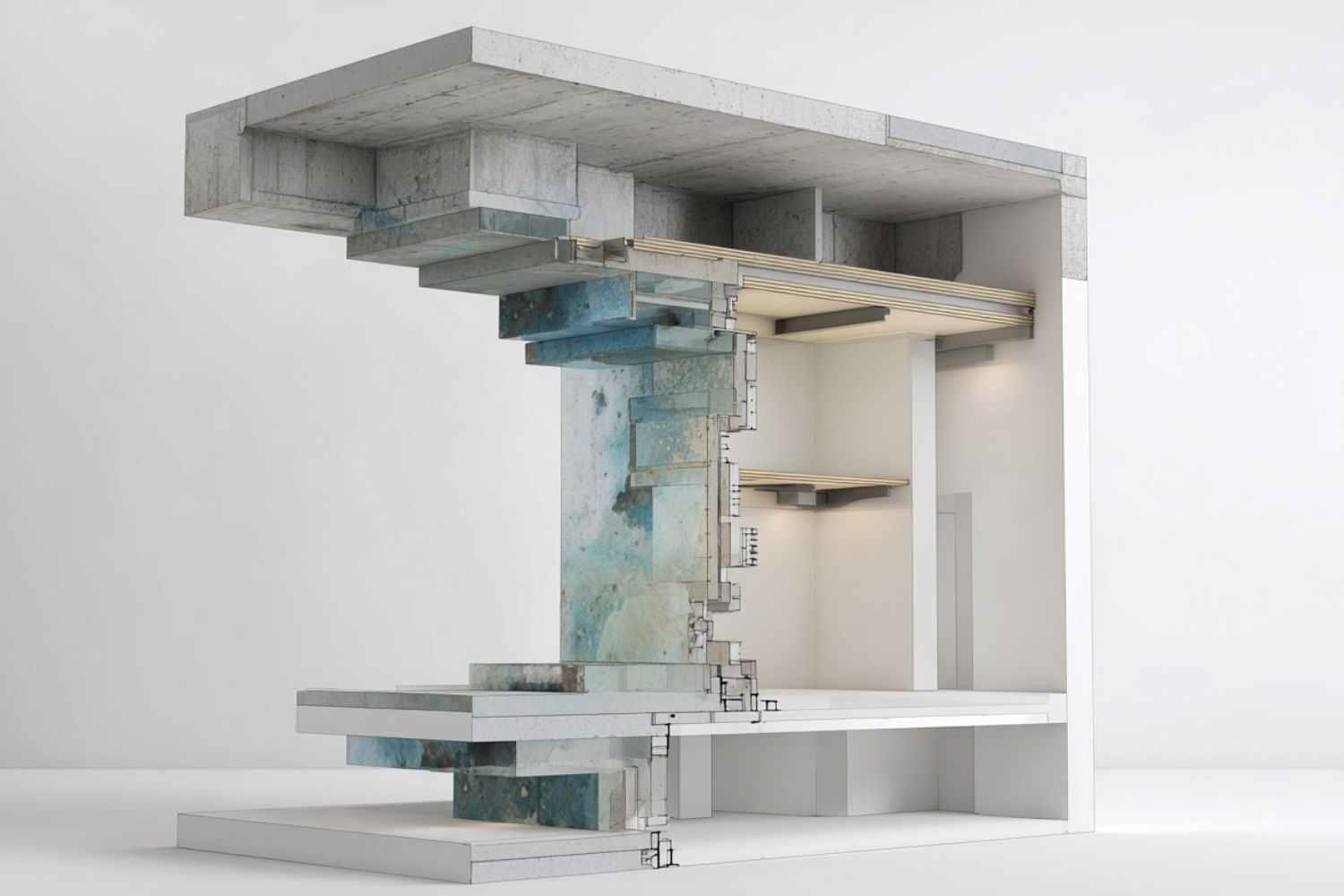
Understanding what a cantilever in architecture does starts with two forces: shear and moment. When a load pushes down on the free end of the cantilever, the fixed end must push back with an equal vertical force (shear reaction) and simultaneously resist the tendency of the beam to rotate (moment reaction). The support, whether it is a thick concrete wall or a bolted steel connection, must handle both.
Inside the cantilever itself, the top fibers are in tension (being pulled apart) while the bottom fibers are in compression (being squeezed together). This is the opposite of what happens in a simply supported beam loaded from above, where the bottom is in tension. That reversal is why you sometimes see deeper structural sections or additional reinforcement at the top of a cantilevered concrete slab rather than the bottom.
Counterbalancing plays a large role in longer cantilevers. A building’s core mass or a heavy back span can act as a counterweight, preventing the structure from tipping. Think of a diving board: the part bolted to the platform is much shorter than the part you stand on, but its rigid connection and the weight of the platform itself keep everything stable. Architects and engineers use the same logic when a conference room or living space projects beyond the building’s main footprint.
💡 Pro Tip
When designing a cantilever, always check the deflection limit at the free end, not just the strength. A cantilever that is structurally safe can still feel uncomfortable to occupants if it bounces or sways. A common rule of thumb is to limit tip deflection to L/180 for occupied floors and L/360 when finishes like glass are involved.
Materials Used in Cantilever Construction
The material you choose determines how far a cantilever can reach, how deep the structural section needs to be, and how the connection at the fixed end is detailed.
Reinforced concrete has been the default material for cantilevered slabs and balconies since the early 20th century. Concrete handles compression well, and steel reinforcing bars embedded in the top of the slab carry the tension forces. Post-tensioned concrete takes this further by threading steel tendons through the slab and stressing them after the concrete has cured, allowing longer spans with thinner profiles. Many of the most recognized modern architecture icons, including Fallingwater, owe their cantilevered forms to reinforced concrete.
Structural steel offers a higher strength-to-weight ratio than concrete, making it the material of choice for long cantilevers where dead weight is a concern. Steel trusses or plate girders can project 15 meters or more from a building core without excessive depth. The trade-off is cost and the need for fire protection, since exposed steel loses strength rapidly at high temperatures.
Timber cantilevers are less common in large-scale construction but remain practical in residential and pavilion design. Glulam (glued laminated timber) and cross-laminated timber (CLT) beams can achieve modest cantilevers of 2 to 4 meters while providing a warm, natural appearance. The role of structure in architecture becomes especially visible when timber cantilevers are left exposed as a design feature.
Comparison of Cantilever Materials
The table below summarizes the key properties of the three primary cantilever materials:
| Property | Reinforced Concrete | Structural Steel | Engineered Timber |
|---|---|---|---|
| Typical cantilever span | 2 – 8 m (post-tensioned up to 12 m) | 5 – 20+ m | 1.5 – 4 m |
| Self-weight | High | Moderate | Low |
| Fire resistance | Excellent (inherent) | Requires protection | Good with CLT mass |
| Connection complexity | Moderate (rebar continuity) | High (moment connections) | Moderate (steel plates, bolts) |
| Best suited for | Balconies, slabs, terraces | Large building volumes, bridges | Residential, pavilions |
Types of Cantilevers in Architecture
Not all cantilevers look or behave the same way. The type depends on the structural system, the building’s geometry, and the architect’s intent.
A simple cantilever slab is the most common form. A concrete floor slab extends beyond the supporting wall or column line, creating a balcony or terrace. These are everyday elements found in apartment buildings worldwide and typically extend 1.5 to 3 meters.
A cantilever beam or truss carries loads over longer distances. Here, a discrete beam (steel I-section, concrete girder, or truss) projects from the structure and supports the floor or roof above. This approach is used when the cantilever needs to reach further than a flat slab can manage on its own.
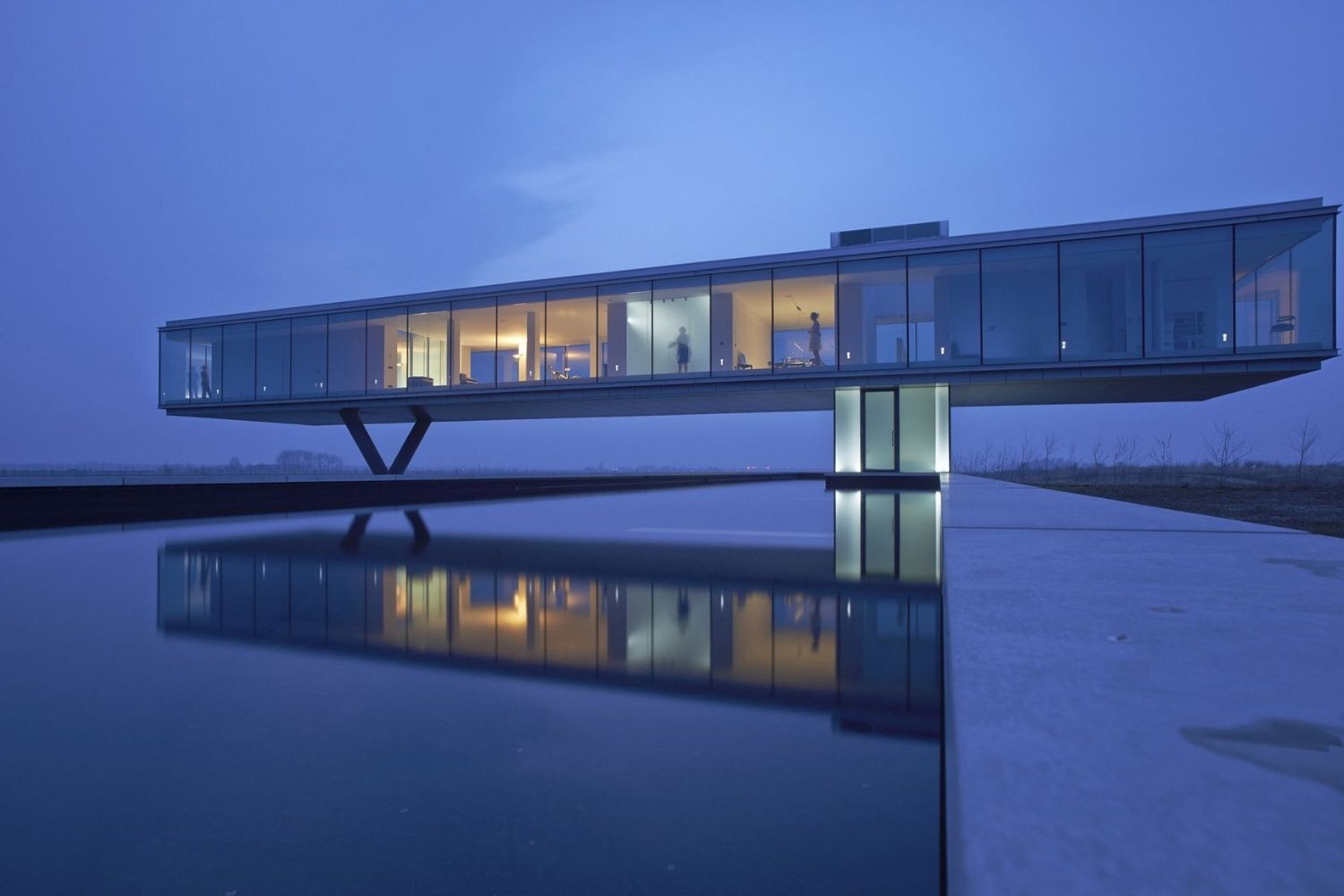
A cantilevered building volume is the most dramatic application. Instead of a single beam or slab, an entire section of the building, sometimes multiple stories, projects beyond the structural core. The principles of spatial design are pushed to their visual limits when a whole box of occupied space appears to float in mid-air. Achieving this typically requires deep transfer structures, outrigger trusses, or a stiff central core that acts as the fixed support.
Cantilever roofs and canopies are common in stadiums, airports, and cultural buildings. These elements shelter large areas from weather without columns obstructing views or circulation. Cantilever architecture in the woods or rural settings often uses cantilevered roofs to extend living spaces toward the landscape while keeping the building footprint small.
⚠️ Common Mistake to Avoid
Many architecture students assume that a cantilever only needs to be strong enough to carry its load. In practice, the back-span anchorage is equally important. If the back-span is too short or too light, the entire assembly can overturn. Engineers typically design the back-span to be at least 2 to 3 times the cantilever length, depending on the loading conditions and the structural system.
Famous Cantilever Buildings Around the World
A handful of buildings have come to define what cantilevers in architecture can achieve. Each one pushed the available technology of its time and changed how architects thought about projecting forms.
Fallingwater (1935) by Frank Lloyd Wright
No discussion of cantilevers in architecture is complete without Fallingwater. Designed as a weekend retreat for the Kaufmann family in rural Pennsylvania, the house uses reinforced concrete cantilevers that extend directly over a natural waterfall. The concrete terraces project from a central stone core, creating a layered horizontal composition that reads as an extension of the rock ledges in the stream below. The American Institute of Architects has called it the best all-time work of American architecture, and in 2019, UNESCO inscribed it as a World Heritage Site.
Fallingwater’s cantilevers were controversial from the start. Wright’s structural engineer, Mendel Glickman, recommended more reinforcing steel than Wright was willing to accept. Wright reduced the steel to achieve thinner, lighter-looking slabs. The result was visible deflection over the decades, and in 2002, post-tensioned cables were added beneath the main terrace to arrest further sagging. In early 2026, a $7 million restoration completed by the Western Pennsylvania Conservancy addressed water infiltration and structural wear across the building.
🎓 Expert Insight
“I wanted the family to live with the waterfall, as an integral part of their lives.” — Frank Lloyd Wright, on the Kaufmann House
This statement captures why Wright placed the house directly over Bear Run rather than on the bank with a view of the falls. The cantilevers were not a stylistic choice alone; they were the structural means to achieve his philosophy of organic architecture, where building and landscape merge into one experience.
CCTV Headquarters (2012) by OMA / Rem Koolhaas
The CCTV Headquarters in Beijing is a 234-meter-tall loop formed by two leaning towers connected at the top and bottom by perpendicular horizontal volumes. The upper connecting section is a 75-meter cantilever, one of the longest unsupported building overhangs ever constructed. The structure uses a diagrid of steel tubes visible on the facade, with the density of the diagrid increasing in areas of higher stress. It demonstrated that cantilevers could operate at a skyscraper scale, not just in low-rise residential or cultural buildings.
Cantilever Architecture in Residential Design
Beyond landmark projects, cantilevers appear in residential work wherever architects want to maximize views, create covered outdoor space, or step a building’s volume away from the ground plane. Hillside houses in Los Angeles, lake houses in Scandinavia, and forest cabins in the Pacific Northwest routinely use cantilevered floor plates or decks. The term cantilever architecture in the woods describes a growing category of residential projects where timber or steel cantilevers push living spaces out among tree canopies, reducing ground-level impact and framing landscape views that a conventional footprint would miss.
🏗️ Real-World Example
Central Park Tower (New York, 2021): At 472 meters, this supertall residential skyscraper features a 28-foot (8.5 m) cantilever that extends over the landmark Art Students League building at its base. Central Park Tower holds the Guinness World Record for the tallest cantilevered structure, demonstrating that cantilever design operates across every scale, from a timber balcony to a supertall tower.
Why Are Cantilevers Important in Modern Architecture?
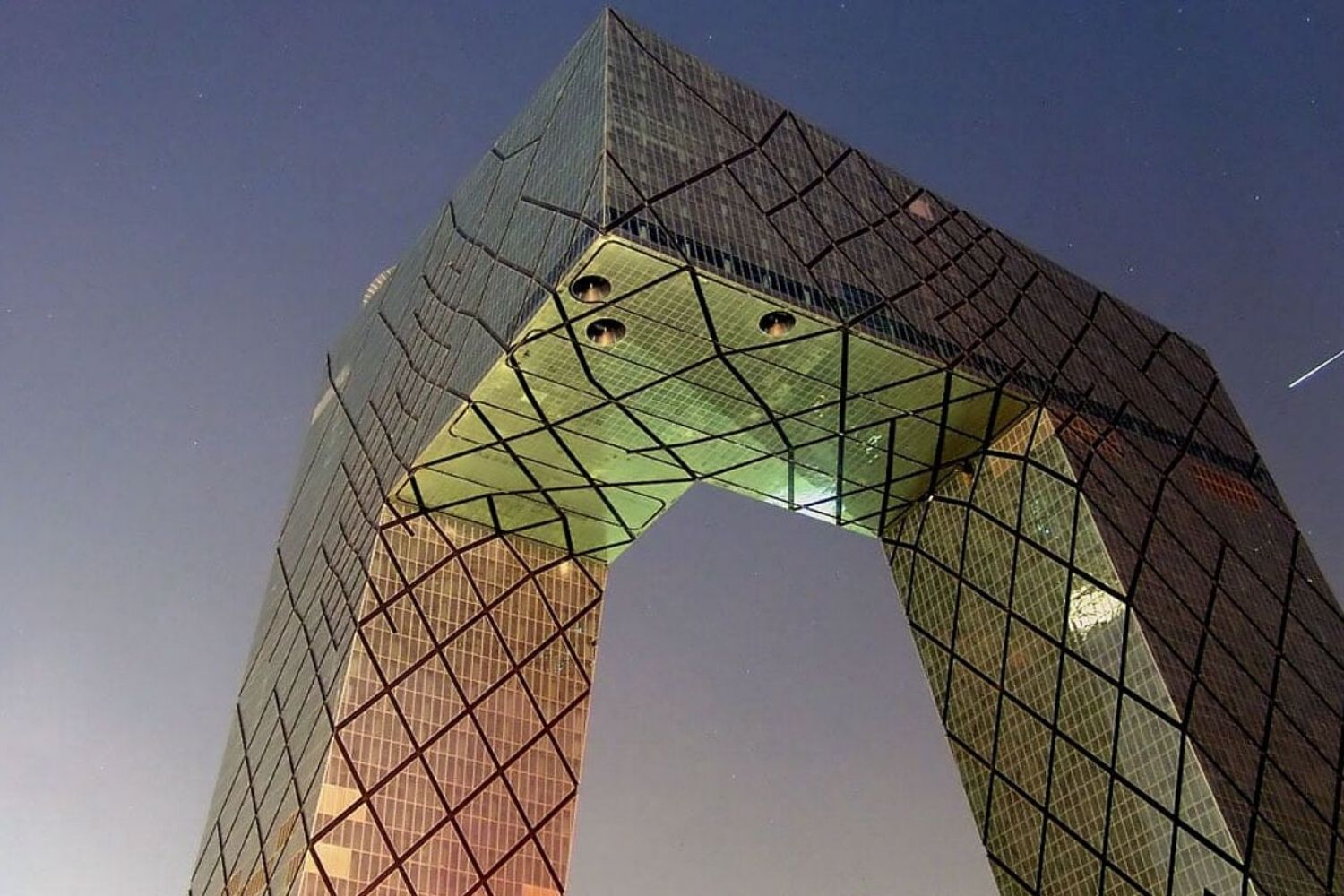
Cantilevers solve practical problems that other structural approaches cannot address as efficiently. A cantilevered roof shelters a stadium without columns blocking sightlines. A cantilevered floor plate creates a covered entrance below without a separate canopy structure. A cantilevered upper story allows pedestrian circulation at ground level while maximizing usable floor area above.
Beyond function, cantilevers carry strong visual meaning. A projecting volume signals daring, technical mastery, and a willingness to challenge gravity. This is why cantilevers appear so frequently in museums, corporate headquarters, and cultural buildings where the architecture itself is part of the message. The massing logic of buildings often starts with the question of what projects, what recedes, and what floats, and cantilevers are the structural answer to “what floats.”
💡 Pro Tip
If you are designing a cantilevered volume and want to keep the structural depth minimal, consider using a Vierendeel truss hidden within the floor-to-ceiling height of the projecting section. Unlike a conventional diagonal truss, a Vierendeel uses rigid rectangular frames, which means no diagonal members cutting through windows or usable floor space.
Design Considerations for Cantilever Structures
Successful cantilever design involves more than picking a material and projecting a slab. Several factors determine whether the result will perform well structurally, feel comfortable to occupy, and age gracefully.
Deflection control is often the governing criterion. A cantilever that meets all strength requirements can still feel unsettling if it bounces underfoot or visibly sags. Pre-cambering, where the beam is fabricated with a slight upward curve so it appears level under load, is a standard technique for longer steel cantilevers.
Thermal movement must be addressed at the connection between the cantilever and the main building. Concrete and steel expand and contract with temperature changes, and a rigid connection without adequate detailing can crack finishes, break waterproofing membranes, or transmit cold through the building envelope, creating a thermal bridge. Proprietary thermal break connectors are now standard in European practice for balcony cantilevers, and their use is growing in North American projects as energy codes tighten.
Water management is critical because the exposed top surface of a cantilever collects rain and snow. Drainage must be planned carefully to avoid pooling, and the waterproofing detail at the junction between the cantilever and the building wall is one of the most failure-prone areas in any facade system. The stabilization work at Fallingwater showed exactly what decades of water infiltration can do to a cantilevered concrete structure.
Video: How Structural Cantilevers Are Designed
This video from The Structural Engineering Channel covers the key engineering decisions behind cantilever design, including load paths, deflection limits, and connection details.
📌 Did You Know?
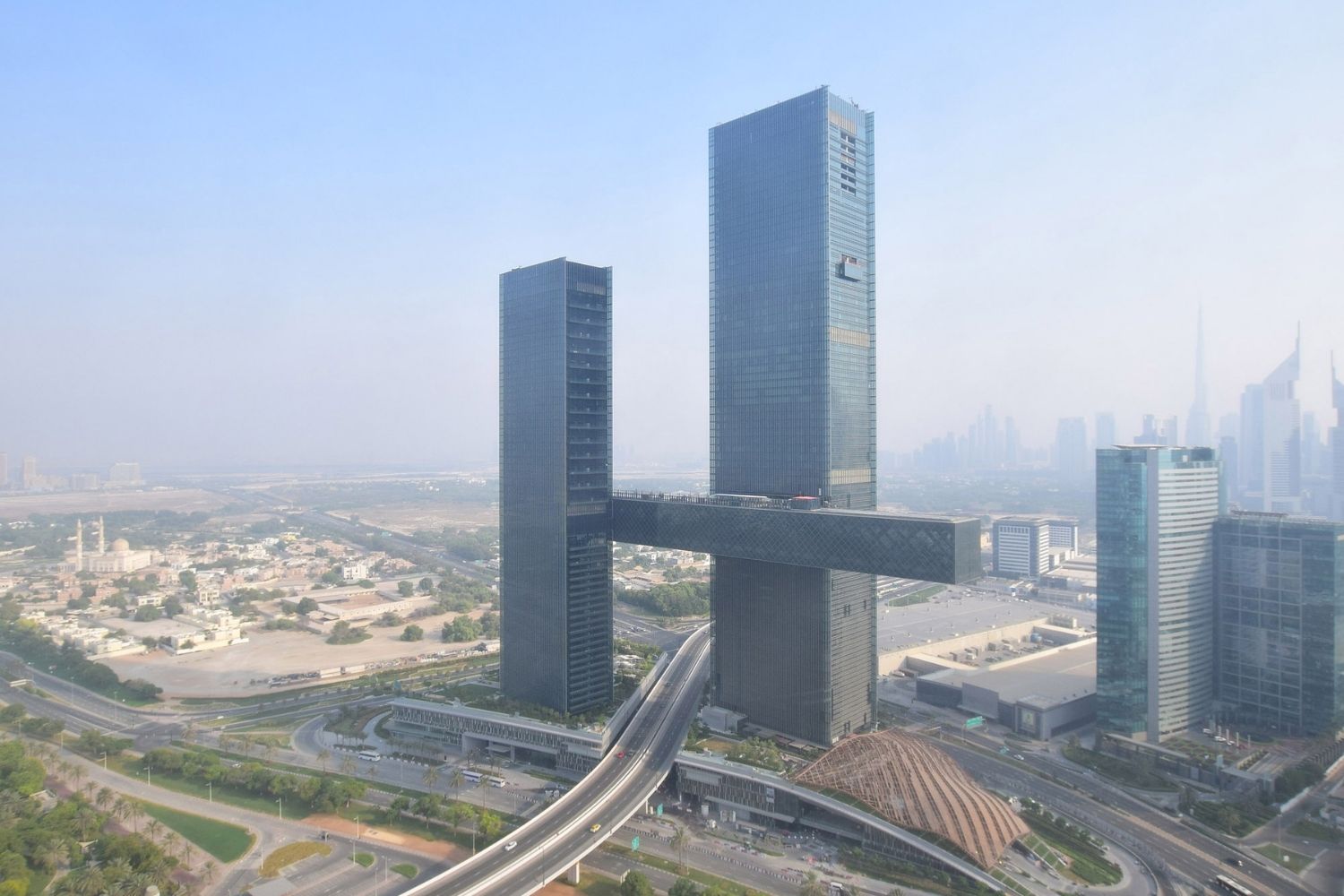
The Link, a sky bridge connecting two towers of the One Za’abeel development in Dubai, holds the record for the longest building cantilever in the world at 67.3 meters (221 feet). The 9,500-tonne steel structure was lifted into position in 2023 and required a temporary support tower during installation that was later removed, leaving the cantilever free-spanning between the two towers.
✅ Key Takeaways
- A cantilever is a structural element fixed at one end and unsupported at the other, relying on moment resistance at the support to carry loads.
- Reinforced concrete, structural steel, and engineered timber are the three primary materials, each suited to different span ranges and building types.
- The back-span anchorage and counterweight are just as important as the projecting section itself; under-designing either can cause failure.
- Fallingwater remains the most cited example of cantilevers in architecture, but contemporary projects like the CCTV Headquarters and Central Park Tower have expanded the concept to skyscraper scale.
- Deflection control, thermal bridging, and water management are the three most common detailing challenges in cantilever design and should be addressed early in the design process.
Final Thoughts
Cantilevers in architecture sit at the intersection of engineering logic and design ambition. They let architects do something that no other structural system does as cleanly: project occupied space into the air with nothing visible holding it up. The definition of cantilever in architecture has not changed since the concept was first described in engineering textbooks centuries ago, but what architects choose to do with it keeps evolving. From Frank Lloyd Wright’s concrete terraces over a Pennsylvania waterfall to a 67-meter steel bridge suspended between towers in Dubai, the cantilever remains one of the most powerful tools for shaping how buildings meet the sky, the street, and the landscape around them.
Technical specifications referenced in this article, including deflection limits and structural design codes, should be verified by a licensed structural engineer for your specific project conditions and local building code requirements.
- cantilever architecture in the woods
- cantilever in architecture
- cantilever meaning in architecture
- cantilevers in architecture
- define cantilever in architecture
- definition of cantilever in architecture
- what does cantilever mean in architecture
- what is a cantilever in architecture
- what is cantilever in architecture






The Power of Networking in Architecture School: A Practical Guide
Networking in architecture school is more than handing out business cards at...
Furkan Sen11 Mins read

Residential Architecture Face-Off: Co-Living vs Traditional Apartment for Urban Housing
Co-living and traditional apartments represent two distinct approaches to residential architecture in...
Furkan Sen8 Mins read

Fibonacci Sequence in Architecture: 10 Iconic Examples and How They Work
From the spiral columns of ancient temples to the proportional grids of...
 Elif Ayse Sen14 Mins read
What Makes a Bathroom Truly High-End? The Decisions You Don’t See
Table of Contents Show Circulation That Survives Real UseMaterials Chosen for Behaviour,...
 illustrarch Editoral Team3 Mins read


Leave a comment