

Nashville’s $2.1B Nissan Stadium Approaches Final Construction Stage
Nashville’s new Nissan Stadium is nearing completion, bringing advanced engineering, an all-weather ETFE roof, improved seating, and modern hospitality spaces that prepare the city for major national events and a new era of sports and entertainment.
 Elif Ayse Sen8 December 20253 Mins read403
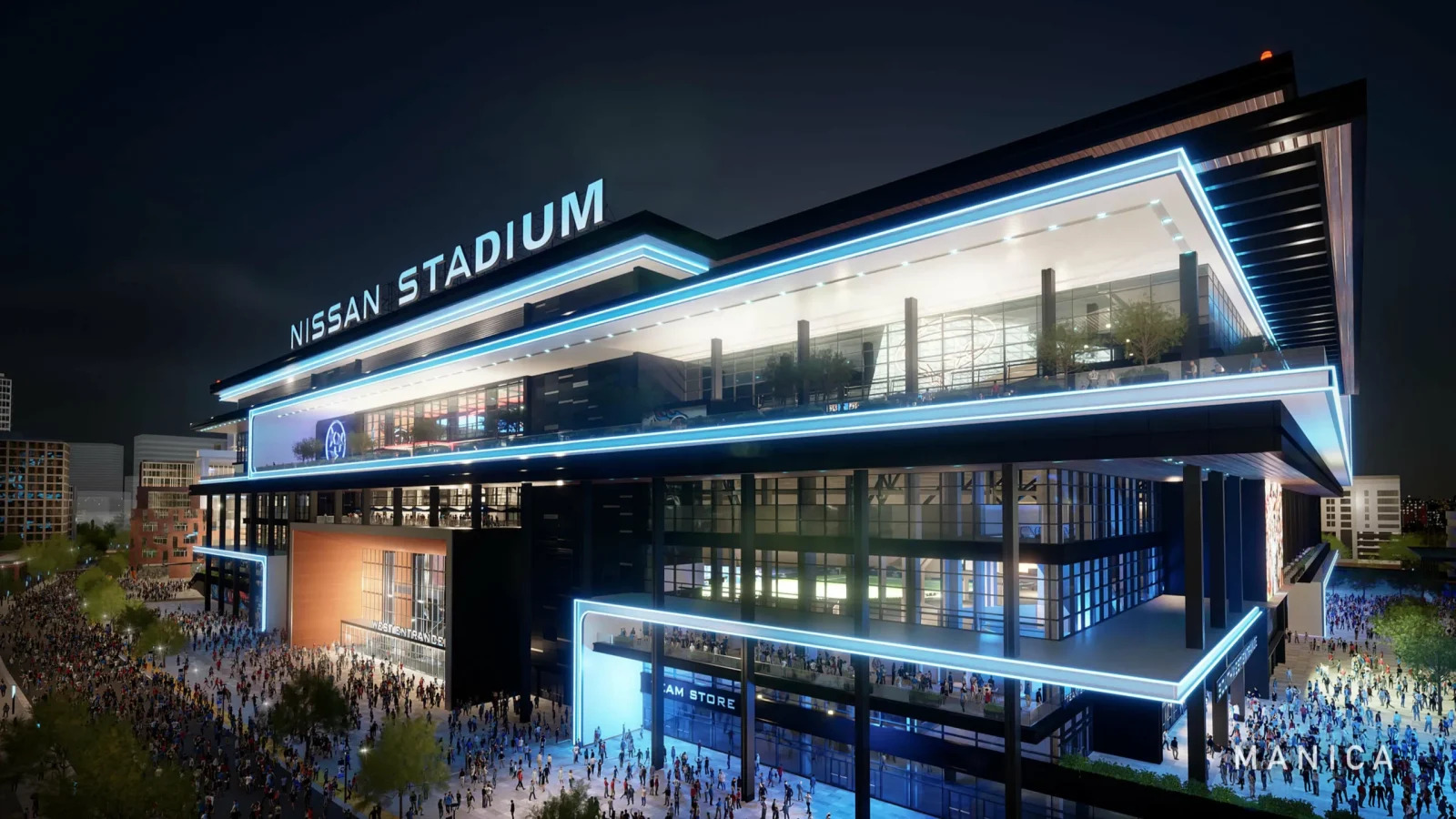


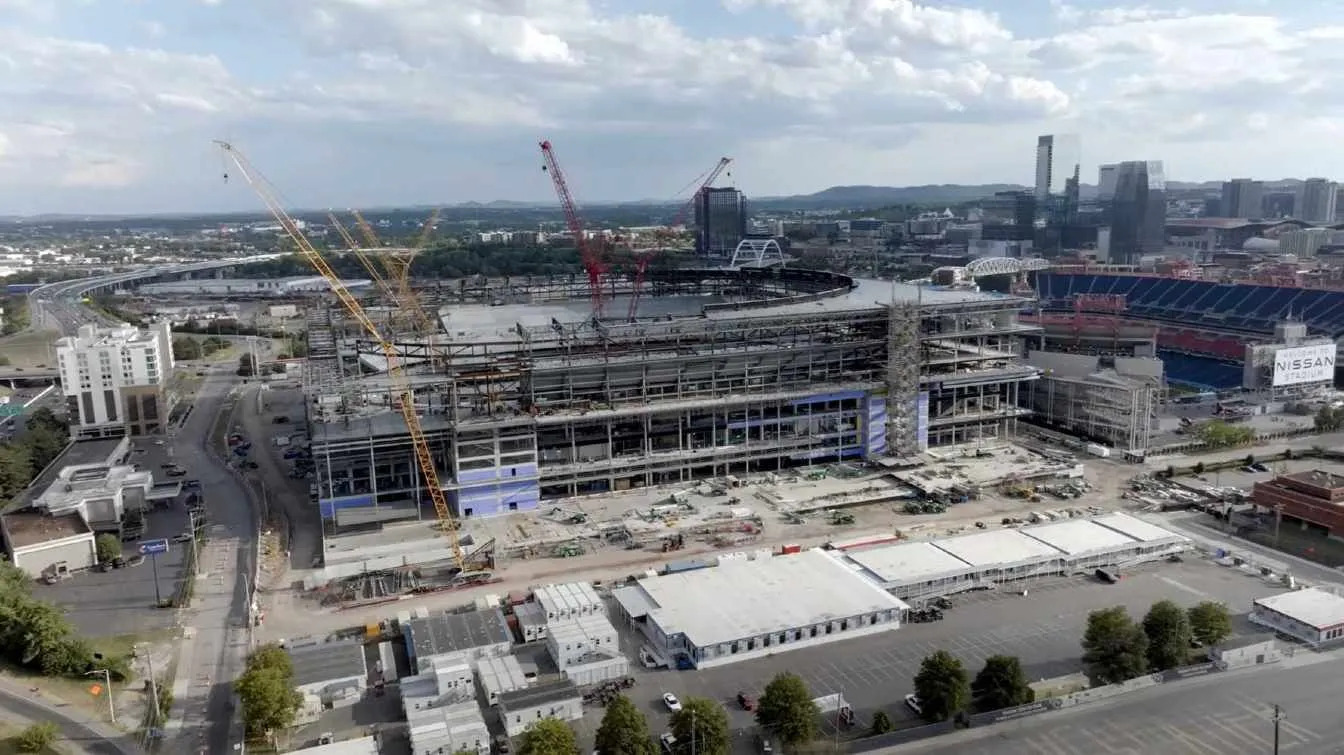
Table of Contents Show
Nashville is entering a major transformation as the new Nissan Stadium, a $2.1 billion development, moves through its final construction phases. Designed to replace the city’s aging open-air venue, the project will give the Tennessee Titans a world-class home and finally allow Nashville to compete for major events, including the Super Bowl, an opportunity the city has long missed due to weather limitations and outdated stadium standards.
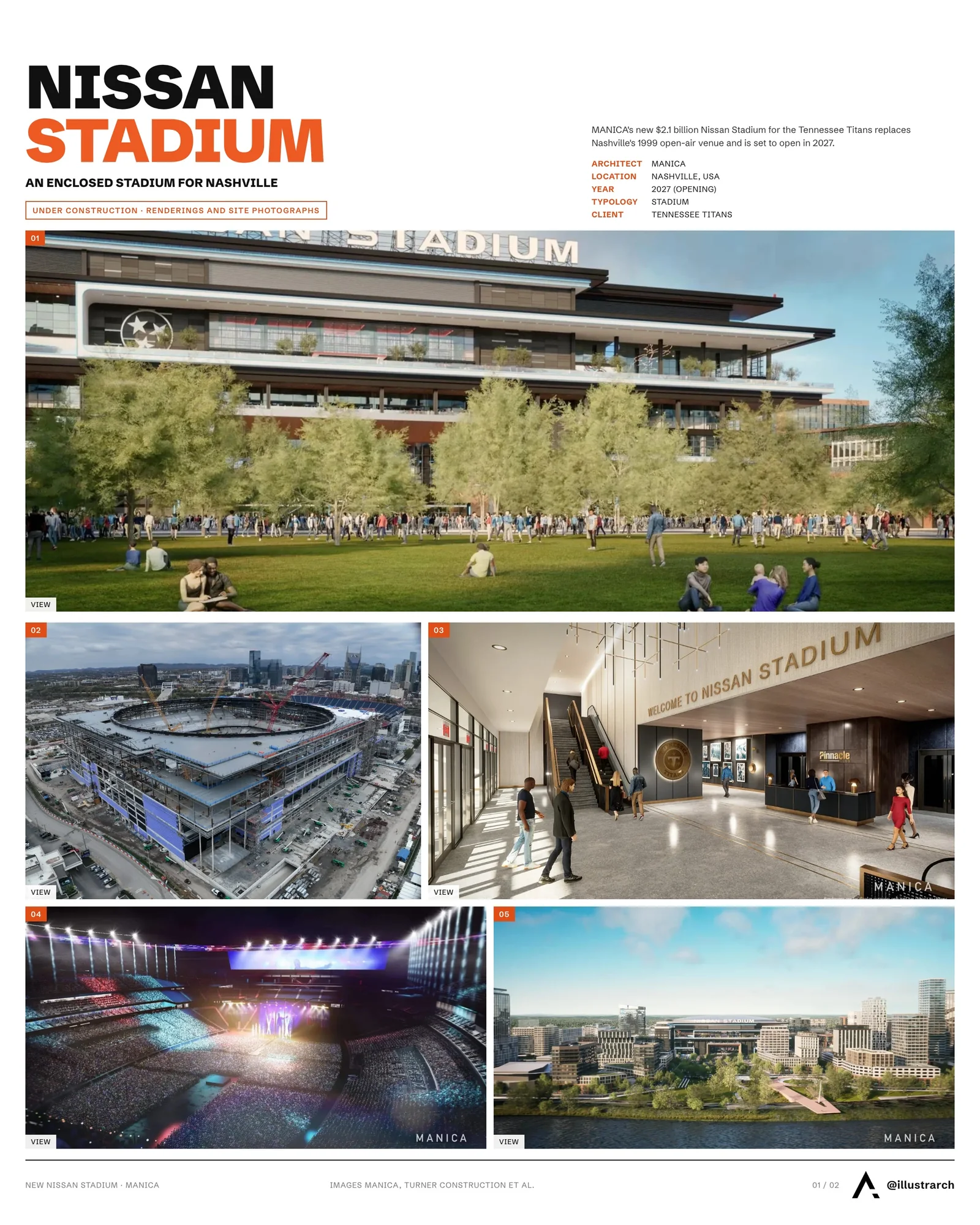
After more than two decades of service, the existing 1999-built Nissan Stadium no longer meets modern NFL requirements or fan expectations. The open roof exposed visitors to harsh winters, and the cost to renovate the old structure had climbed beyond what was economically reasonable. Building a new, enclosed stadium next to the original site became the more efficient long-term solution, offering better comfort, stronger infrastructure, and improved event potential.
A Modern Roof Engineered for All Seasons
A major highlight of the new stadium is its advanced roof system, designed to support events throughout the year. The structure relies on a cable-stayed configuration that is anchored by 50 ring beam boxes and reinforced with high-tension steel cables. Covering this framework is roughly 660 feet of ETFE panels, a lightweight and durable material that lets in natural light while creating a controlled interior environment. ETFE not only protects spectators from rain, snow, and extreme temperatures but also reduces the overall weight of the roof and cuts long-term maintenance costs. Its energy-efficient qualities help the stadium operate comfortably regardless of the season. With this enclosed design, Nashville becomes a strong contender for hosting Super Bowls, NCAA Final Four tournaments, major concerts, and a variety of international sports events.
Structural Progress: Concrete, Steel, and Coordination
The stadium’s construction relies on a hybrid structural system that blends concrete and steel to maximize strength and efficiency. Concrete forms the foundation and lower concourse areas, giving the building a solid base, while steel frames the upper seating bowl and supports the roof structure. In total, the project uses about 19,000 tons of steel, precision-cut into roughly 25,000 components, to create the stadium’s overall form. A coordinated rotation of cranes keeps the site active almost around the clock, allowing crews to maintain steady momentum. This organization is essential for keeping the project on schedule as it moves toward its anticipated opening in 2027.

Seating Bowl Reimagined for Better Sightlines
Designers reduced capacity from around 70,000 to 60,000 to create a closer, more engaging fan experience. On average, spectators will sit nearly 38 percent nearer to the field. Rotating the building footprint by 90 degrees creates a tighter bowl and brings end-zone seating closer, improving atmosphere and sightlines.
Premium Hospitality for a New Generation
The stadium’s hospitality spaces focus on flexibility and comfort, with 130 upgraded suites, 126 studio boxes, and several all-inclusive clubs. Expanded indoor areas, 77,000 square feet of LED screens, frictionless concession systems, and improved vertical circulation through 44 escalators and 27 elevators deliver a modern, premium visitor experience.
A Stadium Designed for the City
Beyond football, the design encourages community use and year-round programming. Transparent façades, terrace-level walkways, and large doors connect the building to its surroundings and offer 360-degree views of Nashville.
The complex will also include a 12,000-square-foot community center to support local events such as:
- Job fairs
- Neighborhood meetings
- Seminars and workshops
- Charity programs
These features position the stadium as both an entertainment hub and civic asset.
Hosting a Super Bowl can generate close to $1 billion in visitor-related spending, benefiting hotels, transportation, restaurants, and small businesses. With Nashville’s fast-growing tourism sector and vibrant downtown scene, the new stadium is expected to strengthen the city’s role as a national cultural and economic destination.
What Happens to the Old Stadium?
Once the new venue opens, the existing Nissan Stadium will be dismantled. Because only 90 feet separate the two structures, implosion is not possible. Instead, crews will carefully remove it using a high-reach mechanical claw. This process will take roughly six months, with each side requiring around three months of controlled demolition.
The upcoming Nissan Stadium represents more than a replacement, it signals a shift in how the city engages with sports, entertainment, and community life. With advanced engineering, enhanced fan comfort, and the ability to host major events, the project marks a new chapter for both the Tennessee Titans and the city itself. As construction nears completion, Nashville moves closer to becoming one of the most dynamic sports destinations in the country.






MoMA’s Full Disclosure Exhibition Traces Information Design from Hand-Drawn Data to AI Memories
Full Disclosure: The Edge of Information Design, curated by Paola Antonelli, is...
 illustrarch Editoral Team2 Mins read
Zumthor’s Three New Buildings Open at Fondation Beyeler in Riehen
Peter Zumthor's Wyss Museum, Ammann Pavilion and Erlen Torhaus open at Fondation...
illustrarch Editoral Team4 Mins read

Benthem Crouwel Completes the Afsluitdijk Revamp with a Fish Passage and Domed Pumping Stations
The 32 km Afsluitdijk in the Netherlands has been raised, armoured and...
illustrarch Editoral Team2 Mins read
Luxembourg Pavilion Tackles the Overconsumption of Living Space at the 2027 Venice Biennale
Curated by Céline Zimmer and Exutoire, the Luxembourg Pavilion's Excess! will compare...
illustrarch Editoral Team2 Mins read


Leave a comment