

10 Examples of the Golden Ratio in Iconic Buildings
Discover 10 iconic buildings that embody the Golden Ratio, showcasing how proportional harmony shapes architecture from ancient monuments to modern masterpieces.
 Begum Gumusel8 December 20259 Mins read477
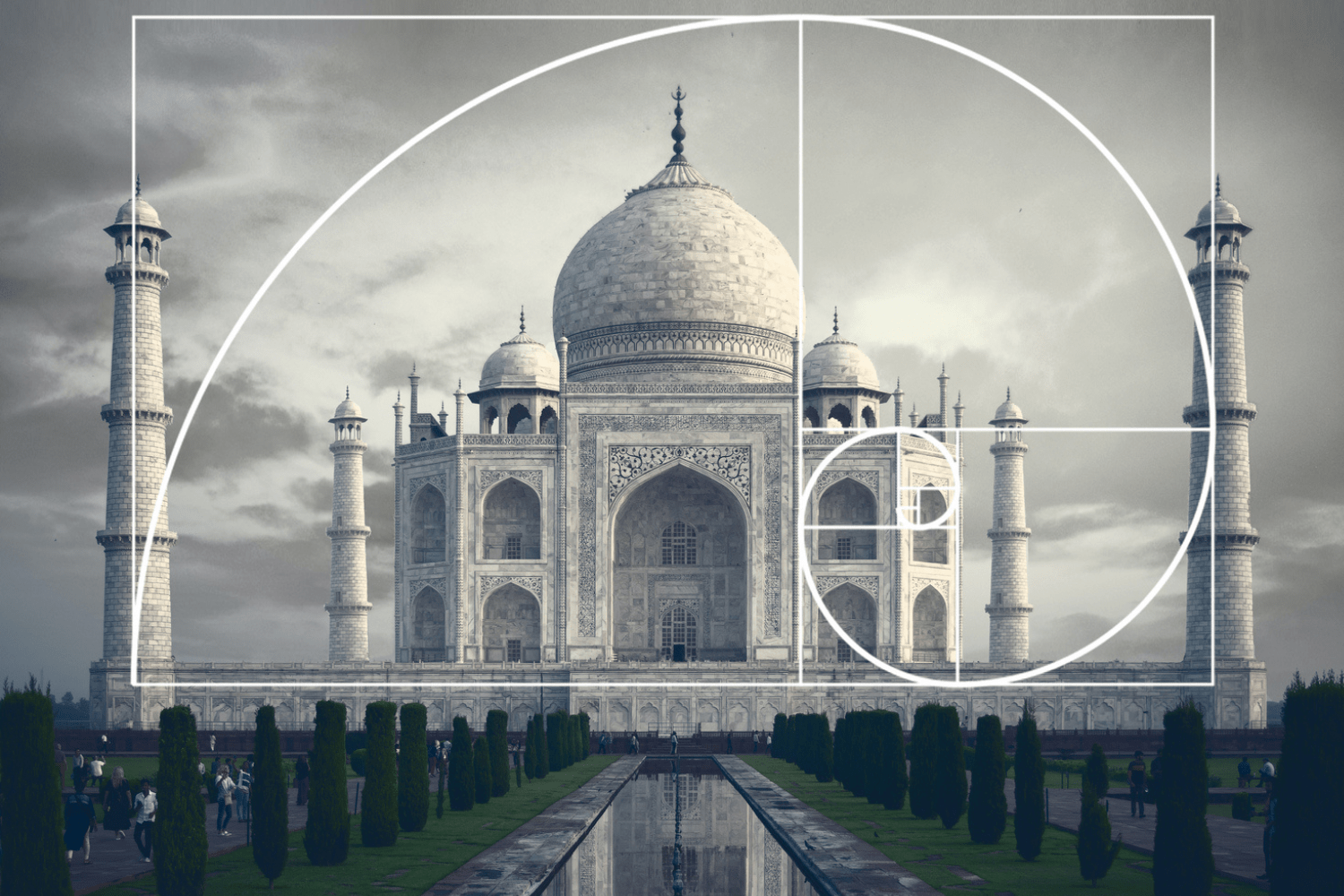
Table of Contents Show
The Golden Ratio has long served as a bridge between mathematics and visual harmony, offering architects a timeless proportional system that enriches both form and perception. Found throughout nature, art, and geometry, this 1:1.618 relationship creates naturally pleasing compositions that resonate across cultures. Architecture, perhaps more than any other design field, uses the Golden Ratio to shape balanced façades, elegant spatial sequences, and rhythmic structural systems. From ancient monuments to contemporary landmarks, the following ten examples illustrate how architects throughout history have embraced this mathematical ideal to create buildings that remain visually compelling and structurally coherent.
Golden Ratio in Iconic Buildings: Overview Table
| # | Building | Location | Year Built | Architect(s) | Architectural Style | Golden Ratio Application |
|---|---|---|---|---|---|---|
| 1 | The Parthenon | Athens, Greece | 447-432 BC | Iktinos & Kallikrates | Classical Greek | Façade width-to-height, column spacing |
| 2 | Great Pyramid of Giza | Giza, Egypt | c. 2560 BC | Hemiunu (attributed) | Ancient Egyptian | Slant height to half-base ratio ≈ 1.618 |
| 3 | Notre-Dame Cathedral | Paris, France | 1163-1345 | Jean de Chelles, Pierre de Montreuil, Pierre de Chelles | Gothic | Façade vertical/horizontal divisions, rose window |
| 4 | The Taj Mahal | Agra, India | 1632-1653 | Ustad Ahmad Lahori | Mughal | Dome-to-façade proportion, garden layout |
| 5 | UN Secretariat Building | New York, USA | 1948-1952 | Le Corbusier & Oscar Niemeyer | International / Modernist | Tower height-to-width, window proportions |
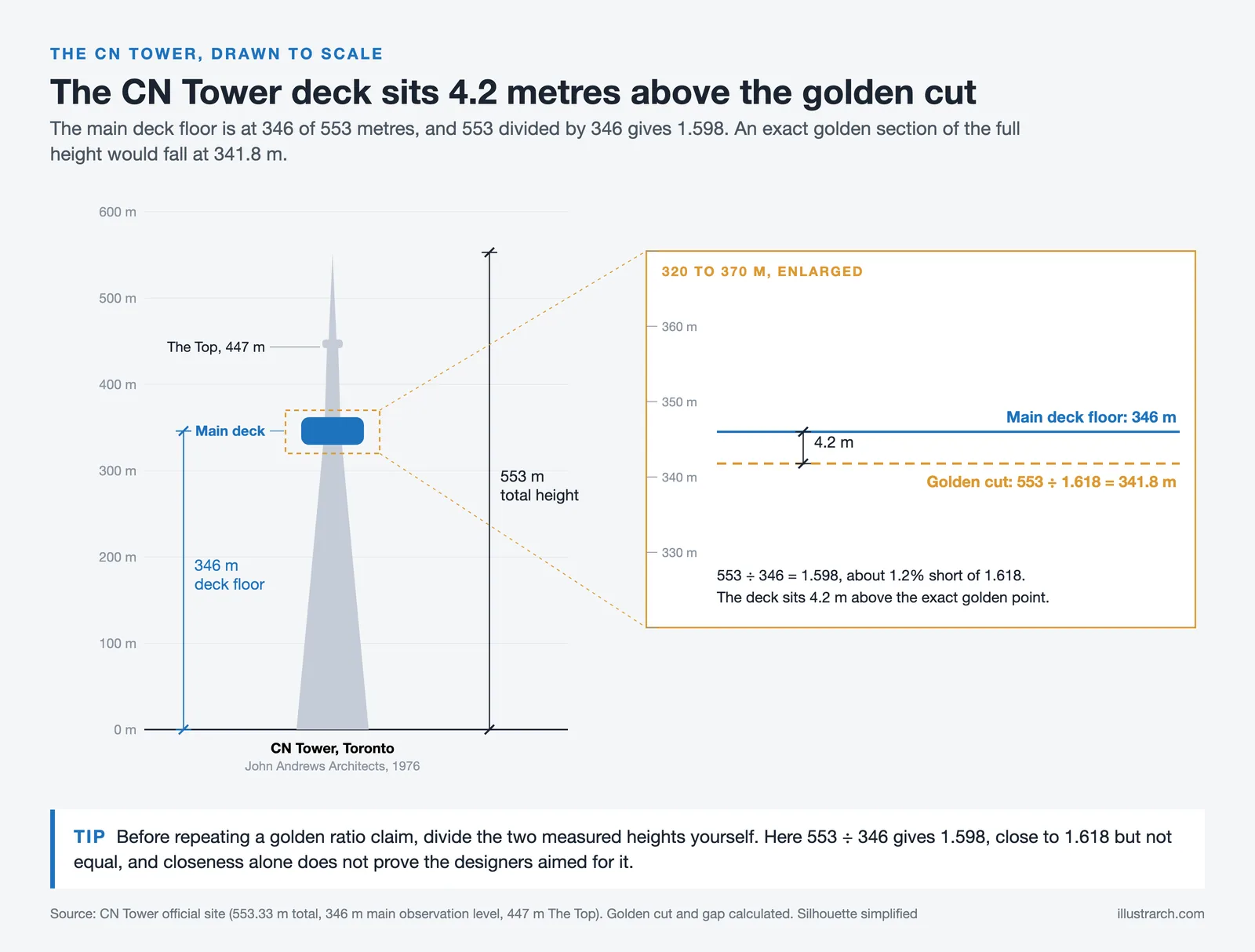
| 6 | The CN Tower | Toronto, Canada | 1973-1976 | John Andrews Architects | Structural Expressionism | Total height to observation deck height ≈ 1.60 |
| 7 | Sydney Opera House | Sydney, Australia | 1959-1973 | Jørn Utzon | Expressionist / Modern | Shell curvature interrelationships |
| 8 | Villa Stein | Garches, France | 1926-1928 | Le Corbusier | Modern / Purism | Façade divisions, Modulor system, window spacing |
| 9 | Guggenheim Museum | New York, USA | 1956-1959 | Frank Lloyd Wright | Organic Architecture | Spiral ramp progression, Fibonacci scaling |
| 10 | Cathedral of Brasília | Brasília, Brazil | 1958-1970 | Oscar Niemeyer | Brazilian Modernism | Column spacing rhythm, hyperbolic curve intervals |
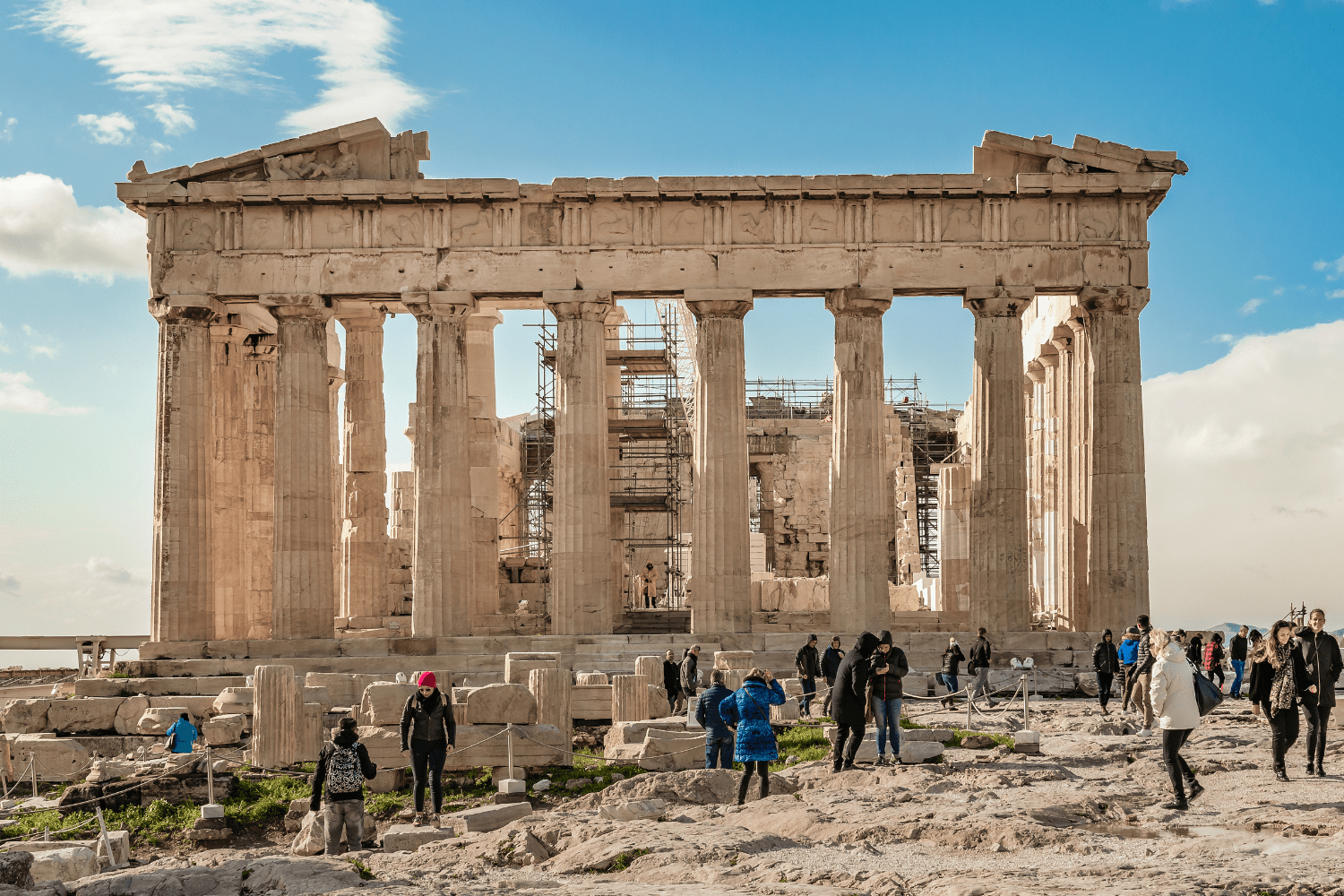
1. The Parthenon
One of the most referenced architectural examples of the Golden Ratio, the Parthenon in Athens showcases proportional precision in its façade and structural layout. Scholars highlight the relationship between the temple’s width, height, and column spacing, which align closely with the Golden Ratio. These proportional strategies contribute to a façade that feels balanced from every vantage point, reinforcing the Greeks’ belief that mathematical harmony was essential to beauty. The Parthenon’s enduring visual stability demonstrates how ancient architects mastered proportion long before modern analytical tools.
Free Online Golden Ratio Calculator
Nearest Fibonacci Numbers
Golden Rectangle
Image Golden Ratio Overlay

2. The Great Pyramid of Giza
The Great Pyramid is another ancient masterpiece whose proportions echo the Golden Ratio. When comparing the pyramid’s slant height to half of its base length, the ratio approaches 1.618. This alignment may have been intentional or coincidental, but its effect is undeniable: the pyramid achieves a timeless equilibrium between vertical rise and horizontal grounding. This proportional balance is one of the reasons the structure remains both monumental and graceful despite its massive scale.


Golden Ratio Measurements in Ancient Structures
| Building | Measurement A | Measurement B | Ratio (A/B) | Ideal φ | Deviation |
|---|---|---|---|---|---|
| The Parthenon | Stylobate length: 69.5 m | Stylobate width: 30.9 m | 2.25 (≈ 9:4) | 1.618 | Debated* |
| Height of monument | Height of columns | Debated* | 1.618 | Debated* | |
| Great Pyramid of Giza | Slant height: 186.4 m | Half-base: 115.15 m | 1.619 | 1.618 | ~0.06% |
| CN Tower | Total height: 553 m | Observation deck: 346 m | 1.598 | 1.618 | ~1.2% |
*The Parthenon’s use of the Golden Ratio is debated among scholars. Some researchers argue the 9:4 ratio is the dominant proportional system, while others identify Golden Ratio relationships in specific elements of the façade and floor plan.
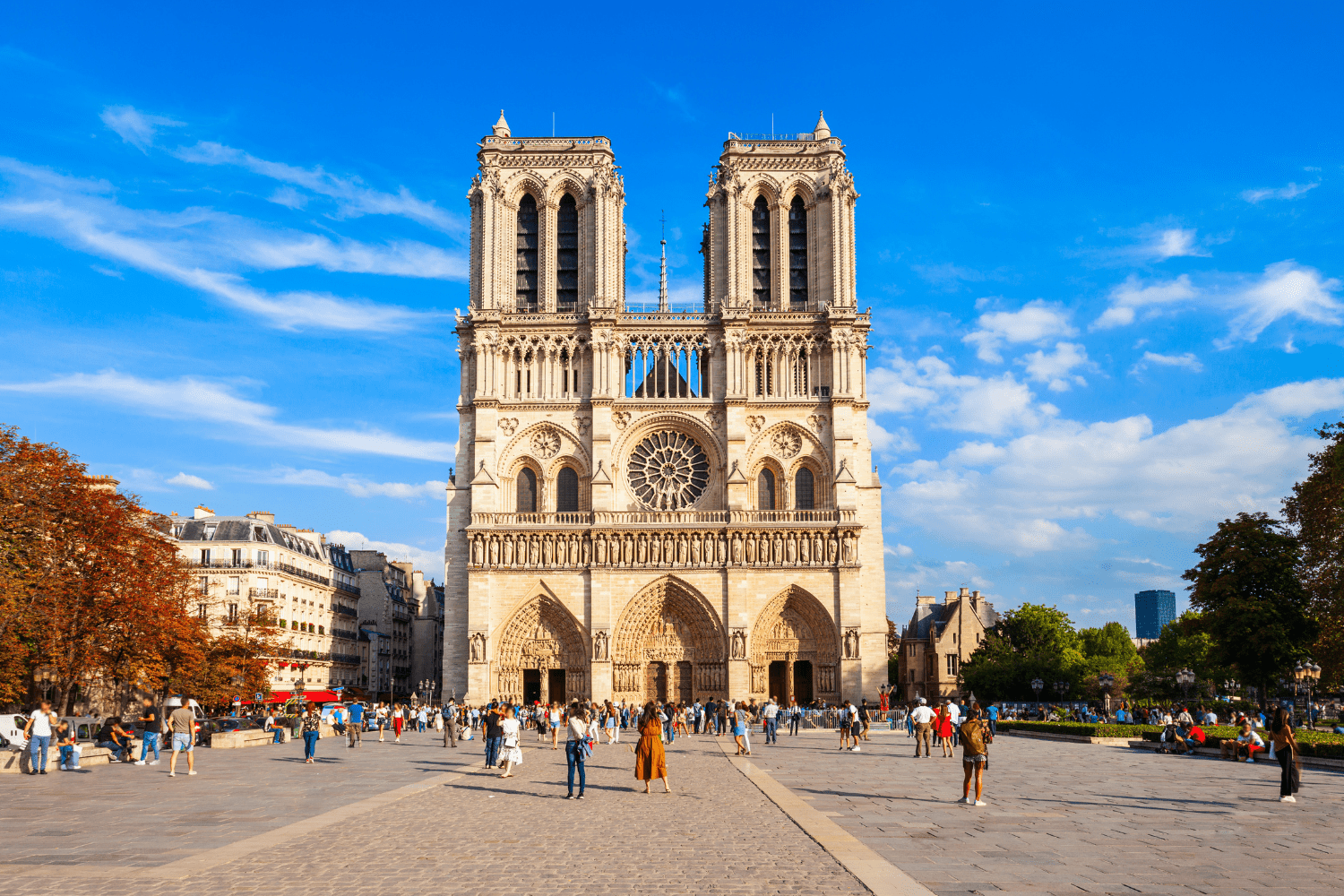
3. Notre-Dame Cathedral
Medieval architects frequently relied on harmonious ratios, and Notre-Dame Cathedral in Paris exemplifies this tradition. The façade’s vertical and horizontal divisions reflect relationships approximating the Golden Ratio, contributing to its highly ordered yet richly detailed composition. The placement of towers, rose window dimensions, and the sequence of architectural tiers work together to create a visually coherent elevation that unifies complexity with structural clarity.
4. The Taj Mahal
Regarded as one of the most beautiful buildings in the world, the Taj Mahal integrates the Golden Ratio into its plan, elevation, and ornamental geometry. The height of the central dome and its relation to the surrounding façade exhibit proportional harmony. Additionally, the layout of the gardens and reflecting pools reinforce symmetrical and ratio-based organization. These carefully calibrated relationships help the monument achieve its iconic sense of serenity and perfection.

5. The United Nations Secretariat Building
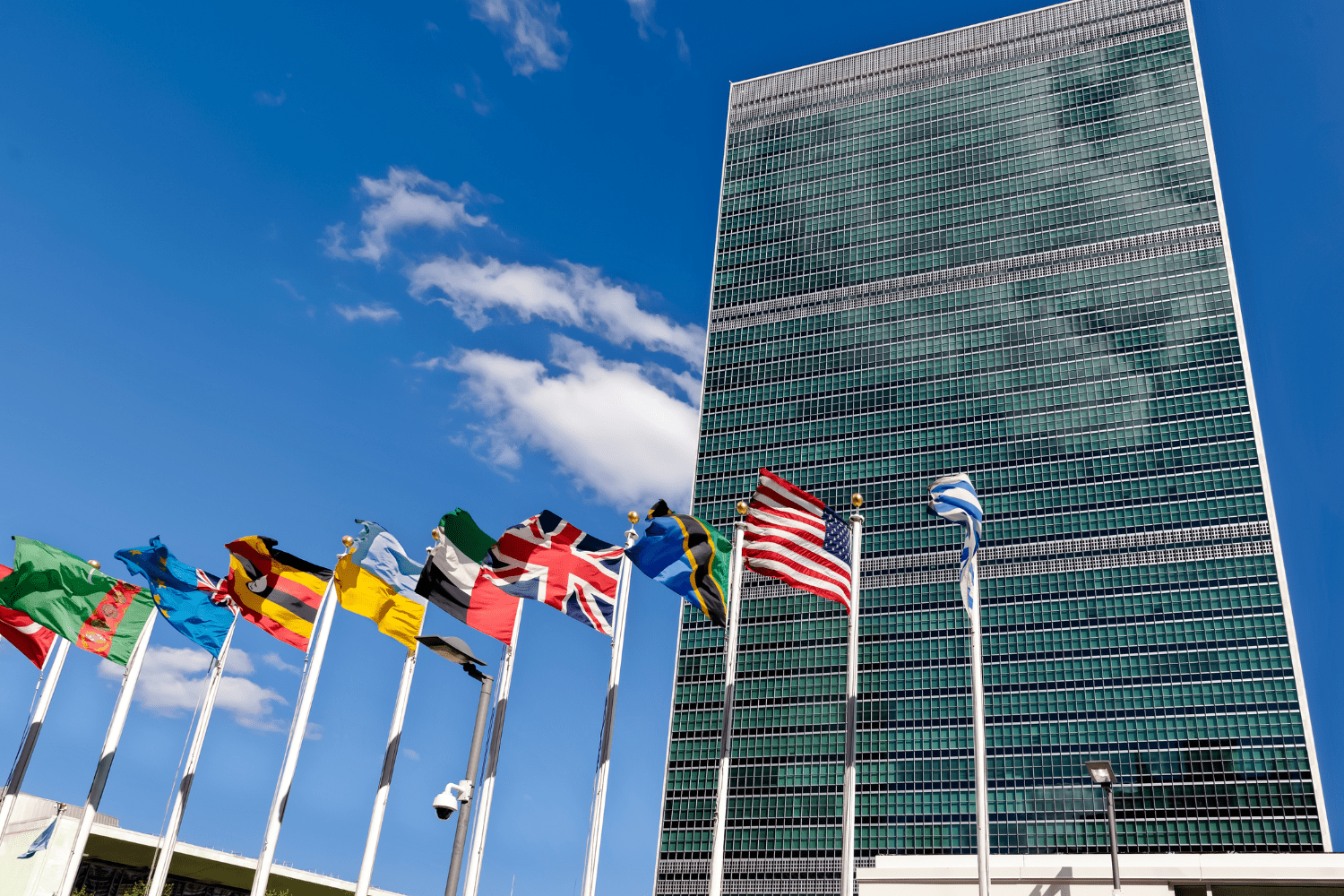
A modern example of Golden Ratio application, the United Nations Secretariat Building in New York utilizes proportional systems to guide its façade arrangement. The ratio influenced the relationship between the tower’s height and width, creating a slender, elegant profile that embodies the mid-century pursuit of rationality and clarity. Its sleek rectangular geometry demonstrates how the Golden Ratio can subtly inform modernist compositions.
6. The CN Tower
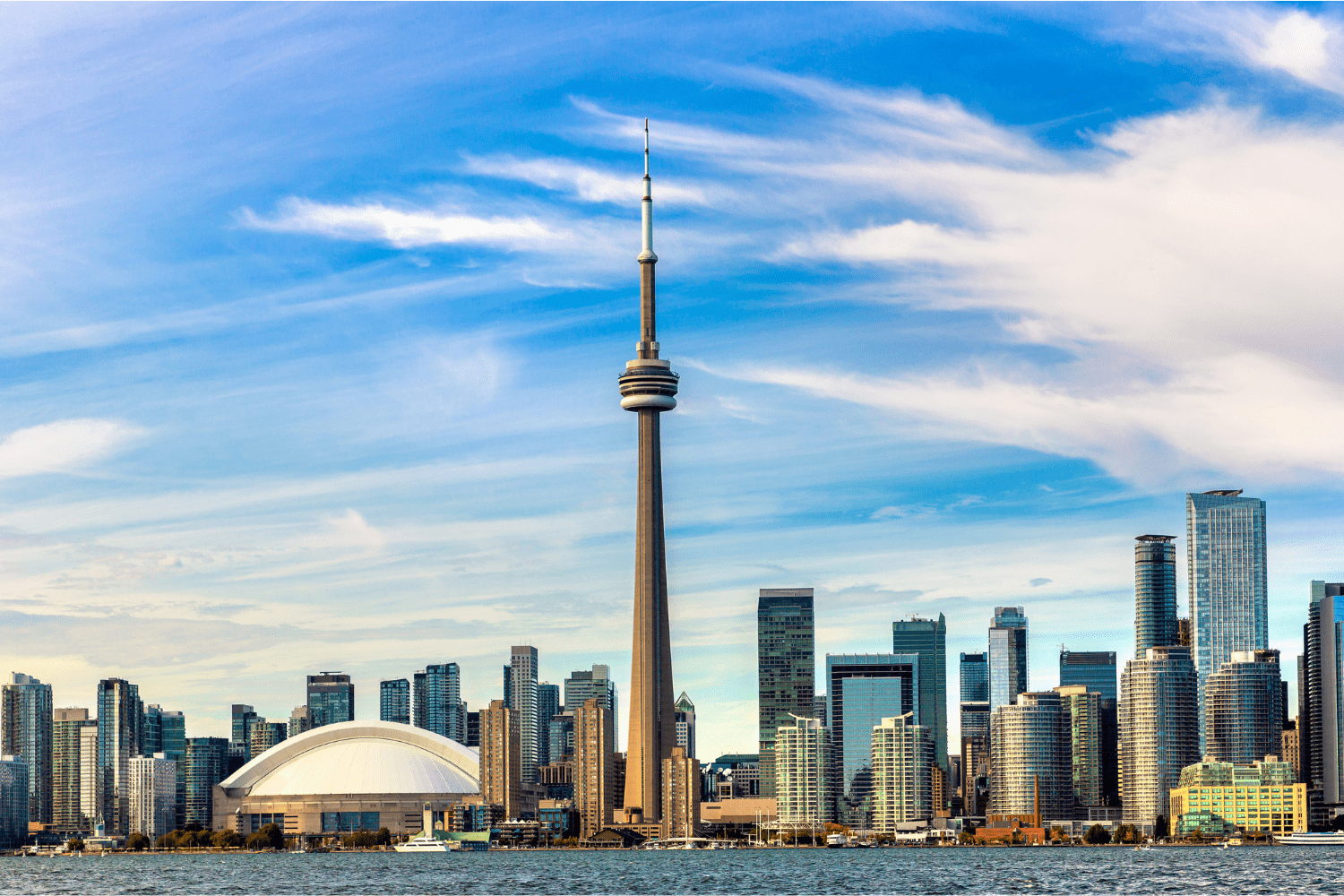
While seemingly a purely functional telecommunications structure, Toronto’s CN Tower incorporates ratio-based relationships in its overall form. The transition between its base, shaft, and observation levels aligns with scaling patterns reminiscent of the Golden Ratio. Such proportional logic contributes to the tower’s visually unified tapering silhouette, allowing a massive engineering structure to maintain aesthetic refinement.
7. The Sydney Opera House
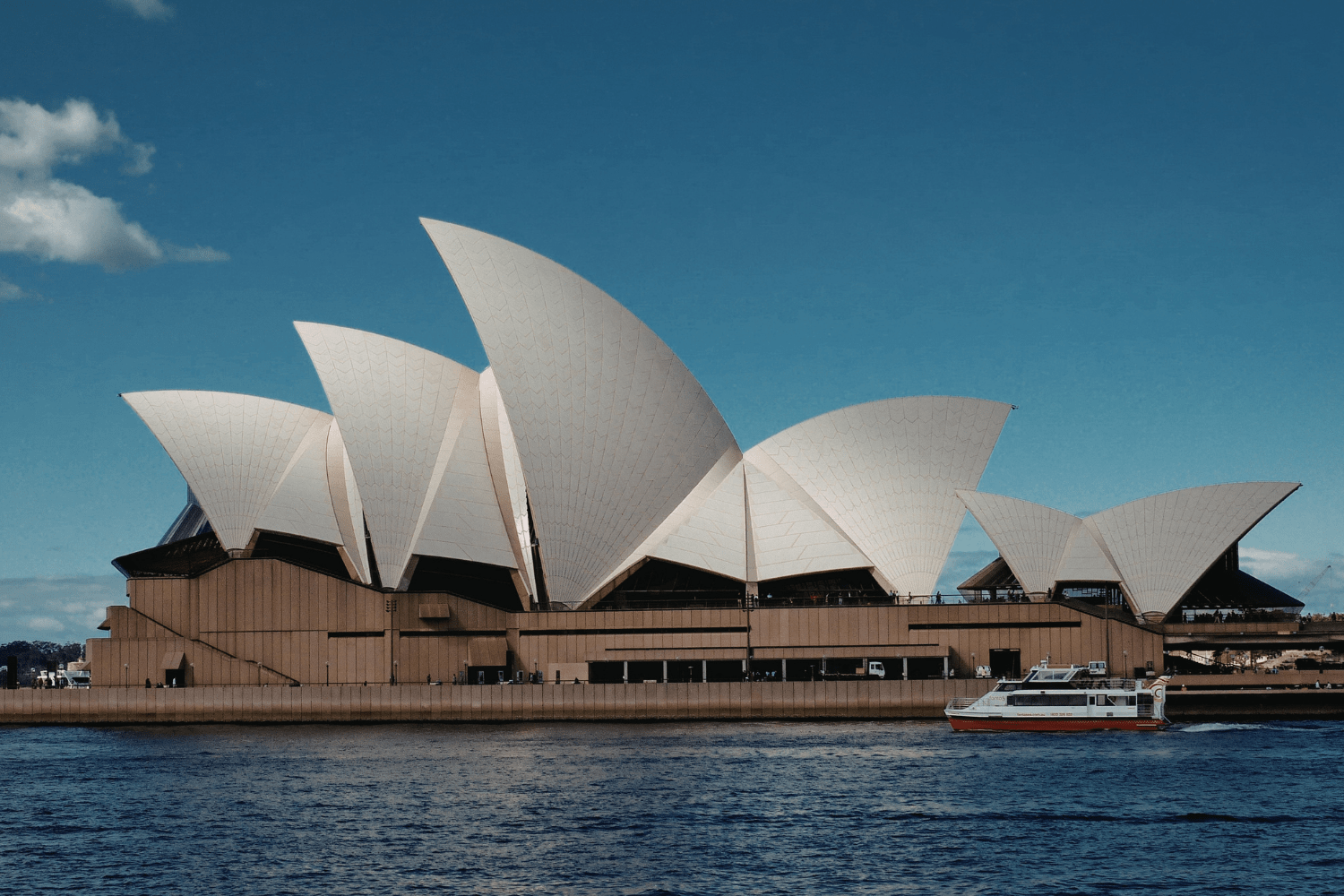
Although known for its expressive shell-like forms, the Sydney Opera House also follows underlying proportional rhythms. The curvature of the shells and their interrelationships align with geometric rules derived from circles and ratios similar to the Golden Ratio. These mathematical principles help unify the diverse components of the structure, creating coherence within its bold sculptural expression.
8. Le Corbusier’s Villa Stein
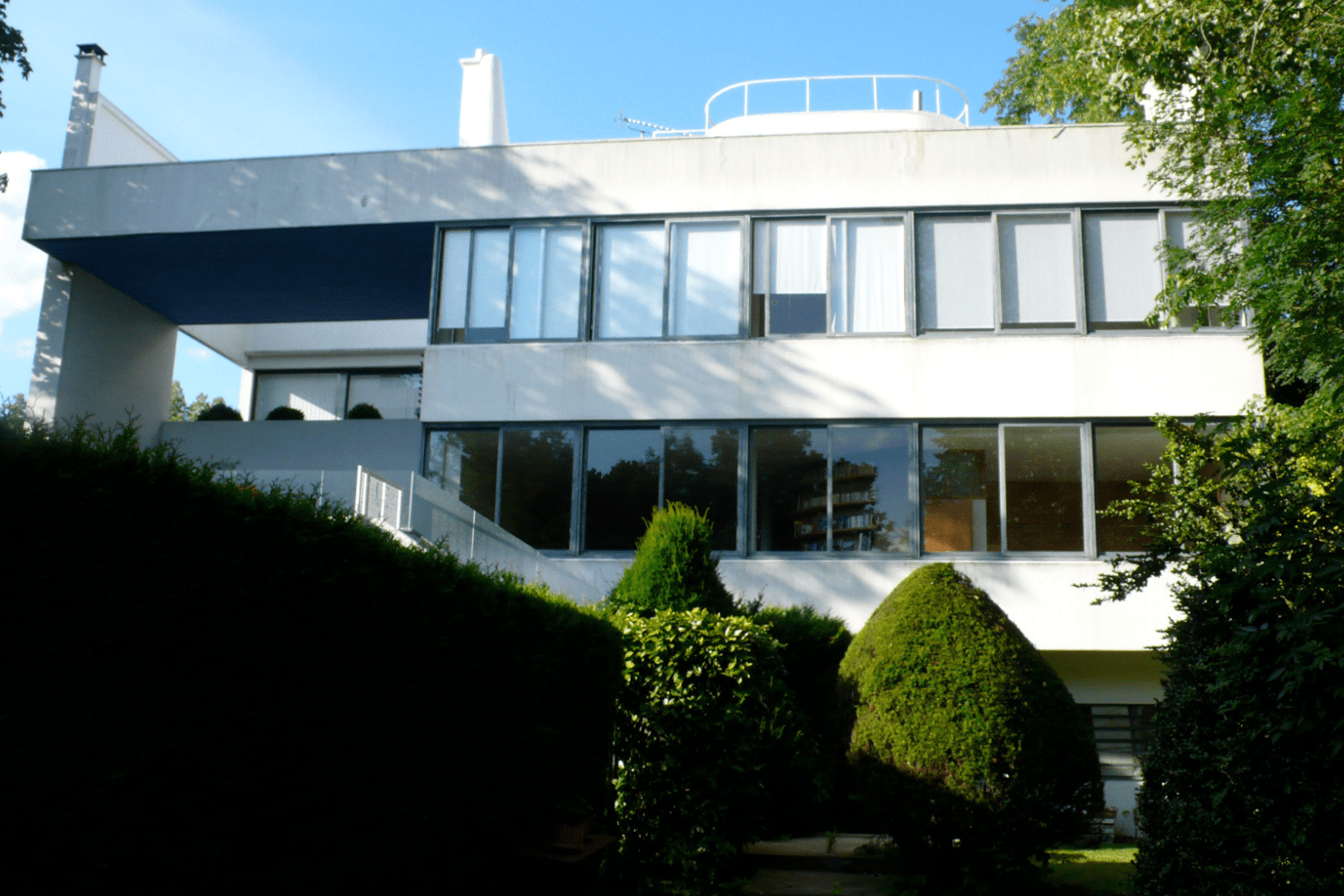
Le Corbusier’s design for Villa Stein reveals deliberate use of Golden Ratio-based proportioning. Its façade divisions, window spacing, and volumetric relationships draw from the Modulor system, which was itself rooted in the Golden Ratio. The result is a façade that feels intuitively ordered, neither rigid nor arbitrary, reflecting Corbusier’s belief that proportion is central to architectural beauty.
9. The Guggenheim Museum (New York)
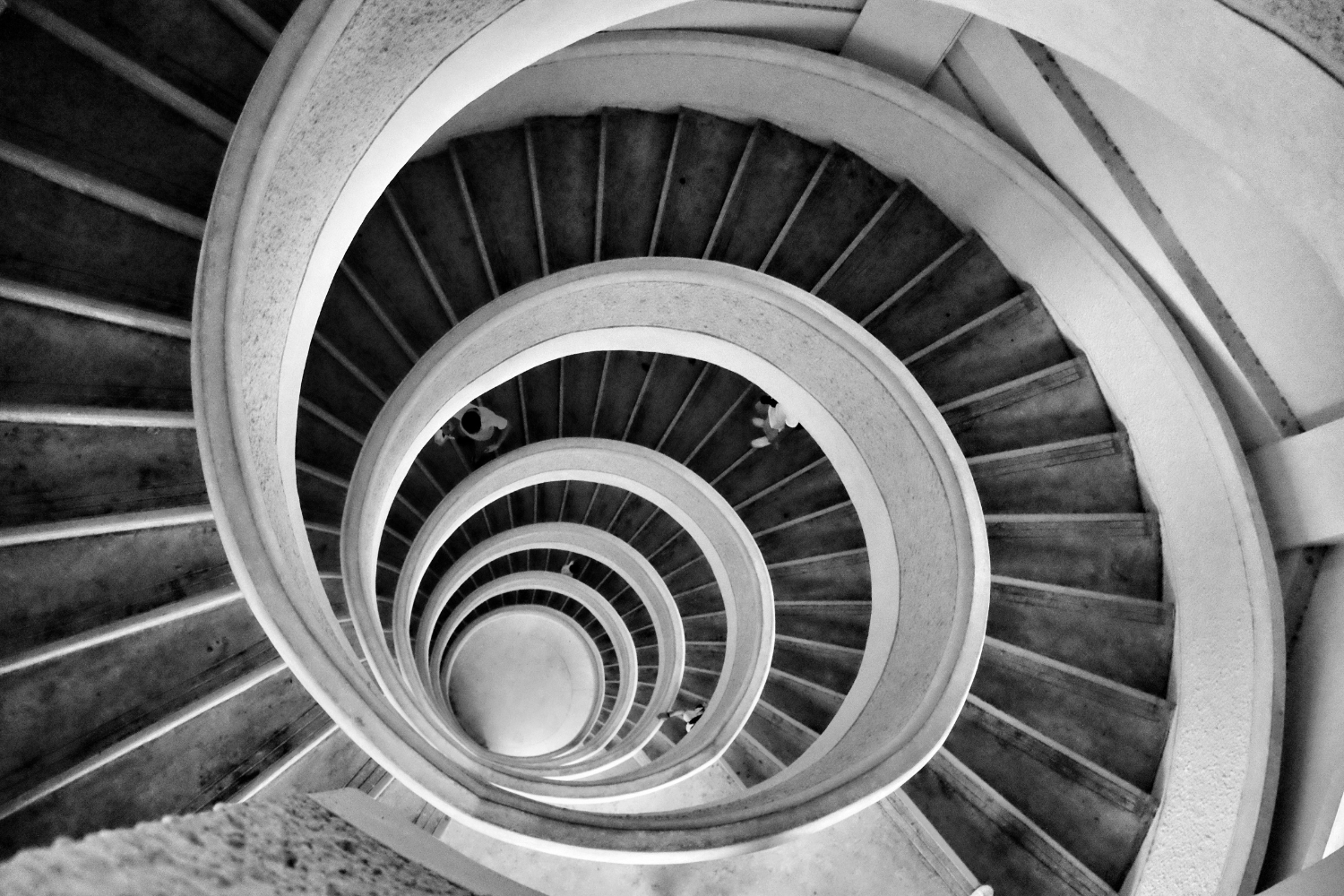
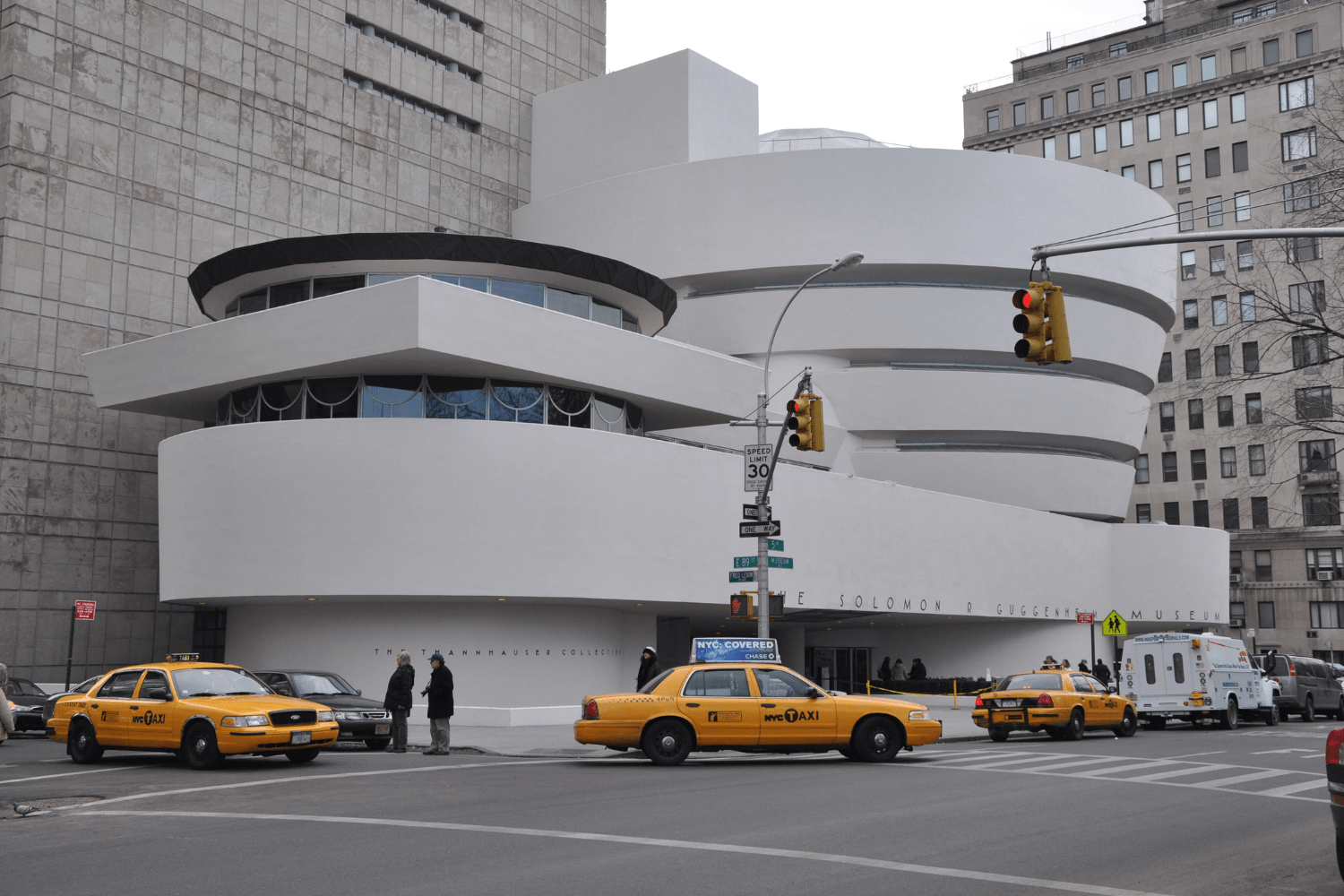
Frank Lloyd Wright often employed natural geometries, and the Guggenheim Museum incorporates proportional sequences consistent with the Golden Ratio. The spiraling ramp, widening form, and overall scaling of the museum reflect a progression that resonates with Fibonacci-based geometry. These relationships help the building achieve a unique sense of flow, guiding visitors through a continuous spatial experience.
10. The Cathedral of Brasília
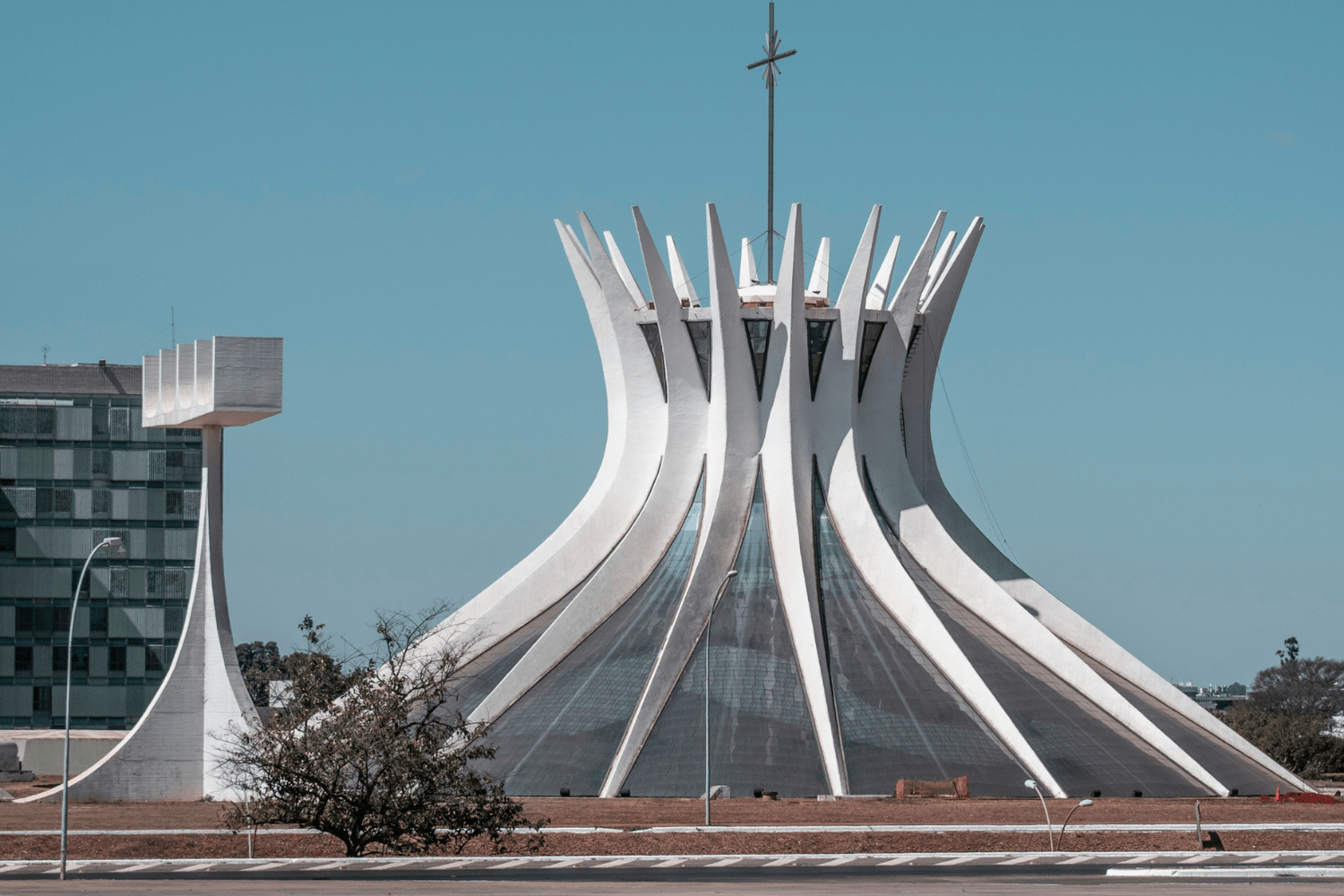
Designed by Oscar Niemeyer, the Cathedral of Brasília uses sweeping hyperbolic curves arranged in a repeated pattern that reflects Golden Ratio-like spacing. The rhythm of the structural columns and the spacing between them contribute to the cathedral’s uplifting and harmonious atmosphere. This integration of expressive form with measured proportion creates a spiritual and visually balanced architectural icon.
Golden Ratio in Architecture: Timeline Comparison
| Era | Building | Year | Primary Material | Building Type | Proportional System | Intentional Use of φ? |
|---|---|---|---|---|---|---|
| Ancient | Great Pyramid of Giza | c. 2560 BC | Limestone, Granite | Tomb / Monument | Geometric (slant/base ratio) | Debated |
| The Parthenon | 447-432 BC | Pentelic Marble | Temple | Geometric (9:4 and φ-related) | Debated | |
| Medieval | Notre-Dame Cathedral | 1163-1345 | Limestone | Cathedral | Geometric (Gothic proportions) | Likely |
| Mughal | The Taj Mahal | 1632-1653 | White Marble, Red Sandstone | Mausoleum | Geometric (symmetry + φ) | Likely |
| Modern (20th c.) | Villa Stein | 1926-1928 | Reinforced Concrete | Residential Villa | Modulor System (φ-based) | Yes ✓ |
| UN Secretariat Building | 1948-1952 | Steel, Glass, Marble | Government Office | Modulor / Golden Rectangle | Yes ✓ | |
| Guggenheim Museum | 1956-1959 | Reinforced Concrete | Museum | Fibonacci / Organic geometry | Implied | |
| Late Modern / Contemporary | Cathedral of Brasília | 1958-1970 | Reinforced Concrete, Glass | Cathedral | Hyperbolic curves (φ-like) | Implied |
| Sydney Opera House | 1959-1973 | Concrete, Ceramic Tiles | Performing Arts Center | Spherical geometry (φ-related) | Implied | |
| CN Tower | 1973-1976 | Reinforced Concrete, Steel | Telecommunications Tower | Scaling ratios (φ-related) | Likely |
How the Golden Ratio Manifests in Each Building
| Building | Façade Proportions | Floor Plan / Layout | Structural Elements | Ornamental / Details | Overall Massing |
|---|---|---|---|---|---|
| The Parthenon | ✔ | ✔ | ✔ | ✔ | ✔ |
| Great Pyramid of Giza | , | ✔ | , | ✔ | |
| Notre-Dame Cathedral | ✔ | : | ✔ | ✔ | ✔ |
| The Taj Mahal | ✔ | ✔ | : | ✔ | ✔ |
| UN Secretariat Building | ✔ | , | , | ✔ | ✔ |
| The CN Tower | , | , | ✔ | : | ✔ |
| Sydney Opera House | , | , | ✔ | : | ✔ |
| Villa Stein | ✔ | ✔ | : | ✔ | ✔ |
| Guggenheim Museum | : | ✔ | ✔ | : | ✔ |
| Cathedral of Brasília | : | ✔ | ✔ | : | ✔ |
How Architects Use the Golden Ratio in Building Design
Architects have been using the golden ratio for centuries, on the belief that it creates balance and harmony in a building. The ratio turns up in many elements: the overall proportions of a mass, the placement of windows and doors, and the design of decorative elements. Applications range from setting the height-to-width ratio of a facade to organising interior spaces and structural grids, and the same logic scales down into furniture and detail.
The practical method is simpler than the mathematics suggests. Most architects begin with the bounding rectangle of the main elevation, check whether it approaches 1:1.618, then subdivide it to place the major horizontal bands. Only after the envelope is settled do the smaller divisions, window bays, cornice lines, entrance widths, get tuned against the same ratio.
How Are the Golden Ratio and Fibonacci Sequence Related?
The Fibonacci sequence is the golden ratio’s practical companion. Each consecutive pair of Fibonacci numbers approximates phi more closely than the last, 8/5 = 1.600, 13/8 = 1.625, 21/13 = 1.615, which hands architects usable whole-number ratios instead of an irrational decimal. That is why Fibonacci numbers appear in facade rhythms, structural grids, and spatial hierarchies from medieval cathedrals through to contemporary towers.

Le Corbusier formalised the connection in his Modulor system, and the relationship is easiest to see in repetition: a bay sequence of 3, 5, 8, 13 metres reads as a golden progression without any single dimension being irrational. For the underlying mathematics and the historical debate, see our guide to the golden ratio in architecture.
The Modulor: Le Corbusier’s Golden Ratio System
No account of the golden ratio in modern architecture is complete without the Modulor. Developed by Le Corbusier between 1943 and 1955, it is a scale of proportions derived from the human figure and the golden ratio. It consists of two number series, the Red and Blue series, based on the height of a person with a raised arm (2.26 m) and navel height (1.13 m). Base measurements are multiplied and divided by phi to generate a complete range of dimensions.
Le Corbusier used the Modulor to set furniture sizes, ceiling heights, door widths, and entire building facades. It remains the most systematic attempt to fold phi into a complete architectural workflow, and, unlike most historical claims, it is documented by its own author through the Fondation Le Corbusier.

More Buildings That Use the Golden Ratio
The ten cases above are the most frequently cited, but they are not the whole list. The buildings below extend the pattern across Roman, Gothic, Neoclassical and modernist work.
The Colosseum, Rome
The Colosseum is an iconic example of ancient Roman architecture, built well before the ratio was formally named. Its elliptical plan measures roughly 188 m by 156 m, a ratio of about 1.205, so the overall footprint is not a golden rectangle. The proportional reading sits elsewhere: the relationship between the arena floor and the surrounding seating structure comes closer to 1.618, and the vertical division of the four external orders (Doric, Ionic, Corinthian, and the Corinthian attic) follows a similar logic.

Villa Savoye, Poissy
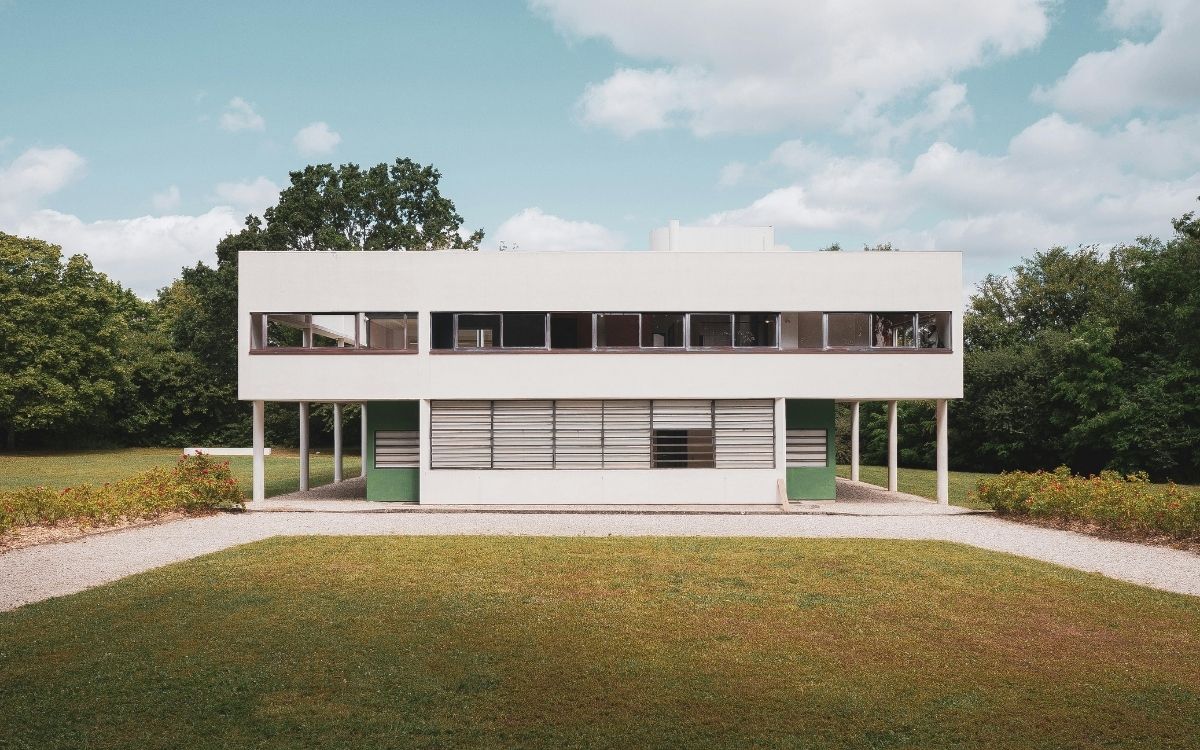
Le Corbusier’s Villa Savoye is one of the clearest documented cases of deliberate golden ratio application in twentieth-century architecture. The villa is set out on a modular grid proportioned by the Modulor, and the ratio carries through to the rooms, doors and windows rather than stopping at the elevation. The result is a building where no single dimension feels arbitrary.
The Seagram Building, New York
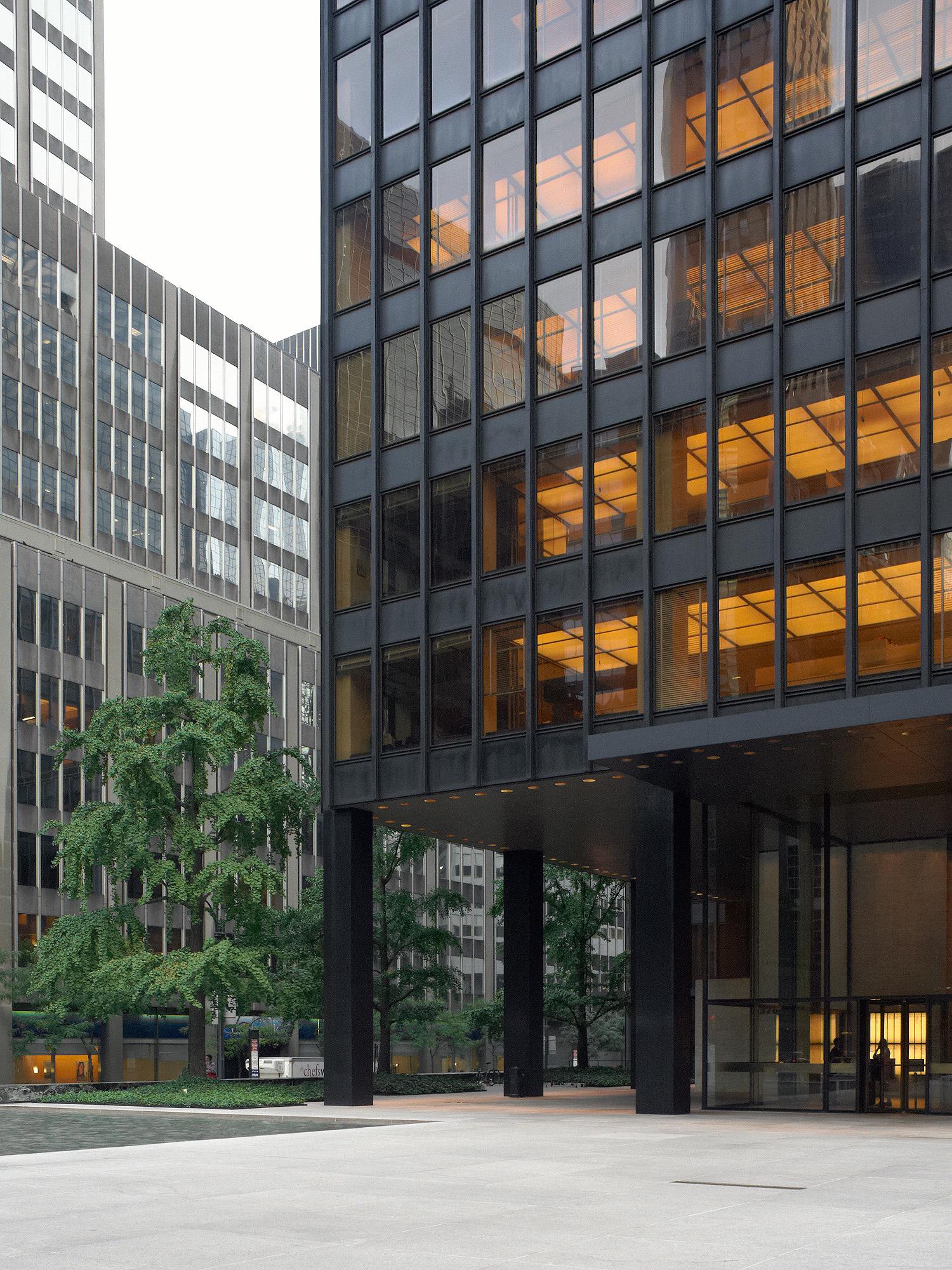
Mies van der Rohe’s Seagram Building is a restrained modernist tower whose massing aligns closely with phi: its 157-metre height and its calculated setback from Park Avenue produce a facade proportion near 1.618. The proportional rigour continues in the spacing of the bronze-clad mullions and the rhythm of the window bays. The building carries almost no ornament, which makes the proportions themselves the visible design decision.
Chartres Cathedral
Built mainly between 1194 and 1220 CE, Chartres is one of the most studied proportional systems of the medieval period. The west facade is organised around vertical and horizontal divisions that approximate golden rectangles: the height from ground to the base of the gable relates to the width of the central portal zone in a ratio near 1.618. The three portals are sized in proportional steps, the central one largest and the flanking ones progressively smaller, following Fibonacci-like scaling.
The Lincoln Memorial, Washington D.C.
Henry Bacon’s Lincoln Memorial (completed 1922) is a Neoclassical structure that borrows Greek temple proportions. Its plan measures about 57.8 m by 36.1 m, a ratio near 1.60. The clearer golden reading is on the elevation: the 13.4-metre column height against the roughly 8.3-metre attic above produces a ratio of about 1.61, which gives the memorial its balance between vertical emphasis and horizontal calm.
Unité d’Habitation, Marseille
Completed by Le Corbusier in 1952, the Unité is the most direct application of the golden ratio to a residential building in modern architecture. Every dimension of the 337-unit block follows the Modulor: ceiling heights, apartment widths, balcony depths and corridor dimensions. The standard ceiling height is 2.26 m, the raised-arm measurement, while the apartment width of 3.66 m is 2.26 multiplied by 1.618.
Apple Park, Cupertino
Foster + Partners’ Apple Park (2017) shows the proportion operating at campus scale. The ring’s radius-to-width relationships and the module of the curved facade panels are set on proportional series rather than round numbers, which is what allows a 1.6-kilometre circumference to read as calm rather than monotonous.

The Fibonacci House
Named after the mathematician who introduced the sequence to Western Europe in Liber Abaci (1202), the Fibonacci House applies the sequence across several scales at once. The height-to-width ratio of the facade is approximately 1.618:1, and beyond the overall massing the sequence governs the spacing and sizing of openings, so the rhythm of solid and void follows a progression rather than arbitrary composition.
Across civilizations and eras, the Golden Ratio has shaped buildings that stand as cultural and aesthetic landmarks. Whether applied intentionally or emerging through natural design intuition, the ratio strengthens architectural harmony and enhances human perception. These ten examples reveal that proportional beauty transcends style, continuing to influence architects seeking compositions that resonate on both structural and emotional levels.








Overlapping Concrete Walls and One Roof Shape a House in Okinawa
IGArchitects built Overlapping Spaces in Okinawa from reinforced concrete walls, columns and...
 illustrarch Editoral Team1 Mins read

Futuro House Production Revived in Finland After Decades-Long Hiatus
A Facebook listing for abandoned moulds led to the first new Futuro...
illustrarch Editoral Team3 Mins read

Building Your Dream Home in NSW: What You Should Know About Montgomery Homes
Montgomery Homes has been building across Sydney, Newcastle, the Hunter, Wollongong and...
illustrarch Editoral Team4 Mins read

Designing a Home Theater: Where Drapery Fits Into the Plan
In a media room the curtains are a performance layer, not decoration....
illustrarch Editoral Team3 Mins read


Leave a comment