

The Dialogue Between Islamic Architecture and Modern Design
Explore Islamic architecture and modern design: climate-smart strategies, case studies, and courtyards, pattern-led facades for performance, privacy, and place.
 Sinan Ozen8 December 20254 Mins read231
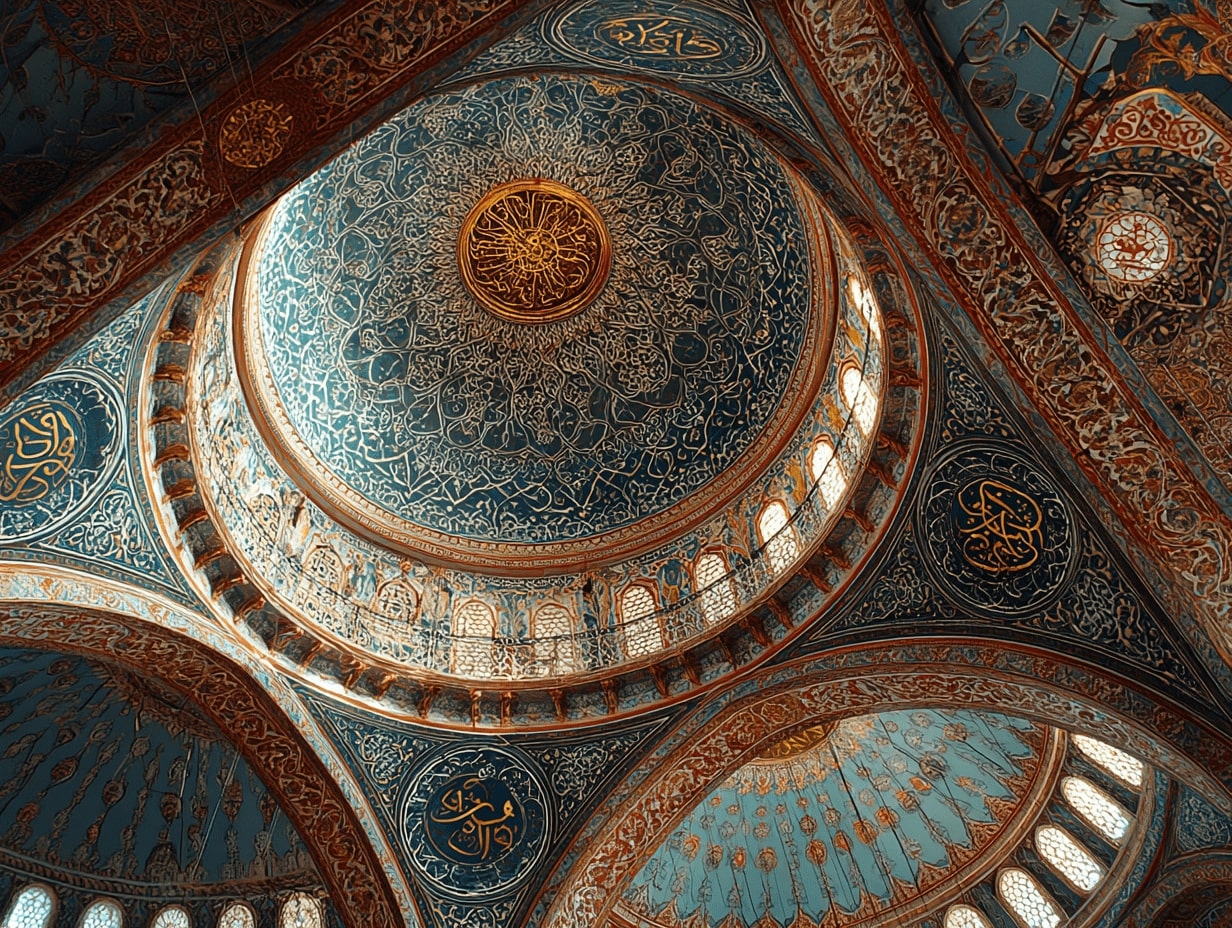
Table of Contents Show
We’re living through a design moment where heritage and innovation can finally talk to each other without shouting. The Dialogue Between Islamic Architecture and Modern Design isn’t just an academic theme, it’s a practical guide for building resilient, beautiful spaces that honor place and people. From geometric order to climate-savvy courtyards, we can translate time-tested intelligence into contemporary performance without resorting to pastiche.
Why This Dialogue Matters Now
Identity, Pluralism, And Place
We design in cities where identities overlap: Muslim-majority contexts, diasporic neighborhoods, and global hubs. Pulling threads from Islamic architecture, its attention to community, privacy, and spiritual cadence, helps us craft places that feel grounded rather than generic. This isn’t nostalgia. It’s pluralism: acknowledging that modern design can be both universal and situated. When we engage patterns, courtyards, and calibrated light as living tools, we give communities spaces that reflect who they are, and invite others in with dignity.

Urbanization And Climate Pressures
Rapid urbanization in hot, arid, and increasingly humid regions demands passive performance. We can’t air‑condition our way out of 21st‑century heat. Traditional devices, thick walls, shaded passages, mashrabiya screens, and water features, manage solar gain, airflow, and comfort at human scale. Pair those with high-performance envelopes and urban shading strategies and we cut loads, stabilize microclimates, and extend outdoor life. The dialogue matters because it directly impacts energy, health, and social cohesion.
Enduring Principles Of Islamic Architecture
Geometry, Proportion, And Pattern
Geometry in Islamic traditions isn’t decoration: it’s structure and meaning. Proportion systems coordinate plan, elevation, and ornament so buildings read as coherent wholes. Today, pattern can do work: modulate light, control views, and tune acoustics. When we derive patterns from site grids or program, the result feels inevitable rather than layered on.
Light, Shadow, And Spiritual Atmosphere
Light in mosques, madrasas, and caravanserais arrives mediated, broken through lattice, bounced off plaster, pooled in niches. This choreography creates calm, orientation, and a sense of threshold. In contemporary spaces, perforated facades, deep reveals, and controlled apertures can deliver the same emotional register while reducing glare and cooling demand. We design for shadow as much as for light.

Courtyards, Water, And Microclimate
Courtyards anchor social life and environmental performance. Shaded trees, evaporative water, and narrow proportions create pressure differentials that move air. Add night-purging and thermal mass and you’ve built a natural comfort engine. In housing, hospitals, and schools, layered courts, public, semi-private, private, balance community with privacy and deliver daylight without overheating.
Modern Design Lenses And Points Of Convergence
Minimalism And Abstraction
We can honor lineage without literal replicas. Abstracting motifs into proportion, rhythm, or material jointing keeps spaces calm and legible. A restrained palette lets light and shadow do the talking, while details, reveals, edges, and tactile surfaces, carry the memory of craft.

Parametric Tools And Contemporary Ornament
Parametric platforms help us translate geometric logics into buildable systems. We can test densities, align patterns to view corridors, and rationalize panels to standard modules. The key is intent: ornament should mediate climate, privacy, or acoustics, not just fill a facade with noise.
Performance-Driven Facades
From screen walls to double skins, we can stage layers that cut solar gain and glare while preserving outward connection. Think adaptive porosity, selective reflectance, and depth. Performance metrics, sDA, ASE, UDI, and cooling loads, become design drivers, not afterthoughts.
Lessons From Precedents And Contemporary Case Studies
Hassan Fathy And Human-Scaled Vernacular
Hassan Fathy showed that earthen construction, vaulted roofs, and courtyards can deliver comfort and dignity with minimal mechanical help. His work reminds us to hire local craftspeople, design to climate first, and privilege human scale over monumental gestures.
Louvre Abu Dhabi’s Porous Dome
Jean Nouvel’s vast dome layers geometric lattices to create a “rain of light.” Beyond spectacle, it’s a microclimatic device: a permeable canopy that shades galleries and public terraces while preserving sky and horizon. It’s a persuasive argument for shade as civic infrastructure.

Al Bahar Towers’ Responsive Mashrabiya
In Abu Dhabi, kinetic shading elements open and close with the sun, reducing solar exposure while maintaining views. It’s a direct translation of mashrabiya logic into actuation and controls. The lesson: cultural references can lead performance, not trail it.
Practical Strategies For Designers
Diagnose Climate And Program Before Form
Start with climate files, comfort targets, and occupancy patterns. Map hot spots, glare risks, and prevailing winds. Let these findings set massing, depth, and orientation. Form follows forces, and community use.

Use Patterns For Performance, Not Pastiche
Generate screen densities from daylight and privacy requirements. Align pattern modules to structure and fabrication limits to cut cost and waste. If a motif can’t justify its existence through comfort, energy, or wayfinding, we rethink it.
Design Courtyard-Based Circulation And Social Space
Stack courts vertically or string them horizontally to structure movement and encounters. Use planted edges, porous ground floors, and shaded loggias to connect inside and out. In housing, organize clusters around shared courts to support neighborliness without sacrificing seclusion.
Ethics, Representation, And Cultural Sensitivity
Co-Design And Community Stewardship
We don’t just consult communities: we co-design with them. That means listening sessions, paid cultural advisors, and local fabrication pipelines. Stewardship continues post-occupancy with training and feedback loops.

Symbolism Without Stereotypes
We avoid token domes and copy-paste arches. Instead, we translate values, hospitality, modesty, rhythm, into spatial sequences, thresholds, and light quality. Symbolism should be legible to those who live with the building, not just to a camera.
Conclusion
The Dialogue Between Islamic Architecture and Modern Design is a design method, not a mood board. When we pair enduring principles, geometry, courtyards, calibrated light, with contemporary tools and metrics, we get buildings that are culturally resonant, climatically tough, and quietly moving. If we let performance and people lead, the architecture will speak with a clear, timeless voice.



Futuro House Production Revived in Finland After Decades-Long Hiatus
A Facebook listing for abandoned moulds led to the first new Futuro...
 illustrarch Editoral Team3 Mins read
Building Your Dream Home in NSW: What You Should Know About Montgomery Homes
Montgomery Homes has been building across Sydney, Newcastle, the Hunter, Wollongong and...
illustrarch Editoral Team4 Mins read
Designing a Home Theater: Where Drapery Fits Into the Plan
In a media room the curtains are a performance layer, not decoration....
illustrarch Editoral Team3 Mins read
Oscar Niemeyer’s Cathedral of Brasília: The Hyperboloid Concrete Hymn
The Cathedral of Brasília reads as a single gesture, yet it stood...
 Furkan Sen7 Mins read


Leave a comment