

The Eiffel Tower and the Rise of Structural Expression in Architecture
The Eiffel Tower is far more than a Parisian icon, it is an early manifesto for structural expression in architecture. From Gustave Eiffel's original engineering drawings to the tower's radical use of iron, this article explores how the tower challenged 19th-century aesthetics, redefined materiality, and paved the way for modern skyscrapers. Discover key facts about how long it took to build, what color it is, the secret apartment at the top, and why the Eiffel Tower drawing remains a beloved subject for artists and architects worldwide.
 Sinan Ozen8 February 20267 Mins read270

Table of Contents Show
Few structures have endured the scrutiny of time, criticism, and cultural transformation as resiliently as the Eiffel Tower. Rising from the heart of Paris, it occupies a paradoxical position in architectural history: at once a feat of radical engineering and a symbol initially rejected by the very culture it now represents. Conceived in an era when iron was still negotiating its legitimacy as an architectural material, the tower challenged long-held notions of beauty, permanence, and authorship. Any Eiffel Tower drawing from the original 1884 sketches by Maurice Koechlin reveals a structure that was neither a palace nor a monument in the traditional sense, yet it redefined what monumental architecture could be. Beyond its instantly recognizable silhouette, the Eiffel Tower invites a deeper reflection on how technology reshapes aesthetics, how temporary structures can achieve lasting meaning, and how architecture often advances through controversy rather than consensus.

Engineering as Architectural Expression: The Original Eiffel Tower Drawing
The Eiffel Tower stands as an early manifesto for structural honesty, where engineering logic becomes the primary generator of form. Designed by Gustave Eiffel and his team for the 1889 Exposition Universelle, the tower’s geometry was dictated by wind resistance, material efficiency, and mathematical precision rather than symbolic ornament. The earliest drawing of the Eiffel Tower in Paris, created by engineers Emile Nouguier and Maurice Koechlin in June 1884, depicted a large pylon with four lattice-work columns converging at the top, a shape born entirely from structural calculation. Its tapering profile and lattice structure were not aesthetic gestures layered onto a structural core; they were the structure itself. This approach marked a decisive shift in architectural thinking, anticipating later modernist principles that would advocate for the expression of function and construction. In this sense, the tower operates less as a sculptural object and more as a diagram made monumental, demonstrating that technical necessity can yield a compelling visual language when allowed to speak without disguise.

Iron, Industry, and the Redefinition of Materiality
At the time of its construction, iron was widely associated with bridges, factories, and infrastructure, domains considered outside the realm of “high” architecture. The Eiffel Tower disrupted this hierarchy by elevating an industrial material to the scale and visibility of a national symbol. Its exposed rivets, repetitive elements, and skeletal transparency celebrated industrial production rather than concealing it behind stone facades. This radical material candor reframed iron not as a secondary support but as a primary architectural medium capable of elegance and precision. The tower thus occupies a pivotal moment in material history, where architecture began to acknowledge the aesthetic potential of industrial processes, paving the way for steel-framed skyscrapers and the modern construction ethos that followed.
How Long Did It Take to Build the Eiffel Tower?
One of the most frequently asked questions about this iconic structure is: how long did it take to build the Eiffel Tower? Construction began on January 26, 1887, with the digging of the foundations, and the tower was completed on March 31, 1889, a record-breaking timeframe of just 2 years, 2 months, and 5 days. Considering the scale of the project, this pace was extraordinary for the era. A team of 150 to 300 workers assembled 18,038 individual iron pieces using 2.5 million rivets, with all components prefabricated at Eiffel’s factory in the Parisian suburb of Levallois-Perret. The prefabrication system, where each piece was precision-measured before arriving on site, was a pioneering approach that anticipated modern modular construction methods. Remarkably, no fatal accidents occurred during the main structural assembly, an exceptional safety record that speaks to the careful planning behind both the engineering drawings and the construction process. The tower was inaugurated in time for the 1889 Exposition Universelle, which celebrated the centenary of the French Revolution.

What Color Is the Eiffel Tower?
The question “what color is the Eiffel Tower?” has a surprisingly layered answer. Today, the tower is painted in a specially formulated shade known as “Eiffel Tower Brown,” a warm bronze tone selected in 1968 to harmonize with the Parisian historic cityscape. However, the tower has undergone multiple color transformations since its debut. When first erected, the structure was painted a reddish-brown (Venetian red). It was repainted yellow-ochre in 1899, then shifted to chestnut brown before arriving at its current bronze. The tower is repainted approximately every seven years, a process that requires around 60 tons of paint and takes about 18 months to complete. Three slightly different shades are applied from bottom to top, progressively lighter with elevation, to enhance the tower’s silhouette against the sky. For the 2024 Paris Olympic Games, the tower received a special golden paint treatment to mark the occasion.
Controversy, Criticism, and the Politics of Taste
The Eiffel Tower’s path to acceptance was anything but smooth. Prominent artists and intellectuals of late nineteenth-century Paris denounced it as a grotesque intrusion into the historic cityscape, fearing that it would overshadow the refined urban fabric shaped by centuries of stone architecture. A famous petition signed by notable figures including writer Guy de Maupassant and architect Charles Garnier called the proposed structure a “metal asparagus” that would disfigure Paris. These criticisms reveal an enduring tension in architectural culture: the struggle between innovation and continuity, between experimental form and collective memory. What makes the Eiffel Tower particularly instructive is how time reframed this debate. The very qualities once deemed offensive, its scale, materiality, and mechanical appearance, became central to its cultural value. The tower demonstrates how architectural judgment evolves and how radical ideas often require temporal distance to be fully understood and appreciated. Understanding what does Eiffel Tower mean in cultural terms requires acknowledging this journey from controversy to universal admiration.

Gustave Eiffel’s Secret Apartment at the Top
Few visitors realize that there is a private Eiffel Tower apartment located at the very top of the structure. Gustave Eiffel built himself a small but elegantly furnished Paris Eiffel Tower apartment on the third level, approximately 1,000 feet above the ground. The space featured plush rugs, wooden furniture crafted by Jean Lachaise, oil paintings, and even a grand piano. Eiffel used this sky-high retreat to entertain distinguished guests, most notably the inventor Thomas Edison, who visited and presented Eiffel with one of his newly invented phonographs. Beyond its social function, the apartment served as a scientific laboratory where Eiffel conducted meteorological observations and experiments on air resistance. The apartment remained largely unknown to the public until it was opened for viewing in 2015, complete with period furnishings and lifelike mannequins recreating scenes of Eiffel and his famous guests.
Temporality and the Myth of Permanence
Originally intended as a temporary installation with a 20-year permit, the Eiffel Tower complicates conventional assumptions about permanence in architecture. Its survival was secured not through monumentality alone, but through adaptability, serving scientific research, telecommunications, and later tourism. During World War I, the tower’s radio transmitter played a crucial role in jamming enemy communications during the Battle of the Marne, which ultimately saved it from demolition. This evolving functionality underscores an important architectural lesson: longevity is not solely a function of material durability, but of relevance. The tower’s ability to absorb new programs without compromising its identity suggests a model of architectural resilience rooted in flexibility. In contemporary discourse, where sustainability and adaptive reuse are central concerns, the Eiffel Tower stands as an early example of how structures can outlive their original purpose by embracing change rather than resisting it.
How to Draw the Eiffel Tower: From Sketch to Structural Understanding
The Eiffel Tower is one of the most drawn landmarks in the world, and learning how to draw the Eiffel Tower offers more than just an artistic exercise, it cultivates an understanding of structural geometry and proportion. An Eiffel Tower drawing easy enough for beginners typically starts with a simple triangular silhouette, progressively adding the three horizontal platforms and the characteristic curved legs. For those seeking a drawing easy Eiffel Tower approach, the key is to break the complex lattice into basic geometric shapes: a tall triangle divided into three tiers, with arched legs at the base and a narrow spire at the top. An easy sketch of Eiffel Tower can be achieved in just a few steps by first drawing the central vertical axis, then mirroring the tapered outline on each side, and finally adding cross-bracing details that suggest the iron latticework. For architects and design students, studying the original technical drawings reveals how Eiffel’s team used mathematical curves to optimize wind resistance, making the Eiffel Tower not just a subject for architectural illustration but a lesson in form-follows-function design. Whether you are creating a detailed drawing of the Eiffel Tower in Paris or a simple Eiffel Tower clipart, the structure’s elegant proportions make it a rewarding subject at every skill level.

The Eiffel Tower Pose: Cultural Symbol and Visual Icon
Beyond engineering and architecture, the Eiffel Tower has transcended into a global cultural phenomenon. The “Eiffel Tower pose”, a popular photography stance where visitors appear to hold or touch the tower in forced-perspective shots, has become one of the most recognizable tourist traditions in the world. This playful interaction between people and architecture illustrates how the tower functions not merely as a static monument but as an active participant in cultural expression. The phrase “Eiffel Tower” has even entered popular slang; those curious about Eiffel Tower urban dictionary meanings will find various colloquial usages that reflect the structure’s deep penetration into everyday language and pop culture. From Parisian postcards to global merchandise, the tower’s image serves as a universal shorthand for romance, elegance, and architectural ambition.
A Precursor to Modern Urban Icons and Skyscrapers
While the Eiffel Tower predates the formal emergence of modernism, its influence is unmistakable in the vertical ambitions of twentieth-century architecture. It reintroduced the city to the idea of height as an experiential and symbolic dimension, not merely a defensive or religious one. Unlike traditional towers tied to cathedrals or fortifications, the Eiffel Tower was secular, technological, and accessible, offering panoramic views that transformed how people perceived the urban landscape. When it opened in 1889, the tower stood 312 meters tall, making it the tallest structure in the world, a record it held for 41 years until the Chrysler Building surpassed it in 1930. This democratization of the skyline foreshadowed the rise of observation decks, skyscrapers, and infrastructural landmarks that now define global cities. Its legacy can be traced in the way contemporary architecture embraces visibility, structural expression, and the skyline as a cultural medium.

Conclusion
The Eiffel Tower endures not simply because it is iconic, but because it embodies a critical moment when architecture renegotiated its relationship with technology, material, and public perception. It teaches that architectural progress often emerges from discomfort, that new forms require time to reshape collective taste, and that engineering innovation can carry profound cultural meaning. From the earliest Eiffel Tower drawing by Koechlin in 1884 to the millions of easy sketches created by tourists and students today, this structure continues to inspire both technical admiration and creative expression. For architects, educators, and students today, the tower remains a compelling case study in how clarity of structure, material honesty, and adaptability can generate lasting relevance. As contemporary practice grapples with rapid technological change and evolving societal demands, the Eiffel Tower reminds us that architecture’s most transformative contributions often arise when it dares to imagine beyond established conventions, trusting that the future will eventually recognize their value.


1 Comment

Interior Design for Commercial Spaces: Enhancing Functionality and Brand Identity
Commercial interior design has to serve brand, function and regulation at once....
 Begum Gumusel4 Mins read

Famous Buildings in Los Angeles: Icons of LA Architecture
Nine of the most famous buildings in Los Angeles profiled: architect, year,...
 illustrarch Editoral Team9 Mins read
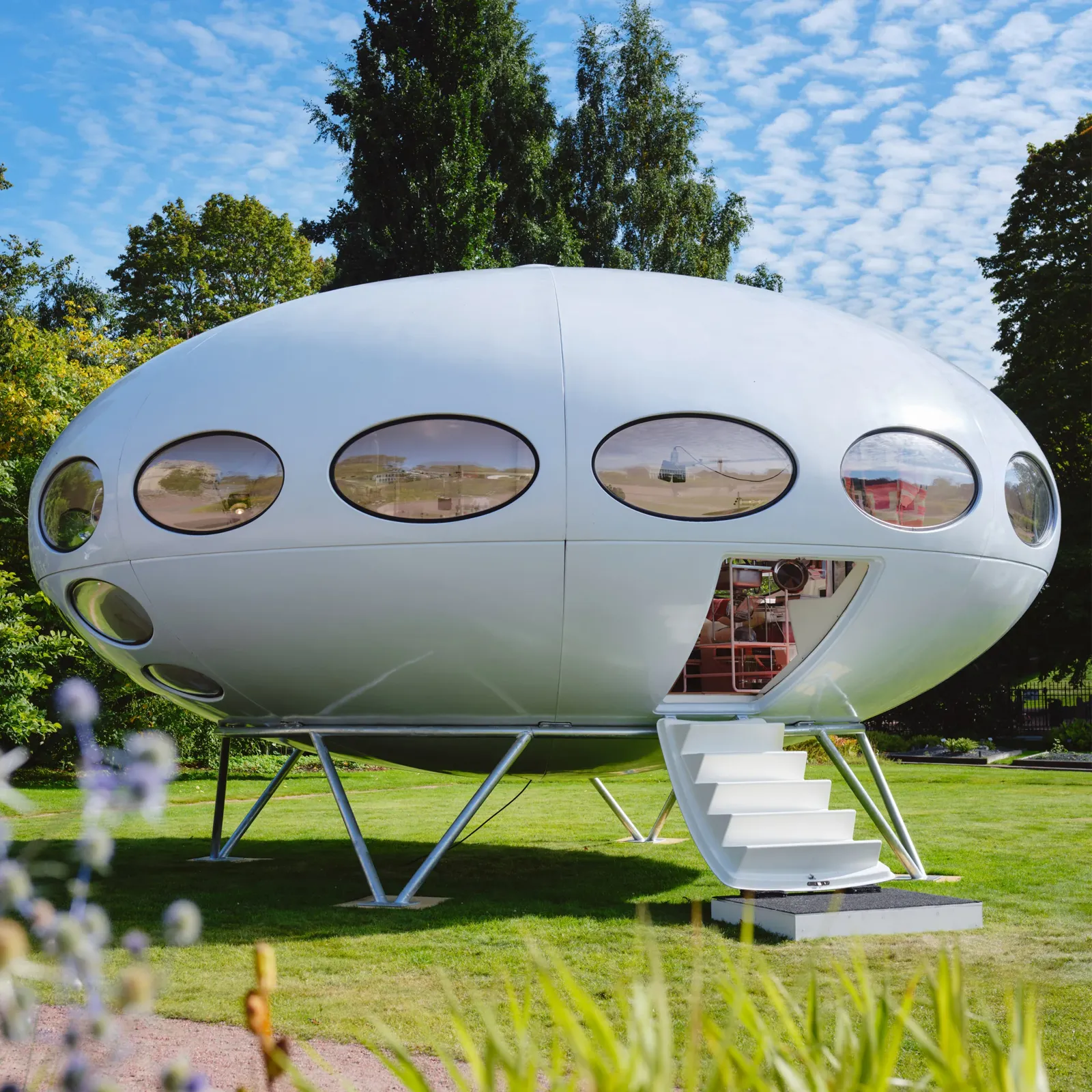
Futuro House Production Revived in Finland After Decades-Long Hiatus
A Facebook listing for abandoned moulds led to the first new Futuro...
illustrarch Editoral Team3 Mins read
Building Your Dream Home in NSW: What You Should Know About Montgomery Homes
Montgomery Homes has been building across Sydney, Newcastle, the Hunter, Wollongong and...
illustrarch Editoral Team4 Mins read


The Eiffel Tower is interesting. It changed how we see buildings and materials like iron. I didn’t know it faced so much criticism at first. It’s cool that something once thought to be temporary became such a big part of Paris.