

10 Architectural Styles That Shaped History: From Classical to Postmodern
Architectural styles have shaped civilizations for thousands of years. From the symmetry and order of classical architecture in ancient Greece and Rome to the soaring heights of Gothic cathedrals, the theatrical grandeur of Baroque, and the bold experiments of postmodernism — explore 10 defining styles that changed history.
 Elif Ayse Sen5 February 202620 Mins read3.3k
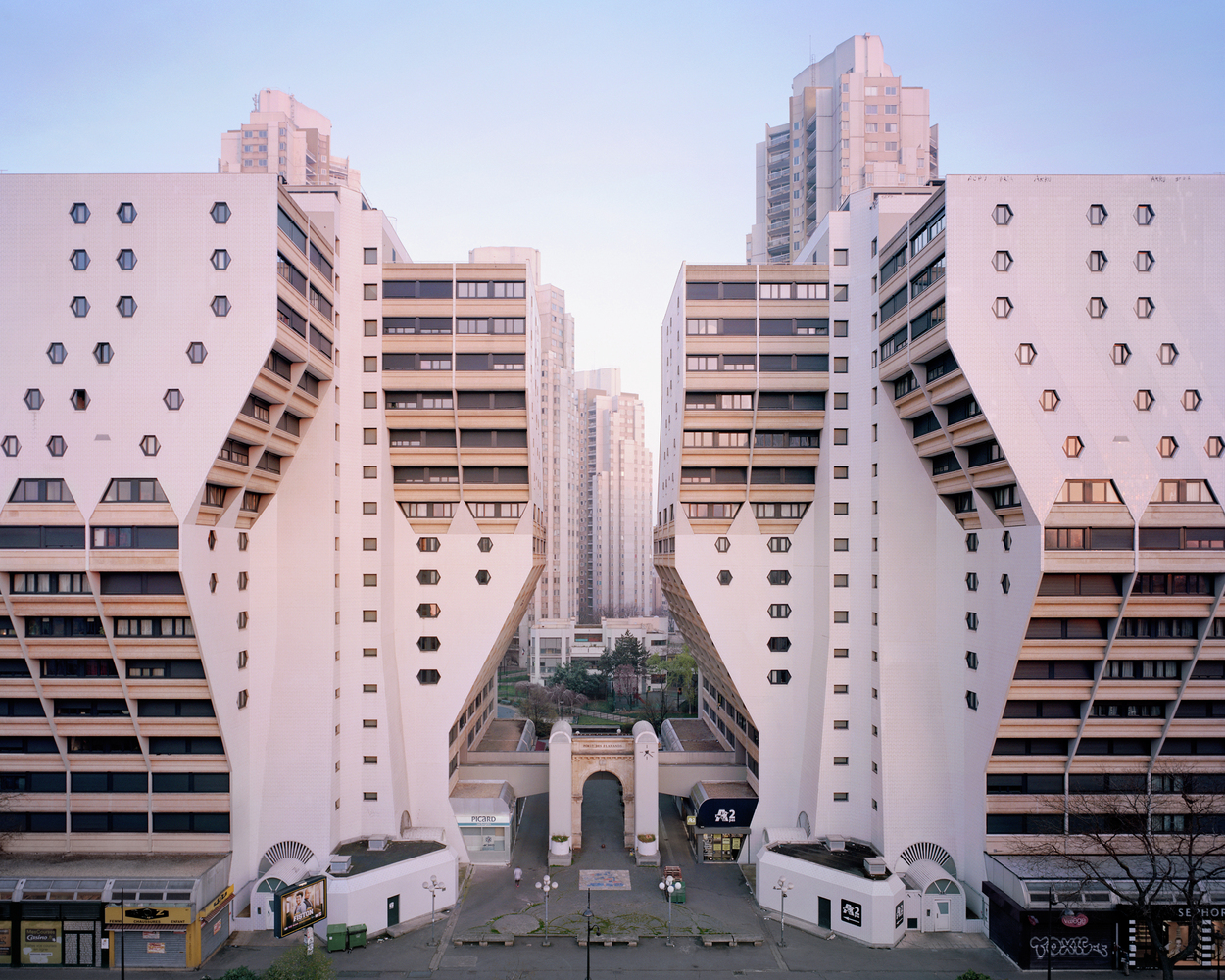
Table of Contents Show
Quick Answer: Architectural styles are distinct design approaches shaped by their era, culture, technology and materials. Key styles that shaped history include Classical, Gothic, Renaissance, Baroque, Neoclassical, Modernist, Brutalist and Postmodern. Each reflects the values and innovations of its time, and together they trace how human building has evolved over thousands of years. This surveys ten movements. For a close comparison of two of them, see our Baroque and Romanesque comparison.
Architectural styles define how buildings look, function, and communicate cultural values across different periods of history. From the columnar orders of classical Greece and Rome to the raw concrete forms of Brutalism and the playful ornamentation of postmodernism, each style reflects the materials, technologies, and social priorities of its era. This guide covers 10 of the most significant architectural movements, with real-world examples and side-by-side comparisons to help you trace how one style influenced the next.
Architectural styles have shaped the way we experience the built environment for thousands of years. From the enduring symmetry of classical architecture rooted in ancient Greece and Rome, through ancient architecture styles like Romanesque and Gothic, to the bold experiments of postmodernism, each era has produced a distinct visual language in facade design that reflects the values, technologies, and aspirations of its time. Understanding these architectural styles and examples is essential for anyone interested in design history, urban planning, or the evolution of human creativity. In this updated guide for 2026, we trace the most important styles of architecture, from classical buildings and medieval churches to modern masterpieces, examining what makes each one unique and how they continue to influence one another.
Classical Architecture: The Foundation of Western Design
Classical architecture is derived from the architecture of ancient Greece and ancient Rome. This classical style of architecture is designed from principles of symmetry, geometry, order, and perspective, core classical architecture characteristics that have endured for millennia. The classical architecture elements most immediately recognizable are columns arranged in specific classical architectural orders: Doric, Ionic, and Corinthian, each with distinct proportions and decorative details that define the character of a building. These classical arches and columnar systems form the basis of what many consider the purest expression of Western architectural harmony. You can explore the full terminology in our guide to classical architecture terms.
The classical building style consists of durable building materials such as marble, concrete, and brick, chosen for both structural integrity and aesthetic beauty. Among the finest classical architecture examples, the greatest known work is the Pantheon in Rome, whose unreinforced concrete dome remains the largest of its kind in the world, a testament to ancient Roman engineering innovation. The classical architecture period, spanning roughly from the 5th century BCE through the fall of Rome, established principles that architects still study today, making it one of the most influential types of ancient architecture ever developed.
📌 Did You Know?
The Pantheon’s concrete dome in Rome, completed around 125 CE, has a diameter of 43.3 meters (142 feet) and remains the world’s largest unreinforced concrete dome. Engineers still study its composition, which includes volcanic ash (pozzolana) mixed with lightweight pumice aggregate near the top to reduce structural weight.
Classical architecture profoundly influenced later movements, from the Renaissance to neoclassicism, and its principles of proportion and order remain central to traditionalist architecture practiced around the globe today. The enduring appeal of classic architecture can also be seen in classical American architecture, particularly in government buildings such as the United States Capitol and the many neoclassical civic structures found throughout Washington, D.C. When we ask what elements of the architecture are classical legacies, the answer includes symmetry, columnar orders, pediments, entablatures, and the proportional systems that continue to define public architecture worldwide. French classical architecture offers another powerful example, with buildings like the Chateau de Versailles demonstrating how classical era architecture was adapted to serve the grandeur of European monarchies. For a deeper exploration of how these traditions have shaped residential design, see our guide to modern vs traditional architecture.

Styles of Classical Architecture and Their Legacy
The styles of classical architecture extend far beyond their ancient origins. Classical revival architecture, including neoclassical, Beaux-Arts, and Federal styles, has kept these traditions alive for centuries. Classical architecture houses and classical house architecture draw on temple fronts, symmetrical plans, and refined proportional systems to create residences of timeless elegance. Whether found in Georgian townhouses in London or antebellum plantation homes in the American South, classical architecture styles demonstrate remarkable adaptability across cultures and climates.
The relationship between classical and modern architecture is more complex than it might first appear. While modernism rejected ornament, many modern and classical architecture projects share a deep respect for geometry, proportion, and structural clarity. Understanding the classical period architecture and its characteristics is fundamental to appreciating how later movements, from Renaissance to Brutalism, defined themselves in relation to these enduring ideals. For a broader look at the range of different architectural styles across history, explore our comparative guide.
Romanesque Architecture: The Medieval Precursor
Romanesque architecture is the style of medieval Europe known for semi-circular arches, massive stone walls, and a fortress-like solidity that made it one of the defining medieval architecture styles. This romanesque architecture style is inspired by the Republic of Ancient Rome, incorporating thick walls, round arches, sturdy pillars, large towers, barrel vaults, and decorative arcading. Romanesque architecture columns tend to be short, heavy, and cylindrical, often carved with simple geometric or figural motifs. One of the most known works of the Romanesque style is The Abbaye de Lessay of the Holy Trinity in France, widely cited among famous romanesque architecture examples.
The difference between romanesque and gothic architecture is one of the most studied contrasts in historical architecture styles. Both are medieval architectural styles, yet they differ profoundly: Romanesque buildings use round arches and thick load-bearing walls, while Gothic structures employ pointed arches, ribbed vaults, and flying buttresses to achieve greater height and luminosity. The differences between romanesque and gothic architecture also extend to decoration. Romanesque favors carved stone relief and decorative arcading, while Gothic embraces tracery, stained glass, and soaring verticality. Understanding the romanesque vs gothic progression reveals how examples of medieval architecture evolved from heavy, earth-bound fortresses to light-filled cathedrals.
The Romanesque period served as a critical transitional phase in European architectural history. It carried forward the structural vocabulary of ancient Rome, particularly the rounded arch and the barrel vault, while adapting these elements to serve the needs of medieval monasteries, churches, and fortifications. For those interested in architectural styles churches, Romanesque religious buildings remain among the finest church architectural styles still standing, from the Durham Cathedral in England to Santiago de Compostela in Spain. This era laid the groundwork for the technical and aesthetic breakthroughs that would define Gothic architecture in the centuries ahead.

Romanesque vs Gothic Architecture: Key Differences
The transition from romanesque architecture to gothic architecture represents one of the most dramatic shifts in the history of building styles. In the romanesque vs gothic architecture comparison, Romanesque structures prioritize solidity and defensive strength, while Gothic design evolved toward openness and light. Romanesque and gothic architecture together form the backbone of middle ages architecture examples, and their contrasting arch styles, round versus pointed, define two fundamentally different approaches to enclosing sacred space. The shift from romanesque to gothic design principles also reflects broader social changes: as medieval societies grew more urbanized and wealthy, the demand for taller, more luminous church architectural styles drove the innovations that gave rise to the Gothic era.
Gothic Architecture: Soaring Heights and Spiritual Light
Gothic architecture is a pan-European gothic architectural style characterized by large stained glass windows, ribbed vaults, pointed arches, flying buttresses, and ornate decoration. The most significant feature of the gothic style of architecture is its height. This was one of the most important arch styles in history, using the pointed arch to distribute weight more efficiently and reach unprecedented vertical dimensions. Gothic architecture columns, often clustered into compound piers, and gothic style columns with their slender shafts were engineered to support the immense loads of ribbed vaults and clerestory walls. Load-bearing flying buttresses, vaulted ceilings, and large stained glass-colored windows are primarily defined in the Gothic style. One of the greatest works of gothic architecture examples is the Milan Cathedral, which is the largest church in Italy.
The gothic architecture types span several centuries and regional variations, including Early Gothic (or Lancet), Rayonnant, and Flamboyant, each showing an increasing refinement of structural technique and decorative complexity. Gothic architecture in Rome, while less prevalent than in France or England, can still be found in churches such as Santa Maria sopra Minerva, the city’s only Gothic church. For students of architectural styles gothic design, understanding these regional and chronological variations is key to appreciating the style’s remarkable range. Contemporary gothic architecture and neo gothic vs gothic comparisons reveal how 19th-century revivalists like Augustus Pugin and Eugene Viollet-le-Duc reinterpreted medieval forms for a modern age, creating gothic revival architecture examples such as the Palace of Westminster and the Woolworth Building.
💡 Pro Tip
When visiting Gothic cathedrals, look at the flying buttresses from the rear or side of the building rather than the front facade. This angle reveals how the external support structure actually transfers the weight of the vault outward and downward, letting you appreciate the engineering logic that made those massive stained glass windows possible.
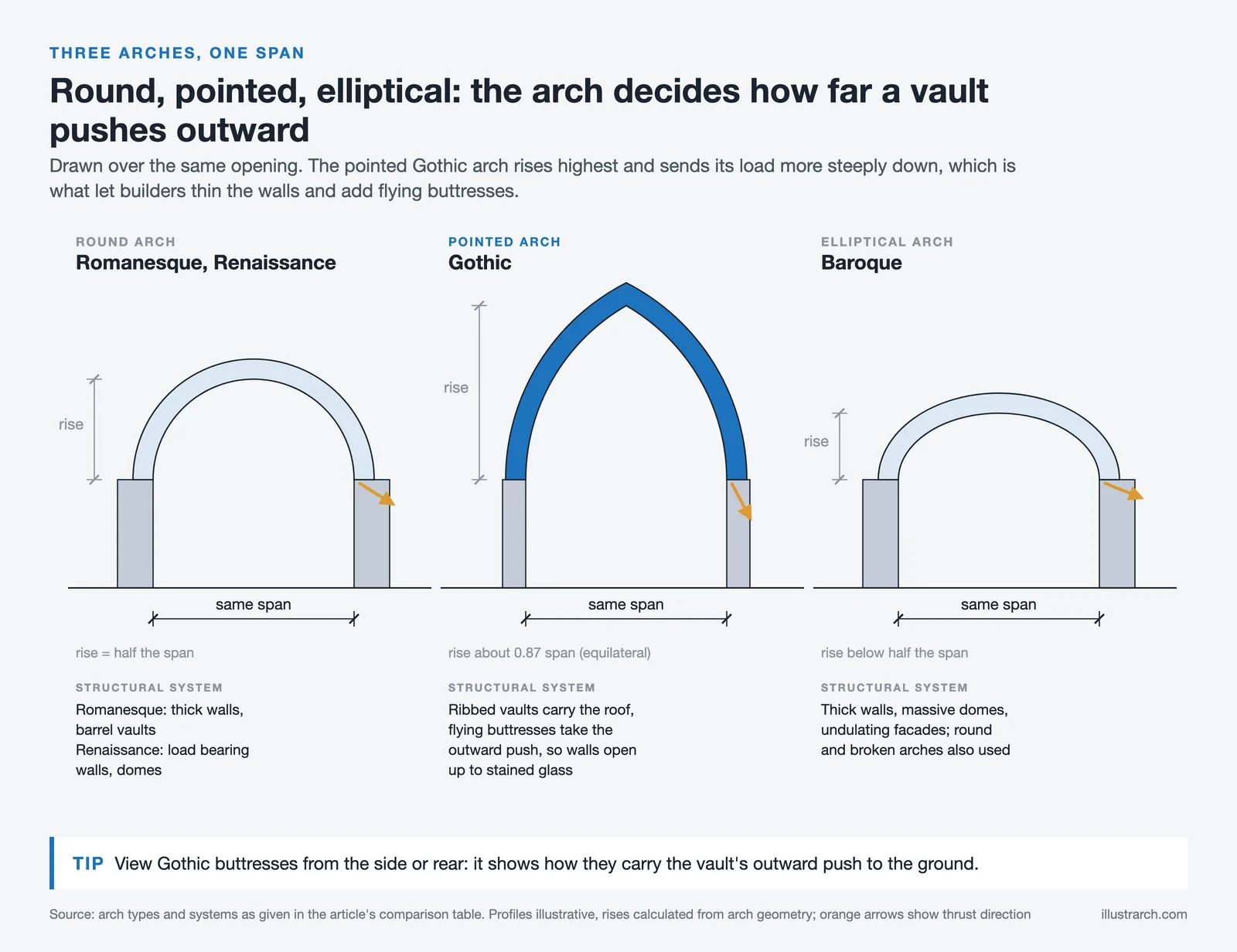
When comparing baroque vs gothic styles, the differences become immediately apparent. While Gothic architecture emphasizes verticality, pointed structural elements, and an almost ethereal use of light filtering through stained glass, baroque architecture favors drama, curvature, and overwhelming ornamentation. In the gothic vs baroque comparison, Gothic buildings direct the eye upward toward the heavens, reflecting the spiritual aspirations of medieval Christianity, whereas Baroque structures envelop the viewer in theatrical grandeur. The gothic architecture vs baroque debate highlights two distinct strategies for inspiring religious awe, one through structure, the other through surface. For those interested in how these two styles compare in detail, our article on Baroque vs. Romanesque architecture provides additional context about the stylistic transitions across these periods. You can also explore Gothic vs. Neoclassical arches to understand how pointed and semicircular arches each shaped architectural identity.

Gothic vs Renaissance Architecture: From Sacred to Secular
The comparison of gothic vs renaissance architecture illustrates how European architecture shifted from religious transcendence to humanist rationality. While gothic and renaissance architecture both valued craftsmanship and structural ambition, gothic architecture vs renaissance design philosophies diverged sharply: Gothic architects sought to dissolve walls into windows, while Renaissance architects returned to classical proportions and earthly harmony. Renaissance gothic architecture, sometimes called transitional architecture, can be seen in late-medieval buildings that blend pointed arches with classical motifs, particularly in northern Italy and the Low Countries. The roman and gothic architecture traditions thus converge in unexpected ways, as Renaissance builders explicitly looked back to Rome while working in cities filled with Gothic cathedrals. For more on how classical gothic architecture principles coexisted and competed, explore our article on Europe’s historic cities for architecture lovers.
Renaissance Architecture: Classical Rebirth
The style architectural renaissance emerged in 15th-century Italy as architects rediscovered the principles of classical antiquity. Renaissance architecture is defined by its emphasis on symmetry, proportion, and geometry, drawing directly from the writings of Roman architect Vitruvius and the surviving examples of ancient Greek and Roman buildings. Filippo Brunelleschi, Leon Battista Alberti, and Andrea Palladio were among the pioneering figures who shaped this movement.
The Renaissance marked a conscious return to the classical style of architecture, reinterpreting Doric, Ionic, and Corinthian orders with renewed mathematical precision. Major works include the dome of Florence Cathedral by Brunelleschi, the Tempietto by Bramante in Rome, and Palladio’s Villa Rotonda near Vicenza. The renaissance vs gothic architecture contrast is especially visible in Florence, where Brunelleschi’s dome rises above a Gothic nave, symbolizing the transition between eras. The Renaissance also served as a bridge between the Gothic era and the Baroque period, laying the intellectual foundation that Baroque architects would later amplify into their more dramatic compositions. Understanding the style architectural renaissance is essential for grasping how Europe’s historic cities developed their distinctive character.
Baroque Architecture: Drama, Movement, and Grandeur
Baroque architecture is a theatrical and highly decorative baroque architectural style that emerged in late 16th-century Italy. What is baroque style architecture? At its core, the baroque style of architecture took basic elements of Renaissance architecture, including domes, colonnades, and classical orders, and amplified them with dramatic scale, intense ornamentation, and a sense of dynamic movement. The baroque architecture style is more theatrical compared to the Renaissance due to higher, more decorated, and larger-scale architectural elements, making the difference between baroque and renaissance immediately visible to any observer. There are three phases: Early Baroque, High Baroque, and Late Baroque architecture. The interior design of Baroque buildings consists of various unique paintings all over interiors called “quadrature,” twisted or Solomonic columns, painted and pear-shaped domes, grand stairways, sculptures, and specifically designed gardens.
Baroque architecture features extend to both interior and exterior. The features of baroque exterior architecture include bold projections, undulating facades, baroque arches with rich sculptural decoration, and dramatic contrasts of light and shadow. Famous baroque architecture examples include the Church of Santa Susanna in Italy, Les Invalides in France, and St. Peter’s Basilica in Vatican City. Examples of baroque architecture can be found across Europe and Latin America, reflecting the style’s global reach during the Counter-Reformation era. The baroque era architecture represents one of the most expressive periods in the history of building styles, and its influence persists in contemporary baroque architecture and baroque revival architecture projects that draw on its theatrical vocabulary for modern cultural institutions.
🎓 Expert Insight
“Architecture is the learned game, correct and magnificent, of forms assembled in the light.” — Le Corbusier, Vers une architecture (1923)
While Le Corbusier was a modernist, his observation applies equally well to Baroque architecture, where architects carefully orchestrated form, light, and shadow to create spaces of overwhelming emotional power. Understanding this principle helps explain why Baroque interiors feel so different from the calm rationality of Renaissance rooms.
Architecture in the Baroque Period: Style and Context
Understanding architecture in the baroque period requires considering the historical forces that shaped it. The Catholic Church, seeking to inspire devotion during the Counter-Reformation, commissioned architecture of baroque masterpieces designed to overwhelm the senses. The architecture style baroque thus carries deep connections to religious authority, political power, and artistic patronage. The baroque style in architecture evolved differently across regions: Italian baroque architectures tend toward sculptural dynamism, while French baroque architecture, seen in Versailles, favors classical restraint combined with monumental scale. For more on this period, the Royal Institute of British Architects (RIBA) and Dezeen’s coverage of Baroque-inspired design offer valuable contemporary perspectives.
Baroque vs Gothic Architecture: A Detailed Comparison
One of the most frequently searched topics in architectural history is the comparison of baroque vs gothic styles. Understanding gothic architecture vs baroque helps clarify how Western architecture evolved from the medieval period through the early modern era. The debate of baroque vs gothic architecture reveals two fundamentally different approaches to inspiring awe.
Gothic architecture (12th to 16th centuries) is defined by its structural innovations: the pointed arch, the ribbed vault, and the flying buttress, which allowed builders to create taller, lighter structures with expansive windows. The goal was to draw the eye and the spirit upward, creating interiors filled with colored light. Notre-Dame de Paris, Chartres Cathedral, and Milan Cathedral are among its most celebrated achievements.
Baroque architecture (late 16th to 18th centuries), by contrast, emerged during the Counter-Reformation as the Catholic Church sought to inspire devotion through overwhelming sensory experiences. Where Gothic buildings achieved their effect through height and light, baroque and gothic architecture differ in that Baroque relied on rich surface decoration, curving forms, dramatic lighting effects, and a sense of theatrical movement. The difference between baroque and classical design is also significant: while classical architecture prioritizes restraint and order, Baroque deliberately breaks classical rules to create emotional impact.
| Feature | Gothic (12th–16th c.) | Renaissance (15th–17th c.) | Baroque (late 16th–18th c.) |
|---|---|---|---|
| Arch type | Pointed arch | Round arch (Roman) | Round, elliptical, and broken arches |
| Primary goal | Height and spiritual light | Harmony and human proportion | Drama, movement, and emotion |
| Decoration | Tracery, stained glass, gargoyles | Restrained classical ornament | Heavy gilding, frescoes, sculptural facades |
| Use of light | Filtered through stained glass | Even, natural illumination | Hidden sources, chiaroscuro effects |
| Structural system | Ribbed vaults, flying buttresses | Load-bearing walls, domes | Thick walls, massive domes, undulating facades |
| Spatial emphasis | Vertical (upward aspiration) | Balanced (horizontal and vertical) | Horizontal grandeur and spatial complexity |
| Key example | Notre-Dame de Paris | Villa Rotonda, Vicenza | St. Peter’s Basilica, Vatican City |
In baroque vs gothic architecture, key differences include: Gothic uses pointed arches while Baroque favors rounded and elliptical forms; Gothic interiors are relatively austere compared to the lavishly decorated Baroque interiors; Gothic emphasizes vertical aspiration while Baroque emphasizes horizontal grandeur and spatial complexity. The gothic baroque comparison also extends to their respective treatment of light. Gothic filters it through stained glass into prismatic color, while Baroque manipulates it through hidden windows and reflective surfaces to create dramatic chiaroscuro effects. Both styles remain profoundly influential and can be explored further in our comparison of Baroque vs. Romanesque architecture.
Baroque vs Renaissance Architecture: Evolution of Grandeur
The baroque vs renaissance architecture comparison reveals how the restrained elegance of the Renaissance gave way to Baroque exuberance. The difference between baroque and renaissance lies not only in decoration but in spatial conception: Renaissance buildings present calm, balanced compositions, while baroque architecture vs renaissance designs create dynamic, flowing spaces that guide the viewer’s movement and emotional response. Renaissance vs baroque architecture also differs in its relationship to nature: Renaissance gardens are geometric and ordered, while Baroque gardens become theatrical stages with fountains, sculpture, and dramatic vistas.


Neoclassical Architecture: Order Meets Enlightenment
Neoclassical architecture is a result of some classicizing features of the Late Baroque style. This neo classical style of architecture was called the new “classical” architecture, emphasizing planar qualities and clarity of form. Characteristics of neoclassical buildings include sober colors, shallow space, strong vertical and horizontal “orders,” grand porticos with classical columns, and triangular pediments, drawing heavily on Greek and Roman precedents. Not only emphasizing interior and exterior features, the Neoclassical style also influenced city planning and urban patterns. Neoclassical landmarks often share public squares and historic city centers, illustrating how historical styles of architecture coexist in European capitals. The Pantheon in Paris and Museo Nacional del Prado in Madrid are among the finest examples of neoclassical architecture modern visitors can experience today.
Neoclassical modern architecture continues to influence designers who seek the gravitas of classical forms within contemporary contexts. Neo roman architecture and stripped classical designs of the early 20th century demonstrate how the neoclassical impulse was adapted for governmental and institutional buildings in an era of industrial modernization. The beaux arts architectural style, which flourished from the 1880s through the 1920s, represents a particularly lavish interpretation of neoclassical principles, combining classical symmetry with rich sculptural decoration, visible in landmarks like the Grand Palais in Paris and Grand Central Terminal in New York.
Neoclassical design became especially prominent during the Enlightenment, when rationality and democratic ideals drove a renewed interest in the clean geometric forms of Greek and Roman antiquity. This movement had a powerful impact on classical American architecture, shaping the design of government buildings, universities, and public institutions across the United States. The U.S. Capitol, the Lincoln Memorial, and Thomas Jefferson’s Monticello all exemplify how neoclassical principles traveled across the Atlantic. For a deeper comparison, see our article on Gothic vs Neoclassical arches. The American Institute of Architects (AIA) remains an important resource for understanding how these classical traditions continue to inform American public architecture.

Art Nouveau and Ornate Styles: Nature as Inspiration
Art Nouveau is an ornamental style of architecture with sinuous lines and flowing organic shapes based on plant forms, expressed in both interior and exterior design. Among the most distinctive ornate styles in architectural history, Art Nouveau features asymmetrical shapes, curved glass, extensive use of arches and other curved forms, mosaics, and botanical motifs. One major objective of this style was to break down the traditional difference between fine art and applied arts. With the Art Nouveau movement, interior design, graphic arts, furniture, textile, ceramics, jewelry, and metal works were all influenced. La Sagrada Familia and Casa Batllo in Barcelona, as well as the Museum of Applied Arts in Budapest, are the most beautiful examples of Art Nouveau style in architecture.
Art Nouveau flourished roughly between 1890 and 1910, bridging the gap between historical revivalism and the modern movements that followed. The relationship between art nouveau and rococo architecture is often discussed by historians: both styles celebrate organic curves and lavish decoration, but Art Nouveau drew its vocabulary from nature rather than from courtly tradition. Similarly, rococo and baroque architecture share a love of ornamentation, but Rococo refined Baroque exuberance into lighter, more playful compositions. Rococo architecture examples such as the Amalienburg in Munich and the Catherine Palace in St. Petersburg illustrate this distinction beautifully. The Art Nouveau style’s influence can still be seen in cities beloved by architecture enthusiasts, particularly Barcelona, Brussels, and Vienna. For a detailed side-by-side comparison of how Art Nouveau and its successor movement diverged, see our guide to Art Nouveau vs Art Deco.

What Is Art Deco Architecture?
Art Deco is an architectural and decorative style that emerged in the 1920s as a response to both the organic curves of Art Nouveau and the austerity of early modernism. Characterized by bold geometric forms, stepped silhouettes, zigzag patterns, and rich surface materials such as chrome, marble, and stainless steel, Art Deco combined industrial confidence with decorative glamour. The style formally debuted at the 1925 Exposition Internationale des Arts Decoratifs et Industriels Modernes in Paris, though the name “Art Deco” was not widely used until the 1960s.
Art Deco became a global phenomenon, shaping skylines from New York to Mumbai. The Chrysler Building (1930) and the Empire State Building (1931) in New York remain among the most recognized Art Deco landmarks in the world, with their stepped-back profiles, metallic ornament, and sunburst motifs. Miami’s South Beach district preserves one of the largest collections of Art Deco buildings anywhere, with pastel-hued facades and nautical-inspired details. In India, Mumbai’s Marine Drive features over 80 Art Deco residential buildings, making it a UNESCO World Heritage Site alongside the city’s Victorian Gothic ensemble.
Unlike Art Nouveau, which drew from nature, Art Deco drew from industry, technology, and ancient civilizations. Egyptian motifs became fashionable after the discovery of Tutankhamun’s tomb in 1922, while Cubism, Futurism, and Mesoamerican patterns all contributed to the style’s visual vocabulary. The result was an architecture that felt simultaneously modern and ornamental, a quality that set it apart from the strict functionalism of the Bauhaus and International Style that developed in parallel. Art Deco’s influence extended well beyond architecture into furniture, fashion, graphic design, and cinema set design, making it one of the most pervasive aesthetic movements of the 20th century. For more on this style, explore our coverage of a hundred years of Art Deco architecture.
Bauhaus: Function, Form, and the Birth of Modern Design
Bauhaus is a school of design and architecture founded by architect Walter Gropius in Weimar, Germany, in 1919. The school became famous for its principles and approach to design and architecture. Bauhaus architecture is characterized by focusing on simple, rational, functional design. Modern materials such as concrete, steel, and glass with simple geometric forms were used in the Bauhaus style. Notable Bauhaus architecture examples include the Bauhaus Museum Weimar, Bauhaus Dessau, and the Fagus Factory.
The Bauhaus school represented a turning point in the transition from historical revivalism to classical modernism architecture. By unifying art, craft, and technology under a single educational framework, the Bauhaus laid the philosophical groundwork for the modernist movement that would transform cities worldwide. Its emphasis on mass production, standardization, and the elimination of unnecessary ornamentation became hallmarks of 20th-century architecture and industrial design. For more context on how Bauhaus connected to broader modernist trends, the ArchDaily Bauhaus archive provides an excellent resource. For a direct comparison of how Bauhaus ideals contrasted with the raw material expression that followed, see our article on Bauhaus architecture vs Brutalism.
⚠️ Common Mistake to Avoid
Many people confuse “Bauhaus” with “modernism” as if they were the same thing. Bauhaus was a specific school (1919 to 1933) with a defined curriculum and faculty, while modernism is a broader architectural movement spanning decades and continents. Bauhaus contributed to modernism, but the two are not interchangeable. Other strands of modernism, such as De Stijl in the Netherlands and Constructivism in Russia, developed independently of the Bauhaus.

Modernism: Function Over Ornament
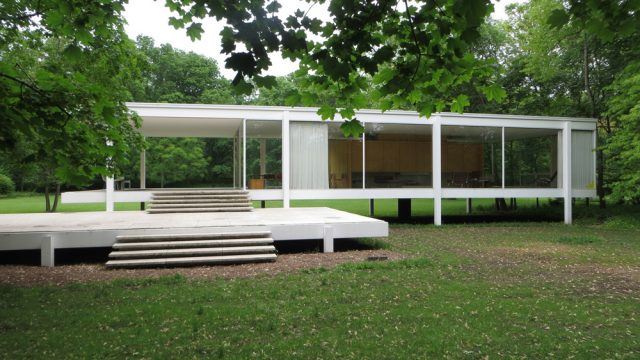
Modern architecture is a style of building that emphasizes function and a contemporary form over ornamentation. Modernism is based upon new and innovative technologies of construction, particularly the use of glass, steel, and reinforced concrete. Modern architecture embraces functionalism, meaning form should follow function, and minimalism rather than ornament. The most important architects of modern architecture include Frank Lloyd Wright, Ludwig Mies van der Rohe, Walter Gropius, and Le Corbusier. The Farnsworth House, Villa Savoye, and The Glass House are considered pioneering works of modern architecture.
The concept of classical modernism architecture may seem contradictory, but many modernist architects deeply studied classical proportional systems even as they stripped away decorative elements. Mies van der Rohe’s famous phrase “less is more” captured the modernist ethos, yet his buildings often reflected the same devotion to geometry and order found in classical architecture. The relationship between classical and modern architecture demonstrates that architectural styles rarely emerge in isolation; they build upon, react to, and reinterpret what came before. Modern and classical architecture share a common commitment to structural honesty and spatial clarity, even as they differ dramatically in appearance. Learn more about these connections in our article on modern vs traditional architecture and how they relate in practice.
What Is Brutalist Architecture?
Brutalist architecture emerged in the 1950s as a post-war movement that prioritized raw materials, monumental scale, and functional honesty. The term comes from the French “beton brut,” meaning raw concrete, a phrase associated with Le Corbusier’s exposed concrete work and later popularized by British critic Reyner Banham. Brutalism stripped buildings down to their structural essentials, leaving concrete surfaces unfinished, exposing mechanical systems, and creating bold geometric forms that asserted their physical presence without apology.
Key examples of Brutalist architecture include Le Corbusier’s Unite d’Habitation in Marseille (1952), London’s Barbican Estate (completed 1982), Paul Rudolph’s Yale Art and Architecture Building (1963), and Boston City Hall (1968). These buildings served primarily public functions: housing, civic centers, universities, and cultural institutions. Governments across Europe and beyond adopted Brutalism because concrete offered speed, economy, and fire resistance during a period of urgent post-war reconstruction.
Brutalism remains one of the most debated architectural styles. Critics point to its imposing scale and the deterioration of exposed concrete over time, while supporters celebrate its honesty, craftsmanship, and social ambition. Many formerly maligned Brutalist buildings are now listed heritage structures, and the style has found a new audience through photography and social media. For a deeper look at how Brutalism relates to the modernist tradition that preceded it, see our article on Brutalism vs Modernism. The Society of Architectural Historians provides additional scholarly resources on the movement’s cultural significance.
💡 Pro Tip
When photographing Brutalist buildings, shoot during golden hour or on overcast days. The raking light of early morning or late afternoon reveals the board-marked textures and formwork patterns in the concrete that define the style’s visual character. Harsh midday sun tends to flatten these surfaces and makes the buildings look more monolithic than they actually are.
Postmodernism: Complexity, Color, and Cultural Memory
Postmodern architecture is a style that emerged in the 1960s as a reaction to modern architecture and even traditional architecture. Postmodern buildings had curved shapes, decorative elements, asymmetry, bright colors, and features often borrowed from earlier periods. Colors and textures were irrelevant to the structure or function of the building. According to the postmodern style, buildings should have historical layers and textures rather than being uniform. Robert Venturi and his wife Denise Scott Brown are two of the most famous architects in the Postmodern design world. Piazza d’Italia, The Portland Building, and Orgues de Flandre can be counted among the most famous buildings for postmodern architecture.
Postmodernism deliberately embraced what modernism had rejected: historical quotation, playful irony, and ornamentation as a form of communication. In the larger debate between these two philosophies, explored in depth in our article on modernism vs postmodernism in architecture, we see how buildings shifted from silent expressions of structural logic to active participants in cultural dialogue. For further reading on the evolution of postmodern residential design, visit our article on the postmodern era in residential design. You can also explore a direct comparison of postmodernism vs modernism to see how these two movements define themselves against each other.
How Architectural Styles Connect and Evolve
No architectural style exists in a vacuum. Classical architecture gave birth to the Renaissance, which in turn evolved into the Baroque. Gothic innovations in structure influenced how later architects thought about light and space. The Neoclassical movement was a deliberate return to classical Greek and Roman forms, while Art Nouveau rejected historical revivalism entirely. Art Deco fused geometric abstraction with decorative glamour before modernism stripped away ornamentation in favor of function. Brutalism pushed material honesty to its extreme, and Postmodernism brought ornament back with a knowing wink. Even classical modernism architecture, a term that describes the overlap between classical proportional thinking and modernist simplicity, reveals how these various architectural styles constantly inform one another.
The study of old architecture styles and historical styles of architecture is not merely academic; it directly informs contemporary design practice. From different arch styles used in bridge and building engineering to the various architectural styles that define neighborhoods and skylines, the past remains an inexhaustible source of inspiration. For those exploring American architecture styles and their diverse influences, or tracing the trajectory of different architectural styles in greater detail, understanding these connections transforms isolated knowledge into a coherent narrative of human creativity. Whether you are an architecture student, a design professional, or simply someone who appreciates beautiful buildings, recognizing how each style responds to its predecessors enriches every visit to a historic city or contemporary structure.
✅ Key Takeaways
- Classical architecture established the columnar orders, symmetry, and proportional systems that every subsequent Western style either built upon or reacted against.
- The shift from Romanesque to Gothic represents one of history’s most dramatic structural leaps, replacing thick walls with skeletal frameworks of pointed arches and flying buttresses.
- Renaissance, Baroque, and Neoclassical architecture each represent a different relationship with classical ideals: revival, amplification, and rational reinterpretation.
- Art Nouveau and Art Deco bridged the gap between historical revivalism and modernism, one through organic nature-based forms and the other through geometric industrial glamour.
- Modernism, Brutalism, and Postmodernism form a three-part dialogue about ornament, function, and meaning that continues to shape contemporary architecture.

Related Guides
- History of Architecture: Timeline from Ancient to Modern
- The Evolution of Modern Architecture: From Bauhaus to Brutalism
- Postmodernism vs Modernism Architecture: Key Differences and Their Lasting Impact
- Vernacular Architecture #2 – Ottoman Architecture
- Greek and Roman Classical Architecture
More Related Guides
- How To Incorporate Pacific Northwest Style Into Your Home Remodel
- Key Elements Of Colonial Style Homes
- Style Meets Security Choosing Entry Solutions That Do Both
- How To Decorate Your Laundry Room In Style Practical Tips
- Discover The Latest Interior Design Styles Sweeping The Usa
- The Pantheon Rome
- Important Dates Architecture History
- Best Examples Of Greek And Roman Architecture
- Machu Picchu Architecture
- Al Aqsa Mosque Architecture
Last updated:


1 Comment





Futuro House Production Revived in Finland After Decades-Long Hiatus
A Facebook listing for abandoned moulds led to the first new Futuro...
 illustrarch Editoral Team3 Mins read

Building Your Dream Home in NSW: What You Should Know About Montgomery Homes
Montgomery Homes has been building across Sydney, Newcastle, the Hunter, Wollongong and...
illustrarch Editoral Team4 Mins read

Designing a Home Theater: Where Drapery Fits Into the Plan
In a media room the curtains are a performance layer, not decoration....
illustrarch Editoral Team3 Mins read

Oscar Niemeyer’s Cathedral of Brasília: The Hyperboloid Concrete Hymn
The Cathedral of Brasília reads as a single gesture, yet it stood...
 Furkan Sen7 Mins read


I found this post informative about different architectural styles. It seems like there are many interesting features to learn.