

Museum of Tomorrow: Santiago Calatrava’s Sustainable Vision in Rio de Janeiro
The Museum of Tomorrow in Rio de Janeiro, designed by Santiago Calatrava, stands as one of the most striking examples of sustainable museum architecture. Built on Pier Maua as part of the Porto Maravilha urban renewal, the building uses movable solar panels, bay water cooling, and rainwater harvesting to save millions of liters of water and thousands of megawatt-hours of electricity annually.
 Sinan Ozen6 May 20268 Mins read221
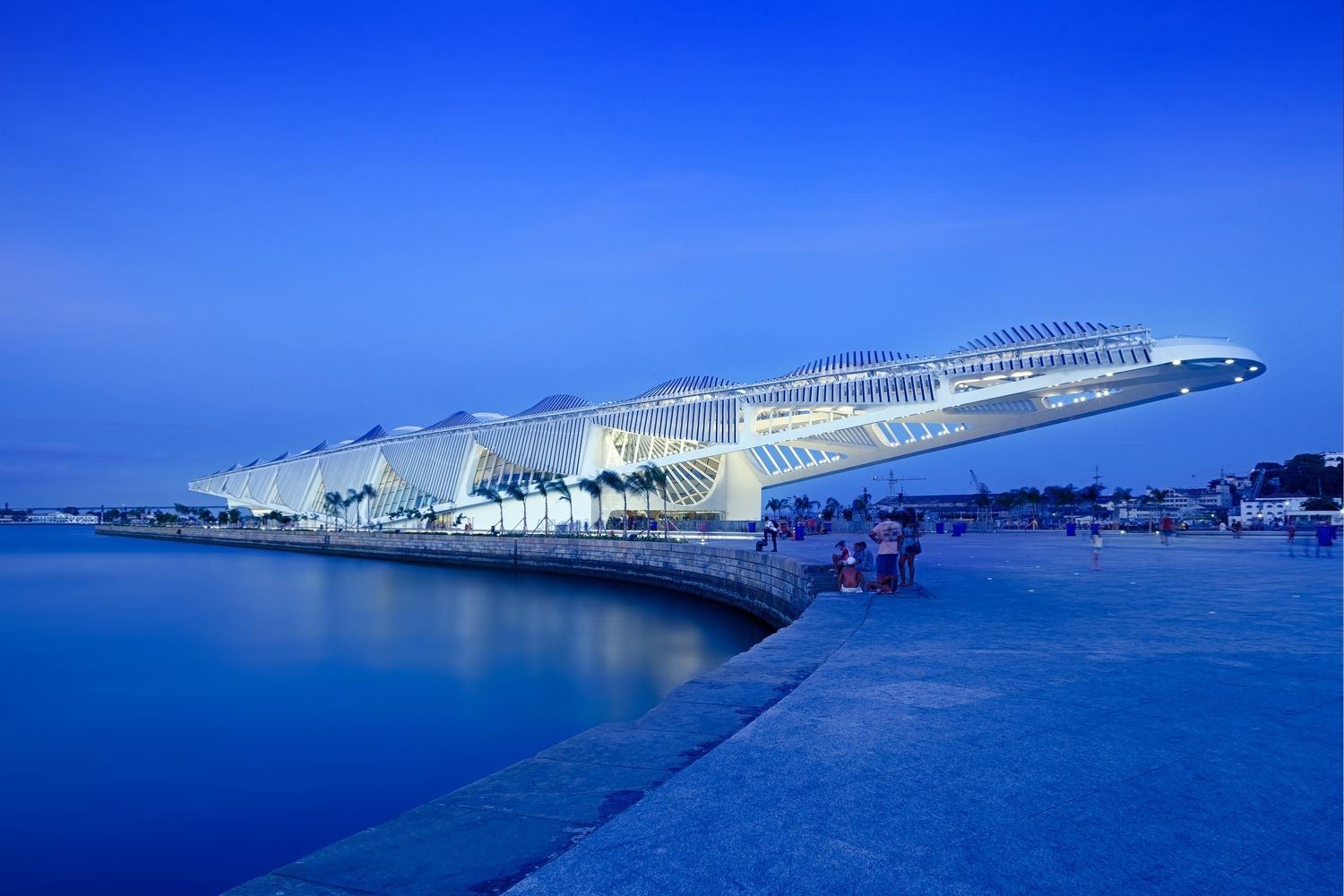
Table of Contents Show
The Museum of Tomorrow (Museu do Amanha) is a science museum in Rio de Janeiro, Brazil, designed by Spanish architect Santiago Calatrava. Opened in December 2015 on Pier Maua, this 15,000-square-meter building combines solar energy, bay water cooling, and rainwater harvesting into a striking neofuturistic form, earning LEED Gold certification as the first museum in Brazil to do so.
What Is the Museum of Tomorrow?
The Museum of Tomorrow in Rio de Janeiro is not a traditional museum filled with historical artifacts. Instead, it is an applied sciences museum built around five key questions: Where did we come from? Who are we? Where are we? Where are we going? And how do we want to live together over the next fifty years? The permanent exhibition, curated by physicist and cosmologist Luiz Alberto Oliveira and designed by Ralph Appelbaum Associates, guides visitors through five areas: Cosmos, Earth, Anthropocene, Tomorrows, and Us.
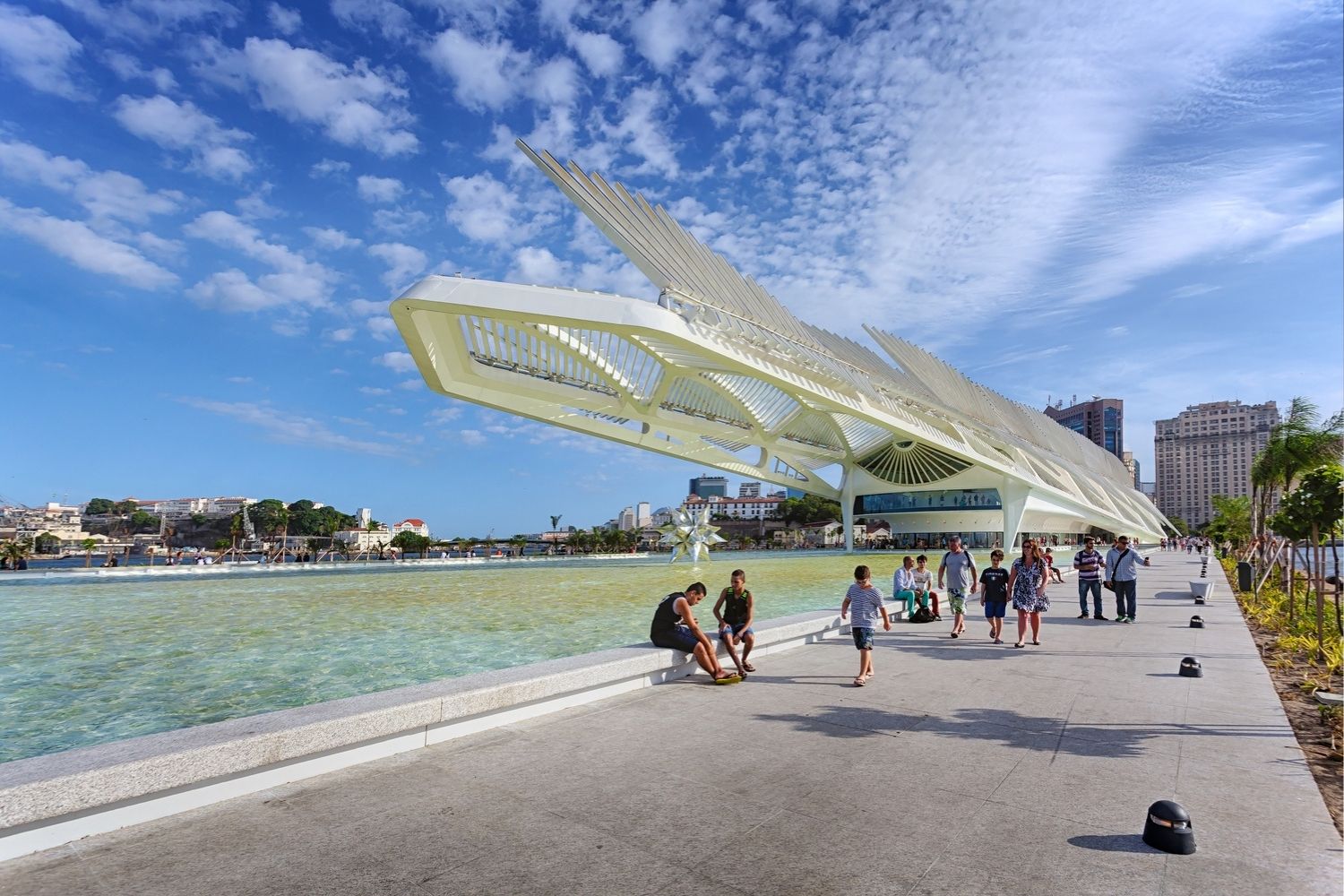
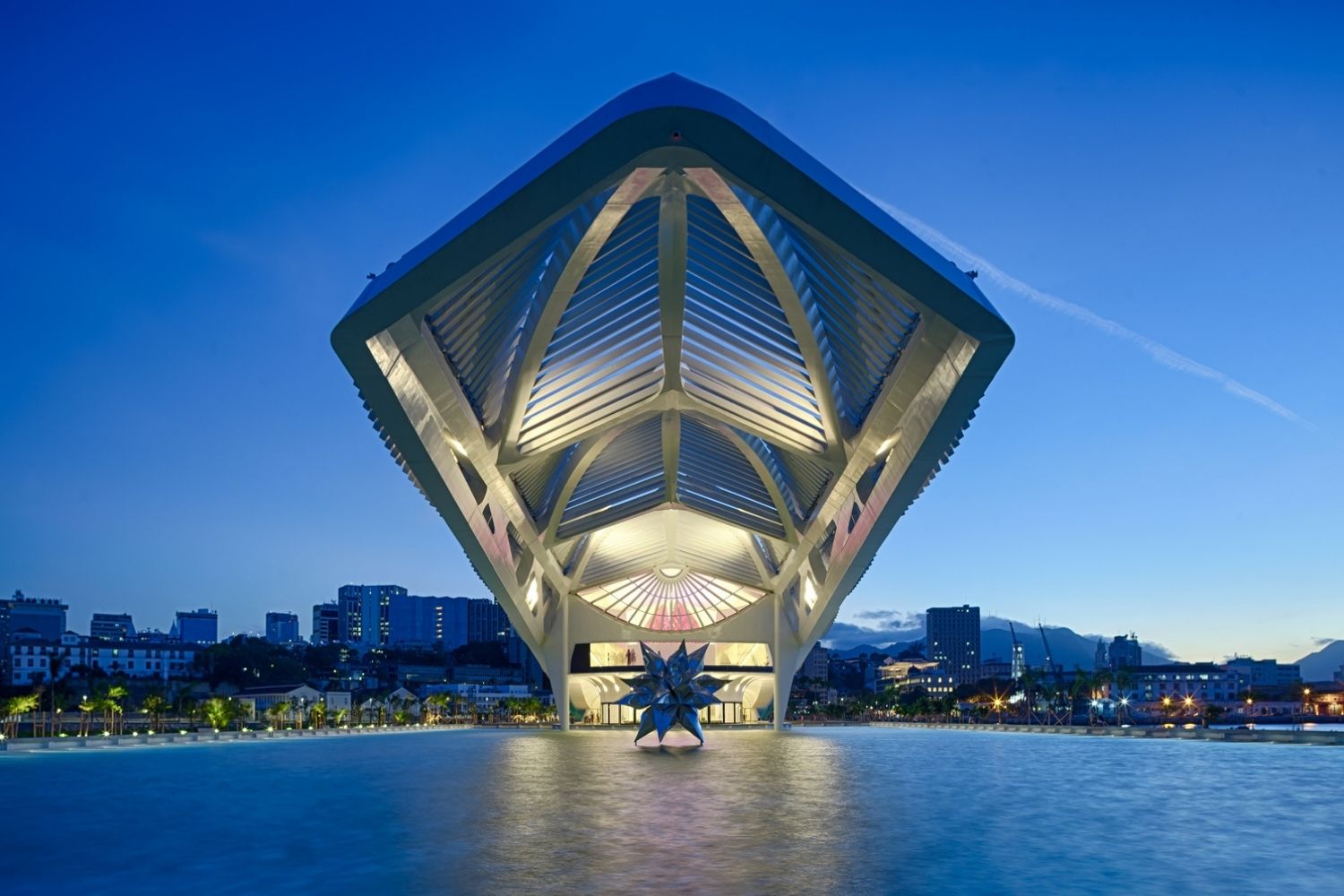
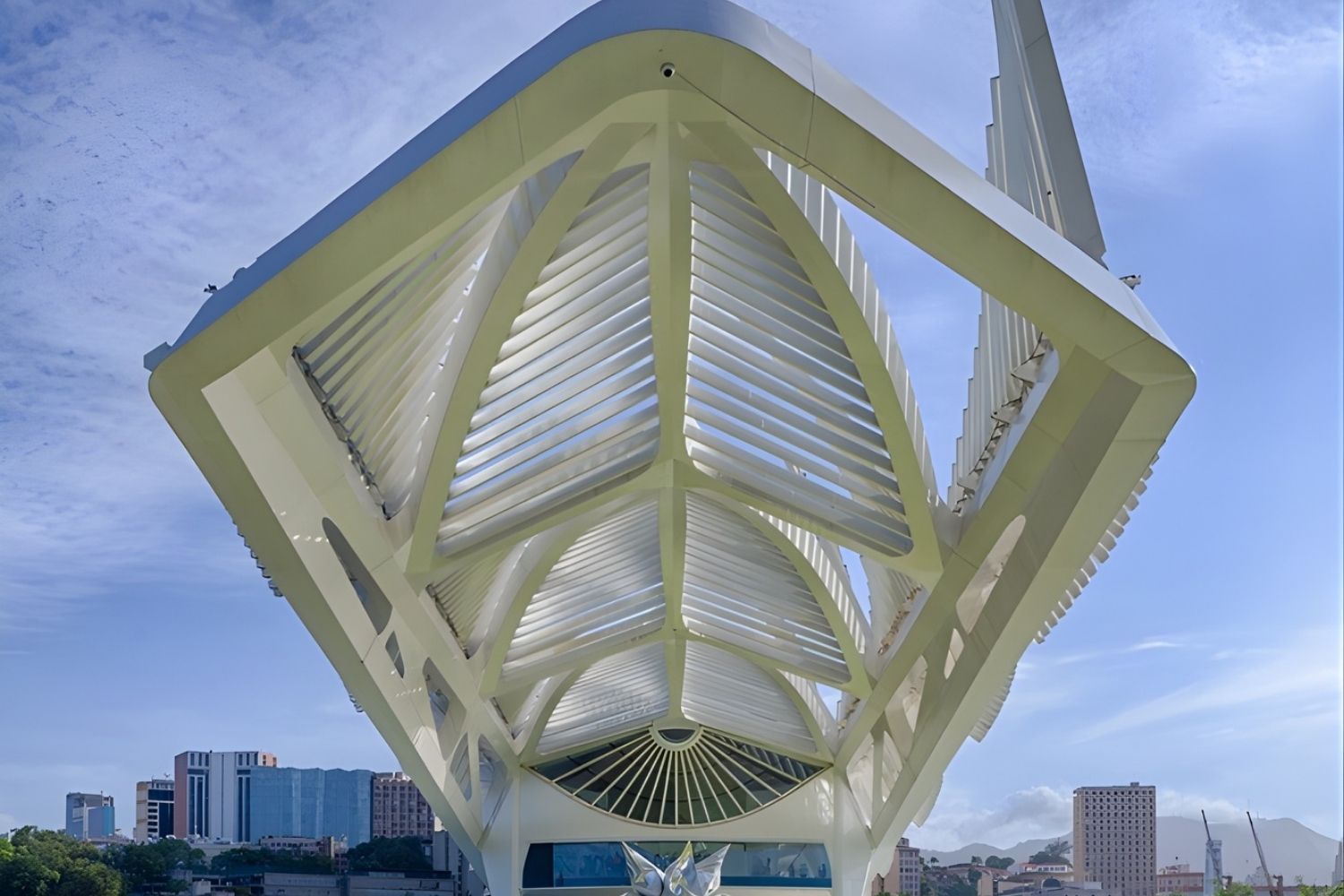
Sitting on 30,000 square meters of land at the edge of Guanabara Bay, the museum building stretches along the pier with large overhangs reaching 75 meters on the plaza side and 45 meters toward the sea. A 7,600-square-meter plaza wraps around the structure, and reflecting pools give visitors the impression that the building is floating on the water. The total height is limited to 18 meters, which protects the view of the nearby Sao Bento Monastery, a UNESCO World Heritage Site.
📌 Did You Know?
In its first year of operation, the Museum of Tomorrow attracted 1.4 million visitors, far exceeding the anticipated 450,000 visits. The museum was originally conceived by the Roberto Marinho Foundation and cost approximately 230 million Brazilian reais to build.
Santiago Calatrava’s Architectural Design
Santiago Calatrava approached the Museum of Tomorrow in Brazil as a building that should feel alive and connected to its environment. He described the concept in clear terms: the building should feel ethereal, almost floating on the sea, like a ship, a bird, or a plant. Calatrava spent time in Rio de Janeiro and recorded his creative process in over 600 watercolors before finalizing the design.
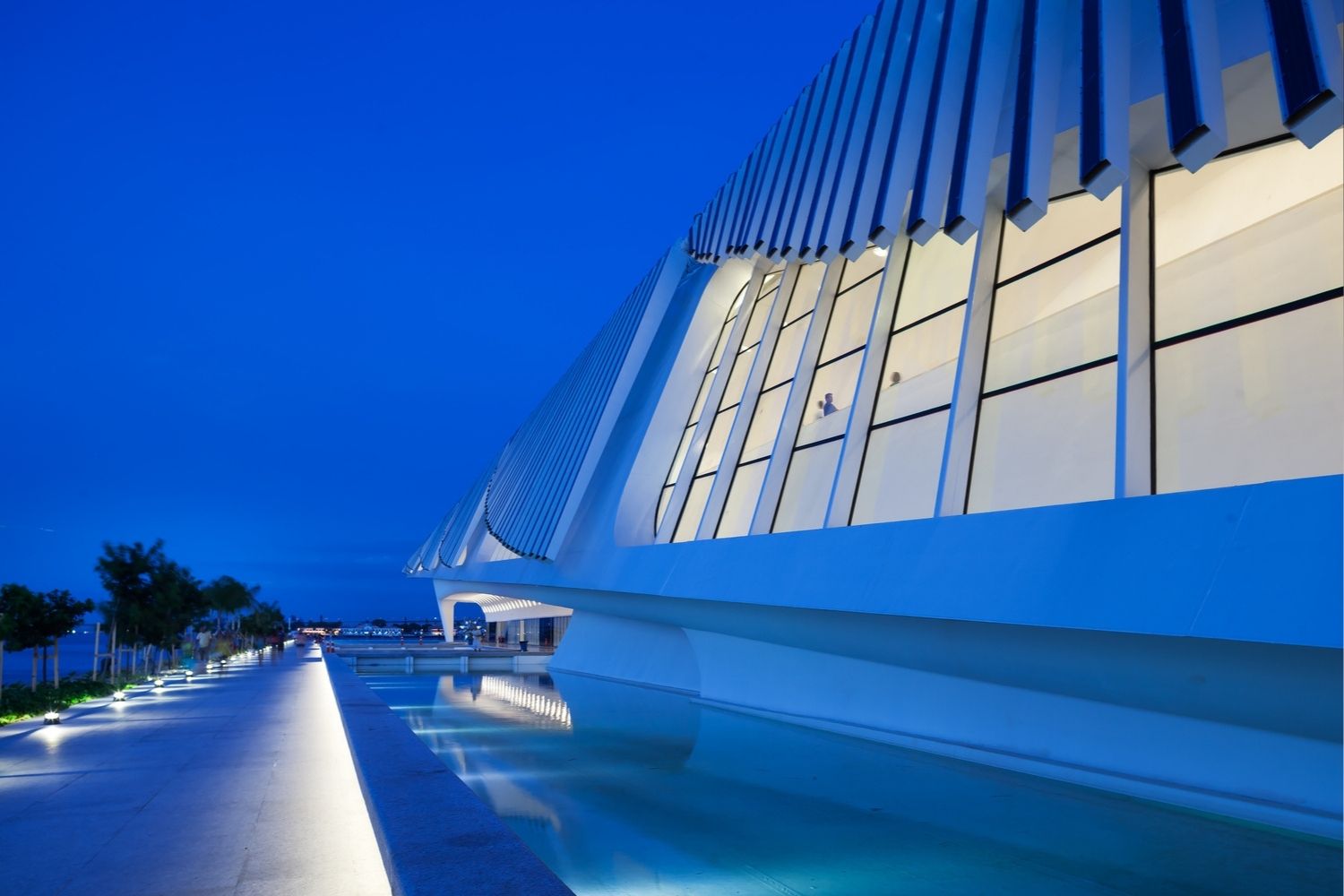
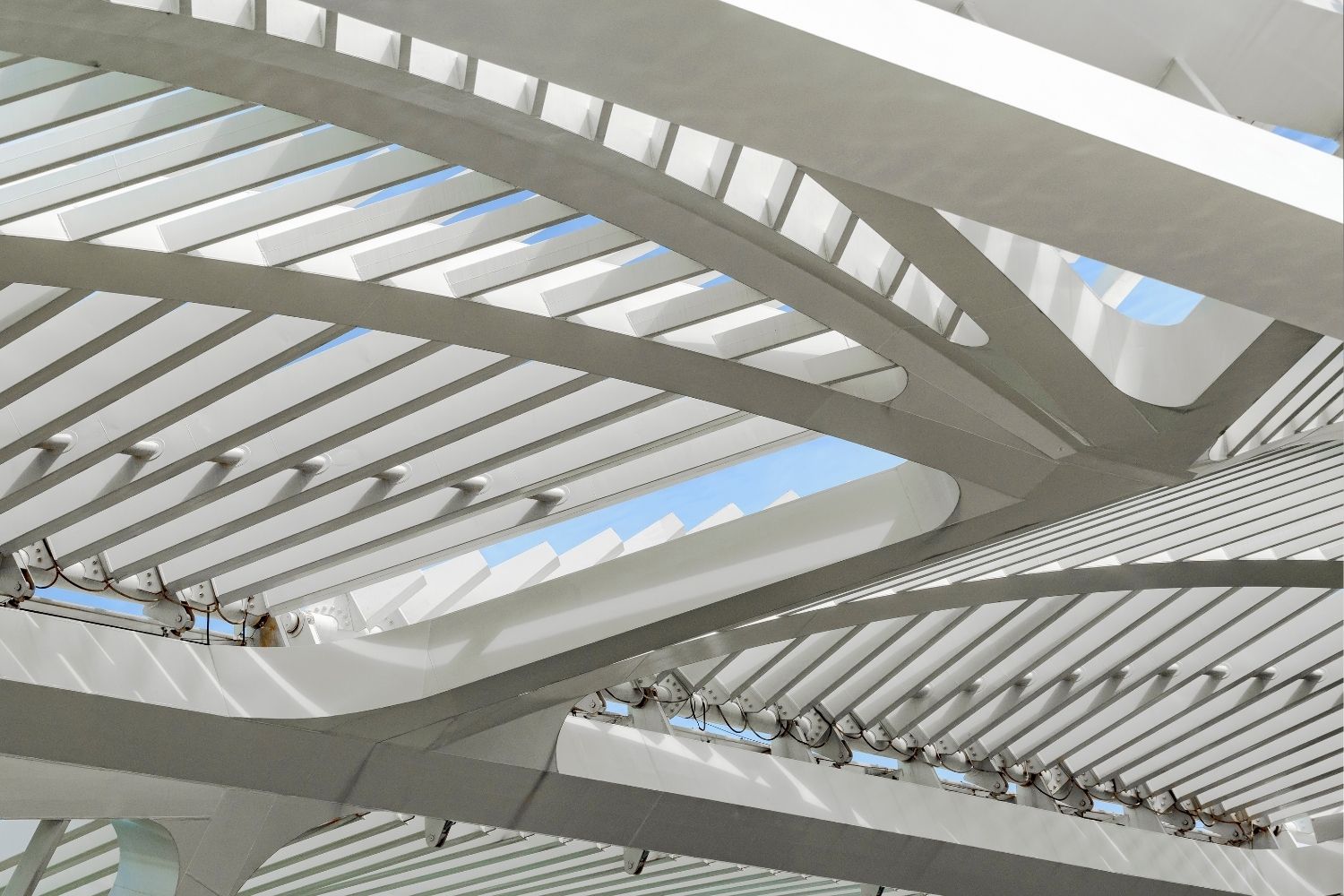
The Calatrava Museum of Tomorrow features a distinctive cantilevering roof with large mobile wings that extend almost the full length of the pier. These wing-like structures are not decorative. They house 5,492 solar panel modules arranged in 48 movable sets that track the sun throughout the day. The facade structure and roof together emphasize the building’s extension into Guanabara Bay, while the building’s width is kept minimal to preserve openness.
Inside, the upper floor houses the permanent exhibition space with a ceiling over 10 meters high and panoramic views of Guanabara Bay. The lower level contains administrative offices, educational facilities, research space, a 400-seat auditorium, a museum store, a restaurant, and a delivery area. Calatrava kept the interior structure simple on purpose, allowing the museum to accommodate different exhibitions, conferences, and research activities over time.
🎓 Expert Insight
“The city of Rio de Janeiro is setting an example to the world of how to recover quality urban spaces through drastic intervention and the creation of cultural facilities such as the Museum of Tomorrow.”
Santiago Calatrava, Architect
Calatrava’s statement reflects how the museum was always intended as more than an isolated building. It was designed to serve as a catalyst for the larger Porto Maravilha urban renewal project, reconnecting the port district with the rest of the city.
How Does the Museum of Tomorrow Achieve Sustainability?
The Museum of Tomorrow in Rio de Janeiro Brazil is one of the clearest examples of how architecture can integrate sustainability into both form and function. Every major system in the building draws on local natural resources to reduce energy and water consumption.
The most visible feature is the solar energy system. The 48 sets of movable solar panels on the roof track the sun’s position throughout the day, producing a total capacity of 181.2 kWp. This system supplies approximately 9% of the museum’s energy consumption. Because the building also uses low-consumption air conditioning, efficient lighting, and high-efficiency pumps and motors, total energy savings reach up to 50% compared to conventional buildings of the same size.
Water management is equally important. The building’s air conditioning system draws cold water from Guanabara Bay, circulates it through the building for cooling, then filters and returns it to the bay. The reflecting pools surrounding the museum also use bay water, creating a cooler microclimate around the structure. All water from washbasins, sinks, and showers is treated and recycled, along with water used for dehumidification, which can reach up to 4,000 liters per day. Rainwater is also harvested for non-potable uses.
🔢 Quick Numbers
- 9.6 million liters of water saved annually (Calatrava.com, 2017)
- 2,400 megawatt-hours of electricity saved per year, enough to sustain over 1,200 homes (Calatrava.com, 2017)
- 181.2 kWp total solar panel capacity across 5,492 modules (Canal Solar, 2025)
- Up to 50% energy savings compared to conventional buildings (Canal Solar, 2025)
The landscaping around the museum was designed by the Burle Marx studio, covering 5,500 square meters with native species and marsh plants found along Rio’s coastline. These plants require minimal water and attract local fauna, adding both ecological value and educational content for visitors walking through the gardens.
💡 Pro Tip
When studying how the Museum of Tomorrow integrates sustainability, pay close attention to the relationship between the reflecting pool and the cooling system. The bay water serves three purposes simultaneously: temperature regulation for the building, a visual element that makes the museum appear to float, and an educational demonstration of water filtration. This kind of multi-purpose design strategy is something architects can apply to projects of any scale.
The Role of the Rio Museum of Tomorrow in Urban Renewal
The Museum of Tomorrow Rio location on Pier Maua was not accidental. The building sits at the center of Porto Maravilha (Marvellous Port), one of the largest urban development projects in Brazil’s history. The Porto Maravilha operation covers 5 million square meters of the city’s port area, which had been abandoned and neglected for decades before the revitalization effort began in preparation for the 2016 Olympic Games.
The project introduced new urban services across the district: selective trash collection, efficient street lighting, sidewalks, bike lanes, and the planting of 15,000 trees. The museum and its surrounding plaza, gardens, and bike paths became a central gathering point that reconnected the port district with Rio’s city center. Nearby landmarks include the Museum of Art of Rio (MAR), the A Noite building (the first skyscraper in Latin America), and the Sao Bento Monastery.
Calatrava’s decision to limit the building height to 18 meters was a direct response to the urban context. Rather than dominating the skyline, the museum sits low on the pier and allows views of the surrounding historic architecture. The elongated, two-story form is oriented north-south, off-center from the pier’s east-west axis, which creates space for gardens and walkways along the southern edge. Visitors can walk the full perimeter of the pier, enjoying panoramic views of the bay and the monastery.
This approach to urban public space design turned a once-derelict port into one of Rio’s most visited destinations. The museum demonstrates how a single architectural project, when thoughtfully positioned and designed, can drive broader urban change.
Architectural Features and Structural Details
The Museum of Tomorrow architecture relies on a combination of steel, glass, and concrete. The cantilevering roof is the most structurally demanding element, extending 75 meters over the plaza and 45 meters toward the sea. The 48 wing-like solar panel assemblies were tested in wind tunnels to ensure proper aerodynamic performance under Rio’s coastal conditions.
Visitors enter from a ground-level plaza and ascend to the upper exhibition level via two long ramps, one designed for children and the other for adults. Both ramps end at windows overlooking Guanabara Bay. From there, visitors pass through a vestibule that rotates 180 degrees and leads into a high-ceilinged, nave-like gallery that runs the building’s full length. Most exhibits are freestanding to preserve the architectural design of the interior space.
📐 Technical Note
The Museum of Tomorrow covers a total area of 15,000 square meters, with approximately 5,000 square meters dedicated to exhibition space. The building sits on 30,000 square meters of land. The structure includes 12,600 square meters of built program area across two floors, with the upper floor offering a permanent exhibition ceiling height of over 10 meters.
The building’s white exterior reflects sunlight, reducing heat absorption naturally. Combined with the bay water cooling system and the solar panels, the overall design creates a building that works with Rio’s tropical climate rather than fighting against it. The sustainable architecture principles visible here go beyond energy and water. The construction used locally sourced materials where possible, and the building’s positioning maximizes natural ventilation and daylight.
Awards and Global Recognition
The Museum of Tomorrow has received significant recognition since opening. In 2017, it won the MIPIM Award for Best Innovative Green Building, with the awards committee highlighting the museum’s solar energy capture technology and bay water cooling system. The museum also became the first in Brazil to receive LEED Gold certification, verifying its environmental performance across energy, water, materials, and indoor environmental quality.
The museum’s exhibitions have been recognized by Canada’s International Design and Communication Awards, and its architectural design won Best New Museum of the Year for Central and South America at the Leading Culture Destinations Awards. These awards confirm that the building succeeds on two levels: as a museum design and as a working example of sustainable engineering.
⚠️ Common Mistake to Avoid
Many visitors and writers describe the Museum of Tomorrow as purely a “green” building because of its solar panels. The sustainability strategy is far more layered than that. The solar system supplies about 9% of the building’s energy. The real efficiency gains come from the bay water cooling, water recycling, efficient mechanical systems, and passive design strategies like the white reflective exterior and natural ventilation. Reducing sustainable architecture to a single feature misses how these systems work together.
The Exhibition Experience Inside the Museum
The permanent exhibition at the Museum of Tomorrow in Rio de Janeiro takes visitors on a journey structured around five areas. The Cosmos section opens with a 360-degree immersive video on the origins of the universe and Earth. The Earth section uses three large-scale cubes illuminated by images representing matter, nature, and human behavior. The Anthropocene section examines the current geological age defined by human impact on the planet.
In the Tomorrows section, interactive games present hypothetical scenarios for how humans might live and coexist in the future. The final area, Us, centers on a replica of an indigenous house where tribal leaders traditionally pass on wisdom to their communities. This curatorial approach makes the museum’s message personal and forward-looking rather than historical.
The museum also hosts the Exploration Lab of Tomorrow, a space for educational activities, sample projects, and prototypes. An Observatory of Tomorrow provides a space for technological and scientific research that can be integrated into the museum’s exhibitions. These programs ensure the museum remains active and relevant beyond its permanent displays.
For those interested in how museums tell stories through design, the Museum of Tomorrow is a strong case study. The architecture and the exhibition content reinforce each other: a building that captures energy and filters water houses exhibits about sustainability, climate change, and humanity’s relationship with the planet.
Visiting the Museum of Tomorrow
The Museum of Tomorrow is located at Praca Maua 1, Centro, Rio de Janeiro. It is open Thursday through Tuesday, from 10am to 6pm, with last entry at 5pm. The nearest metro station, Uruguaiana, is a 15-minute walk away. There is no car park on site, so public transportation is recommended. Exhibition texts are available in Portuguese, English, and Spanish. The building is fully accessible with ramps, elevators, and accessible restrooms.
Plan for at least 2.5 to 3 hours to fully explore the main exhibition areas. The museum has a cafeteria and a gift shop. Visitors who want to experience the exterior architecture and waterfront gardens can do so without entering the museum, and the surrounding public spaces are worth exploring on their own.
Final Thoughts
✅ Key Takeaways
- The Museum of Tomorrow is a science museum focused on sustainability, not a traditional artifact museum, designed by Santiago Calatrava and opened in 2015 on Pier Maua in Rio de Janeiro.
- Its solar panel system uses 5,492 movable modules to track the sun, while bay water cools the building and is filtered before being returned to Guanabara Bay.
- The building saves an estimated 9.6 million liters of water and 2,400 MWh of electricity annually, earning LEED Gold certification as the first museum in Brazil to do so.
- The museum was a central piece of the Porto Maravilha urban renewal project, helping transform a neglected port district into one of Rio’s most popular destinations.
- Calatrava limited the building height to 18 meters to protect views of the nearby Sao Bento Monastery, showing how sustainable design includes respect for existing urban context.
The Museum of Tomorrow stands as proof that a building can communicate its message through its own structure. Calatrava did not simply design a container for sustainability exhibits. He created a building that generates its own energy, cools itself with bay water, recycles its own waste water, and sits within a landscape of native plants. For architects, urban planners, and anyone interested in sustainable architecture trends, the Museum of Tomorrow offers a concrete example of how form, function, and environmental responsibility can work as one system.





Futuro House Production Revived in Finland After Decades-Long Hiatus
A Facebook listing for abandoned moulds led to the first new Futuro...
 illustrarch Editoral Team3 Mins read
Building Your Dream Home in NSW: What You Should Know About Montgomery Homes
Montgomery Homes has been building across Sydney, Newcastle, the Hunter, Wollongong and...
illustrarch Editoral Team4 Mins read
Designing a Home Theater: Where Drapery Fits Into the Plan
In a media room the curtains are a performance layer, not decoration....
illustrarch Editoral Team3 Mins read
Oscar Niemeyer’s Cathedral of Brasília: The Hyperboloid Concrete Hymn
The Cathedral of Brasília reads as a single gesture, yet it stood...
 Furkan Sen7 Mins read


Leave a comment